The Decorative Arts Trust Announces New Publishing Grants
From the press release (11 December 2023) . . .
Publishing Grant for First-Time Authors or Recent PhD Graduates, up to $5000
Publishing Grant in Support of Catalogues and Conference Proceedings, up to $50,000
Proposals due by 31 March 2024
The Decorative Arts Trust announces the creation of a new publishing grant program. This latest expansion of the Trust’s efforts to invigorate scholarship and broaden appreciation of material culture represents a major initiative under the leadership of Brock Jobe and Margaret Pritchard, who serve as President and Vice President of the Board of Governors, respectively. The endeavor is structured to respond to the changing needs of the field and to support publishing efforts in both the print and digital sectors.
“The Trust’s Board recognizes the strong demand for and limited supply of resources focused on publishing in the art community,” according to Executive Director Matthew A. Thurlow. “The organization receives dozens of requests for funding each year for publishing-related projects through our Prize for Excellence and Innovation and Failey Grant program and has supported a variety of books through those awards. This new venture establishes a commitment to sharing important art historical research as broadly as possible.”
The Trust will allocate funding to two separate grants. Building on its long tradition of promoting emerging scholars, the Trust will award an annual grant of up to $5,000 to a first-time author or a PhD graduate who is converting their dissertation into a book-length academic publication. Academic presses are also able to apply on behalf of authors currently under contract.
The second grant line is applicable to exhibition and collections catalogues and compilations of conference papers. The Trust will provide up to $50,000 per year for this purpose, and proposals can request funding from $5,000 to the full $50,000, depending on the level of need. Both nonprofit organizations and independent scholars are welcome to apply. Project and publication teams that include early career professionals will receive preference.
To steward the program and oversee the selection of grant recipients, the Trust created a new advisory committee overseen by Pritchard. The committee consists of museum professionals and academics with broad experience in publishing. The members are eager for the opportunity to support publications tackling the broad context of the Americas and to encourage projects that advance diversity in the study of American decorative arts and material culture.
The deadline to submit proposals for the inaugural round of grants is 31 March 2024. More information and submission guidelines can be found here.
Doctoral Scholarship | Representations of Black People in European Art
From ArtHist.net, where the posting includes the German description:
Doctoral Scholarship | The Representation of Black People in European Art and Material Culture Using the Example of the Tucher Family Coat of Arms
Argelander Professorship for Critical Museum and Heritage Studies, University of Bonn, and Tucher Kulturstiftung
Applications due by 31 January 2023
Since 1345, the central motif of the Tucher family coat of arms has been the head of a Person of Colour in profile. While in the early modern period the depiction was interpreted as a portrait of St Maurice and a symbol of Christian defence and virtue, depictions from the colonial period tend to suggest stereotypical, racialising ideas of Black people. As part of the doctoral scholarship The Representation of Black People in European Art and Material Culture Using the Example of the Tucher Family Coat of Arms (Die Darstellung von Schwarzen Menschen in europäischer Kunst und materieller Kultur am Beispiel des Tucher Familienwappens), some of the diverse questions raised by the family coat of arms will be explored. What can the changing depiction of Black people / BIPoC / people of the global majority in the coat of arms over the centuries tell us about the perception of people from Africa and the African diaspora in Europe? How did the presence of Black people in Europe shape the representations? What role did upheavals in the history of ideas and political economy—such as the Enlightenment in Europe, the transatlantic trade in enslaved people, and the colonisation of non-European territories—play in the different forms of representation? What purposes did the identification of a white patrician family with a Black person serve in these different eras? And to what extent did the changing materiality of European art and craftsmanship influence the forms of depiction of the family coat of arms? The doctoral candidate selected is invited to set their own research priorities according to their expertise (epochs, materialities) and to contribute comparative examples to the research. A critical examination of the tipping points of self-perception and external attribution expressed by the changing family coat of arms is desired. Reference to approaches from Postcolonial and Critical Whiteness Studies is also expressly encouraged.
Tasks
• Independent research on the topic The Representation of Black People in European Art and Material Culture Using the Example of the Tucher Family Coat of Arms
• Annual research reports
• Conclusion of a supervisory relationship at the University of Bonn at the start of the fellowship
Applicant Profile
• Completed Master’s degree in social and cultural anthropology, history, art history, cultural studies, museum studies, material culture studies, postcolonial studies, or related subjects
• Experience with historical German scripts
• Experience with historical material culture
1700€ / month doctoral scholarship; 1500€ / year travel and material costs
To apply, please send a cover letter, a description of the proposed research project (1–2 pages), a writing sample, and a CV in one PDF file to Nana Tsiklauri, ntsiklau@uni-bonn.de. The scholarship should be started as soon as possible. The deadline for applications is 31 January 2024. For details, please refer to the official call for applications at this link. If you have any questions, please contact Jun.-Prof. Dr. Julia Binter, julia.binter@uni-bonn.de.
Decorative Arts Trust Grant to Support Study of Frames at AGO
From the press release (1 December 2023). . .
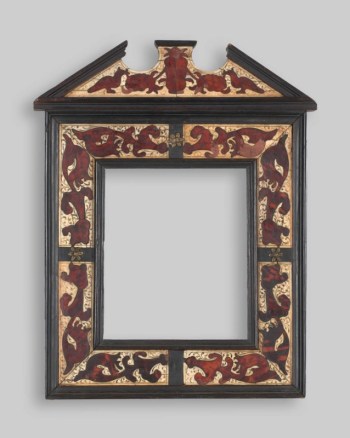
Italian Tabernacle Frame, 1600s, tortoiseshell, bone or ivory, and wood. (Toronto: AGO, gift from a private collector, 94/994).
The Decorative Arts Trust is pleased to announce that the Art Gallery of Ontario (AGO) in Toronto, Canada, will serve as our 2024–26 Curatorial Internship Grant partner. The Decorative Arts Trust underwrites curatorial internships for recent Masters or PhD graduates in collaboration with museums and historical societies. These internships allow host organizations to hire a deserving professional who will learn about the responsibilities and duties common to the curatorial field while working alongside a talented mentor.
This intern will focus on a type of material culture that links the decorative and fine arts: frames. The AGO is home to one of the largest collections of historic frames in the world, currently amounting to well over 1,200 examples. The collection is expansive in terms of both chronology and geography, ranging from the late 1400s to the early 1990s, and with fine frames from France, England, Germany, the Netherlands, Italy, Spain, the Americas, and Asia. The AGO’s goals are twofold: to study the history of frame making to preserve knowledge at a moment when most experts in the field are currently retiring; and to pair paintings and frames to show artwork within a surround that was made in the same region and time period.
Under the mentorship of Caroline Shields, Curator, European Art, and Adam Harris Levine, Associate Curator, European Art, the intern will research and catalogue the AGO’s holdings and assist in making the collection available to the public online. They will work to pair paintings with frames that are chronologically and geographically suited, and they will facilitate the loan of frames to peer museums. The intern’s term will begin in May 2024, when the AGO hosts an international conference, Many Lives: Picture Frames in Context, featuring keynote speakers Hubert Baija, Senior Frames Conservator, and Lynn Roberts, Frame Historian. As part of their tenure at the AGO, the intern will help prepare the conference papers for a digital publication.
A formal call for applications for the internship will be posted early in 2024. Current and recent graduate students who are interested in this opening are encouraged to visit AGO’s website at ago.ca for updates.
2-Day Course | Reynolds and His Circle
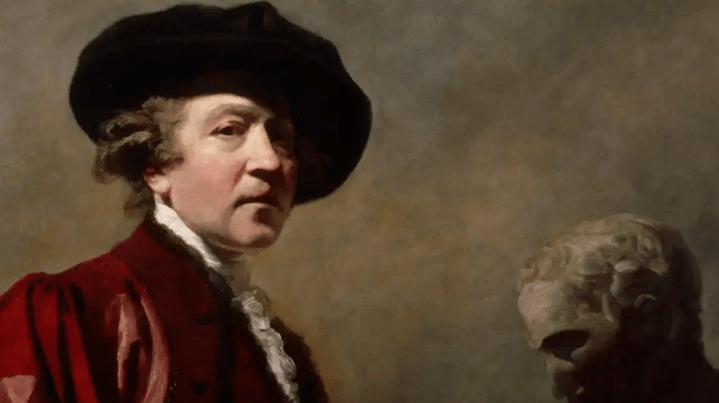
Joshua Reynolds, Self-Portrait of Sir Joshua Reynolds, PRA, detail, ca. 1780, oil on panel, 127 × 102 cm
(London: Royal Academy of Arts, 03/1394)
◊ ◊ ◊ ◊ ◊
This fall at the RA in London:
Reynolds and His Circle: A Weekend Course
Royal Academy of Arts, London, 30 September and 1 October 2023, 10.00–5.00 each day
2023 is the 300th anniversary of the birth of the Royal Academy’s first President, Sir Joshua Reynolds (1723–1792). This two-day art history weekend explores the life and work of one of Britain’s most important artists. The course offers participants an in-depth insight into Sir Joshua Reynolds and his work—via lectures, talks, and archive visits with leading art historians and experts.
The weekend will contextualise the many paintings and prints of Reynolds, looking at his work through various prisms: from the importance of portraiture and the rise of celebrity culture, to questions of Britishness and empire. We will explore what it meant to be Britain’s leading artist at the end of the eighteenth century and learn about his intrinsic role in the creation of the Royal Academy of Arts. The course will also address Reynolds’s artistic contemporaries and followers including Thomas Gainsborough, Angelica Kauffman, and Sir Thomas Lawrence. As well as providing a snapshot of the artistic life of eighteenth-century society, the course takes an object-based approach—looking at some of Reynolds’s most famous works in depth, along with a visit to the RA archive to see ephemera related to the artist and the founding of the RA.
No prior knowledge is required and debate and discussion are encouraged. The course fee of £420 includes light refreshments and a wine reception at the end of the first day.
Call for Applications | Making Her Mark: Exhibition Study Day

From the Call for Applications:
Making Her Mark: Exhibition Study Day
Baltimore Museum of Art, 23 October 2023
Applications due by 6 September 2023
The Baltimore Museum of Art and the Art Gallery of Ontario are delighted to be co-organizing the exhibition Making Her Mark: A History of Women Artists in Europe, 1400–1800, scheduled to run from 1 October 2023 to 7 January 2024 in Baltimore and from 30 March until 1 July of 2024 in Toronto. Curated by Andaleeb Badiee Banta, BMA Senior Curator of Prints, Drawings & Photographs, and Alexa Greist, AGO Associate Curator and R. Fraser Elliott Chair, Prints & Drawings, this exhibition presents a feminist revision of early modern European art. An invitational study day will be held in the exhibition galleries at the BMA, where scholars and the exhibition curators will facilitate discussions around the themes and objects on display. Advanced graduate students and early career professionals from diverse humanistic disciplines are invited to apply to participate. Up to 10 selected participants will receive a $250 travel stipend, made possible by a generous grant from the Kress Foundation, to offset travel costs.
As the first North American exhibition in over forty years to stage such an expansive woman artist-centered approach to Renaissance, Baroque, and 18th-century European art, Making Her Mark will be unique in its presentation of a wide range of materials, media, and scale, foregrounding quality works made by women, many of whom remain largely unfamiliar to general and specialist audiences. Exemplary works by well-known artistic ‘heroines’ such as Sofonisba Anguissola, Lavinia Fontana, Artemisia Gentileschi, Judith Leyster, Luisa Roldán, Rosalba Carriera, and Rachel Ruysch will join exceptional products of women-led workshops, female artisanal collectives, and talented amateurs who operated outside of the male-dominated professional arena. Expanding beyond the traditional focus on the ‘major arts’ of large-scale painting and sculpture, Making Her Mark aims to be a bold corrective to the historical assumption that women artists and makers of this period were rare and relatively untalented. This presentation will consider the entire European continent and seeks to subvert the typical monographic format, identifying it as an inherently sexist critical apparatus that encouraged the classification of women artists as anomalous.
The exhibition’s scope is purposefully broad, both temporally and geographically, in order to allow for differences in individual social circumstances, power dynamics, and cultural context, and to address the careers of women artists who had transnational reputations and relationships. Bringing together such varied objects will present them through a wider lens, one that includes creative production by female practitioners who did not or could not subscribe to male-determined criteria for what constituted important or legitimate art. Thematic groupings on the themes of power, faith, interiority, scientific documentation, empire, professional pathways, and entrepreneurship guide visitors through a wide variety of media exploring women’s contributions to the early history of botany, zoology, and epistemology; book arts; religious and history subjects; print culture; textile production; ceramics; wax modeling; metalwork; and courtly and private portraiture. A diverse presentation of works brilliantly illuminates the fact that women were involved with all manner of artistic production and contributed to nearly every aspect of early modern visual culture, even if their names were not recorded for posterity.
We invite applications from advanced graduate students as well as early career scholars who are no more than five years out from degree conferral. The ideal applicant will be engaged with the study of early modern women and materiality. We welcome applications from scholars working in disciplines outside of art history. In order to minimize the cost of attendance, we are pleased to offer accepted applicants free entrance to the exhibition and a $250 travel stipend, generously provided by the Kress Foundation.
To be considered for participation and the travel grant, please submit a one-page CV. Additionally, please provide a brief summary (not to exceed 250 words) of your interest and how this experience in the exhibition will benefit your current work. Application materials should be sent to Theresa Kutasz Christensen at TChristensen@artbma.org. We cannot consider applications received after Wednesday, September 6th. Selected applicants will be notified of their acceptance by September 22nd.
Call for Applications | Getty Residential Scholars: Extinction
From ArtHist.net:
Getty Residential Scholars: Extinction
Getty Research Institute, Los Angeles, 2023–24
Applications due by 2 October 2023
The Getty Research Institute is pleased to announce the theme for residential grants and fellowships for pre-docs, post-docs, and scholars at the Getty Center and Villa for the 2024/25 academic year. Applications will open on 1 July 2023 and are due by 2 October 2023.
In this moment of extreme environmental decay and monumental epidemic loss, the Getty Scholars Program invites applications on the pressing topic of extinction and its bearing on the visual arts and cultural heritage. Scholars are asked to contemplate how representational practices are deployed to cope with the precarious survival of plants, animals, and humans; the ever-present specter of species-level extinction and resource exhaustion; and, at the most extreme pole, the brutality of mass atrocity. On another level, atrophy, decay, and obsolescence constitute the temporal dimensions of certain artistic practices, especially as creative approaches, technologies, media, formats, and ideals become outmoded or superseded. The finality of disappearance may also portend a certain amount of hope for rebirth, innovation, or recovery. We invite proposals on these topics from art historians and those from related to disciplines. Please find the full call for applications and theme text on the Scholars Program webpage.
Applicants need to complete and submit the online Getty Scholar Grant application form by the deadline, which requires the following attachments:
• Project Proposal (not to exceed five pages, typed and double-spaced), which must include a description of the applicant’s proposed plan of study. The description should indicate 1) how the project addresses the annual theme and 2) how it would benefit from the resources at the Getty, including its library and collections. Applicants for the AAAHI Fellowship are not required to address the annual theme. Rather, they should describe how their projects will generate new knowledge in the field of African American art history.
• Curriculum Vitae
• Optional Writing Sample
Applicants will be notified of their application outcome approximately six months after the deadline.
Contact
researchgrants@getty.edu
Attn: Getty Scholar Grants
Decorative Arts Trust Announces 2023 Research Grant Recipients
From The Decorative Arts Trust:
The Decorative Arts Trust announced that the 2023 Research Grants will be awarded to 15 recipients, the largest number of recipients since the program began 20 years ago.

Alyse Muller is studying Sévres porcelain, such as this Lidded pot-pourri vase, from around 1760 (Los Angeles: The J. Paul Getty Museum, 75.DE.11). The painting on front panel is attributed to Charles-Nicolas Dodin, after an engraving of a painting by David Teniers the Younger.

Damiët Schneeweisz is studying Caribbean miniatures. Pictured: Eliab Metcalf, Benjamin Turo of Bermuda, ca. 1825, probably painted in the Caribbean islands, watercolor on ivory (Smithsonian American Art Museum, 1986.64.2).
• Elliot Camarra (MA student, History of Design and Material Culture, Bard Graduate Center) Brauronian votive mirrors
• Graham Feyl (PhD student, History of Art and Architecture, University of California, Santa Barbara), queer craft in San Francisco
• Isabella J. Galdone (PhD student, History of Art, Yale University), paintings and textile works by women
• Cara Marie Green (MA student, Fashion & Textile Studies: Theory, History, Museum Practice, Fashion Institute of Technology), Norwegian folk dress
• Andrew Grider (BA student, Interior Design, Virginia Commonwealth University), furnishings in the Hill House Museum
• Lily Higgins (PhD student, History of Art, Yale University), bilingual samplers
• Alida R. Jekabson (PhD student, History of Art and Architecture, University of California Santa Barbara), indigenous craft displays in the 1915 Panama Pacific International Exposition in San Francisco
• Laura C. Jenkins (PhD student, History of Art, The Courtauld Institute of Art), French 18th-century interiors in 19th-century New York
• Sybil F. Joslyn (PhD student, History of Art and Architecture, Boston University), furniture made of reclaimed ship materials, scrimshaw, and ship figureheads
• Tracy Meserve (MA student, Decorative Arts and Design History, George Washington University), the silk industry in Calabria, Italy
• Alyse B. Muller (PhD student, Art History, Columbia University), port scenes on Sévres porcelain
• Damiët Schneeweisz (PhD student, History of Art, The Courtauld Institute of Art), Caribbean miniatures
• Krishna Shekhawat (PhD student, Art History, University of California, Berkeley), an 18th-century gilded palanquin (DARTS Grant)
• Hampton Smith (PhD student, History, Theory, and Criticism of Art and Architecture, Massachusetts Institute of Technology), tools created by Black craftspeople
• Lea C. Stephenson (PhD student, Art History, University of Delaware), Egyptian-inspired textiles and jewelry (Marie Zimmermann Grant)
The application deadline for Research Grants is April 30 annually. For more information on grants and scholarships from the Decorative Arts Trust, read about our Emerging Scholars Program, generously supported by many Trust members and donors. For grant announcements and deadline reminders, sign up for our e-newsletter and follow us on Facebook and Instagram. The deadline for the 2023 Prize for Excellence and Innovation is approaching on 30 June 2023.
Performance | Mary Berry’s Fashionable Friends
From The Walpole Library:
Mary Berry’s Fashionable Friends
The Lewis Walpole Library, Farmington, Connecticut, 12–13 May 2023
 An entirely new version of the comedy directed and abridged by Laura Engel, Duquesne University
In 1801 Anne Damer, Mary Berry, and Agnes Berry embarked on a remarkable collaboration staging a performance of Berry’s comedy Fashionable Friends as an amateur theatrical production at Horace Walpole’s Strawberry Hill. Damer and Berry starred in the play as the titular fashionable friends; Damer played the seductive and sly Lady Selina and Berry the sentimental and clever Mrs. Lovell.
Featuring
• Christopher Collier
• Sadie Crow
• Amy Dick
• Eric Leslie
Seating is limited and advance registration is required.
Friday, May 12, 2.30pm
Friday, May 12, 4.30pm
Saturday, May 13, 2.00pm
Summer Seminar | Material Religion in Early America
From the American Antiquarian Society:
Material Religion: Objects, Images, Books
2023 CHAViC-PHBAC Summer Seminar
American Antiquarian Society, Worcester, Massachusetts, 25–30 June 2023
Led by Christopher Allison and Sonia Hazard
Applications due by 17 April 2023
 Scholars of religion have taken a material turn, delving into the study of images, objects, monuments, buildings, books, spaces, performances, and sounds. What do these inquiries look like in the context of early America, and how did religious materialities shape early American worlds? The goal of this seminar is to explore this area’s exciting archives, theories, and methods, enabling participants to bring together religion and materiality in their own work in fresh ways.
The American Antiquarian Society provides an exceptional site for hands-on inquiries into the material worlds of early American religions. Collections at AAS furnish materials relating to religion before 1900 in North America, including Islam, Judaism, Mormonism, Catholicism, Protestantism, metaphysical religions, African-inspired religions, South Asian religions, and civil religion as well as collections that support studying religious hybridity and forms of Christianity as practiced in Hawaiian, Caribbean, and Indigenous nations and groups.
Topics will include lived religion, materialisms (old and new), sensory culture, books as objects, animisms and animacies, iconoclasm, visual piety, the ontological turn, residual transcription, and sacred objects in archival contexts. The seminar will be held from Sunday, June 25, through Friday, June 30, 2023, at the American Antiquarian Society in Worcester, Massachusetts. Co-leaders for the seminar will be Chris Allison and Sonia Hazard. Guest speakers will include Solimar Otero, Professor of Folklore and Ethnomusicology, Indiana University, Bloomington and Anthony Trujillo, doctoral candidate in American Studies, Harvard University.
Participation is intended for faculty, museum and library professionals, and graduate students. It welcomes researchers across fields such as art history, religious studies, history, anthropology, American studies, music, and literature. It is co-sponsored by the Center for Historic American Visual Culture (CHAViC) and the Program in the History of the Book in American Culture (PHBAC).
The format of the seminar will be select readings, highly interactive seminar discussion, collections explorations and archival sessions, individual research time with the collection, and site visits to notable collections and religious sites in the area, including the Worcester Art Museum, burial grounds, and sacred sites. The syllabus is available online. Information on access to the readings will be emailed to students.
Tuition for the seminar is $600, which includes lunch each day and some evening meals. Some financial aid is available for graduate students. The cost of housing is not included in the tuition fee. Housing is available at two nearby hotels.
Faculty
• Sonia Hazard is Assistant Professor of Religion at Florida State University. Her book, Building Evangelical America: How the American Tract Society Laid the Groundwork for a Religious Revolution, is forthcoming from Oxford University Press. She did her graduate work at Harvard Divinity School and Duke University.
• Christopher Allison is Director of the McGreal Center for Dominican Historical Studies, Department of History, Dominican University. He is the author of the forthcoming book, Protestant Relics: Capturing the Sacred Body in Early America, under contract with the University of Chicago Press. He did his graduate work at Yale Divinity School and Harvard University.
Guest Speakers
• Solimar Otero is Professor of Folklore and Ethnomusicology at Indiana University, Bloomington. She is the author of Archives of Conjure: Stories of the Dead in Afrolatinx Cultures (Columbia University Press, 2020).
• Anthony Trujillo is a doctoral candidate in American Studies at Harvard University. He works at the confluence of Native American and Indigenous studies, history, religious studies, anthropology, and the arts.
Predoctoral Fellow | Decay, Loss and Conservation in Art History
From the Bibliotheca Hertziana:
Predoctoral Fellow for the Research Group ‘Decay, Loss and Conservation in Art History’
Led by Francesca Borgo at the Bibliotheca Hertziana – Max Planck Institute for Art History in Rome
Applications due by 31 May 2023
The Lise Meitner Research Group “Decay, Loss and Conservation in Art History” led by Francesca Borgo at the Bibliotheca Hertziana – Max Planck Institute for Art History in Rome seeks to appoint a Predoctoral Fellow (M/F/D). The Max Planck Society is Germany’s premier research organization. The 86 Max Planck Institutes conduct research at the highest level in the service of the general public in the natural sciences, life sciences, social sciences, and the humanities. The deadline for application is 31 May 2023, 12pm CEST. Interviews will be held virtually in June 2023. Candidates should propose a funding period of desired length within the academic year 2023/2024. Motivations for the length of period proposed should be made clear in the cover letter.
The Predoctoral Fellow will conduct their own research within the framework of the Research Group, which focuses on European and Colonial art histories from the fifteenth to the eighteenth century, a period during which techniques and media were ranked based on their ability to last, and decay was first recognized as a subject worthy of aesthetic and scientific attention.
Excellence in research, commitment to pursue new insights through original scholarship, and willingness to become part of a group of young, international scholars are essential. Fellows will actively participate in the Group’s activities and are invited to contribute to its publication output while benefitting from editorial and image licensing support. They will be responsible for planning and organizing seminars, workshops, visits, and fieldtrips in collaboration with other team members and under the supervision of the Group Leader. Candidates must be conversant in English and familiar with Italian and/or German.
This position is intended for a PhD student enrolled at any university worldwide who is in the finishing stages of their dissertation. In addition to clarifying how residence in Rome benefits their PhD research, candidates should include in their cover letter a statement of how their work advances the goals of the research group. Candidates should also seek the approval of their doctoral advisor. Candidates are expected to review the Research Group’s research agenda, past initiatives and event series, as well as the broader structure of the Bibliotheca Hertziana into which the Research Group fits. We welcome applications from doctoral students in every field within the history of art, technical art history, conservation history, and museum studies, with preference given to projects spanning traditional disciplinary boundaries. The selection committee aims to assess the ability of candidates to contribute in a collegial way to the intellectual life of the Research Group.
This is a residential fellowship. By the start of the appointment, candidates are expected to have taken up residence in Rome. The fellowship may not be held concurrently with another major fellowship award; applicants must disclose any supplementary funding and may not take on other obligations during their fellowship period.
The Max Planck Society offers a fixed-term contract of employment. Stipend and benefits are determined according to the German Civil Service Collective Agreement (65% TVöD Bund E 13) or equivalent, depending on individual personal circumstances. Fellows enjoy all the privileges of the Institute, including library access seven days a week, a research budget, and their own carrel or desk.
We encourage women and individuals from communities that are underrepresented in academia to apply. The Max Planck Society is committed to fostering equal opportunities and diversity and welcomes applicants from all parts of society, regardless of gender, ethnicity, disabilities, or sexual orientation.
To apply the candidate must upload the following documents as separate PDF files to the application portal:
• Cover letter that clearly states the candidate’s contribution to the Research Group’s objectives
• Description of proposed research project (max. 1000 words), accompanied by a bibliography
• Curriculum vitae with list of publications (including those forthcoming, under revision, submitted, or in preparation)
• One reference letter
• Output proposal (max. 500 words). This could be a site visit, a collaboration with a local collection, a research seminar, a publishable piece of writing, or a contribution to a national or international conference. The proposal should detail specific names and locations and specify how the output aligns with the Research Group’s themes.










 Enfilade
leave a comment