Exhibition | Luisa Roldán: Royal Sculptor
Adam Busiakiewicz noted the exhibition at Art History News a few weeks ago:
Luisa Roldán: Escultora Real
Museo Nacional de Escultura, Valladolid, 29 November 2024 — 9 March 2025
Curated by Miguel Ángel Marcos Villán and Pablo Amador Marrero
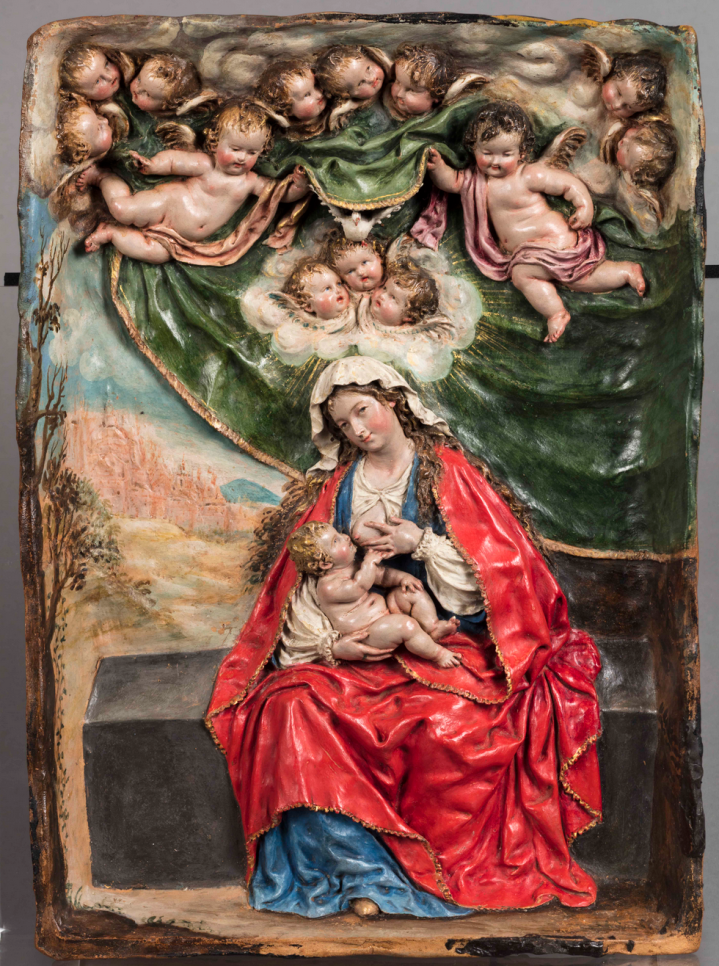
Luisa Roldán, Virgen con el Niño (Sevilla, Convento de San José).
Esta exposición permitirá al visitante adentrarse en una vida apasionante. Luisa Roldán (1652–1706) aunó excelencia, versatilidad y habilidad para romper las barreras de género y llegar a lo más alto como artista: fue nombrada escultora del rey por Carlos II, cargo que mantuvo con Felipe V. Además, fue la primera artista española en ingresar en la Academia de San Lucas en Roma, un hito nunca antes alcanzado por escultores hispanos.
Pero Luisa Roldán: Escultora real también es el producto de una reivindicación y de una necesidad de hacer presente la trayectoria de una de las más destacadas artistas españolas. De hecho, nunca cayó en el olvido y autores como Antonio Palomino (quien la conocería personalmente), Antonio Ponz o Juan Agustín Ceán Bermúdez alabaron su obra. Sin embargo, el hecho de que fuera considerada por muchos como autora de menor calidad que su padre, identificando con él buena parte de su producción, ha pesado en algunos de los estudios que se realizaron sobre su figura. Como también que se le adjudicaran sobre todo obras de devoción, delicadas y de pequeño formato en barro cocido, «más propias de su condición y sexo», según autores como el propio Ceán Bermúdez, dejando en un lugar secundario su rica y extraordinaria producción de obras en madera y de mayor formato.
La dedicación de Luisa Roldán al oficio de la escultura sólo fue posible por su nacimiento en el seno de una familia dedicada a esta disciplina. Su padre, Pedro Roldan fue el gran artista del mercado sevillano y de buena parte del andaluz durante la segunda mitad del siglo XVII. La artista, cuyas dotes para el oficio se desvelaron en época muy temprana, heredó de él la inquietud por el mejor conocimiento del arte. Tras dejar el taller paterno se estableció en Sevilla junto a su marido, Luis Antonio de los Arcos. De allí se trasladaron a Cádiz, metrópoli comercial del momento, y posteriormente el matrimonio y sus hijos fijaron su residencia en Madrid. Allí la escultora pudo entrar al servicio de la Corte, alcanzando el mayor éxito y reconocimiento al que cualquier artista de la época podía aspirar.
Miguel Ángel Marcos Villán and Pablo Amador Marrero, Luisa Roldán: Escultora Real (Valladolid: Museo Nacional de Escultura, 2024), €40.
The Courtauld Announces New Manton Centre for British Art
From the press release earlier this fall (6 August 2024) . . .
The Manton Foundation has donated $12 million to The Courtauld to create the Manton Centre for British Art. The Centre, named after British art collectors and philanthropists, Sir Edwin Manton and Florence, Lady Manton, will help secure The Courtauld’s ambition of becoming a world leader in the field of British art and marks the continued commitment of the Manton family to arts education.
The Manton Centre for British Art will serve as an intellectual hub for art historians, curators, critics, artists, and students nationally and internationally, providing a platform for sharing world-leading research and for teaching the next generation of British art specialists. Located initially at The Courtauld’s current campus at Vernon Square, the Manton Centre will later be housed in the purpose-designed premises at Somerset House, providing the physical and intellectual home for The Courtauld’s research and teaching on British art. The Courtauld’s specialists in British art will become members of the Centre and help shape its activities and development. The Centre will operate as the base for students taking modules in British art as part of their MA degree and also provide a home for The Courtauld’s PhD students researching British art.
Professor Mark Hallett, Märit Rausing Director, said: “This is a thrilling moment for The Courtauld. Our new Manton Centre will place British art in a global context, and aim to deliver truly world-class teaching and research in this rich, endlessly fascinating field of study. The Centre will support students through a generously endowed programme of scholarships, and offer a dynamic programme of activities and events across the year. We are hugely grateful to the Manton Foundation for their generous gift, which will enable us to support the very best new thinking and teaching on British art for generations to come.”
Julia Krapf and Sandy Niles, Trustees of The Manton Foundation, said: “After a visit to The Courtauld and several discussions with its leadership and faculty, we came away impressed by the dedicated academic training offered to students interested in British art, including the period of most interest to our grandparents. We are excited and motivated by the opportunity to help The Courtauld strengthen and formalize its research capacity in that area.”
The Centre will present an ambitious and dynamic programme of events including:
• An annual lecture in memory of Sir Edwin and Lady Manton
• An annual international conference devoted to a major topic in the field
• Regular workshops devoted to specific areas of British art
• An annual programme of seminars and lectures enabling scholars, curators, critics, and artists to share their thinking and research
• An annual ‘scholar in residence’ programme, designed to host a leading figure in the field of British art
The Manton Centre for British Art will also pursue collaborations with other scholarly and artistic institutions both in the UK and around the world. In pursing these collaborations and partnerships, the Centre will engage with all areas and periods of British art, and with a wide range of partners and interlocutors.
Print Quarterly, December 2024
The long eighteenth century in the latest issue of Print Quarterly:
Print Quarterly 41.4 (December 2024)
a r t i c l e s
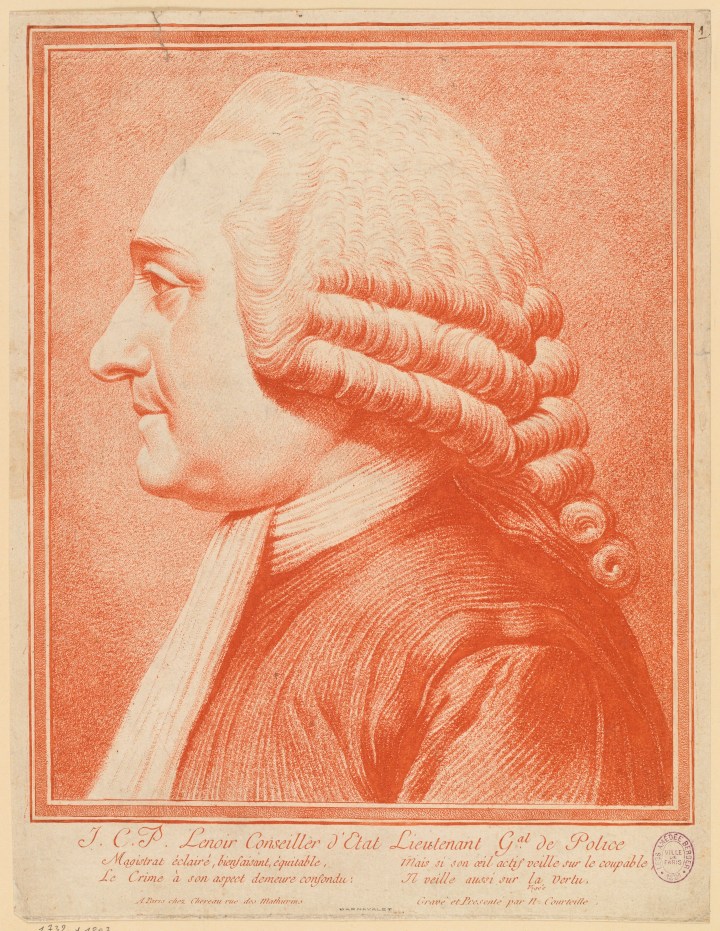
Nicholas de Courteille, presumably after Jean Pierre Bouch, Jean Charles Pierre Lenoir, 1779, soft-ground etching, 308 × 235 mm (Paris, Musée Carnavalet, Histoire de Paris).
• Dorinda Evans, “Jean Pierre Bouch, A Rediscovered Polymath”, pp. 394–407. This article attempts to compile the real identity and life story of the French artist Jean Pierre Bouch (1765–1820), whose diverse career included being a balloonist and pyrotechnician as well as portrait artist.
n o t e s a n d r e v i e w s
• Christian Rümelin, Review of Jean-Gérald Castex, ed., Graver pour le Roi: Collections Historiques de la Chalcographie du Louvre (Louvre éditions and Lienart éditions, 2019), pp. 434–37.
• Evonne Levy, Review of Bettina Wassenhoven, Gravuren nach Skulpturen – Skulpturen nach Gravuren (Konigshausen & Neumann, 2021), pp. 437–38.
• Simon McKeown, Review of Rosa de Marco and Agnès Guiderdoni, eds., Eliciting Wonder: The Emblem on the Stage (Librairie Droz, 2022), pp. 438–41.
• Clarissa von Spee, Review of Anne Farrer and Kevin McLoughlin, eds., The Handbook of the Colour Print in China, 1600–1800 (Brill, 2022), pp. 441–45.
• Nicholas JS Knowles, “The First British Caricature in Aquatint?,” pp. 445–47.
• Bénédicte Maronnie, Reviews of Chiara Casarin and Pierluigi Panza, eds., Giambattista Piranesi: Architetto senza tempo / An Architect out of Time (Silvana Editoriale, 2020); Moritz Wullen and Georg Schelbert, eds., Das Piranesi-Prinzip (E.A. Seeman Verlag, 2020); and Carolyn Yerkes and Heather Hyde Minor, Piranesi Unbound (Princeton University Press, 2020), pp. 469–73.
b o o k s r e c e i v e d
• Jennifer Milam and Nicola Parsons, eds., Making Ideas Visible in the Eighteenth Century (University of Delaware Press, 2021), p. 460.
• Ian Haywood, Queen Caroline and the Power of Caricature in Georgian England (Palgrave Macmillan, 2023), p. 460.
Exhibition | In Slavery’s Wake: Making Black Freedom
From the press release for the exhibition, recently covered by Jennifer Schuessler for The New York Times:
In Slavery’s Wake: Making Black Freedom in the World
National Museum of African American History and Culture, Washington DC, 13 December 2024 — 8 June 2025
Other venues will include museums in Belgium, Brazil, England, Senegal, and South Africa

The Smithsonian’s National Museum of African American History and Culture (NMAAHC) recently unveiled its first international touring exhibition, In Slavery’s Wake: Making Black Freedom in the World. Through powerful forms of artistic expressions, such as quilting, music and ironwork, the exhibition reveals healing traditions rooted in the resilience of enslaved people. Featuring more than 190 artifacts, 250 images, interactive stations, and newly commissioned artworks, In Slavery’s Wake offers a transformative space to honor these legacies of strength and creativity.
“This global exhibition is a profound journey through the African diaspora, reflecting on our shared history and envisioning a future shaped by resilience and freedom,” said Kevin Young, Andrew W. Mellon Director, Smithsonian National Museum of African American History and Culture. “It beautifully intertwines the past and present, inviting visitors to experience our heritage’s multilingual, multinational, and forward-looking spirit. This show reflects not just the impact of slavery but a celebration of the freedom-making efforts of the enslaved and abolitionists, embodying the humane and interconnected world we live in today.”
In Slavery’s Wake reckons with the impact of slavery and colonialism on present-day societies around the world and explores the often-overlooked efforts of the enslaved to force the end of slavery with legal emancipation and abolition as well as to provide a wellspring for descendants to draw upon to help create a better world for themselves and their communities through art, storytelling, music, protest, and communal healing. It delves into key questions about freedom and its expressions across six sections.
Organized by the National Museum of African American History and Culture’s Center for the Study of Global Slavery and the Ruth J. Simmons Center for the Study of Slavery and Justice at Brown University, the exhibition grew out of a decade-long collaboration between international curators, scholars, and community members who were committed to sharing stories of slavery and colonialism in public spaces. The collective worked across geographies, cultures, and languages, connecting the past and the present.
After its close in Washington, the exhibition will travel to museums in Belgium, Brazil, England, Senegal, and South Africa. Curatorial partners from each location contributed stories, objects and oral histories that reflect their local communities within this global history. It also incorporates a new collection of more than 150 oral histories filmed at each partner site, titled Unfinished Conversations. Voices from this international archive of everyday people’s memories and stories are featured throughout.
Paul Gardullo, Johanna Obenda, and Anthony Bogues, eds., with a foreword by Lonnie G. Bunch III, In Slavery’s Wake: Making Black Freedom in the World (Washington, DC: Smithsonian Books, 2024), 240 pages, ISBN: 978-1588347794, $40.
New Book | Ange Laurent de La Live de Jully
From Lienart:
Marie-Laure de Rochebrune, ed., Ange Laurent de La Live de Jully (1725–1779): Un grand amateur à l’époque des Lumières (Paris: Lienart éditions, 2024), 488 pages, ISBN: 978-2359064186, €55. With contributions by Lionel Arsac, Géraldine Aubert, Colin Bailey (foreword), Vincent Bastien, Mathieu da Vinha, Patricia de Fougerolle, Mathieu Deldicque, Vincent Droguet, Alexandre Maral, Marc-André Paulin, Alexandre Pradère, Yohan Rimaud, and Xavier Salmon.
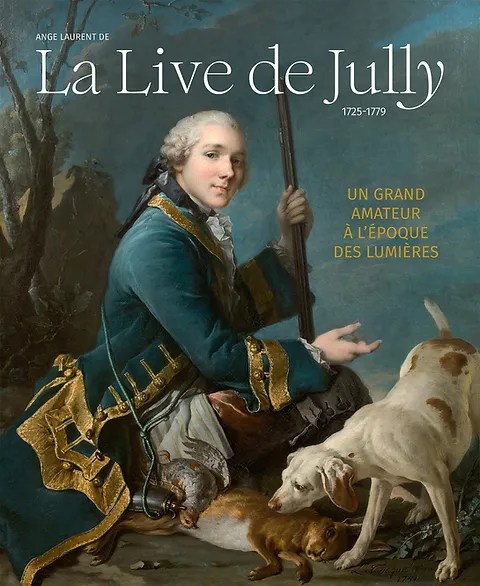 Ange Laurent de La Live de Jully (1725–1779) fut l’une des figures les plus brillantes et les plus attachantes du monde des grands amateurs français de la seconde moitié du XVIIIe siècle. Mécène et ami des artistes de son temps, collectionneur, graveur, musicien et historien, il fut élu, très jeune, membre honoraire ou associé libre de l’Académie royale de peinture et de sculpture, en raison de la qualité des collections qu’il avait réunies et aussi de ses capacités artistiques. Avec le concours des meilleurs spécialistes, cet ouvrage a pour ambition d’embrasser l’ensemble des collections de ce « dénicheur de talents » dans des domaines très divers—peintures, arts graphiques, sculptures, mobilier et objets d’art, livres, coquilles, instruments de musique—collections qui constituent autant de témoignages de son immense curiosité, de son ouverture d’esprit et de sa générosité envers les artistes. Il met également en lumière les milieux familial et intellectuel si stimulants dans lesquels il a baigné et qui expliquent, à bien des égards, la formation de son goût si raffiné et de son extrême sensibilité artistique.
Marie-Laure de Rochebrune est conservateur général au château de Versailles.
New Book | Coade Stone
From Springer:
Howell Edwards and Christopher Brooke, Coade Stone: A History and Analysis (New York: Springer, 2024), 275 pages, ISBN: 978-3031714313, $110.
 The history and nature of artificial stone for use in architecture is a subject still shrouded in myth and misconception. This book aims to lay bare those misconceptions and present a scientific and architectural account of these materials, and especially Coade Stone, the most successful of all, which found great favour during the Georgian period. Many examples of Coade Stone cast sculpture still exist and several key examples are presented in context and as case studies . Eleanor Coade’s artificial stone was so good that many observers could not distinguish it from the natural stone it replaced: the growth in replication of the neo-classical statuary and building adornment required in the late Georgian and Regency period was well satisfied by the use of Coade stone. A holistic evaluation of Coade stone artefacts is undertaken whereby the use of analytical data, historical documentation, invoices, company records, impressed marks and expert connoisseurship will establishthe attribution of Coade stone artefacts, some of which are currently in the unknown category. Several new scientific analyses are presented that demonstrate the true nature of high temperature fired ceramic Coade Stone and allow comparison with other forms of artificial stone, such as the cold cured cementitious variations, which eventually replaced it in the Victorian period.
Howell G. M. Edwards is Professor Emeritus of Molecular Spectroscopy at the University of Bradford. He read Chemistry at Jesus College in the University of Oxford and after completing his BA and BSc degrees he studied for his doctorate in Raman spectroscopy at Oxford with Dr Leonard Woodward and then became a Research Fellow at Jesus College, University of Cambridge. He joined the University of Bradford as a Lecturer in Structural and Inorganic Chemistry, becoming Head of the Department of Chemical and Forensic Sciences, and was awarded a Personal Chair in Molecular Spectroscopy in 1996. He has published over 1350 research papers in Raman spectroscopy and the characterisation of materials, along with six books on the application of this analytical technique to art, archaeology, and forensic science. He has had a lifelong interest in porcelains and the industrial archaeology, excavation, and the preservation of early porcelain manufactory sites.
Christopher J. Brooke studied for a BSc (Hons.) in Archaeological Sciences at the University of Bradford, specializing in geophysics, environmental archaeology, and palaeopathology, followed by a PhD at the University of Nottingham in the field of archaeological remote sensing for historic buildings analysis. He has worked in a wide range of organizations from central and local government, through university teaching appointments and industry, a major charity, and freelance consultancy. A Fellow of the Society of Antiquaries, a Fellow of the Royal Historical Society, an Associate Fellow of the Remote Sensing and Photogrammetry Society, and a member of many professional organizations both nationally and in the UK East Midlands, he serves on a large number of advisory boards and committees. Dr Brooke’s principal research specializations are in electromagnetic remote sensing, nondestructive archeological site survey, record photography, mathematical image processing, environmental study, spectroscopy, the history and archaeology of churches, and the recording and conservation of historic buildings. He has lectured extensively at academic institutions throughout the UK and is currently Honorary Associate Professor in Medieval History and Church Archaeology at the University of Nottingham, and Visiting Fellow in Remote Sensing at Nottingham Trent University.
c o n t e n t s
1 Introduction: Coade Artificial Stone and Its Marks
2 Factors That Influenced the Success of Coade Stone
3 Artificial Stone: The Precursors, Contemporaries, and Later Variations of Coade Stone
4 Historical Myths and Anomalies Associated with Coade Stone
5 The Mineralogy of Fired Ceramics
6 The Analysis of Coade Stone Artefacts
7 Case Studies: Coade Stone
8 Conclusions
Appendices
Glossary
Index
Drayton Hall Awarded Decorative Arts Trust Funding Prize
From the press release (25 November 2024) . . .
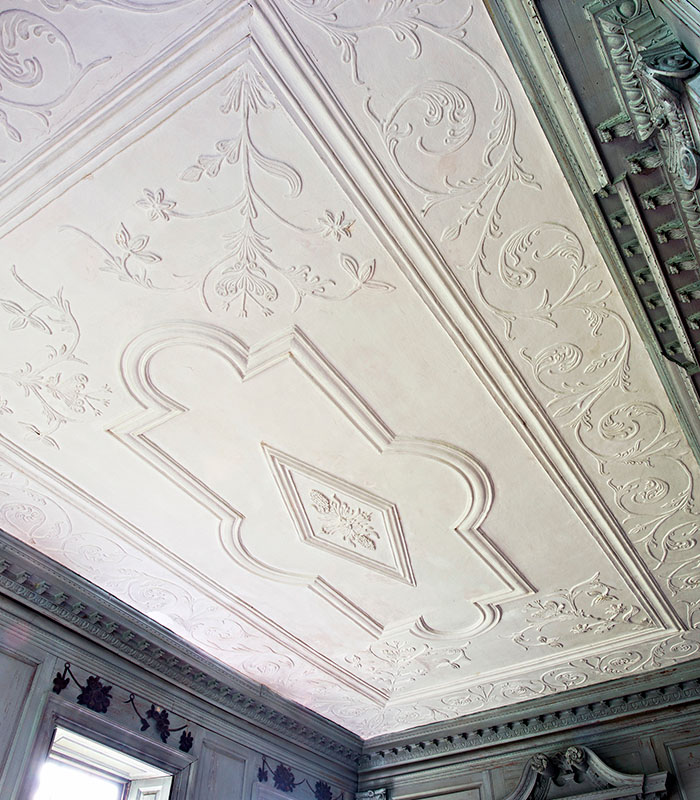
Drawing Room Ceiling, Drayton Hall (Charleston, South Carolina; photo by Willie Graham).
The Decorative Arts Trust is thrilled to announce that the 2024 Prize for Excellence and Innovation will be awarded to Drayton Hall Preservation Trust in Charleston, South Carolina, for projects to include the conservation of the plaster ceiling in the house’s Great Hall, the investigation of the plaster ceiling in the Drawing Room, and digital and in-person access to these spaces during conservation treatment and the results of the interventions. Drayton Hall, built 1738–50, is the earliest example of Palladian architecture in the United States. Surviving in relatively untouched condition, and displayed devoid of furnishings, Drayton Hall offers architectural historians the rare opportunity to study materials and designs from every period in the house’s history.
The Decorative Arts Trust Prize for Excellence and Innovation, founded in 2020, funds outstanding projects that advance the public’s appreciation of decorative art, fine art, architecture, or landscape. The Prize is awarded to a nonprofit organization in the United States for a scholarly endeavor, such as museum exhibitions, print and digital publications, conservation and preservation projects, and online databases. Past recipients include the Concord Museum; Cooper Hewitt, Smithsonian Design Museum; the Black Craftspeople Digital Archive; and Craft in America.
More information about the Prize for Excellence and Innovation is available here»
Exhibition | The Art of Dining: Food Culture in the Islamic World
I saw the exhibition last weekend at the DIA: so many amazing objects, especially from the Middle Ages, but also plenty of 18th-century treats (with a stunning catalogue). –CH
The Art of Dining: Food Culture in the Islamic World
LACMA, Los Angeles, 17 December 2023 — 4 August 2024
Detroit Institute of Arts, 22 September 2024 — 5 January 2025
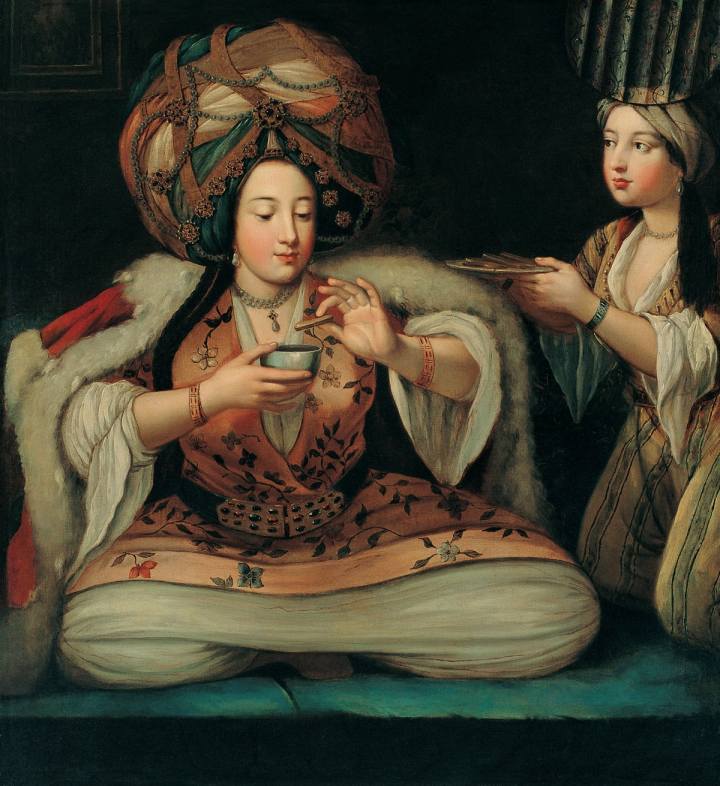
Unknown painter (French School), Enjoying Coffee, Turkey, first half of the 18th century (Istanbul: Pera Museum).
The Art of Dining brings together more than 200 works from the Middle East, Egypt, Central and South Asia, and beyond to explore connections between art and cuisine from ancient times to the present day. Paintings of elaborate feasts, sumptuous vessels for food and drink, and historical cookbooks show how culinary cultures have thrived in the Islamic world for centuries. Highlighting the relationship of these works to preparing, serving, and enjoying food, the exhibition engages multiple senses and invites us to appreciate the pleasures of sharing a meal.
Originally organized by the Los Angeles County Museum of Art (LACMA), the exhibition includes works from 30 public and private collections from across the U.S., Europe, and the Middle East, and 16 from the DIA’s collection.
Linda Komaroff, ed., Dining with the Sultan: The Fine Art of Feasting (DelMonico Books, 2023), 375 pages, ISBN: 978-1636810881, $85.
New Book | Goethe, His Faustian Life
From Bloomsbury:
A. N. Wilson, Goethe, His Faustian Life: The Extraordinary Story of Modern Germany, a Troubled Genius, and the Poem that Made Our World (London: Bloomsbury Continuum, 2024), 416 pages, ISBN: 978-1472994868, $35.
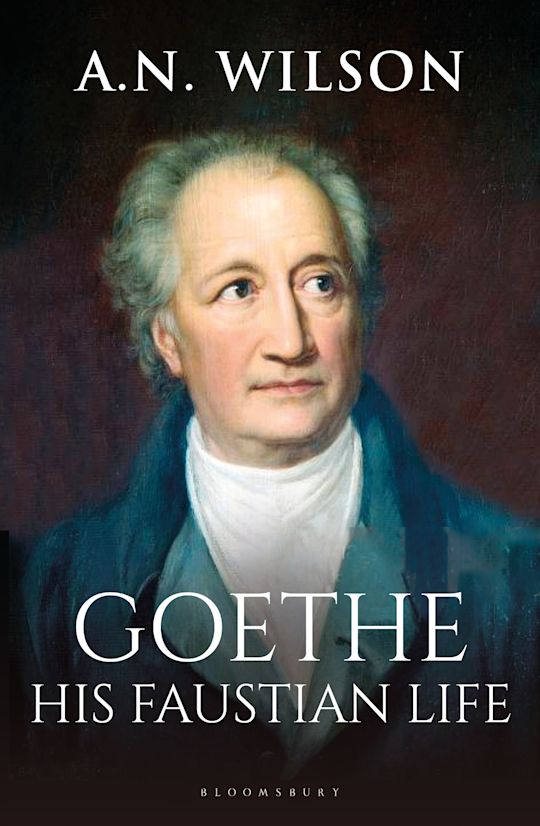 Goethe was the inventor of the psychological novel, a pioneer scientist, great man of the theatre, and a leading politician. As A. N. Wilson argues in this groundbreaking biography, it was his genius and insatiable curiosity that helped catapult the Western world into the modern era. Wilson tackles the life of Goethe with characteristic wit and verve. From his youth as a wild literary prodigy to his later years as Germany’s most respected elder statesman, Wilson hones in on Goethe’s undying obsession with the work he would spend his entire life writing—Faust. Goethe spent over 60 years writing his retelling of Faust, a strange and powerful work that absorbed all the philosophical questions of his time as well as the revolutions and empires that came and went. It is his greatest work, but as Wilson explores, it is also something much more—it is the myth of how we came to be modern.
A. N. Wilson is a Fellow of the Royal Society of Literature and holds a prominent position in the world of literature and journalism. He is a prolific and award-winning biographer and celebrated novelist, having written biographies of Tolstoy, C. S. Lewis, Milton, and Hilarire Belloc. In 2007, Wilson’s novel, Winnie and Wolf, was longlisted for the Man Booker Prize, and in 2020 The Mystery of Charles Dickens was published to great critical acclaim. He lives in North London.
New Book | A Life of Leibniz in Seven Pivotal Days
From Norton, a translation of the original German, Die beste aller möglichen Welten: Gottfried Wilhelm Leibniz in seiner Zeit, which appeared in 2022:
Michael Kempe, The Best of All Possible Worlds: A Life of Leibniz in Seven Pivotal Days, translated by Marshall Yarbrough (New York: Norton & Co., 2024), 304 pages, ISBN: 978-1324093947, $32.
 A biography of the polymath Gottfried Wilhelm Leibniz told through seven critical days spanning his life and revealing his contributions to our modern world.
Gottfried Wilhelm Leibniz (1646–1716) was the Benjamin Franklin of Europe, a ‘universal genius’ who ranged across many fields and made breakthroughs in most of them. Leibniz invented calculus (independently from Isaac Newton), conceptualized the modern computer, and developed the famous thesis that the existing world is the best that God could have created.
In The Best of All Possible Worlds, historian and Leibniz expert Michael Kempe takes us on a journey into the mind and inventions of a man whose contributions are perhaps without parallel in human history. Structured around seven crucial days in Leibniz’s life, Kempe’s account allows us to observe him in the act of thinking and creating, and gives us a deeper understanding of his broad-reaching intellectual endeavors. On 29 October 1675, we find him in Paris, diligently working from his bed amid a sea of notes, and committing the integral symbol—the basis of his calculus—to paper. On 17 April 1703, Leibniz is in Berlin, writing a letter reporting that a Jesuit priest living in China has discovered how to use Leibniz’s binary number system to decipher an ancient Chinese system of writing. One day in August 1714, Leibniz enjoys a Viennese coffee while drawing new connections among ontology and biology and mathematics. The Best of All Possible Worlds transports us to an age defined by rational optimism and a belief in progress, and will endure as one of the few authoritative accounts of Leibniz’s life available in English.
Michael Kempe is the director of the Leibniz Research Center and the Leibniz-Archiv in Hannover and teaches early modern history at the University of Konstanz.
Marshall Yarbrough is a writer, musician, and German-to-English translator. He lives in Brooklyn, New York.










 Enfilade
leave a comment