Dresden’s Royal East Asian Porcelain Catalogue Now Available
A decade in development, the online catalogue for Dresden’s Royal East Asian Porcelain collection was recently launched by Staatliche Kunstsammlungen Dresden:
The Dresden Porcelain Project
Researching the Royal East Asian Collection and the Japanese Palace Inventories
From 2014 to 2024, the Porzellansammlung, Staatliche Kunstsammlungen Dresden, has been the subject of a collaboration between an international team of specialists on an extensive research project aimed at cataloguing the collection of East Asian porcelain owned by Augustus the Strong (1670–1733). Of the initially more than 29,000 Chinese and Japanese ceramic objects, about 8200 are still extant in the Porzellansammlung today. The Japanese Palace Inventories were transcribed, translated and analysed as part of the research into the objects’ provenance.
The project’s findings are available here on the digital platform. The Royal Dresden Porcelain Collection is a publication of the Porzellansammlung. It showcases the objects and emphasises the historical context of the collection.
Team
Cora Würmell, Project Leader
Christiaan J. A. Jörg, Academic Supervisor
Karolin Randhahn, Research Associate
Ruth Sonja Simonis, Research Associate
Advisory Board
John Ayers
Helen Espir
Jessica Harrison-Hall
Peter Lam
Hiroko Nishida
Kōji Ōhashi
Rosemary Scott
Authors
Caroline Allen, Masaaki Arakawa, Eline van den Berg, Denise A. Campbell, Jan van Campen, Teresa Canepa, Menno Fitski, Ron Fuchs II, Tomoko Fujiwara, Ernst Geppert, Christiaan J. A. Jörg, Rose Kerr, Regina Krahl, Anette Loesch, Hiroko Nishida, Kōji Ōhashi, Linda Pomper, Karolin Randhahn, Maura Rinaldi, Miki Sakuraba, William R. Sargent, Ruth Sonja Simonis, Filip Suchomel, Daniel Suebsman, Yue Sun, Heike Ulbricht, Ching-Ling Wang, Liang-Chung Wang, Wen-Ting Wu, Cora Würmell, Pei-Chin Yu
More information and additional credits can be found here»
Highlights Tour | American Furniture Study Center at Yale

View of case furniture in the Leslie P. and George H. Hume American Furniture Study Center
(New Haven: Yale West Campus)
◊ ◊ ◊ ◊ ◊
From the Yale University Art Gallery:
Furniture Study Highlights Tour
Hume American Furniture Study Center, New Haven, first Fridays of each month, 5 January — 3 May 2024
Join us at 12.30 on the first Friday of the month for a one-hour, in-person tour of the Leslie P. and George H. Hume American Furniture Study Center at the Collection Studies Center, Yale West Campus. See more than 1,300 examples of American furniture and clocks from the 17th century to the present in this facility, which opened in 2019, as well as an outstanding collection of contemporary wood art. Registration is required, and space is limited. Registered visitors will receive a confirmation email including directions to the site.
Online Lectures | David Pearson on Cambridge Bookbinding, 1450–1775
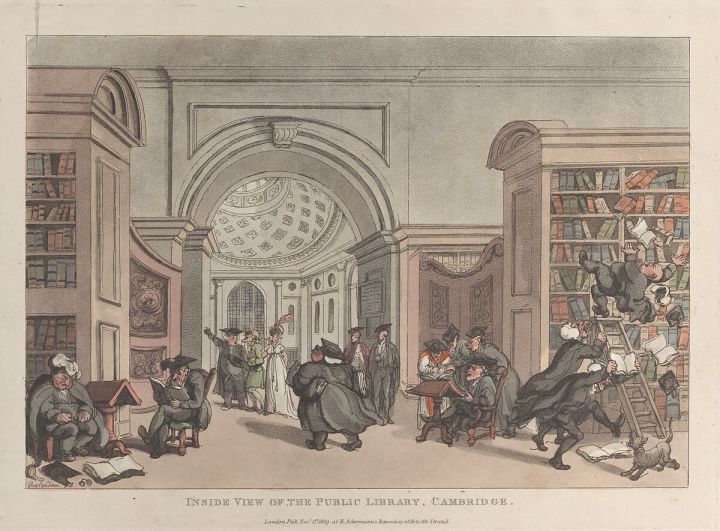
Thomas Rowlandson, Inside View of the Public Library, Cambridge, published in London by Rudolph Ackermann, 9 November 1809, hand-colored etching and aquatint, plate: 23 × 32 cm (New York: The Metropolitan Museum of Art, 59.533.1635).
◊ ◊ ◊ ◊ ◊
As recently announced on the SHARP listserv (Society for the History of Authorship, Reading, and Publishing) . . .
David Pearson | Cambridge Bookbinding, 1450–1775
Online and in-person, Robinson College, Cambridge, 21–23 November 2023
The Sandars Readership in Bibliography is one of the most prestigious honorary posts to which book historians, librarians, and researchers can be appointed. Those elected deliver a series of lectures on their chosen subject. This year’s Reader, Dr David Pearson, will address the topic of Cambridge bindings.
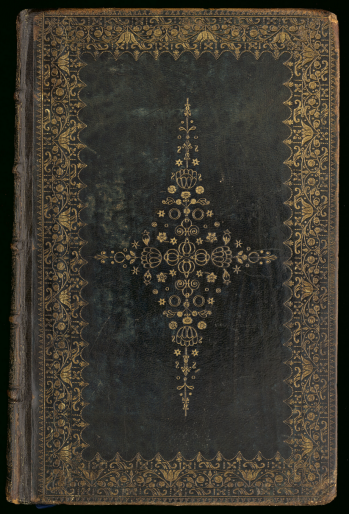
The Book of Common Prayer, and Administration of the Sacraments. . . together with the Psalter (Cambridge: John Baskerville for B. Dod in London, 1761), with gilt-tooled binding from the workshop of Edwin Moore, ca.1761–65 (TC.77.1), pasteboards, covered with black goatskin, gilt-tooled; rebacked, preserving most of the original gilt-tooled spine.
Cambridge has been a leading centre for binding books (as well as for printing and selling them) for many centuries, and books bound in Cambridge are found all over the world. How do we recognise them, and what can they tell us? The 2023 lectures will build on a project aiming, for the first time, to produce a comprehensive overview of Cambridge binding work through the early modern period. They will explore the evolution of the craft in its broader context, and the questions we should ask when we identify books bound in Cambridge. Cambridge Bookbindings 1450–1770, featuring 45 bookbindings in Cambridge during the handpress period using the collections of Cambridge University Library, is available on the Cambridge Digital Library.
The three lectures will be held in-person at Robinson College, live-streamed, and recorded. Click on the lectures below for more information and to register (please register for each lecture you hope to attend).
• Tuesday, 21 November, 5pm, followed by a drinks reception at the University Library
• Wednesday, 22 November, 5pm
• Thursday, 23 November, 5pm
David Pearson was formerly Director of Culture, Heritage, and Libraries for the City of London Corporation. He is a Senior Fellow of the Institute of English Studies at the University of London, was Lyell Reader in Bibliography at Oxford (2017–18), and teaches regularly on the Rare Book Schools in London and Virginia. His books include Provenance Research in Book History (new edition, 2019), English Bookbinding Styles, 1450–1800 (2005), Book Ownership in Stuart England (2021), and Speaking Volumes: Books with Histories (2022). In 2020 he launched the Book Owners Online database.
◊ ◊ ◊ ◊ ◊
Of the binding of The Book of Common Prayer pictured above, Dr Pearson writes,
The name which is most immediately associated with Cambridge bookbinding work of the middle decades of the eighteenth century, and whose workshop produced many handsomely-decorated bindings, is Edwin Moore. . . The ornamental design which became fashionable in England for upmarket binding work, from about 1720, is what has come to be known as ‘Harleian style’, characterised by a large central lozenge-shaped pattern made up of small tools symmetrically arranged, surrounded by a wide border of rolls and/or other tools around the perimeters. Moore’s better quality work conformed very much to this idea, and numerous bindings like this survive, made from the 1740s, 50s and 60s. . .
Online Resource | Art Collection of the Académie, 1648–1793

From the DFK Paris:
La Collection d’Art de l’Académie Royale de Peinture et de Sculpture au Louvre, 1648–1793
Deutsches Forum für Kunstgeschichte, Paris
The DFK Paris is pleased to present the database of the The Art Collection of the Royal Academy of Painting and Sculpture at the Louvre / La Collection d’Art de l’Académie Royale de Peinture et de Sculpture au Louvre. Based on the inventories of Nicolas Guérin (1715) and Antoine-Nicolas Dezallier d’Argenville (1781), the database lists 653 paintings, sculptures, prints, and plaster casts assembled by the Académie royale de peinture et de sculpture in the century and a half of its existence (1648–1793). It establishes their present-day locations and their locations in the eighteenth-century Louvre. The database provides useful links to the original texts of the inventories and to the Procès-verbaux. It is available in English and in French and would be of great use to scholars of seventeenth- and eighteenth-century French art.
This database is the result of a collaboration between the DFK Paris, Sofya Dmitrieva, Anne Klammt (Hannah Arendt Institute for Totalitarianism Studies), Moritz Schepp (CEO Wendig.io), the Centre Dominique-Vivant Denon (Musée du Louvre), the École nationale des Beaux-Arts (ENSBA), and the Institut national d’histoire de l’art (INHA). It is part of the DFK’s research project, La collection d’art de l’Académie royale de peinture et de sculpture, led by Markus A. Castor, that explores the history and functions of the Académie’s art collection.
Online Resource | Glossary of Early Modern Popular Print Genres

◊ ◊ ◊ ◊ ◊
As recently noted on the SHARP listserv (Society for the History of Authorship, Reading, and Publishing) . . .
Jeroen Salman and Andrea van Leerdam, eds., Glossary of Early Modern Popular Print Genres (Utrecht University, 2023), link»
This glossary describes popular print genres of the early modern period (ca. 1450–1850) from a European perspective, covering terms in English, Dutch, French, German, Italian, and Spanish. It is being developed as part of the project The European Dimensions of Popular Print Culture (EDPOP), led by Dr Jeroen Salman at Utrecht University. The glossary is by no means exhaustive, but is intended to offer an overview of the concepts used in several European countries by experts in the field, as an aid to further research and to offer a state-of-the-art vocabulary for cataloging early modern popular printed materials. As a ‘work-in-progress’, it appears only online, to allow for easy updating. We invite all experts in the field to continue sending us corrections and additions.
More information is available here»
Mary Sheriff’s Articles Compiled at Academia.edu

Michael Yonan passes along word from Keith Luria, the widower of Mary Sheriff, that there is now an Academia webpage where most of Mary’s articles are available for download (43 articles and 1 book review). It is, of course, an extraordinary body of work and incredibly useful to have it all in one place. –CH
Yale Launches LUX to Search Collections
As announced earlier this summer, from Yale News:
Mike Cummings, “17 Million Reasons to Love ‘LUX,’ Yale’s New Collections Search Tool,” Yale News (1 June 2023). Yale introduces LUX, a groundbreaking custom search tool for exploring the university’s unparalleled holdings of artistic, cultural, and scientific objects.
Yale University’s museums, libraries, and archives contain vast troves of cultural and scientific heritage that fire curiosity and fuel research worldwide. Now there’s a simple new way to make astonishing connections among millions of objects.
Starting today, anyone can explore the university’s unparalleled holdings online through LUX: Yale Collections Discovery—a groundbreaking discovery and research platform that provides single-point access to more than 17 million items, including defining specimens of dinosaur fossils, illuminated medieval manuscripts, paintings by Vincent van Gogh and J. M. W. Turner, and the archives of Langston Hughes, Gertrude Stein, and other renowned literary figures.
Free and easy to use, the platform—a powerful kind of database that maps relationships—helps users find clear pathways through the collections and uncover links between objects that might otherwise seem unconnected, such as a fish fossil and an 18th-century sketch of a young woman. Previously there was no easy way to search multiple collections at once or discern associations among the objects within them.
Developed by Yale over the past five years, LUX encompasses the collections of the Yale Center for British Art (YCBA), the Yale University Art Gallery, the Yale Peabody Museum, and Yale University Library, which includes the Beinecke Rare Book and Manuscript Library, the Lewis Walpole Library, and specialized collections devoted to the arts, music, film, history of medicine, and religion. The Mellon Foundation, the nation’s largest funder of the arts and humanities, funded key aspects of the project and was instrumental in its completion. . . .
Ayesha Ramachandran, associate professor of comparative literature in Yale’s Faculty of Arts and Sciences, has experimented with LUX, and calls it a “terrific tool” for teaching and conducting research.
“I was struck by the way LUX is constructed to be a tool of exploration and not just a database,” Ramachandran said. “It is extremely intuitive and conceptually organized to allow you to drill down to learn more about the object of your search.”
New Book | A Biographical Dictionary of RA Students, 1769–1830
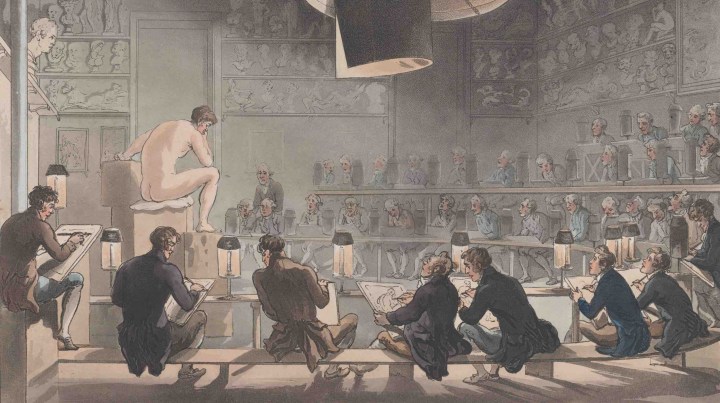
Thomas Rowlandson, Auguste Charles Pugin, and John Bluck, Drawing from Life at the Royal Academy, (detail), 1808, hand-coloured etching and aquatint, sheet: 28 × 34 cm (New York: The Metropolitan Museum of Art, New York, Elisha Whittlesey Collection, 59.533.2084).
◊ ◊ ◊ ◊ ◊
Recently published by The Walpole Society:
Martin Myrone, “A Biographical Dictionary of Royal Academy Students, 1769–1830,” The Walpole Society 84 (2022).
 An essential new reference work for students of 18th- and 19th-century British art, Martin Myrone’s A Biographical Dictionary of Royal Academy Students 1769–1830 records every student known to have attended the RA schools in London during its first six decades. The book contains 1,800 biographical entries and draws on extensive new archival research, offering a comprehensive account of the extraordinarily diverse life stories of former RA students and an unprecedented overview of British art during the Romantic period. It provides a revealing new context for such familiar figures as John Constable, William Blake, and J.M.W. Turner, and a wealth of fresh information about three generations of obscure, forgotten, or previously unknown British painters, sculptors, engravers, and architects. As the first national art school, enjoying Royal patronage, prestige, and prominence, the Royal Academy has a pivotal role in British art history, with almost every notable figure of the era passing through its walls.
Martin Myrone is Head of Grants, Fellowships, and Networks at the Paul Mellon Centre for Studies in British Art, London.
A Biographical Dictionary of Royal Academy Students 1769–1830 is for sale to the general public exclusively through Thomas Heneage Art Books, London. It is also available free online and to download for members of the Walpole Society via their newly launched website, where a growing number of volumes can be found in a dedicated member’s area. Members of the Walpole Society support the research and publication of British art history; membership subscriptions—starting at only £20 annually for a student membership—contribute to the cost of producing new volumes, and, in return, members receive a free copy of the current year’s volume, either as a digital file or a hardback book.
The Walpole Society was formed in 1911 chiefly through the efforts of Alexander Finberg (1866—1939), who had been employed to arrange the paintings in the bequest of J.M.W. Turner. In the course of his work, Finberg saw that many artists of the 18th century lay unrecognised, and established the Society to address this lack of knowledge and to shine a light on earlier periods which were then entirely neglected. The Society was named after Horace Walpole (1717—1797), who published the first history of art in Britain, basing his work on the manuscript notebooks of George Vertue (1684—1756), which he had acquired. One of the first goals of the Walpole Society was to publish the notebooks in their original form, which included much material that Walpole omitted. This took up six volumes as well as an index volume, and was finally completed in 1950. This publication is the single most important source of information concerning art collections, artists, architects, and craftsmen working in Britain before the mid-18th century. They form part of more than 80 volumes that the Society has so far published containing articles, catalogues, and editions of original documents.
In the News | ‘Prize Papers’ in UK’s National Archives
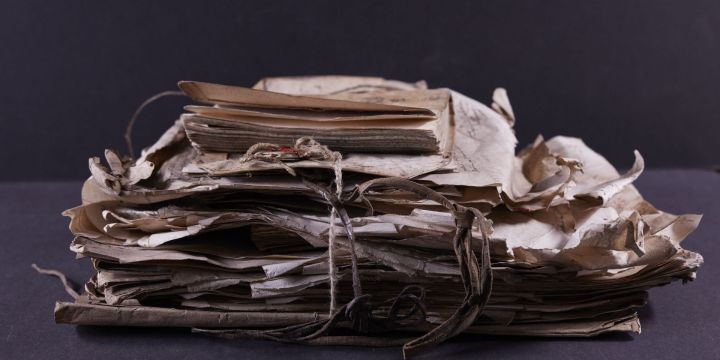
Photograph from The Prize Papers Project.
◊ ◊ ◊ ◊ ◊
From The NY Times (and Art Daily) . . .
Bryn Stole, “Long-Lost Letters Bring Word, at Last,” The New York Times (9 March 2023). Researchers are sorting through a centuries old cache of undelivered mail that gives a vivid picture of private lives and international trade in an age of rising empires.
In a love letter from 1745 decorated with a doodle of a heart shot through with arrows, María Clara de Aialde wrote to her husband, Sebastian, a Spanish sailor working in the colonial trade with Venezuela, that she could “no longer wait” to be with him.
Later that same year, an amorous French seaman who signed his name M. Lefevre wrote from a French warship to a certain Marie-Anne Hoteé back in Brest: “Like a gunner sets fire to his cannon, I want to set fire to your powder.”
Fifty years later, a missionary in Suriname named Lene Wied, in a lonely letter back to Germany, complained that war on the high seas had choked off any news from home: “Two ships which have been taken by the French probably carried letters addressed to me.”
None of those lines ever reached their intended recipients. British warships instead snatched those letters, and scores more, from aboard merchant ships during wars from the 1650s to the early 19th century. . . .
Poorly sorted and only vaguely cataloged, the Prize Papers, as they became known, have now begun revealing lost treasures. Archivists at Britain’s National Archives and a research team at the Carl von Ossietzky University of Oldenburg in Germany are working on a joint project to sort, catalog, and digitize the collection, which gives a nuanced portrait of private lives, international commerce, and state power in an age of rising empires. The project, expected to last two decades, aims to make the collection of more than 160,000 letters and hundreds of thousands of other documents, written in at least 19 languages, freely available and easily searchable online. . . .
The full article is available here»
◊ ◊ ◊ ◊ ◊
From The Prize Papers Project:
The objects in the Prize Papers Collection were impounded by the High Court of Admiralty of the English and later British Royal Navy between 1652 and 1817, and they are now held by The National Archives of the UK.
The Prize Papers were collected a result of the early modern naval practice of prize-taking: capturing ships belonging to hostile powers, dealing severe blows to their military, political and economic capabilities. This practice had its heyday in the 17th and 18th centuries, and so the collection proves a fascinating insight into the formative period of European colonial expansion. . . .
The practice of prize-taking resulted in a vast, extraordinary and partly accidental archive of the early modern world, contains documents from more than 35,000 captured ships, held in around 4088 boxes and 71 printed volumes. The Prize Papers Collection includes at least 160,000 undelivered letters intercepted on their way across the seas, many of which remain unopened to this day. These are accompanied by books and papers on all manner of legal, commercial, maritime, colonial, and administrative matters, often embellished with notes and doodles. Documents in at least 19 different languages have been identified so far, and more languages are likely to be discovered as the project progresses. Alongside this written material is a variety of small miscellaneous artifacts, including jewelry, textiles, playing cards, and keys.
◊ ◊ ◊ ◊ ◊
In June 2022, the project published the first of the Prize Papers from the War of the Austrian Succession (1740–48), with papers from ten French ships.
The project has a YouTube site with a handful of video presentations, including a fascinating session on letterlocking.
Call for Contributions | Antiquitatum Thesaurus Blog
From ArtHist.net, which includes the call in German as well:
Antiquitatum Thesaurus Blog
Berlin-Brandenburg Academy of Sciences and Humanities
Antiquitatum Thesaurus is the youngest research project hosted at the Berlin-Brandenburg Academy of Sciences and Humanities (BBAW). The project investigates drawings and prints of the 17th and 18th centuries based on artefacts from antiquity, and links them with the ancient objects that they document as well as with other evidence of their reception in a digital repository. In addition, we are interested in establishing a platform for an ongoing exchange of information to complement and enrich the database and the digital environment.
Cataloguing the graphic material and the connected artefacts, numerous questions arise, further research areas open up, and interesting connections emerge that cannot always be discussed in depth within the framework of a fixed and preset input mask of a database.
We are very keen to build a long lasting and fruitful contact with the academic community through
• the research tools we make available in our database by cataloguing the graphic material and artefacts represented, and for which we would appreciate your feedback
• an academic dialogue and exchange by blog entries
For our blog section, we are looking for writers interested in contributing essays written to show individual insights and expertise on a specific topic. Blogs are a great way to generate fresh content; they are quick and easy to assimilate, thought provoking, able to generate academic discussion, to take stock of a situation, to give a precise answer to an open question, and much more. In addition, blogs offer the authors the opportunity to introduce themselves to the academic community and draw attention to their websites, academic interests, research fields, and possibly help to establish contacts for cooperation.
Blog contributors could cover one of the following topics, though other proposals are welcome as well:
• methodological approaches in dealing with graphic arts (drawings and prints) in their documentary value
• insights into collectors or personalities involved in either collecting ancient artefacts or exchanging graphic materials
• short reports on ongoing research related to the interests and research areas of Antiquitatum Thesaurus
• short reports on comparable projects dealing with digital humanities
• new finds and discoveries
Some simple guidelines
• Blog postings should be no less than 700 and no more than 2,000 words in length and should contain essential references.
• Postings can include illustrations (no more than 10) provided with captions and rights cleared for website use.
• We would appreciate the provision of links to bibliography (DOI), digital copies and websites (permalink).
• Languages: German, English, Italian, French.
To better evaluate the content of postings and coordinate their sequence, we ask for short proposals first. If you are interested in providing a guest contribution for the Antiquitatum Thesaurus blog page, please send us your application by completing the submission form available at our website. Blog proposals can be submitted at any time to thesaurus@bbaw.de.










 Enfilade
leave a comment