Journal18, Fall 2025 — Clean
The latest issue of J18:
Journal18, Issue #20 (Fall 2025) — Clean
Issue edited by Maarten Delbeke, Noémie Etienne, and Nikos Magouliotis
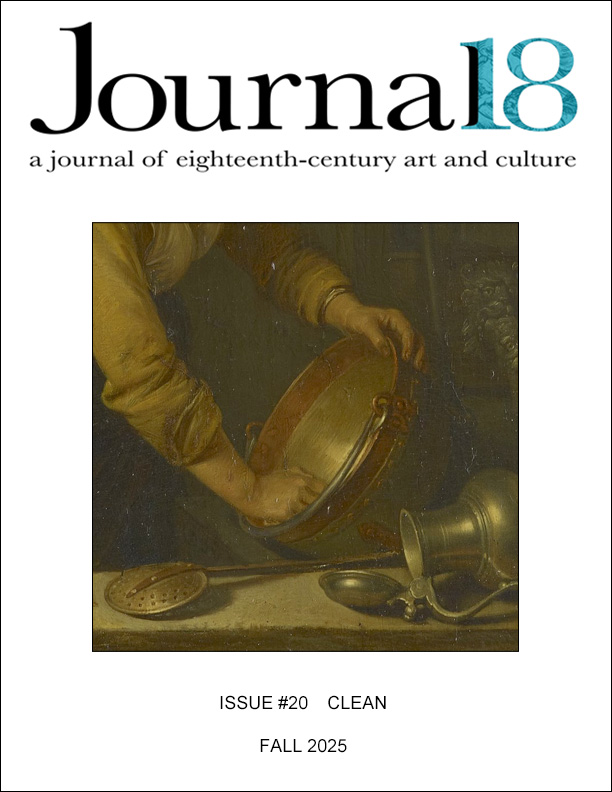 Cleaning is never a neutral act. In the eighteenth century, acts of cleaning became a way to decide what counted as disorder, to separate asserted purity from designated pollution, and to display authority over matter, space, and people. From the forecourt of Paris’s Notre-Dame to the Ganges river in Varanasi to Scotland’s filthy privies, practices of cleaning have shaped political order. Racial issues, colonization, and the management of public space revolved around the idea and implementation of cleaning, which could also involve the deliberate relocation or erasure of human beings.
a r t i c l e s
Economies of Waste: Revolutionary Administration and the Afterlives of the Kings of Notre-Dame — Demetra Vogiatzaki
‘Beneath the Waters of a Universal Ocean’: Containing, Contaminating, and Cleaning the Ganges River in Varanasi — Ushma Thakrar
Piss, Poison, and other Paths between Scotland and England in Caricature since 1745 — Laura Golobish
c o n v e r s a t i o n p i e c e
The Grammar of Cleaning: A Conversation — Maarten Delbeke, Noémie Etienne, and Nikos Magouliotis
All articles are available for free here, along with recent notes & queries:
r e c e n t n o t e s a n d q u e r i e s
Marie Antoinette Style: An Exhibition Catalogue Review — Madeleine Luckel
Room for the Lost Paradise: A Symposium — Jason M. Kelly
Reflections on Mai, Joshua Reynolds, and Eighteenth-Century Art — A Roundtable
Colonial Crossings: A Review — Juan Manuel Ramírez Velázquez
The Burlington Magazine, October 2025
The long 18th century in the October issue of The Burlington:
The Burlington Magazine 167 (October 2025)
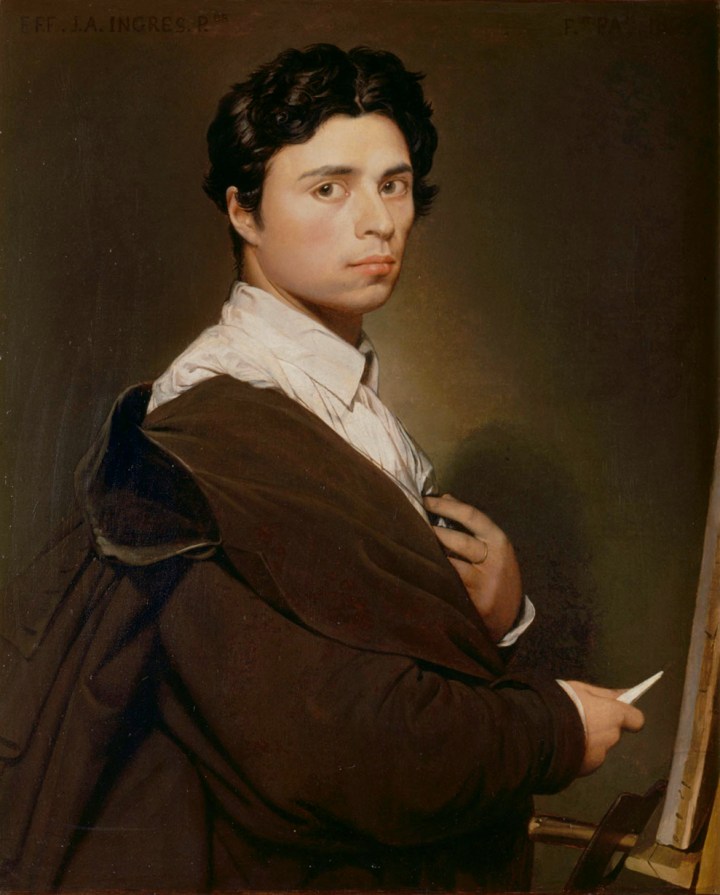
Jean-Auguste-Dominique Ingres, Self-Portrait at the Age of Twenty-Four, 1804, revised 1850–51, oil on canvas, 77 × 61 cm (Musée Condé, Chantilly).
e d i t o r i a l
• “The Story of Art at 75,” p. 959.
Gombrich’s The Story of Art is seventy-five years old this year. Its clarity of conception and expression, civilised values, and the enormous benefits that have undoubtedly resulted from its publication should be a cause for continuing admiration and celebration.
a r t i c l e s
• Sylvain Bédard, “New Proposals about Ingres’s Self-Portrait at the Age of Twenty-Four,” pp. 982–93.
Of all the self-portraits painted by Jean-Auguste-Dominique Ingres, that of 1804 now in the Musée Condé, Chantilly, remains the most discussed. The focus of criticism when it was exhibited in 1806, the painting was taken up again and transformed by the artist during his old age. Here a revised sequence for these modifications is proposed and corrections are made to its earlier history.
• Emma Roodhouse, “Scraps of Genius, Taste and Skill: Works by John Constable in the Mason Album,” pp. 994–1001.
An album emerged at auction in 2020 and was acquired by Colchester and Ipswich Museums. It included hitherto unknown and very early works by John Constable and was compiled by the Mason family, the artist’s relatives in Colchester. These juvenilia are assessed here and placed in the context of Constable’s artistic evolution and his wide social circle.
• Edward Corp, “A Recently Identified Scottish Portrait of Bonnie Prince Charlie by Katherine Read,” pp. 1012–15.
There is a set of three portraits showing the exiled King James III (1701–66) and his two sons, Prince Charles Edward Stuart (1720–88) and Prince Henry Benedict Stuart, Cardinal Duke of York (1725–1807), which are here attributed to Katherine Read (1723–78) and were painted while she was living in Rome between 1750 and 1753. The paintings, which are all in a Somerset collection, have similar dimensions and are framed within painted stone ovals, which have chips and carvings; it seems evident that they were made to be displayed together.
r e v i e w s
• Hugh Doherty, Review of the exhibition catalogue La Rotonde de Saint-Bénigne: 1000 ans d’histoire, ed. by by Franck Abert, Arnaud Alexandre, and Christian Sapin (Faton, 2025), pp. 1033–35.
• Cloe Cavero de Carondelet, Review of the exhibition catalogue Tan lejos, tan cerca: Guadalupe de México en España, ed. by Jaime Cuadriello and Paula Mues Orts (Prado, 2025), pp. 1039–41.
• Elena Cooper, Review of Cristina Martinez and Cynthia Roman, eds., Female Printmakers, Printsellers, and Print Publishers in the Eighteenth Century: The Imprint of Women, c. 1700–1830 (Cambridge: Cambridge University Press, 2024), pp. 1052–53.
• Clive Aslet, Review of Juliet Carey and Abigail Green, eds., Jewish Country Houses (Brandeis University Press, 2024), pp. 1056–57.
o b i t u a r y
• Colin Thom, Obituary for Andrew Saint (1957–2024), pp. 1059–60.
A longstanding editor for the Survey for London, an astute architectural scholar, and a personable educator, Andrew Saint effortlessly combined many skills. His time as a professor in the University of Cambridge’s Department of Architecture shaped numerous future careers, and his contributions to the Survey enriched the history of London’s urban fabric.
The Burlington Magazine, September 2025
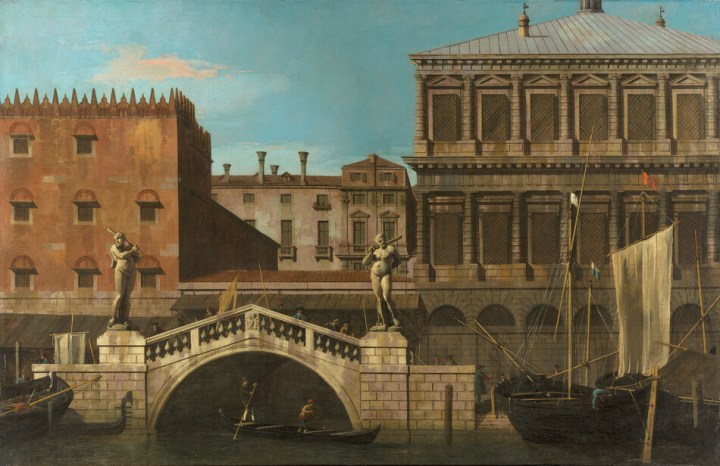
Canaletto, Cappriccio: The Ponte della Pescaria and Buildings in the Quay, Showing Zecca on the Right, 1744(?), oil on canvas, 84 × 130 cm
(Royal Collection Trust, © His Majesty King Charles III 2025)
◊ ◊ ◊ ◊ ◊
The long 18th century in the September issue of The Burlington:
The Burlington Magazine 167 (September 2025) | Italian Art
a r t i c l e s
• Gregorio Astengo and Philip Steadman, “Canaletto’s Use of Drawings of Venetian Buildings by Antonio Visentini,” pp. 896–905.
The use by Canaletto of measured drawings by Antonio Visentini and his assistants is fully considered here for the first time. He ingeniously utilised them at different points in his career to provide images of buildings in both his ‘vedute’ and ‘capricci’. This creative borrowing was possible because both painters formed part of the same successful network of artists, scientists, and patrons.
r e v i e w s
 • Philippe Bordes, Review of the exhibition Duplessis (1725–1802): The Art of Painting Life / L’art de peindre la vie (Inguimbertine, Carpentras, 2025), pp. 924–27.
• Colin Bailey, Review of Katie Scott and Hannah Williams, Artists’ Things: Rediscovering Lost Property from Eighteenth-Century France (Getty Research Institute, 2024), pp. 946–48.
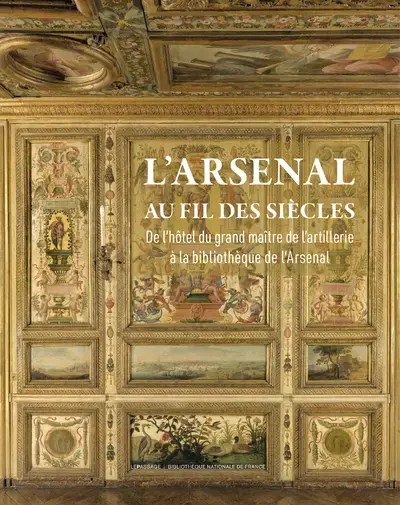
• Karl-Georg Pfändtner, Review of Olivier Bosc and Sophie Guérinot, eds., L’Arsenal au fil des siècles: De l’hôtel du grand maître de l’Artillerie à la bibliothèque de l’Arsenal (Le Passage / BNF, 2024), pp. 951–52.
• Timothy Revell, Review of Lieke van Deinsen, Bert Schepers, Marjan Sterckx, Hans Vlieghe, and Bert Watteeuw, eds., Campaspe Talks Back: Women Who Made a Difference in Early Modern Art (Brepols: 2024), pp. 952–53.
• Jonathan Yarker, Review of Katherine Jean McHale, Ingenious Italians: Immigrant Artists in Eighteenth-Century Britain (Brepols, 2024, p. 953.
• Conal McCarthy, Review of Deidre Brown, Ngarino Ellis, and Jonathan Mane-Wheoki, Toi Te Mana: An Indigenous History of Māori Art (University of Chicago Press, 2025), pp. 953–54.
Print Quarterly, September 2025
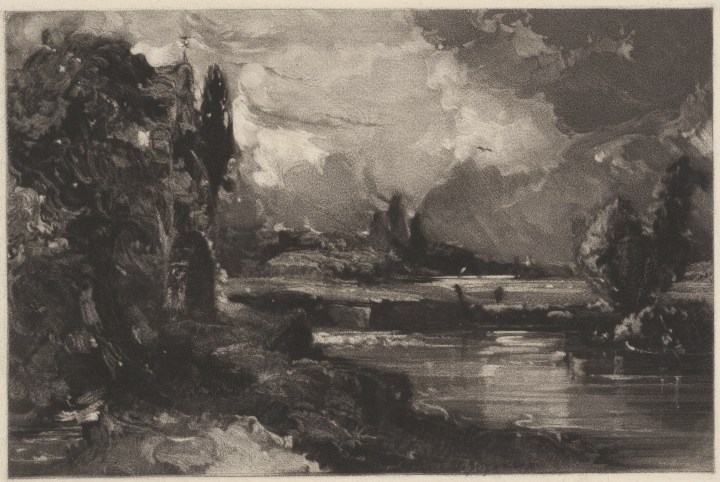
David Lucas, after John Constable, A Mill, 1829, mezzotint, 182 × 250 mm
(Cambridge, Fitzwilliam Museum, inv. P.145-1954)
◊ ◊ ◊ ◊ ◊
The long eighteenth century in the latest issue of Print Quarterly:
Print Quarterly 42.3 (September 2025)
a r t i c l e s
• Elenor Ling and Harry Metcalf, “John Constable’s Working Relationship with David Lucas on the English Landscape Series,” pp. 272–85. This article examines the collaborative partnership between John Constable (1776–1837) and his engraver David Lucas (1802–81) using the mezzotint print series English Landscape as a case study, based particularly on the technical examination of various impressions and plates.
• Niklas Leverenz, “Lithographs from Shanghai of the East Turkestan Engravings, 1890,” pp. 301–06. This short article examines the popularity of the East Turkestan engravings depicting the 1755–60 Qianlong Emperor’s conquest. Leverenz specifically discusses a set of 34 photolithographs printed in 1890 by the photographer Herman Salzwedel (active c. 1877–1904) in Shanghai.
n o t e s a n d r e v i e w s
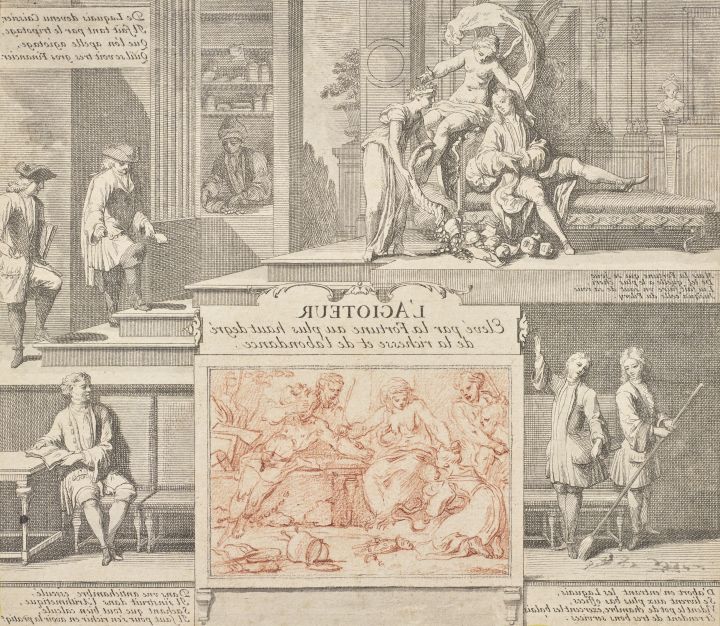
Claude Gillot, The Speculator Raised by Fortune to the Highest Degree of Wealth and Abundance, 1710–11, counterproof of engraving, with additions in red chalk, 255 × 220 mm (Paris, Private collection).
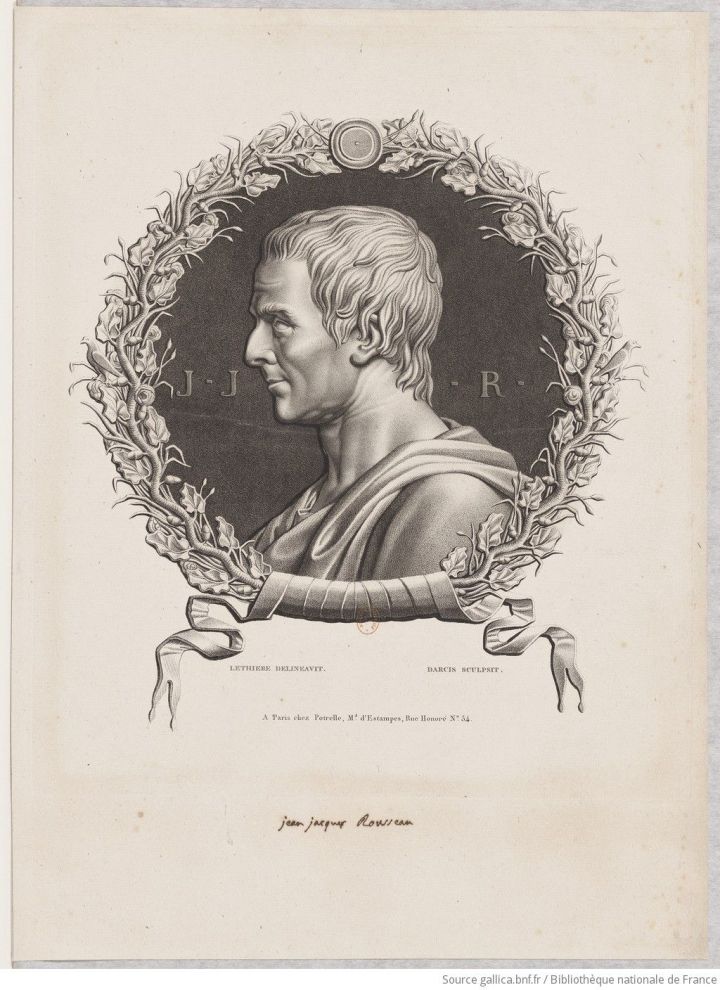
J.-Louis Darcis, after Guillaume Lethière, Portrait of Jean Jacques Rousseau, 1795, engraving, platemark 355 × 305 mm, page 440 × 320 mm (Paris, Bibliothèque Nationale de France).
• Dagmar Korbacher, Review of Andaleeb Badiee Banta, Alexa Griest and Theresa Kutasz Christiensen, eds., Making Her Mark: A History of Women Artists in Europe, 1400–1800 (Goose Lane Editions, 2023), pp. 307–10.
• Daniel Godfrey, Review of Gwendoline de Mûelenaere, Early Modern Thesis Prints in the Southern Netherlands: An Iconological Analysis of the Relationship between Art, Science, and Power (Université Catholique de Louvain, 2022), pp. 310–12.
• Meredith M. Hale, Review of Julie Farguson, Visualising Protestant Monarchy: Ceremony, Art and Politics after the Glorious Revolution, 1689–1714 (The Boydell Press, 2021), pp. 313–15.
• Rena M. Hoisington, Review of Jennifer Tonkovich, Claude Gillot: Satire in the Age of Reason (Paul Holberton, 2023), pp. 315–17.
• Michael Snodin, Review of Orsola Braides, Giovanni Maria Fara, and Alessia Giachery, eds., L’arte di tradurre l’arte: John Baptist Jackson incisore nella Venezia del Settecento (Leo S. Olschki, 2024), pp. 317–19.
• Benito Navarrete Prieto, Review of Ana Hernández Pugh and José Manuel Matilla, Del lapicero al buril. El dibujo para grabar en tiempos de Goya (Museo del Prado, 2023), pp. 320–24.
• Giorgio Marini, Review of Ilaria Miarelli Mariani, Tiziano Casola, Valentina Fraticelli, Vanda Lisanti, and Laura Palombaro, eds., La storia dell’arte illustrata e la stampa di traduzione tra il XVIII e il XIV secolo (Campisano Editore, 2022), pp. 324–28.
• Julie Mellby, Review of Roberta J. M. Olson, Audubon as Artist: A New Look at The Birds of America (Reaktion Books, 2024), pp. 328–29.
• Thea Goldring, Review of Esther Bell and Olivier Meslay, eds., Guillaume Lethière (Clark Art Institute, 2024), pp. 347–52.
Journal of the History of Collections, July 2025
The long eighteenth century in the latest issue:
Journal of the History of Collections 37.2 (July 2025)
a r t i c l e s
• Christian Huemer and Tom Stammers, “Perspectives on the Study of the Art Market,” pp. 215–20.
As interest in art-market studies continues to grow, the editorial team of the Journal of the History of Collections decided to interview Christian Huemer, director of the Belvedere Research Center in Vienna, and editor of the Brill series Studies in the History of Collecting & Art Markets; and Tom Stammers, who is leading the new MA in Art and Business at the Courtauld Institute of Art in London, to find out more about the subject and how it does and does not overlap with the study of collecting.
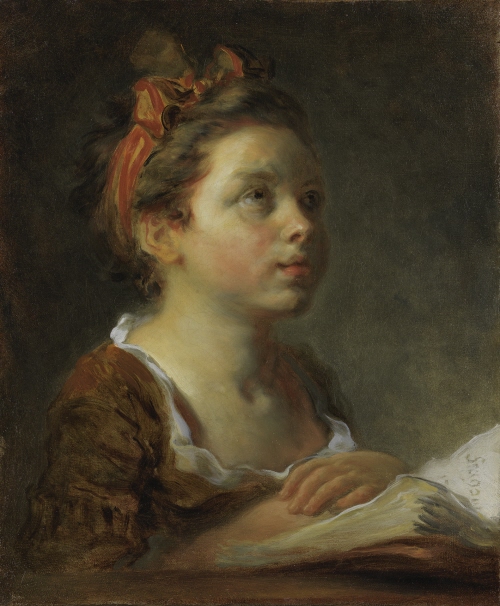
Jean-Honoré Fragonard, Girl Reading a Book, ca. 1770s, oil on canvas (London: The Wallace Collection).
• Yuriko Jackall, “French Art / English Taste: Richard Wallace’s Fragonards,” pp. 269–82.
Although an active collector of a broad range of objects, Sir Richard Wallace is more commonly known for his taste in nineteenth-century pictures, arms and armour, Renaissance maiolica and Kunstkammer objects than for his interest in eighteenth-century French painting. Nonetheless, he did add two significant works by Jean-Honoré Fragonard, Girl Reading a Book and A Boy as Pierrot, to the large and distinguished collection of rococo art that he had inherited from his supposed father, the 4th Marquess of Hertford. This paper focuses on these two acquisitions, and suggests that their purchase represents a calculated move by Wallace to enhance the existing holdings of his collection. By adding these two paintings, he sought not only to augment the art-historical value of the collection that it was now his responsibility to shepherd, but also to improve its appeal within the context of late nineteenth-century British taste.
• Ollie Croker, “The Architect as Agent: Charles Heathcote Tatham at Woburn Abbey and Castle Howard,” pp. 359–72.
The acquisition of Classical antiquities by the British nobility in the late eighteenth and early nineteenth centuries occurred within a complex social network. While the activities of prominent figures within this network have been well documented, those of lesser-known agents remain overlooked. This discussion focuses on Charles Heathcote Tatham (1772–1842), an architect involved in acquiring vases and sculptures for display at Woburn Abbey and Castle Howard. Acquisitions for both houses coincide with Tatham’s work designing galleries for these two estates. This suggests a means of collecting that has been less often studied: an architect is commissioned to acquire objects specifically for the interior decoration of his own architectural creations. Tatham’s dual role as architect and agent raises questions about the nature of these acquisitions, and the cultural associations his clients aimed to establish.
r e v i e w s
 • Wu Yunong, Review of Becky MacGuire, Four Centuries of Blue and White: The Frelinghuysen Collection of Chinese and Japanese Export Porcelain (Ad Ilissvm, 2023), pp. 391–92.
• Adriana Turpin, Review of Ulrike Müller, Private Collectors in Brussels, Antwerp, and Ghent, ca.1780–1914: Between Public Relevance and Personal Pleasure (Brepols, 2024), pp. 392–94.
• Marjorie Schwarzer, Review of Jonathan Conlin, The Met: A History of a Museum and its People (Columbia University Press, 2024), pp. 394–96.
• Jonathan Conlin, Review of Erica Ciallela and Philip Palmer, eds., Belle da Costa Greene: A Librarian’s Legacy (DelMonico Books, 2024) and Vanessa Sigalas and Jennifer Tonkovich, eds., Morgan―The Collector: Essays in Honor of Linda Roth’s 40th Anniversary at the Wadsworth Atheneum Museum of Art (Arnoldsche Verlagsanstalt, 2023), pp. 396–97.
The Burlington Magazine, August 2025
The long 18th century in the August issue of The Burlington:
The Burlington Magazine 167 (August 2025) | Decorative Arts
e d i t o r i a l
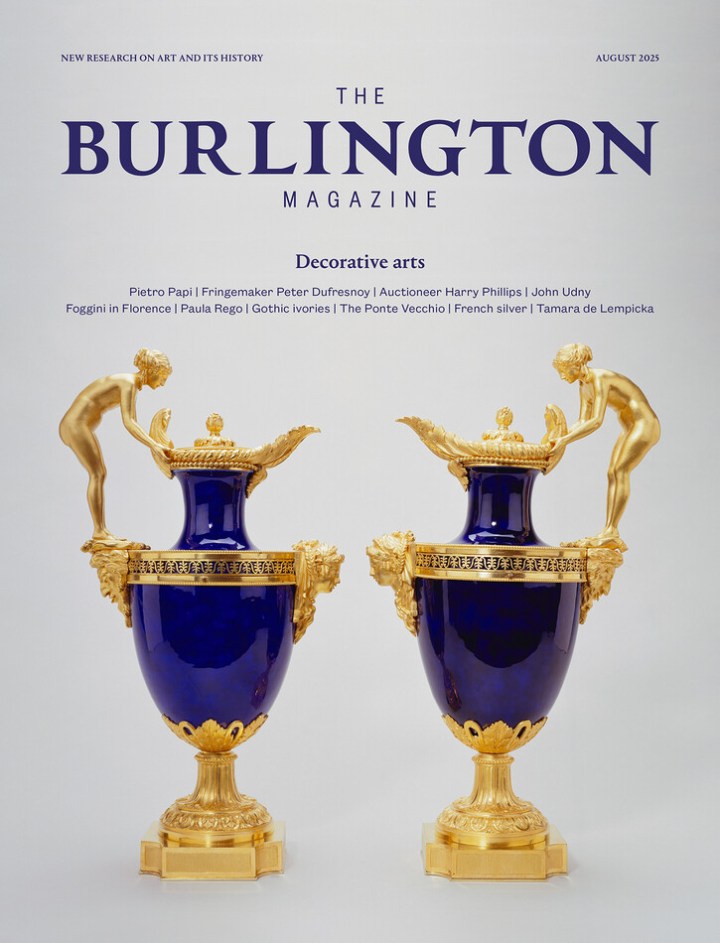 • Studying the Decorative Arts, p. 755.
The serious study of the decorative arts and the pleasures that derive from it have been an important feature of The Burlington Magazine since the early twentieth century. But how healthy is this field of research today? Arguably, it remains a specialised endeavour rather than holding a very prominent place in the mainstream of art-historical studies; and although there are some brilliant advocates for it and encouraging developments, an uncertain future is the key concern, as is the case with so many areas of scholarship in universities, museums and the market.
l e t t e r
• Philip McEvansoneya, “Lefèvre in Ireland,” pp. 756–57. Response to Humphrey Wine’s article in the May issue, “Napoleon Crossing the Alps: British Press Reaction to the London Exhibitions of David, Lefèvre, Wicar, and Lethière,” pp. 450–59.
a r t i c l e s
• Annabel Westman, “Peter Dufresnoy, Fringe and Lacemaker Extraordinaire,” pp. 758–75.
The French fringe and lacemaker Peter Dufresnoy excelled at his craft and trade in Restoration London. A close study of written sources and surviving works by him facilitates a reconstruction of his brilliant career. His patrons included the Duke of Lauderdale (Ham House), Mary Howard, Duchess of Norfolk and 7th Baroness Mordaunt (Drayton House), the Earl of Exeter (Burghley House) and the Dowager Queen Catherine of Braganza.
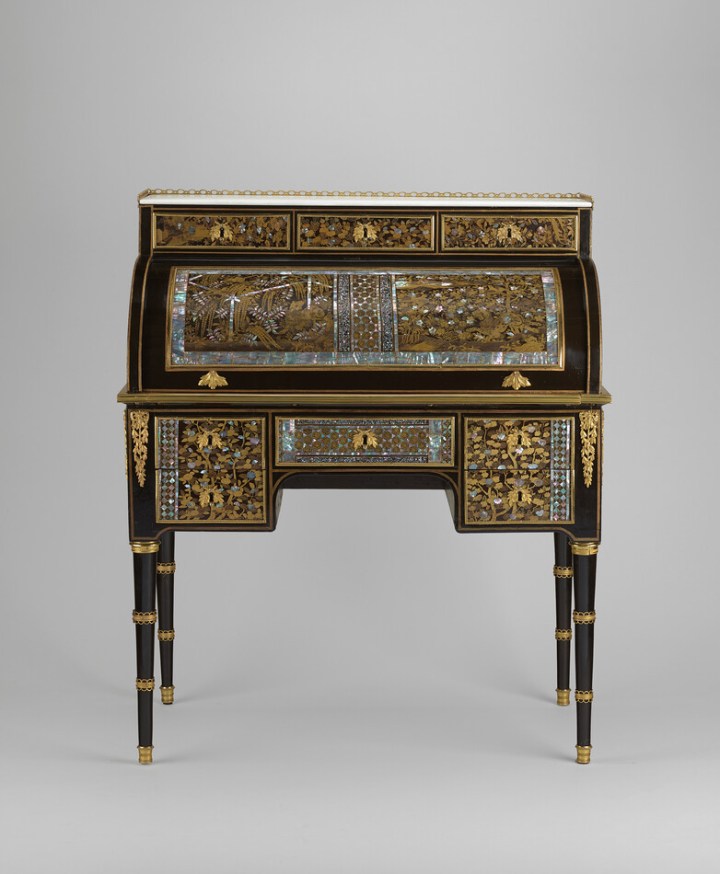
Roll-top desk. France, ca.1790, mounted with 16th-century Japanese lacquer, wood, black lacquer, gold and silver lacquer, mother of pearl, leather and gilt metal mounts, 110 × 95 × 55 cm (Royal Collection Trust; © His Majesty King Charles III 2025). The desk was acquired by the Prince of Wales (the future George IV) from Harry Phillips.
• Helen Jacobsen, “Harry Phillips and the Development of the London Decorative Art Market, 1796–1839,” pp. 776–91.
Analysis of sale catalogues assists in an assessment of the career of Harry Phillips, the least known of London’s significant Regency auctioneers. He specialised in decorative arts sales and his clients included William Beckford, the Prince of Wales and the Earl of Yarmouth. Notable works acquired at his auctions are now in the Royal Collection and the Wallace Collection, London.
• Brendan Cassidy, “John Udny and the ‘Battle of Pavia’ Tapestries, 1762–74,” pp. 792–99.
To commemorate Emperor Charles V’s victory at the Battle of Pavia in 1525, a set of seven tapestries illustrating key moments in the conflict were presented to the emperor by the Netherlands in 1531. They are now in the Museo di Capodimonte, Naples, and their provenance between 1762 and 1774 is established here by connecting them to John Udny, a Scottish diplomat, art collector and dealer.
• Romana Mastrella, “Two Monumental Maiolica Amphoraefrom the Papi Workshop: New Insights and Contexts,” pp. 800–05.
Recently acquired by the Metropolitan Museum of Art, New York, two large ‘istoriato’ maiolica vases [1670] featuring scenes from Torquato Tasso’s poem ‘Gerusalemme Liberata’ illustrate the continued presence of pottery workshops in seventeenth-century Urbania. Two previously unpublished documents help to contextualise their maker, Pietro Papi, as well the Papi family workshop, within the social and economic dynamics of central Italian ceramic production.
r e v i e w s
 • Christopher Baker, “New Collection Displays at the National Gallery, London,” pp. 806–15.
In May 2025, as the final part of its bicentenary celebrations, the National Gallery, London, unveiled extensive new displays of its paintings. Juxtaposing the familiar and the unexpected, they provide fresh perspectives on its outstanding and expanding collection.
• David Pullins, Review of the newly renovated Frick Collection in New York, pp. 816–19.
• Nicola Ciarlo, Review of the exhibition Giovan Battista Foggini: Architetto e scultore granducale (Palazzo Medici Riccardi, Florence), pp. 824–27.
• Charles Saumarez Smith, Review of the new V&A East Storehouse in London, pp. 837–39.
• Kirstin Kennedy, Review of Peter Fuhring, The French Silverware in the Calouste Gulbenkian Collection (Calouste Gulbenkian Foundation, 2023); and Charissa Bremer-David, with contributions by Jessica Chasen, Arlen Heginbotham, and Julie Wolfe, French Silver in the J. Paul Getty Museum (J. Paul Getty Museum, 2023), pp. 840–42.
• Humphrey Wine, Review of Nicolas Lesur, Pierre Subleyras (1699–1749) (Arthena, 2023), pp. 848–49.
• Françoise Barbe, Review of Marco Spallanzani, Otto studi sul vetro a Firenze, Secoli XIV–XVIII (Edifir Edizioni, 2024), pp. 849–50.
• Marika Sardar, Review of Sonal Khullar, ed., Old Stacks, New Leaves: The Arts of the Book in South Asia (University of Washington Press, 2023), 850–51.
The Burlington Magazine, July 2025
The long 18th century in the July issue of The Burlington:
The Burlington Magazine 167 (July 2025)
e d i t o r i a l

Maria van Oosterwijck, Vanitas stilleven, ca. 1675, oil on canvas (Amsterdam: Rijksmuseum).
• “The Gallery of Honour,” p. 635. The gallery of honour in the heart of the Rijksmuseum, Amsterdam, has recently welcomed an impressive painting to its walls: Vanitas still life by Maria van Oosterwijck (1630–93). In a compelling sense the artist has long had a place in galleries of honour, as works by her were acquired by Emperor Leopold I, Louis XIV of France, and Cosimo III de’ Medici of Tuscany.
r e v i e w s
• Christian Scholl, “Germany’s Celebration of Caspar David Friedrich’s 250th Anniversary,” pp. 694–701.
In Germany, the 250th anniversary of Caspar David Friedrich’s birth was celebrated with a series of exhibitions. Key among them were those organised by the three museums with the most extensive holdings of the artist’s work: the Hamburger Kunsthalle, the Alte Nationalgalerie, Berlin, and the Staatliche Kunstsammlungen, Dresden. All three focused on stylistic, iconographic and technical aspects of the artist’s work rather than on Friedrich’s life, and each in its own way has thrown fresh light on his complex and enigmatic art.
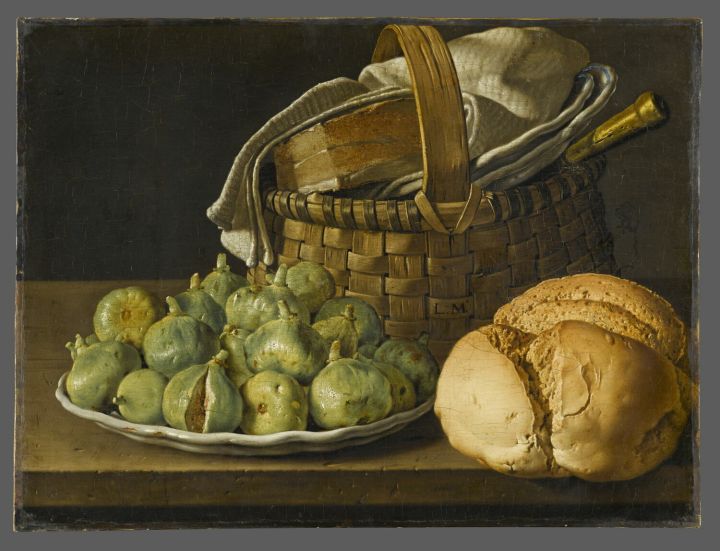
Luis Egidio Meléndez, Still Life with Figs, ca. 1760, oil on canvas (Paris: Musée du Louvre, on view at the Musée Goya, Castres).
• Robert Wenley, Review of the exhibition Wellington’s Dutch Masterpieces (Apsley House, London, 2025), pp. 713–15.
• Christoph Martin Vogtherr, Review of the exhibition Corot to Watteau? On the Trail of French Drawings (Kunsthalle Bremen, 2025), pp. 715–18.
• Elsa Espin, Review of the exhibition Le Louvre s’invite chez Goya (Musée Goya, Castres, 2025), pp. 718–20.
• John Marciari, Review of the exhibition Picturing Nature: The Stuart Collection of 18th- and 19th-Century British Landscapes and Beyond (Museum of Fine Arts, Houston, 2025), pp. 720–22.
• Kee Il Choi Jr., Review of the exhibition Monstrous Beauty: A Feminist Revision of Chinoiserie (The Metropolitan Museum of Art, New York, pp. 722–25.
• Deborah Howard, Review of Mario Piana, Costruire a Venezia: I mutamenti delle tecniche edificatorie lagunari tra Medioevo e Età moderna (Marsilio, 2024), pp. 732–33.
• Isabelle Mayer-Michalon, Review of Christophe Huchet de Quénetain and Moana Weil-Curiel, Étienne Barthélemy Garnier (1765–1849): De l’Académie royale à l’Institut de France (Éditions Faton, 2023), pp. 737–39.
The Burlington Magazine, June 2025
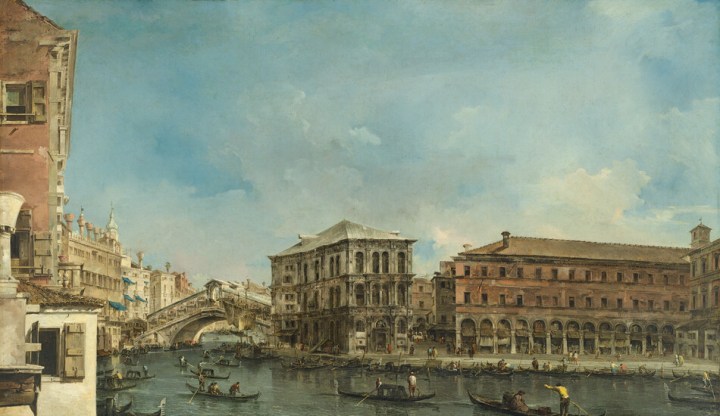
Francesco Guardi, Venice: The Rialto Bridge with the Palazzo dei Camerlenghi, ca.1764, oil on canvas, 120 × 204 cm
(Private collection)
◊ ◊ ◊ ◊ ◊
The long 18th century in the June issue of The Burlington:
The Burlington Magazine 167 (June 2025)
e d i t o r i a l
• “American Gothic,” p. 531.
There are many excoriating ways in which the current administration in Washington might be described; a number of them are perhaps too impolite to appear in a decorous journal such as this. The necessity of restraint does not, however, mean we should refrain from expressing a view on the provocative actions of the new United States government. They are not merely a matter of political theatre that feeds the news cycles, but also a corrosive force that is undermining many valued cultural institutions and having a direct and negative impact on the lives of tens of millions of people.
l e t t e r
• David Wilson, “More on Lorenzo Bartolini’s The Campbell Sisters Dancing a Waltz,” pp. 532–34.
Response to the article in the February issue by Lucy Wood and Timothy Stevens, “The Elder Sisters of The Campbell Sisters: William Gordon Cumming’s Patronage of Lorenzo Bartolini.”
a r t i c l e s
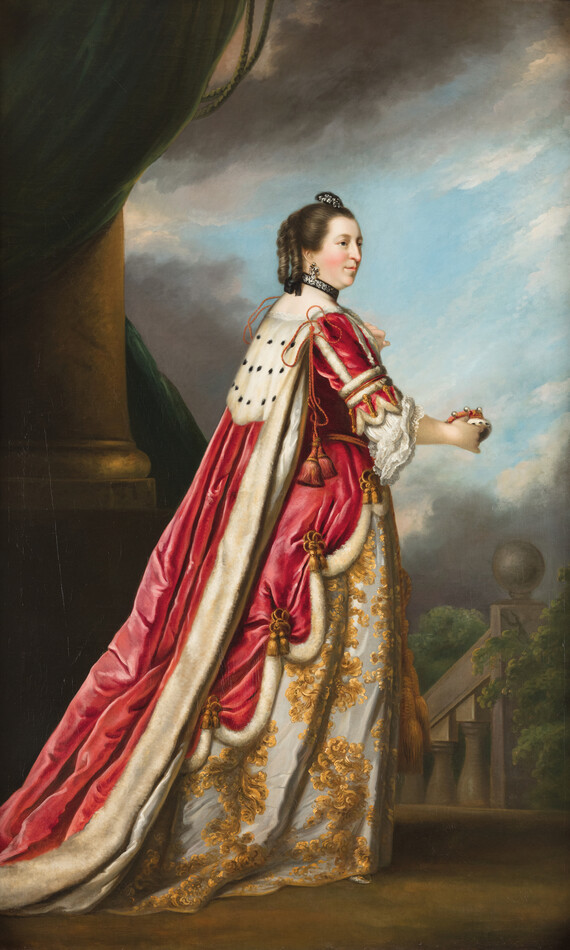
Joshua Reynolds, Elizabeth Percy, Countess (later Duchess) of Northumberland, 1757, oil on canvas, 240 × 148.6 cm. (Collection of the Duke of Northumberland, Syon House, London).
• Justus Lange and Martin Spies, “Two Royal Portraits by Reynolds Rediscovered in Kassel,” pp. 564–71.
Two paintings in the Gemäldegalerie Alte Meister, Kassel, are here identified as portraits by Joshua Reynolds of Princess Amelia, second daughter of George II, and her brother William Augustus, Duke of Cumberland. Both were gifts from the sitters to their sister Mary, Landgravine of Hesse-Kassel, a provenance that sheds new light on the cultural links between England and the landgraviate in the mid-eighteenth century.
• Giovanna Perini Folesani, “An Unpublished Letter by Sir Joshua Reynolds,” pp. 575–78.
in the historical archive of the Accademia di Belle Arti, Florence, there is an autograph letter by Sir Joshua Reynolds dated 20th May 1785 that was sent from London. . . . The text is in impeccable Italian, suggesting that Reynolds copied a translation made by a native speaker. . . .
• Francis Russell, “Guardi and the English Tourist: A Postscript,” pp. 578–83.
Some three decades ago this writer sought to demonstrate in this Magazine that the early evolution of Francesco Guardi (1712–93) as a vedutista could be followed in a number of pictures supplied to English patrons who were in Venice from the late 1750s. Other pieces of the jigsaw now fall into place. . . .
r e v i e w s
• Christoph Martin Vogtherr, Review of Schönbrunn: Die Kaiserliche Sommerresidenz, edited by Elfriede Iby and Anna Mader-Kratky (Kral Verlag, 2023), pp. 614–16.
• Steven Brindle, Review of Christopher Tadgell, Architecture in the Indian Subcontinent: From the Mauryas to the Mughals (Routledge, 2024), pp. 620–21.
• Stephen Lloyd, Review of ‘What Would You Like?’ Collecting Art for the Nation: An Account by a Director of Collections, edited by Magnus Olausson and Eva-Lena Karlsson (Nationalmuseum Stockholm, 2024), pp. 627–28.
Print Quarterly, June 2025
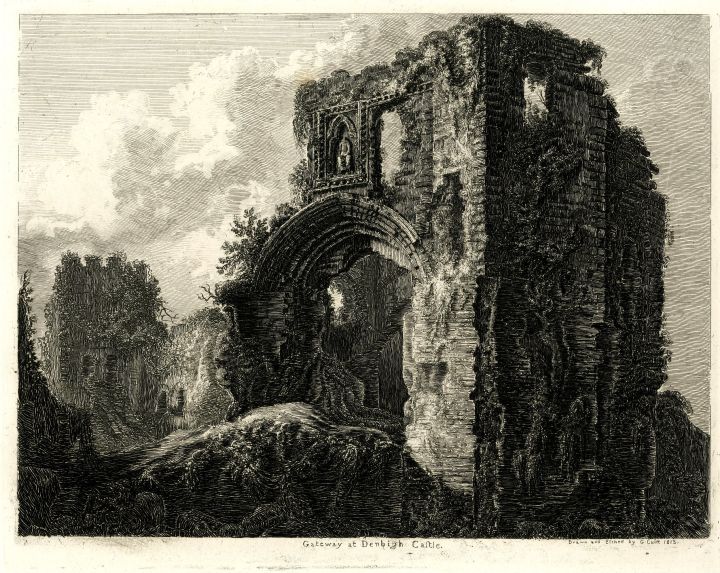
George Cuitt, Gateway at Denbigh Castle, 1813, etching, 252 × 315 mm
(London, British Museum), reproduced on p. 200.
◊ ◊ ◊ ◊ ◊
The long eighteenth century in the latest issue of Print Quarterly:
Print Quarterly 42.2 (June 2025)
a r t i c l e s
• Jane Eade, “A Mezzotint by Jacob Christoff Le Blon (1667–1741) at Oxburgh Hall,” pp. 143–53. This article examines a newly discovered impression of Jacob Christoff Le Blon’s colour mezzotint after Sir Anthony van Dyck’s (1599–1641) portrait of The Three Eldest Children of Charles I at Windsor Castle. The author discusses Le Blon’s invention of his revolutionary printing technique, the print’s distribution history, the operations of Le Blon’s workshop known as the ‘Picture Office’, as well as the circumstances surrounding the Oxburgh Hall impression, including its recent conservation treatment.
• Stephen Bann, “Abraham Raimbach and the Reception of Prints after Sir David Wilkie in France,” pp. 154–67. This article establishes the premise that Sir David Wilkie (1785–1841) introduced a new style of narrative painting in England that would prove influential for painting throughout Europe. It was previously thought that Paul Delaroche (1797–1856) popularized this new narrative style a couple of decades later in France. Since the French public had no local access to Wilkie’s paintings, it is here shown that it was the reproductive engravings of Abraham Raimbach that brought Wilkie to their attention. In doing so, this idea challenges the centrality of Delaroche’s sole influence on European painting.
• Paul Joannides, “John Linnell, Leonardo Cungi and the Vault of the Sistine Chapel,” pp. 168–84. This article discusses John Linnell’s (1792–1882) mezzotints after the Sistine Chapel ceiling and the recently discovered drawings on which the prints were based. The drawings, once a single sheet, are here attributed to Leonardo Cungi (1500/25–69); in its entirety, it is the earliest known copy to show the complete ceiling in full detail.
n o t e s a n d r e v i e w s
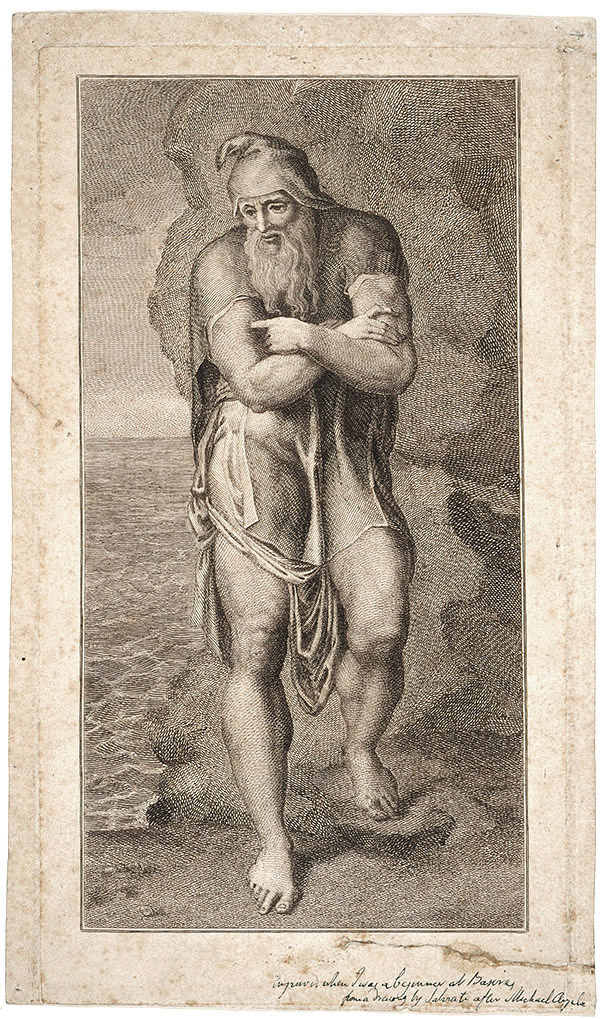
William Blake, Joseph of Arimathea among the Rocks of Albion, ca. 1773, engraving, 254 × 138 mm (Cambridge, Fitzwilliam Museum), reproduced on p. 192.
• Ulrike Eydinger, Review of Jürgen Müller, Lea Hagedorn, Giuseppe Peterlini and Frank Schmidt, eds., Gegenbilder. Bildparodistische Verfahren in der Frühen Neuzeit (Deutscher Kunstverlag, 2021), pp. 185–87.
• Nigel Ip, Review of Owen Davies, Art of the Grimoire (Yale University Press, 2023), pp. 187–89.
• Antony Griffiths, Review of Mario Bevilacqua, ed., Edizione Nazionale dei Testi delle Opere di Giovanni Battista Piranesi. I. Opere giovanili, ‘Vedute di Roma’, ‘Pianta di Roma e Campo marzo’ (De Luca Editori d’Arte, 2023), pp. 191–92.
• Mark Crosby, John Barrett and Adam Lowe, Note on William Blake as an apprentice engraver, pp. 192–93.
• Ersy Contogouris, Review of Pascal Dupuy, ed. De la création à la confrontation. Diffusion et politique des images (1750–1848) (Presses Universitaires de Rouen et du Havre, 2023), pp. 194–95.
• Cynthia Roman, Review of David Atkinson and Steve Roud, Cheap Print and Street Literature of the Long Eighteenth Century (Open Book Publishers, 2023), pp. 197–98.
• Sarah Grant, Review of Peter Boughton and Ian Dunn, George Cuitt (1779–1854), ‘England’s Piranesi’: His Life and Work and a Catalogue Raisonné of His Etchings (University of Chester Press, 2022), pp. 199–201.
• Timon Screech, Review of Akiko Yano, ed., Salon Culture in Japan: Making Art, 1750–1900 (British Museum Press, 2024), pp. 201–03.
• Bethan Stevens, Review of Evanghelia Stead, Goethe’s Faust I Outlined: Moritz Retzsch’s Prints in Circulation (Brill, 2023), pp. 240–43.
The Burlington Magazine, May 2025
The long 18th century in the May issue of The Burlington:
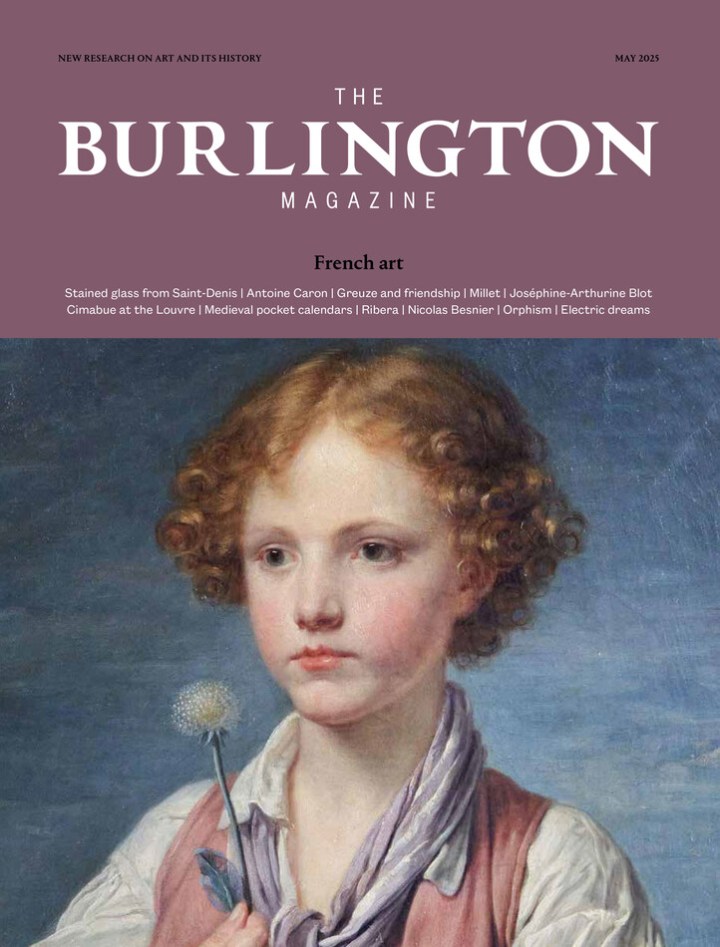
The Burlington Magazine 167 (May 2025) | French Art
 e d i t o r i a l
• “Fashionistas,” p. 427.
The costume institute and its annual gala in May at the Metropolitan Museum of Art, New York (the Met), have become fixtures on the museum world’s map and calendar. Whether you delight in them or are bemused by the spectacle they provide, or indeed try and take no notice at all, they are hard to ignore. The alignment they represent between fashion history, contemporary celebrity and the gravitas of a major museum is immensely beneficial in terms of fundraising and profile.
l e t t e r
• “A Sleeping Apostolado at Wentworth Woodhouse,” pp. 428–29.
We are launching an appeal for the conservation, reframing, and rehanging of an important set of seventeenth-century paintings. We are making this appeal in honour of the art historian Alastair Laing, who died aged seventy-nine in 2024. It was he who identified the artist of this series as the Flemish painter Gérard Seghers (1591–1651). . . . By 1870 the thirteen paintings were framed in groups and fixed against the walls, as they are now, probably to give a more church-like feel to the simple prayer-book chapel of 1736, with its panelling and gallery of craved, unstained oak.
a r t i c l e s
• Yuriko Jackall, John Delaney, and Michael Swicklik, “Friendship Tokens: Jean-Baptiste Greuze’s Paintings for Madame de Pompadour,” pp. 438–49.
Greuze’s paintings, known for their sentimentality and charm, were lauded by the artist’s contemporaries. Two early compositions, Simplicity and Young Shepherd Holding a Flower, were part of the collection of Madame de Pompadour; stylistic and technical analysis of them, in conjunction with another version of Simplicity, expands their early provenance.
• Humphrey Wine, “Napoleon Crossing the Alps: British Press Reaction to the London Exhibitions of David, Lefèvre, Wicar, and Lethière,” pp. 450–59.
Paintings by notable French artists were exhibited in Britain during the first third of the nineteenth century. Reactions to these works published in British newspapers and journals between 1814 and 1830 were often negative in tone and politically motivated. Despite this criticism, these accounts provide a valuable perspective on the art of the period that was shipped across the Channel.
• Daniëlle Kisluk-Grosheide, “Bravery, Ingenuity, and Aerial Post: An Enamelled Bowl by Joséphine-Arthurine Blot,” pp. 470–77.
During the height of the Franco-Prussian War, Gaston Tissandier made a perilous balloon journey from Paris to deliver correspondence from the besieged city. The flight is commemorated in a small bowl by Joséphine-Arthurine Blot, a technically accomplished yet little-known enamellist. Her bold design celebrates Tissandier’s bravery as well as French resistance and resourcefulness.
r e v i e w s
• Alice Minter, Review of Christophe Huchet de Quénetain, Nicolas Besnier (1686–1754): Architecte, orfèvre du roi et échevin de la Ville de Paris (Presses universitaires de Rennes, 2024), pp. 516–17.
• Céline Cachaud, Review of La Tabatière Choiseul: Un monument du XVIIIe siècle, edited by Michèle Bimbenet-Privat (Éditions Faton, 2025), pp. 519–20.
• Mark Evans, Review of Ulrike Müller, Private Collectors in Brussels, Antwerp, and Ghent, ca.1780–1914: Between Public Relevance and Personal Pleasure (Brepols, 2024), pp. 521–22.
o b i t u a r y
• Christopher Baker and Stephen Duffy, Obituary for Rosalind Joy Savill (1951–2024), pp. 526–28.
An immensely successful director of the Wallace Collection, London, and a pre-eminent scholar of eighteenth-century Sèvres porcelain, Rosalind (‘Ros’) Savill had a profound and enduring impact both on the museum and the research she cared passionately about.










 Enfilade
leave a comment