Forvo — You Say Tomato, I Say Tomato
Note from the Editor
One of the challenges of ‘doing’ art history, whether at the introductory, student level or as an established scholar, is knowing how to pronounce lots of unfamiliar words and names. That making sense of the eighteenth century requires such a wide range of international knowledge just compounds the difficulties. A working knowledge of French and Italian go a long way, but they hardly solve all of one’s problems (and incidentally just reinforce how large the gaps are in what often counts as the field’s dominant terrain). The important addition of German helps a lot, but there’s still plenty of room for serious gaffes. Latin is always useful with languages, though sometimes it can hurt with pronunciations. And names can be tough even in one’s native language. At least for American speakers, British names like Albemarle, Derby, and Leicester are tricky enough without the likes of Featherstonhaugh (which is sometimes, maybe all the time?, pronounced Fanshaw).
The digital revolution has transformed lots of what we do, but until recently, the usage model depended upon reading as an exclusively visual (and thus silent) experience. How often have I heard fine presentations from my students, marred by their serious mispronunciation of some crucial term or person in their paper? How often have I done the same thing, realizing only a few moments before giving a talk that I’ve never actually heard that name pronounced before?
One indication of the expanding sensory dimensions of the web comes from a source that I stumbled across several months ago, Forvo. The site’s tagline is clear enough: All the words in the world. Pronounced. Well, they’re not there yet (at least as of today, no Featherstonhaugh), but what is included is impressive. This past May, the site passed the million mark, with 267 languages represented . . .
 ◊ ◊ ◊ ◊ ◊
We are celebrating these days our third year online and coinciding with this anniversary we have reached an amazing number of pronunciations: 1,000,000. We have no words to thank you for making this possible but we have a graphic instead : )
Our friend Asier has created this nice infographic where you can see the evolution of Forvo and also the key data in our way.
◊ ◊ ◊ ◊ ◊
The site allows users to see how the same word would be pronounced in multiple locations. The proper pronunciation, for instance, of the British surname, Albemarle, would be a mispronunciation of the eponymous town in North Carolina. Forvo gives you both.
I still have questions. Is it affectation for an American to pronounce the city Bath with a British accent? Or in fact a mispronunciation of the city’s name not to do so? It also is often quite useful to know how names were pronounced in the eighteenth century (sometimes the shifts have been substantial), and at least currently Forvo appears to deal only with the present. Still, I think it’s a really valuable tool. I’ll be pointing students to it and also checking words myself (likely much more often than I would care to confess). -CH.
ECCO Texts and Print-on-Demand Possibilities
While working on an article related to William Cowper’s Myotomia Reformata, I recently discovered that I could purchase a paperback copy for less than $25 at Amazon or Alibris. I was surprised but guessed that these copies were the remainders from a recent printing of the 1724 text. In fact, however, they are the result of a print-on-demand initiative. Here’s the description from Alibris:
◊ ◊ ◊ ◊ ◊

As noted at EMOB, the covers of these new paperbacks do not come from the original books, and in this instance, the selection is hardly ideal. I'm not sure if the editor, Dr. Richard Mead, would be angry, appalled, or merely amused.
The 18th century was a wealth of knowledge, exploration and rapidly growing technology and expanding record-keeping made possible by advances in the printing press. In its determination to preserve the century of revolution, Gale initiated a revolution of its own: digitization of epic proportions to preserve these invaluable works in the largest archive of its kind. Now for the first time these high-quality digital copies of original 18th century manuscripts are available in print, making them highly accessible to libraries, undergraduate students, and independent scholars. Medical theory and practice of the 1700s developed rapidly, as is evidenced by the extensive collection, which includes descriptions of diseases, their conditions, and treatments. Books on science and technology, agriculture, military technology, natural philosophy, even cookbooks, are all contained here.++++The below data was compiled from various identification fields in the bibliographic record of this title. This data is provided as an additional tool in helping to insure edition identification: ++++British LibraryT132919Titlepage in red and black. Edited by Richard Mead, assisted by Joseph Tanner, James Jurin and Henry Pemberton. Large paper issue.London: printed for Robert Knaplock, and William and John Innys; and Jacob Tonson, 1724. [12],
lxxvii, [1],194p., plates: ill.; 2.
Condition: New
Publisher: Gale Ecco, Print Editions
Date published: 2010
ISBN-13: 9781140985778
ISBN: 1140985779
◊ ◊ ◊ ◊ ◊
An online search quickly turned up a fine discussion of the issue — not surprisingly — at Early Modern Online Bibliography. Eleanor Shevlin wrote a thoughtful posting on the subject last August, which has thus far occasioned 27 responses. The posting nicely lays out the potential advantages and drawbacks. Most objections relate to concerns over bibliographic completeness and uniformity. I’ve not yet looked to see what the art offerings might look like, but for anyone looking to incorporate primary sources into the classroom, this could be useful. I’ve included below a comment on the posting from Scott Dawson (24 August 2010) that clarifies some of these issues, but by all means have a look at the full discussion at EMOB. -CH. (more…)
Electronic Enlightenment, Part II
After a few minutes exploring the ‘classroom’ resources at Electronic Enlightenment (free until the end of June), I was impressed by the possibilities. So often amazing electronic resources are presented (or at least perceived) as if the value lay simply in the information that’s been digitized. It’s nice to see EE thinking about the pedagogical potential (I really like Meghan Roberts’s lesson plan for ‘Inoculation in the Age of Enlightenment’).
Perhaps at some point, Enfilade could feature a series of lesson plans generally. Members’ contributions are most welcome. -CH.
◊ ◊ ◊ ◊ ◊
Electronic Enlightenment, Classroom
Through a collaboration with academics using EE in their teaching, EE is pleased to present a selection of lesson plans suitable for undergraduate classes. We would like to thank the academics involved, and also to extend an offer to others who would like to make their lesson plans available to get in touch with us.
◊ ◊ ◊ ◊ ◊
Dissonance in the Republic of Letters
Christopher Tozzi, Johns Hopkins University
Abstract: This lesson plan highlights the diversity of opinion within the Republic of Letters by presenting a few of the personal and intellectual conflicts in which thinkers of the seventeenth and eighteenth centuries involved themselves. By reading letters exchanged by Enlightenment thinkers, students will gain an appreciation of the intellectual nuances of the period and the way in which knowledge was pursued.
◊ ◊ ◊ ◊ ◊
Inoculation in the Age of Enlightenment
Meghan Roberts, Northwestern University
Abstract: This lesson would be suited to courses that deal with the Enlightenment, the history of science and medicine, and could also be adapted to courses on early modern France and early modern Europe.
◊ ◊ ◊ ◊ ◊
National Identity and Otherness in the Eighteenth Century
Neven Leddy, University of Ottawa
Abstract: This session tackles the complexities of identity in 18thC Great Britain and Europe. The correspondence of the key figures of the Scottish Enlightenment is used to illuminate the personal experiences which structure 18thC theories of the Other. In this session EE can be productively interleaved with electronic texts from other sources to structure a dialogue between biography and philosophy. The aim of this session is to problematize the modern nation-state as a conceptual lens to view the past. Students will become familiar with the 18thC model of a multi-ethnic state, a well the many layers of national and human identity.
◊ ◊ ◊ ◊ ◊
Optimism and Cosmopolitanism in the Enlightenment
Neven Leddy, University of Ottawa
Abstract: This session introduces the Enlightenment through the Lisbon Earthquake of November 1st, 1755 focusing on the elements of Optimism and Cosmopolitanism. In the process it illuminates the diffusion of “news” through the eighteenth century Republic of Letters. The methodological thrust of the lesson plan is interdisciplinary, demonstrating the crossover and feedback between history, philosophy, religion and literature. It assumes a bilingual student body.
◊ ◊ ◊ ◊ ◊
The Restoration and Early Eighteenth-Century Theatre World
Anne Greenfield, University of Denver
Abstract: This section will discuss the value of incorporating correspondence into courses on History and/or Literary History. Writers of letters tend to move from topic to topic far more readily and abruptly than do writers of more singularly-focused works (e.g., essays, poems, or political treatises). For this reason, correspondence gives students of History and Literary History a more expansive vision of the past, exposing them to writers’ insights into a wide variety of phenomena.
Rethinking Study Habits: Mix It Up
Benedict Carey, “Forget What You Know about Good Study Habits,” The New York Times (6 September 2010) . . .
. . . In recent years, cognitive scientists have shown that a few simple techniques can reliably improve what matters most: how much a student learns from studying. The findings can help anyone, from a fourth grader doing long division to a retiree taking on a new language. But they directly contradict much of the common wisdom about good study habits, and they have not caught on. . . .
These findings extend . . . even to aesthetic intuitive learning. In an experiment published last month in the journal Psychology and Aging, researchers found that college students and adults of retirement age were better able to distinguish the painting styles of 12 unfamiliar artists after viewing mixed collections (assortments, including works from all 12) than after viewing a dozen works from one artist, all together, then moving on to the next painter. . . .
The full article is available here»
◊ ◊ ◊ ◊ ◊
The Psychology and Aging article referenced is even more interesting than the the NY Times piece might imply:
Nate Kornell, Alan D. Castel, Teal S. Eich, Robert A. Bjork, “Spacing as the Friend of Both Memory and Induction in Young and Older Adults,” Psychology and Aging 25 (2010): 498-503.
Abstract: We compared the effects of spaced versus massed practice on young and older adults’ ability to learn visually complex paintings. We expected a spacing advantage when 1 painting per artist was studied repeatedly and tested (repetition) but perhaps a massing advantage, especially for older adults, when multiple different paintings by each artist were studied and tested (induction). We were surprised to find that spacing facilitated both inductive and repetition learning by both young and older adults, even though the participants rated massing superior to spacing for inductive learning. Thus, challenging learners of any age appears to have unintuitive benefits for both memory and induction.
Back to the Classroom — Graduate Seminar
Today closes our special week on teaching the eighteenth century. Warm thanks to Georgina Cole, Jennifer Germann, and Susan Dixon for commenting on Professor Plax’s undergraduate survey course. We owe Julie a great debt of gratitude for her willingness to share that syllabus as well as this one for a graduate course on the French Rococo! All the best to those of you who are, in fact, still finalizing your own syllabi for the fall and thinking about that first day of class . . . -C.H.
◊ ◊ ◊ ◊ ◊
Professor Julie-Anne Plax
Pleasures, Pastimes, Parks and Pavilions:
The Spaces and Spectacles of Sociability in the French Rococo
This seminar will focus on French eighteenth-century art and architecture. In particular we will explore the intersection of art and shifting modes of social relationships and hierarchies in what could be termed “Rococo culture.”
TEXTS
I have not ordered any texts for this class. The books for the course will be on reserve at the main library and many of the shorter readings will be available as PDFs located in the D2L course site. We will be reading all, or substantial portions of the following books in case would like to order any of them from a preferred source.
- William Reddy, The Navigation of Feeling: A Framework for the History of Emotions
- Daniel Gordon. Citizens without Sovereignty: Equality and Sociability in French Thought, 1670-1789
- François Bastide, The Little House
- Jennifer Milam, Fragonard’s Playful Paintings: Visual Games in Rococo Art
- Katie Scott, The Rococo Interior
- Mary Sheriff, Moved by Love: Inspired Artists and Deviant Women in Eighteenth-Century France
COURSE REQUIREMENTS
This course requires extensive reading. Weekly reading assignments must be done in advance of the Tuesday class meeting, since they will be discussed at that time.
- seminar participation 25.5%
- opinion papers 32.5%
- seminar paper 32%
- oral presentation based on the term paper 10%
Seminar Participation
A seminar can be successful only when all participants are prepared and ready to discuss the readings. It is expected that students will have completed all the assigned readings and at least perused the suggested readings. View this seminar as a time to clarify issues, to thrash out points of views, and to hash out new ideas with a sympathetic and engaged audience. Each week a pair of students will be responsible for leading the discussion. We will determine the grouping of students and the meetings for which they will be responsible during the first meeting. Discussion leaders will be responsible for framing the course of discussion, based on the required reading. The weekly discussion leaders should be flexible enough to allow the discussion to meander into uncharted waters when it proves fruitful to the seminar as a whole; I also expect the leaders to pull the discussion back on track if it begins to flounder. At the end of each meeting, I will spend a few minutes previewing the readings for the next week.
Opinion Papers
Each week you will turn in a 5-page minimum 6-page maximum “opinion” paper discussing the weeks reading. I am more interested in your thoughtful response to the readings than a description or summary of the content. Each paper is worth 2.5 percentage points. They will not be graded but if the paper is not turned in, or deemed unacceptable, I will reduce the point value. Here are some questions that might be useful in thinking about the readings:
- What sorts of concerns do the authors presuppose? Do they present these concerns in a straightforward manner, or do they remain as simply implied assumptions?
- How does the author frame the argument, and what strategies are used to make (or not) the argument?
- In the case of the readings that do not refer specifically to the visual arts, how do you see them as applicable to the study of the history of art?
- What are the larger issues the author addresses and how does the reading relate to previous readings.
Seminar Paper
The seminar paper will be the major project for the semester. This project is intended to help the art history student’s work toward publication; hence, the art history students should attempt to undertake original research. Art education and studio students’ papers should explore a topic that will enhance and expand their professional goals or artistic practice. All students in the seminar should view this paper as a means to articulate new ideas. It is perfectly acceptable if conclusions are tentative. What is more important is the explanation of why they are so. The topic of the paper is your choice; however, you will need to consult with me about your paper topic.
- Date Due: The last seminar meeting.
- Length: Aim for 20 typewritten pages of text (not counting notes or illustrations).
- Notes: You may use either footnotes or endnotes. Proper end note format must be followed; in-text parenthetical citations will not be accepted. Models for standard format can be found in Kate Turabian, A Manual for Writers of Term Papers, Theses and Dissertations, which is available at the bookstore.
- Bibliography: A bibliography, following proper form, must be included at the end of the paper.
- Illustrations: Please include photocopies of the art works you discuss in your paper. Indicate the illustrations in the text by: (fig. 1) after you first mention the work. The captions for the illustration should include the following information whenever possible: figure number, artist, name of work, date, location.
Oral Presentation
Each of you will present a 20-minute oral report based on your seminar paper.
GRADING
Grading will be based on the Art Department Grading System:
A = Excellent. One who answers all of the course requirements and performs at a level which is clearly outstanding.
B = Good. One who answers all of the course requirements and performs at a level measurably above average.
C = Fair. One who answers all of the course requirements and performs adequately in so doing.
D = Poor. One who answers all of the course requirements but performs on a level measurably below the average.
E = Failure. One who either does not complete all of the course requirements or does so inadequately or both.
Grades will take into consideration the subjective criteria normal to academic grading which accords attention to the difficulty of the material considered and the students’ improvement, development, attendance, and performance. Attendance at all seminar meetings is mandatory. Students are cautioned that a grade of C or below in Graduate work is considered inadequate.
Plagiarism, that is, copying of the language, ideas, and thoughts of others and passing them off as one’s original work is contrary to scholarly practice. Please acknowledge the words of others with quotation marks and footnotes, but try to put thoughts into your own words and avoid excessive quotations. For the code of academic integrity see: http://studpubs.web.arizona.edu/policies/cacaint.htm.
COURSE CALENDAR
August 25: Introduction to the 18th Century
- Professor Plax lectures
September 1: Sociability and Slippery Hierarchies
- Daniel Gordon, Citizens without Sovereignty: Equality and Sociability in French Thought, 1670-1789, pp. 3-126.
- William Reddy, The Navigation of Feeling: A Framework for the History of Emotions, pp. 112-72.
- Thomas Crow, “A Public Space in the Making,” chapter 1 in Painters and Public Life in Eighteenth-Century Paris, pp. 22-44.
- Dena Goodman, “Public Sphere and Private Life: Toward a Synthesis of Current Historiographical Approaches to the Old Regime,” History & Theory 31 (1992): 1-20.
September 8: Watteau’s fêtes galantes and the fêting of Watteau
- Donald Posner, “Fêtes Galantes,” chapter 4 in Antoine Watteau, pp. 116-95.
- Norman Bryson, “The Legible Body: LeBrun,” chapter 2 in Word and Image: French Painting of the Ancien Régime, pp. 29-57.
- Norman Bryson, “Watteau and Reverie,” chapter 3 in Word and Image: French Painting of the Ancien Régime, pp. 58-88.
- Mary Vidal, “Not Just Talk: The Recurring Theme of Conversation in Watteau’s Art,” chapter 1 in Watteau’s Painted Conversations, pp. 11-43.
- Colin Bailey, “Toute seule elle peut remplir et satisfaire l’attention: The Early Appreciation and Marketing of Watteau’s Drawings, with an Introduction to the Collecting of Modern French Drawings During the Reign of Louis XV,” in Watteau and his World, ed. Alan Wintermute, pp. 68-92.
- Julie Anne Plax, “”Belonging to the In Crowd: The Bonds of Art and Friendship,” in French Genre Painting in the Eighteenth Century ed. Philip Conisbee, pp. 48-71.
September 15: New Genre, New Money
- Denise Baxter, “Fashions of Sociability in Jean-François de Troy’s tableaux de mode, 1725-1738: Defining a Fashionable Genre in Early Eighteenth-Century France,” in Performing the “Everyday:” The culture of Genre in the Eighteenth Century ed. Alden Cavanaugh, pp. 27-46.
- Jorg Ebeling, “Upwardly Mobile: Genre Painting and the Conflict between Landed and Moneyed Interests,” in French Genre Painting in the Eighteenth Century ed. Philip Conisbee, pp. 72-89.
- Wolfgang Stechow and Christopher Comer, “The History of the Term Genre,” Bulletin of the Allen Memorial Art Museum 33, no. 2 (1975-76): 89-94.
- JoLynn Edwards, “John Law and His Painting Collection: Connoisseur or Dupe?” in Art and Culture in the Eighteenth Century: New Dimensions and Multiple Perspectives ed. Elise Goodman, pp. 59-75.
- Mary Salzman, “Decoration and Enlightened Spectatorship,” in Furnishing the Eighteenth Century: What Furniture can Tell Us bout the European and American Past, ed. Dena Goodman and Kathryn Norberg, pp. 155-65.
September 22: Dealers and Display, Consumers and Connoisseurs
- Andrew McClellan, “Watteau’s Dealer : Gersaint and the Marketing of Art in Eighteenth-Century Paris,” Art Bulletin 78 (September 1996): 439-53.
- Julie-Anne Plax, “The Meeting of High and Low Culture in Watteau’s Gersaint’s Signboard,” Watteau and the Cultural Politics of Eighteenth-Century France, pp. 154-82.
- Krzysztof Pomian, “Dealers, Connoisseurs and Enthusiasts in Eighteenth-century Paris,” chapter 5 in Collectors and Curiosities: Paris and Venice, 1500-1800, pp. 139-168.
- Colin Bailey, “Conventions of the Eighteenth-Century Cabinet de tableaux: Blondel d’Azincourt’s La première idée de la curiosité,” Art Bulletin 60 (September 1987): 431-47.
- Denise Baxter, “Parvenu or honnête homme: The Collecting Practices of Germain-Louis de Chauvelin,” Journal of the History of Collections 20, (November 2008): 273-89.
September 29: Architecture & Arrangements
- Katie Scott. The Rococo Interior: Decoration and Social Spaces in Early Eighteenth-Century Paris, pp. 1-10; 81-117; 147-239.
- Rochelle Ziskin, The Place Vendôme: Architectural and Social Mobility in Eighteenth-Century Paris, pp. 1-64.
October 6: Furniture & Furnishings
- Mimi Hellman, “Furniture, Sociability and the Work of Leisure in Eighteenth-Century France,” Eighteenth-Century Studies 32 (1999): 414-45.
- Mimi Hellman, “ The Joy of Sets,” in Furnishing the Eighteenth Century : What Furniture can Tell Us bout the European and American Past, ed. Dena Goodman and Kathryn Norberg, pp. 129-53.
- Mimi Hellman, “Interior Motives: Seduction by Decoration in Eighteenth-Century France,” in Dangerous Liaisons: Fashion and Furniture in the eighteenth Century ed. by Harold Koda and Andrew Bolton, pp. 15-23.
- Carolyn Sargentson, “Looking at Furniture Inside Out: Strategies of Secrecy and Security in Eighteenth-Century French Furniture,” in Furnishing the Eighteenth Century: What Furniture can Tell Us bout the European and American Past, ed. Dena Goodman and Kathryn Norberg, pp. 205-36.
- Natcha Coquery, “The Language of Success: Marketing and Distributing Semi-luxury Goods in Eighteenth-Century Paris,” Journal of Design History 17 (2004): 71-81.
- Dena Goodman, “The Secrétaire and the Integration of the Eighteenth-Century Self,” in Furnishing the Eighteenth Century: What Furniture can Tell Us bout the European and American Past, ed. Dena Goodman and Kathryn Norberg, pp. 183-203.
October 13: Pavilions of Seduction (Students will be asked to report on research progress)
- François Bastide, The Little House, all.
- Paula Radisch, “Performing the Libertine: Hubert Robert in the Bagatelle”, chapter 4 in Hubert Robert: Painted Spaces of Enlightenment, pp. 78-96.
- Jill Casid “Commerce in the Boudoir,” in Women, Art and the Politics of Identity in Eighteenth-Century Europe ed. Melissa Hyde and Jennifer Milam, pp. 91-114.
October 20: Madame de Pompadour
- Donald Posner, “Madame de Pompadour as a Patron of the Visual Arts,” Art Bulletin 72 (March 1990): 74-105.
- Katie Scott, “Framing Ambition: The Interior Politics of Mme de Pompadour,” in Between Luxury and the Everyday: Decorative Arts in Eighteenth-Century France ed. Katie Scott and Deborah Cherry, pp. 110-52.
- Colin Jones, Mme de Pompadour: Images of a Mistress, all.
- Melissa Hyde, “The ‘Makeup’ of the Marquise: Boucher’s Portrait of Pompadour at her Toilette,” Art Bulletin 82 (September 2000): 453-75.
- Perrin Stein, “Madame de Pompadour and the Harem Imagery at Bellevue,” Gazette des Beaux-arts 123 (January 1994): 29-44.
October 27: Luxury, Ladies, Rococo
- Katie Scott, “The Rococo Exposed,” chapter 10 in The Rococo Interior, pp. 241-65.
- Rémy Saisselin, “Neo-Classicism: Images of Public Virtue and Realities of Private Luxury,” Art History 4 (March 1981): 15-36.
- Jacqueline Lichtenstein, “Making Up Representation: The Risks of Femininity,” Representations 20 (Fall 1987): 77-87.
- Madelyn Gutwirth, “Gendered Rococo as Political Provocation,” chapter 1 in The Twilight of the Goddesses: Women and Representation in the French Revolutionary Era, pp. 3-22.
- Paula Radisich, “Deconstructing Dissipation,” Eighteenth-Century Studies 29 (Winter 1995-96): 222-25.
- Melissa Hyde, “Boucher, Boudoir, Salon: cherchez la Femme,” chapter 1 in Making Up the Rococo: François Boucher and his Critics, pp. 45-81.
November 3: Theatrics!
- Julie Anne Plax, “Watteau’s Departure of the Italian Comedians in 1697,” chapter 1 in Watteau and the Cultural Politics of Eighteenth-Century France, pp. 7-52.
- Melissa Hyde, “Pastoral Make Believe: Gender Play from the Opéra Comique to the Salon,” chapter 4 in Making Up the Rococo: François Boucher and his Critics, pp. 145-78.
- Mark Ledbury, “Boucher and the Theater,” in Rethinking Boucher, ed. Mark Ledbury and Melissa Hyde, pp. 133-60.
- Mark Ledbury, “Intimate Dramas: Genre Painting and New Theater in Eighteenth-Century France,” in Intimate Encounters: Love and Domesticity in Eighteenth-Century France, ed. Richard Rand, pp. 49-67.
November 10: Playing!
- Jennifer Milam, Fragonard’s Playful Paintings: Visual Games in Rococo Art, all.
- Katie Scott, “Child’s Play,” in The Age of Watteau, Chardin and Fragonard: Masterpiece of French Genre: Painting, ed. by Colin Bailey, pp. 90-105.
- Donald Posner, “The Swinging Women of Watteau and Fragonard,” Art Bulletin 64 (March 1982): 75-88.
November 17: Enthused!
- Mary Sheriff, Moved by Love: Inspired Artists and Deviant Women in Eighteenth-Century France, all.
November 24: In the Garden
- Dora Wiebenson, “French Picturesque Garden Types,” chapter V in The Picturesque Garden in France, pp. 81-107.
- Kenneth Woodbridge, The Princely Gardens, The Origins and Development of the French Formal style, pp. 267-277.
- Diana Ketcham, Le Desert de Retz, pp. 1-27.
- Michel Baridon, “The Garden of the Perfectiobilists: Mereville and the Dessert de Retz,” in Tradition and Innovation in French Garden Art, ed John Hunt, and Michel Conan, pp. 121-34.
- William Adams, “Labors in Perfection,” chapter 4 in The French Garden 1500-1800, pp. 75-102.
- William Adams, “After Le Notre: a Sentimental Journey,” chapter 5 in The French Garden 1500-1800, pp. 103-38.
- Brigitte Weltman-Aron, Introduction and “Natural Nature,” chapter 1 in On Other Grounds: Landscape Gardening and Nationalism in Eighteenth-century England and France, pp. 1-40.
December 1 and 8: Presentations
Back to the Classroom — Thursday
Susan Dixon wraps up our responses to Julie Plax’s syllabus for an undergraduate course on the eighteenth century. Tomorrow, this special ‘teaching week’ concludes with Julie’s syllabus for a graduate seminar on the French Rococo.
◊ ◊ ◊ ◊ ◊
Susan M. Dixon is Associate Professor of art history at The University of Tulsa. She is interested in the history of archaeology as practiced in Rome, ca. 1500-1900. She has published on Giovanni Battista Piranesi and is currently working on a monograph about Rodolfo Lanciani.
◊ ◊ ◊ ◊ ◊
This is a grand experiment, to have us as a group consider what constitutes a good eighteenth-century art survey, and I thank Julie for her courage in providing us fodder. How each of us might choose to dish up the century’s artistic production for student consumption will necessarily reflect our own tastes and fascinations. The freedom we have in that regard is staggering, not having the weight of a textbook like Hartt’s (Italian Renaissance) or Wittkower’s (Italian Baroque); we are without a table d’hôte. Julie’s lecture topics give her the opportunity to cover the most well-known works of art as they help flesh out major issues by which many define the century, i.e., reflections on aesthetics and taste, definitions of public versus private space, sea changes in economic, social and political structures, and the tension between rational science and religion. It is just what one wants a survey class to be, a nice smorgasbord.
I respond here in a way that I hope a good colleague would respond to me, by suggesting readings that have worked for her, or even lecture topics that he thinks I should not neglect. I think one can sometimes get more value by not choosing the reading that presents the broad view (designing the lecture to provide that), and rather using readings that are more focused in scope and more critical in approach. If the readings are chosen well, they can act to expose students to various methodologies, something that could help them navigate the literature when researching. The tricky part, however, is choosing readings that challenge without alienating, as Jennifer pointed out yesterday.
To be brief, if Julie and I were having coffee and cake right now, I might say to her: “how about . . . ?”
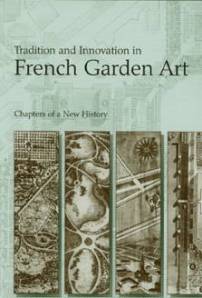 Under Nature, David L. Hays, “’This is not a Jardin Anglais’: Carmontelle, the Jardin de Monceau and Irregular Garden Design in late 18th-Century France,” in M. Benes and D. Harris, eds., Villas and Gardens in Early Modern Italy and France (Cambridge University Press, 2001), pp. 294-326. I like this because even though it’s about a quirky garden that might not be taught in a survey course, it engages with perceptions of what makes a French vs. an English garden. If this is too far off the mark, there’s also Michel Conan, “The Coming of Age of the Bourgeois Garden,” in J. Dixon Hunt and M. Conan, eds., Tradition and Innovation in French Garden Art (University of Pennsylvania Press, 2002), pp. 160-83. It’s a nice foil after the students have seen Versailles and even Stowe. The piece ends with a question: “how did changes in landscape garden forms contribute to the construction of the sphere of intimacy in the bourgeois families of the first half of the 19th century?”
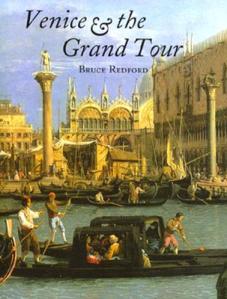 Under Grand Tour, Bruce Redford, Venice and the Grand Tour (Yale University Press, 1996), perhaps chapters 1 (who’s touring) and 2 (what they learn on the tour). Both are easy reading. It might be nice to pair them with a quirky article by Ilaria Bignamini on the Italian “take” on the Grand Tourists.
Under Religion, I would look at Jon Seydl, “Contesting the Sacred Heart of Jesus in Late Eighteenth-century Rome,” in Andrew Hopkins and Maria Wyke, eds., Roman Bodies: Antiquity to the Eighteenth Century (British School at Rome, 2005).
I’m sure my predisposition for social history is showing about now. Anyone want to join us for coffee?
Back to the Classroom — Wednesday
As we continue this week’s focus on teaching the eighteenth century (with Julie Plax’s syllabus serving as a prompter), Jennifer Germann offers these useful observations . . .
◊ ◊ ◊ ◊ ◊
Jennifer Germann is Assistant Professor of Art History at Ithaca College where she teaches visual culture and gender studies. She is currently completing a manuscript on the representation of Marie Leszczinska (1703-1768), Queen of France, and working on a project on homosociality and women artists in the French Revolutionary and Napoleonic periods.
◊ ◊ ◊ ◊ ◊
Thanks to Craig for inviting me to be a part of this forum and to Julie for sharing her syllabus. Reviewing Julie’s syllabus is a bit like being a Grand Tourist, in the best armchair-traveler style – I have all the benefits of the voyage without actually having to do the grading! Julie’s course is an introductory-level survey of eighteenth-century European art and architecture. It covers (from my perspective as a specialist in France) many corners of the Continent across the length of the century. It considers key cultural developments in relation to science, religion, and gender. For our purposes, consideration of this syllabus engages broader pedagogical questions as well as more specific issues relating to the field.
When preparing syllabi for introductory-level classes, I often find myself facing the complex issues around reading and learning. Most significantly, I find myself confronting the questions of what I can expect my students to know when they come into the classroom. What skills do they possess and which do I wish them to develop? Will they understand the reading? And if they can, will they actually do it? Julie’s course utilizes textbook reading mixed with some juicy articles by specialists that students are required to analyze in a graded writing assignment (about which I would be interested in hearing more). This is a useful way to bring undergraduates into a specialist field and to hold them accountable for the work. In my own courses, students often remark that they enjoy encountering ‘real art history’, not just survey books; I imagine Julie’s students feel the same way.
However, this also raises the question of how students are introduced to this field of study. In terms of background reading, Julie relies on a variety of textbook sources but returns most frequently to Petra ten-Doesschate Chu’s textbook, Nineteenth-Century Painting. Is the lack of focused survey (or more choices of one) about eighteenth-century European art and architecture a problem for those teaching the field or for students encountering it for the first time? I certainly recognize that for specialists (as in Julie’s case), this may not be a problem but it may suggest a lack of ‘institutional presence’. I think this issue resonates, for me, with a recent Enfilade discussion about the ‘risk’ of and to eighteenth-century studies that Mary Sheriff raised. Or, as Michael Yonan suggests in the comments section for that posting, would a textbook simply create a confining canon out of our beau désordre?
As I read Julie’s rich syllabus, I am also reminded that the fifteen-week semester looming ahead isn’t actually a very long stretch and there are topics, areas, and works of art that have to be omitted. This raises a final question: how to cover it all? How do other HECAA members choose what to cover and what to leave for a different encounter?
Back to the Classroom — Tuesday
Our first response to Julie-Anne Plax’s syllabus for an undergraduate course on eighteenth-century art . . .
◊ ◊ ◊ ◊ ◊
Georgina Cole is a part-time lecturer and researcher at the University of Sydney. She has just been awarded her Ph.D. from the same university for her thesis “Painting the Threshold: Doors, Space and Representation in Eighteenth-Century Genre Painting,” which examines the role of doors in the work of Watteau, Chardin, Hogarth, and Gainsborough alongside a new theory of genre painting. Georgina has taught and contributed to a number of art history courses at the University of Sydney, the University of Technology, and the Art Gallery of New South Wales.
◊ ◊ ◊ ◊ ◊
Overshadowed by the looming edifices of the baroque and the nineteenth century, the eighteenth century is often an unfamiliar period for art history students, and prone to be written off as a frivolous century lacking any real achievements. Faced with these prejudices, a good course needs to show students that there is a lot to be gained from taking this playfulness seriously and that ultimately, the eighteenth century is a crucial turning point for many ‘modern’ ideas about representation, science, and private life. Julie Plax’s syllabus tackles both of these issues, and it does so by focusing on the intersections of eighteenth-century art and cultural identity, politics, travel and scientific discovery. The range of seminar topics here is impressive, as is the attention to things that aren’t paintings, such as monuments, buildings and gardens. This approach accurately emphasizes the ‘artfulness’ of the period and its fluid relationships between painting, sculpture, architecture and decoration. Her pan-European focus is particularly refreshing, and includes English, Spanish, German, Russian and Swedish art and contexts. The thematic and chronological organization of the course is well devised and should help students engage with the themes, forms and contexts of eighteenth-century art rather than just its stylistic affiliations.
While I liked the breadth and diversity of the course content, I was really impressed by the forms of examination and their focus on student learning. The numerous assessments – multiple exams, an article critique and a final research paper – provide the student with continual feedback to aid in the development of writing skills and critical analysis. As a teacher, I have found that students need and want constant feedback on their academic performance. This can sometimes be a heavy burden, but it is vital for their academic development. The ongoing opportunities for assessment in this course, especially the submission of multiple drafts of the research paper, will certainly help students improve their writing, research and interpretive skills. Spreading the assessment loading across multiple tasks also keeps students engaged throughout the semester.
Also on the topic of examination, I was intrigued by the lottery for the allocation of research topics. This is an ingenious solution to an often difficult and time-consuming problem, and admirably avoids “Fragonard fatigue”, a condition experienced after marking 97 papers on Happy Hazards of the Swing. It means a good spread of topics for marking, and forces students to study works they would not have chosen for themselves. Although we generally introduce more critical articles and essays into the reading list at the University of Sydney, I think that the way Julie has controlled access to more difficult material by turning it into a form of assessment is a great way of ensuring that it is comprehended and critically analyzed. The article critique assessment is an excellent way of developing reading and interpretive skills and the emphasis on discussion improves communication and argumentation. All in all, this is a comprehensive and in-depth approach to the major concerns of eighteenth-century art that emphasizes its interaction with social, cultural and political contexts, and effectively promotes student learning.
Back to the Classroom — Syllabus for the Eighteenth Century
As many of us prepare to return to the classroom this fall, it seems an appropriate time to think about teaching as a vital component of the life of HECAA. The vast majority of postings here at Enfilade point to exhibitions, conferences, and scholarly opportunities. Yet in addition to the hats we wear as researchers and writers, many of us spend a huge portion of our professional careers trying to communicate our understanding and love of art history to students. In acknowledgment of this crucial responsibility, our fearless leader, Julie-Anne Plax has graciously agreed to share a syllabus from one of her past undergraduate courses. It’s posted below, and for the next three days, HECAA members will weigh in with their own responses to it (of course, all members are invited to leave comments along the way as well). To wrap up the week, Julie is also providing a syllabus for a graduate seminar on the French Rococo. Special thanks to Professor Plax for her generosity!
N.B. — The syllabus has here been modified slightly for formatting reasons. It is also available for download as a Word Document.
◊ ◊ ◊ ◊ ◊
ARH 316B — SURVEY OF EIGHTEENTH-CENTURY ART
Professor Julie-Anne Plax
Art Building, Room 312
Spring 2008, MW 2:00-3:15
Office Hours: MW 12:30-1:30, or by appointment
Art Building 294 / 626-4864 / jplax@email.arizona.edu
Course Description
ARH 316B is a one-semester lecture course which can be taken for three units of credit under ‘General Education Tier II: Traditions and Cultures’. This course presents a thematic survey of European art and architecture from the beginning of the eighteenth century to the French Revolution; or, in stylistic terms, from Rococo to Neo-Classicism. The lectures will examine the major artists, artistic monuments, and movements of the eighteenth century and address, more specifically, some of the critical issues in the study of eighteenth-century art.
Required Text
There is no required text for this class. The required readings will be available as PDFs at the course’s electronic reserve library site.
Course Requirements
The grade for the course will be based the following requirements.
- Exam 1 15% Feb 25
- Exam 2 15% April 7
- Final Exam 20% May 9, Friday, 2:00-4:00
- Article Critique 15% various dates
- Participation 5%
- Research Paper 30%
- Paper prospectus and bibliography, February 18
- 1st rough draft, March 10
- Penultimate draft, April 14
- Final paper, May 7
Examinations: Bluebooks required. Each examination will consist of a combination of short answer, slide identification/comparison and an essay question.
Article Critique: You will write a critique of one article. There are four articles to chose from which are indicated with *** in the syllabus course calendar. Due dates for each of the article critiques are also indicated in the course calendar below. The critique should be 3-4 typewritten pages. The critique should include a brief summation of the article, a discussion of what the article was about (the larger questions addressed as opposed to a recapitulation of the argument) and your own evaluation and opinion of the article.
Research Paper: You will be assigned a particular artwork or monument as the topic for your research paper during the research paper lottery on January 28. (See the end of the syllabus for the list of artworks). The finished research paper will be between 7 and 9 typewritten double-spaced pages of text, not including the required endnotes, bibliography and illustrations. The paper will be graded according to three categories: 1) evidence of research; 2) content and organization; 3) writing skill and scholarly form; (correct form and usage of notes, bibliography and illustrations) There is a research paper guideline on e-res for correct form and usage. To ensure steady progress on the paper there are several requirements: 1) a prospectus and preliminary bibliography 2) 1st rough draft 3) penultimate draft 4) final paper. Failure to meet these requirements will result in a 10% reduction of your final grade for each of the requirements not met.
Discussion/participation: Discussion and participation is evidence of engagement with the material. We will be discussing all the readings informally and the four article critique readings in a more formal manner.
Grading
Students will receive a score for each requirement based on the following scale. The final grade will be calculated according to the percentage weights assigned to each requirement above.
Grading scale:
90-100% -A
80-89%-B
70-79%-C
60-69% -D
0-59% -E
The School of Art follows the University of Arizona Grading System. A, B, C, D, and E constitute the regular grades used at the University of Arizona.
The University of Arizona Grading System
A* Excellent
B* Good
C* Satisfactory
D* Poor
E* Failure
P Passing (Special S/P and P/F grade)
F Failure (Special P/F grade)
S Superior (Special S/P grade)
O Audit
Late Work
Late work will be accepted with a 5% deduction per day.
Absence Policy
Students are expected to attend class and roll will be taken at each class meeting. More than three absences will affect your grade at the rate of 5% per each additional absence subtracted from your final total score.
Classroom Behavior and Academic Integrity
Student Code of Conduct: “The aim of education is the intellectual, personal, social, and ethical development of the individual. The educational process is ideally conducted in an environment that encourages reasoned discourse, intellectual honesty, openness to constructive change and respect for the rights of individuals. Self-discipline and a respect for the rights of others in the university community are necessary for the fulfillment of such goals.”
Code of Academic Integrity: “Integrity is expected of every student in all academic work. The guiding principle of academic integrity is that a student’s submitted work must be the student’s own. This principle is furthered by the student Code of Conduct and disciplinary procedures established by ABOR Policies 5-308/5-403, all provisions of which apply to University of Arizona students.”
Both the Code of Conduct and Code of Academic Integrity can be found online.
◊ ◊ ◊ ◊ ◊
READING ASSIGNMENTS AND COURSE CALENDAR
January 16: Introduction to the Course and Background to the Eighteenth Century
Chu, Nineteenth-Century European Art, 19-33
January 21: Martin Luther King Holiday
No class
January 23: The Art Academy
Chu, Nineteenth-Century European Art, 33-39
January 28: Watteau and the Fête Galante — RESEARCH PAPER LOTTERY
Wakefield, Eighteenth-Century French Painting, 22-41
January 30: Rococo and Pompadour
Wakefield, Eighteenth-Century French Painting, 78-91
February 4: Architecture of Private Life
***ARTICLE CRITIQUE READING: Mimi Hellman, “Furniture, Sociability, and the Work of Leisure in Eighteenth-Century France” in Eighteenth-Century Studies 32 (Summer 1999): 415-45
February 6: Grand Tour I
Ford, “The Grand Tour,” Apollo 114 (December 1981): 390-400
February 11: Grand Tour II
DISCUSSION of Hellman READING and Critique due
February 13: The British Country House
Tavernor, Palladio and Palladianism, 151-80
February 18: Nature and the Great Outdoors
Berrall, The Garden: An Illustrated History, 263-80
Paper Prospectus and Bibliography due
February 20: Guest Speaker!
February 25: Exam I
February 27: Hogarth and Humor
Vaughan, British Painting, 24-37
March 3: Portraiture
Vaughan, British Painting, 68-97
March 5: Baroque Tradition and Religious Art
March 10: Germany
1st Rough Draft of Paper due
***ARTICLE CRITIQUE READING: Hart and Stevenson, “The Body and Ascension in the Sacred Rococo Art of Southern Germany and Austria,” in Heaven and the Flesh, 127-47
March 12: Neo-Classical I
Chu, Nineteenth-Century European Art, 41-53
March 17 & 19: Spring Break
No Class
March 24: Neo-Classical II
DISCUSSION of Hart and Stevenson READING and Critique due
Chu, Nineteenth-Century European Art, 53-69
March 26: Great Men, Great Monuments and Great Museums
March 31: The Cult of Sensibilité
Brookner, Greuze: The Rise and Fall of an Eighteenth-Century Phenomenon, “Sensibilité,” 1-18
April 2: Mothers and Children
***ARTICLE CRITIQUE READING: Duncan, “Happy Mothers and Other New Ideas in French Art,” Art Bulletin 55 (December 1973): 570-83
April 7: Exam II
April 9: Women Artists
DISCUSSION of Duncan READING and Critique due
Slotkin, Women Artists in History, 110-27
April 14: Diderot: Art Criticism and the Encyclopédie0
Penultimate draft of Paper due
Diderot, Salon of 1765 “Greuze,” 96-100
Diderot, Salon of 1767 “Robert,” 190-200
April 16: Russia and Sweden
April 21: Science and Industry
***ARTICLE CRITIQUE READING: Boime, Art in an Age of Revolution 1750-1800, “Joseph Wright of Derby,” 233-60
April 23: Animals and Art
Vaughan, British Painting: The Golden Age, 162-73
April 28: Exoticisms
DISCUSSION of Boime READING and Critique due
April 30: Colonial America
May 5: Revolution and Art
Chu, Nineteenth-Century European Art, 93-107
May 7: The Sleep of Reason
Final and perfected Paper due
Last day of class, no reading, Hooray!
◊ ◊ ◊ ◊ ◊
Paper Lottery Choices
For Images see IMAGEN Portfolio: 316 Paper Images
1. Johann Zoffany, Royal Academicians in General Assembly
2. Antoine Watteau, Pilgrimage to Cythera
3. François Boucher, Portrait of Mme de Pompadour
4. Pompeo Batoni, The Honorable Colonel William Gordon
5. Canaletto, Rio dei Mendicanti
6. Lord Burlington and William Kent, Chiswick House
7. Stowe Garden
8. William Hogarth, Gin Lane and Beer Street
9. Joshua Reynolds, Mrs. Sarah Siddons as a Tragic Muse
10. Christopher Wren, St. Paul’s, London
11. Giambatistta Tiepolo’s fresco painting at the Wurzburg Palace
12. Jacques-Louis David, Oath of the Horatii
13. Fuseli, The Nightmare
14. Mengs, Portrait of Winckelmann
15. Antonio Canova, Statue of Napoleon
16. Elisabeth Vigée-Lebrun, Marie Antoinette and her Children
17. Angelica Kaufmann, Cornelia, Mother of the Gracchi
18. Joseph Wright of Derby, Experiment on a Bird in an Airpump
19. Etienne Falconet, Monument to Peter the Great
20. George Stubbs, Mares and Foals in a River Landscape
21. François Boucher, Sultaness Drinking Coffee
22. Benjamin West, The Death of General Wolfe
23. Jacques-Louis David, Marat
24. Francisco Goya, The Duchess of Alba
Thinking about Teaching
At the beginning of a new academic year, recent postings at The Long Eighteenth address various themes related to teaching. Laura Rosenthal tackles grading and tactics for teaching with ECCO (Eighteenth-Century Collections Online). David Mazella responds to a posting by Kenneth Mostern at Leaving Academia (he found it at Perverse Egalitarianism), which suggests that “the scariest thing a young faculty member experiences is not, as is conventionally supposed, the ‘need to produce’ and therefore her/his experience is not aided by the ‘mentorship’ of an experienced scholar. Rather, the young scholar’s fear stems from the fact that no one in the department is talking to each other about scholarship.” Mazella also describes an assignment he gives students to make use of the Burney Collection of seventeenth- and eighteenth-century newspapers (as noted earlier here, the Burney Collection is available for free until October 30 through Early Modern Online Bibliography). The postings are all accompanied by dozens of comments. For the most part, the specifics apply to literary studies, but the larger concerns and goals would seem to bear on art history in the eighteenth century as well.










 Enfilade
2 comments