Enfilade

‘Gloriana’ to Lead the Flotilla for the Diamond Jubilee in London

The Gloriana launched in April 2012; from Leon Watson’s
story for the Mail Online, 19 April 2012; Photo by David Parker

◊  ◊  ◊  ◊  ◊

From The BBC (19 April 2012)

The £1m boat that will the lead the Thames Diamond Jubilee Pageant has been launched on the river. The 94ft (28.6m) royal barge Gloriana was escorted through the streets of London on the back of a truck. It had been transported from a unit in Brentford to Isleworth, west London, where it was placed in the Thames. A pageant of more than 1,000 boats involving some 20,000 people will sail down the river on 3 June to mark the Queen’s 60 years on the throne. . . .

Lord Sterling said: “I became enamoured with the idea of building something timeless and got inspiration from Canaletto’s paintings that showed the great barges of the 18th Century and decided to build one. If we had to give it a style, it would be Regency. Including 18 rowers, it will carry 52 people. No-one’s really built anything like this for 200 years and the way we’ve built it, it will last for 200 years if looked after” . . .

◊  ◊  ◊  ◊  ◊

From the official event website:

Photo from ‘Luxatic’; click image to access the article.

On Sunday 3rd June 2012, over one thousand boats will muster on the River Thames in preparation for Her Majesty The Queen to take part in the Thames Diamond Jubilee Pageant. The formal river procession will be between 2pm and 6pm, starting upriver of Battersea Bridge and finishing downriver of Tower Bridge. The boats will muster between Hammersmith and Battersea and disperse from Tower Bridge to West India Docks.

It will be one of the largest flotillas ever assembled on the river. Rowed boats and working boats and pleasure vessels of all shapes and sizes will be beautifully dressed with streamers and Union Flags, their crews and passengers turned out in their finest rigs. The armed forces, fire, police, rescue and other services will be afloat and there will be an exuberance of historic boats, wooden launches, steam vessels and other boats of note.

The flotilla will be bolstered with passenger boats carrying flag-waving members of the public placed centre stage (or rather mid-river) in this floating celebration of Her Majesty’s 60 year reign. The spectacle will be further enhanced with music barges and boats spouting geysers. Moreover, there will be specially constructed elements such as a floating belfry, its chiming bells answered by those from riverbank churches.

The opening ceremony of London’s Olympic Games will be just six weeks away and the public that crowd the riverbanks and bridges will give a rousing reception to the many boats that have travelled from far and wide to represent UK port cities, the Commonwealth countries and other international interests. Downriver of London Bridge, there will be a gun salute and the flotilla will pass through a spectacular Avenue of Sail made by traditional Thames sailing boats, oyster smacks, square riggers, naval vessels and other impressive ships.

The Thames Diamond Jubilee Pageant celebrates Her Majesty’s 60 years of service by magnificently bringing the Thames to life; making it joyously full with boats, resounding with clanging bells, tooting horns and sounding whistles; recalling both its royal heritage and its heyday as a working, bustling river.

Quince, Then and Now

Posted in the 18th century in the news by Editor on May 5, 2012

Michael Tortorello, “In Praise of the Misunderstood Quince,” The New York Times (2 May 2012) . . .

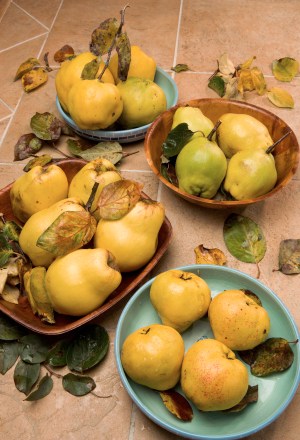
Assorted quince varieties from the germplasm collection at the USDA-ARS National Clonal Germplasm Repository in Corvallis, Oregon. From top down, Van Deman, Cooke’s Jumbo, Ekmek, and Quince A, a rootstock variety used for grafting pears (Wikimedia Commons)

. . . What most Americans know about quince (Cydonia oblonga) — if they know about quince at all — is that it was once a fixture in Grandma’s garden. O.K., Great-Great-Grandma’s garden. As long ago as 1922, the great New York pomologist U. P. Hedrick rued that “the quince, the ‘golden apple’ of the ancients, once dedicated to deities, and looked upon as the emblem of love and happiness, for centuries the favorite pome, is now neglected and the least esteemed of commonly cultivated tree-fruits.” Almost every Colonial kitchen garden had a quince tree. But there was seldom need for two, said Joseph Postman, the United States Department of Agriculture scientist who curates the quince collection in Corvallis, Ore. Settlers valued quince, above all, as a mother lode of pectin for making preserves. And for that task, a little fruit went a long way.

“If you put the seeds in a cup of water, it becomes almost like Jell-O,” Mr. Postman said. This goo doubled as a pomade. (If you try this at home, please post photos.) Like so many American workers, the quince lost its job to a disruptive technology: powdered gelatin, introduced by Charles Knox in the 1890s. Unemployment has been tough. Today the nation’s entire quince crop covers a paltry 250 acres — about the size of the lawns in Central Park. By contrast, farmers this year will
raise some 350,000 acres of apples and 96 million acres of
corn. . .

The full article is available here»

The 2011 Georgian Group Architectural Awards

Posted in the 18th century in the news, today in light of the 18th century by ashleyhannebrink on January 6, 2012

The annual Georgian Group Architectural Awards were held on 31 October 2011. As noted at the Georgian Group’s website (for an overview of last year’s awards, see Enfilade’s previous post) . . .

◊  ◊  ◊  ◊  ◊

Our Architectural Awards, sponsored by international estate agents Savills, recognise exemplary conservation and restoration projects in the United Kingdom and reward those who have shown the vision and commitment to restore Georgian buildings and landscapes. Awards are also given for high-quality new buildings in Georgian contexts and new architecture in the Classical tradition.

The 2011 Awards were presented by Viscount Linley on 31 October 2011. The judges were the architectural historians Dr John Martin Robinson (Chairman), Professor David Watkin and Emeritus Professor John Wilton-Ely; the architecture critic Jonathan Glancey; Lady Nutting (Chairman of the Georgian Group); Charles Cator (Deputy Chairman of Christie’s International); and Crispin Holborow (Director of Country Property at Savills).

2011 WINNING AND COMMENDED SCHEMES

A record eighty entries were received, of which nineteen were shortlisted and eight were selected as award winners. The remaining shortlisted schemes were commended.

Restoration of a Georgian Country House
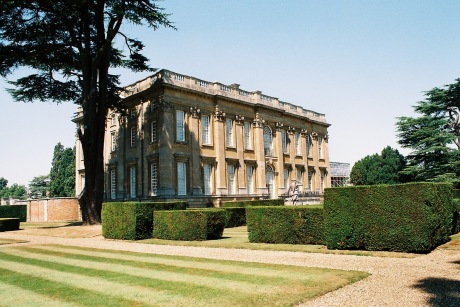
Easton Neston, Towcester, Northants

JOINT WINNER Easton Neston, Towcester, Northants (Ptolemy Dean Architects for Leon Max) 1702 by Hawksmoor for Fermor-Heskeths, who sold up in 2005. External repairs; restoration where possible of Hawksmoor’s original plan form; removal of tanking and cement render in basement; rebuilding of roof of fire-damaged Wren wing and reinstatement of lost dormers; relandscaping of north courtyard.

JOINT WINNER Strawberry Hill, Twickenham (Inskip & Jenkins for The Strawberry Hill Trust) 1750s for Horace Walpole. Building at Risk by 1993. Restoration of fabric, reinstatement of Walpole plan form and decorative scheme. Recreation of selected furnishings, including bespoke damask. External colour scheme reinstated.

COMMENDED Wilton House, near Salisbury, Wiltshire (Coade Ltd, David Mlinaric et al for the Earl of Pembroke) Restoration of cloisters, conservation of stonework and re-display of sculpture collection.

Restoration of a Georgian Building in an Urban Setting
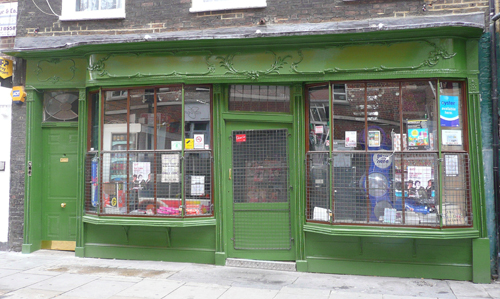
88 Dean Street, Soho

JOINT WINNER Cockermouth Shopfront Heritage Scheme, Cumberland (By and for Allerdale Borough Council) Sensitive local authority-led restoration of shopfronts in Main Street and Market Place following the severe flooding of November 2009. Concerted effort to emerge from the adversity of flooding with a visually enhanced historic centre. Fifteen shopfronts restored to traditional designs by July 2011.

JOINT WINNER 88 Dean Street, Soho (David Bieda et al for Romil Patel) Meticulous restoration of 1791 shopfront, in particular the overpainted and dilapidated gesso fascia board and the damaged fanlight, backed by extensive research, including paint research.

COMMENDED Creative Ropewalks scheme, Liverpool Coordinated grant and enforcement action by Liverpool City Council to rescue and restore disused and derelict Georgian properties in the Ropewalks. Several properties in Seel Street, a notoriously derelict Georgian street with numerous buildings at risk, have been externally restored.

Reuse of a Georgian Building

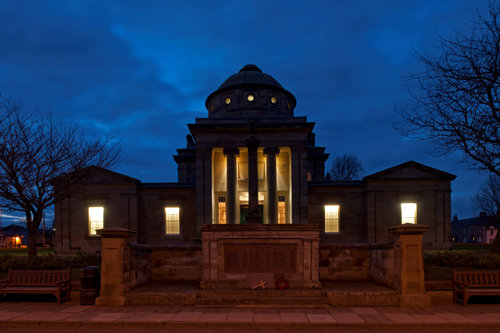
WINNER Greenlaw Town Hall, Berwickshire (Adam Dudley Architects for the Scottish Historic Buildings Trust) 1831 by John Cunningham as Berwickshire Courthouse. Redundant and a building at risk since 2001, now restored and reused as office space for local businesses and a community hall.

Restoration of a Georgian Church
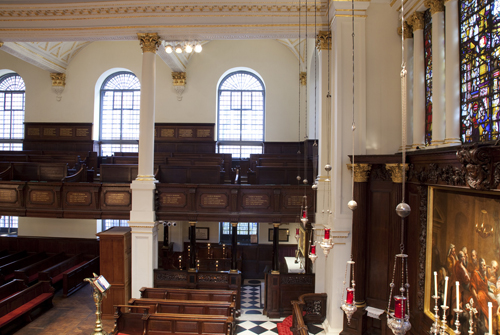
St George’s Hanover Sq, London

WINNER St George’s Hanover Sq, London (Molyneux Kerr Architects for the Rector and PCC of St George’s Church) 1720s by John James. Roof and plasterwork repairs, servicing and lighting renewal, restoration of reredos, cleaning of woodwork, reinstatement of original decorative scheme, restoration of clock faces, restoration of gallery pews with reinstatement where lost.

COMMENDED St Peter and St Paul, Wolverhampton (Rodney Melville & Partners for Roman Catholic Church)1729, oldest surviving post-Reformation public urban chapel for Catholics; disguised as townhouse. Extended and altered 1826 by Joseph Ireland as memorial to Bishop Milner. Blighted by 1960s ring road and at risk of demolition; derelict by late 1980s. Restoration since then, now completed with reorganisation of interior; new altar, confessional and crucifix, the last by Rory Young.

Restoration of a Georgian Garden and Landscape
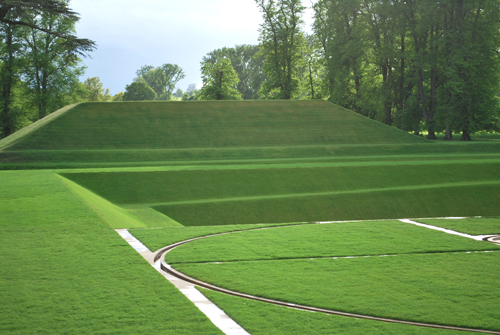
Boughton House, near Kettering, Northants

WINNER Boughton House, near Kettering, Northants (The Landscape Agency and Kim Wilkie Associates for Buccleuch Estates) Restoration of the main structure of the canal system, key water and earthworks features and the grand avenues (over a mile of lime avenues using home grown stock has been planted); repair of garden railings and gates; creation of a new formal landscape element, Orpheus by Kim Wilkie.

COMMENDED Hagley Hall, Hagley, Worcestershire (Reading Designs for Viscount Cobham) 1756-60 by Sanderson Miller for Lord Lyttleton. Restoration of 1764 obelisk in park.

COMMENDED Stourhead, Wiltshire (Temple of Apollo) (Caroe & Partners for The National Trust) 1765 by Flitcroft. Reroofing (replacement of 1950s roof, with original shallower dome profile reinstated) and interior redecoration (recreation of lost ‘gilt representation of the solar rays’ described in contemporary correspondence and partly based on a surviving Flitcroft design at Woburn).

Special Award
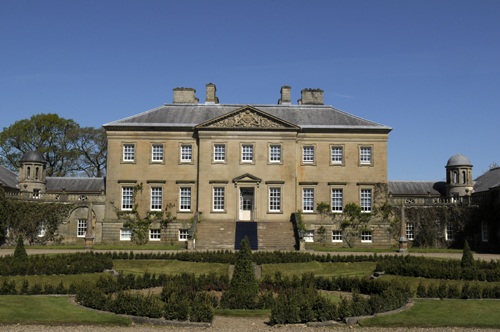
Dumfries House, Cumnock, Ayrshire (By and for Great Steward of Scotland’s Dumfries House Trust) 1750s by Adam Brothers for Earl of Dumfries. Restoration and conservation of interiors and contents (saved from dispersal in 2007). Recreation of original paint scheme and Adam decorative scheme, recreation of furnishings using archival records.

◊  ◊  ◊  ◊  ◊

The photos are drawn from The Georgian Group Blog, which also provides additional information about the individual awards, as well as the categories of New Building in the Classical Tradition and the Giles Worsley Award for a New Building in a Georgian Context.

1787 U.S. Coin Fetches $7.4 Million

Posted in the 18th century in the news by Editor on December 14, 2011

From CoinWeek (12 December 2011) . . .

Blanchard and Company places world’s most valuable gold coin – the Brasher Doubloon for a record $7.395 million . . .

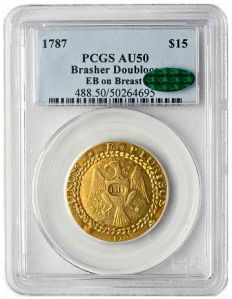
This rare numismatic treasure is considered America’s first and most important gold coin. It was purchased from John Albanese, founder of Certified Acceptance Corp. (CAC), and the transaction is the single highest price ever paid for a coin in a private transaction. It is truly unique as there is only one known example. . .

The Brasher Doubloon with the punch on the breast was minted in 1787 by Ephraim Brasher, a silversmith and goldsmith in New York City, and it contained $15 worth of gold at the time of its minting. Brasher made a small number of gold coins that historians today believe were intended for public circulation. . . .

The full article is available here»

Additional coverage is available at The Daily Mail.

Trio of Witches at the National Portrait Gallery

Posted in the 18th century in the news by Editor on October 31, 2011

Press release from the NPG:

Daniel Gardner, "The Three Witches from Macbeth (Elizabeth Lamb, Viscountess Melbourne; Georgiana, Duchess of Devonshire; Anne Seymour Damer)," pastel on paper, 1775 (London: NPG)

As it launches a major exhibition of actress portraits, the National Portrait Gallery has announced the acquisition of a large and rarely seen picture of three of eighteenth-century society’s most glamorous and notorious women – as the three witches from Shakespeare’s Macbeth. Georgiana, Duchess of Devonshire and Elizabeth Lamb, Viscountess Melbourne – the most famous political hostesses and society beauties of their day – are shown gathered around the witches’ cauldron alongside their friend, the sculptor Anne Seymour Damer.

The portrait will be seen by museum visitors for the first time at the National Portrait Gallery’s autumn exhibition The First Actresses: Nell Gwyn to Sarah Siddons, where it’s included in a section devoted to amateur dramatics. It was acquired through the Government’s Acceptance in Lieu scheme having been allocated to the Gallery from a private collection in lieu of inheritance tax.

This unusual group portrait of 1775 in pastel by artist Daniel Gardner (1750-1805) shows three intimate friends who enjoyed attending private theatricals and shared a common passion for Whig politics and the arts. Gardner’s choice of the Cauldron scene from Macbeth can be related to their shared and shadowy political machinations as leading members of the Devonshire House circle. The daughter of the First Earl Spencer, Georgiana’s marriage to the fifth Duke of Devonshire placed her at the apex of Whig Society. She held famously libertine parties at Devonshire house in London, and recently was the subject of Amanda Foreman’s hugely successful book and the subsequent film The Duchess with Keira Knightley.

Viscountess Melbourne was married to Sir Penniston Lamb MP and was an ‘enthusiastic manager of her husband’s political interests’. While she had been friends with Damer, the foremost female sculptor of her day, since the early 1770s, her friendship with Georgiana was fairly recent. This pastel portrait may in part be related to Melbourne’s desire to publicise this new friendship. Melbourne is thought to have commissioned the work that has descended in her family. (more…)

Restoring the Chancellerie d’Orléans Interiors

Posted in the 18th century in the news by Amanda Strasik on September 15, 2011

As noted several weeks ago by Art Daily . . .

Germain Boffrand and Antoine Coypel, Chancellerie d'Orleans, also known as the Hôtel de Voyer d'Argenson, ca. 1707 (Photo: François Jeanneau)

The World Monuments Fund (WMF) Europe announced today a project to restore and reconstruct the interiors of the Chancellerie d’Orleans, which have been in storage for nearly ninety years. One of the most important Parisian hôtel particuliers of the eighteenth century, the Chancellerie d’Orleans was demolished in the 1920s but its interiors were saved and stored for later reinstatement elsewhere. Now that a preliminary study by a French Architecte en chef des Monuments historiques has been completed, the interiors will be installed in the former Hôtel de Rohan-Strasbourg, a structure contemporary to the Chancellerie and now the Archives nationales.

For more information about the reinstallation of the interiors,
read the full article here»

New Director Appointed at Versailles

Posted in the 18th century in the news by Editor on September 6, 2011

As reported at ArtInfo (2 September 2011) . . .

Jean-Jacques Aillagon, Photo from his blog (click to visit)

Jean-Jacques Aillagon, the Versailles director who introduced contemporary art into the sanctum of the château, will leave his post on September 30. Faced with mandatory retirement as he turns 65, he wrote in a letter to the palace’s staff that “I will depart our establishment with the regret of leaving you.” Aillagon had hoped that a special dispensation would allow him to serve at least through the end of his current appointment in 2013. But Wednesday French president Nicolas Sarkozy appointed 57-year-old journalist Catherine Pégard to replace him as head of Versailles. . . .

The full article is available here»

◊  ◊  ◊  ◊  ◊

Whereas Aillagon was seen by some as provocative for his inclusion of work by Jeff Koons and Takashi Murakami at Versailles, Sarkozy’s new pick brings its own controversy. As reported at Art Media Agency (30 August 2011) . . .

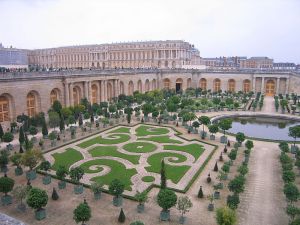
Versailles (Wikimedia Commons)

The French newspaper Libération has announced today the appointment of Catherine Pégard as President of Versailles. . . . The art world is sad to see the former director retire, who was shocked to see that Catherine Pégard would replace him. She has no university titles, experience or particular predispositions in order to direct such a prestigious museum as the Château de Versailles. She has worked as a political journalist, mostly at the Point, and more importantly, was nominated counsellor to the French president in 2007. Since 2008, she was in charge of his political entourage. . . .

The full AMA article is available here»

News: British Library to Digitize Eighteenth-Century Texts

Posted in books, the 18th century in the news by Freya Gowrley on July 31, 2011

With a growing number of eighteenth-century texts available online, the period should become increasingly accessible to scholars around the world. This latest cooperative project between the British Library and Google promises to augment the already invaluable contribution made by Gale’s subscription-based resource, Eighteenth Century Collections Online. As reported by Mark Brown for The Guardian (20 June 2011) . . .

British Library and Google Bring 18th-Century Hippos to the Web

British Library, Photo by Mike Peek, Wikimedia Commons

Digitisation project will make out of copyright books from 1700 to 1870 available online, including account of Prince of Orange’s stuffed animal interests.

An 18th-century treatise on the Prince of Orange’s interest in a stuffed hippo will join one of the first modern constitutions and pamphlets on Marie Antoinette as part of an ambitious project to make 250,000 books in the British Library available online for the first time.

The library and Google said they were linking up to digitise out-of-copyright books from the collection, making them available to both specialised researchers and the simply curious.

The library’s chief executive Lynne Brindley called it a “significant partnership” which was part of the institution’s “proud tradition of giving access to anyone, anywhere and at any time.”

The out-of-copyright books from around 1700 to 1870 will be digitised over three years, with the majority being books from continental Europe. The library will not choose the books in forensic fashion, although they will be thematically linked – colonial history, for example. Shelves of books relating to the French revolution will be some of the first packaged up and sent to Google for digitisation

Others which will be digitised include Georges Buffon’s hitherto little-known 1775 work on the natural history of the hippo which also gives an account of the stuffed hippo taking up much of the Prince of Orange’s cabinet of curiosities. . . .

The full article is available here»

◊  ◊  ◊  ◊  ◊

In the latest issue of Eighteenth-Century Studies 44 (September 2011), Patrick Spedding’s article “‘The New Machine’: Discovering the Limits of ECCO,” pp. 437-53, addresses the difficulties of conducting research with scanned text-bases such as Eighteenth Century Collections Online — in this case, Spedding catalogs some of the ways ECCO fails to turn up texts with references to condoms, even though the texts are available in the database. It will be interesting to see what the results of the BL/Google initiative look like, though if scholars’ reactions to Google Books serves as any guide, there will be plenty of grumbling. -CH.

The Irish Georgian Society to Restore Dublin’s City Assembly House

Posted in on site, the 18th century in the news by Editor on June 29, 2011

From the Irish Georgian Society:

One of the most exciting developments in the history of the Irish Georgian Society has been its acquisition of the old City Assembly House, on South William Street, on a lease from Dublin City Council. In partnership with the Council, the Society aims to restore and revitalise this landmark building as a centre for its heritage and cultural activities but also, and most importantly, to give back to the life of the city one of its long forgotten but once venerable public spaces — the octagonal Exhibition Room of the former Society of Artists.

Over fifty years the Irish Georgian Society has established an unparalleled reputation for rescuing and restoring historic buildings throughout Ireland. In turning its attention to the City Assembly House, the IGS, in partnership with Dublin City Council, aims to restore this historically and architecturally significant building to its former glory. To achieve this the Irish Georgian Society, through its international membership in Ireland, the UK and the US, need to raise €2,000,000 over three years. Significant fundraising has already taken place on both sides of the Atlantic.

Once fully restored, the City Assembly House will become:

  • An incomparable middle sized venue for exhibitions, lectures, musical performances and for other public gatherings.
  • Headquarters for the Irish Georgian Society A centre for those interested in the Society’s activities relating to the preservation and conservation of our built heritage and support for the nation’s heritage in the decorative arts.
  • A venue for other organizations active in the architectural conservation and heritage fields.
  • A significant addition to the amenities of one of the oldest streets in Dublin, of the local community and as a new tourist destination for visitors to Dublin.

Please join with us in this amazing adventure. Our ambition is to complete this task in time for the building’s 250th anniversary in 2016 and for this we need your support. Information about how you can donate is available here»

◊  ◊  ◊  ◊  ◊

On Sunday, 3 July 2011, from 2-4pm, the City Assembly House (58 South William Street) will be open to visitors. Staff and the IGS Committee will be on hand to guide you around the house.

Ian Wardropper Named Next Director of the Frick

Posted in the 18th century in the news by Editor on May 27, 2011

Press release (19 May 2011) from The Frick Collection:

The Board of Trustees of The Frick Collection announced the appointment of Ian Bruce Wardropper as the next Director of the institution. Dr. Wardropper, currently Iris and B. Gerald Cantor Chairman, Department of European Sculpture and Decorative Arts, The Metropolitan Museum of Art, will take up the post as of October 3, 2011, with the retirement of the Frick’s Director of eight years, Anne L. Poulet. Wardropper will be responsible for the overall vision of The Frick Collection, which includes the Frick Art Reference Library. Comments Margot Bogert, Chairman of the Board of Trustees, “We are delighted to welcome Ian Wardropper to The Frick Collection as its next Director. He comes to the institution with a significant and nuanced combination of experience as a scholar and curator in areas that relate beautifully to the holdings of the Frick. As an administrator over large collections and staffs at The Metropolitan Museum of Art, and previously at The Art Institute of Chicago, Ian Wardropper played an increasingly involved role―along with Directors, Trustees, and Development colleagues―in the fundraising efforts required of large-scale projects, among them the multimillion-dollar renovation of the former institution’s Wrightsman Galleries in 2006–7. His top-down involvement in such successful and well-received initiatives, his relationships with collectors and donors, and his appreciation for the high standards and values espoused by the Frick, inspire great confidence in us today as we share this wonderful news.” (more…)