New Book | Freemasonry and Civil Society
From Peter Lang:
Margaret Jacob and María Eugenia Vázquez Semadeni, Freemasonry and Civil Society: Europe and the Americas (North and South) (Bern: Peter Lang, 2023), 170 pages, ISBN: 978-1433198397, $90.

Version 1.0.0
This is the first comprehensive account of freemasonry in the Western world, written by two of the field’s foremost scholars. It embraces every country in the Americas, with a particular focus on the American experience. The authors devote significant attention to the Scottish origins of the lodges and their growth in the American colonies, against a backdrop of European imperialism and the emergence of democratic movements. Later they examine the story of freemasonry in the twentieth century, from its encounter with Nazism to its decline beginning in the 1960s. Future directions for the movement are also discussed. Along the way major figures in the movement are assessed: Benjamin Franklin, Alessandro Cagliostro, Giuseppe Garibaldi, Harry S. Truman, and many others. Masons and non-masons, college students, and the curious general reader will find Freemasonry and Civil Society a dazzling and accessible account of one of the world’s most enduring fraternal organizations.
Margaret C. Jacob holds the position of Distinguished Chair of Research in History at UCLA. She has a PhD from Cornell University and an honorary doctorate from Utrecht University in the Netherlands. She is a Guggenheim Fellow and a member of the American Academy of Arts and Sciences, the American Association for the Advancement of Science, and the American Philosophical Society. She is the author of The Radical Enlightenment: Pantheists, Freemasons, and Republicans; Living the Enlightenment: Freemasonry in Eighteenth Century Europe; The Newtonians and the English Revolution; and The Secular Enlightenment.
María Eugenia Vázquez Semadeni has a PhD from El Colegio de Michoacán, Mexico. She has held postdoctoral positions at the Instituto de Investigaciones Históricas, UNAM, México, and at UCLA, as well as Tinker Visiting Professor at Stanford University. She is a member of the Centro de Estudios Históricos de la Masonería Española and a founding member of the Centro de Estudios Históricos de la Masonería Latinoamericana y Caribeña. She is the author of La formación de una cultura política republicana: El debate público sobre la masonería. México 1821–1830.
c o n t e n t s
List of Figures
Acknowledgments
Introduction
1 British Origins
2 European Lodges in the Age of Enlightenment
3 Freemasonry in the New World: North America
4 European Freemasonry in the Age of Nationalism and Imperial Expansion
5 Freemasonry in the New World: Latin America, 1770–c.1830
6 United States Freemasonry: From the Civil War to the End of World War II and Beyond
7 Freemasonry in Latin America and Spain, 1850s–1940s
Conclusion
Bibliography
Index
New Book | Der Hameau de la Reine in Versailles
From Diaphanes:
Felix Vogel, Empfindsamkeitsarchitektur: Der »Hameau de la Reine« in Versailles (Paris: Deutsches Forum für Kunstgeschichte, 2023), 464 pages, ISBN: 978-3035806281, €30. Also available as a free open access PDF file.
 Der von Marie-Antoinette in Auftrag gegebene und zwischen 1783 und 1789 durch Richard Mique in Versailles erbaute Hameau de la Reine besteht aus einem um einen künstlichen Weiher angelegten Ensemble von zwölf Bauernhäusern. Die vermeintlich vernakuläre Anlage ist jedoch von einem Widerspruch gekennzeichnet: Manche der rustikalen Gebäude waren vom dort arbeitenden Personal bewohnt oder wurden für agrikulturelle Produktion genutzt, andere dienten lediglich dem höfischen Vergnügen. Der äußerliche Schmutz war aufgemalt, innen zeigte sich zum Teil eine opulente Ausstattung.
Das Buch rekonstruiert die Funktions- und Nutzungsgeschichte der Gartenanlage anhand bislang nicht berücksichtigter Archivquellen. Zugleich erschließt es den Hameau de la Reine kulturwissenschaftlich, indem es ihn in den Horizont der sich herausbildenden Epoche der Empfindsamkeit einordnet. Dabei zeigen sich die Objekthaftigkeit von Architektur, der Status von »ausgestellten Körpern«, Nützlichkeit als ästhetische Kategorie oder die Frage nach der künstlichen Herstellung von »Natürlichkeit« als zentrale Themen, die weit über die »Sattelzeit« hinaus Bedeutung beanspruchen: Im Hameau de la Reine wird Authentizität zum ästhetischen Kalkül, dessen Spuren bis in die Gegenwart reichen.
Der Kunsthistoriker Felix Vogel ist seit 2021 Professor für Kunst und Wissen an der Universität Kassel und Mitglied des documenta Instituts. Zuvor unterrichtete er unter anderem in Basel, Hamburg, São Paulo, Toronto und Zürich. Seine Promotion schloss er 2017 an der Université de Fribourg ab. Neben der Kunst des 18. Jahrhunderts beschäftigt sich Felix Vogel insbesondere mit der Conceptual Art sowie der Theorie und Geschichte der Ausstellung.
Exhibition | Kaendler’s Meissen Porcelain Figures
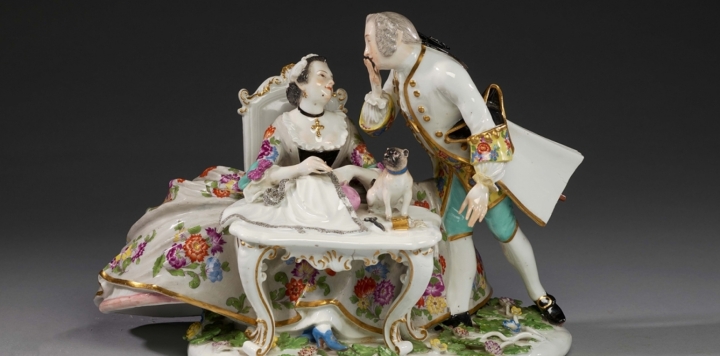
This summer at the Wawel Royal Castle:
Magnificence of Rococo: Kaendler’s Meissen Porcelain Figures
Wspaniałość rokoka: Miśnieńskie figurki porcelanowe Johanna Joachima Kaendlera
Wawel Royal Castle, National Art Collection, Kraków, 23 May — 29 September 2024
At the age of 25, Johann Joachim Kaendler (1706–1775) was appointed court sculptor by Augustus the Strong (r. 1694–1733). In the same year he joined the Meissen porcelain manufactory as a modeller, to which he remained loyal throughout his life. Kaendler’s name is closely associated with the golden age of the Meissen manufactory in the 18th century, where, he demonstrated his artistic and technical talent in creating numerous porcelain sculptures, which are still highly valued as collectors’ items today. At the same time they are still part of the manufactory’s repertoire.
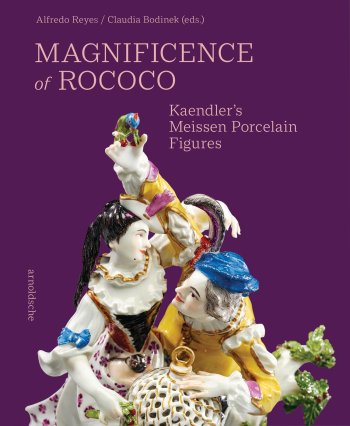 The choice of themes in Kaendler’s works reflects the courtly life of the period, which ranged from the late Baroque through the Rococo to the emerging Classicism. Until the end of the Saxon-Polish joint reign in 1763, the nobility and the court were almost the only clients of the manufactory, before the emerging middle classes finally discovered porcelain for themselves. Accordingly, Kaendler’s early works are oriented towards the preferences and fashions of the court. Hunting and theatre—especially the popular Commedia dell’arte—played a central role here, as did the Masonic Order, which was replaced by the Order of the Pug after the papal ban of 1738.
In 1736, for the first time Kaendler created one of the highly esteemed crinoline groups, which often depicted men and women in everyday court life, also in an amorous context. They were named after the ladies’ flared skirts, which were given their shape by a framework of fishbone. Alongside love adventures, the pastoral idyll, the simple life, was one of the secret longings of the nobility. This trend found its most famous manifestation in the Hameau of the French Queen Marie Antoinette (1755–1793) in Versailles. Kaendler served this fad with figures from the people, craftsmen, peasants and, last but not least, the ‘Cris de Paris’ (Cries of Paris), which embody various professions.
Increasing world trade and travel reports from distant countries stimulated people’s curiosity at that time. Exotic depictions of all kinds were in vogue. Artists and craftsmen endeavoured to satisfy the wishes of their customers with ever new subjects, which, however, were often far removed from reality—and few could verify it anyway. Kaendler devoted himself to the subject in his own way. He modelled figures in the national costumes of various peoples as well as animals that were foreign to Central Europeans at the time, such as elephants, lions and dromedaries, to name but a few. The chinoiseries had long since developed into a fashion in their own right. Kaendler did not limit himself to shaping individual figures in their characteristic costumes and physiognomy, but also created family scenes with a unique charm.
Kaendler’s surviving notes from the 1740s prove his productivity. The surviving porcelain sculptures bear witness to his creativity, his genius. Thus, within a few years, a world of his own was created in porcelain, which was enjoyed by the society of the time. Even if tastes have changed since then, Kaendler still proves to be a gifted artist when we take a closer look.
The exhibition jointly organised by the Röbbig Gallery and Wawel Royal Castle will present, for the first time in Poland, a magnificent group of figures by Johann Joachim Kaendler from European private collections. The exhibition will be an excellent pendant to the Wawel collection of Meissen porcelain, which centres around stately objects that create illustrate how the manufactory worked to elevate the prestige of the Wettin court. Wawel Hill was the seat of Polish kings from 1025, and coronations took place here, including that of Augustus II the Strony and his son Augustus III. The figurines presented by the Röbbig Gallery served the more private needs of porcelain lovers all over the world and continue to do so today. Together, the two collections will provide an opulent picture of life in the palaces and residences of the mid-eighteenth century.
Alfredo Reyes and Claudia Bodinek, eds., Magnificence of Rococo: Kaendler’s Meissen Porcelain Figures (Stuttgart: Arnoldsche, 2024), 400 pages, ISBN: 978-3897907072, $135.
Online Talks | San Francisco Ceramic Circle
Upcoming talks from the San Francisco Ceramic Circle:
Membership to the San Francisco Ceramic Circle includes seven in-person and/or virtual lectures per year, a summer social, and our annual ‘Pot Night’, which occurs in September and combines an annual business meeting with a social time to share current acquisitions and ceramic information with fellow members. The membership fee for 2024/2025 is $35. For general questions, please write to sfceramiccircle@gmail.com.
The Art of German Stoneware: Meanings and Mysteries
Jack Hinton (Henry P. McIlhenny Curator of European Decorative Arts and Sculpture, Philadelphia Museum of Art)
Zoom, Sunday, 17 March 2024, 11am (PST)
All Walks of Life: Meissen Porcelain Figures of the 18th Century
Vanessa Sigalas (Associate Curator of Collections Research, Wadsworth Atheneum)
Zoom, Sunday, 14 April 2024, 11am (PST)
American Ceramic Circle Research Grants
From ArtHist.net:
American Ceramic Circle Research Grants
Applications due by 2 April 2024
To encourage new scholarship in the field of ceramics, the American Ceramic Circle (ACC) annually underwrites grants for up to $5,000 to individuals to help offset costs associated with original research. Grant applications, which are reviewed by the Grants and Scholarship Committee, are due the second Friday of April. Grants are not intended for projects involving commercial profit, including publication subventions. Successful applicants are required to submit the results of their completed research to the ACC in the form of a paper, which may be published in the ACC Journal. Grantees may also be invited to speak at the annual ACC symposium. Please send completed application including a coversheet and proposal as PDF to: ACC Grants and Scholarship Chair at accgrants@gmail.com using this form.
1 Coversheet
• Name
• Address
• Telephone
• Email
• Institutional Affiliation
• List of Publications — please attach copy of one, especially if related to proposed topic.
• References — please ask references familiar with your project to send letters of recommendation directly to accgrants@gmail.com as PDFs.
2 Proposal
Please prepare an attachment to the cover sheet with the following sections:
• Project title
• Brief project summary (100 words max)
• Significance of topic (500 words max)
• List of primary sources consulted (if project is historic in nature)
• Project description: plans for the project, reasons, how it will be accomplished, and describe the qualifications of individuals involved in project (500 words max)
• Research plan
• Timeline, including estimated date of completion
• Collections, archives, institutions, etc. to be visited
• Proposed budget, with estimated expenditures
• Total amount requested from ACC
The American Ceramic Circle was founded in 1970 as a non-profit educational organization committed to the study and appreciation of ceramics. Its purpose is to promote scholarship and research in the history, use, and preservation of ceramics of all kinds, periods, and origins. The current active membership is composed of ceramics enthusiasts from many walks of life, including museum professionals, collectors, institutions, auction house professionals, and dealers in ceramics. Member interest is focused on post-Medieval pottery and porcelain of Europe, Asian ceramics of all periods, and ceramics made, used, or owned in North America.
New Book | Artists’ Things
From The Getty:
Katie Scott and Hannah Williams, Artists’ Things: Rediscovering Lost Property from Eighteenth-Century France (Los Angeles: Getty Research Institute, 2024), 374 pages, ISBN: 978-1606068632, $60. With free digital editions available.
 Histories of artists’ personal possessions shed new light on the lives of their owners.
Artists are makers of things. Yet it is a measure of the disembodied manner in which we generally think about artists that we rarely consider the everyday items they own. This innovative book looks at objects that once belonged to artists, revealing not only the fabric of the eighteenth-century art world in France but also unfamiliar—and sometimes unexpected—insights into the individuals who populated it, including Jean-Antoine Watteau, François Boucher, Jean-Baptiste Greuze, and Elisabeth Vigée-LeBrun.
From the curious to the mundane, from the useful to the symbolic, these items have one thing in common: they have all been eclipsed from historical view. Some of the objects still exist, like Jean-Honoré Fragonard’s color box and Jacques-Louis David’s table. Others survive only in paintings, such as Jean-Siméon Chardin’s cistern in his Copper Drinking Fountain, or in documents, like François Lemoyne’s sword, the instrument of his suicide. Several were literally lost, including pastelist Jean-Baptiste Perronneau’s pencil case. In this fascinating book, the authors engage with fundamental historical debates about production, consumption, and sociability through the lens of material goods owned by artists.
The free online edition of this open-access publication, with zoomable illustrations, is available here. Free PDF and EPUB downloads of the book are also available.
Katie Scott is professor of the history of art at the Courtauld Institute of Art. Hannah Williams is senior lecturer in the history of art at Queen Mary University of London.
New Book | A Place Apart: The Artist’s Studio, 1400–1900
From Unicorn:
Caroline Chapman, A Place Apart: The Artist’s Studio, 1400–1900 (Lewes: Unicorn Publishing Group, 2023), 168 pages, ISBN: 978-1911397687, £25.
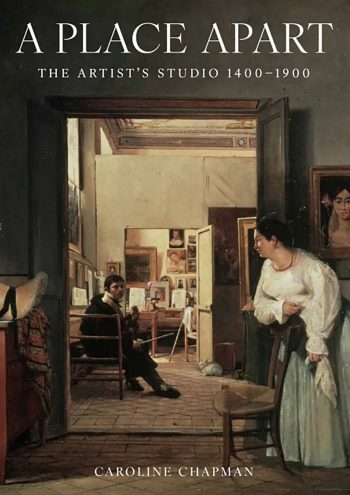 Exotic lair, freezing garret, or convivial rendezvous, artists’ studios reflect their personalities, the way they work, their dreams, and obsessions. Some are battlegrounds where hopes are dashed and original concepts fail dismally in their execution. A few artists became celebrities and flaunted their success by furnishing huge studios with exotic objects, while others lived in a haze of opium in squalid tenements in Montmartre. Spanning 500 years of Western art history from 1400 to 1900, A Place Apart describes the skilful techniques employed in a Renaissance workshop, Michelangelo’s agony and ecstasy while painting the Sistine Chapel, the murky world of the artist’s model, the looting by Napoleon of Veronese’s masterpiece, Van Gogh’s wretched first studio, how Géricault painted his Raft of the Medusa, the way Rodin worked in his plaster-spattered environment, and the ateliers of the Impressionists in Paris.
Caroline Chapman worked as a picture researcher for many of the principal UK publishers before becoming an editor and an author. Her publications include Russell of The Times: War Dispatches and Diaries, Elizabeth and Georgiana: The Duke of Devonshire and His Two Duchesses, John and Joséphine: The Creation of The Bowes Museum, Eighteenth-Century Women Artists: Their Trials and Tribulations, and Nineteenth-Century Women Artists: Sisters of the Brush.
Exhibition | ‘Fruit of Friendship’: Portraits by Mary Beale
From Philip Mould & Co:
‘Fruit of Friendship’: Portraits by Mary Beale
Philip Mould & Company, London, 25 April — 19 July 2024
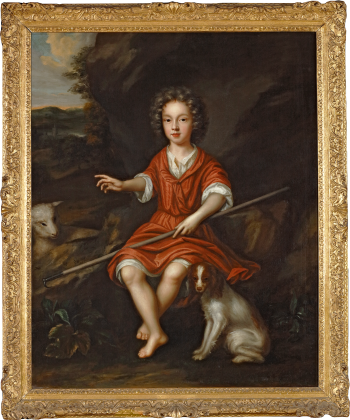
Mary Beale, Portrait of a Young Boy Seated in a Landscape, 1680s, oil on canvas, 127 × 102 cm.
Mary Beale (1633–1699) was one of Britain’s first professional woman artists. Philip Mould & Company’s forthcoming exhibition ‘Fruit of Friendship’: Portraits by Mary Beale, opening this spring, will feature twenty-five of her works from public and private collections, spanning her entire career and including self-portraits, portraits of her family and friends, and formal commissions.
The exhibition will also shed light on Beale’s studio practice and highlight its radical reversal of conventional gender roles for the period. Beale’s husband Charles dedicated himself to his wife’s career and supported her studio diligently by priming canvases, manufacturing pigments, and recording business in a series of notebooks. The exhibition will present three works not seen in public before, including an early re-discovered portrait of the artist’s husband and a portrait of Anne Sotheby, which will be displayed in the gallery for two weeks before it is exhibited in Tate Britain’s upcoming exhibition Now You See Us: Women Artists in Britain, 1520–1920.
The exhibition will be complemented by an openly available online catalogue. In anticipation of a comprehensive printed publication scheduled for summer 2024, this online resource will be an accessible guide to her works and their significance.
Ellie Smith and Lawrence Hendra, Fruit of Friendship: Portraits by Mary Beale (London: Paul Holberton Publishing, 2024), 160 pages, ISBN: 978-1913645748, £25.
◊ ◊ ◊ ◊ ◊
Note (added 4 September 2024) — The posting was updated to include the hardback catalogue.
New Book | Glorious Qing: Decorative Arts in China, 1644–1911
From the University of Washington Press:
Claudia Brown, Glorious Qing: Decorative Arts in China, 1644–1911 (Seattle: University of Washington Press, 2024), 336 pages, ISBN: 978-0295751917, $70.

With over 250 color illustrations, this companion volume to Claudia Brown’s Great Qing: Painting in China, 1644–1911 covers an array of superbly crafted objects of art produced during China’s last dynasty. It features ceramics, metalwork, textiles, lacquer, glass, jade, and works of bamboo selected from collections in North America, Europe, China, and Taiwan. Art historian Brown probes the materials, motivations, technologies, and skills of Qing period artists, along with trends in art patronage and collecting. She considers objects of private patronage, including snuff bottles and instruments for the scholar’s desk, alongside imperial commissions, palace furnishings, and pieces made for export in the flourishing East-West trade market. Moving chronologically from one emperor’s reign to the next, Glorious Qing offers a comprehensive survey of Qing decorative arts that will delight experts and novices alike, from collectors to students of art history.
Claudia Brown is professor of art history at Arizona State University and research curator for Asian art at the Phoenix Art Museum. She is author of Great Qing: Painting in China, 1644–1911.
New Book | The Ghost in the City: Luo Ping and the Craft of Painting
From the University of Washington Press:
Michele Matteini, The Ghost in the City: Luo Ping and the Craft of Painting in Eighteenth-Century China (Seattle: University of Washington Press, 2023), 248 pages, ISBN: 978-0295750958, $65.
 In 1771 the artist Luo Ping (1733–1799) left his native Yangzhou to relocate to the burgeoning hub of Beijing’s Southern City. Over two decades, he became the favored artist of a cosmopolitan community of scholars and officials who were at the forefront of the cultural life of the Qing-dynasty (1644–1911). From his spectacular ghost paintings to his later work exploring the city’s complex history, compressed spatial layout, and unique social rituals, Luo Ping captured the pleasures and concerns of a changing world at the end of the Qing’s ‘Prosperous Age’. This study takes the reader into the vibrant artistic and literary cultures of Beijing outside the court and to the networks of scholars, artists, and entertainers that turned the Southern City into a place like no other in the Qing empire. At the center of this narrative lie Luo Ping’s layered reflections on the medium of painting and its histories and formal conventions. Close reading of the work of Luo Ping and his contemporaries reveals how this generation of experimental artists sought to reform ink painting, paving the way for further developments in the nineteenth and twentieth centuries. Drawing on a vast range of textual and visual sources, The Ghost in the City shares groundbreaking research that will transform our understanding of the evolution of modern ink painting.
Michele Matteini is assistant professor of art history at New York University and associate faculty at the Institute of Fine Arts.
c o n t e n t s
Acknowledgments
Note on Romanization
Introduction
1 The Dream of the Southern City
2 Luo Ping from Yangzhou
3 Textures of Samsara
4 Landscapes of Culture
Epilogue Luo Ping’s Returning Home
Dramatis Personae
Glossary of Chinese Characters
Notes
Bibliography
Index










 Enfilade
leave a comment