Symposium | New Discoveries in Furniture and Historic Interiors
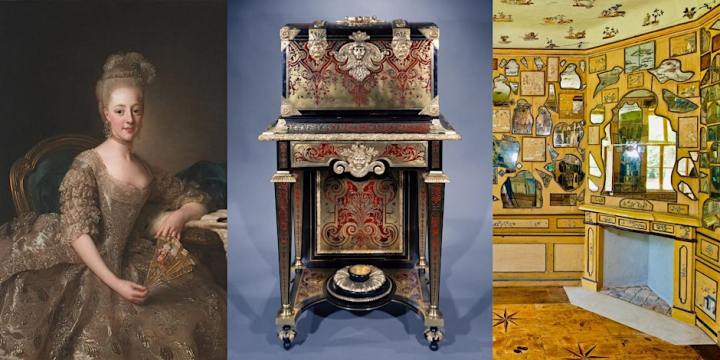
Left: Alexander Roslin, Portrait of Hedvig Elisabet Charlotta, Princess of Sweden, detail, 1775 (Nationalmuseum, Sweden). Center: André-Charles Boulle, Coffer-on-stand (Chatsworth House Trust). Right: Mirror shard cabinet, Apartment of Margravine Wilhelmine of Bayreuth, ca. 1750 (Old Palace of the Hermitage in Bayreuth; photo by Achim Bunz).
◊ ◊ ◊ ◊ ◊
From the reservation page at Eventbrite:
New Discoveries in Furniture and Historic Interiors
University of Buckingham, London Campus, 23 January 2026
Registration due by 19 January 2026
The Furniture History Society invites you to its eighth Early Career Research Symposium, to be held at the University of Buckingham’s London campus, 51 Gower Street, from 9.30am to 5pm on Friday, 23 January. Part of the Society’s Early Career Group (ECG) programme, the symposium features current research by emerging scholars in furniture history, the decorative arts, and historic interiors. The programme reflects the wide range of interests among early-career researchers, with speakers from Britain, Sweden, France, Italy, Germany, and the United States. The event is free to attend, but advance registration via Eventbrite is required by midnight (GMT) on Monday, 19 January. The limited number of places are allocated on a first-come, first-served basis. The symposium will be recorded and made available for one month to registered participants. Any enquiries about this event or the Early Career programme should be directed to grants@furniturehistorysociety.org.
The day is made possible thanks to the generous support of the University of Buckingham, the Della Howard Fund, and the Oliver Ford Trust.
p r e s e n t a t i o n s
• Mary Algood (V&A/RCD History of Design Programme, UK) — Makers of Funeral Furniture in 17th-Century England
• Tristan Fourmy (Institut National du Patrimoine, France) — Hercules in the Decorative Arts in 18th-Century France
• Laini Farrare (University of Delaware, USA) — Atlantic Mahogany: Enslavement, Labor, and the Early American Windsor Chair
• Francesco Montuori (European University Institute, Italy) — Beyond Chinoiserie: The Gabinetto di Porcellana and its Floor
• Anne Weiss (University of Cologne, Germany) — Status and Space: Dynastic References in the Furnishings of Wilhelmine von Bayreuth’s Apartments in the New Palace and Old Palace of the Hermitage in Bayreuth, 1735–1758
• Karolina Laszczukowska (University of Uppsala, Sweden) — The Material Hierarchies in the Furnishings and Interiors of the Private Apartments of Princess Sofia Magdalena and Duchess Hedvig Elisabet Charlotta at Stockholm Palace in 1766 and 1774
• Katherine Hardwick (Chatsworth House, UK) — Garrets Full of the Commodity? Collecting Boulle at Chatsworth
• Paul Giraud (Institut National du Patrimoine, France) — Collecting Italian 18th-Century Furniture at the Belle Epoque: The Origins of Interior Design
• Justine Lecuyer (Sorbonne, France) — Crafting Comfort: Upholstery and Textile Aesthetics in 19th-Century Interiors
• Eleonora Drago (Civic Museums of Treviso, Italy) — Paul Albert Bernard and the Decoration of the French Room at the Biennale in 1905: An Homage to Venice and France from a Decorative Skylight
Exhibition | The Count of Artois, Prince and Patron
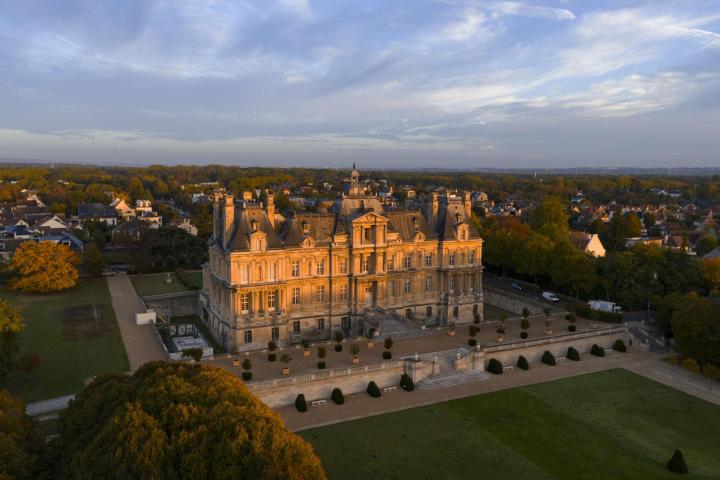
Château de Maisons, in Maisons-Laffitte, a northwest outer suburb of Paris, about 12 miles from the city center
(Photo: © EPV / Thomas Garnier)
◊ ◊ ◊ ◊ ◊
From the Château de Versailles:
The Count of Artois, Prince and Patron: The Youth of the Last King of France
Château de Maisons, Maisons-Laffitte, 14 November 2025 — 2 March 2026
The result of a partnership between the Centre des Monuments Nationaux and the Palace of Versailles, this exhibition traces the life of the Count of Artois (1757–1836), brother of Louis XVI and the future Charles X, through his residences, his artistic projects, and his passions. From the splendor of the Château de Maisons to the count’s exile in 1789, it reveals the journey of a refined prince at the heart of the 18th century.
The exhibition begins with a presentation of the Château de Maisons in the 18th century and then traces the life of the Prince of Artois from his birth to his exile. The prince’s personality, his life, his patronage, and his taste are explored through a great variety of objects: graphic arts, paintings, objets d’art, sculptures, furniture, curiosities, and books. The exhibition also highlights the prince’s interest in architecture, as he was the last owner of the Château de Maisons under the Ancien Régime. Sourced primarily from the collections of the Palace of Versailles, the exhibition benefits from additional prestigious loans from the National Archives, the National Library of France, the Louvre Museum, the Mobilier National, the Château de Fontainebleau, the Carnavalet Museum, the Musée de l’Armée – Invalides, the municipal library of Versailles, and the Fine Arts Museums of Amiens and Reims, as well as from private collections.
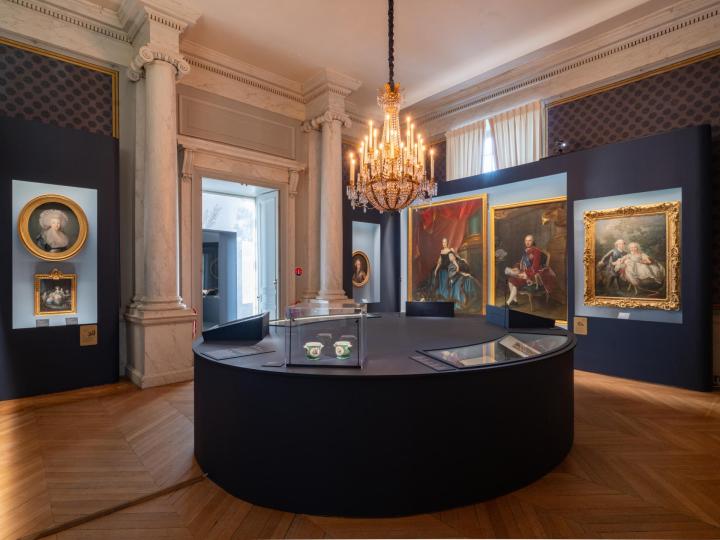
The exhibition as installed at the Château de Maisons
(Photo: © EPV / Thomas Garnier)
◊ ◊ ◊ ◊ ◊
The Count of Artois, Future Charles X
Reputed for his frivolous spirit and taste for luxury, the Count of Artois was both an attractive and controversial figure, eccentric yet conservative. Charles-Philippe of France, known under the title Count of Artois, was born in Versailles on 9 October 1757. He was the grandson of Louis XV and the brother of Louis XVI and the future Louis XVIII. He became King of France upon the death of the latter in 1824, under the name Charles X, and soon emerged as the representative of the most uncompromising Catholic faction. He was consecrated at Reims the following year. The July Ordinances of 1830, which restricted freedom of the press and dissolved the Chamber, triggered an uprising that became known as the Three Glorious Days. Faced with the revolt, Charles X abdicated and left France. His exile led him first to Scotland, then to Prague, and finally to Istria (a peninsula shared by Slovenia, Croatia, and Italy), where he died on 6 November 1836.
A Taste for Innovation
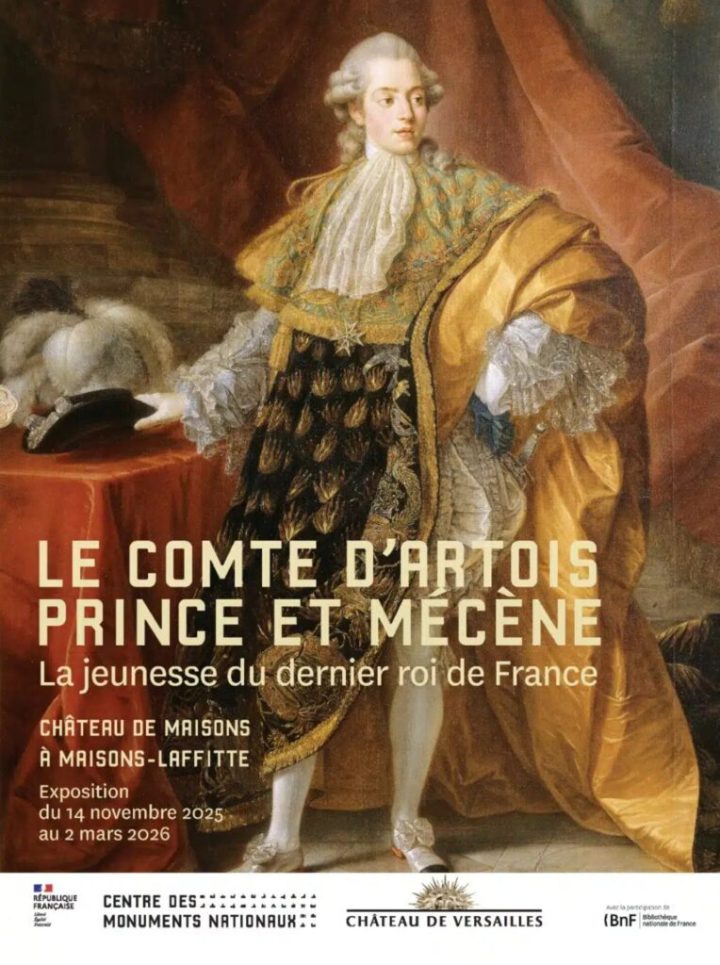 From an early age, the Count of Artois distinguished himself through his marked interest in splendor and refinement, coupled with an unrestrained passion for the modern currents of art and fashion. He was very close to Marie-Antoinette at the beginning of her reign, and they shared this common enthusiasm. However, unlike the queen, constrained by the demands of court etiquette, the Count of Artois enjoyed far greater freedom to adopt and promote the latest trends.
The château de Maisons, a masterpiece by François Mansart, was built from 1633 onward for René de Longueil, a magistrate of the Parliament of Paris. Designed as a pleasure residence, it became, as early as the 17th century, a place admired by the court. King Louis XIV himself visited it several times. In the following century, the estate entered a new era of splendor when, in 1777, the Count of Artois acquired it. He commissioned the architect François-Joseph Bélanger to transform the château with ambitious embellishment projects, refined interior decoration, and modern gardens. The count intended to make it both a setting for entertainment and a symbol of aristocratic refinement. But the upheavals of 1789 brought the work to a halt, and the prince’s property was confiscated.
After the Revolution, the château passed through various hands, from Marshal Lannes under the Empire to the banker Jacques Laffitte, who subdivided the park. The château was saved from ruin at the beginning of the 20th century thanks to its listing as a historic monument and its acquisition by the State. Today, restored and open to the public, the Château de Maisons remains a jewel of the Grand Siècle and still bears the mark of the Count of Artois’s lavish ambitions, whose tenure constitutes one of the most brilliant episodes in its history.
A Dialogue between Collections
The partnership established in 2013 between the Centre des Monuments Nationaux and the Palace of Versailles creates a dialogue between collections that are too often overlooked and major landmarks of France’s national heritage. Temporary exhibitions allow both institutions to pool their resources in order to offer as many people as possible the opportunity to discover, or rediscover, chapters of French history within the prestigious setting of national monuments. The CMN and the Palace of Versailles have concluded a deposit agreement that will allow the return and presentation, in situ, of works that were once at Maisons during the time of the Count of Artois, seized during the Revolution, and later kept at Versailles.
Curators
• Laurent Salomé, director of the National Museum of the Palaces of Versailles and Trianon
• Vincent Bastien, scientific collaborator at the Palace of Versailles
• Benoît Delcourte, chief curator at the Palace of Versailles
• Raphaël Masson, chief curator at the Palace of Versailles
• Clotilde Roy, responsible for enriching the collections of the Centre des Monuments Nationaux
• Gabriel Wick, doctor of history
Vincent Bastien, Benoît Delcourte, and Clotilde Roy, eds., Le Comte d’Artois, Prince et Mécène: La Jeunesse du Dernier Roi de France (Paris: Éditions du patrimoine, 2025), 96 pages, ISBN: 978-2757710821, €16.
At Christie’s | From the Collection of Arthur Georges Veil-Picard

Jean-Honoré Fragonard, The Happy Family (L’Heureuse Famille, alternatively: Young Couple Contemplating a Sleeping Child, The Return Home, or The Reconciliation), oil on canvas, 70 × 89 cm. Estimate: €1,500,000–2,000,000.
◊ ◊ ◊ ◊ ◊
From the press release (8 January) for the sale:
Chefs-d’oeuvre de la collection Veil-Picard, Auction #24451
Christie’s, Paris, 25 March 2026
On March 25, Christie’s is proud to present at auction a group of thirty masterpieces from the collection of Arthur Georges Veil-Picard (1854–1944). Rarely exhibited, this collection—whose works are often known only through black-and-white reproductions—remains among the most mysterious and coveted. Featuring works by Jean-Honoré Fragonard, Hubert Robert, Jean-Antoine Watteau, Gabriel de Saint-Aubin, Élisabeth Vigée Le Brun, and Marie-Suzanne Roslin, the sale brings together the greatest names in 18th-century French painting and could, on its own, embody this golden age of art history in France. A true labor of love for the 18th century, the collection perfectly illustrates the joviality, sense of pleasure, and freedom so characteristic of the period. Estimated at €5–8 million, this exceptional ensemble represents a long-awaited event for collectors in search of masterpieces.

Marie-Suzanne Roslin, Madame Hubert Robert, née Anne-Gabrielle Soos, 1771, pastel. Estimate: €70,000–100,000.
Pierre Etienne, Vice President of Christie’s France and International Director of the Old Masters Department, and Hélène Rihal, Head of the Old Master and 19th-Century Drawings Department, note: “There are works one searches for over many years, desired even without having seen them. This is the case for these museum-quality pieces from the Veil-Picard collection, kept hidden within the family for decades. A heritage preserved with pride, which Christie’s is honored to unveil to the public for the first time. The sale is also an opportunity to pay tribute to Arthur Georges Veil-Picard, who assembled this unique collection purely out of his love for drawing and painting and his taste for marvelous images.”
Banker and brilliant entrepreneur at the helm of the renowned Pernod distillery, Arthur Georges Veil-Picard began building his collection in the early 20th century. A free-spirited collector—almost self-taught, instinctive, and passionate about the 18th century—he gathered important treasures in his private mansion in the Plaine Monceau district of Paris. Over forty years, he created an ensemble that remains a reference worldwide, especially among museum curators and collectors of Old Master paintings and drawings. A discerning connoisseur, Veil-Picard also inherited a lineage of knowledgeable collectors and generous benefactors of Alsatian origin. The Louvre and the Musée des Beaux-Arts et d’Archéologie in Besançon, the family’s hometown, benefited from this generosity on numerous occasions. Today, many works from the Veil-Picard collection are housed in the Louvre, Versailles, and the Metropolitan Museum of Art in New York.
Among Veil-Picard’s favorite artists, Fragonard best reflects the collector’s jovial character—he owned up to sixteen of his works, five of which are included in the sale. The centerpiece, The Happy Family, perfectly illustrates the ‘Fragonard style’ (€1,500,000–2,000,000). Painted in the 1770s, after the Italian journey that liberated the painter’s manner, this work showcases Fragonard’s lively, spontaneous brushwork. Its tender scene is enhanced by the voluptuousness of a deliberately playful composition. Of the various versions of the work, the one offered here is considered by scholars to be the first and most representative of Fragonard’s palette. Two other versions remain in private collections, and a preparatory study is held at the André Malraux Museum in Le Havre.

Hubert Robert, Madame Geoffrin’s Luncheon.
The same lightness is found in a delightful portrait, The Little Coquette, also known as The Peeping Girl (€400,000–600,000). This mischievous, tilted face offers the quintessence of Fragonard’s art: a painting of pleasure and spontaneity. Beyond its aesthetic and expressive qualities, it boasts a prestigious provenance, having belonged to Hippolyte Walferdin, a great admirer of 18th-century art, and later to Count de Pourtalès—collectors among the most enlightened of their time, still celebrated today. A charming, large wash drawing, Woman with a Dove, also came from Walferdin’s collection before being acquired by the Rothschild family (€200,000–300,000).
Intimate, confidential scenes remain highly prized by lovers of 18th-century painting. Works by Hubert Robert, Madame Geoffrin’s Luncheon and An Artist Presents a Portrait to Madame Geoffrin, perfectly exemplify this taste. Famous for her salon that gathered Enlightenment scholars and artists, Madame Geoffrin embodies the spirit of her century. These two paintings, depicting her in her drawing room and bedroom, brilliantly showcase Robert’s talent for capturing the atmosphere of his time. They are also the last works commissioned by this celebrated patron (estimate on request).
Among the twenty drawings in the collection, a large sheet in red chalk and black stone by Antoine Watteau stands out as a major rediscovery in the artist’s corpus. Illustrated in black and white in the 1996 catalogue raisonné of Watteau’s drawings, it was described there as “from an inaccessible private collection.” Reminiscent of the celebrated Pierrot in the Louvre, this Actor Holding a Guitar under His Arm has never been exhibited publicly (€600,000–800,000). A remarkable and joyful drawing by Gabriel de Saint-Aubin offers a vivid example of his talent as a chronicler of Parisian life. While female nudes were forbidden at the Academy, the artist depicts a painter and his model in the intimacy of the studio (The Private Academy, €150,000–200,000). A pastel by Marie-Suzanne Roslin, one of the rare female academicians of the Enlightenment, presents a delicate portrait of Madame Hubert Robert, née Anne-Gabrielle Soos (€70,000–100,000). Finally, in a more historical vein, the collection also includes two pairs of drawings dated 1783 by Jean-Michel Moreau, illustrating festivities held in honor of the Dauphin’s birth by the royal couple at the Hôtel de Ville (€300,000–500,000) and at the Palais Royal (€70,000–100,000).

Gabriel de Saint-Aubin, The Private Academy, 1776. Estimate: €150,000–200,000.
Exhibition | Virtue and Vice: Allegory in European Drawing
On view this spring at The Getty:
Virtue and Vice: Allegory in European Drawing
Getty Center, Los Angeles, 3 March — 7June 2026

This rotation from Getty’s collection explores how European artists from the 16th to 19th centuries made drawings to criticize bad behavior as well as praise virtuous deeds. Drawings of proper and improper conduct range from straightforward examples (charity, lust, and greed) to complex allegories (virtue, decadence, and friendship). Whether warning against sinful ways or celebrating how one should behave, drawings visualized moral codes, political ideologies, and social norms.
Image: Jacques de Gheyn II, Allegory of Avarice, ca. 1609, pen and brown ink, 18 × 13 cm (Los Angeles: The J. Paul Getty Museum, 2003.23).
Exhibition | Learning to Draw

Hubert Robert, A Draftsman in the Capitoline Gallery, detail, ca. 1765, red chalk, 46 × 34 cm
(Los Angeles: Getty Museum, 2007.12)
◊ ◊ ◊ ◊ ◊
Now on view at The Getty:
Learning to Draw
The Getty Center, Los Angeles, 21 October 2025 — 25 January 2026
Drawing is a skill, gained like any other through study and practice. Combining the movement of the hand with the dedication of the mind, drawing was considered the foundation of the arts of painting, sculpture, and architecture since the Renaissance. Proficiency in drawing was critical for exploring, inventing, and communicating ideas visually, but how was this foundational ability actually learned? This exhibition explores artistic training and the mastery of drawing in Europe from about 1550 to 1850.
Call for Papers | The Lessons of Rome
From ArtHist.net:
Les Leçons de Rome / The Lessons of Rome, 9th Edition
Lyon Museum of Fine Arts, 13 March 2026
Proposals due by 15 February 2026
This study day aims to provide a space of reflection for anyone who grasps Italy as an architectural, urban, and landscape research laboratory. Defining Italy as a laboratory involves analyzing contexts of urban policies as well as design experiences, theories, practices, legacies, mutations, and prospects. It means building knowledge and culture, learning and developing tools to conceive the present and to enrich contemporary practices. The Lessons of Rome will provide an opportunity to engage current and upcoming research, to share existing and generate new knowledge and dialogues with Italy. Professionals, students, PhD candidates, researchers, and people from various academic disciplines, schools, and nationalities are welcome. Th study day is organized in partnership by the Ecole nationale supérieur d’architecture de Lyon, the LAURE, the Institut Culturel Italien of Lyon, and the Lyon Museum of Fine Arts.
Researchers wishing to contribute are invited to send a proposal with a title, an abstract (about 200 words), and a short biography to rome@lyon.archi.fr before 15 February 2026. The official language of the day is French, but proposals and papers may also be submitted in English.
Scientific Committee
Nicolas Capillon, Ecole nationale supérieure d’architecture de Lyon
Julie Cattant, Ecole nationale supérieure d’architecture de Lyon
Benjamin Chavardès, Ecole nationale supérieure d’architecture de Lyon
Lorenzo Ciccarelli, Università degli studi di Firenze
Philippe Dufieux, Ecole nationale supérieure d’architecture de Lyon
Federico Ferrari, Ecole nationale supérieure d’architecture de Paris-Malaquais
Audrey Jeanroy, Université de Tours
Manuel Lopez Segura, Graduate School of Design, Harvard University
Alessandro Panzeri, Ecole nationale supérieure d’architecture de Lyon
Davide Spina, The University of Hong Kong
Call for Papers | Rethinking Early Modern Prints, 15th–18th Centuries
From ArtHist.net:
Rethinking Early Modern Prints Today: New Questions and New Approaches
Actualités et perspectives de la recherche sur l’estampe à l’époque moderne
Université de Poitiers, CRIHAM, 24 September 2026
Proposals due by 16 February 2026
This symposium aims to bring together established researchers, early career scholars, PhD candidates, and students—in art history or related disciplines—to present and discuss current research and perspectives on prints in the early modern period (15th–18th centuries). It seeks to provide a forum for exchange devoted to recent approaches and ongoing projects, whether they focus on the practices and techniques of printmaking, on its networks of production, circulation, and exchange, or on the place of the printed image within visual and material culture. Presentations, lasting around twenty minutes, may address, without geographical restriction, any aspect of the production, circulation, or reception of prints, from historical, artistic, material or theoretical perspectives.
As part of the Creation, Corpus, Heritage (Création, corpus, patrimoine) program of the Centre de Recherches Interdisciplinaires en Histoire, Histoire de l’Art et Musicologie (CRIHAM), the symposium will take place at the University of Poitiers and will also be available via videoconference. Please submit an abstract with a title (in French or English) of no more than 2500 characters (including spaces) and a short biographical note (institutional affiliation, contact details, and research topics) by 16 February 2026 to je.rechercheestampe@gmail.com.
Organizers
• Teoman Akgönül, University of Poitiers (CRIHAM) and INHA
• Amélie Folliot, Rennes 2 University (HCA)
• Estelle Leutrat, University of Poitiers (CRIHAM)
• Louise Quentel, University of Poitiers (CRIHAM)
Exhibition | Painters, Ports, and Profits
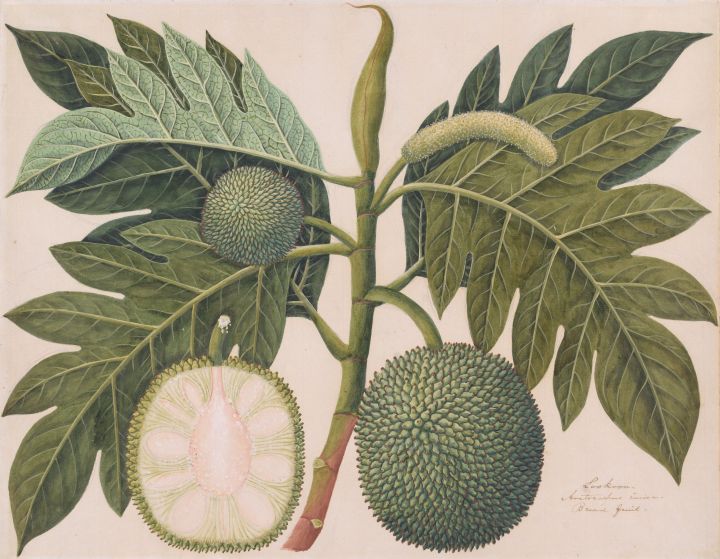
Unknown artist (Company style), Breadnut (Artocarpus camansi), ca. 1825, watercolor, gouache, and graphite on medium, slightly textured, cream laid paper, sheet: 15 × 19 1/4 inches (New Haven: Yale Center for British Art, Paul Mellon Fund, B2022.5).
◊ ◊ ◊ ◊ ◊
From the press release for the exhibition, which opens today:
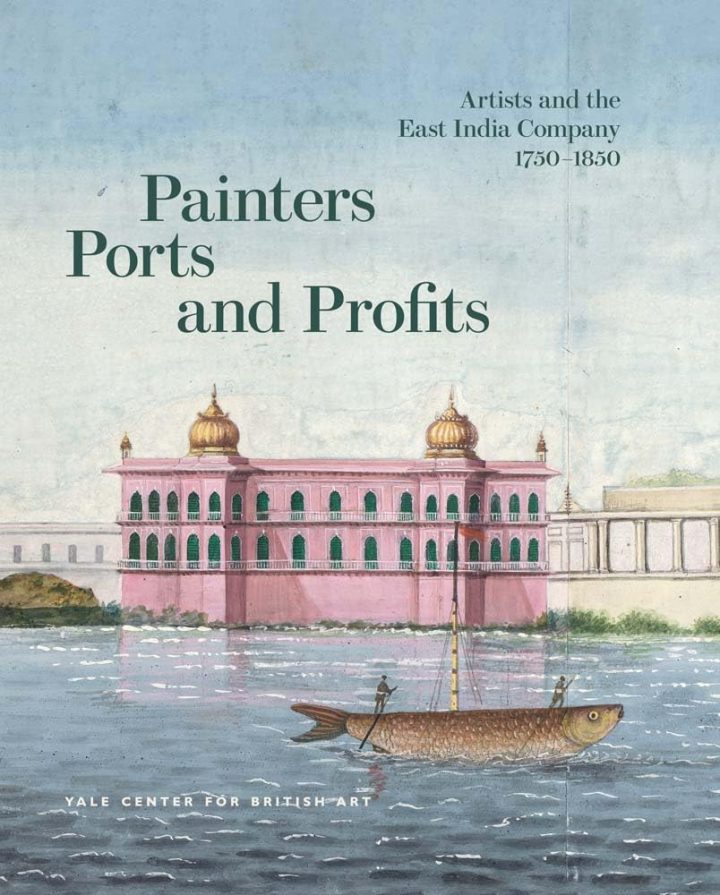
Painters, Ports, and Profits: Artists and the East India Company, 1750–1850
Yale Center for British Art, New Haven, 8 January — 21 June 2026
Curated by Laurel Peterson and Holly Shaffer
The Yale Center for British Art presents Painters, Ports, and Profits: Artists and the East India Company, 1750–1850 from January 8 through June 21, 2026. Spanning a century of artistic production, the exhibition reveals the material and technical innovations of the Indian, Chinese, and British artists whose work and lives were shaped by the British East India Company’s global reach. Featuring more than one hundred objects, Painters, Ports, and Profits highlights the beauty and range of the extraordinary artwork produced within the context of one of the most powerful and ruthless corporations in history.
 “This exhibition brings to light an astonishing chapter of global art history, when artistic innovation and exchange flourished under the shadow of empire,” said Martina Droth, Paul Mellon Director of the Yale Center for British Art. “It tells the story of direct encounters between artists from different continents and traditions, who responded to one another by experimenting with new materials and methods. We are thrilled to share these important, and rarely seen, works from our collection and to invite new reflection on their artistic legacy.”
Between 1750 and 1850, the Company’s growing commercial, military, and political operations linked an incredibly varied group of artists—amateurs, soldiers, and professionals—into a vast network that stretched from London to Calcutta (Kolkata) to Canton (Guangzhou). As goods, people, and ideas circulated through the Company’s networks, artists experimented with papers, pigments, and methods, adapting techniques from different traditions to develop a striking visual language that connected art to the expanding global economy.
“We are excited to take visitors on a journey to ports and trading cities across India and China where artists produced captivating and innovative works of art,” said exhibition curators Laurel O. Peterson and Holly Shaffer. “The period of the East India Company is one in which art and business intersected. There is a profound tension between the ventures of a global corporation and the works of beauty created by the artists in its orbit. With technical brilliance, these artists ingeniously fused traditions and materials together to develop new ways of making, picturing, and selling.”
Years in development, the preparations for Painters, Ports and Profits included extensive original research and careful technical study by curators and conservators at the YCBA in collaboration with conservation scientists at Yale’s Institute for the Preservation of Cultural Heritage. The resulting exhibition illuminates the museum’s deep holdings of Asian art, showcasing many exceptional works that have hardly ever or never been displayed. Highlights of the exhibition include stunning small- and large-scale portraits, such as the monumental Woman Holding a Hookah at Faizabad, India (1772) by Tilly Kettle and the intimate Portrait of a Woman (ca. 1850) by an artist from the circle of eminent painter Lam Qua. Watercolor drawings of a great Indian fruit bat by Bhawani Das (1778–82) and breadnut by an artist once known (ca. 1825), among others, record the flora and fauna of the Company’s domain with striking naturalism. A spectacular thirty-seven-foot-long scroll uses delicate watercolor to depict the city of Lucknow, India, in panoramic detail, which recent technical analysis has revealed was completed by multiple artists working in collaboration.
Painters, Ports, and Profits: Artists and the East India Company, 1750–1850 is organized by the Yale Center for British Art. The exhibition is curated by Laurel O. Peterson, Assistant Curator of Prints and Drawings at the YCBA, and Holly Shaffer, Associate Professor in the Department of the History of Art and Architecture at Brown University.
r e l a t e d p r o g r a m m i n g
First Look | Painters, Ports, and Profits: Artists and the East India Company, 1750–1850
Thursday, 15 January, 4pm, Lecture Hall and Livestream
Spring Exhibitions Openings
Thursday, 26 February, 4pm, Lecture Hall and Livestream
Curator Tours
Thursdays, 22 January, 26 March, 16 April, 21 May, and 18 June, 4pm
Docent Tours
Saturdays, 3pm
The catalogue is published by YCBA and distributed by Yale UP:
Laurel O. Peterson and Holly Shaffer, eds., Painters, Ports, and Profits: Artists and the East India Company, 1750–1850 (New Haven: Yale Center for British Art, 2026), 280 pages, ISBN: 978-0300286540, $65. With contributions by Mark Aronson, Tim Barringer, Swati Chattopadhyay, Soyeon Choi, Anita Dey, Gillian Forrester, Navina Najat Haidar, Richard R. Hark, Emma Hartman, Brooke Krancer, Margaret Masselli, Kaylani Madhura Ramachandran, Romita Ray, Yuthika Sharma, Marcie Wiggins, Winnie Wong, and Tom Young.
Featuring more than one hundred objects drawn primarily from the YCBA’s collection, including architectural drawings, watercolors, and hand-colored aquatints, the catalog critically reconsiders the vibrant creative exchanges between artists in India, China, and Britain during a period driven by ruthless commercial and colonial expansion.
New Book | The Royal Pavilion, Brighton
From Yale UP:
Alexandra Loske, The Royal Pavilion, Brighton: A Regency Palace of Colour and Sensation (New Haven: Yale University Press, 2025), 272 pages, ISBN: 978-0300266665, $50.
 The first in-depth study since the 1980s of the Royal Pavilion in Brighton, a building that is often considered the most impressive architectural expression of the Romantic imagination and that has become a hallmark of Regency style
Created between 1787 and 1823 by George IV, the Royal Pavilion in Brighton is perhaps the most daring and enchanting example of a building that expresses the European fascination with what in the early nineteenth century was considered the ‘Orient’, in particular China and India. The building, with its Indian-inspired exterior, was the work of the renowned architect John Nash, who with the contributions of several other gifted and inventive architects, artists, and designers, created a building that draws you in, takes you on a journey, and plays with your senses. Featuring new photography, this lavishly illustrated book will provide a fresh look at the sumptuous Chinoiserie interiors of the Royal Pavilion and their enduring appeal. Drawing on recent research, conservation projects, and the unprecedented loan exhibition A Prince’s Treasure: From Buckingham Palace to the Royal Pavilion (2019–22), this book celebrates the colours and sensual beauty of these interiors while situating the Royal Pavilion in the context of the time of its creation and development under royal ownership, from its beginning in the wake of the French Revolution, through its transformation and extension during and just after the Napoleonic Wars, to its fate and legacy in the early Victorian era.
Alexandra Loske is a British-German art historian, writer, and curator with a particular interest in late-eighteenth and early nineteenth-century European art and architecture, specialising in the history of colour. She has been working at the University of Sussex since 1999, where she also studied art history and completed an AHRC-funded DPhil in 2014. The subject of her doctoral thesis was the use of colour and the application of colour theory in the Royal Pavilion, Brighton. Since 2014 Alexandra has been a curator at the Royal Pavilion. Since 2022, she has been the curator of the Royal Pavilion and Historic Properties at Brighton & Hove Museums.
◊ ◊ ◊ ◊ ◊
Note added (21 January 2026) — Alexandra Loske gave an online talk related to the book on 22 October 2025. The event was hosted by Cooper Hewitt and moderated by Jamie Kwan, the museum’s Assistant Curator of Drawings, Prints, and Graphic Design. A recording of the talk is available here.
New Book | A Guide to Regency Dress
From Yale UP:
Hilary Davidson, A Guide to Regency Dress: From Corsets and Breeches to Bonnets and Muslins (New Haven: Yale University Press, 2025), 248 pages, ISBN: 978-0300282412, $25.
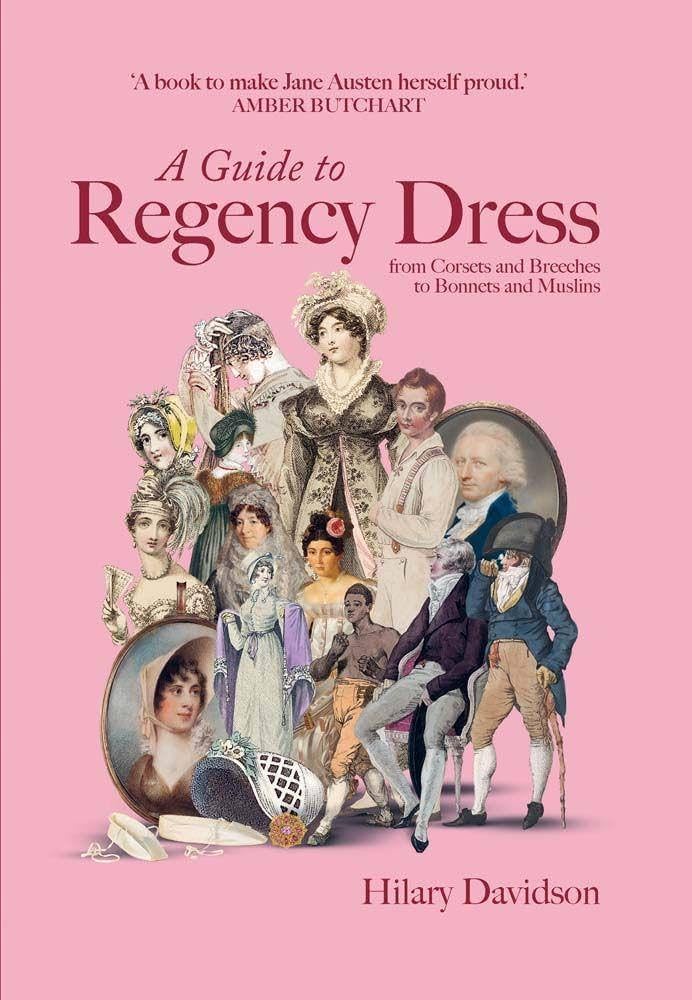 An accessible, fun, yet authoritative guide to male and female Regency fashions.
Celebrated dress historian Hilary Davidson brings together nearly 20 years of research on Regency fashion in an illustrated guide for the first time. All the elements of the Regency wardrobe of both men and women—from coats, gowns and undergarments to shoes, accessories, beauty, hair and jewellery—are assembled, along with their textiles and trimmings. A Guide to Regency Dress is an essential companion to navigate the fashion world of Jane Austen or re-create the Regency look.
Hilary Davidson is associate professor and chair of MA Fashion and Textile Studies at the Fashion Institute of Technology, New York. She has curated, lectured, broadcast, and published extensively in her field and is author of Dress in the Age of Jane Austen: Regency Fashion and Jane Austen’s Wardrobe.










 Enfilade
leave a comment