Exhibition | Luxury and Passion: Inventing French Porcelain
Now on view at The Nelson-Atkins:
Luxury and Passion: Inventing French Porcelain
The Nelson-Atkins Museum of Art, Kansas City, 13 August 2022 — 12 August 2024
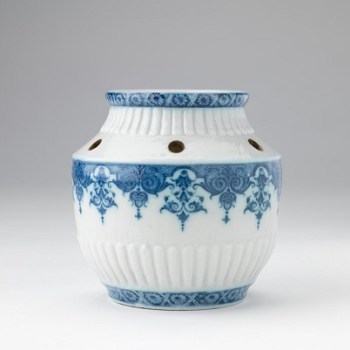
Designed by Louis Poterat, made by Louis Poterat Manufactory (Rouen, France, 1690–1696), potpourri jar, ca. 1690–96, soft-paste porcelain with underglaze enamel decoration, 12.4 × 11.4 cm (Kansas City, Missouri: The Nelson-Atkins Museum of Art, 2021.10).
Luxury and Passion celebrates the debut of a new acquisition, one of the earliest pieces of soft-paste porcelain made in France in the late 17th century. A potpourri jar, one of the handful of experimental pieces made by the Poterat Manufactory in Rouen, France, is one of only about a dozen surviving works by this brief-lived company, and only the second example in a US museum–only four exist in museums worldwide. The new acquisition gives us the opportunity to feature almost the entire collection of the museum’s important 18th-century French porcelain holdings. In this focus installation, the Nelson-Atkins explores how France launched itself into the domestic porcelain industry in the 17th and 18th centuries. This beautiful, durable type of ceramic was the focus of intense competition among European superpowers, all who raced to discover how to make this ‘white gold’ for themselves, after falling in love with imported Asian wares.
New Book | Brittle Beauty
Published by Paul Holberton and distributed by The University of Chicago Press:
Andreina d’Angeliano, Claudia Lehner-Jobst, Errol Manners, Rosalind Savill, Selma Schwartz, and Jeffrey Munger, Brittle Beauty: Reflections on 18th-Century European Porcelain (London: Ad Ilissvm, 2023), 560 pages, ISBN: 978-1912168293, £90 / $110.
 Brittle Beauty presents a superlative private collection of European porcelain—radical, rare, and in many cases unique pieces assembled over thirty years. Lavishly illustrated and insightfully researched, the book showcases eighty vessels and sculptures and includes accounts of their patrons and former owners, many as eccentric as the works themselves.
One striking attribute of porcelain is its reflective glaze. Mirror-like in a wider sense, Brittle Beauty: Reflections on 18th-Century European Porcelain examines the context in which this porcelain was created—including cultural, political, topographical, and ceremonial aspects. It also looks at related materials such as silver, textiles, and glass.
The 18th century was the golden age of porcelain in Europe, which had previously been dependent on precious imports from the Far East. The discovery of the formula for hard-paste porcelain in Dresden in 1709 inspired the establishment of manufactories throughout the Continent. However, its popularity was not purely commercial: porcelain—with its meld of art and science, beauty and intellect, East and West—became a symbol of Enlightenment culture for every princely court. Oriental motifs and European forms were synthesised with deceptive subtlety; later, creations of pure fantasy emerged, often based on travellers’ accounts of exotic lands. Familiar Occidental themes such as nature, hunting, or archaeology were paralleled by ironic narratives of love and vanity. Porcelain, with its fragile allure, is uniquely expressive of the human comedy, yet its destiny has often been brutal and tragic. This book features essays from several eminent scholars. It also showcases a wealth of stunning imagery from Sylvain Deleu, who expertly photographed the pieces, many for the first time.
Andreina d’Agliano art historian and curator, is a specialist in porcelain from Turin and Florence and has published various private and public collections.
Claudia Lehner-Jobst is an art historian specializing in European decorative arts, notably du Paquier porcelain, and Director of the Augarten Porcelain Museum, Vienna.
Errol Manners, FSA is a dealer in antique ceramics based in London and the former Chair of The French Porcelain Society and of the Ceramics Vetting Committee at TEFAF (Maastricht) and Masterpiece (London).
Dame Rosalind Savill, DBE, FBA, FSA, worked at the Victoria and Albert Museum and at the Wallace Collection (where she was Director from 1992 until 2011), and has published widely on Sèvres porcelain.
Selma Schwartz, an independent scholar, was Deputy Keeper and Curator of Porcelain at the Rothschild Collection, Waddesdon Manor for over 25 years.
Jeffrey Munger is a former curator in the Department of European Sculpture and Decorative Arts at the Metropolitan Museum of Art, New York.
New Book | My Dark Room
From The University of Chicago Press:
For 30% off US orders, visit http://www.press.uchicago.edu and enter code MDR30 at checkout (expires 31 December 2023). For 30% off UK and European orders, call +44 (0) 1243 843291 or email chicago.csd@wiley.com and redeem with promo code MDR30 (expires 7 September 2023).
Julie Park, My Dark Room: Spaces of the Inner Self in Eighteenth-Century England (Chicago: The University of Chicago Press, 2023), 344 pages, ISBN: 978-0226824758 (cloth), $105 / ISBN: 978-0226824765 (paper), $35. Also available as a PDF.
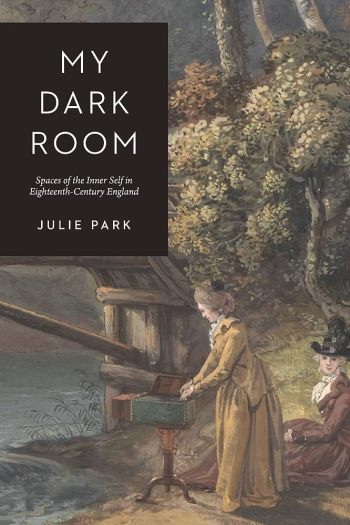 Examines spaces of inner life in eighteenth-century England to shed new light on interiority in literature and visual and material culture.
In what kinds of spaces do we become most aware of the thoughts in our own heads? In My Dark Room, Julie Park explores places of solitude and enclosure that gave eighteenth-century subjects closer access to their inner worlds: grottos, writing closets, landscape follies, and the camera obscura, that beguiling ‘dark room’ inside which the outside world in all its motion and color is projected. The camera obscura and its dreamlike projections within it served as a paradigm for the everyday spaces, whether in built environments or in imaginative writing, that generated the fleeting states of interiority eighteenth-century subjects were compelled to experience and inhabit.
My Dark Room illuminates the spatial and physical dimensions of inner life in the long eighteenth century by synthesizing material analyses of diverse media, from optical devices and landscape architecture to women’s intimate dress, with close readings of literary texts not traditionally considered together, among them Andrew Marvell’s country house poem Upon Appleton House, Margaret Cavendish’s experimental epistolary work Sociable Letters, Alexander Pope’s heroic verse epistle Eloisa to Abelard, and Samuel Richardson’s novel Pamela. Park also analyzes letters and diaries, architectural plans, prints, drawings, paintings, and more, drawing our attention to the lively interactions between spaces and psyches in private environments. Park’s innovative method of ‘spatial formalism’ reveals how physical settings enable psychic interiors to achieve vitality in lives both real and imagined.
Julie Park is Paterno Family Librarian for Literature and professor of English at the Pennsylvania State University. She is the author of The Self and It: Novel Objects in Eighteenth-Century England and coeditor of Organic Supplements: Bodies and Things of the Natural World, 1580–1790.
c o n t e n t s
Introduction
1 Country House: Making Storylines at Nun Appleton
2 Closet: Margaret Cavendish’s Writing Worlds
3 Grotto: Design and Projection in Alexander Pope’s Garden
4 Pocket: Pamela’s Mobile Settings and Spatial Forms
5 Folly: Fictions of Gothic Space in Eighteenth-Century Landscapes
Epilogue
Acknowledgments
Notes
Bibliography
Index
◊ ◊ ◊ ◊ ◊
Note (added 8 August) — The posting was updated to include the discount code.
Exhibition | UFO 1665
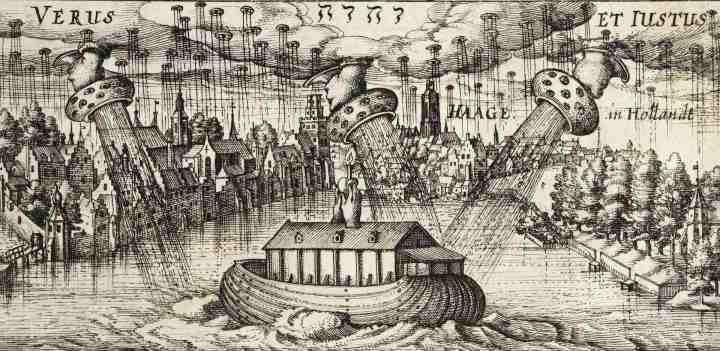
So Sehr War Nei Erzürnet Gott / Never Was God So Full of Wrath, detail, emblematic representation from Daniel Meisner, Politica – Politica, Newes Emblematisches Büchlein, I–VIII (Nürnberg, ca. 1700), engraving (Staatliche Museen zu Berlin, Kunstbibliothek).
◊ ◊ ◊ ◊ ◊
I was fortunate to see this exhibition a few weeks ago and can’t recommend it highly enough: it’s thoughtfully conceived, brilliantly installed, incredibly engaging, and deeply satisfying. It’s also just a lot of fun! A model for how to make the history of visual conventions (overlapping with history of ideas generally) broadly accessible (my thirteen-year-old daughter was riveted). It’s a reminder of how many of our categories for making sense of the world emerged in the seventeenth and eighteenth centuries. The catalogue is certainly worth ordering. –CH
UFO 1665: The Air Battle of Stralsund / Die Luftschlacht von Stralsund
Kunstbibliothek, Staatliche Museen zu Berlin, 5 May — 3 September 2023
Curated by Moritz Wullen
In April 1665, six fishermen witnessed an unexplained celestial phenomenon: an aerial battle in the skies above the Baltic Sea near Stralsund. As evening broke, a dark-grey disk appeared high above the city centre. UFO 1665 is the first exhibition of its kind to focus on this historical UFO sighting. With reference to contemporaneous visual and textual sources, the exhibition reconstructs the way this event was portrayed in the media and exposes certain paradigms and communications strategies that are still used today to determine how we report on ‘unexplained aerial phenomena’ (UAPs).
 The exhibition takes visitors on an expedition into a strange and unfamiliar world of images that otherwise remains concealed from the museum’s general audience in archives or between the pages of old books. Those who are familiar with 17th-century art only from the grand galleries of paintings may be taken aback: upon entering the exhibition space, visitors might feel they are entering a baroque parallel universe with strange symbols in the sky, airships, space rockets, and flying saucers. Everything is centred around one of the most spectacular celestial phenomena of the modern era: at 2pm on 8 April 1665, six men fishing for herring off the coast of Stralsund watch as great flocks of birds in the sky morph into warships and engage in a thunderous air battle. The decks teem with ghostly figures. When, at dusk, “a flat, round shape like a plate” appears above the St. Nicholas Church, they flee. The following day, they find that they are trembling all over and complain of pain.
Media Transformation
The media spread the news like wildfire, with the publishers of various leaflets and newspapers locked in fierce competition with each other to concoct the most colourful versions and interpretations of events. It was religious convictions in particular that were most responsible for determining how the event was transformed by the media. The general public could not have known that what had actually been witnessed was an atmospheric reflection of a sea battle that was raging just beyond the horizon. Instead, they were convinced that the universe was ruled by a god who had the power to project visions of impending disaster into the sky. The air battle was likewise perceived as a prodigium (Latin for ‘omen’ or ‘portent’).
The visual themes of the 17th century were likely also decisive in terms of determining how the media shaped depictions of the air battle, with futuristic visions of airships—which the people of the 17th century were incredibly enthusiastic about—playing a special role. More than 100 years before the first manned hot air balloon flight was conducted, Francesco Lana Terzi (1631–1687) had published his design for a flying boat borne aloft by vacuum spheres, which caused a great sensation throughout Europe. The fact that the project could never actually be realised did little to detract from the general fervour. Humankind continued to dream of conquering the skies.
The Power of Myths
Another theme of the exhibition is the power of myths: when, on 19 June 1670, lightning struck—of all places—the St. Nicholas Church, the building above which the grey disc had loomed so ominously five years earlier, the celestial phenomenon was subsequently interpreted as a sign of God’s wrath. The descriptions and accounts of the day invoked a mystical link to the destruction of Babylon at the hands of a great millstone, as it is described in the Book of Revelation. However, the popular perception of the air battle over Stralsund was not only shaped by the media, beliefs, designs, and myths of the baroque era; it also reveals the kinds of things that humans of the era were unable to envisage and comprehend. There are no 17th-century sources, for example, that mention extraterrestrials in connection with the unexplained aerial phenomena. Yet at the same time, the human imagination was already so far advanced that it could well conceive of expeditions to other inhabited planets and the kinds of propulsion systems that would be required to carry these out. Why nobody considered for a moment that extraterrestrials might appear in our skies with their own flying machines is one of the many mysteries this exhibition endeavours to solve.
An Excursion into the Present
This cultural and media-historical investigation culminates in an excursion into the present, which focuses on the videos and accounts of sightings of mysterious ‘Unidentified Aerial Phenomena’ (UAPs) made by the US military that went viral in 2019 and even made their way onto the front cover of an issue of Der Spiegel two years later. The sightings in question have given rise to a maddeningly broad spectrum of interpretations. Are they physically explicable natural phenomena, sophisticated high-tech drones made in China or Russia, extraterrestrials, or even visitors from the future? Even NASA and the Pentagon seem completely baffled. We can, however, be sure of one thing: the factors that were so crucial to the media success of the UFO of 1665 lack none of their that same potency today.
The exhibition is curated by Moritz Wullen, director of the Kunstbibliothek.
Moritz Wullen, UFO 1665: The Air Battle of Stralsund / Die Luftschlacht von Stralsund (Cologne: Wienand Verlag, 2023), 112 pages, ISBN 978-3868327502 (bilingual edition, German and English), €24.
New Book | Piranesi’s Candelabra and the Presence of the Past
From Oxford UP:
Caroline van Eck, Piranesi’s Candelabra and the Presence of the Past: Excessive Objects and the Emergence of a Style in the Age of Neoclassicism (Oxford: Oxford University Press, 2023), 224 pages, ISBN: 978-0192845665, £70 / $90.
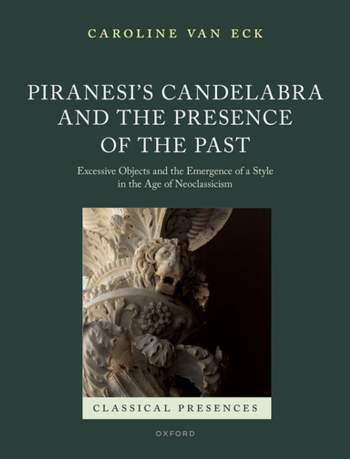 Near the end of his life, Giovanni Battista Piranesi (1720–1778) created three colossal candelabra mainly from fragments of sculpture excavated near the Villa Hadriana in Tivoli—two of which are now in the Ashmolean Museum, with the other one in the Louvre. Although these objects were among the most sought-after and prestigious of Piranesi’s works and fetched enormous prices during his lifetime, they suffered a steep decline in appreciation from the 1820s onwards, and even today they are among the least studied of the artist’s works. Piranesi’s Candelabra and the Presence of the Past uncovers the intense investment around the start of the nineteenth century—by artists, patrons, collectors, and the public—in objects that made Graeco-Roman antiquity present again. Caroline van Eck’s study examines how objects make their makers, or viewers feel that they are again in the presence of antiquity, that not only antiquity has been revived, but that classical statues become alive under viewers’ gaze. The book considers the three candelabra in depth, providing the biography of these objects, from the excavation of the Roman fragments to their entry into private and public collection. Van Eck considers the context that Piranesi gave them by including them in his Vasi, Candelabri e Cippi (1778), allowing us to rethink the processes that led to the development of neoclassicism from the perspective of the objects and objectscapes that came into being in Rome at the end of the eighteenth century.
Caroline van Eck studied art history at the Ecole du Louvre in Paris, and classics and philosophy at Leiden University. She obtained a PhD in aesthetics at the University of Amsterdam in 1994. She has held teaching positions at the Universities of Amsterdam, Groningen, and Leiden, where she was appointed Professor of Art and Architectural History in 2006. She has been a Visiting Fellow at the Warburg Institute and the Paul Mellon Centre for British Art at Yale University, a Visiting Professor in Ghent, Yale, York, and the Ecole Normale Supérieur in Paris, and in 2018 held the Panofsky Chair at the Zentralinstitut für Kunstgeschichte in Munich. In September 2016, she was appointed Professor of Art History at the University of Cambridge. She delivered the 2017 Slade Lectures in Oxford.
c o n t e n t s
List of Illustrations
Introduction
1 ‘A Neoclassical Dream and an Archaeologist’s Nightmare’: Piranesi’s Colossal Candelabra in the Louvre and Ashmolean Museum
2 Candelabra in Antiquity, Their Rediscovery, and Reception
3 Making Antiquity Materially Present
4 Animal Features
5 Animation, Immersion, and the Revival of Antiquity
6 Movement, Animation, and Intentionality
Conclusion: ‘Antiquity Is Only Now Coming into Being’. The Origins of the Style Empire and the Turn towards the Object, 1770–1820
References
Index
Exhibition | Making Her Mark
Opening this fall at the BMA:
Making Her Mark: A History of Women Artists in Europe, 1400–1800
Baltimore Museum of Art, 1 October 2023 — 7 January 2024
Art Gallery of Ontario, Toronto, 30 March — 1 July 2024
Curated by Andaleeb Badiee Banta and Alexa Greist
 For centuries, women artists in Europe were considered rare and less talented than their male counterparts. Women who achieved professional artistic careers were deemed anomalous or exceptional, while those who engaged in creative pursuits in the home were dismissed as amateurs, and their works were categorized as material culture rather than art.
Making Her Mark: A History of Women Artists in Europe, 1400–1800, the BMA’s much anticipated major exhibition opening 1 October 2023, aims to correct these broadly held but mistaken beliefs through more than 200 works of diverse media and scale. From royal portraits and devotional sculptures to embroidered objects, tapestries, costumes, wax sculptures, metalwork, ceramics, graphic arts, furniture, and more, Making Her Mark will feature objects from the 15th to 18th centuries that reflect the multifaceted and often overlooked ways that women contributed to the visual arts of Europe.
The exhibition’s focus on displaying exclusively objects made by women or toward which women contributed their labor distinguishes this project by putting women makers of all social levels in conversation with each other through their works. Examples by artistic heroines such as Sofonisba Anguissola, Artemisia Gentileschi, Judith Leyster, Luisa Roldán, Rosalba Carriera, Rachel Ruysch, and Élisabeth Vigée Le Brun will join exceptional products of female artisanal collectives and talented amateurs who operated outside of the male-dominated professional arena and often remained anonymous in the historical record. Further, sublime examples of ceramics, metalwork, and cabinetmaking from this era will reflect women’s involvement in major manufactories and workshops.
Organized by the Baltimore Museum of Art and the Art Gallery of Ontario, Making Her Mark is curated by Andaleeb Badiee Banta, Senior Curator and Department Head, Prints, Drawings & Photographs at the BMA, and Alexa Greist, Curator and R. Fraser Elliott Chair, Prints & Drawings at the AGO. The exhibition is generously supported by the National Endowment for the Humanities, The Gladys Krieble Delmas Foundation, the Samuel H. Kress Foundation, and Sheela Murthy/MurthyNAYAK Foundation.
Andaleeb Badiee Banta and Alexa Greist, with Theresa Kutasz Christensen, Making Her Mark: A History of Women Artists in Europe, 1400–1800 (Fredericton, New Brunswick: Goose Lane Editions, 2023), 264 pages, ISBN: 9781773103181, $60.
Call for Applications | Making Her Mark: Exhibition Study Day

From the Call for Applications:
Making Her Mark: Exhibition Study Day
Baltimore Museum of Art, 23 October 2023
Applications due by 6 September 2023
The Baltimore Museum of Art and the Art Gallery of Ontario are delighted to be co-organizing the exhibition Making Her Mark: A History of Women Artists in Europe, 1400–1800, scheduled to run from 1 October 2023 to 7 January 2024 in Baltimore and from 30 March until 1 July of 2024 in Toronto. Curated by Andaleeb Badiee Banta, BMA Senior Curator of Prints, Drawings & Photographs, and Alexa Greist, AGO Associate Curator and R. Fraser Elliott Chair, Prints & Drawings, this exhibition presents a feminist revision of early modern European art. An invitational study day will be held in the exhibition galleries at the BMA, where scholars and the exhibition curators will facilitate discussions around the themes and objects on display. Advanced graduate students and early career professionals from diverse humanistic disciplines are invited to apply to participate. Up to 10 selected participants will receive a $250 travel stipend, made possible by a generous grant from the Kress Foundation, to offset travel costs.
As the first North American exhibition in over forty years to stage such an expansive woman artist-centered approach to Renaissance, Baroque, and 18th-century European art, Making Her Mark will be unique in its presentation of a wide range of materials, media, and scale, foregrounding quality works made by women, many of whom remain largely unfamiliar to general and specialist audiences. Exemplary works by well-known artistic ‘heroines’ such as Sofonisba Anguissola, Lavinia Fontana, Artemisia Gentileschi, Judith Leyster, Luisa Roldán, Rosalba Carriera, and Rachel Ruysch will join exceptional products of women-led workshops, female artisanal collectives, and talented amateurs who operated outside of the male-dominated professional arena. Expanding beyond the traditional focus on the ‘major arts’ of large-scale painting and sculpture, Making Her Mark aims to be a bold corrective to the historical assumption that women artists and makers of this period were rare and relatively untalented. This presentation will consider the entire European continent and seeks to subvert the typical monographic format, identifying it as an inherently sexist critical apparatus that encouraged the classification of women artists as anomalous.
The exhibition’s scope is purposefully broad, both temporally and geographically, in order to allow for differences in individual social circumstances, power dynamics, and cultural context, and to address the careers of women artists who had transnational reputations and relationships. Bringing together such varied objects will present them through a wider lens, one that includes creative production by female practitioners who did not or could not subscribe to male-determined criteria for what constituted important or legitimate art. Thematic groupings on the themes of power, faith, interiority, scientific documentation, empire, professional pathways, and entrepreneurship guide visitors through a wide variety of media exploring women’s contributions to the early history of botany, zoology, and epistemology; book arts; religious and history subjects; print culture; textile production; ceramics; wax modeling; metalwork; and courtly and private portraiture. A diverse presentation of works brilliantly illuminates the fact that women were involved with all manner of artistic production and contributed to nearly every aspect of early modern visual culture, even if their names were not recorded for posterity.
We invite applications from advanced graduate students as well as early career scholars who are no more than five years out from degree conferral. The ideal applicant will be engaged with the study of early modern women and materiality. We welcome applications from scholars working in disciplines outside of art history. In order to minimize the cost of attendance, we are pleased to offer accepted applicants free entrance to the exhibition and a $250 travel stipend, generously provided by the Kress Foundation.
To be considered for participation and the travel grant, please submit a one-page CV. Additionally, please provide a brief summary (not to exceed 250 words) of your interest and how this experience in the exhibition will benefit your current work. Application materials should be sent to Theresa Kutasz Christensen at TChristensen@artbma.org. We cannot consider applications received after Wednesday, September 6th. Selected applicants will be notified of their acceptance by September 22nd.
Exhibition | Ingenious Women, 16th to 18th Centuries

Angelika Kauffmann, Clio, Muse of History, detail, ca. 1770–75 (Augsburg: Schaezlerpalais–Deutsche Barockgalerie; photo by Andreas Brücklmair).
◊ ◊ ◊ ◊ ◊
Opening this fall at the the Bucerius Kunst Forum:
Ingenious Women: Women Artists and Their Companions
Geniale Frauen: Künstlerinnen und ihre Weggefährten
Bucerius Kunst Forum, Hamburg, 14 October 2023 — 28 January 2024
Kunstmuseum Basel, 2 March — 30 June 2024
With the exhibition Ingenious Women: Women Artists and Their Companions, the Bucerius Kunst Forum traces the careers of outstanding women artists (Künstlerinnen) from the sixteenth to the eighteenth century. For the first time, the family context in which the women artists pursued their careers is addressed and made visible through juxtaposition with works by their fathers, brothers, husbands, and fellow painters. Today often forgotten, female artists of their time were able to achieve extraordinary success in a wide variety of family constellations: they became court painters, teachers, entrepreneurs, and even publishers and were awarded the highest honours.
 The exhibition presents around 140 works by 26 women artists, including Sofonisba Anguissola, Judith Leyster, Marietta Robusti (Tintoretto’s daughter), and Angelika Kauffmann. Masterful portraits, still lifes, and historical scenes in painting, along with drawings and prints from across Europe, ranging from the Renaissance and Baroque periods to early Neoclassicism, will be brought together in Hamburg. For the first time, works by women artists will be juxtaposed with those of their male colleagues in such a pointed way that both formal and stylistic similarities and differences will come to the fore.
In the early modern period it was not altogether impossible for women to pursue a career as an artist, but it was definitely outside the norm and therefore always subject to special challenges. Anyone wishing to practice a freelance profession had to join a guild, but some regions denied membership to women, and in others it entailed considerable hurdles and costs. A conspicuous number of women artists of this period came from or married into artistic families. They worked for their fathers, brothers, and husbands, and often in secret. At the royal courts of Europe, the situation was different: with an open mind to artistic achievement—regardless of origin or gender—women were able to work openly as artists at court. Women such as Lavinia Fontana, Anna Dorothea Therbusch, and Rachel Ruysch asserted themselves against social norms, capturing the attention and earned the esteem of their contemporaries. The fact that they fell into oblivion is also due to the history of art scholarship, in which a male gaze dominated until the advanced twentieth century.
The exhibition shows the unique careers of these pioneering women artists and offers new insights into their lives and work, as well as thought-impulses on contemporary issues such as equality and the reconciliation of work and family.
Bodo Brinkmann and Katrin Dyballa, eds., with contributions by Beiträge von B. Brinkmann, K. Dyballa, S. Engel, A. Mensger, R. Müller, S. Salomon, A. Tacke, S. Pisot, I. Wenderholm, and S. Werthemann, Geniale Frauen: Künstlerinnen und ihre Weggefährten (Munich: Hirmer Verlag, 2023), 300 pages, ISBN: 978-3777442365, €45.
Exhibition | Out of the Shadows: Women Artists
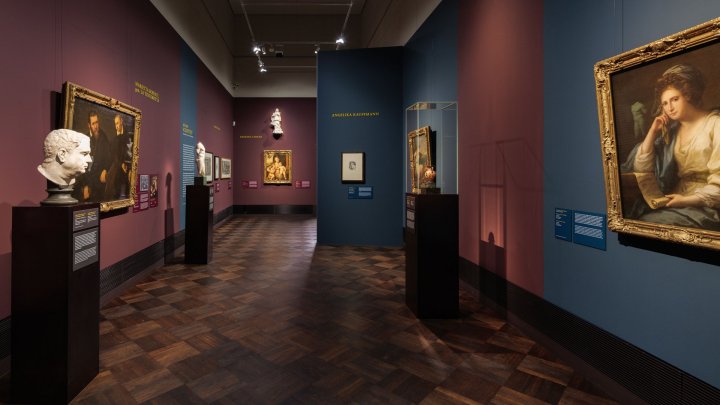
Installation view, Out of the Shadows: Women Artists from the 16th to the 18th Century, Gemäldegalerie Alte Meister at Dresden’s Zwinger, 2023.
◊ ◊ ◊ ◊ ◊
This installation on view at the Zwinger closes in a few weeks:
Out of the Shadows: Women Artists from the 16th to the 18th Century
Aus dem Schatten: Künstlerinnen vom 16. bis zum 18. Jahrhundert
Gemäldegalerie Alte Meister, Zwinger, Dresden, 12 May — 20 August 2023
With this cabinet exhibition, the Gemäldegalerie Alte Meister turns its attention to women artists (Künstlerinnen) from the 16th to the 18th century, who for a long time have been overshadowed by the ‘Great Masters’ of art history. With their works represented in the collection, they are a minority, and to this day their names are far less familiar than those of their male counterparts. This is not due to inability, but to a structural discrimination that is perpetuated in art historiography.
 Women generally were not allowed formal academic training nor drawing from live (nude) models. Only a few women were lucky enough to grow up and be promoted in an artistic environment, so that institutional and social structures did not necessarily hinder their advancement. In many cases, they were the daughters of artists trained in their father’s workshop.
The cosmopolite Angelika Kauffmann (1741–1807) achieved widespread recognition in her lifetime and is also represented here with five works. In a time when only men were seen as true artists and women were credited, at most, with talent but never genius, the painter managed to assert herself by also being a shrewd strategist and self-promotor. She produced numerous history paintings with references to antiquity in which women take the leading roles.
Lavinia Fontana (1552–1614) was one of the first women of the modern period to work as an independent artist. She painted numerous portraits and history paintings of mythological and biblical themes, some of them in large format. The devotional painting in Dresden, The Holy Family, is an early work by the Bolognese artist which, after undergoing restoration, will be included in the show in mid-August.
This concentrated presentation also features copperplate engravings by Diana Scultori from the holdings of the Kupferstich-Kabinett as well as paintings and prints by other noteworthy women artists such as Elisabetta Sirani, Barbara Longhi, Rachel Ruysch, Maria van Oosterwijck, and Theresa Concordia Mengs.
Stephan Koja and Iris Yvonne Wagner, Out of the Shadows: Women Artists from the 16th to the 18th Century (Dresden: Staatliche Kunstsammlungen Dresden, 2023), 144 pages, ISBN: 978-3954987559 (German edition) / ISBN: 978-3954987696 (English edition), €34.
Call for Essays | The Material History of the Visually Altered Book

Extra-illustrated copy of Johann Amos Comenius, Orbis Sensualium Pictus, translated by Charles Hoole, 12th edition, (London, 1777) in Bodleian Library, Vet.A6.e.2518.
◊ ◊ ◊ ◊ ◊
Extra Extra: The Material History of the Visually Altered Book
A collection of essays edited by Julie Park and Adam Smyth
Proposals due by 31 August 2023
Julie Park and Adam Smyth invite proposals for essays to be included in an edited collection on the long history of the extra-illustrated book. Extra-illustration had a vital flowering in late-eighteenth and nineteenth-century culture, but what are the earlier roots of this practice in medieval and early modern cultures and what are the legacies today? The editors welcome proposals by contributors from different backgrounds, career stages, disciplines, and fields (art historians, book historians, book artists, book sellers, curators and librarians, media studies scholars, and more) to consider the methods, materials, forms, and consequences of extra-illustration as a transhistorical medium and activity. Long before and well after Richard Bull’s pivotal act of reconstructing James Granger’s Biographical History of England (1769) by affixing engraved prints to illustrate its textual body, book readers and makers have added images to pre-existing works of writing, fundamentally altering their physical design and composition, and destabilizing categories of book, art and object in doing so. How might we consider, for instance, medieval books, continually modified by their owners with added images and text, or the contemporary artist’s book, frequently an alteration of a previously printed book object through added visual elements, as forms of extra-illustration?
How might we think of extra-illustration in terms of a series of tensions: between amplification (the book extrapolated) and destruction (the book blown up); between the classificatory logic of James Granger and chaos; between order and flux; between the iconophilic and the iconoclastic. Is extra-illustration an erotic, libidinal process? Is it a respectable activity for a quiet drawing room, or is it, in Holbrook Jackson’s words, “a singularly perverted idea”? What is the extra-illustrated volume’s relationship to the codex: tribute, or parody? What is the politics of extra-illustration? Is extra-illustration connected to retreat and consolation, or is it driven by a grasping, colonial ambition? Is it a radical upending of ideas of order and convention, or is it an assertion of hierarchy? How do we read—or how did readers read—these combinatory texts? And are there extra-illustrators who occupy a particularly important place in this tradition—figures like Charlotte and Alexander Sutherland, perhaps, or Richard Bull, or John Kitto?
Please submit proposals of 175–250 words, with a brief (one-page) CV, to Julie Park (jvp6261@psu.edu) and Adam Smyth (adam.smyth@ell.ox.ac.uk) by 31 August 2023.










 Enfilade
leave a comment