Conference | Legacies: Why Museum Histories Matter
From ArtHist.net and the conference website (which includes abstracts) . . .
Legacies: Why Museum Histories Matter
Leiden, 13–15 January 2026
Organized by Laurie Kalb Cosmo, Marika Keblusek, Susanne Boersma, Raphaël Gerssen, and Margot Stoppels
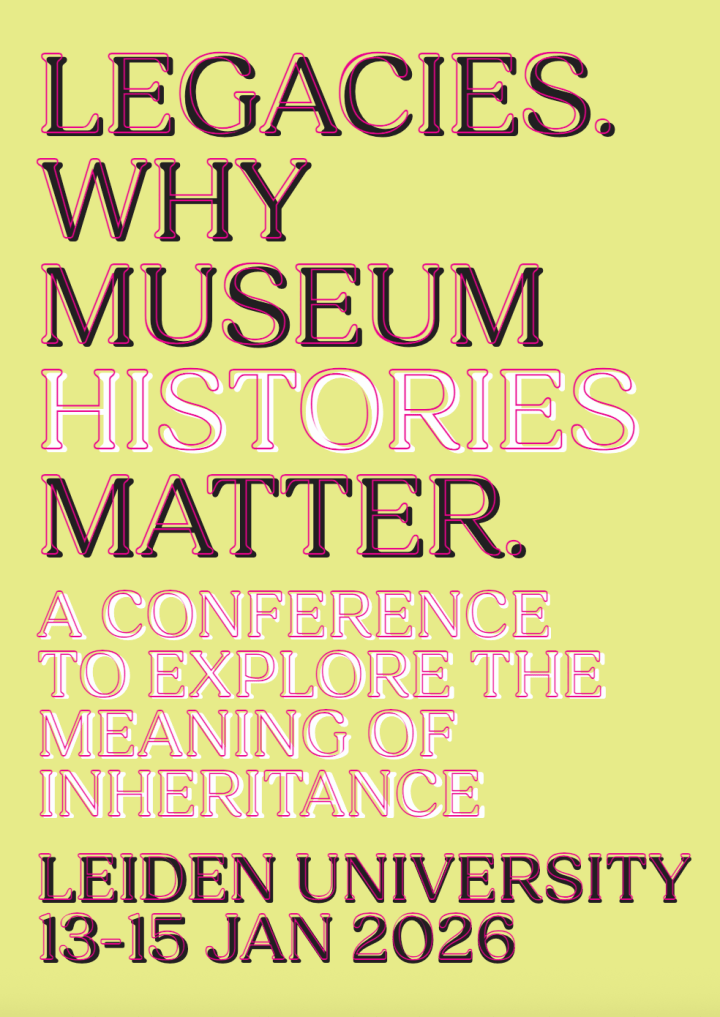 In January 2026, Leiden University’s Museum Lab will host the international conference Legacies: Why Museum Histories Matter. The conference reflects on museums with significant founding histories, broadly defined by their buildings, collections, commemorative functions, collectors or founders, that are currently engaged in some manner of institutional introspection, by way of exhibitions, acquisitions, restitutions, or renovations. International researchers and museum professionals from a range of institutions present their research and museum practices tied to museum legacies.
The three-day programme consists of twelve panels and four keynote speeches by Dr. Carole Paul (University of California, Santa Barbara), Monsignor Dr. Timothy Verdon (Museo dell’Opera del Duomo, Florence), Prof. Dr. Emile Schrijver (Jewish Cultural Quarter and National Holocaust Museum, Amsterdam), and Prof. Dr. Andrew McClellan (Tufts University, Boston).
Registration is available here»
t u e s d a y, 1 3 j a n u a r y
9.00 Registration
9.30 Welcome and Introduction
• Welcome — Stijn Bussels (Academic Director, Leiden University Centre for the Arts in Society)
• Introduction — Laurie Kalb Cosmo (University Lecturer and Project Director, Museum Lab, Leiden University)
9:50 Keynote
• Reflections on the History of the Public Art Museum — Carole Paul (Director of Museum Studies, University of California, Santa Barbara)
10.30 Coffee Break
11.00 Panel 1 | Monumental Legacies
Chair: Pieter ter Keurs (Emeritus, Leiden University)
• The Glyptotheque as a Site of Memory, Monumentality, and Transformation: Historical Identity and Contemporary Reflection of a Museum Institution in Croatia — Magdalena Getaldić (Glyptotheque of the Croatian Academy of Sciences and Arts)
• Obelisks and Totems: On Reframing Ethnographic Museums and Why Artistic Practice Matters — Irene Quarantini (Sapienza University, Rome)
• The Palatine Gallery: How Residents of the Pitti Palace Shaped Today’s Museum — Ilya Markov (Leiden University)
12.20 Lunch break
13.20 Panel 2 | Reshaping Legacies: Italian Museums
Chair: Irene Baldriga (Sapienza University)
• Reshaping the Oldest Italian National Museum — Paola D’Agostino, (Musei Reali Torino)
• Legacies Now: The Renewal of Institutional Inheritances at Five Museums in Rome — Laurie Kalb Cosmo (Leiden University)
• Two Centuries of Legacy, One Decade of Inclusion. Political Backlash and Strategic Reframing of Outreach at the Museo Egizio — Costanza Paolillo (New York University)
14.40 Panel 3 | Founders’ Legacies
Chair: Susanne Boersma (Leiden University)
• The Long Shadow of the Founder. Hero-Worship and the Construction of Continuity for a ‘National Museum’ — Joachim Berger and Darja Jesse (Germanisches Nationalmuseum, Nuremberg)
• National Gallery in Prague throughout the 20th Century: The Case of the Morawetz Collection — Lucie Němečková (Documentation Centre for Property Transfers of the Cultural Assets of WWII Victims, Prague)
• Leache & Wood: Rediscovering the Chrysler Museum’s Lost Founders — Mia Laufer and Drew Lusher (Chrysler Museum of Art, Norfolk)
16.00 Tea Break
16.30 Panel 4 | Unseen Legacies: Belgian Museum Buildings
Chair: Annemarie de Wildt (Former Curator at the Amsterdam Museum, Board Member of CAMOC, ICOM)
• Inherited Workspaces: Rethinking Creative Practice at the Constantin Meunier Museum — Ulrike Müller (University of Antwerp/Royal Museums of Fine Arts of Belgium, Brussels)
• Haunted Halls: Reclaiming Hidden Histories of the Royal Museums of Art and History in Brussels — Gerrit Verhoeven (University of Antwerp/Royal Museums of Art and History, Brussels)
• Between Immersion and Reflection. Old Antwerp and Museum Mayer van den Bergh Performing the Past — Stijn Bussels (Leiden University) and Bram van Oostveldt (Ghent University)
17.50 Day Closing — Laurie Kalb Cosmo
w e d n e s d a y , 1 4 j a n u a r y
9.00 Introduction — Laurie Kalb Cosmo
9.10 Keynote
• Legacies: Gifts of Love, Sacred Trusts, Investments — Timothy Verdon (Director of the Museo dell’Opera del Duomo/Museum of the Workshop of the Cathedral of Santa Maria del Fiore, Florence)
9.50 Keynote
• Developing and Opening Amsterdam’s National Holocaust Museum in a Politicized Era: Curatorial Challenges and Critical Choices — Emile Schrijver (Director of the Jewish Cultural Quarter and National Holocaust Museum, Amsterdam)
10.30 Coffee Break
11.00 Panel 5 | Revealing Histories and Reclaiming Heritage
Chair: Laurie Kalb Cosmo
• ‘My Heritage, Your Heritage?!’ Places of Jewish Heritage in Germany — Christiane Dätsch (Merseburg University of Applied Sciences
• POLIN Museum i Warsaw: A Place Where Memory Meets Responsibility — Joanna Fikus (POLIN, Warsaw)
• How to Celebrate the 75th Anniversary of the Museum Rietberg? Reflections on Researching and Curating the Institution’s History — Esther Tisa Francini (Museum Rietberg, Zurich)
12.20 Lunch break
13.20 Panel 6 | Eastern Europe: War and Recuperation
Chair: Seraina Renz (Leiden University)
• UNESCO and Museum Diplomacy: Geographies and Balances of Cultural Policy during the Cold War — Irene Baldriga (Sapienza University, Rome)
• Cultural Losses of Museums: The Polish Respond to World War II —Bartłomiej Sierzputowski and Elżbieta Przyłuska (Polish Ministry of Culture and National Heritage, Warsaw)
14.40 Panel 7 | Eastern Europe: (Post-)socialist Museums
Chair: Seraina Renz
• Shaping the Contemporary Art Museum Identity through its Complex Heritage. The Example of the Museum of Fine Arts in Split, Croatia —Jasminka Babić (Museum of Fine Arts, Split) and Dalibor Prančević (University of Split)
• Collecting to Forget: The Legacy of the Museum of Atheism in Vilnius — Karolina Bukovskytė (Lithuanian Culture Research Institute/National Museum of Lithuania, Vilnius)
• Whose Ethnography? Ethnographic Collections and Museums in Central Europe — Marika Keblusek (Leiden University)
16.00 Tea Break
16.30 Panel 8 | Revisiting Institutional Narratives
Chair: Wonu Veys, Leiden University/Wereldmuseum
• The Imperial Gaze Materialised: The Ten Thousand Chinese Things Museum as Archive — Yuansheng Luo (KU Leuven)
• Museum Histories in a Postcolonial Age: Collecting and Curating Netherlandish Art Legacies in the Global South — Laia Anguix-Vilches (Utrecht University)
• ‘You’re usually wrong’: Looking Back at the Anti-racism of the Past at One Museum — Deirdre Madeleine Smith (University of Pittsburgh/Carnegie Museum of Natural History)
17.50 Day Closing — Susanne Boersma
t h u r s d a y , 1 5 j a n u a r y
9.00 Panel 9 | Modernist Legacies in the Americas
Chair: Stephanie Noach (Leiden University)
• Lourival Gomes Machado and the Legacy of a Certain Brazilian Modernism at MAM-SP — Ana Avelar (University of Brasília)
• Legitimating Modernism: Art History and the Formation of Museum Authority in the United States — Laura Braden (Erasmus University Rotterdam)
• (Re)Making the San Francisco Museum of Art Modern — Berit Potter (California State Polytechnic University Humboldt, Arcata)
10.20 Coffee Break
10.50 Panel 10 | Crafts and Material Legacies
Chair: Lieske Huits (Leiden University)
• Donating Lace and Knowledge: Women and Early 20th-Century Historic Lace Acquisitions in the Belgian Royal Museums for Art and History — Julie Landuyt (Ghent University/Free University of Brussels)
• Crafts’ Networks and the National Museum of Capodimonte in Naples — Francesco Montuori (European University Institute, Florence)
• Preserving Heritage through Museums: The Case of the Kurdistan Region of Iraq — Chang Farhan Tahir (University of Duhok)
12.10 Lunch break
13.30 Panel 11 | Colonial Legacies
Chair: Wonu Veys (Leiden University/Wereldmuseum)
• Founding Myths and Colonial Entanglements: The Japan Folk Crafts Museum and the Politics of Mingei — Anna Stewart-Yates (University of Oxford)
• A Forgotten History: The Former Colonial Collection of the Royal Museums of Art and History, Belgium — Anke Hellebuyck (University of Antwerp)
• Rethinking Narratives: The ‘Animals of Africa’ in Bern — Sarah Csernay (Nordamerica Native Museum, Zurich)
14.50 Panel 12 | Prominent Figures and Entangled Histories
Chair: Susanne Boersma
• A Contested Museum History: Scenography and the Placement of the Islamic Collection at the Berlin Museums — Zehra Tonbul (Ozyegin University, Istanbul)
• Entangled Objects and Memory Sites in the Museum: Re-imagining the ‘Modern’ Collection — Juliet Simpson (Coventry University)
• The Museum as a Battleground: Political Art at the Israel Museum, 1967–1977 — Meital Raz (University of Amsterdam)
16.10 Tea Break
16.40 Keynote
• The Museum of Fine Arts, Boston, 1909: Towards a Machine for Looking — Andrew McClellan (Tufts University, Boston)
17.25 Closing Remarks — Marika Keblusek (Leiden University)
The Clark Names Lara Yeager-Crasselt as Tavitian Curator
From the press release (5 November 2025) . . .
 The Clark Art Institute, in Williamstown, Massachusetts, announced today that Lara Yeager-Crasselt has been appointed to serve as the first Aso O. Tavitian Curator of Early Modern European Painting and Sculpture.
Dr. Yeager-Crasselt is currently the Curator and Department Head of European Painting and Sculpture at the Baltimore Museum of Art, where she oversees the museum’s collection of fifteenth- through eighteenth-century painting and sculpture, including its research, exhibition, loans, acquisitions, and publication. Prior to her current role, she held prestigious curatorial and research positions at The Leiden Collection in New York and at KU Leuven, Belgium, among others. From 2015 until 2017, Yeager-Crasselt served as the Clark’s Interim Curator of Painting and Sculpture.
“We are delighted to welcome Lara Yeager-Crasselt back to the Clark and we feel incredibly fortunate to be able to entrust the Aso O. Tavitian Collection to her stewardship,” said Olivier Meslay, Hardymon Director of the Clark. “She is an ideal person to manage this collection, and we feel confident that Lara will play a major role in shaping the many ways in which we share these remarkable works of art with our visitors in the years ahead.”
Yeager-Crasselt’s curatorial experience includes a rich array of international exhibitions including Watershed: Transforming the Landscape in Early Modern Dutch Art (Baltimore Museum of Art); Exchanging Words: Women and Letters in Seventeenth-Century Dutch Genre Painting (Timken Museum of Art, San Diego); Rembrandt, Vermeer, and the Dutch Golden Age: Masterpieces of The Leiden Collection and the Musée du Louvre (Louvre Abu Dhabi); The Age of Rembrandt and Vermeer: Masterpieces of The Leiden Collection (Pushkin Museum, Moscow and The State Hermitage Museum, St. Petersburg, Russia), and Splendor, Myth, and Vision: Nudes from the Prado at the Clark.
“Lara is an exceptional scholar and curator and is well-regarded for her expertise in early modern painting and sculpture,” said Esther Bell, the Clark’s Deputy Director and Robert and Martha Berman Lipp Chief Curator. “Her deep knowledge and curatorial acumen will be a phenomenal addition to our team and will be so important to her research on the Tavitian Collection. Lara will also work with the Clark’s full collection of fifteenth- through eighteenth-century paintings and sculpture, and I know that her prior experience with our existing collection will be particularly important as she integrates this transformative gift and develops the plan for its installation in the new Aso O. Tavitian Wing. I look forward to collaborating with Lara on our summer 2026 exhibition An Exquisite Eye: Introducing the Tavitian Collection, which will provide the first opportunity for our visitors to see some of the magnificent treasures in the Tavitian Collection.”
An Exquisite Eye opens on 13 June 2026 and will showcase works by many of the most acclaimed artists of the early modern era—Jan van Eyck, Andrea della Robbia, Gian Lorenzo Bernini, Peter Paul Rubens, Jean-Antoine Watteau, and Jacques Louis David, among others. The exhibition will remain on view at the Clark through 21 February 2027.
The Aso O. Tavitian Collection was gifted to the Clark in 2024 from the foundation of the late collector, philanthropist, and connoisseur, Aso O. Tavitian. Between 2004 and 2020, Mr. Tavitian assembled the most significant private collection of European art assembled in North America in the twenty-first century. Representing one of the largest gifts in the Clark’s history, the Tavitian gift includes 331 works of art from Mr. Tavitian’s personal collection and more than $45 million to endow two new positions on the Clark’s curatorial staff to oversee the collection; provide necessary support for its long-term care; and fund construction of the Aso O. Tavitian Wing at the Clark, which is slated to open in 2028. The gift of art includes 132 paintings, 130 sculptures, thirty-nine drawings, and thirty decorative arts objects, creating an important addition to the Clark’s holdings and more than doubling the size of its sculpture collection.
“It is a tremendous honor to represent Aso O. Tavitian’s collection and his legacy at the Clark, as well as a great privilege and joy to be able to care for these extraordinary objects in my new role,” Yeager-Crasselt said. “I am truly thrilled to be returning to the Clark after these many years, and eager to join the team there in realizing the new Tavitian Wing and the first presentation of the collection this summer.”
In addition to her curatorial activity, Yeager-Crasselt has published widely on the art of the Netherlands, particularly its cross-cultural and artistic exchange with Italy, among which are studies on Michael Sweerts and François Duquesnoy. She is also a dedicated teacher, having taught art history to students at Johns Hopkins University, Baltimore; Vassar College; George Washington University, Washington, D.C., the University of Maryland, College Park; and The Catholic University of America, Washington, D.C. She holds a PhD in Art History from the University of Maryland and a bachelor of arts degree in History from Vassar College.
Yeager-Crasselt will begin work at the Clark in December 2025 and will immediately join the Institute’s cross-departmental team planning the construction of the Tavitian Wing. Designed by Selldorf Architects, New York City, the building project will get underway in early 2027 and will provide a permanent home for the Tavitian Collection.
Call for Papers | Gulliver’s Travels at 300
From the Call for Papers:
Gulliver’s Travels at 300: The Global Afterlives of a
Bestseller in Print, Transmedial Adaptations, and Material Cultures
The Seventh ILLUSTR4TIO International Symposium
St. Bride Library, London, 23–25 September 2026
Proposals due by 15 March 2026
 Plenary Lecture: Professor Daniel Cook (University of Dundee)
Artist’s Talk: Martin Rowson, in conversation with Brigitte Friant-Kessler
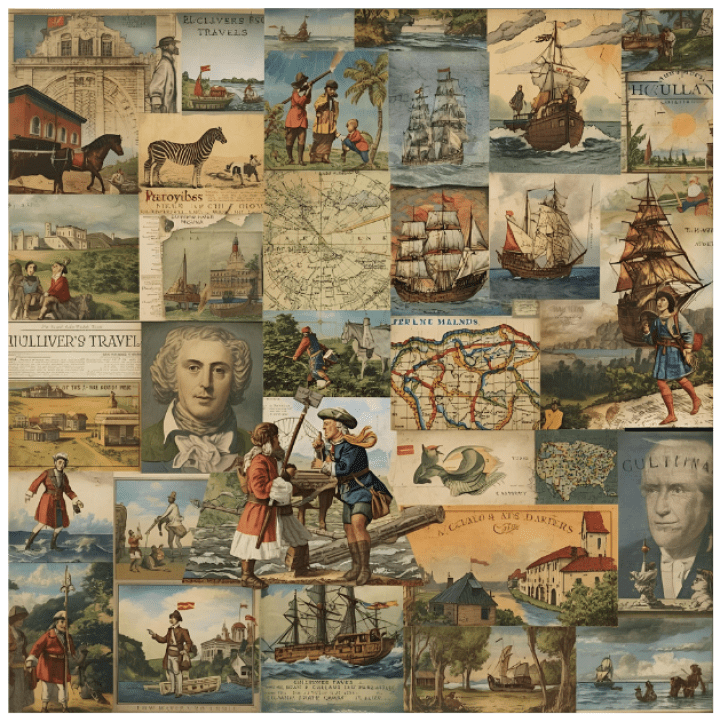
After Gulliver’s Travels was first published in 1726 and became, in the words of English dramatist John Gay, ‘universally read, from the cabinet council to the nursery’, Jonathan Swift’s contemporaries provided mixed reviews of this prose satire, reflecting on its moral value, social landscape, political subtext, comic scenes, and general appeal as a fictional travelogue. The long list of famous figures who commented publicly or privately during Swift’s century on Captain Lemuel Gulliver’s memoirs includes Alexander Pope, Lady Mary Wortley Montagu, Samuel Richardson, Walter Scott, Abbé Desfontaines, Voltaire, Madame du Deffand, Johann Christoph Gottsched, and Christoph Martin Wieland. During its three-centuries-old existence, Gulliver’s Travels has been rewritten and reedited, imitated and parodied, abridged and expanded, visualised and adapted, commodified and collected…. ‘If I had to make a list of six books which were to be preserved when all others were destroyed’, wrote George Orwell in 1946, ‘I would certainly put Gulliver’s Travels among them’. And as Will Rossiter (@Satyrane), who is an X (previously Twitter) user and literary scholar, summed up its appeal using this platform on 2 June 2016, ‘the afterlife of Gulliver’s Travels is built into the text itself’. Less concerned with literary rhetoric and textual semantics, artists seized upon Gulliver’s Travels to engage creatively with a text punctuated with humorous scenes, set in apocryphal lands, and sewn with inventive plot twists, and in which the main character interacts with miniature creatures, giants, flying islands, and talking horses. In the process, they generated a multifaceted iconographic corpus that rivals those of eighteenth-century bestsellers such as Robinson Crusoe and Candide, which have benefited, however, from substantial critical attention.
As its tercentennial anniversary approaches, Gulliver’s Travels has established itself as a canonical text and global bestseller. It still resonates with readers, young and old alike, throughout the world, is successfully taught in university classrooms, inspires new visual and textual remediations and adaptations, and captures the consumer’s gaze from a wealth of material objects. Considered ‘a great classic’ written by ‘the preeminent prose satirist in the English language’, it is ranked number 3 on The Guardian’s 100 Best Novels (as ‘a satirical masterpiece that’s never been out of print’), 35 in Raymond Queneau’s Pour une bibliothèque idéale (listing books forming an ideal library), 55 on the BBC’s 100 Greatest British Novels (based on a poll distributed to book critics outside the U.K.), 62 on The Telegraph’s 100 Novels Everyone Should Read (inventorying ‘the best novels of all time’), as well as unnumbered in Die Zeit’s Bibliothek der 100 Bücher (a collection with pedagogical aims from the well-respected German newspaper) and Harold Bloom’s Western canon, listing works ‘of great aesthetic interest’. In the Greatest Books of All Time, an inventory generated by an algorithm from 130 lists compiling the best books including the aforementioned ones, Gulliver’s Travels is classified as number 36. The Dean’s fictional travelogue has inspired a fascinating array of afterlives, ranging from the conventional (e.g. Sawney Gilpin’s 1760s oil paintings of Gulliver interacting with the Houyhnhnms and Thomas Stothard’s 1782 designs for The Novelist’s Magazine), to the loosely connected (Max Fleischer’s 1939 technicolour Gulliver’s Travels, recently restored for BluRay, and Gulliver’s Wife, Lauren Chater’s 2020 historical novel giving voice and agency to a midwife and herbalist whose presence in the source-text is minimal), to the transgressive (a fumetto: Milo Manara’s 1996 Gullivera; and American sailors from the Yokosuka Naval Base in Japan dressing up as Gulliver and parading in the Gulliver-Kannonzaki Festival), and to the playful (the giant Gulliver figure tied to the ground in Turia Gardens located in Valencia, Spain, with stairs, ramps, and ropes for children to climb up and down, as well as fast slides).
It is the enduring power and presence of Gulliver’s Travels in a diverse spectrum of fields, from scholarly editions to transmedial adaptations to popular culture events, that are of great interest to the conference organisers for this event. Papers that propose new, previously unpublished interpretations of the lively afterlives and global peregrinations of Gulliver’s Travels across time and space, or in various media and contexts, using interdisciplinary and cross-cultural approaches, are particularly welcomed.
Avenues for reflection include, but are not limited to, fresh perspectives on:
• the reception of Gulliver’s Travels in specific timeframes, geographic locations, and cultural contexts;
• Gulliver’s Travels in eighteenth- and nineteenth-century print (limited editions, serialised publications, chapbook adaptations, children’s books, ephemera, etc.);
• (illustrated) translations of Gulliver’s Travels in their editorial/linguistic/cultural contexts;
• Gulliver’s Travels and print culture (editorial paratexts, book collections, readers’ marginalia, extra-illustrated editions, etc.); or other graphic literature such as comics;
• images inspired by Gulliver’s Travels (paintings, frontispiece portraits, series of illustrations, standalone prints, graphic satire, maps, book covers, film posters, etc.) – focusing, for example, on visual commonplaces, iconographic paradigms, text-image relations, or Gulliver in the press;
• material Gulliveriana (board games, ceramic objects, playing cards, fans, keychains, bags, etc.) in relation to consumer culture and the Swift industry;
• the fun Gulliver (amusement parks, funfairs, cosplay, etc.);
• Gulliver’s Travels on stage (plays, musicals, operas, songs, sheet music) or on screen (film, TV, internet platforms, webzines, webcomics, video games, etc.)
• Gulliver’s Travels in the classroom: innovative pedagogical approaches to a world classic;
• decolonising Gulliver’s Travels and its links to the global British Empire;
• bringing Swift’s travelogue to life: curating exhibitions or events related to Gulliver’s Travels.
This international symposium celebrating the 300th anniversary of Gulliver’s Travels will be held under the auspices of the St. Bride Library in London, U.K. and in conjunction with a print workshop. In keeping with Illustr4tio’s aim to animate a dialogue between practitioners and critics, proposals are invited from illustrators, authors, printmakers, publishers, curators, collectors, and researchers. Papers can be presented in English or French. Proposals (500 words), accompanied by a bio-bibliographical note (100–150 words), should be sent to gulliverat300@yahoo.com by 15 March 2026. The publication of a selection of revised papers with previously unpublished material is envisaged. We will be able to accommodate requests for an early decision to support funding applications (please indicate your deadline in the submission).
Organising Committee
Nathalie Collé (Université de Lorraine)
Leigh G. Dillard (University of North Georgia)
Brigitte Friant-Kessler (Université de Valenciennes)
Christina Ionescu (Mount Allison University)
Illustr4tio is an international research network on illustration studies and practices. It aims at bringing together illustrators, authors, printmakers, publishers, curators, collectors, and researchers who have a common interest in illustration in all its forms, from the 16th century to the 21st century.
c o n t e n t s
Barchas, Janine. ‘Prefiguring Genre: Frontispiece Portraits from Gulliver’s Travels to Millenium Hall.’ Studies in the Novel 30.2 (Summer 1998): 260–86.
Borovaia, Olga V. ‘Translation and Westernization: Gulliver’s Travels in Ladino’. Jewish Social Studies, New Series 7.2 (Winter 2001): 149–68.
Bracher, Frederick. ‘The Maps in Gulliver’s Travels’. Huntington Library Quarterly 8.1 (November 1944): 59–74.
Bullard, Paddy, and James McLaverty. Jonathan Swift and the Eighteenth-Century Book. Cambridge: Cambridge University Press, 2013.
Collé, Nathalie. ‘“[T]o Mix Colours for Painters” and Illustrate and Adapt Gulliver’s Travels Worldwide: Street Murals, Adaptability and Transmediality’. In Adaptation and Illustration, edited by Shannon Wells-Lassagne and Sophie Aymes, Palgrave Studies in Adaptation and Visual Culture (London: Palgrave Macmillan, 2024), 47–68.
Cook, Daniel. Gulliver’s Afterlives: 300 Years of Transmedia Adaptation. London: Bloomsbury Publishing, 2025.
Colombo, Alice. ‘Rewriting Gulliver’s Travels under the Influence of J. J. Grandville’s Illustrations’. Word & Image: A Journal of Verbal/Visual Enquiry 30.4 (October-December 2014): 401–15.
Cook, Daniel. ‘Vexed Diversions: Gulliver’s Travels, the Arts and Popular Entertainment.’ In The Edinburgh Companion to the Eighteenth-Century British Novel and the Arts, edited by Jakub Lipski and M.-C. Newbould (Edinburgh: Edinburgh University Press, 2024), 228–43.
Cook, Daniel, and Nicholas Seager, eds. The Cambridge Companion to Gulliver’s Travels. Cambridge; New York: Cambridge University Press, 2024.
Didicher, Nicole E. ‘Mapping the Distorted Worlds of Gulliver’s Travels’. Lumen: Selected Proceedings from the Canadian Society for Eighteenth-Century Studies 16 (1997): 179–96.
Duthie, Elizabeth. ‘Gulliver Art’. The Scriblerian 10.2 (1978): 127–31.
Edwards, A. W. F. ‘Is the Frontispiece of Gulliver’s Travels a Likeness of Newton?’. Notes and Records of the Royal Society of London 50.2 (July 1996): 191–94.
Friant-Kessler, Brigitte. ‘L’encre et la bile: Caricature politique et roman graphique satirique au prisme de Gulliver’s Travels Adapted and Updated de Martin Rowson’. In L’Image railleuse, ed. Laurent Baridon, Frédérique Desbuissons, et Dominic Hardy (Paris: Publications de l’Institut National d’Histoire de l’Art, 2019), 315–44.
Gevirtz, Karen Bloom. Representing the Eighteenth Century in Film and Television, 2000-2015. Cham, Switzerland: Palgrave Macmillan, 2017.
Goring, Paul. ‘Gulliver’s Travels on the Mid-Eighteenth-Century Stage; Or, What is an Adaptation?’ Forum for Modern Language Studies 51.2 (2015): 100–15.
Halsband, Robert. ‘Eighteenth-Century Illustrations of Gulliver’s Travels’. In Proceedings of The First Münster Symposium on Jonathan Swift, ed. Hermann J. Real and Heinz J. Vienken (Munich: Wilhelm Fink, 1985), 83–112.
Hui, Haifeng. ‘The Changing Adaptation Strategies of Children’s Literature: Two Centuries of Children’s Editions of Gulliver’s Travels’. Hungarian Journal of English and American Studies 17.2 (Fall 2011): 245–62.
Léger, Benoit. ‘Nouvelles aventures de Gulliver à Blefuscu: traductions, retraductions et rééditions des Voyages de Gulliver sous la monarchie de Juillet’. Meta 49.3 (September 2004): 526–43.
Lenfest, David. ‘A Checklist of Illustrated Editions of Gulliver’s Travels, 1727-1914’. The Papers of the Bibliographical Society of America 62.1 (1968): 85–123.
Lenfest, David. ‘LeFebvre’s Illustrations of Gulliver’s Travels’. Bulletin of the New York Public Library 76 (1972): 199–208.
McCreedy, Jonathan, Vesselin M. Budakov, and Alexandra K. Glavanakova (eds.). Swiftian Inspirations: The Legacy of Jonathan Swift from the Enlightenment to the Age of Post-Truth. Newcastle-upon-Tyne: Cambridge Scholars Publishers, 2020.
Real, Hermann Josef. The Reception of Jonathan Swift in Europe. London: Thoemmes Continuum, 2005.
Rivero, Albert J., ed. Gulliver’s Travels: Contexts, Criticism. New York: Norton, 2002.
Sena, John F. ‘Gulliver’s Travels and the Genre of the Illustrated Book’. In The Genres of Gulliver’s Travels, ed. Frederik N. Smith (Newark: University of Delaware Press, 1990), 101–38.
Tadié, Alexis. ‘Traduire Gulliver’s Travels en images’. In Traduire et illustrer le roman au XVIIIe siècle, ed. Nathalie Ferrand (Oxford: Voltaire Foundation, 2011), 149–68.
Taylor, David Francis. ‘Gillray’s Gulliver and the 1803 Invasion Scare’. In The Afterlives of Eighteenth-Century Fiction, ed. Daniel Cook and Nicolas Seager (Cambridge: Cambridge University Press, 2015), 212–32.
Wagner, Peter. Reading Iconotexts: From Swift to the French Revolution. London: Reaktion, 1995.
Welcher, Jeanne K. ‘Eighteenth-Century Views of Gulliver: Some Contrasts between Illustrations and Prints’. In Imagination on a Long Rein: English Literature Illustrated, ed. Joachim Möller (Marburg: Jonas Verlag, 1988), 82–93.
Welcher, Jeanne K. Gulliveriana VII: Visual Imitations of Gulliver’s Travels, 1726–1830. Delmar, N.Y.: Scholars’ Facsimiles and Reprints, 1999.
Welcher, Jeanne K. Gulliveriana VIII: An Annotated List of Gulliveriana, 1721–1800. Delmar, NY: Scholars’ Facsimiles and Reprints, 1988.
Welcher, Jeanne K. and Joseph Randi. ‘Gulliverian Drawings by Richard Wilson’. Eighteenth-Century Studies 18.2 (Winter 1984-1985): 170–85.
Womersley, David. Gulliver’s Travels. New York: Cambridge University Press, 2012.
Call for Papers | Plants and the Sacred in the Arts of the Americas
From ArtHist.net:
Plant Lives: Sacred Interdependencies in the Arts of the Americas
Yale Institute of Sacred Music, New Haven, 11 April 2026
Proposals due by 16 January 2026
In 1831, the preacher Nat Turner testified that hieroglyphics had appeared to him on leaves and corn stalks, relaying divine messages that inspired him to lead a rebellion of enslaved Virginians. The capacities of plants to transmit divine insights across time is the starting point for this one-day conference, which explores the ways in which plants perform, evoke, and embody sacred relations throughout the Americas. In addition to considering plants as agents of divination, the conference and the subsequent planting celebration will look to plants as a means of reviving sacred interdependencies in art and musical practices. Coconut shells and seed beads frequently appear in contemporary Santeria divinations; the banjo is a cousin of gourd-based stringed instruments originating in Africa and Brazil; African American eco-feminist musicians have revived shekere and coconut percussion instruments since the 1980s. Images of plants are also powerful reminders of the tastes, smells, and other sensory experiences lost to migration.
We are interested in 20-minute papers or performances that discuss plants, planting, or plant-derived materials in relation to ecology and the sacred. On the evening of the conference, the Yale Institute of Sacred Music will host a public groundbreaking for a gourd garden at the Urban Naturescapes Native Plant Nursery in New Haven’s Newhallville neighborhood. We hope the event will activate questions such as: How have plants sustained spiritual relationships across geographic contexts? How can we see plants as living archives that impact what we remember in the here and now?
Possible topics include:
• The role of plants in precolonial or Indigenous cosmologies
• The production of plant-based musical instruments
• The cultural patrimony of sacred plants
• Plants and planting in sacred music repertoires
• Planting and agricultural work as teaching tools
• Plants that defy normative categorization, e.g. weeds
• The preservation of sacred plant lineages, such as through seed banks or community food projects
• Motifs in sacred art and architecture
• Queer intimacies with organic matter or vegetation
The Yale Institute of Sacred Music will cover the cost of hotel accommodates in New Haven and will provide a $250 stipend toward travel. Interested participants should send a 250-word abstract, along with the presenters’ names and affiliations, if any, to plantlivesconference@gmail.com by 16 January 2025. All abstracts will receive a response by 23 January 2025. Questions can be directed to Katie Anania at katie.anania@yale.edu.
Call for Papers | Visualizing Antiquity: The Copy of the Copy
From the Call for Papers and ArtHist.net (which includes the Call for Papers in German). . .
Visualizing Antiquity: On the Episteme of Early Modern Drawings and Prints V:
The Copy of the Copy … of the Copy: Techniques of Pictorial Reception of
Antiquity in the Early Modern Period
Berlin-Brandenburgische Akademie der Wissenschaften, 3 July 2026
Organized by Elisabeth Décultot, Arnold Nesselrath, Cristina Ruggero, and Timo Strauch
Proposals due by 11 January 2026
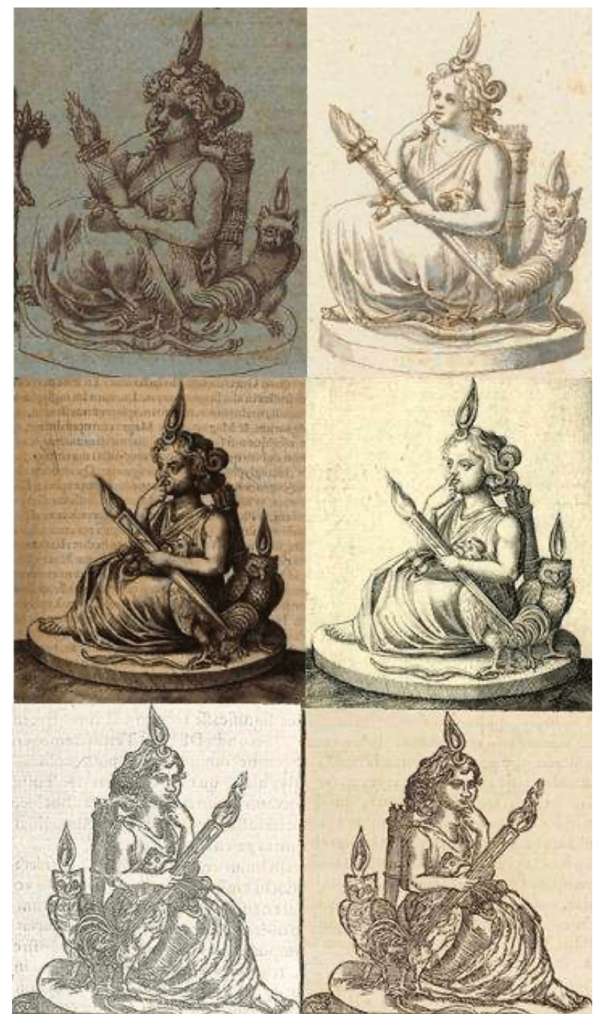
Various early modern depictions of Harpocrates (the Greek form of the Egyptian child-god Horus).
In virtually all domains of human creativity, the outcomes—whether deliberately or inadvertently—are subject to the principle of repetition. This phenomenon likewise characterizes the history of acquiring knowledge about antiquity. Once information has been recorded in written or visual form, it typically becomes the point of departure for subsequent reproductions. The material documented at the beginning of the transmission process is copied and disseminated for as long as it is considered useful, with the copies themselves generally functioning as further agents of replication.
In this process, copies function not merely as duplicates in a subordinate hierarchical relationship to the ‘original’, but as powerful resources of knowledge. They enable the preservation, transmission and creative transformation of knowledge about specific objects, monuments and forms. In transmission chains that are often only partially preserved—and frequently lack the now-lost ‘original’—, copies are rather the standard means of transmission. As such, they provide essential insights into historical developments, reveal methodological approaches, and support the production of knowledge by making ongoing engagement with ancient models visible.
The fifth colloquium in the series Visualizing Antiquity: On the Episteme of Early Modern Drawings and Prints focuses on copying processes in graphic arts that deal with antique or supposedly antique artefacts. The primary aim is not to examine the function of repetition as an artistic exercise or attempt at stylistic emulation, but rather the role of copies in the context of the transmission and transformation of knowledge. Images ‘live on’ by being traced, redrawn, re-engraved or otherwise transformed in order to preserve and convey concepts, forms and concrete objects, or to illustrate and continue discourses about them.
The entire chain of possible lines of transmission will be examined: from the study of the ‘original’—a term that in this context needs to be questioned itself—to proven or inferred copies in drawing or print, to their use in antiquarian, academic or artistic contexts. What material, institutional and epistemic structures determined the circulation of these images? How did repeated transmission influence the perception of antiquity, and were objects and images reinterpreted or creatively transformed despite being copies? Did the actors involved—draughtsmen, engravers, antiquarians or publishers—address the methodology of copying and the quality of the reproductions? What significance did the point of origin of the tradition have, and how did the status of graphic art as a medium between documentation, illustration and imagination change? Are there differences depending on the type of objects being passed on, for example in the case of records of antique architecture and their use in architectural theory (editions of Vitruvius)?
Possible topics, with further suggestions also welcome:
• Examples of ‘long-chain’ transmission of ancient artefacts and monuments in 17th- and 18th-century graphic arts
• (Non-)availability of lost and missing artefacts and monuments
• Manipulation and conjecture in the process of replication
• Breaks and ruptures in established patterns
• Copying as practice and method
• Technical reproduction processes: from drawing to drawing, from drawing to print, from print back to drawing
• Copies in drawing and print as instruments of knowledge circulation and preservation
• Academic, antiquarian and publishing contexts of graphic reproduction
• Copies as a means of documentation, systematisation and virtual collections
The colloquium thus aims to highlight the process of copying as a mode of cultural and media transmission—as a process in which images, and with them knowledge, remain in motion.
Researchers are invited to submit proposals for 20-minute presentations in German, English, French, or Italian, ideally combining case studies with broader perspectives. Proposals (max. 400 words) can be submitted until 11 January 2026, together with a short CV (max. 150 words) to thesaurus@bbaw.de with the keyword ‘Episteme V’. Hotel and travel expenses (economy-class flight or train; 2 nights’ accommodation) will be reimbursed according to the Federal Law on Travel Expenses (BRKG). Publication of the contributions to the colloquium in expanded form is planned.
Bildwerdung der Antike: Zur Episteme von Zeichnungen und Druckgrafiken der
Frühen Neuzeit V: Die Kopie der Kopie … der Kopie: Techniken der bildlichen
Antikenrezeption in der Frühen Neuzeit Bildwerdung der Antike
Organized by the Academy Research Project Antiquitatum Thesaurus. Antiquities in European Visual Sources from the Seventeenth and Eighteenth Centuries. Conceived by Elisabeth Décultot, Arnold Nesselrath, Cristina Ruggero, Timo Strauch.
New Book | Picturing Landscape in an Age of Extraction
From The University of Chicago Press:
Stephanie O’Rourke, Picturing Landscape in an Age of Extraction: Europe and Its Colonial Networks, 1780–1850 (Chicago: The University of Chicago Press, 2025), 240 pages, ISBN: 978-0226841557, $45.
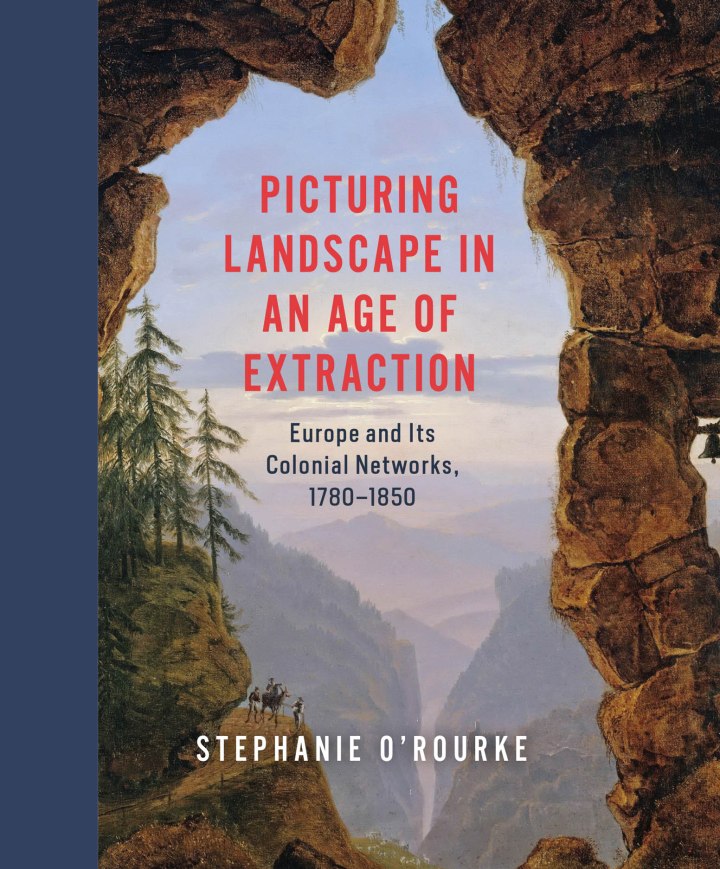 In the late eighteenth and early nineteenth centuries, European artists confronted the emergence of a new way of thinking about and treating the Earth and its resources. Centered on extraction, this new paradigm was characterized by large-scale efforts to transform and monetize the physical environment across the globe. With this book, Stephanie O’Rourke considers such practices, looking at what was at stake in visual representations of the natural world during the first decades of Europe’s industrial revolutions. O’Rourke argues that key developments in the European landscape painting tradition were profoundly shaped by industries including mining and timber harvesting, as well as by interlinked ideas about race, climate, and waste. Focusing on developments in Britain, France, Germany, and across Europe’s colonial networks, she explores how artworks and technical illustrations portrayed landscapes in ways that promoted—or pushed against—the logic of resource extraction.
Stephanie O’Rourke is a senior lecturer in art history at the University of St. Andrews, Scotland. She is the author of Art, Science, and the Body in Early Romanticism.
c o n t e n t s
Introduction
1 The French Landscape and the Colonial Forest
2 Mining Romanticism and the Abyss of Time
3 How to Scale a Volcano
4 Human Resources
Conclusion
Acknowledgments
Notes
Bibliography
Index
Exhibition | Versailles and the Origins of French Diplomacy
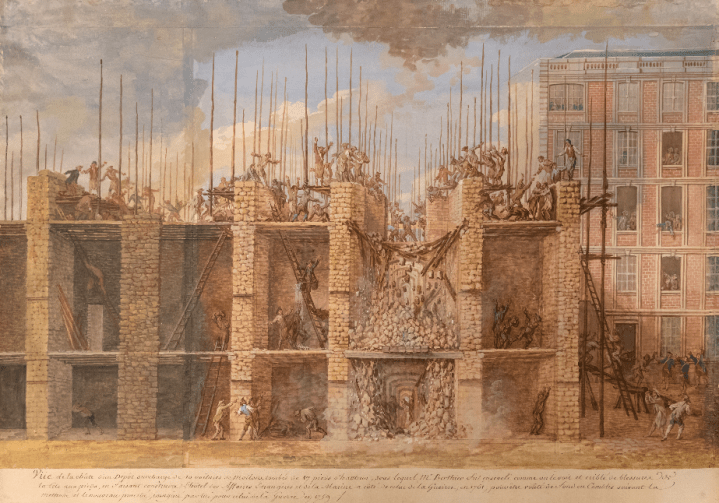
Louis-Nicolas van Blarenberghe, Accident survenu lors de la construction de l’hôtel des Affaires étrangères et de la Marine, à Versailles en 1761, ca. 1761, gouache over black chalk on paper, 38 × 56 cm (Bibliothèque Municipale de Versailles, Inv. 29359).
◊ ◊ ◊ ◊ ◊
Now on view at Versailles:
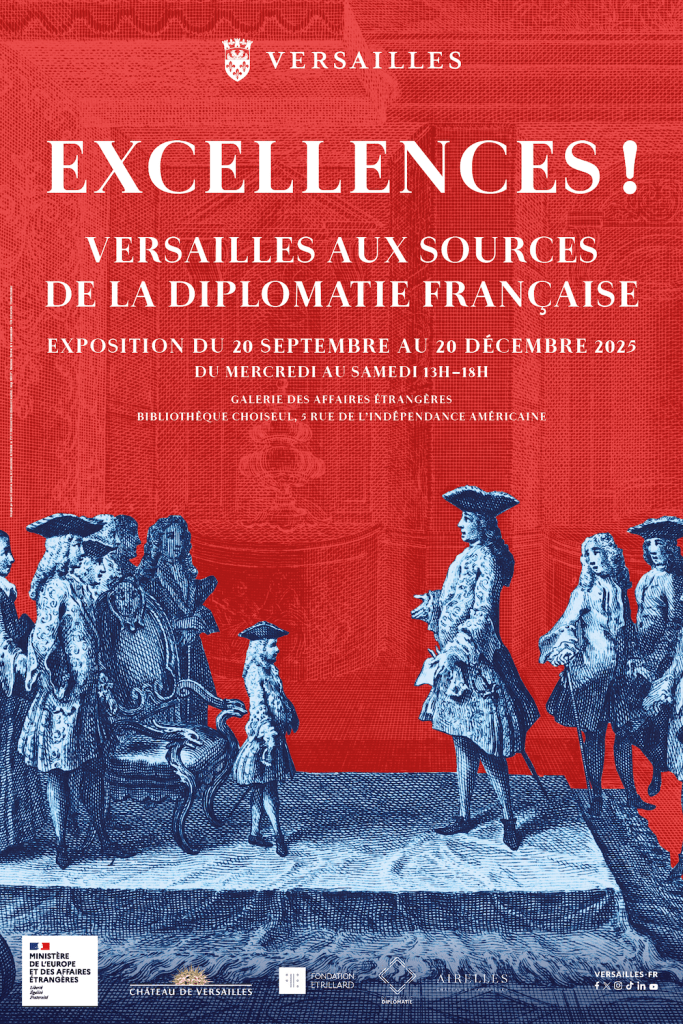
Excellences! Versailles aux Sources de la Diplomatie Française
Bibliothèque Choiseul, Versailles, 20 September — 20 December 2025
Curated by Sophie Astier and Vincent Haegele
La Ville de Versailles en collaboration avec les archives du Ministère de l’Europe et des Affaires étrangères présente l’exposition Excellences ! Versailles aux sources de la diplomatie française, dans un cadre emblématique : la Galerie des Affaires étrangères, lieu de diplomatie française et de la construction d’une administration moderne de la diplomatie. Une sélection exceptionnelle de documents retrace l’histoire de la diplomatie française sous l’Ancien Régime : 157 pièces originales dont près de la moitié, appartenant aux archives des Affaires étrangères, reviendront à Versailles pour la première fois depuis la Révolution française.
 Parmi ces pièces, on peut admirer des documents chargés d’histoire comme le traité de Cambrai dit Paix des Dames (1529), le traité de Westphalie qui termine la guerre de Trente Ans (1648), le traité de Paris (1763), la ratification du contrat de mariage scellant l’union de Louis XVI et Marie-Antoinette (1770), le traité de Versailles concluant la guerre d’Indépendance américaine (1783)…
Du règne de François Ier jusqu’à la guerre d’Indépendance américaine, découvrez l’histoire de la diplomatie française ainsi que la formalisation de ses pratiques et la construction d’une administration moderne. Le propos sera complété par différents portraits et objets d’arts permettant d’illustrer la vie d’ambassade et l’importance des cadeaux diplomatiques.
Une autre thématique abordée sera celle de la diplomatie officieuse, celle des espions, des messages codés et des opérations occultes, en faisant la part belle à ses acteurs les plus mystérieux, comme le chevalier d’Eon, qui sera évoqué par des correspondances, mais aussi par un étonnant portrait mi-homme mi-femme conservé dans les collections de la bibliothèque.
Le parcours de l’exposition est organisé en cinq étapes, qui sont à la fois chronologiques et thématiques. On y trouve une sélection de pièces tirées des collections de la bibliothèque municipale et des Archives diplomatiques, enrichies par quelques prêts exceptionnels venus d’autres institutions, notamment le Musée national des châteaux de Versailles et de Trianon. Dans chaque salle, un ou plusieurs documents constituent un « focus géographique » en lien avec les intitulés historiques des lieux. Le parcours se conclut sur la reconstitution d’un bureau de commis, tel qu’il existait dans la galerie sous Louis XV et Louis XVI.
The exhibition brochure is available here»
Excellences! Versailles aux sources de la diplomatie Française (Dijon: Éditions Faton, 2025), 192 pages, ISBN: 978-2878444056, €27. With contributions by Sophie Astier, Virginie Bergeret-Maës, Guillaume Frantzwa, and Vincent Haegele.
Call for Papers | Sculpture and Trompe l’œil in European Ceramics
From ArtHist.net:
Sculpture and Trompe l’œil in European Ceramics,
From Bernard Palissy to the Present
Hôtel de la Roche, Mons, Belgium, 10–13 July 2026
Proposals due by 12 December 2025; full papers due by 30 April 2026
Second Edition of the Annual Conference on European Sculpture and Decorative Arts
A combined effort of the Centre de Recherches Historiques sur les Maîtres Ébénistes and the Low Countries Sculpture Society, whose libraries and archives have merged and are housed in the Hôtel de la Roche (1750) at Mons, the Annual International Conference had its inaugural edition in July 2025. This edition, dedicated to European ceramics, aims to address issues relating to figurative sculpture in the round, to relief sculpture and to trompe l’oeil, all in the medium of ceramics. This includes the imitation of other materials, such as wood or precious stones, and the mimetic representation of animals and plants. Sculpture and trompe l’oeil are recurring themes but have been little studied in a comprehensive manner in European ceramic art, not even in Art Deco ceramics, which frequently use sculptural forms, both in tableware and in purely decorative pieces.
The term trompe l’oeil comes from the world of easel painting, and the conference will be an opportunity to define more precisely the use and usefulness of this term in the world of ceramics. Our conference proposes to study cases that can shed light on this practice, from the Renaissance to the present day, in terms of the rendering of forms, colours, and textures. These cases may concern the production, consumption, collecting and display of these types of ceramics throughout Europe and North America, from the Renaissance to the present day. Issues of design history, collaborations between creators and producers, artists and artisans, as well as the relations with any other people involved in the production of these ceramics may be studied. The theme will draw, in particular but not exclusively, on the rich tradition of ceramics in the Low Countries, from Antwerp majolica, via Tournai porcelain and Bouffioulx stoneware, to contemporary productions.
The conference has an international and multidisciplinary orientation. As such, we hope to attract lively participation from junior and senior scholars in the history of ceramics, sculpture, archaeology, ethnography, as well as practitioners of restoration-conservation in the same and other relevant fields. Short papers (maximum 30 minutes) of new research or work in progress may be presented in English or French. A minimal passive knowledge of English and French are highly recommended to enable full participation in the ensuing discussions, which form the core of the seminar. The Society covers accommodation expenses for foreign speakers at the conference, as well as group meals and the optional excursions. On the other hand, travel arrangements to and from Mons are the responsibility of the individual participants and their travel expenses will not be reimbursed.
The conference will take place without audience (apart from the speakers, moderators and a few benefactors), but it will be filmed and broadcast live on YouTube for free, on our dedicated channel, The Low Countries Sculpture Society. The conference proceedings will be published in 2027 in a new academic journal dedicated to European sculpture and decorative arts, based on our annual international conferences.
Please send participation proposals with a 200-word abstract of the intended paper and a 200-word CV by email to info@lcsculpture.art. We prefer to receive your abstract written in your mother tongue. We will then have it professionally translated into English and French for our Scientific Committee. We will inform of the Scientific Committee’s decision in December. Full papers, with their accompanying PowerPoint presentation, will then be due by 30 April for peer review and final paper acceptance.
Scientific Committee
Jean-Dominique Augarde, Centre de Recherches Historiques sur les Maîtres Ebénistes, Paris / Mons
Yves De Leeuw, collector and exhibition curator at the château d’Ecaussinnes-Lalaing, Fondation van der Burch
Bernard Dragesco, Dragesco-Cramoisan Gallery, Paris / Château de Barly
Errol Manners, E & H Manners Gallery, London
Sylvie Milasseau-Wengraf, art historian, Switzerland
Tamara Préaud, formerly Cité de la Céramique, Sèvres, and president, The French Porcelain Society, London
Miriam E. Schefzyk, The J. Paul Getty Museum, Los Angeles
Volker Seiberth, University of Heidelberg / The Low Countries Sculpture Society
Pier Terwen, art historian and conservator of sculpture and ceramics, Leiden
Organizing Committee
Katia Berseneva, Ecole du Louvre, Paris / The Low Countries Sculpture Society
Théodore and Clotilde de Brouwer, château d’Ecaussinnes-Lalaing, Fondation van der Burch
Guillaume Hambye, notary, Mons
Laurence Lenne, Galerie Art & Patrimoine, Ath
Léon Lock, The Low Countries Sculpture Society, Brussels / Mons
Grégory Maugé, Centre de Recherches Historiques sur les Maîtres Ébénistes, Paris / Mons
Thierry Naveaux, The Low Countries Sculpture Society, Brussels / Mons
Sébastien Tercelin de Joigny, Tercelin de Joigny Gallery, Mons / Seneffe
Jenny Tondreau, Collegiate church of Sainte-Waudru, Mons
Attingham Courses in 2026
Attingham offerings for 2026:
The Study Programme | Sweden: Stockholm and Its Hinterland
Led by David Adshead with Beatrice Goddard, 8–14 June 2026
Applications due by 30 January 2026
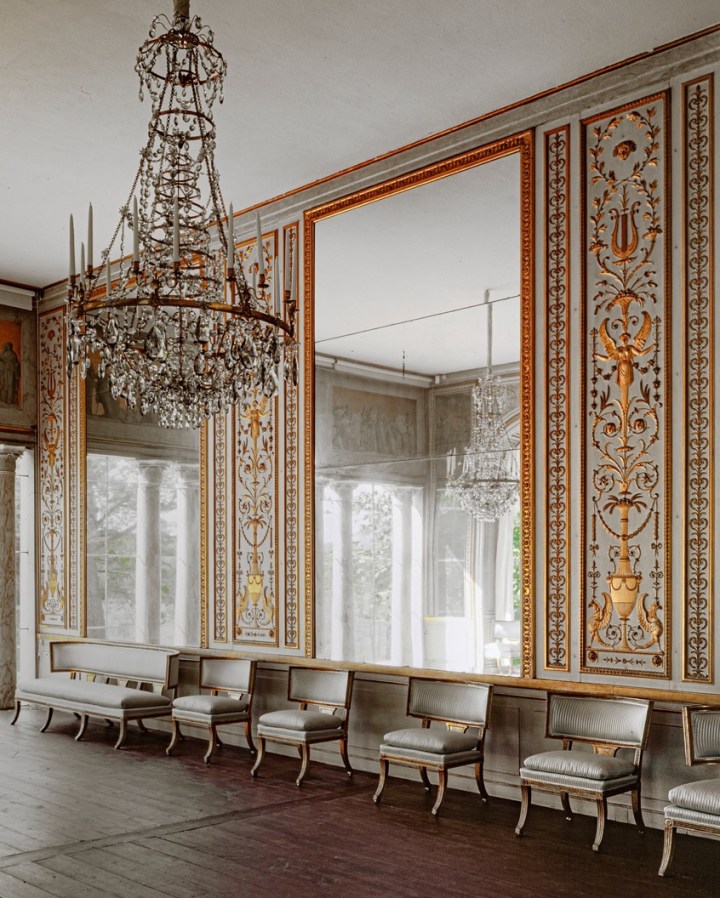
The Hall of Mirrors, Gustav III’s Pavilion at Haga Park. The Royal Palaces, Sweden (Photograph: ©Jens Markus Lindhe).
This intensive seven-day course will study the patronage of successive Swedish royal dynasties and that of the nobility and wealthy merchant class, in Stockholm’s palaces and the castles and country houses of its hinterland—Svealand, the nation’s historic core. With earlier outliers, it will focus on the arts and architecture of the mid 17th to early 19th centuries, encompassing the Baroque, Rococo, neo-Classical and ‘Empire’ styles.
For more than a hundred years, from the accession of Gustavus Adolphus in 1611 to its loss of territory at the end of the Great Northern War in 1721, Sweden was a European military superpower and enjoyed an ‘Age of Greatness’, its fortunes reflected in the richness of buildings, interiors, and collections of fine and decorative arts, particularly those of the monarchy. A new political compact with power-sharing between government and parliament—the so-called ‘Age of Liberty’—subsequently encouraged a flowering of the arts and sciences and the further influence of all things French. During the following ‘Gustavian Age’, led by the energetic but latterly autocratic, Gustav III, Sweden’s elegant interpretation of neo-Classicism reached its apogee.
In Stockholm, visits will be made to the Riddarhuset, Riddarholmskyrkan, the Royal Palace, and Gustav III’s Museum of Antiquities. Outside Stockholm, in addition to a number of private houses, visits will include, Tullgarns Palace, Drottningholm Palace, Svartsjö Palace, the English landscape park at Haga, Rosersberg Palace, Svindersvik a summer residence, Gripsholm Castle, the manor house at Grönsöo, and Skokloster Castle. For the last two nights we will be staying in the town of Mariefred on the south-west tip of Lake Mälaren.
◊ ◊ ◊ ◊ ◊
The 73rd Summer School
Led by David Adshead and Tessa Wild, with Sabrina Silva, 27 June — 12 July 2026
Applications due by 30 January 2026
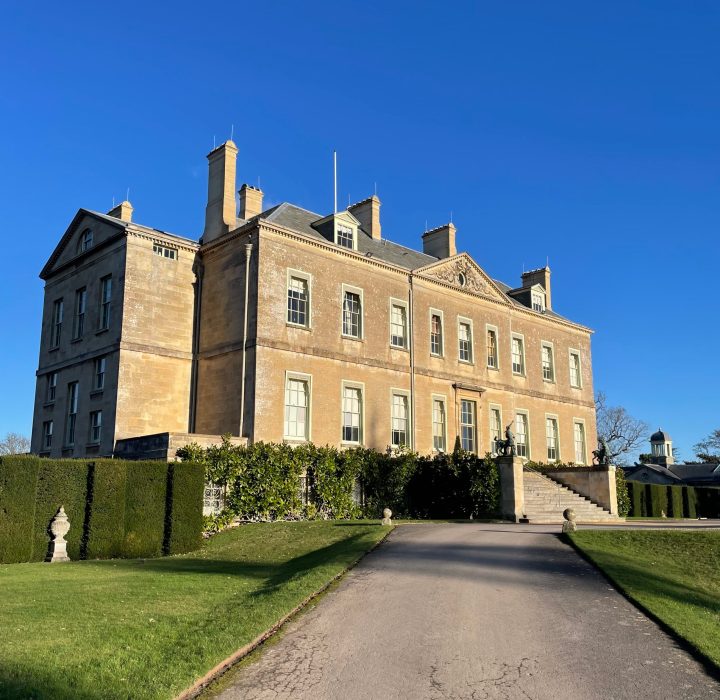
Buscot Park, Faringdon, Oxfordshire, 1780–83.
The 73rd Attingham Summer School, a 16-day residential course will visit country houses in Sussex, Derbyshire, Nottinghamshire, Buckinghamshire, and Oxfordshire. From West Dean, our first base, we will study, amongst other houses and gardens: Petworth House, where the patronage of great British artists such as Turner and Flaxman enrich its Baroque interiors; Parham, a fine Elizabethan house in an unrivalled setting; and Standen, an Arts and Crafts reinterpretation of the country house.
In the Midlands, a series of related houses will be examined: Hardwick Hall, unique amongst Elizabethan houses for its survival of late 16th-century decoration and contents; Bolsover Castle, a Jacobean masque setting frozen in stone; and Chatsworth, where the collections and gardens of the Cavendishes and Dukes of Devonshire span more than four centuries. Other highlights include Robert Adam’s crisp neo-Classical interior and Fishing Pavilion at Kedleston Hall.
The final part of the course will focus on the rich estates and collections of Oxfordshire. Our itinerary will include Broughton Castle, a moated and fortified manor house with a chapel first consecrated for Christian worship in 1331, and Buscot Park, with its superb collection with works by Rembrandt, Botticelli, Rubens, Edward Burne-Jones and Dante Gabriel Rossetti, and furniture by Robert Adam and Thomas Hope. While at Buscot we will have the opportunity to explore one of the country’s finest water gardens, designed by Harold Peto in 1904 and extended from 1911–13, and a surviving country house theatre created in 1936 for the 2nd Lord Faringdon. We will also visit the much more modest 17th-century stone-built, Kelmscott Manor, the beloved country home of William Morris and his family, and the place that he described as ‘Heaven on Earth’.
◊ ◊ ◊ ◊ ◊
Royal Collection Studies
Led by Helen Jacobsen, with Beatrice Goddard, 6–15 September 2026
Applications due by 15 February 2026

James Roberts, The Pavilion Breakfast Room at Buckingham Palace (known by 1873 as the Queen’s Luncheon Room), 1850, watercolour and bodycolour with gum arabic, paper: 26 × 38 cm (RCIN 919918).
The Royal Collection is one of the world’s leading collections of fine and decorative art, with over one million works from six continents, many of them masterpieces. Working in partnership with The Royal Collection Trust, this ten-day residential course offers participants the opportunity to study the magnificent holdings of paintings, furniture, metalwork, porcelain, jewellery, sculpture, arms and armour, books, and works on paper and to examine the architecture and interiors of the palaces which house them. Based near Windsor, the course also examines the history of the collection and the key roles played by monarchs and their consorts over the centuries. Combining a mixture of lectures and tutorials, visits to both the occupied and unoccupied palaces in and around London and close-up object study, Royal Collection Studies aims to give experienced professionals in the heritage sector a deeper understanding of this remarkable collection.
◊ ◊ ◊ ◊ ◊
From College Library to Country House
Led by Andrew Moore, with Rita Grudzien, 7–11 September 2026
Applications due by 15 February 2026
This course is conceived from the perspective of the British aristocracy and gentry whose education centred upon preparing them to run their country estate, including the house and collections, and argues for the importance of the library and the book collection in this process. Too often in country house studies the architecture, interior design, and art collections have held sway; this course aims to foreground the College book collections at the disposal of tutors and the subsequent development of the country house library. Libraries reveal not only the intellectual or recreational interests of past generations, but also how books manifest taste, fashion, and opportunities for display. Book historians and tutors well known in their respective fields will conduct the course, attending to a broad variety of subjects including book binding, the development of the idea of rare books and of book collections, library portraiture, and questions of spatial analysis and mobility—all in the context of the collections housed in some of the oldest and most complete book rooms in Britain.
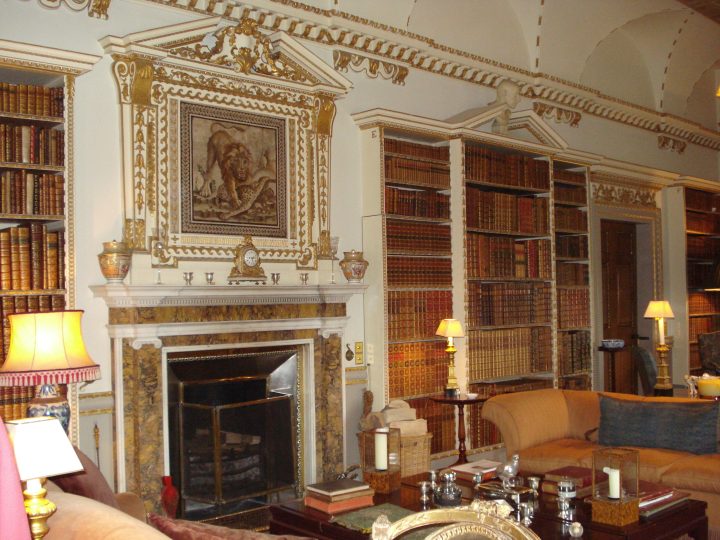
Library at Holkham Hall.
This intensive residential five-day course is based in the exceptional surroundings of St Catharine’s College, a constituent college of the University of Cambridge. Directed by Dr Andrew Moore, the programme plans to visit a series of iconic libraries. These include the historic private library of Houghton Hall, created by Robert Walpole, and Holkham Hall, home to one of the greatest private manuscript and printed book collections in Britain, housed today in three of the country’s most important country house library rooms. The course will also visit the library designed by James Gibbs for Edward Harley, Earl of Oxford at Wimpole Hall in Cambridgeshire, and the Braybrooke library rooms at Audley End, of considerable interest for being reconstituted from dressing rooms into the 3rd Lord Braybrooke’s library, incorporating the inherited Neville family books. The library at Audley End functioned as an informal family sitting room, with the adjacent study (the South Library) still displayed as it looked in the early 19th century.
The course includes the Old Libraries of St John’s College and Queens’ College; the Wren Library, Trinity; the Perne Library at Peterhouse; the Parker Library at Corpus Christi; and the Founder’s Library at the Fitzwilliam Museum. Additional seminars will take place in the context of the historic book collections in the Cambridge University Library designed by Giles Gilbert Scott (1880–1960). St Catharine’s College will host a seminar on the medical book collection of John Addenbrooke (1680–1719), founder of Addenbrooke’s Hospital, Cambridge.
◊ ◊ ◊ ◊ ◊
Note (added 14 January 2026) — From Attingham’s Instagram account (6 January 2026) . . .
We are thrilled to congratulate Annabel Westman on being awarded an MBE in the New Year Honours “for services to heritage, particularly to The Attingham Trust and historic textiles.” Annabel’s time as Director of the Attingham Summer School (1993–2005) and Executive Director of The Attingham Trust (2005–2021) helped shape Attingham into the vibrant, welcoming, and extraordinary community it is today. Alongside this, her distinguished career as a textile historian and consultant has enriched the understanding and restoration of historic interiors worldwide. This honour is richly deserved, and we are so proud to celebrate Annabel and all she continues to give to the field.
New Book | Bluestockings and Landscape in Eighteenth-Century Britain
From Boydell & Brewer:
Markman Ellis and Jack Orchard, eds., Bluestockings and Landscape in Eighteenth-Century Britain: The Prospect of Improvement (London: Boydell Press, 2025), 292 pages, ISBN: 978-1837650507, £85. Available as an ebook for £19. Studies in the Eighteenth Century series, Volume 16.
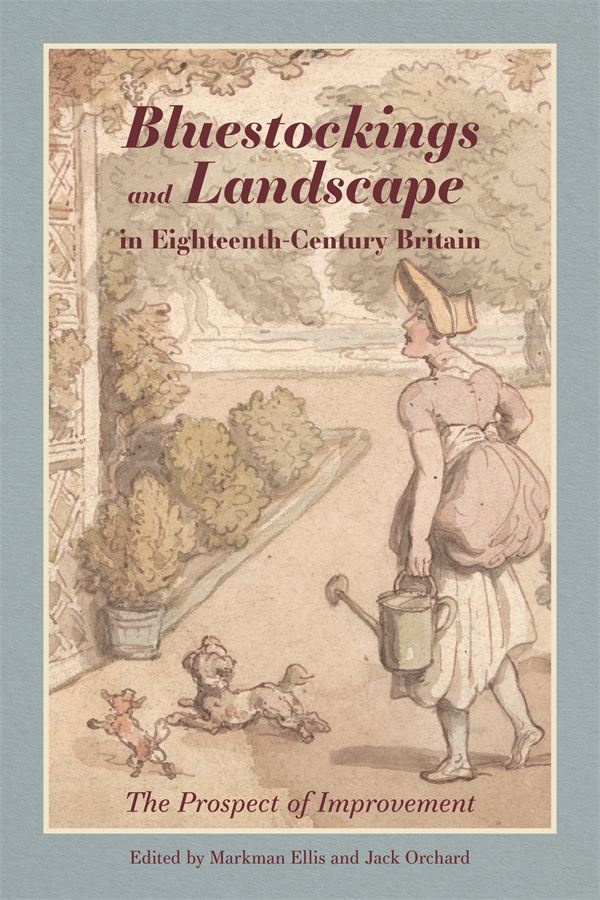 Situated within the broader context of eighteenth-century intellectual and cultural history, this collection redefines the role of the Bluestocking circle in shaping Britain’s landscapes and social ideals. Against the backdrop of Whiggish notions of ‘improvement’—encompassing agricultural innovation, aesthetic refinement, and moral progress—it explores how women such as Elizabeth Montagu, Mary Delany, and Elizabeth Carter navigated the intersections of polite sociability, intellectual production, and estate management. Their contributions reveal a dynamic interplay between cultural critique and practical reform, positioning them as active participants in the period’s debates on land, labour, and national identity.
Drawing on insights from the Elizabeth Montagu’s Correspondence Online (EMCO) project, these essays uncover the creative and social tensions embedded in iconic estates such as Montagu’s Sandleford and Lord Lyttelton’s Hagley Hall. They delve into the poetic and philosophical musings of James Woodhouse, the sociable artistry of Mary Delany, and the symbolic landscapes of Wrest Park. By examining correspondence, poetry, visual arts, and cartography, this volume offers an unprecedented exploration of the ways Bluestocking women engaged with and redefined the designed landscape as a site of intellectual and environmental innovation. This interdisciplinary collection reshapes the historiography of gender, environment, and cultural progress, offering fresh insights into the enduring significance of eighteenth-century landscapes and the intellectual communities that shaped them.
Markman Ellis is Professor of Eighteenth-Century Studies at Queen Mary University of London.
Jack Orchard is Content Editor of the Electronic Enlightenment project based at the Bodleian Libraries, Oxford.
c o n t e n t s
List of Illustrations
Notes on Contributors
Acknowledgements
Foreword: ‘Bringing Elizabeth Montagu to the World’ — Joanna Barker and Nicole Pohl
Introduction: ‘The Prospect of Improvement: Bluestockings and Landscape in Eighteenth-Century Britain’ — Markman Ellis and Jack Orchard
Section One
1 Idioms of Improvement: Gender and Social Relations on the Montagu Estates, 1730–1800 — Steve Hindle
2 Religious Faith, Class Politics, and Equitable Progress: James Woodhouse and Elizabeth Montagu’s Contending Visions of Improvement — Adam Bridgen and Steve Van Hagen
3 Cultivating Wilderness — Ve-Yin Tee
Section Two
4 ‘Another Little Excursion’: On Tour with Mrs Montagu and Lord Lyttelton — Michael Cousins
5 Cultivating Land, Literature, Letters: Textualities of Improvement in Elizabeth Montagu’s Travels in Scotland — Millie Schurch
6 ‘She had no eyes nor understanding to see that it was not a common vulgar garden’: Mary Delany’s Landscapes of Improvement — Kristina Decker
7 Ladies of Landscape: The Discovery of Lady Harriett Garnier’s ferme ornée at Rookesbury, Hampshire — Rosemary Baird Andreae
Section Three
8 ‘The Genius of Rest … those Happy Groves Inspired’: Literary Composition, Coterie Sociability, and the Gardens at Wrest Park — Jemima Hubberstey
9 ‘Fate Led Me from my Lov’d Retreat’: The City and the Country in Elizabeth Harcourt’s Writings — Mary Chadwick
10 ‘Death’s Refreshing Shade’: Elizabeth Carter, ‘Church-yard Poetry’ and Contemplative Retirement in the Gardens of the Dead — James Metcalf
Afterword: Bluestocking Landscapes — Stephen Bending
Bibliography










 Enfilade
leave a comment