Exhibition | Michaelina Wautier and ‘The Five Senses’
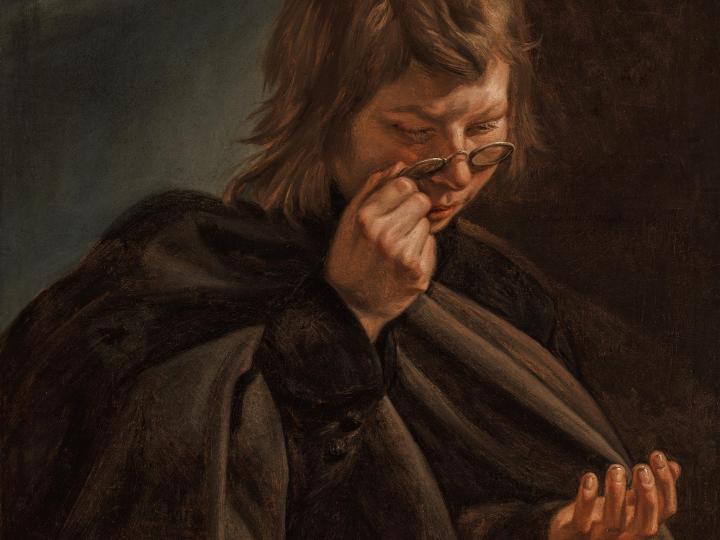
Michaelina Wautier, detail of Sight from The Fives Senses series, 1650
(Collection of Rose-Marie and Eijk van Otterloo, on loan to the MFA)
◊ ◊ ◊ ◊ ◊
Predating even the long eighteenth century, this was the first I learned of the artist (though a 2021 posting here at Enfilade did note an auction sale). –CH.
Now on view at Boston’s MFA:
Michaelina Wautier and The Five Senses: Innovation in 17th-Century Flemish Painting
Museum of Fine Arts, Boston, 12 November 2022 — 12 November 2023
Organized by Christopher Atkins and Jeffrey Muller, with six PhD students from Brown University
Centered around her rare series The Five Senses (1650), this is the first gallery space in the Americas dedicated to the art of Michaelina Wautier (1614–1689), a painter from Brussels all but forgotten until the recent rediscovery of her work. The set of five pictures was virtually unknown until it was acquired by Rose-Marie and Eijk van Otterloo and lent to the MFA in 2020. Here, it is joined by Wautier’s remarkable Self-Portrait (1645), on loan from a private collection and on public view in the US for the first time.
Wautier’s technique, process, and training are mysterious. Few records about her life exist, due in part to her gender. This exhibition, organized by the MFA’s Center for Netherlandish Art in collaboration with a professor and six doctoral students from Brown University, presents new scholarship about the artist and her unusual career as a female painter working in mid-17th-century Brussels.
The Five Senses and Self-Portrait, all of which have only been attributed to Wautier in recent years, are among fewer than 40 known works by the artist. Wautier focuses on boys—a different model in each painting—performing everyday activities in her detailed portrayals of Sight, Hearing, Smell, Taste, and Touch. Accompanying prints by her predecessors and contemporaries, including Cornelis Cort (1533–1578) and Johannes Gillisz. van Vliet (about 1610–about 1640), demonstrate Wautier’s originality, showcasing how she defied a convention at the time of depicting the senses as experienced by idealized women. In her Self-Portrait, Wautier presents herself both in a formal aristocratic setting and as a professional artist, facing an easel and holding painting tools. Together, these extraordinary pictures are exemplary of Wautier’s unique style and brushwork. The exhibition also features a print after a now lost portrait by Wautier from MFA Boston that has never been on view.
The installation is accompanied by the first volume of the digital publication series CNA Studies, edited by Professor Jeffrey Muller and with essays by the six organizing students: Yannick Etoundi, Sophie Higgerson, Emily Hirsch, Regina Noto, Mohadeseh Salari Sardari, and Dandan Xu.
This is the second in a series of collaborations between the CNA and its academic partners that draws on MFA Boston’s deep collection of Dutch and Flemish art in new and unexpected ways, bringing new perspectives and diverse voices to the forefront while showcasing cross-disciplinary scholarship. The previous installation, A Modern Art Market, was on view from November 2021 through October 2022.
◊ ◊ ◊ ◊ ◊
More information is available from this piece in The NY Times:
Milton Esterow, “For Centuries, Her Art Was Forgotten, or Credited to Men. No More,” The New York Times (2 December 2022). The work of Michaelina Wautier, a 17th-century artist, was long overlooked. She is belatedly gaining recognition as an old master, as the first US show of her work opens in Boston.
In addition to the MFA’s exhibition, the article addresses the work of Professor Katlijne Van der Stighelen (University of Leuven), who learned of Wautier’s work in 1993 and organized the 2018 exhibition Michaelina Wautier: Baroque’s Leading Lady, held at Antwerp’s Museum aan de Stroom.
New Book | William Ellis
From the University of Hertfordshire Press:
Malcolm Thick, William Ellis: Eighteenth-Century Farmer, Journalist, and Entrepreneur (Hatfield: University of Hertfordshire Press, 2022), 224 pages, ISBN: 978-1912260492, £17 / $34.
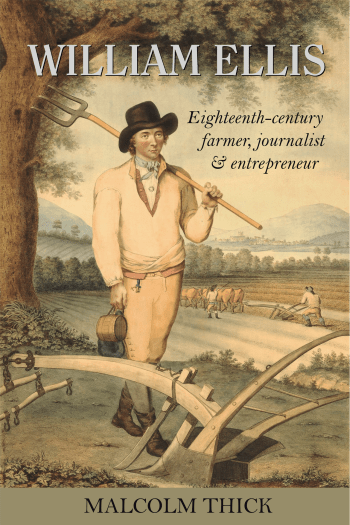 William Ellis, who lived and farmed at Little Gaddesden in Hertfordshire in the first half of the eighteenth century (d. 1759), is an important figure in English agricultural history. In his time the most prolific writer on agriculture in England, he authored many works that were read not only at home but also in the American colonies and continental Europe. Ellis was essentially an agricultural journalist, then a relatively new occupation. He wrote about his own life as well as those of the ordinary people of Little Gaddesden and further afield—he travelled extensively throughout the southern half of England. Most of his copy was derived from conversations he had had with farmers, their wives, and other rural folk, the sheer immediacy of his books outshining those of his rivals.
Ellis’s style was discursive, particularly so in The Country Housewife’s Family Companion (1750). As well as providing a compendium of household management, cookery, and medicine, Ellis delighted in relaying gossip. He included the activities of farmers, wives and maids, labourers, travellers, and beggars, as well as the gentry and aristocracy, rich pickings for social historians.
Ellis also used his books to advertise his business as a supplier of agricultural instruments, seeds, plants, trees, and fowls—an innovative approach. The Swedish botanist Pehr Kalm visited Little Gaddesden in 1748 to inspect Ellis’s farming and the various farm implements he advertised for sale. The two men didn’t warm to each other, but Kalm’s independent observations add to what we know about Ellis.
Piecing together the scant facts about Ellis’s early life, Malcolm Thick has uncovered new information on his time before he commenced farming and unravelled some of the complexities of his two marriages. The book’s central focus is on Ellis’s agricultural writings, which provide a fascinating picture of rural life in the period and shed light on the evolution of English farming. This is the first book about Ellis for over sixty years and the first to consider him fully in the round—as a farmer, an active member of his community, an innovative salesman, and a wonderfully curious mind.
Malcolm Thick is a Fellow of the Royal Historical Society and a winner of the Sophie Coe prize for food history writing. He has published books and papers on early modern gardening, food, and agriculture, including a critically acclaimed biography of the early scientist Sir Hugh Plat and a history of market gardening around London. He also wrote the introduction to a new edition of Ellis’s Country Housewife’s Family Companion and has contributed a chapter on “Plants as Staple Foods” in volume 3 of A Cultural History of Plants (Bloomsbury, 2022).
C O N T E N T S
1 Introduction
2 Life before Little Gaddesden and at Church Farm
3 Agriculture
4 Advertising and Trading
5 Food, Drink, and Medicine
6 Ellis the Man
7 Other Matters
8 Conclusion
Online Exhibitions | Museum of the American Revolution
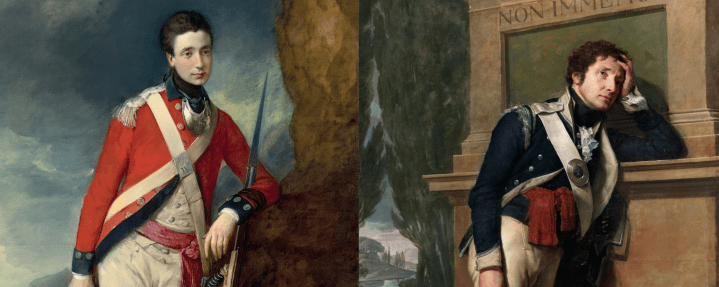
Left: Thomas Gainsborough, Portrait of Richard Mansergh St. George, detail, 1776 (Melbourne: National Gallery of Victoria). Right: Hugh Douglas Hamilton, Portrait of Richard Mansergh St. George, detail, ca. 1796 (Dublin: National Gallery of Ireland, purchased, 1992)
◊ ◊ ◊ ◊ ◊
From the Museum of the American Revolution:
Cost of Revolution: The Life and Death of an Irish Soldier
Museum of the American Revolution, Philadelphia, 28 September 2019 — 17 March 2020, online version ongoing
What can a life tell us about an era? These two portraits depict Richard Mansergh St. George, an Irish soldier who fought against two revolutions, one in America and one in Ireland. To the left is the young and confident St. George in 1776, dressed in his British Army uniform, ready to ship off to fight the American ‘rebels’. To the right is Richard Mansergh St. George grieving at his wife’s tomb two years before his tenants killed him at the beginning of the Irish Revolution of 1798.
In the 20 years separating his portraits, St. George’s life changed dramatically. He survived a severe head wound in America, mourned over the tragic death of his wife, and saw the power of kings and of gentlemen like himself violently challenged on two continents. Along the way, St. George created and commissioned artwork to deal with his trauma and make sense of his rapidly changing world. His portraits, paintings, sketches, and cartoons provide new insight into the personal cost of revolution and the entangled histories of the American Revolution of 1776 and the Irish Revolution of 1798.
1 St. George’s Ireland: A Divided Population
2 American War: Fighting for the Crown
3 Wounded Veteran: A Man Versed in Misfortune
4 Irish Revolution: Fighting for Independence in 1798

1797 New Jersey Electoral Reform Enrolled Law
(New Jersey State Archives, Department of State)
◊ ◊ ◊ ◊ ◊
From the Museum of the American Revolution:
When Women Lost the Vote: A Revolutionary Story, 1776–1807
Museum of the American Revolution, Philadelphia, 2 October 2020 — 25 April 2021, online version ongoing
Women voted in Revolutionary America, over a hundred years before the United States Constitution guaranteed that right to women nationally. The 1776 New Jersey State Constitution referred to voters as “they,” and statutes passed in 1790 and 1797 defined voters as “he or she.” This opened the electorate to free property owners, Black and white, male and female, in New Jersey. This lasted until 1807, when a new state law said only white men could vote. What can this story of changing laws about who could vote from the earliest days of American democracy teach us about what it means to vote and what it takes to preserve and expand that right? A newly discovered set of sources—lists of men and women, Black and white—who voted in New Jersey between 1798 and 1807 set off our quest to find the answers.
1 How Did Women Gain the Vote? The Promise of 1776 for Women
2 How Did the Vote Expand? New Jersey’s Revolutionary Decade
3 How Did Women Lose the Vote? The Backlash
4 How Was the Vote Regained? Redemption
Exhibition | Ignatius Sancho: A Portrait
Now on view at Gainsborough’s House:, which just reopened after a £10m refurbishment, including a new three-story building, by ZMMA:
Ignatius Sancho: A Portrait
Gainsborough’s House, Sudbury, 21 November 2022 — 26 February 2023
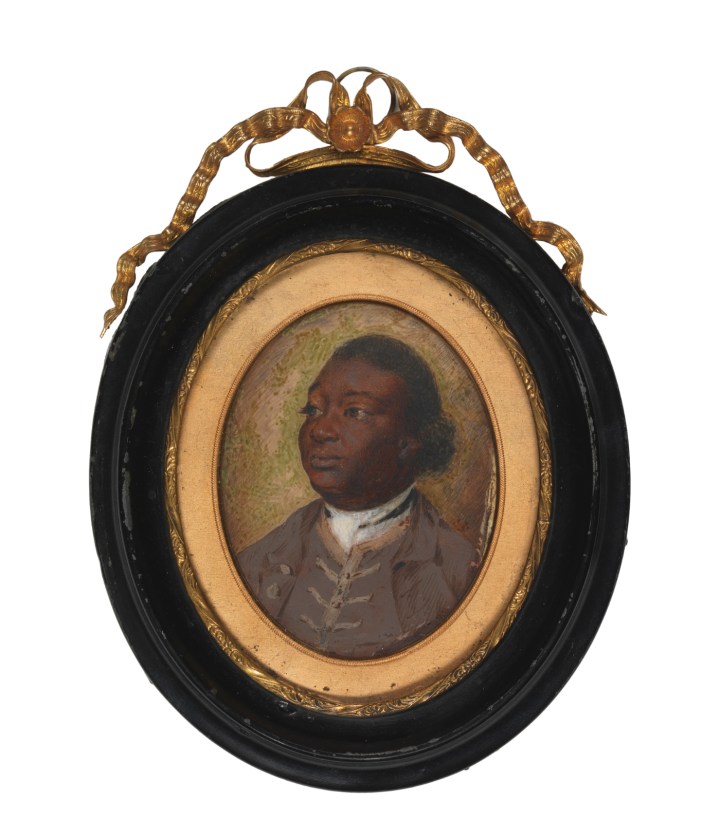
Unknown artist after Thomas Gainsborough, Portrait of Ignatius Sancho, ca. 1802–20 (Gainsborough’s House and NPG)
In 1768 Thomas Gainsborough painted the portrait of Ignatius Sancho (c. 1729–1780), who was then valet to the Duke of Montagu. The portrait of Sancho is a rare depiction of an African in eighteenth-century Europe shown not as an enslaved person, servant or caricature, but as a gentleman. After Sancho’s death, the portrait was engraved and used to illustrate a publication of his letters, which played a significant role in the abolitionist movement. On display at the centre of this exhibition is a rare copy of the portrait in miniature, which was jointly acquired by Gainsborough’s House with the National Portrait Gallery in 2019.
Sancho lived a remarkable life. Born to enslaved parents in the West Indies, he became famous for his correspondence with the author Laurence Sterne and for the grocers that he ran in Westminster. He was the first African to receive an obituary in the British press. The temporary exhibition Ignatius Sancho: A Portrait, aims to shed light on just a few of the interesting and varied aspects of Sancho’s life using his published letters as inspiration. It is supported by loans from the National Portrait Gallery and The Laurence Sterne Trust.
The exhibition has been created in partnership with the National Portrait Gallery as part of their transformational Inspiring People project that includes an extensive programme of nationwide activities, funded by The National Heritage Lottery Fund and Art Fund.
New Book | Auld Greekie: Edinburgh as the Athens of the North
From Fonthill Media:
Iain Gordon Brown, Auld Greekie: Edinburgh as the Athens of the North (Fonthill Media, 2022), 368 pages, ISBN: 978-1781558928, £30.
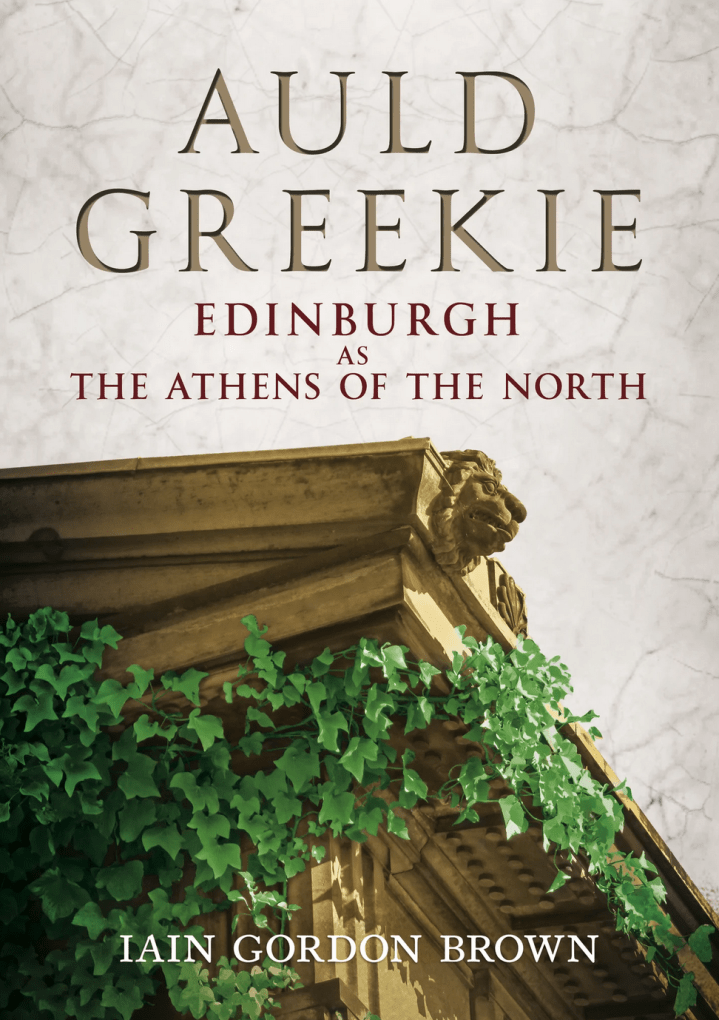 Around the turn of the eighteenth and nineteenth centuries, and especially in the years between about 1810 and 1840, Edinburgh—long and affectionately known as ‘Auld Reekie’—came to think of itself and to be widely regarded as something else. The city became ‘Modern Athens’, an epithet later turned to ‘the Athens of the North’. The latter phrase is very well-known. It is also much used by those who have little understanding of the often confused and contradictory messages hidden within the apparent convenience of a trite or hackneyed term that actually conceals a myriad of nuanced meanings.
This book examines the circumstances underlying a remarkable change in perception of a place and an age. It looks in detail at the ‘when’, the ‘by whom’, the ‘why’, the ‘how’ and the ‘with what consequences’ (for good or ill) of this most interesting, and extremely complex, transformation of one city into an image—whether physical or spiritual, or both—of another. A very broad range of evidence is drawn upon, the story having not only topographical, artistic and architectural dimensions, but also social, cerebral and philosophical ones. Edinburgh may well have been considered, for one reason or another, as ‘Athenian’. But, in essence, it remained what it had always been. Maybe, however, for a brief period it was really a sort of hybrid city: ‘Auld Greekie’.
Iain Gordon Brown FSA FRSE, whose academic career began as a student of ancient history and classical archaeology, was principal curator of manuscripts in the National Library of Scotland, where he is now honorary fellow. He has held the office of curator of the Royal Society of Edinburgh, Scotland’s national academy, and has also been president of the Old Edinburgh Club and a trustee of Edinburgh World Heritage. He is consultant to the Adam Drawings Project at Sir John Soane’s Museum, London.
Print Quarterly, December 2022
The long eighteenth century in the latest issue of Print Quarterly:
Print Quarterly 39.4 (December 2022)
A R T I C L E S • Antony Griffiths and Giorgio Marini, “Some Italian Importers of British Prints in the 1780s,” pp. 412–22. “There is little evidence of interest or awareness of British printmaking in Italy before the last quarter of the eighteenth century. In those years, however, things began to change with remarkable speed. The purpose of this article is to draw attention to five importers of British prints—Molini in Florence, Micali in Livorno (Leghorn), Montagnani in Rome, and Viero and Wagner, both in Venice—all of whom produced catalogues of their imported stock within the five years between 1785 and 1789. When considered as a group, these catalogues give evidence of how quickly dealers were able to import newly published stock and how varied tastes were in these years” (412).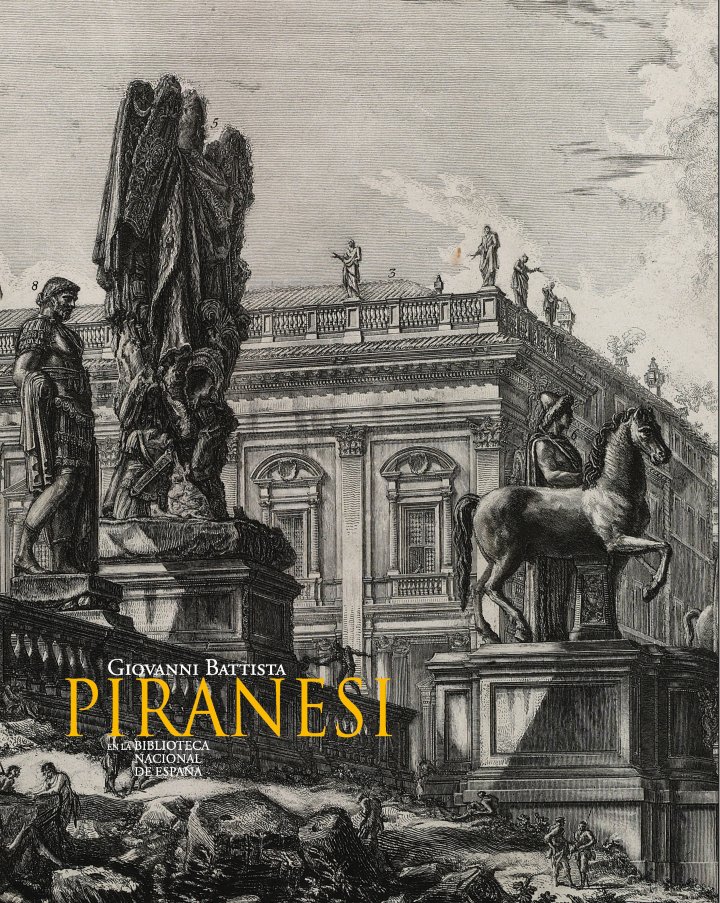 N O T E S A N D R E V I E W S
• Giorgio Marini, Note of the exhibition catalogue Delfín Rodríguez Ruiz and Helena Pérez Gallardo, eds., Giovanni Battista Piranesi en la Biblioteca Nacional de España (Biblioteca Nacional de España, Madrid, 2019), pp. 444–46.
• Laurence Lhinares, Note on the Print Collection of Horace His de La Salle (1795–1878), occasioned by the exhibition Officier et Gentleman: La Collection Horace His de La Salle (Louvre, 2019–20) and the recent purchase by the Fondation Custodia of a copy of the 1856 sale catalogue of the collector’s prints, pp. 446–50.
• Paul Coldwell, Note on Elizabeth Jacklin, The Art of Print: Three Hundred Years of Printmaking (Tate, 2021), pp. 450–51.
• Rachel Sloan, Note on Kinga Bódi and Kata Bodor, eds., The Paper Side of Art: Eight Centuries of Drawings and Prints in the Collections of the Museum of Fine Arts – Hungarian National Gallery, Budapest (2021), pp. 451–52.
• Anne Leonard, Review of the exhibition catalogue, Rena Hoisington, Aquatint: From Its Origins to Goya (National Gallery of Art / Princeton University Press, 2021), pp. 466–71. The catalogue won the 2022 IFPDA book award and discusses many notable innovators in the aquatint medium, including Giovanni David and Maria Catharina Prestel.
N O T E S A N D R E V I E W S
• Giorgio Marini, Note of the exhibition catalogue Delfín Rodríguez Ruiz and Helena Pérez Gallardo, eds., Giovanni Battista Piranesi en la Biblioteca Nacional de España (Biblioteca Nacional de España, Madrid, 2019), pp. 444–46.
• Laurence Lhinares, Note on the Print Collection of Horace His de La Salle (1795–1878), occasioned by the exhibition Officier et Gentleman: La Collection Horace His de La Salle (Louvre, 2019–20) and the recent purchase by the Fondation Custodia of a copy of the 1856 sale catalogue of the collector’s prints, pp. 446–50.
• Paul Coldwell, Note on Elizabeth Jacklin, The Art of Print: Three Hundred Years of Printmaking (Tate, 2021), pp. 450–51.
• Rachel Sloan, Note on Kinga Bódi and Kata Bodor, eds., The Paper Side of Art: Eight Centuries of Drawings and Prints in the Collections of the Museum of Fine Arts – Hungarian National Gallery, Budapest (2021), pp. 451–52.
• Anne Leonard, Review of the exhibition catalogue, Rena Hoisington, Aquatint: From Its Origins to Goya (National Gallery of Art / Princeton University Press, 2021), pp. 466–71. The catalogue won the 2022 IFPDA book award and discusses many notable innovators in the aquatint medium, including Giovanni David and Maria Catharina Prestel.
New Book | Francisco de Goya and the Art of Critique
Published by Zone Books and distributed by Princeton UP:
Anthony Cascardi, Francisco de Goya and the Art of Critique (New York: Zone Books), 376 pages, ISBN: 978-1942130697, $40 / £30.
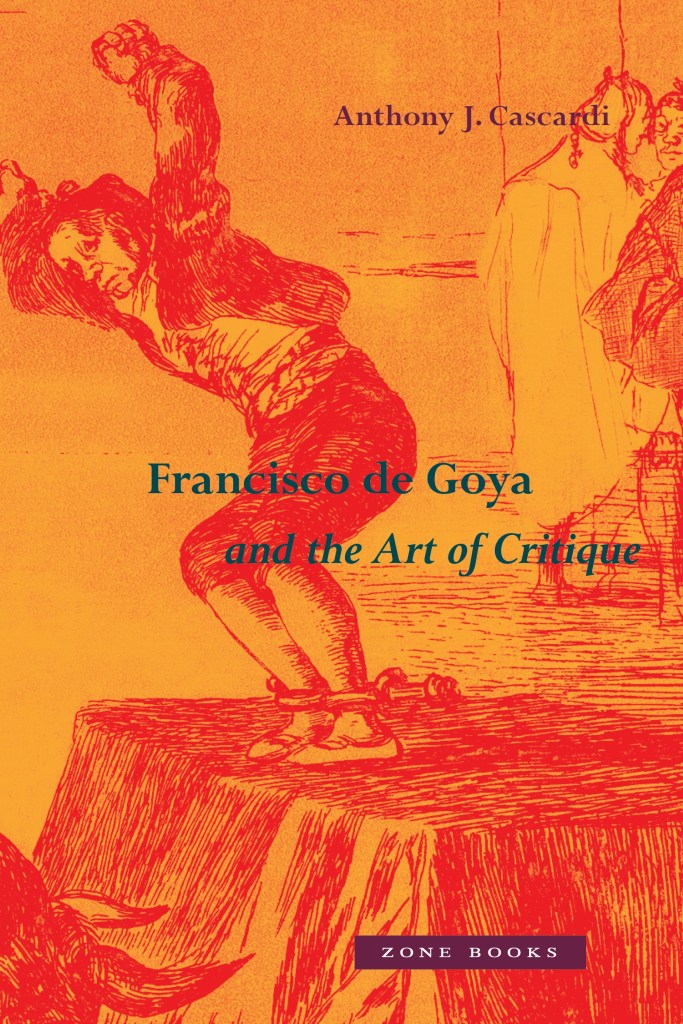 Francisco de Goya and the Art of Critique probes the relationship between the enormous, extraordinary, and sometimes baffling body of Goya’s work and the interconnected issues of modernity, Enlightenment, and critique. Taking exception to conventional views that rely mainly on Goya’s darkest images to establish his relevance for modernity, Cascardi argues that the entirety of Goya’s work is engaged in a thoroughgoing critique of the modern social and historical worlds, of which it nonetheless remains an integral part. The book reckons with the apparent gulf assumed to divide the Disasters of War and the so-called Black Paintings from Goya’s scenes of bourgeois life or from the well-mannered portraits of aristocrats, military men, and intellectuals. It shows how these apparent contradictions offer us a gateway into Goya’s critical practice vis-à-vis a European modernity typically associated with the Enlightenment values dominant in France, England, and Germany. In demonstrating Goya’s commitment to the project of critique, Cascardi provides an alternative to established readings of Goya’s work, which generally acknowledge the explicit social criticism evident in works such as the Caprichos but which have little to say about those works that do not openly take up social or political themes. In Francisco de Goya and the Art of Critique, Cascardi shows how Goya was consistently engaged in a critical response to—and not just a representation of—the many different factors that are often invoked to explain his work, including history, politics, popular culture, religion, and the history of art itself.
Anthony J. Cascardi is the Sidney and Margaret Ancker Distinguished Professor at the University of California, Berkeley. He is the author of numerous books, including The Consequences of Enlightenment; Cervantes, Literature, and the Discourse of Politics; The Subject of Modernity; and The Cambridge Introduction to Literature and Philosophy.
C O N T E N T S
Introduction
1 Secularization and the Aesthetics of Belief
2 A Promise of Happiness?
3 Goya, Modernity, Aesthetic Critique
4 The Limits of Representation
5 Conflicts of the Faculties: Goya and Kant
6 Extremities
7 Freedom and the Face of Darkness
8 Beauty and Sympathy
Acknowledgments
Notes
Index
Image Credits
Call for Papers | Shaped by Greed
From the Call for Papers:
Shaped by Greed: Reflections and Impacts of Environmental Exploitation in European Visual Cultures, 1200–1900
Masaryk University, Brno, Czech Republic, 8–9 June 2023
Proposals due by 22 January 2023
How have environmental exploitation, industrialization, and urbanization shaped late medieval and modern visual cultures, landscapes, environments, and the built environment in Europe (and beyond)? An international conference hosted by the Art History Department of Masaryk University in Brno, 8–9 June 2023, organized by Tomáš Valeš, Jan Galeta, Martin F. Lešák, and Veronika Řezníčková as 3rd Biennale of the University’s Centre for Early Modern Studies.
During the Anthropocene, the planet Earth has witnessed several environmental shifts, closely affecting not only the current existence of living species but also the overall future of the planet. The exploitation of the environment creates wealth and simultaneously leads to the various ecological, social, economic, and humanitarian crises that contemporary societies are forced to address, especially in reaction to climate change. In the past centuries, the extraction of precious materials (silver, gold, coal, pearls, coral, whale bones, ivory, or even wood) financed the running of states, cities, churches, monasteries, influential families, and clergy who, in turn commissioned luxurious art and opulent buildings, using the mined materials themselves. Industrialization and urbanization had a tremendous impact on the environment and landscape. Currently, these issues also resonate in the field of art history, or rather eco-art history, for example, in connection with groundbreaking studies and edited volumes, such as those by Sugata Ray (Climate Change and the Art of Devotion Geoaesthetics in the Land of Krishna, 1550–1850), Andrew Patrizio (Ecological Eye: Assembling an Ecocritical Art History), and Karl Kusserow (Picture Ecology: Art and Ecocriticism in Planetary Perspective). Following this line of research, the conference’s main aim is to tackle a broad spectrum of relevant questions that have not yet been asked.
We intend to investigate the interconnections between the environment, its exploitation, art, architecture, and urbanism in a broader European frame with global overlap between 1200 and 1900 (thus taking a longue durée perspective). This explicitly includes the transformation of raw mined materials into luxurious objects; sumptuous and prestigious artistic and urbanistic projects financed by the wealth raised by exploiting nature; iconographies that reflect how the environment was treated, shaped and used in late medieval and modern times.
We are particularly interested in bringing together scholars specialized in different academic areas to confront the human impact on past environments and connect it with the sometimes somewhat self-righteous world of art and beauty. Ultimately, the aim is to explore future perspectives of environmental approaches in art history and lay the foundations for further cooperation between researchers from diverse academic backgrounds.
Possible topics may include but are by no means limited to such issues as:
1. The role of industrialization and urbanization and their foot prints on the landscape, environment, and built environment.
2. Visual representation of human impact on the natural world, e.g., mining, logging, whaling, etc.
3. The mechanisms of exploitation of natural resources in connection to artistic production, e.g., in the case of ivory, coral, or various building materials.
4. Appropriation of nature for collecting purposes or personal representation (taxidermies, live specimens, parts of animal bodies, herbariums, portraits of animals, menageries and zoos, etc.)
5. The origins of appreciating wild nature and the reflection of this appreciation in visual culture, e.g., the beginning of mass tourism, scientific research of nature or how travellers mediated non-European nature in their homelands.
The keynote lecture of the conference will be given by Dr. Hannah Baader (Kunsthistorisches Institut in Florenz – Max-Planck-Institut).
We invite proposals for papers (in English) from senior as well as junior scholars and advanced PhD candidates; presentations will be 20 minutes. Please submit your proposals of around 200–300 words, accompanied by a short CV, by 22 January 2023 to brno.conference.2023@gmail.com. Notification of acceptance of proposals will be issued before 22 February 2023. Selected papers will be published in an edited volume with Brepols publishing house (Belgium).
The Burlington Magazine, November 2022
The eighteenth century in the November issue of The Burlington . . .
The Burlington Magazine 164 (November 2022) — Sculpture

Massimiliano Soldani Benzi, Lamentation over the Dead Christ, 1690–92(?), gilded bronze, 57 × 40 cm (Córdoba Cathedral).
E D I T O R I A L
• The Parthenon Sculptures, p. 1063.
A R T I C L E S
• Fernando Loffredo, “Soldani’s Lamentation in Córdoba,” pp. 1118–22.
R E V I E W S
• Colin Bailey, Review of the exhibition catalogue, Renoir: Rococo Revival (Städel Museum, Frankfurt am Main, 2022), pp. 1150–53.
• Joseph Connors, Review of Livio Pestilli, Bernini and His World: Sculpture and Sculptors in Early Modern Rome (Lund Humphries, 2022), pp. 1160–62. [Pestilli “mines the correspondence of the directors of the Académie de France and sorts through student drawings in the Accademia de San Luca to find that well into the eighteenth century Bernini was copied more than any other artist” (1162).]
• Jamie Mulherron, Review of Alexandre Maral and Valérie Carpentier-Vanhaberbeke, Antoine Coysevox (1640–1720): Le sculpteur du Grand Siècle (Arthena, 2020), pp. 1165–66.
• Hugo Chapman, Review of Carel van Tuyll van Serooskerken, The Italian Drawings of the Seventeenth and Eighteenth Centuries in the Teyler Museum (Primavera Pers, 2021), pp. 1166–67.
• Christopher Martin Vogtherr, Review of Sarah Salomon, Die Kunst der Außenseiter: Ausstellungen und Künstlerkarrieren im absolutistischen Paris jenseits der Akademie (Wallstein Verlag, 2021), pp. 1167–68. [Salomon’s book focuses on four institutions: the Académie de Saint-Luc, the Colisée, the Salon de la Correspondence, and the Exposition de la Jeunesse.]
• Stephen Lloyd, Review of Magnus Olausson, Miniature Painting in the Nationalmuseum: A World-Class Collection (Nationalmuseum Stockholm, 2021), pp. 1168–70.
O B I T U A R I E S
• Michael Hall, Obituary for Mark Girouard (1931–2022), pp. 1171–72.
Call for Papers | Bodily Autonomies, Autonomous Bodies
From the Call for Papers, from IU Bloomington’s Center for Eighteenth-Century Studies:
Bodily Autonomies, Autonomous Bodies
Indiana Center for Eighteenth-Century Studies, Bloomington, 18–20 May 2023
Proposals due by 20 January 2023; accepted papers due mid-April 2023
The Indiana Center for Eighteenth-Century Studies announces its twenty-first annual Bloomington Workshop: Bodily Autonomies, Autonomous Bodies. The idea of ‘autonomy’ arises in the early modern period in relation to political entities, rather than individuals. A borrowing from the Greek (αὐτο + νόμος) meaning self law, autonomy referred to ability of an institution or a state to govern itself. In the eighteenth century, that scope began to apply increasingly to the capacities of individuals. Indeed, one strong tradition in eighteenth-century studies identifies our period with the invention of the author and the origins of the modern, autonomous individual. Looking back to the early modern, eighteenth-century conceptions of autonomy draw from the foundations that would lead to the birth of the nation state, and from contrasting models of internal and external virtue. From out of the eighteenth-century, the application of the term will spread from Montesquieu’s political philosophy, to Kant’s moral philosophy, and extend across the natural and social sciences. And yet the questions of autonomy—of self governance of a human or a political body—do not move in straight lines or toward easy answers.
Self-governance is often a sweet lie that hides the abuse of power, from the personal level to the geopolitical. Foucault has taught us that the individual operates within a network of power systems—religious, gendered, political, racial, geographic, and colonial, among others—that can influence, abridge, inhibit, or reinforce their ability to exercise agency or will over their life and body. More recently, methodological approaches such as New Materialisms, object-oriented ontologies, and alternative ontological frameworks such as those drawn from Black and indigenous studies often serve to unsettle the concept of autonomy, probing the spaces between the ephemeral capacity to self-govern, the material acts of self-determination, and the very notion of a ‘self’ who can be governed and determined at all. Therefore, with this Workshop theme, we hope to explore the limits of self-governance within the network of power structures that make up the world, to recognize the ways that autonomies exist against the grain of social discourse, and to acknowledge long-running ramifications—both positive and negative—of the aspirational quality of this ideal. At the same time, we look to question whether this idealization has contributed to dogmas of personal responsibility and economic self-interest at the expense of collective forms of action and care.
Within the sphere of the eighteenth century, we invite papers about autonomy as it applies to individuals across the spectrums of power and privilege; of groups whose identity or enforced social status inhibits or countermands their capacity to exercise agency; of national or political entities whose formation, liberation, and sovereignty are impacted by colonial pressures, and work that questions and probes autonomy’s drawbacks and boundaries as they figure in eighteenth-century histories, archives, and texts.
We look forward to reading your abstracts and ideas. A non-exhaustive list of topics they might address would include:
• negotiating questions of self and autonomy for enslaved persons
• the autonomy of gendered bodies
• autonomy within or of a colonized state
• freedom of movement: border-crossings, gatherings, quarantines, departures
• approaches that complicate or question ideas of personal or political sovereignty
• scientism and visions of the body as machine
• the individual figured against a backdrop of control or systems of power
• disenfranchisement: debt, citizenship, exile, etc.
In last year’s Workshop, which focused on Collaborations, questions arose about the limits of what can be considered labor performed together (col + labōrāre) in the context of radically inequal power relationships or within systems of sanctioned oppression. This year we hope to continue these conversations, which hold the echoes of the Center’s first workshop, Signs of the Self, and resound into a present where the concept of the autonomous individual is being questioned for political gain.
During the Workshop, we will discuss pre-circulated texts (due in mid-April) and perhaps have an occasional lecture or library, museum, or archive visit. Given the theme, we are especially open to co- and multi-authored contributions, including those that work across hitherto conventional boundaries of genre, discipline, and media. We intend and hope that the workshop will largely take place in person (and that participants will be present for the entire event), but anticipate making provision for some online participation as well.
The application deadline is Friday, 20 January 2023. Please send a paper proposal (1–2 pages) and current brief CV (3 pages, max) to Dr. Barbara Truesdell, Administrator, Center for Eighteenth-Century Studies. Please email to voltaire@indiana.edu. We will acknowledge all submissions within a fortnight: if you do not receive an acknowledgment by 31 January 2022, please email voltaire@indiana.edu or the Center’s Director, Jesse Molesworth (jmoleswo@indiana.edu).
Papers will be selected by an interdisciplinary committee. We cover most expenses for visiting scholars chosen to present their work: accommodations, travel (up to a certain limit), and most meals. Expanded abstracts and/or entire papers may be published in the Center’s The Workshop, along with discussion transcripts or summaries.










 Enfilade
leave a comment