New Book | Versailles Mirrored
From Bloomsbury:
Robert Wellington, Versailles Mirrored: The Power of Luxury, Louis XIV to Donald Trump (London: Bloomsbury Visual Arts, 2025), 256 pages, ISBN: 978-1350451315 (hardback), $100 / ISBN: 978-1350451353 (paperback), $35.
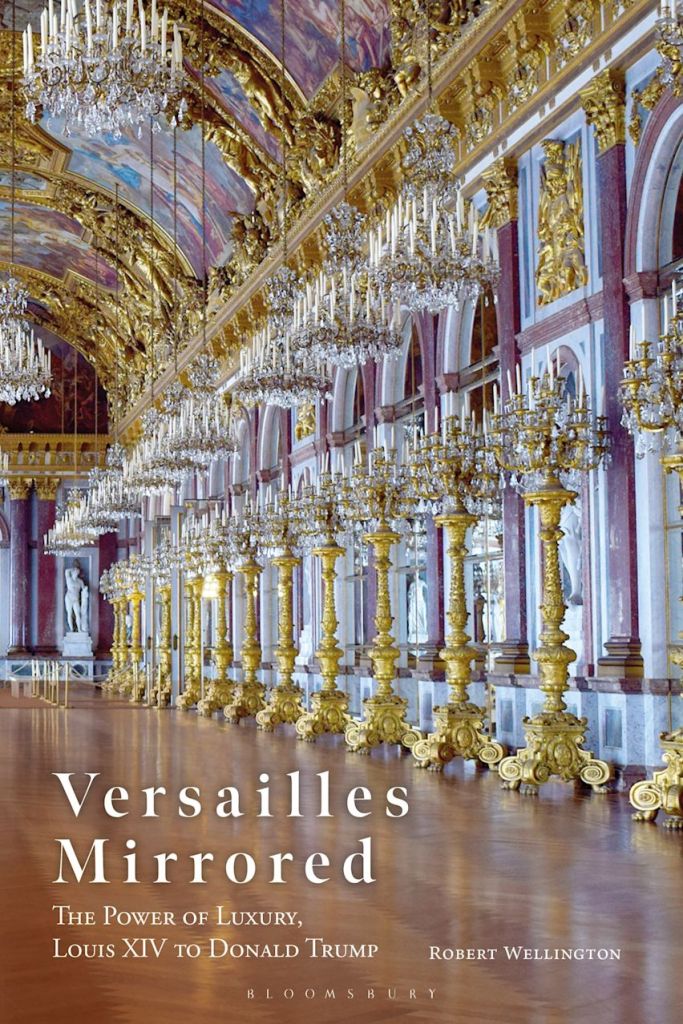 Why has Louis XIV’s Palace of Versailles, defining symbol of hedonistic opulence in 17th-century France and synonymous with the notion of the divine right of kings, continued to shape the aesthetics of cultural capital in the centuries since his death?
In Versailles Mirrored, Robert Wellington tracks this enduring fascination with the Sun King’s palace through eight case studies spanning the 17th to 21st centuries. The book demonstrates how the extravagant palace style began as a symbol of the state in the 17th century; how it was adopted by the nouveau riche to show off their financial success in the 19th century; and, remarkably, how that palace look returned to play a role in statecraft in the hands of US President Donald Trump. Wellington links the aristocratic architectural traditions of France, England, and Germany to North America through the lens of Versailles, French architecture, and the decorative arts. Following a brief overview of the history of Versailles and the political and cultural motivations of its creation, chapters address aristocratic buildings in France and Germany built by the Sun King’s contemporaries; historicism in the 19th century in Britain, Germany, and America; and the present day, with Trump’s buildings and Château Louis XIV, known as the ‘world’s most expensive home’, purchased by the Crown Prince of Saudi Arabia. In uncovering the motivations of those patrons, the book ultimately reveals why Versailles remains a powerful point of reference for those who wish to flaunt their social, cultural, and political capital.
Robert Wellington is Associate Professor of Art History in the Centre for Art History and Art Theory, The Australian National University, Australia. He is a Fellow of the Society of Antiquaries, London, and co-editor of The Versailles Effect (2021).
c o n t e n t s
List of Illustrations
Acknowledgements
Introduction – World’s End
Part I | The Old Regime
1 Making Versailles: Louis XIV
2 The Inveterate Francophile: Ralph Montagu
3 Reflections of the Sun: John Churchill, 1st Duke of Marlborough
Part II | The Age of Historicism
4 Sun King to Moon King: Ludwig II of Bavaria
5 Gilded Age Ambitions: Alva Vanderbilt
6 Frenchified Blenheim: Sunny, 9th Duke of Marlborough
Part III | Generation Wealth
7 Tanned by the Sun King: Donald J. Trump
8 Return to Historicism: Emad Khashoggi
Postscript – A Hermès Scarf
Bibliography
Notes
Index
Exhibition | Enlightenment Princess: Marie Catherine de Brignole-Sale
Now on view at Chantilly:
From Monaco to Chantilly, A Princess of the Enlightenment in Search of Freedom
Château de Chantilly, 18 October 2025 — 4 January 2026
Curated by Mathieu Deldicque and Thomas Fouilleron
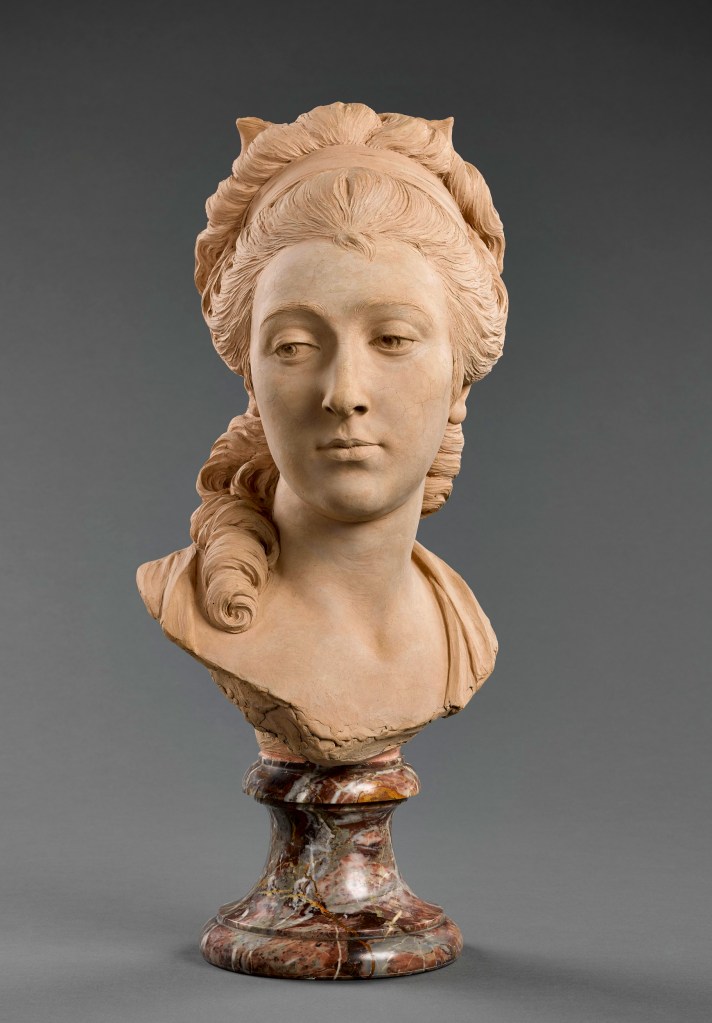
Claude Dejoux, The Princess of Monaco (Marie Catherine de Brignole-Sale), 1783, terracotta (Paris: Musée du Louvre).
Following the 2024 exhibition on the romantic destiny of Louise d’Orléans, the first Queen of the Belgians, the Musée Condé now turns its attention to another little-known yet remarkable woman who left a lasting mark on its history: Marie Catherine de Brignole-Sale, Princess of Monaco and later Princess of Condé (1739–1813). Thanks to an ambitious partnership with the Princely Palace of Monaco, this landmark exhibition, a collaborative research project involving the archives of the palace and those of the Condé Museum, sheds new light on the romantic life and artistic patronage of an extraordinary figure whose influence spanned the Age of Enlightenment and the French Revolution.
The Princess from the Sea
Born in Genoa on 16 September 1738, the only daughter of the Marquis of Brignole-Sale and a doge’s niece, Marie Catherine came from one of the most powerful families in this influential Mediterranean republic. Raised in Paris, she was celebrated as “the prettiest woman in France” and soon caught the attention of Prince Honoré III of Monaco (1720–1795). Though significantly older and initially hoping for a more prestigious match within the French nobility, the Prince ultimately opted for a less exalted but more financially advantageous alliance. After the sumptuous wedding on 15 June 1757, which was fraught with formal tensions, the new, young Princess of Monaco lived up to expectations by giving birth to two little princes. She is a regular at Parisian salons and confidently navigates the Hôtel de Matignon, the royal couple’s Parisian residence. The collections from the Prince’s Palace of Monaco will allow visitors to relive the splendour of Monaco and admire, among other treasures, dynastic portraits exceptionally leaving the palace walls to be exhibited at Chantilly.
A Resounding Split
The marriage did not last. Marie Catherine’s growing boredom, persistent rumours of an affair with the Prince of Condé, her refusal to move to Monaco, and the jealous nature of Honoré III, along with accounts of his mistreatment, gradually led to a deepening crisis. This culminated in the princess petitioning the Parliament of Paris for a legal separation of property and person. Swayed by the influence of the Prince of Condé, the court ruled in her favour on 31 December 1770.
Love and Friendship: The Princess of Monaco and the Prince of Condé
From then on, the Princess of Monaco was emancipated. As a reader of the philosophers of the Enlightenment, she existed in her own right and was free to live out her passions alongside her dear friend, Louis Joseph de Bourbon, Prince de Condé (1736–1818), whom she never left. In Paris, near the Palais Bourbon, which the Prince had expanded at great cost as a reflection of his love for the princess, architect Alexandre Brongniart designed the Hôtel de Monaco for the Princess in the 1770s. Though the residence was destroyed during the Revolution, it was later rebuilt and has housed the Polish Embassy since 1937. Brongniart’s monumental architectural plans reflect the ambition of a princess who was both builder and patron, offering a glimpse into the refined interiors she envisioned.
The Betz Refuge of a Woman of the Enlightenment
Not far from Chantilly, but still at somewhat of a distance, Marie Catherine chose the Château de Betz (now Crépy-en-Valois in the Oise department) as the ultimate refuge and expression of her personal preferences. There, echoing what the Prince of Condé envisioned at the Palais Bourbon and at Chantilly, she championed a new Rousseau-inspired taste: a return to nature and the rise of English-style gardens. At the same time, she embraced the latest Asian exotic trends and supported the early stirrings of a neo-medieval aesthetic destined for a brilliant future. They were surrounded by some of the most innovative and gifted architects, sculptors, landscape designers, painters, and draughtsmen of the final years of the Ancien Régime. From one Temple of Friendship to another, the emotions shared by this aesthetically minded couple were immortalised in stone, marble, and plaster by artists such as Jean-Baptiste Pigalle and Claude Dejoux. Hubert Robert— the great stylist, painter, and garden designer—worked for the princess. Superb leaves from his work illustrate the innovative aesthetic that Marie Catherine deploys in her gardens at Betz: the neo-Gothic style.
The Monaco Migrant in the Revolution
The French Revolution hit the Princess of Monaco and the Prince of Condé hard. The ruthless prince of the blood quickly took command of one of the main armies of the counter-revolution, and the Princess of Monaco followed him on the roads of emigration throughout Europe, from Italy to Russia. The exhibition traces the romantic journey of a couple caught in the upheaval of revolution, torn between despair and a deep sense of honour.
Princess of Condé, at Last
Her hardships only really came to an end during her final years in England (1801–1813), when the now widowed Princess of Monaco was finally able to marry her eternal lover and become, at last, the Princess of Condé, before breathing her last in 1813 at Wimbledon, without ever having had the chance to return to France. The touching marriage contract of a couple over 70 years old, far from their homeland, brings this first monographic exhibition dedicated to the Princess of Monaco to a close. Its aim is to restore this great patron to her rightful place, to better understand her role in the arts, and to bring her hotels, parks, and châteaux back to life through previously unseen sculptures, paintings, drawings, engravings, and archival documents.
Curators
Thomas Fouilleron, Director of the Archives and Library of the Prince’s Palace of Monaco
Mathieu Deldicque, Lead Heritage Conservator, Director of the Condé Museum
Mathieu Deldicque and Thomas Fouilleron, eds., De Monaco à Chantilly, une princesse des Lumières en quête de liberté (Paris: In Fine éditions d’art, 2025), 208 pages, ISBN: 978-2382032336, €35.
At Christie’s | Important Canaletto to Headline Christie’s Classic Week
From the press release (28 October), with press reports suggesting a $30million estimate (as noted at the Art History News blog). . .
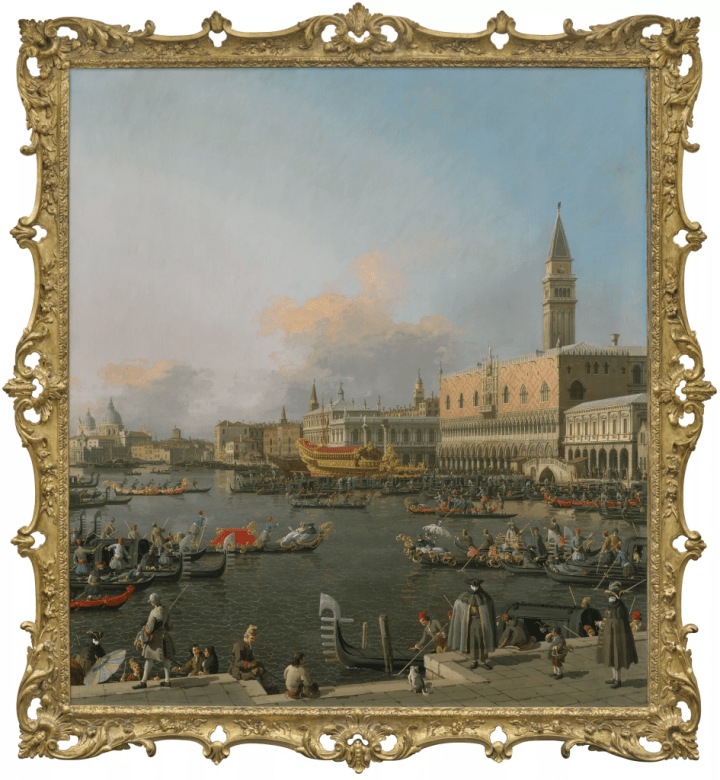
Canaletto, Venice, the Bucintoro at the Molo on Ascension Day, oil on canvas, 60 × 54 inches.
This monumental, theatrical masterpiece is unquestionably the most spectacular view of Venice painted by Canaletto in England (1746–1755). When the painting last appeared at auction at Christie’s 20 years ago as part of the Champalimaud collection, it justifiably broke all previous auction records for the artist. Venice, the Bucintoro at the Molo on Ascension Day will lead the 4 February 2026 Old Master sales in New York, with a pre-auction view in New York 29 January – 3 February 2026. Daring in composition and dazzling both in its brushwork and colourful palette, the painting was commissioned in around 1754 by the King family (later Earls of Lovelace), in whose possession it remained for almost 200 years. Other canvases from the same decorative scheme are in private collections and museums, including Washington (National Gallery of Art) and Boston (Museum of Fine Arts).
The present picture shows the Feast of Ascension Day, a key date in the Venetian calendar and a subject to which Canaletto frequently returned as it enabled him to bring the pomp and ceremony of the Venetian lagoon to life. This is Canaletto’s last known rendition of the theme from this viewpoint—his first was painted for Britain’s first Prime Minister, Robert Walpole (1676–1745), 1st Earl of Orford, sold at Christie’s, London, in July 2025 for a world record price of £31,935,000 ($43,851,545).
The Global Head of Christie’s Old Masters Department, Andrew Fletcher, said: “It is thrilling to handle the sale of Canaletto’s theatrical masterpiece which, through its scale, colour, and composition, is one of the most visually powerful paintings he ever produced. That it is so impeccably preserved—its paint surface almost as pristine as when it left the artist’s easel—makes it all the more exciting for today’s collectors, who increasingly seek the very best of the best.”
Venice, the Bucintoro at the Molo on Ascension Day will be the leading lot in what promises to be an especially strong Classics Week at Christie’s Rockefeller Center in February. This series of sales will include a number of important single-owner collections coming to the market for the first time, as well as a strong various-owner sales series, in total offering paintings, sculptures, drawings, and antiquities.
The painting will be on on view at the following locations:
• 7–12 November: Christie’s Rockefeller Center, New York, during 20/21 Marquee Week
• 20–21 November: Christie’s Henderson, Hong Kong, during Luxury Week
• 27 November–2 December: Christie’s King Street, London, during Classic Week
Conference | Rethinking Carlo Maratti (1625–1713)
From ArtHist.net and KNIR:
Rethinking Carlo Maratti (1625–1713): Patronage, Practice, Reception
Royal Netherlands Institute, Rome, 20–21 November 2025
Organized by Giovan Battista Fidanza, Guendalina Serafinelli, and Laura Overpelt
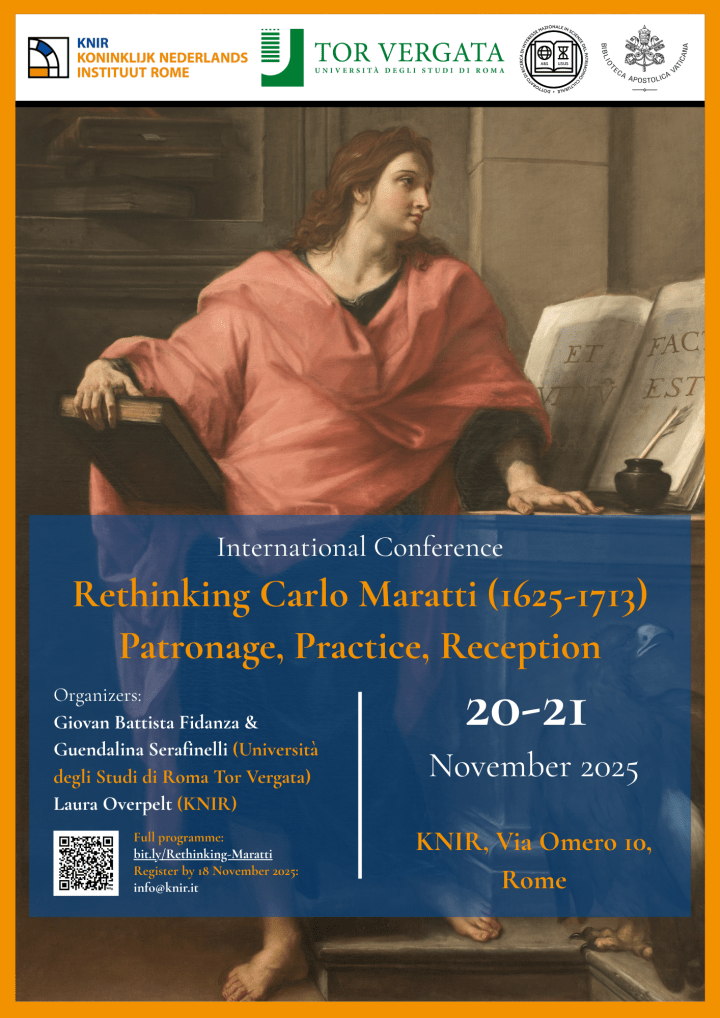 Carlo Maratti (1625–1713) stands as one of the most significant painters of late Baroque Rome—celebrated in his own time as the natural heir to Raphael and Carracci and the leading painter of the Eternal City. Maratti’s extraordinarily long and successful career linked the seventeenth and eighteenth centuries, shaping academic practice, taste, and artistic institutions well beyond his lifetime. His activity as painter, restorer, collector, ‘principe’ of the Academia di San Luca, and head of a large and international workshop placed him at the centre of Rome’s artistic and cultural networks.
Despite this prominence, Maratti’s reputation in art history has long oscillated between admiration and neglect. While traditional scholarship often portrayed him as the embodiment of academic classicism or as a symbol of stylistic decline after Bernini and Cortona, more recent research has begun to reassess the complexity of his artistic persona and his impact on the European art world. Yet, major questions remain regarding his patronage, his practices, his economic strategies, his workshop organisation, and his reception.
Marking the 400th anniversary of Carlo Maratti’s birth, this international conference seeks to offer a critical reassessment of the artist and his legacy. Bringing together established scholars and emerging researchers, it provides a forum for exploring new perspectives on Maratti’s art, practice, and influence. Special emphasis is placed on the study of unpublished archival materials, newly identified documents, and analytical approaches that shed light on the dynamics of patronage, artistic production, restoration, collecting, and reception.
The conference will take place in person at the Koninklijk Nederlands Instituut Rome (KNIR). Presentations will be given in English and Italian. A keynote lecture by Dr Arnold Witte (University of Amsterdam) will conclude the first day of the conference and can be attended remotely via Zoom. The conference is organized by Giovan Battista Fidanza and Guendalina Serafinelli (Università degli Studi di Roma Tor Vergata) and Laura Overpelt (Royal Netherlands Institute in Rome). It is supported by the Royal Netherlands Institute in Rome and the PhD Program of National Interest in Cultural Heritage at the Università degli Studi di Roma Tor Vergata, with the patronage of the Biblioteca Apostolica Vaticana.
In-person participation is free of charge, but places are limited. Please RSVP by 18 November 2025 by sending an email to info@knir.it. Kindly specify which part(s) of the conference you plan to attend, if not the entire programme. Zoom registration for the keynote lecture is available here.
t h u r s d a y , 2 0 n o v e m b e r
10.15 Welcome and Opening Remarks
• Susanna de Beer (Deputy Director of the Koninklijk Nederlands Instituut Rome); Lucia Ceci (Vice Chancellor for Communications and Head of the Dipartimento di Storia, Patrimonio culturale, Formazione e Società – Università degli Studi di Roma Tor Vergata); Tullia Iori (Vice Chancellor for Education – Università degli Studi di Roma Tor Vergata); Don Mauro Mantovani S.D.B. (Prefect of the Biblioteca Apostolica Vaticana)
• Introduction by Guendalina Serafinelli (Università degli Studi di Roma Tor Vergata) on behalf of the organizers
11.00 Session 1 | Barberini Patronage
Chair: Isabella Aurora (Biblioteca Apostolica Vaticana)
• Giovan Battista Fidanza (Università degli Studi di Roma Tor Vergata) — Carlo Maratti and His Workshop for Cardinal Carlo Barberini: Reconstructing the Significance of a Relationship
• Olga Arenga (Università degli Studi di Roma Tor Vergata) — Prince Maffeo Barberini and Carlo Maratti: New Documents in Microhistorical Perspective
• Sara Carbone (Università degli Studi di Roma Tor Vergata) — Francesco Reale in the Workshop of Carlo Maratti: Professional History in the Service of the Barberini Family
13.45 Session 2 | Transregional Patronage and Institutions
Chair: Loredana Lorizzo (Università degli Studi ‘G. d’Annunzio’ Chieti – Pescara)
• Andrea Spiriti (Università degli Studi dell’Insubria) — Maratti, the Omodei Family, and the Lombard National Church of SS. Ambrogio e Carlo al Corso in Rome: Problems and Reflections
• Laura Facchin (Università degli Studi dell’Insubria) — ‘Del signor Carlo Maratta, stimato da molti il primo che sia oggidì in quell’arte’: Reassessing the Master’s Relationship with Painting in the Savoy State
• Isabella Salvagni (Independent Scholar) — Carlo Maratti e l’ Accademia di San Luca
15.20 Session 3 | Reception and Historiography
Chair: Donatella Livia Sparti (Syracuse University)
• Guendalina Serafinelli (Università degli Studi di Roma Tor Vergata) — Niccolò Maria Pallavicini’s Ambition, the Cult of Carlo Maratti, and Bellori’s Legacy
• Laura Overpelt (Koninklijk Nederlands Instituut Rome) — A Netherlandish Perspective on Carlo Maratti: Hoogewerff and Beyond
17.00 Keynote available remotely via Zoom
Chair: Laura Overpelt (KNIR)
• Arnold A. Witte (Universiteit van Amsterdam) — Cardinals Commissioning Carlo Maratti: Shifts in Ecclesiastical Patronage around 1700
A recent biography of Maratti states that “at the turn of the century, political and economic factors caused official and aristocratic patronage to decline,” which reflects Francis Haskell’s more generic assumption of a general wane of the Roman artistic climate occurring around 1700. This keynote lecture will consider how this presumed downturn in ecclesiastical patronage in the late Seicento affected the artistic milieu in Rome and particularly how Maratti’s late career was determined by this shift.
f r i d a y , 2 1 n o v e m b e r
9.30 Session 4 | Maratti as Entrepreneur
Chair: Karin Wolfe (British School at Rome)
• Alessandro Agresti (Independent Scholar) — Nell’atelier di Carlo Maratti: Struttura, funzione e allestimento di una quadreria (con un inventario inedito del 1701)
• Adriano Amendola (Università degli Studi di Salerno) & Cristiano Giometti (Università degli Studi di Firenze) — Per un ampliamento dei committenti: Le finanze di Carlo Maratti
• Paolo Coen (Università degli Studi di Teramo) — Maratti and the Art Market: New Reflections
11.25 Session 5 | Restoration Practices
Chair: Maria Grazia D’Amelio (Università degli Studi di Roma Tor Vergata)
• Donatella Livia Sparti (Syracuse University) — The Restoration of the Loggia Farnesina Revisited (Without Bellori)
• Simona Rinaldi (Università degli Studi della Tuscia) — Materiali e tecniche nei restauri pittorici di Carlo Maratti
• Lotte van ter Toolen (Rijksuniversiteit Groningen) — From Restoring Reputations to Meddling with Memorials: Reflections on Carlo Maratti and the Pantheon
12.40 Concluding Remarks
Online Talk | Naming Rights: The Case of Mai/Omai from Polynesia
From YCBA:
Naming Rights: The Case of Mai/Omai from Polynesia
with Jessie Park, Catherine Roach, and Edward Town
Online and in-person, Yale Center for British Art, New Haven, Thursday, 13 November 2025, 12pm ET
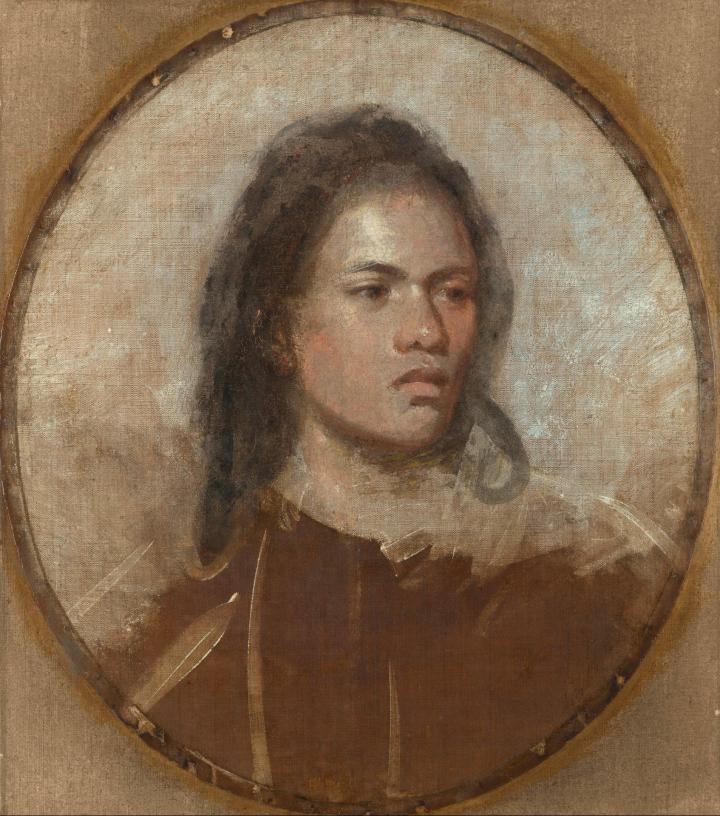
Sir Joshua Reynolds, Study for the Portrait of Mai (‘Omai’), ca. 1774, oil on canvas, 64 × 56 cm (New Haven: Yale University Art Gallery).
This event marks the return to public view of Sir Joshua Reynolds’s Study for the Portrait of Mai (‘Omai’), on loan from the Yale University Art Gallery. The first person from Polynesia to reach Britain, the sitter in Reynolds’s painting sought a military alliance and instead became a celebrity among Europeans, due in part to a public persona he crafted and enacted. The man now known as Mai bore many names over his lifetime. He came to fame in Britain as ‘Omai’ or ‘Omiah’, a British misunderstanding of a Tahitian honorific that he reportedly bestowed on himself. What should we call him, and his representations, today? Can this case study offer deeper insights into the ethics of naming pictures? And how might we thoughtfully narrate the stories of historical figures of color whose lives are known nearly exclusively through European visual and textual sources?
Join the livestream here»
Jessie Park is Nina and Lee Griggs Assistant Curator of European Art, YUAG. Catherine Roach is Graduate Program Director and Associate Professor of Art History in the School of the Arts, Virginia Commonwealth University. Edward Town is Assistant Curator of Paintings and Sculpture, YCBA.
Call for Papers | Graduate Symposium: Single Object Studies
From ArtHist.net:
One and Done: Single Object Studies
Art & Architectural History Graduate Symposium
University of Virginia, Charlottesville, 25–26 March 2026
Proposals due by 1 December 2025
The Art History Graduate Association (AHGA) at the University of Virginia is excited to announce our upcoming graduate research symposium titled One and Done: Single Object Studies.
Keynote Speaker
Jennifer Raab, Professor of History of Art at Yale University and author of Relics of War: The History of a Photograph (Princeton University Press, 2024)
This is a symposium about single objects. Dr. Jennifer Raab’s recent monograph, Relics of War: The History of a Photograph, examines how one photograph—carefully staged by Clara Barton through acts of collecting, naming, and labeling—transformed salvaged artifacts from a Civil War prison camp into material testimony, serving as both evidence of absence and witness to wartime suffering. Inspired by her methodological commitment to writing about a single photograph, this symposium turns to the potential of singularity.
One and Done: Single Object Studies invites graduate students across disciplines to share the intellectual, methodological, and narrative possibilities of centering a singular object of study—whether an artifact, image, monument, architectural structure, manuscript, or unique material form. In turning to the singular, this interdisciplinary symposium asks: How does a focused examination of one object–or one object type–open up expansive questions and stimulate critical discussion? What sorts of approaches can be taken when we examine an object? What roles do materiality, affect, or embodied engagement play when our research dwells with a single object over time? How do practices of display, collection, and conservation shape our understanding of singularity and its interpretation? And what are the rewards–or the risks–of asking one object to stand in for many?
We welcome submissions from graduate students at all stages whose work engages with visual, material, spatial, or object-centered inquiry across discipline, time, and geography. Paper presentations should be 20 minutes in length and will be followed by a Q&A session. Submissions should be original but may include previously published/written material that has been substantially reframed to focus on a single object.
Possible approaches include, but are not limited to:
• Object’s biography and afterlives
• Techniques of making and materials analysis
• Social, cultural, and/or ritual contexts
• Relationships between individuals and objects (makers, patrons, viewers, collectors)
• Mobility and circulation
• Spatial/Distribution analysis
• Categorization and decategorization of a particular form
Please submit a CV and a 250-word abstract along with an image of the studied object (with full caption) as a single PDF to uvagradsymposium2026@virginia.edu by 1 December 2025. Applicants will be notified by 20 December 2025. Limited funds will be available to help cover expenses associated with presenting at the symposium.
Call for Papers | American Art Graduate Symposium: Local
From the Call for Papers:
Local: 21st Annual Yale University American Art Graduate Symposium
Yale University, New Haven, 11 April 2026
Keynote Speaker: Dr. Caitlin Beach, Associate Professor of Art History, CUNY Graduate Center
Proposals due by 31 January 2026
What is at stake in identifying artists, subjects, materials, and economies as local? The term commonly circumscribes a particular space while evoking feelings of inclusion. To be “a local” is to belong to a place or a people, to have insider knowledge, to see oneself as part of a community, to be and feel at home. From quilts made by generations of Black women in Gee’s Bend to the centuries-long production of lienzos by Ñuu Dzaui, Nahua, and other Indigenous artists, objects play outsized roles in shaping and defining the local. Embracing the local may also function as a subversive move. Establishing a local artistic identity can oppose hegemonic national narratives, a gesture in line with what Arjun Appadurai has termed “the production of locality.” Maroon communities in the Caribbean, for instance, blended West African traditions with Taino knowledge and indigenous materials to assert their own definitions of place within imperial landscapes.
Across time, place, and media, artists and viewers alike have imagined and reimagined the local, stretching and compressing its contours to define who falls within its bounds. The term’s elasticity continues to provide fertile ground for new interpretations within art history and beyond. How does the local open onto discourses of repatriation and conservation, or histories of migration, diaspora, and Indigeneity? How do we navigate the term alongside related concepts like intimacy, insularity, and domesticity? How might locality interface with decoloniality?
Featuring Dr. Caitlin Beach as our keynote speaker, the Twenty-first Annual Yale University American Art Graduate Symposium asks what centering the local affords art historical inquiry. We welcome submissions exploring art, architecture, performance, and visual and material culture across the Americas, including the Caribbean, North, Central, and South America. Possible topics include, but are not limited to:
• Community-based artistic practices, collectivized artistic labor, and local artistic identity
• Local materialities and histories of industry
• Indigenous understandings of space, the local, and (home)lands
• Site specificity and placemaking
• Local audiences and reception
• The local in relation to provincialism, urbanism, and cosmopolitanism
• Local ecologies and economies; agrarianism and rural uplift
• Tourism and the commodified local
• The local and the nation state, narratives of locality and universality
You are invited to submit an abstract of no more than 350 words and a CV to americanist.symposium@gmail.com by 31 January 2026. Accepted participants will be notified in mid-February. Local will take the form of a day-long, in-person symposium, with food and hotel accommodations provided for all speakers.
Call for Papers | Graduate Symposium: ‘Ghost Stories for Grown-Ups’
From ArtHist.net:
‘Ghost Stories for Grown-Ups’: Hauntings, Afterlives, and Reawakenings
Washington University in St. Louis, 13–14 February 2026
Proposals due by 8 December 2025
The Department of Art History and Archaeology at Washington University in St. Louis is seeking papers for its 2026 Graduate Student Art History Symposium (GSAHS). The theme of the symposium is ‘Ghost Stories for Grown-Ups’: Hauntings, Afterlives, and Reawakenings, and the event will be held in-person on our campus in St. Louis 13–14 February 2026.
While working on the Mnemosyne Atlas (1925–29), Aby Warburg characterized his art historical practice as a “ghost story for grown-ups.” As scholars, we are often all too familiar with recurring images, motifs, and ideas that persist in the canon or emerge from the archive as if of their own volition. Similarly, many communities have their own traditions and tales of spirits or spectral encounters that linger in visual culture. Many studies across the humanities have attended to the culture of the afterlife, both literally and figuratively. In his book Specters of Marx (1993), Jacques Derrida introduced the theoretical framework of “hauntology” to consider elements of the social and cultural past that endure and reappear in a manner of ghostliness. Furthermore, sociologist Avery Gordon contends that such hauntings are an index of “dispossession, exploitation, and repression” that reemerge in order to demand being addressed. This symposium seeks to lift the veil by critically engaging with hauntings, afterlives, and ghostliness as both cultural phenomena and a conceptual model for art historical inquiry.
We invite current and recent graduate students in art history, archaeology, visual culture and related disciplines to submit abstracts for this symposium. Submissions may explore aspects of this theme as manifested in any medium, historical period, cultural, and geographical context. We welcome potential topics from any time period/geographical area that contend with ghosts, phantoms, spirits, or hauntings, including but not limited to:
• Spirit photography
• Ghosts, spirits, and demons in historical folk and religious art
• Spectral images in theatre and cabaret performances
• Paranormal and horror cinema
• The afterlives of artworks, motifs, notable figures, or ideas
• The persistence and/or reemergence of repressed peoples, beliefs, and images
• Art made in the wake of war, genocide, or tragedy
• Mausoleums, tombs, memorials, or other elements of the built environment connecting the living with the dead
• The display of human remains, sacred relics, and objects that house spirits in museums, cultural institutions, and tourist attractions
To apply, please submit a 350-word abstract and a CV in a single PDF file by Monday, 8 December 2025, to Jillian Lepek and Hannah Wier at gsahs@wustl.edu. Selected speakers will be notified by Friday, January 2. Paper presentations must not exceed 18 minutes in length and should be accompanied by a PowerPoint presentation. The symposium will be held entirely in-person at Washington University in St. Louis. Modest honoraria will be provided to student speakers to offset the cost of travel and accommodation.
Keynote Speaker: Dr. Patrick R. Crowley, Associate Curator of European art at the Cantor Arts Center, Stanford University
Exhibition | Kids! Between Representation and Reality
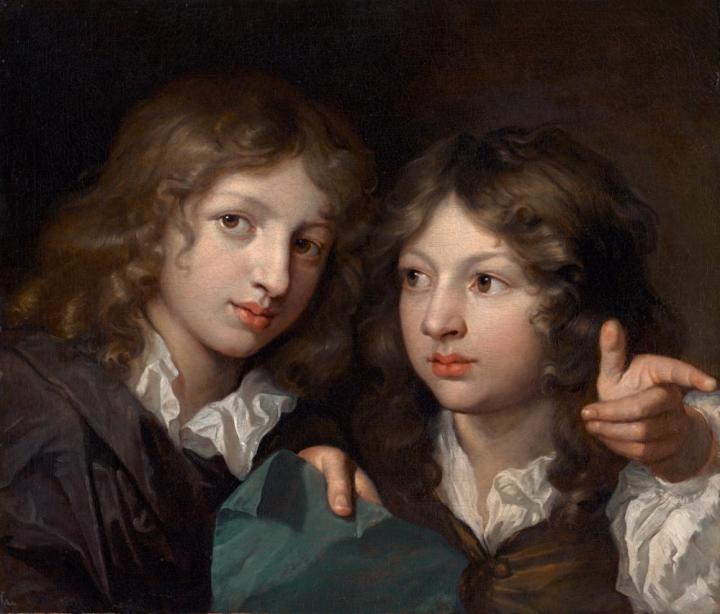
Caspar Netscher, A Portrait of Two Boys, Presuambly the Artist‘s Sons Everardus and Constantijn, ca. 1680–83
(Amsterdam: Collection Bob Haboldt)
◊ ◊ ◊ ◊ ◊
From the press release for the exhibition:
Kids! Between Representation and Reality
Bucerius Kunst Forum, Hamburg, 28 November 2025 — 6 April 2026
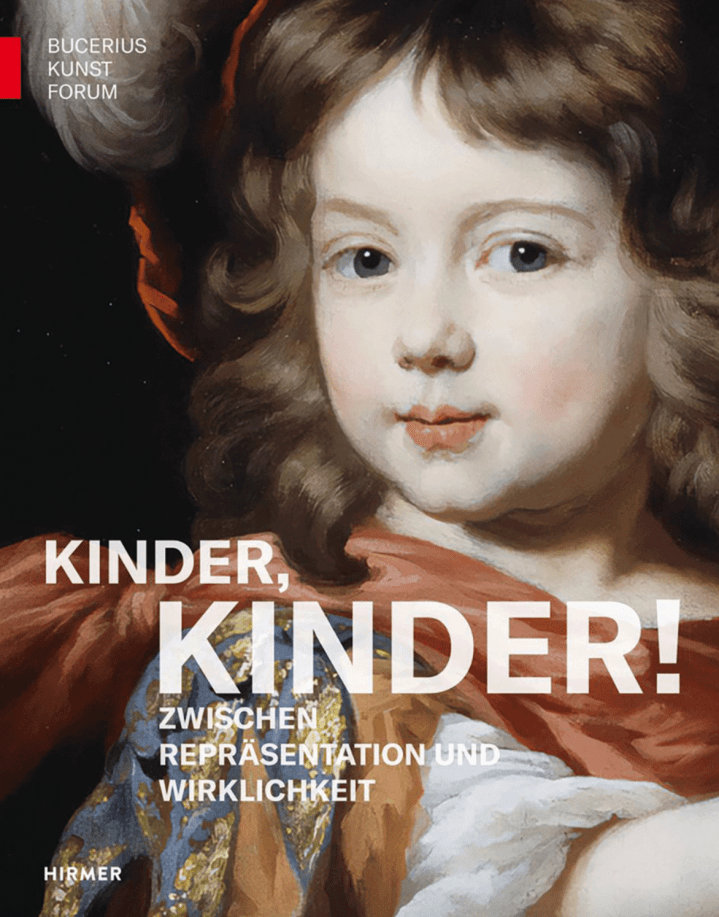
The exhibition Kids! Between Representation and Reality at the Bucerius Kunst Forum is dedicated to the representation of children in art from the 16th to the 21st century. Six chapters approach the subject from different perspectives and show not only paintings but also photographs, works on paper, prints, media art, and sculptures. The exhibition includes works by Tizian, Anthonis van Dyck, Oskar Kokoschka, Paula Modersohn-Becker, Nobuyoshi Araki, Thomas Lawrence, Joshua Reynolds, Rineke Dijkstra, Judith Leyster, Christoph Amberger, Gerhard Richter, and many more. The multifaceted nature of the exhibition illuminates the diverse perspectives and functions of children’s pictures over the centuries. Whether as a symbol of power and domination, as an expression of compassion or as snapshots of happy and sad childhoods: The depictions bear witness to the changing understanding of childhood over the centuries and at the same time illustrate the significance phase of life.
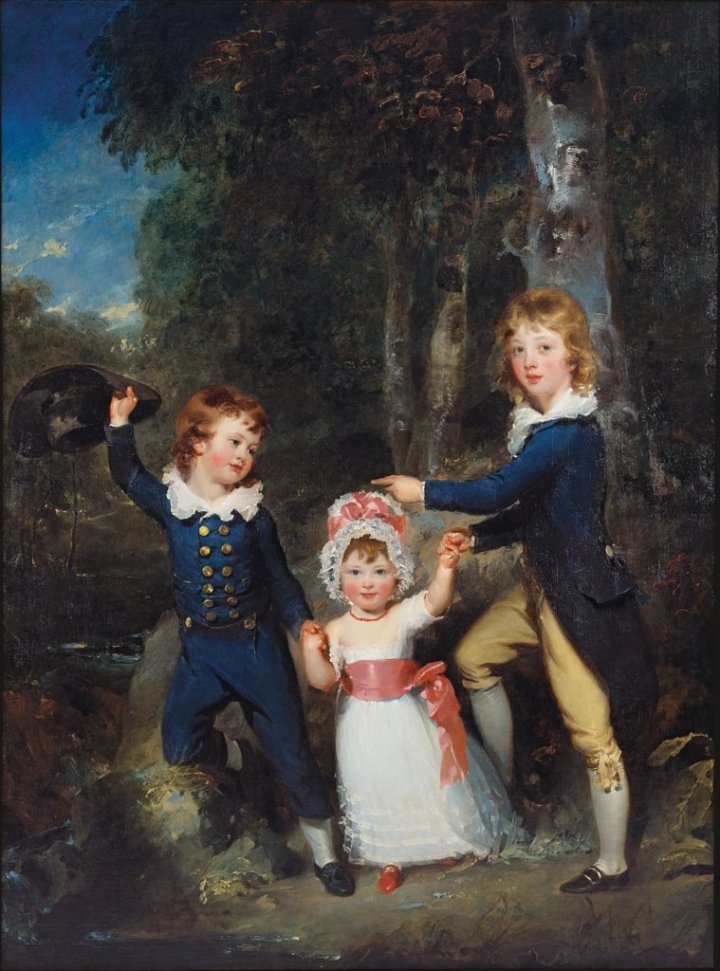
Thomas Lawrence, Portrait of the Children of Lord George Cavendish, 1790 (Frankfurt am Main: Städel Museum, Permanent Loan from the Adolf and Luisa Haeuser Foundation for Art and Culture).
The topic of images of children reflects the values and norms of a society and their changes in a special way. Images of children can be used to draw conclusions about social structures and power relations. Origin, status, and sometimes gender play an important role here. At the same time, over the centuries, social groups have influenced each other in the staging of their children and adapted their own representations in the process. How children are shown today is therefore linked to the reception of images of children from earlier times.
The exhibition reveals such cross-references and influences from the past to the present day and also identifies recurring patterns. The exhibition thus begins with a presentation of depictions of Madonna, in which the ideas of mother-child relationships and their influence up to the present day become clear. The father, on the other hand, usually fades into the background. Only when it comes to presenting the progenitor of the family do fathers proudly and consciously show themselves at the side of their young offspring. Until modern times, intimate father-child images were a rarity.
Created in aristocratic circles around 1500, the child portrait was intended to underpin the continuity and claim to power. Against this backdrop, portraits were often created showing the successors to the throne in armor as small adults. In this way, they were prepared for the future role of general and ruler. A playful variant is the portrait historié, in which the children were depicted as ancient gods, for example. Daughters were depicted at a very young age for reasons of marriage policy. Through strategic marriage promises and early marriages, it was possible to expand one’s own political influence and territorial power. In the course of the 16th century, the upper classes also portrayed their children, albeit less elaborately. In the 17th century, however, the representative and extravagant portrait of a child became increasingly popular in wider society.
In the 17th century in particular, Dutch and Spanish genre painters took up the motif of poor children, which still lives on today. The artists were not necessarily interested in taking a socially critical stance. It is not uncommon for children in financially disadvantaged, often precarious life situations to have a smile written all over their faces. Child labor was not fundamentally rejected either. It was seen as a positive contribution that children could make to the family income.
 Photographs illustrate how differently children grow up globally and structurally to this day. For many children, the street and not the nursery is the place where they come together, interact socially and play together. How the depiction of children has changed over the centuries is made particularly clear in the exhibition by the works of deceased adolescents. In the past, portraits of deceased children were the only means of preserving their memory. Today, commemoration takes place in a different way—for example through lifelike photographs that show children in happy life situations.
The most serious change, which testifies to a different conception and definition of childhood, took place at the end of the 17th century and in the 18th century. Children were now allowed their own development—as close to nature as possible and away from the adult world. The children’s room also became increasingly important, and toys and special children’s literature were regarded as fundamental elements of its furnishings. The theme of ‘being a child’ is still one of the most popular pictorial themes in the visual arts today: trying things out, pushing oneself to the limits, drawing, playing, and togetherness are characteristic of the most important phase of a person’s life.
For the first time at this exhibition, young visitors can borrow a discovery case free of charge at the ticket office or cloakroom. The kit offers elementary school-aged art explorers the opportunity to experience art in a playful way and contains various viewing tools and materials. A telescope, colored glasses, a prism, and a magnifying glass invite them to explore the exhibition and the museum on their own. The kit also includes exciting tasks that draw attention to details in the art. In this way, they learn more about art in a playful way, actively engage with the works, and develop their own perspectives on them.
Katrin Dyballa, ed., Kinder, Kinder! Zwischen Repräsentation und Wirklichkeit (Munich: Hirmer Verlag, 2025), 288 pages, ISBN: 978-3777444963, €50.
Princeton University Library Special Collections Research Grants
From Princeton University Library:
Princeton University Library Special Collections Research Grants
Applications due by 14 January 2026
The Friends of the Princeton University Library Research Grants Program, funded by the Friends of PUL, is now accepting applications through noon on 14 January 2026. With grants of up to $6,000, plus travel expenses, this competitive grant program offers researchers from around the world access to PUL’s rare and unique collections. Awarded to short-term research projects lasting between two and four weeks, the grants aim to promote scholarly use of the Library’s special collections. Research projects are focused on scholarly use of archives, manuscripts, rare books, and other rare and unique holdings of PUL.
A new grant is available this year: the “Will Noel Innovative Cultural Heritage Research Grant,” specifically for cultural heritage professionals to work with PUL’s Special and Distinctive Collections and the Library IT Digital Studio’s specialized photographic equipment to gain new insights into our collective past.
Find out more and how to apply here. Questions can be directed to pulgrant@princeton.edu.










 Enfilade
leave a comment