Exhibition | Wright of Derby: From the Shadows
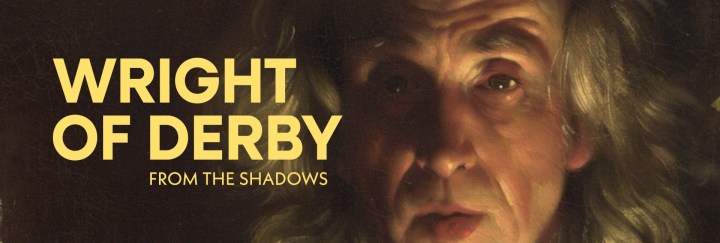
Detail from Joseph Wright, An Experiment on a Bird in the Air Pump, 1768
(London: The National Gallery)
◊ ◊ ◊ ◊ ◊
From the press release for the exhibition:
Wright of Derby: From the Shadows
National Gallery, London, 7 November 2025 — 10 May 2026
Derby Museums, 2026
In the autumn of 2025, the National Gallery will present Wright of Derby: From the Shadows, the first exhibition dedicated to Joseph Wright ‘of Derby’ (1734–1797) at the National Gallery, and the first exhibition to focus on his ‘candlelight’ series. The exhibition is organised in partnership with Derby Museums where it will travel in 2026.
Following on from recent exhibitions such as Turner on Tour (2022) and Discover Constable & The Hay Wain (2024), this exhibition will put the spotlight on a well-known British artist in the National Gallery Collection whose work has come to symbolise an era. Traditionally, Wright of Derby has been viewed as a figurehead of the Enlightenment, a period of scientific, philosophical and artistic development in the 17th and 18th century. Challenging this conventional view, the exhibition contributes to the ongoing re-evaluation of the artist, portraying him not merely as a ‘painter of light’ but as one who deliberately explores the night-time to engage with deeper and more sombre themes, including death, melancholy, morality, scepticism, and the sublime.
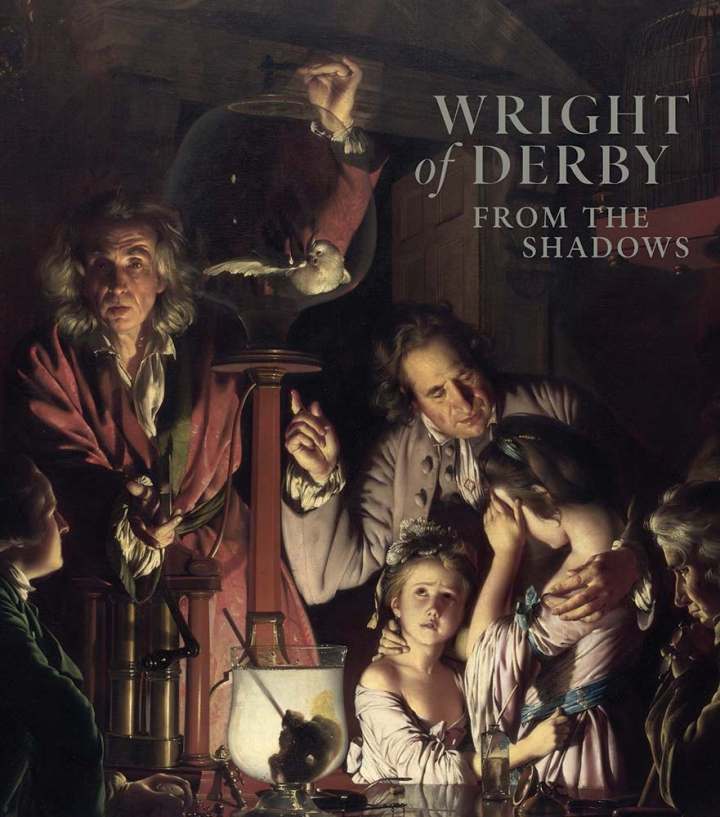 This exhibition will focus on Joseph Wright’s career between 1765 and 1773, during which time he made a series of candlelit scenes. We will show a number of masterpieces from this period including Three Persons Viewing the Gladiator by Candlelight (1765, private collection), A Philosopher giving that Lecture on the Orrery in which a lamp is put in place of the Sun (1766, Derby Museum and Art Gallery), and the National Gallery’s An Experiment on a Bird in the Air Pump (1768). This marks the first time in 35 years that all these works will be brought together. In these ‘candlelight’ paintings, Wright of Derby shows thrilling moments, not just of discovery but of shared learning. His dramatic depictions of natural and artificial light link his work back to the artistic traditions of the Renaissance and artists such as Caravaggio, whose strong light and deep shadows were rarely employed in British art before the mid-18th century.
Yet Wright of Derby also engaged with very contemporary questions around the act of observation, spectacle and education raised by philosophers of the Enlightenment. In his masterpiece An Experiment on a Bird in the Air Pump, a travelling lecturer shows a well-established experiment to a family audience whose reactions range from wonder to horror. In The Orrery, the first of his paintings on a ‘scientific’ subject, a philosopher presents a lecture on astronomy using a clockwork model of the solar system as the centrepiece, the sun replaced by an oil lamp. In Three Persons Viewing the Gladiator by Candlelight, one artist holds up a drawing of the central sculpture for critical assessment. These works explore moral ambiguity in acts of looking, as well as the intellectual influence of ‘high’ art.
Wright ‘of Derby’ was working at a turning point for art viewing in the 18th century, when the public display of art and the instigation of annual contemporary art exhibitions were being promoted. The Air Pump was completed the same year as the creation of the Royal Academy and was intended to be accessible to a broad public (though it was displayed at the Society of Artists). Mezzotint prints of Wright’s works, which played a key role in establishing his international reputation, will also be on display. These luxury prints highlight how the artist took full advantage of popular reproduction techniques of his time to expand his reputation both at home and abroad.
Wright of Derby: From the Shadows will show over twenty works, including other paintings, works on paper, and objects that explore both Wright of Derby’s artistic practice and the historic context of scientific and artistic development in which they were made. Seventeen artworks will be coming from Derby Museums, who hold the world’s largest collection of Wright’s work. In 2026, Wright of Derby: From the Shadows, will travel to Derby Museum and Art Gallery, bringing two of Wright’s most famous works, The Air Pump and The Orrery, back to his hometown for the first time in 80 years.
Christine Riding and Jon King, Wright of Derby: From the Shadows (London, National Gallery London, 2025), 96 pages, ISBN: 978-1857097467, £20.
New Book | The People of Print: Eighteenth-Century England
From Cambridge UP, with an online book launch, together with a speed-pitching workshop, scheduled for Monday (see below) . . .
Adam James Smith, Rachel Stenner, and Kaley Kramer, eds., The People of Print: Eighteenth-Century England (Cambridge: Cambridge University Press, 2025), 124 pages, ISBN: 978-1009629454, $18.
 This collection profiles understudied figures in the book and print trades of the eighteenth century. With an explicit focus on intervening in the critical history of the trades, this volume profiles seven women and three men, emphasising the broad range of material, cultural, and ideological work these people undertook. It offers a biographical introduction to each figure, placing them in their social, professional, and institutional settings. The collection considers varied print trade roles including that of the printer, publisher, business-owner, and bookseller, as well as several specific trade networks and numerous textual forms. The biographies draw on extensive new archival research, with details of key sources for further study on each figure. Chronologically organised, this Element offers a primer both on individual figures and on the tribulations and innovations of the print trade in the century of national and print expansion.
c o n t e n t s
Preface
1 Introduction — Adam James Smith, Rachel Stenner, and Kaley Kramer
2 Elizabeth Nutt: Print Trade Matriarch (1666–1746) — Helen Williams
3 John Nicholson and the Auctioning of Copyright (d.1717) — Jacob Baxter
4 Catherine Sanger: Publisher in Bartholomew Close (1687–1716) — Kate Ozment
5 John White Junior: Printer in the North (1689–1769) — Sarah Griffin
6 Selling the Enlightenment: Mary Cooper and Print Culture (1707–1761) — Lisa Maruca
7 The ‘Indefatigable’ Ann Ward: Printer in York (1715/6–1789) — Kaley Kramer
8 Anne Fisher (1719–1778): Not Simply a Printer’s Wife — Barbara Crosbie
9 Sold at the Vestry: John Rippon (1751–1836) and the Hymnbook Trade — Dominic Bridge
10 Diversity in the Book Trades: Ann Ireland (1751–1843) of Leicester — John Hinks
11 ‘Laugh when you must, be candid when you can’: The Concealed Resistance of the Radical Printer Winifred Gales (1761–1839) — Adam James Smith
◊ ◊ ◊ ◊ ◊
From Eventbrite:
The People of Print: Eighteenth-Century England
Book Launch and Early Career Researcher Speed-pitching Workshop
Online, Monday, 3 November, 6.30pm GMT
All welcome! Please register by 2 November.
Join the Centre for Print Culture at the University of Sussex to celebrate the publication of this volume, the follow-on to The People of Print: Seventeenth-Century England, with an evening of lively talks and discussion. The People of Print: Eighteenth-Century England profiles understudied figures in the book and print trades, featuring new research and critical perspectives on this fascinating and rich cultural field. We will be joined by Dr Barbara Crosbie (Durham University), Dr Jacob Baxter (St Andrews), and Dr Lisa Maruca (Wayne State, Professor Emerita), who will discuss their research for the latest collection.
Following the launch, there will be a Speed-pitching workshop (7.30–8.15pm GMT) for early career researchers studying topics in the histories of the book, print, and publishing trades. Come with an idea you can explain in 3 minutes, and we will pair you with one of our publishing panel of journal, series, and book editors for feedback:
• Dr Helen Williams, The Printing Historical Society
• Dr Kaley Kramer and Dr Adam James Smith, editors The People of Print
• Professor Samantha Rayner, Commissioning Editor of Cambridge Elements, Publishing and Book Culture
• Dr Rachel Stenner, editor of Publishing History journal and The People of Print series
Call for Papers | Hospitals and Confraternities, 13th–18th Centuries
From ArtHist.net:
Hospitals and Confraternities in Europe, 13th–18th Centuries
Naples, 8–11 April 2026
Organized by Gemma Colesanti, Toni Conejo, Salvatore Marino, and Stefano D’Ovidio
Proposals due by 30 November 2025
The 15th edition of the Abrils de l’Hospital, a series of annual conferences promoted by the University of Barcelona since 2103, will be held in Naples in April 2026. This edition will focus on the role of charitable confraternities and craft guilds in the foundation, administration, reform, and expansion of hospitals and other welfare institutions. The conference will place particular emphasis on both the tangible and intangible heritage of these organizations, examined through interdisciplinary and gender-aware approaches. The broad chronological scope will encourage innovative research adopting a longue durée perspective on the ongoing processes of reform, refoundation, and restructuring that characterized confraternities, hospitals, and charitable institutions of the ancien régime. Special attention will be devoted to large and medium-sized urban contexts, in order to promote comparative discussions across the diverse political, economic, social, and cultural landscapes of Christian Europe.
The sessions will be organized around three main research strands:
1. The agency of confraternities, craft guilds, associations of foreigners, and charitable movements in the foundation, management, and administrative reform of hospitals.
2. The involvement of members of ruling families and the urban patriciate, merchants, artisans, and farmers in confraternities and associations responsible for hospitals and other charitable institutions (orphanages, leprosaria, lazarettos, and almsgiving organizations).
3. The written records produced by confraternities and guilds engaged in the management of pious institutions, along with the architectural and artistic heritage commissioned by lay and religious groups for the enlargement, embellishment, and ritual use of hospital spaces and their attached religious buildings.
Alongside academic sessions and discussions, the program will include poster presentations, as well as guided visits to archives and to the main hospitals and confraternal buildings in the city of Naples.
The Call for Papers is open until 30th November 2025. Proposals should be submitted to the conference organizers at abrils.hospital@ub.edu and must include the following information in a single PDF or Word file: full name, academic affiliation, paper title, abstract (150–200 words), and a short CV (maximum 200 words). Presentations may be delivered in Catalan, French, English, Italian, Portuguese, or Spanish. Accepted proposals will be notified by 31st January 2026.
Organizers: Gemma T. Colesanti (ISP-CNR, Napoli), Toni Conejo and Salvatore Marino (Universitat de Barcelona), Stefano D’Ovidio (Università di Napoli Federico II)
Call for Papers | Art and the Aesthetics of Pregnancy and Birth
From ArtHist.net and SSPRB::
Beauty and the Sublime in Gestation and Coming into Being:
Art and the Aesthetics of Pregnancy and Birth
Online, 4–5 June 2026
Keynote Speakers: Lauren Bice and Sheila Lintott
Proposals due by 1 December 2025
The Society for the Study of Pregnancy and Birth (SSPRB) is pleased to announce the Call for Papers for its second international virtual symposium, Beauty and the Sublime in Gestation and Coming into Being: Art and the Aesthetics of Pregnancy and Birth, a virtual event that will take place online across two half-day sessions on June 4–5, 2026 (to facilitate participation across time zones).
In her work on experiences of a feminist sublime in gestation and birth, American philosopher Sheila Lintott has described these experiences as, “dangerous internal experiences that prompt both introspective and extrospective exploration and recognition.” This international virtual symposium explores and recognizes these experiences, seeking to highlight scholarship and ideas on art about birth and pregnancy, as well as philosophical approaches to aesthetic properties, values, and qualities related to beauty and the sublime in gestation and coming into being.
Some areas of interest include
• How have artists represented pregnancy and birth, both historically and in our contemporary world, and what do these images convey to their viewers about the experiences they represent?
• How do aesthetic qualities emerge through our experiences of pregnancy, birth, and coming into being?
• How do birth professionals inform us about birth, neonatal life and the aesthetics of the birth environment through their work?
• Where do we see the aesthetics of pregnancy and birth within the field of philosophy?
• What are some of the ways in which different cultures celebrate or influence the art, beauty, and/or the aesthetics of pregnancy and birth?
• What are the internal and external aesthetic experiences of parents who adopt or foster children?
• How does phenomenology intersect with the aesthetics of pregnancy and birth?
• How are art and the aesthetics of pregnancy and birth part of the Birthing Justice Movement or other movements?
We are interested in philosophical, interdisciplinary, and/or artistic approaches to art and the aesthetics of pregnancy and birth, and welcome papers in fields across the arts, humanities, social sciences and psychology. We also welcome the work of birth professionals whose backgrounds inform their understanding of aesthetics in spaces of birth.
We invite abstracts for short papers (15–20 minutes) from any discipline to be submitted by Monday, 1 December 2025. Please email abstracts (with titles) of no more than 250 words and a short biography (75 words) to the Society for the Study of Pregnancy and Birth (SSPRB) at ssprbpapers@gmail.com. Full panel submissions are also welcome and should include the same information for each presenter on the panel (abstract and biography). Panels should include 3–4 presenters. Please note that presenters on a 4-person panel will have less time to present their work. The event will be recorded and accessible on request for those not able to attend.
You can contact us at ssprbsociety@gmail.com. Sign up for the SSPRB Newsletter here: ssprb.substack.com. To learn more about the Society for the Study of Pregnancy and Birth, visit our website.
Exhibition | Miniature Worlds: Little Landscapes
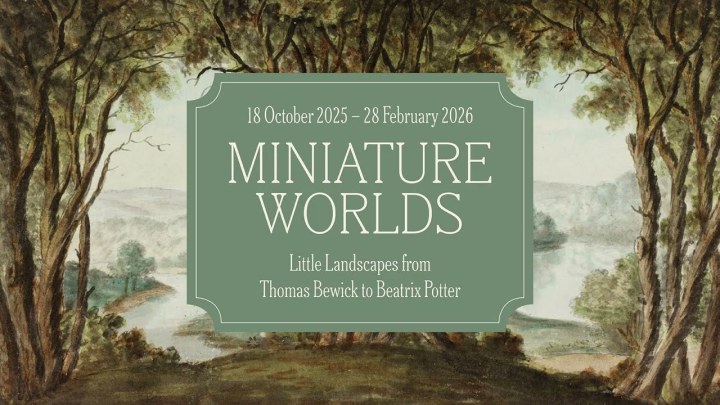
William Beilby, River Landscape Seen through Trees, 1774
(Newcastle: Laing Art Gallery)
◊ ◊ ◊ ◊ ◊
Now on view in Newcastle, as noted by the Art History News blog:
Miniature Worlds: Little Landscapes from Thomas Bewick to Beatrix Potter
Laing Art Gallery, Newcastle, 18 October 2025 — 28 February 2026
Curated by Lizzie Jacklin
Miniature Worlds: Little Landscapes from Thomas Bewick to Beatrix Potter explores the intricate beauty of small-scale landscapes across three centuries of British art. The exhibition focuses on vignette format illustrations and the changing relationship between text, illustration, and publishing. Highlights include seven highly detailed watercolors by J.M.W. Turner, whose 250th birthday is being celebrated this year; a dramatic and diminutive drawing by John Martin; and nine intricate watercolours by Beatrix Potter. The exhibition features over 130 objects, 90 of which are loans from other UK collections.
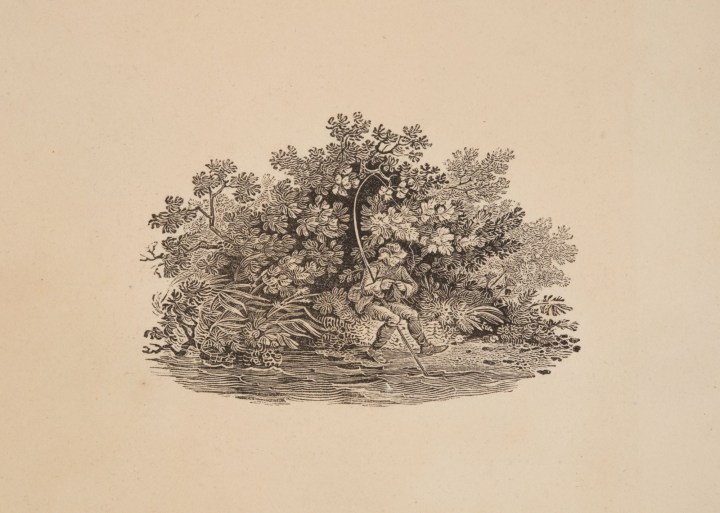
Thomas Bewick, Angler on a Riverbank, Tailpiece Illustration from A History of British Birds, volume 2, p. 50, wood engraving (Newcastle: 1804 / Ashmolean Museum).
The exhibition opens with works by Newcastle artist and wood engraver Thomas Bewick (1753–1828), who reinvented both the wood engraving technique and the small borderless ‘vignette’ illustration. A section dedicated to ‘Poetic Landscapes’ explores small scale works made during the Romantic Era, which saw artists emphasise emotion, imagination, and engagement with the natural world. The exhibition then explores the world of Victorian and Edwardian children’s books, which were often produced in small, child-friendly formats. Highlights include three of John Tenniel’s iconic illustrations for Lewis Carroll’s Alice’s Adventures in Wonderland and original works by Beatrix Potter for The Tale of Peter Rabbit, The Tale of Flopsy Bunnies, and The Tale of Mrs Tittlemouse. The exhibition closes with 20th- and 21st-century works that reference and develop histories of the small-scale landscape in new ways.
Miniature Worlds: Little Landscapes features paintings and prints by artists including J.M.W. Turner, Beatrix Potter, Thomas Bewick, William Blake, Agnes Miller Parker, Eric Ravilious, Joanna Whittle, and more. Loans from Tate, the V&A, the British Museum, the Ashmolean Museum, National Galleries of Scotland, Newcastle University, Newcastle City Libraries, the Natural History Society of Northumbria, and the artists Paul Coldwell and Joanna Whittle complement the strengths of North East Museums’ collections.
r e l a t e d t a l k s
Wednesday, 19 November 2025, 1pm
Lizzie Jacklin | Watercolour Worlds: The Vignettes of J.M.W. Turner and Beatrix Potter
Wednesday, 28 January 2026, 1pm
Lizzie Jacklin | Curator Talk: Miniature Worlds
Wednesday, 4 February 2026, 1pm
Jenny Uglow | Bewick and Lear: Oddities of Daily Life
The Burlington Magazine, October 2025
The long 18th century in the October issue of The Burlington:
The Burlington Magazine 167 (October 2025)
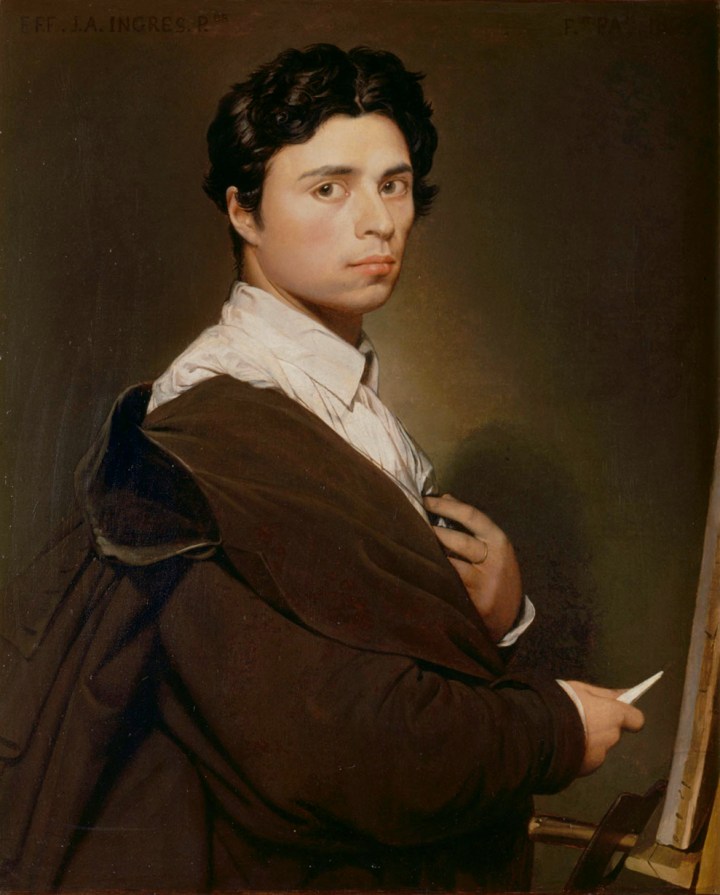
Jean-Auguste-Dominique Ingres, Self-Portrait at the Age of Twenty-Four, 1804, revised 1850–51, oil on canvas, 77 × 61 cm (Musée Condé, Chantilly).
e d i t o r i a l
• “The Story of Art at 75,” p. 959.
Gombrich’s The Story of Art is seventy-five years old this year. Its clarity of conception and expression, civilised values, and the enormous benefits that have undoubtedly resulted from its publication should be a cause for continuing admiration and celebration.
a r t i c l e s
• Sylvain Bédard, “New Proposals about Ingres’s Self-Portrait at the Age of Twenty-Four,” pp. 982–93.
Of all the self-portraits painted by Jean-Auguste-Dominique Ingres, that of 1804 now in the Musée Condé, Chantilly, remains the most discussed. The focus of criticism when it was exhibited in 1806, the painting was taken up again and transformed by the artist during his old age. Here a revised sequence for these modifications is proposed and corrections are made to its earlier history.
• Emma Roodhouse, “Scraps of Genius, Taste and Skill: Works by John Constable in the Mason Album,” pp. 994–1001.
An album emerged at auction in 2020 and was acquired by Colchester and Ipswich Museums. It included hitherto unknown and very early works by John Constable and was compiled by the Mason family, the artist’s relatives in Colchester. These juvenilia are assessed here and placed in the context of Constable’s artistic evolution and his wide social circle.
• Edward Corp, “A Recently Identified Scottish Portrait of Bonnie Prince Charlie by Katherine Read,” pp. 1012–15.
There is a set of three portraits showing the exiled King James III (1701–66) and his two sons, Prince Charles Edward Stuart (1720–88) and Prince Henry Benedict Stuart, Cardinal Duke of York (1725–1807), which are here attributed to Katherine Read (1723–78) and were painted while she was living in Rome between 1750 and 1753. The paintings, which are all in a Somerset collection, have similar dimensions and are framed within painted stone ovals, which have chips and carvings; it seems evident that they were made to be displayed together.
r e v i e w s
• Hugh Doherty, Review of the exhibition catalogue La Rotonde de Saint-Bénigne: 1000 ans d’histoire, ed. by by Franck Abert, Arnaud Alexandre, and Christian Sapin (Faton, 2025), pp. 1033–35.
• Cloe Cavero de Carondelet, Review of the exhibition catalogue Tan lejos, tan cerca: Guadalupe de México en España, ed. by Jaime Cuadriello and Paula Mues Orts (Prado, 2025), pp. 1039–41.
• Elena Cooper, Review of Cristina Martinez and Cynthia Roman, eds., Female Printmakers, Printsellers, and Print Publishers in the Eighteenth Century: The Imprint of Women, c. 1700–1830 (Cambridge: Cambridge University Press, 2024), pp. 1052–53.
• Clive Aslet, Review of Juliet Carey and Abigail Green, eds., Jewish Country Houses (Brandeis University Press, 2024), pp. 1056–57.
o b i t u a r y
• Colin Thom, Obituary for Andrew Saint (1957–2024), pp. 1059–60.
A longstanding editor for the Survey for London, an astute architectural scholar, and a personable educator, Andrew Saint effortlessly combined many skills. His time as a professor in the University of Cambridge’s Department of Architecture shaped numerous future careers, and his contributions to the Survey enriched the history of London’s urban fabric.
The Burlington Magazine, September 2025
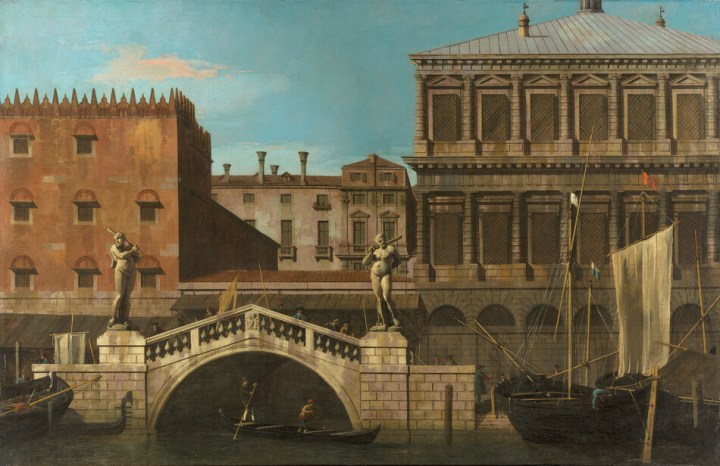
Canaletto, Cappriccio: The Ponte della Pescaria and Buildings in the Quay, Showing Zecca on the Right, 1744(?), oil on canvas, 84 × 130 cm
(Royal Collection Trust, © His Majesty King Charles III 2025)
◊ ◊ ◊ ◊ ◊
The long 18th century in the September issue of The Burlington:
The Burlington Magazine 167 (September 2025) | Italian Art
a r t i c l e s
• Gregorio Astengo and Philip Steadman, “Canaletto’s Use of Drawings of Venetian Buildings by Antonio Visentini,” pp. 896–905.
The use by Canaletto of measured drawings by Antonio Visentini and his assistants is fully considered here for the first time. He ingeniously utilised them at different points in his career to provide images of buildings in both his ‘vedute’ and ‘capricci’. This creative borrowing was possible because both painters formed part of the same successful network of artists, scientists, and patrons.
r e v i e w s
 • Philippe Bordes, Review of the exhibition Duplessis (1725–1802): The Art of Painting Life / L’art de peindre la vie (Inguimbertine, Carpentras, 2025), pp. 924–27.
• Colin Bailey, Review of Katie Scott and Hannah Williams, Artists’ Things: Rediscovering Lost Property from Eighteenth-Century France (Getty Research Institute, 2024), pp. 946–48.
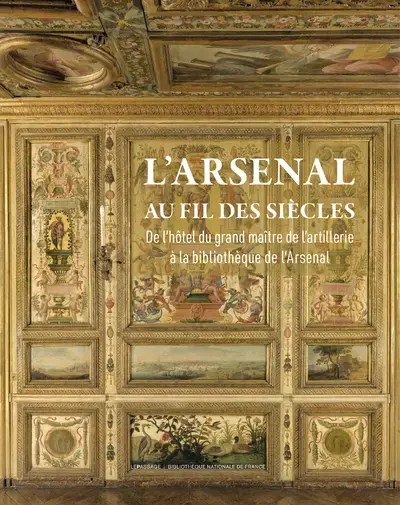
• Karl-Georg Pfändtner, Review of Olivier Bosc and Sophie Guérinot, eds., L’Arsenal au fil des siècles: De l’hôtel du grand maître de l’Artillerie à la bibliothèque de l’Arsenal (Le Passage / BNF, 2024), pp. 951–52.
• Timothy Revell, Review of Lieke van Deinsen, Bert Schepers, Marjan Sterckx, Hans Vlieghe, and Bert Watteeuw, eds., Campaspe Talks Back: Women Who Made a Difference in Early Modern Art (Brepols: 2024), pp. 952–53.
• Jonathan Yarker, Review of Katherine Jean McHale, Ingenious Italians: Immigrant Artists in Eighteenth-Century Britain (Brepols, 2024, p. 953.
• Conal McCarthy, Review of Deidre Brown, Ngarino Ellis, and Jonathan Mane-Wheoki, Toi Te Mana: An Indigenous History of Māori Art (University of Chicago Press, 2025), pp. 953–54.
Conference | Collectors, Agents, Art Dealers: Vienna’s Art Market
From ArtHist.net:
Collectors, Agents, Art Dealers:
The Rise and Expansion of Vienna’s Art Market, 17th–18th Century
Department of Art History, University of Vienna, 13–14 November 2025
t h u r s d a y , 1 3 n o v e m b e r
9:30 Welcome
• Thomas Wallnig, Vice Dean, Faculty of Historical and Cultural Studies
• Silvia Tammaro for the Vienna Center for the History of Collecting
10.00 Session 1 | Agents, Collectors, and Collections
Chair: Roswitha Juffinger
• Tina Košak (Maribor University) — Circulation of Artworks in the Late 17th and Early 18th Century Aristocratic Collections: Some Styrian and Carniolan Cases
• Katharina Leithner (Liechtenstein, The Princely Collections) — Viele Wege führen nach Wien. Transport, Transaktionen und Logistik am Beispiel der Fürstlichen Sammlungen Liechtenstein
• Cecilia Mazzetti di Pietralata (Università di Cassino e del Lazio Meridionale) — A Banker for Maratta: Financial and Logistical Networks between Italy and Vienna, 17th–18th Centuries
• Chiara Petrolini (Università di Bologna) — Manuscript Markets: Sebastian Tengnagel and the Trade in ‘Oriental’ Books
14.00 Session 2 | The Emergence of the Art Market
Chair: Cecilia Mazzetti di Pietralata
• Christof Jeggle (Universität Wien) — The Constitution of Art Markets: Shipping Art on the Danube to Vienna
• Anja Grebe (Universität für Weiterbildung Krems) — Art Dealing and Connoisseurship: Dürer Collectors, Dürer Forgeries, and the Viennese Art Market in the Pre-modern Era
• Gernot Mayer (Universität Wien) — Bewerten und Verwerten: Bilderschätzer als Protagonisten des Wiener Kunsthandels
• Paolo Coen (Università di Teramo) — Tra Roma e Vienna: Dinamiche del mercato artistico nel XVIII secolo
• Silvia Tammaro (Universität Wien) — The Art Dealer Artaria: At the Heart of the Network of Collectors and Artists between Italy and Vienna
17.30 Keynote Lecture
• Koenraad Jonckheere (Ghent University) — Late 17th-Century Art Markets: A Review and a Preview
f r i d a y , 1 4 n o v e m b e r
9.30 Session 3 | International Networks of Exchange and Production
Chair: Silvia Tammaro
• Marco Coppe (Università degli Studi della Campania Luigi Vanvitelli) — Networks of Taste: Silverwork and Porcelain between Tuscany and Vienna through Models and Collecting, 17th–18th Centuries
• Claudia Lehner-Jobst (Porzellanmuseum im Augarten Wien) — ‘Wisdom must be the guide to success’: Enlightened Marketing Strategies and Operations at the Imperial Porcelain Manufactory in Vienna
• Bernhard Woytek (Universität Wien) — Collecting Ancient Coins in 18th-Century Vienna: A General Framework and Some Case Studies
• Martina Fleischer (Akademie der bildenden Künste Wien) — …in Rücksicht der ausserordentlichen guten Wahl von schönsten und seltenstenn Gemälden… Die Sammlung Lamberg-Sprinzenstein und ihre Entstehung in Wien um 1800
12.00 Methodological Outlook
• Christian Huemer (Belvedere Research Center Wien) — Perspectives on the Study of Art Markets
12.30 Concluding Discussions
New Book | Translating John Crome
From University of East Anglia Publishing Project:
Andrew Moore and Clive Scott, eds., Translating John Crome: Through Sight to Insight (Norwich: UEA Publishing Project, 2025), 256 pages, ISBN: 978-1915812728, £30.
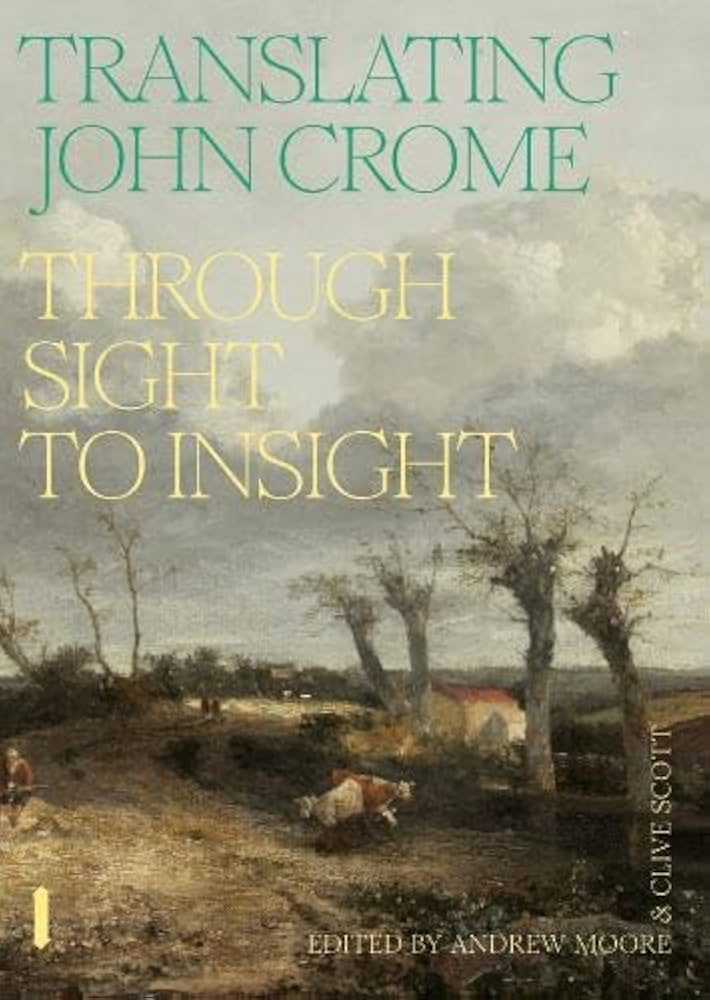 This book considers and translates the paintings and etchings of John Crome (1768–1821), founder of the Norwich School of Artists, through and into other ‘languages’ or media, verbal and pictorial. The word ‘translation’ is not used lightly. This is not an anthology of creative pieces by a variety of artists from different media ‘inspired by’ or ‘expressing a kinship with’ Crome’s paintings. Instead, these are translations in the sense of transformations into new languages designed both to incorporate the perceptual and existential responses of the ‘translator’ to examples of Crome’s work and to project those works into possible cross-medial futures. The book is as much about ‘looking’ across media, as about John Crome. What kinds of transformation do the landscapes and plant studies of John Crome, once considered the equal of J.M.W. Turner, undergo when translated into other ‘languages’ or media? The twenty contributors to this volume—from fields as diverse as travel-writing, poetry, painting, photography, and ceramics—provide a range of answers, and, in so doing, uncover new futures for Crome’s work.
Contributions and extracts from Georg Simmel, John Berger, Richard Mabey, Gerry Barnes, Tom Williamson, Virginia Woolf, Oliver Rackham, Neil MacMaster, Jacques Rancière, Malcolm Andrews, Elizabeth Helsinger, Edmund Bartell, Frances Milton Trollope, Rose Miller, Nick Stone, John Craske, Richard Long, Tacita Dean, Tor Falcon, Anya Gallaccio, Chloe Steele, Katie Spragg, Daniel & Clara, Tim Dee, Esther Morgan, George Szirtes, Anna Reckin, Edward Parnell, Kit Young, Mark Edwards, Lawrence Sail, Jacques Nimki, and Simon Carter.
Andrew Moore has enjoyed a long association with the work of John Crome through his former position as Keeper of Art, based at Norwich Castle Museum & Art Gallery, home to the national collection of works by Crome and the Norwich School of Painters.
Clive Scott is Professor Emeritus of European Literature at the University of East Anglia and an Emeritus Fellow of the British Academy. He specializes in the theory and practice of literary translation.
Exhibition | Collections-Collection
Open since July, the Musée de la Mode et du Costume is the latest cultural project by the Costa family, which owns the perfume company Fragonard (named for the 18th-century painter). The 18th-century mansion was restored by Paris-based Studio KO (as noted by The New York Times and The World of Interiors).
Collections-Collection
Musée de la Mode et du Costume, Arles, 6 July 2025 — 4 January 2026
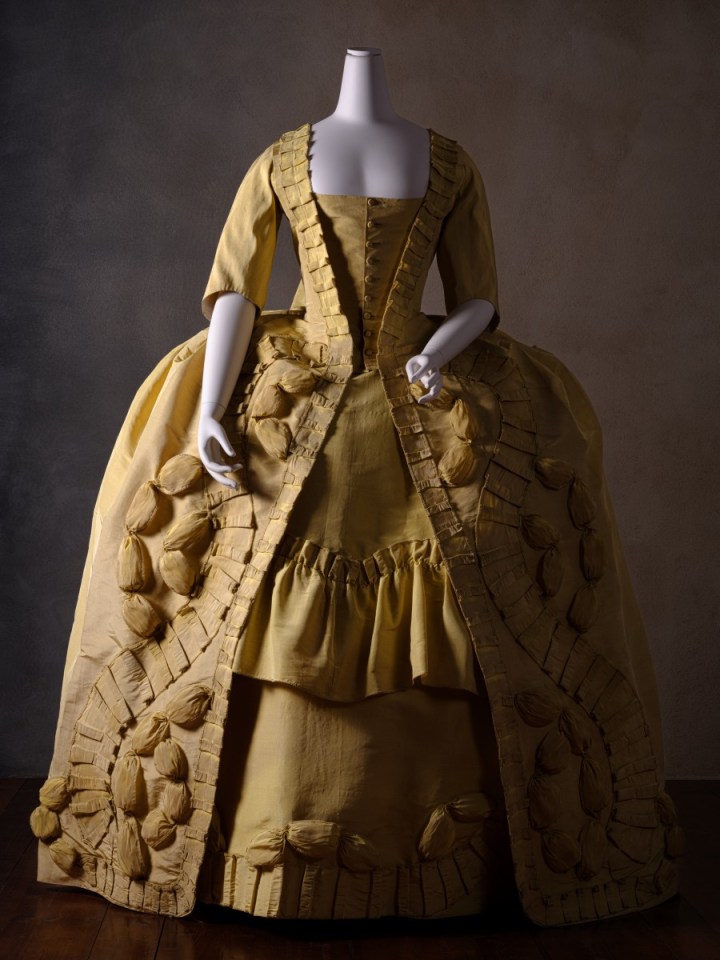
Robe à la française, ca. 1785–90 (Musée de la Mode et du Costume).
After five years of renovations and restoration, the Musée de la Mode et du Costume (Museum of Fashion and Costume at the Hôtel Bouchaud de Bussy ) finally opens its doors. This exceptional venue invites the public to discover custom-designed exhibition spaces at the heart of the building, including a large gallery on the first floor.
For its first exhibition, Collections-Collection, the museum brings together two collections located at the extreme ends of Provence. This fusion lends exceptional richness to the celebration of the history of costume from the French Mediterranean region and the history of textiles. Through a chronological journey, this exhibition offers the public a comprehensive overview of fashion in Provence since the 18th century. Emblematic costumes and major pieces from the Costa and Pascal collections are finally taking their place in the display cases of this long-awaited new museum.
At the request of the Fragonard house, Charles Fréger created for the future Musée de la Mode et du Costume, the only permanent work, depicting Arlesiennes against the light. Between reality and imagination, this internationally renowned photographer devotes himself to groups of belonging and their external symbols. Insatiable, he travels the globe and produces series of flamboyant portraits that capture the individual in his environment and question the creation of archetypal figures. Between poetry and pictorial rigor, his work gives pride of place to the collective: whether in uniforms, work clothes, or colorful masquerade costumes.










 Enfilade
leave a comment