Conference | La Chiesa di San Rocco

Scuola Grande di San Rocco and Chiesa di San Rocco, Venice
(Wikimedia Commons; September 2017)
◊ ◊ ◊ ◊ ◊
From ArtHist.net:
La Chiesa di San Rocco: Spazio Sacro Confraternale e Centro di Culto
Auditorium Santa Margherita, Chiesa di San Rocco, Venice, 2–4 December 2021
Organized by Maria Agnese Chiari Moretto Wiel and David D’Andrea
The church of San Rocco is the only Venetian church that is both a confraternal devotional space and a ‘sanctuary’ that houses the body of the titular saint, who was translated to Venice in 1485 and located in the main altar since 1520. Belief in the miraculous power of San Rocco to heal and protect those afflicted with the plague made the church a popular pilgrimage destination and site of international devotion. The church was adorned with rich artwork and musical space (an organ and choir gallery) designed to focus religious devotion on the altar-reliquary. The original church, built in 1489, was heavily renovated by Giovanni Scalfarotto between 1726 and 1733. The rebuilt façade, completed by Bernardino Maccaruzzi in 1769, unifies the confraternity’s ritual space, which encompasses the square and the adjacent streets.
The conference proposes to examine, in a broad chronological span and with an interdisciplinary approach, the significant aspects of this devotional space, where processions, festivals, and pilgrimages reaffirmed the status of the confraternity and the healing power of San Rocco both in Venetian life and in universal Catholic devotion. Papers will discuss the origins of the cult of San Rocco in Venice, the foundation of the Scuola, the construction of the church and the relationship between the church and confraternity. The altars and devotional images of the fifteenth- and sixteenth-century church and the later seventeenth- and eighteenth-century renovations will be analyzed in relationship with the other confraternal churches in Venice. Particular attention will be dedicated to ritual spaces, music, objects of devotion (the relic of San Rocco, the miraculous Crucifix, the miraculous image of Christ Carrying the Cross; devotion to the Holy Eucharist), and festivals, including changes introduced by new religious devotions and spaces (the Redentore and Madonna della Salute) associated with the plague.
The conference—part of the Churches of Venice: New Research Perspectives project—will consist of two days in the classroom (Auditorium Santa Margherita) and a final session on site in the church. Places are limited, and the required registration can be completed here. In addition, the sessions will be recorded and made available on the ‘Chiese di Venezia’ YouTube channel. For more information, please email chiesedivenezia@gmail.com.
2 D E C E M B E R 2 0 2 1
9.30 Welcome
9.45 Introduction by Maria Agnese Chiari Moretto Wiel, David D’Andrea
10.15 Session 1: Gli inizi del culto di San Rocco nel Veneto, la Scuola e la chiesa veneziana
Chair: David D’Andrea
• Claudia Salmini (Scuola Grande di San Rocco, già Archivista di Stato a Venezia), Alla ricerca delle fonti sulla chiesa di San Rocco
• Rachele Scuro (Università degli Studi di Milano Bicocca), Il culto di san Rocco e la presenza ebraica a Venezia e nello Stato veneto nel Rinascimento
• Francesco Bianchi (Università degli Studi di Padova), San Rocco in ospedale (secc. XV–XVI)
• Adelaide Ricci (Università di Pavia), Le opere e i segni: san Rocco nel progetto narrativo della Scuola di Venezia
13.00 Break
15.00 Session 2: La chiesa quattro-cinquecentesca: gli apparati decorativi e il messaggio dei teleri
Chair: Paola Marini
• Gianmario Guidarelli (Università degli Studi di Padova), L’architettura della chiesa di San Rocco
• Maria Agnese Chiari Moretto Wiel (Wake Forest University), L’arredo della chiesa quattro-cinquecentesca e le sue trasformazioni nel corso del Seicento: proposta
• Diana Gisolfi (Pratt Institute), L’organo rinascimentale della chiesa di San Rocco
• Lorenzo Lazzarini (Laboratorio di Analisi dei Materiali Antichi, Università Iuav di Venezia), Le pietre e i marmi della chiesa di San Rocco
• Louise Marshall (University of Sydney), St Roch Between North and South: Understanding Artistic and Confraternal Choices in Tintoretto’s Narratives at the Chiesa di San Rocco
• Ewa Rybalt (Indipendent Scholar; Lublino), ‘San Rocco cura gli appestati’ di Tintoretto e la disputa tra Valerio Superchio e Vettor Trincavello
3 D E C E M B E R 2 0 2 1
10.00 Session 3: I rapporti della Scuola e della chiesa con il popolo
Chair: Martina Frank
• David D’Andrea (Oklahoma State University), From the Renaissance to the Grand Tour: The Church of San Rocco in the Eyes of Spiritual and Cultural Pilgrims
• Giulia Zanon (University of Leeds), Relazioni sociali e devozionali nella chiesa di San Rocco tra Cinque e Seicento
• Matteo Casini (University of Massachusetts, Boston), Liturgia urbana, di Stato, di gruppi
• Fabio Tonizzi (Facoltà Teologica dell’Italia Centrale), La chiesa di San Rocco: un santuario? Aspetti giuridici e devozionali
13.00 Break
15.00 Session 4: Il culto di San Rocco e la vita religiosa tra XVI e XVIII secolo
Chair: Fabio Tonizzi
• Christopher Nygren (Center for Advanced Study in the Visual Art, National Gallery / University of Pittsburgh), Il Cristo portacroce della Scuola di San Rocco, tra antropologia dell’immagine e storia dell’arte
• Alexandra Bamji (University of Leeds), The Church of San Rocco between Venetian Piety and Post-Tridentine Devotion
• Andrea Savio (Università degli Studi di Padova), La festa di San Rocco a Venezia dopo la pestilenza del 1630
• William Barcham (Fashion Institute of Technology, State University of New York, emeritus), La trasformazione della facciata di San Rocco, ca. 1756–1769
• Federica Restiani (Istituto Veneto per i Beni Culturali), Giuseppe Angeli e il rinnovato ciclo pittorico della cupola del presbiterio. Contributi dal cantiere di restauro
• Jonathan Glixon (University of Kentucky), The Choir of San Rocco and Its Music
4 D E C E M B E R 2 0 2 1
10.00 Session 5: Trasformazioni, restauri, nuove prospettive
Chair: Demetrio Sonaglioni
• Maria Agnese Chiari Moretto Wiel (Wake Forest University) and Melissa Conn (Save VeniceInc.), Ultime trasformazioni interne della chiesa: dal XVIII secolo ad oggi
• Amalia Donatella Basso (Scuola Grande di San Rocco, già Soprintendenza per i Beni Architettonici e Paesaggistici di Venezia e Laguna), Rileggendo i dipinti di Tintoretto nella chiesa confraternale di San Rocco. Considerazioni e riflessioni
• Mario Piana (Università Iuav di Venezia), La cantoria
• David D’Andrea (Oklahoma State University), Sintesi dei temi del convegno
Basile Baudez on Textiles, Policy, and Lived Spaces in 18th-C Venice
https://vimeo.com/646998977?embedded=true&source=video_title&owner=125550939
Basile Baudez contributed to this fall’s Princeton Talks series, a new initiative of the Princeton Public Lectures Committee:
Basile Baudez, “Regulation & Transgression: Textiles, Policy, and Lived Spaces in 18th-Century Venice,” Princeton Talks (Fall 2021), 14 minutes.
Exhibition | In American Waters

Unknown artist in New England, Contemplation by the Sea, 1790, oil on board 37 × 59 inches
(Salem, MA: Peabody Essex Museum, Museum purchase with funds from anonymous donor, 1994 137681)
◊ ◊ ◊ ◊ ◊
Now on view at Crystal Bridges:
In American Waters: The Sea in American Painting
Peabody Essex Museum, Salem, Massachusetts, 29 May — 3 October 2021
Crystal Bridges Museum of American Art, Bentonville, Arkansas, 6 November 2021 — 31 January 2022
Curated by Austen Bailly and Daniel Finamore
 For over 200 years, artists have been inspired to capture the beauty, violence, poetry, and transformative power of the sea in American life. Oceans play a key role in American society no matter where we live, and still today, the sea continues to inspire painters to capture its mystery and power. Be transported across time and water on the wave of a diverse range of modern and historical artists including Georgia O’Keeffe, Amy Sherald, Kay WalkingStick, Norman Rockwell, Hale Woodruff, Paul Cadmus, Thomas Hart Benton, Jacob Lawrence, Valerie Hegarty, Stuart Davis, and others.
highlights American art historical and cultural traditions associated with the sea, deepening our understanding of it as a symbol of American ambition, opportunity, and invention. While histories of American art have long privileged ways of imagining American culture that tell only a partial story and that overlook marine narratives of national and individual experience past and present, this ambitious exhibition reveals the sea as an expansive way to reflect on American culture and environment and to question what it means to be “in American waters.”
The exhibition is co-created by Austen Bailly, chief curator, Crystal Bridges Museum of American Art, and Daniel Finamore, The Russell W. Knight Curator of Maritime Art and History, Peabody Essex Museum in Salem, Massachusetts.
Daniel Finamore and Austen Barron Bailly, eds., with additional contributions by Mindy N. Besaw, Sarah N. Chasse, and George H. Schwartz, In American Waters: The Sea in American Painting (Fayetteville: University of Arkansas Press, 2021), 240 pages, ISBN: 978-1682261705, $60.
Fellowships | Tyson Scholars in American Art, 2022–23
From Crystal Bridges:
Tyson Scholars Program: Fellowships in American Art
Crystal Bridges Museum of American Art, Bentonville, Arkansas, 2022–23
Applications due by 14 January 2022
The Tyson Scholars of American Art Program encourages and supports full-time interdisciplinary scholarship that seeks to expand boundaries and traditional categories of investigation into American art and visual and material culture from the colonial period to the present. The program was established in 2012 through a $5 million commitment from the Tyson family and Tyson Foods, Inc. Since its inception, the Tyson Scholars Program has supported the work of 57 scholars, attracting academic professionals in a variety of disciplines nationally and internationally.
Crystal Bridges and the Tyson Scholars Program invites PhD candidates (or equivalent), post-doctoral researchers, and senior scholars from any field who are researching American art to apply. Scholars may be focused on architecture, craft, material culture, performance art, and new media. We also invite applications from scholars approaching US art transregionally and looking at the broader geographical context of the Americas, especially including Latinx and Indigenous art. Applications will be evaluated on the originality and quality of the proposed research project and its contribution to a more equitable and inclusive history of American art.
The Tyson Scholars Program looks for research projects that will intersect meaningfully with the museum’s collections, library resources, architecture, grounds, curatorial expertise, programs and exhibitions; and/or the University of Arkansas faculty broadly; and applicants should speak to why residence in Northwest Arkansas and the surrounding areas will advance their work. The applicant’s academic standing, scholarly qualifications, and experience will be considered, as it informs the ability of the applicant to complete the proposed project. Letters of support are strongest when they demonstrate the applicant’s excellence, promise, originality, track record, and productivity as a scholar, not when the letter contains a commentary on the project.
Crystal Bridges is dedicated to an equitable, inclusive, and diverse cohort of fellows. We seek applicants who bring a critical perspective and understanding of the experiences of groups historically underrepresented in American art, and welcome applications from qualified persons of color; who are Indigenous; with disabilities; who are LGBTQ; first-generation college graduates; from low-income households; and who are veterans.
Fellowships are residential and support full-time writing and research for terms that range from six weeks to nine months. While in residence, Tyson Scholars have access to the art and library collections of Crystal Bridges as well as the library and archives at the University of Arkansas in nearby Fayetteville. Stipends vary depending on the duration of residency, position as senior scholar, post-doctoral scholar or pre-doctoral scholar, and range from $17,000 to $34,000 per semester, plus provided housing. The residency includes $1,500 for relocation, and additional research funds upon application. Scholars are provided workspace in the curatorial wing of the Crystal Bridges Library. The workspace is an enclosed area shared with other Tyson Scholars. Scholars are provided with basic office supplies, desk space, an office chair, space on a bookshelf, and a locking cabinet with key for personal belongings and files. Housing is provided within walking distance of the museum.
Further information about the Tyson Scholars Program, application instructions, and application portal can be found here. Applications for the 2022–2023 academic year open 1 November 2021 and close 14 January 2022.
New Book | Art, Science, and the Body in Early Romanticism
From Cambridge UP:
Stephanie O’Rourke, Art, Science, and the Body in Early Romanticism (New York: Cambridge University Press, 2021), 205 pages, ISBN: 978-1316519028, £75 / $100. Part of the Cambridge Studies in Romanticism series.
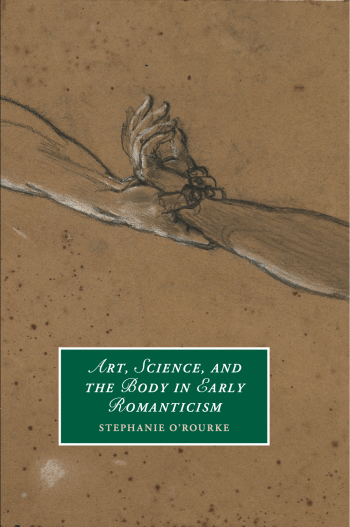 Can we really trust the things our bodies tell us about the world? This work reveals how deeply intertwined cultural practices of art and science questioned the authority of the human body in the late eighteenth and early nineteenth centuries. Focusing on Henry Fuseli, Anne-Louis Girodet, and Philippe de Loutherbourg, it argues that romantic artworks participated in a widespread crisis concerning the body as a source of reliable scientific knowledge. Rarely discussed sources and new archival material illuminate how artists drew upon contemporary sciences and inverted them, undermining their founding empiricist principles. The result is an alternative history of romantic visual culture that is deeply embroiled in controversies around electricity, mesmerism, physiognomy, and other popular sciences. This volume reorients conventional accounts of romanticism and some of its most important artworks, while also putting forward a new model for the kinds of questions that we can ask about them.
Stephanie O’Rourke is a lecturer in Art History at the University of St Andrews.
C O N T E N T S
List of Figures
Acknowledgments
Introduction: Bodies of Knowledge
1 De Loutherbourg’s Mesmeric Effects
2 Fuseli’s Physiognomic Impressions
3 Girodet’s Electric Shocks
4 Self Evidence on the Scaffold
Notes
Bibliography
Index
Online Talk | Gerstenblith on Reparations and the ‘Universal’ Museum
From Penn Museum:
Patty Gerstenblith | Imperialism, Colonialism, Reparations, and the ‘Universal’ Museum
Penn Cultural Heritage Center Lecture
Thursday, 2 December 2021, 12.30–2.00pm (ET)
In this virtual lecture hosted by the Penn Cultural Heritage Center, Patty Gerstenblith will discuss the concept of the ‘universal’ museum and its historical underpinnings. Dr. Gerstenblith will explore its origins across the arc of the 19th century, the inequities of the international legal system and its shortcomings, and the continuing justifications for the retention of looted cultural objects by European and North American museums and collectors.
The notion of the ‘universal’ museum developed in the late 18th and early 19th centuries in the context of the founding of the British Museum, the Napoleonic Wars, European imperialism and colonialism, and the mantra of the rescue narrative, which justified the removal of cultural artifacts first from the Mediterranean region and later sub-Saharan Africa and elsewhere. Evaluating the right to cultural heritage through a human rights perspective, this lecture will analyze the process and elements of reparations and will propose a paradigm for the restitution of cultural objects that fall outside of the legal and ethical frameworks.
Patty Gerstenblith, Ph.D., J.D., is distinguished research professor at the DePaul University College of Law in Chicago and faculty director of its Center for Art, Museum and Cultural Heritage Law. She was appointed by President Clinton to serve on the President’s Cultural Property Advisory Committee in the Department of State and later by President Obama as its chair. She publishes and lectures widely on the protection of cultural heritage during armed conflict and the interdiction of trafficking in archaeological materials. Her casebook Art, Cultural Heritage, and the Law is now in its fourth edition.
Online Colloquium | Celebrating the Illustrious in Europe, 1580–1750
From the programme for the conference:
La célébration des Illustres en Europe (1580-1750) : vers un nouveau paradigme?
Celebrating the Illustrious in Europe, (1580–1750): Towards a New Paradigm?
Online, 25–26 November 2021
Organized by Antoine Gallay, Carla Julie, and Matthieu Lett
Colloque organisé conjointement par l’UNIL (Section d’Histoire de l’art) et par l’Université de Bourgogne (LIR3S CNRS UMR 7366) avec le concours de la Conférence universitaire de Suisse occidentale (CUSO)
Le colloque se propose d’explorer une partie des productions biographiques d’une période usqu’alors peu étudiée sous cet angle. Les deux journées ont pour objectif de mieux comprendre comment se transformèrent, entre 1580 et 1750, les modes de célébration de la gloire des illustres, tant par l’écrit que par l’image, en tenant compte de l’ensemble des médiums que constituent le livre, l’estampe, la peinture, la sculpture ou encore la médaille.
Organisation
• Antoine Gallay (Université de Tel Aviv – The Cohn Institute), antgallay@hotmail.com
• Carla Julie (Université de Lausanne – Université de Bourgogne), carla.julie@unil.ch
• Matthieu Lett (Université de Bourgogne – LIR3S), matthieu.lett@u-bourgogne.fr
Comité scientifique
• Jan Blanc, professeur d’histoire de l’art de la période moderne (Université de Genève)
• Estelle Doudet, professeure de littérature française (Université de Lausanne)
• Laurence Giavarini, maîtresse de conférences HDR en littérature des XVIe et XVIIe siècles (Université de Bourgogne – LIR3S)
• Christian Michel, professeur d’histoire de l’art de la période moderne (Université de Lausanne)
• Frédéric Tinguely, professeur de littérature française (Université de Genève)
Lien du colloque:
https://unil.zoom.us/j/92708025500
ID de réunion : 927 0802 5500
J E U D I , 2 5 N O V E M B R E 2 0 2 1
9.15 Accueil
9.30 Introduction
• Antoine Gallay, Carla Julie, Matthieu Lett
10.00 Session 1: Nouveaux Illustres
Président de séance : Matthieu Lett
• Rémi Jimenes (Université de Tours) et Estelle Leutrat (Université Rennes 2) — Gabriel-Michel de La Rochemaillet, Jean Le Clerc et Les pourtraicts de plusieurs hommes illustres qui ont flory en France depuis l’an 1500
• Paula Almeida Mendes (CITCEM – Université de Porto) — Les ‘femmes illustres’: représentations littéraires et culturelles au Portugal, XVIe–XVIIIe siècles
• Malcolm Baker (University of California, Riverside) — How did images make modern authors illustrious?
12.30 Pause déjeuner
14.00 Session 2: Nouveaux Régimes de Célébration
Président de séance : Frédéric Tinguely
• Marion Deschamp (Université de Lorraine) — En être, ou pas. Conversions, redéfinitions et exclusions de l’économie des grandeurs dans les recueils protestants d’hommes illustres, XVIe– XVIIe siècles
• Pascale Cugy (Université Rennes 2) — Le monde du spectacle dans les portraits en mode parisiens (1690–1710) : à propos de la célébration gravée de quelques noms de la Comédie-Française et de l’Opéra
• Sophie-Luise Mävers (Universität zu Köln) — A faceless gallery of illustrious scientists and artists? Sébastien Leclerc’s orchestration of an institutional utopia
• François Lavie (Université Paris 8) — Recueillir les bons mots des « personnes illustres » dans la France moderne : pratiques de compilation et célébration de l’esprit des grands hommes, 1680–1750
V E N D R E D I , 2 6 N O V E M B R E 2 0 2 1
9.30 Session 3: Desseins Politiques
Président de séance : Laurence Giavarini
• Stanis Perez (Maison des sciences de l’homme Paris-Nord) — La Gallerie des femmes fortes : de la collection historiographique au miroir politique
• Margaux Prugnier (Université Paris Nanterre) — De la célébration des Grands à celle des Lorrains : les œuvres de Dom Calmet (1672–1757) au gré des évolutions de la France de la première moitié du XVIIIe siècle
• Craig Hanson (Calvin University, Grand Rapids) — Thomas Birch’s Heads of Illustrious Persons (1743–1751). Collecting Art, Collecting National Histories
12.00 Pause déjeuner
13.30 Session 4: De la Collection à la Célébration
Président de séance : Antoine Gallay
• Clarisse Evrard (Université de Lille) — Regard d’un illustre sur ses pairs : l’Armamentarium Heroicum, de la collection d’armures au théâtre de papier
• Carla Julie (Université de Lausanne – Université de Bourgogne) — Curieux d’estampes et Illustres dans la France du XVIIe siècle : autour de Michel de Marolles
• Maxime Martignon (Université Paris Nanterre) — Choisir les Illustres : Michel Bégon et le projet biographique
16.00 Conclusion
• Christian Michel (Université de Lausanne)
University of California Press FirstGen Program
From UC Press:
University of California Press FirstGen Program
 At UC Press, we aim to publish and support bold, diverse perspectives that are representative of an inclusive spectrum of voices. This mission informs not only the scholarship we publish, but how we support the community of scholars and authors. We know that book publishing can be difficult to navigate for many scholars, and we’re dedicated to making it a more equitable process for all.
Our FirstGen Program seeks to cultivate and support the work of first-generation scholars—those who are the first in their fam ily to receive a college degree. As we know from research and the University of California’s own FirstGen program, first-gen students often confront a range of intersecting inequalities across race, class, immigration status, and more. First-gen scholars who have gone on to attain advanced degrees and become faculty must navigate additional barriers within the academy. In our role as a non-profit, progressive press within the public UC system, we aim to extend the UC’s efforts by more effectively cultivating, publishing, and promoting the work of first-gen scholars.
Our program includes:
• Financial support to help eliminate costs associated with book publishing, support the writing process, and maximize the reach and impact of the author’s scholarship (e.g. developmental editing, indexing, permissions, etc)
• Publishing workshops and webinars to help demystify the book publishing process for first-gen scholars, and provide opportunities for community-building and networking
• Online resources about book publishing, to enable accessible information for the first-gen scholar community
• Data and findings from the research phase of our program, to raise awareness about the first-gen publishing experience and provide information to the academic and publishing community about how to support these scholars
• A FirstGen Program email list to establish regular communication with first-gen scholars about relevant publishing resources, events, program updates, and to gather feedback that will improve our program and our publishing
More information is available here»
The Burlington Magazine, October 2021
The eighteenth century in October’s issue of The Burlington . . . Rado’s article is not an eighteenth-century essay, but she is a HECAA member (!), and she briefly frames the material in terms of a longer history; the theme for the October issue is ‘art in twentieth-century China’. –CH
The Burlington Magazine 163 (November 2021)
 E D I T O R I A L
• “Art History in the Anthropocene” p. 883.
A R T I C L E S
• Mei Mei Rado, “The Empress Dowager Cixi’s Japanese Screen and Late Qing Imperial Cosmopolitanism,” pp. 886–97.
R E V I E W S
• Arthur Bijl, Review of the exhibition catalogue Kjeld von Folsach, Joachim Meyer, and Peter Wandel, Fighting, Hunting, Impressing: Arms and Armour from the Islamic World, 1500–1850 (Copenhagen: David Collection / Strandberg Publishing, 2021), pp. 946–47.
• Kee Il Jr Choi, Review of John Finlay, Henri Bertin and the Representation of China in Eighteenth-Century France (Routledge, 2020), pp. 966–67.
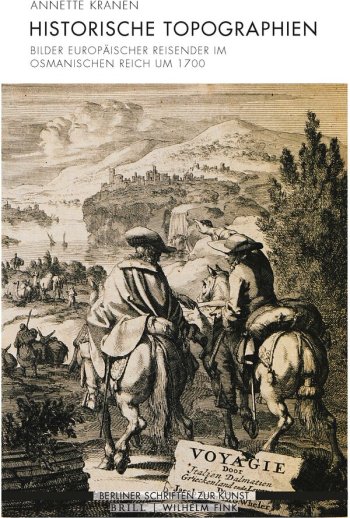
• Mirjam Hähnle, Review of Annette Kranen, Historische Topographien: Bilder europäischer Reisender im Osmanischen Reich um 1700 (Brill, 2020), pp. 971–72.
Online Book Launch | Enlightened Eclecticism
This Friday at 6.30pm (GMT) via Zoom:
Adriano Aymonino, Enlightened Eclecticism: The Grand Design of the 1st Duke and Duchess of Northumberland
Online Book Launch, Sir John Soane’s Museum, London, 19 November 2021
 Hosted by Sir John Soane’s Museum in their beautiful library, and presented in collaboration with the Society for the History of Collecting, this virtual event will celebrate the publication of Adriano Aymonino’s new book, Enlightened Eclecticism: The Grand Design of the 1st Duke and Duchess of Northumberland.
The central decades of the eighteenth century in Britain were crucial to the history of European taste and design. One of the period’s most important campaigns of patronage and collecting was that of the 1st Duke and Duchess of Northumberland: Sir Hugh Smithson (1712–86) and Lady Elizabeth Seymour Percy (1716–76). This book examines four houses they refurbished in eclectic architectural styles—Stanwick Hall, Northumberland House, Syon House, and Alnwick Castle—alongside the innumerable objects they collected, their funerary monuments, and their persistent engagement in Georgian London’s public sphere. Over the years, their commissions embraced or pioneered styles as varied as Palladianism, rococo, neoclassicism, and Gothic revival. Patrons of many artists and architects, they are revealed, particularly, as the greatest supporters of Robert Adam. In every instance, minute details contributed to large-scale projects expressing the Northumberlands’ various aesthetic and cultural allegiances. Their development sheds light on the eclectic taste of Georgian Britain, the emergence of neoclassicism and historicism, and the cultures of the Grand Tour and the Enlightenment.
S C H E D U L E
18.30 Introduction by Frances Sands (Curator of Drawings and Books, Sir John Soane’s Museum)
18.40 Talk by Kate Retford (Professor of Art History, Birkbeck, University of London)
19.10 Talk by Adriano Aymonino (Senior Lecturer and Director of Undergraduate Programs, Department of History and History of Art, University of Buckingham)
19.30 Conversation and questions moderated by Adriana Turpin (Director of Institut Des Etudes Superieurs Des Arts UK)










 Enfilade
leave a comment