Online Symposium | Corning Museum’s 59th Annual Seminar on Glass
From the Corning Museum of Glass:
59th Annual Seminar on Glass
Online, Corning Museum of Glass, Corning, New York, 8–9 October 2021
 The Corning Museum’s 59th Annual Seminar on Glass will be presented virtually, in conjunction with the special exhibition In Sparkling Company: Glass and the Costs of Social Life in Britain during the 1700s. For the first time, the Annual Seminar on Glass will take place online, on Friday, 8 October, and Saturday, 9 October 2021. All are welcome to register for the free two-day seminar, which will include lectures and panel discussions, with pre- and post-seminar digital materials. We hope that this edition of the seminar will be of interest to Corning Museum of Glass members, students, museum and academic professionals, dealers, collectors, artists, glass enthusiasts, and anyone curious to learn more about glass in the 18th century. We look forward to welcoming speakers and attendees from around the world.
F R I D A Y , 8 O C T O B E R 2 0 2 1
Staging the 18th Century for 21st-Century Museum Audiences
Dr. Christopher Maxwell, curator of early modern glass, will introduce the major themes and highlights of the special exhibition In Sparkling Company: Glass and the Costs of Social Life in Britain during the 1700s. Three panel discussions will follow, in which CMoG staff and external collaborators will consider approaches to the interpretation, design, and digital components of the exhibition, including the remarkable virtual reality reconstruction of the now-lost glass drawing room at Northumberland House, London, designed in 1775 by Robert Adam for the 1st Duke and Duchess of Northumberland.
10.00 Welcome
10.10 Video tour of the exhibition In Sparkling Company: Glass and the Costs of Social Life in Britain during the 1700s
10:45 Panel One: In Sparkling Company and Interpretation
Moderator: Mieke Fay (Manager, Education and Interpretation, CMoG)
• Christopher ‘Kit’ Maxwell (Curator of Early Modern Glass, CMoG)
• Kris Wetterlund (former Director of Education and Interpretation, CMoG)
• Cheyney McKnight (Founder and Director of Not Your Momma’s History)
11.45 Break, with hot glass demonstration
12.15 Introduction to the Glass Drawing Room at Northumberland House
• Kit Maxwell (Curator of Early Modern Glass, CMoG)
12.30 Panel Two: In Sparkling Company and Digital Technology
Moderator: Scott Sayre (Chief Information Officer, CMoG)
• Niall Ó hOisín (Noho, Dublin)
• John Buckley (Noho, (Dublin)
• Maria Roussou (Assistant Professor in Interactive Systems, Department of Informatics & Telecommunications, National and Kapodistrian University of Athens)
• Tom Hambleton (Undertone Music, Minnesota)
• Mandy Kritzeck (Digital Media Producer and Project Manager, CMoG)
1.30 Panel Three: In Sparkling Company and Design
Moderator: Carole Ann Fabian (Director of Collections, CMoG)
• Selldorf Architects (New York)
• Warren Bunn (Collections Manager, CMoG)
• Kit Maxwell (Curator of Early Modern Glass, CMoG)
2.30 Q&A
S A T U R D A Y , 9 O C T O B E R 2 0 2 1
Glass and the 18th-Century Atlantic World
The day will open with a live introductory paper. A series of pre-recorded papers, made available a week before the event, will inform three live panel discussions relating to the many contexts, meanings, functions, and innovations of glass within cultures and communities throughout the Atlantic World during the long 18th century (about 1680–1820). The day will end with a state-of-the-field discussion considering the achievements of and possibilities for glass scholarship and 18th-century studies.
10.00 Welcome
10.15 Introduction
• Kit Maxwell (Curator of Early Modern Glass, CMoG), Glass in the 18th-Century Atlantic World
10:45 Panel One: De-centering Glass Production in the Atlantic World
Moderator: Elliot Blair (Assistant Professor of Anthropology and Curator of Southeastern Archaeology, University of Alabama)
• Karime Castillo Cárdenas (Assistant Professor of Anthropology, Bowdoin College), An 18th-Century Glass Workshop in Mexico City: Economic and Social Aspects of Colonial Glassmaking
• Liesbeth Langouche (PhD candidate, University of Antwerp), Clear Window Glass in the Age of Enlightenment
• Melania Ruiz Sanz de Bremond (PhD candidate, Universidad Autónoma de Madrid), Transfer and Reception of Reverse Painting on Glass in Spain and Latin America through Three Case Studies
11.45 Panel Two: Mobility, Identity, and Empire
Moderator: Kerry Sinanan (Assistant Professor in 18th- and 19th-Century Transatlantic Literature, University of Texas at San Antonio)
• Anna Laméris (Frides Laméris Art and Antiques, Netherlands), A History of Colonial Exploitation as Featured on Dutch Ceremonial Goblets
• Hannah Young (Lecturer in 19th-Century British History, University of Southampton), Glass and the Atlantic World: Ralph Bernal, Collecting, and Slave-Ownership
• Philippe Halbert (PhD candidate, History of Art, Yale University), La Belle Créole: Identity, Race, and the Dressing Table in the French Atlantic World
• Alexi Baker (Division of the History of Science and Technology, Yale Peabody Museum), Empire, Science, and Spectacle: Glass Instruments on the Transatlantic Stage
12.45 Break, with a glass-making demonstration
1.15 Panel Three: Cultural Practices of Glass
Moderator: Iris Moon (Department of European Sculpture and Decorative Arts, Metropolitan Museum of Art)
• Suzanne Phillips (PhD student, University of Buckingham), Francis Eginton (1737–1805): A Satellite in the Orbit of the Lunar Circle
• Sammi Lukic-Scott (PhD candidate, University of York), Illuminating Images: The Role of Glass in Developing Reproductive Translucent Images in the Long 18th Century
• Ann Smart Martin (Stanley and Polly Stone Professor of American Decorative Arts and Material Culture, University of Wisconsin), Blaze-Creators: A Material Culture of Lighting and Surfaces in 18th-Century Domestic Interiors
2.15 Panel Four: Wrap-Up Discussion
Moderator: Kit Maxwell
• Elliot Blair
• Kerry Sinanan
• Iris Moon
American Ceramic Circle Journal 21 (2021)
In the latest issue of the ACC Journal:
 The American Ceramic Circle (ACC) is pleased to announce the release of its anniversary issue, volume XXI, of the American Ceramic Circle Journal. For this volume, the Journal committee has selected articles of great variety on quite different and diverse subjects. In the opening essay, “The Mysterious World of Redwares: Medicine and Magic in the Pottery of Pre-Enlightenment Europe,” Errol Manners connects the dots between redwares across Europe, the Americas, and China and explores their historical context. Alison McQueen’s research is an important milestone in giving the female workers of the Vincennes, and later Sevres, manufactory, their identities back. Her “study examines works by the female painters Marie-Victoire Jaquotot, Pauline Knip, Marie-Adélaide Ducluzeau, and Pauline Laurent, and the undervalued contributions of female employees responsible for retouching glaze, laying down prints, and burnishing the wares.” Ronald Fuchs’s essay “From Rehe, China, to Staffordshire, England: The Voyage of a Chinese Image” follows the ‘India Temple’ pattern made by John and William Ridgway of Staffordshire from its origin in China to its appearance on ceramics in England. For the 2019 ACC Symposium, we offered a wonderful excursion to Seagrove, NC, and Stephen Compton’s article “Jugtown Ware: A Modern Primitive Expression” will bring back for those who attended pleasant memories of that experience. Stephen will give a deeper insight into the founding and production of Jugtown Pottery. Radhika Vaidyanathan, a researcher and artist from South India, focuses on the tile-manufacturing process in the Indian subcontinent by the Swiss/German Basel Mission. Manhattan’s Hadler Rodriguez Gallery is the topic of Tom Folk’s article. The two New York gallerists were offering gay and lesbian ceramists a rare forum to freely exhibit in the 1970s and 1980s. Tizziana Baldenebro surveys Fred Marer’s collection of mid-century ceramics, which is now housed at Scripps College, Claremont, CA. The Marer Collection, which holds important examples of the American Studio Pottery Movement, is also part of the Marks Project’s online database. The Marks Project (TMP) received an ACC Grant in 2018.
C O N T E N T S
• Errol Manners — The Mysterious World of Redwares: Medicine and Magine in the Pottery of Pre-Enlightenment Europe
• Alison McQueen — Making the Marks: The Significant Roles and Challenges for Women in the First Century of Sèvres Porcelain
• Ronald W. Fuchs II — From Rehe, China to Staffordshire, England: The Voyage of a Chinese Image
• Stephen C. Compton — Jugtown Ware, a Modern Primitive Expression: American and Asian Pottery Traditions Come together in North Carolina
• Radhika Vaidyanathan — Ceramics and Missionaries in Colonial India: A Preliminary Survey of the Basel Mission Tile Factories
• Tom Folk — The Heroic Story of Manhattan’s Hadler Rodriguez Gallery
• Tizziana Baldenebro — The Marer Collection: Persistent Witness
The American Ceramic Circle (ACC) was founded in 1970 as a non-profit educational organization committed to the study and appreciation of ceramics. Its purpose is to promote scholarship and research in the history, use, and preservation of ceramics of all kinds, periods, and origins. The current active membership of approximately 500 is composed of museum and auction house professionals, collectors, institutions, and a limited number of dealers ceramics. The American Ceramic Circle Journal was first produced in 1971. Each volume has typically included five to ten articles presenting original research on a particular aspect of world ceramics. Many of the articles over the years have concentrated on American, European, and Asian ceramics from the sixteenth to the twentieth centuries, but the Journal welcomes a wide variety of ceramics-related topics. Submissions include papers presented at the ACC’s annual symposium, articles based on research sponsored by an ACC grant, and contributions from independent scholars. The Journal is distributed to all current ACC members, both individuals and institutions, as part of their membership, and individual issues are available for purchase on the ACC website. For questions, please contact ACC Journal Editor, Dr. Vanessa Sigalas, at journal@americanceramiccircle.org.
Print Quarterly, September 2021

Gottfried August Gründler, Frontispiece Der Naturforscher (1774), engraving, 90 × 110 mm
(Cambridge University Library)
◊ ◊ ◊ ◊ ◊
The eighteenth century in the latest issue of Print Quarterly:
Print Quarterly 38.3 (September 2021)
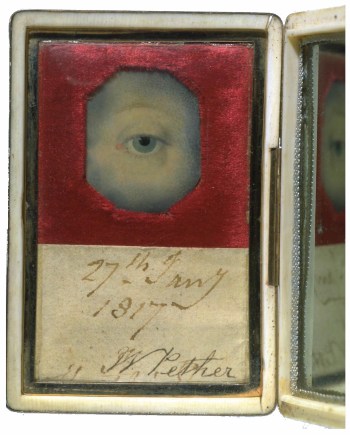
William Pether, Eye Miniature, 1817, watercolour on ivory, embedded in red velvet, 27 × 22 mm (London: Victoria & Albert Museum).
A R T I C L E S
Dominika Cora, “New Light on the Life and Work of the Mezzotint Engraver William Pether (1739–1821)”
William Pether (1739–1821) was one of the most distinguished English mezzotint engravers in the second half of the eighteenth century. Responding to scholarly confusion around his life, this article presents archival discoveries that illuminate his biography and personal life, as well as unpublished drawings and an overview of his artistic output.
N O T E S
Anna Gielas, “Gottfried A. Gründler’s Der Naturforscher (1773)”
During the second half of the eighteenth century, there was a peak in the usage of elaborate frontispiece engravings for European naturalist periodicals. Gielas introduces the frontispiece created by the renowned German engraver Gottfried August Gründler (1710–1775) for the naturalist journal Der Naturforscher and examines the useful information it displayed to the periodical’s (potential) audience. The engraving can be seen as an illustration of the cultural identity of naturalists as well as the Enlightened individual in the later decades of the eighteenth century.
Exhibition | Masterpieces from Buckingham Palace

Installation of the exhibition Masterpieces from Buckingham Palace, at The Queen’s Gallery In London.
◊ ◊ ◊ ◊ ◊
Now on view at The Queen’s Gallery:
Masterpieces from Buckingham Palace
The Queen’s Gallery, Buckingham Palace, London, 17 May 2021 — 13 February 2022
Curated by Desmond Shawe-Taylor and Isabella Manning
Masterpieces from the Royal Collection have been displayed in Buckingham Palace since the residence was acquired by George III and Queen Charlotte in 1762. The painting displays were reinvented during the reign of their son, George IV, who commissioned the architect John Nash to renovate the palace in the 1820s. A Picture Gallery was included to display the monarch’s exceptional collection of paintings. Since then, the Picture Gallery has remained the focus for some of the most treasured Italian, Dutch, and Flemish paintings from the Royal Collection.
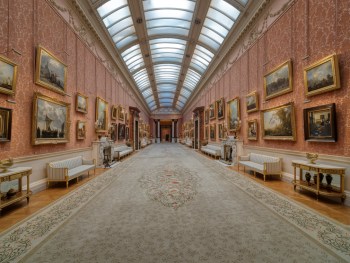
The Picture Gallery at Buckingham Palace (typically open to visitors only during the summer) is currently being renovated–creating an opportunity to display the paintings normally installed there in other contexts.
Palace displays are often imbued with dynastic meaning; the Picture Gallery was one of the few spaces intended for the enjoyment of art, pure and simple. It is in this same spirit that we have mounted this exhibition: for the first time the paintings are displayed together in modern gallery conditions, allowing us to look at them afresh.
In general these paintings are securely dated and attributed; mostly we know which monarch bought them. We are providing this information here, but we are also asking a different, more subjective question—what makes them important? What do they have to offer? In the exhibition catalogue we have suggested qualities that were valued by the makers of these works and can still be appreciated today: the imitation of nature; the sensuous use of materials; the creation of beautiful design; and the ability to express human emotion. But are we missing something? We hope that visitors will make up their own minds about what there is to enjoy in these paintings and find reasons to believe that they are still worth exploring.
Dou to Vermeer
The paintings in this room were all created in the Low Countries between 1630 and 1680, the heyday of the so-called Dutch Golden Age. They are modest in scale, the majority scenes of everyday life, with figures in landscapes or in homes, taverns and shops. These artists didn’t set up their easels in the market place; they worked from drawings, memory and imagination, but they depicted the familiar everyday world around them. The people they painted were of the same kind that bought their paintings: we can see examples in simple ebony frames on the walls of the interiors of de Hooch and Vermeer.
All but two of these paintings were acquired by George IV to hang in the sumptuous interiors of Carlton House, his London residence when Prince of Wales. Like their original purchasers, he admired them for their comedy, their brilliant technique and their truth to life. They continue to fascinate through their minute detail, tactile surfaces and ability to suggest spaces filled with light and air.

Canaletto, The Piazza Looking North-West with the Narthex of San Marco, ca. 1723–24, oil on canvas, 172 × 134 cm (London: Royal Collectin Trust, RCIN 401037). The painting is one of a set of six views of the Piazza San Marco and the Piazzetta.
Rubens, Rembrandt, and Van Dyck
The artists in this room all come from the Low Countries, as in the previous section. There are some comic scenes of everyday life, but the majority of works belong to the more prestigious branches of art—narrative painting, commissioned portraits, and ambitious landscapes with a symbolic or religious meaning.
This room is dominated by three artists of very different character: Rubens, a diplomat and land-owner; van Dyck, a courtier; and Rembrandt, a professional serving the merchants of Amsterdam. In other ways they are similar, especially in their enthusiasm for the type of Venetian painting that can be seen in the next section.
Painting in Italy, 1510–1740
The paintings in this room were created in Italy, in various artistic centres and over a period of two hundred years. Bringing together this great range of painting evokes something of the first displays at Buckingham Palace, during the reign of George III.
Several strands of Italian art are here on show. There are sober male portraits, often painted with a bare minimum of detail and colour range, but conveying great psychological intensity. There are ideal female figures, derived from the study of antique sculpture, their beauty impassive however dramatic the narrative. There are expressive landscapes, ranging from a cataclysmic storm to the unruffled stillness of a sunset. Then there are Canaletto’s boldly expressive views of Venice, where the imposing monuments of the city are spiced with a hint of picturesque shabbiness.
◊ ◊ ◊ ◊ ◊
In the United States, the catalogue is distributed by The University of Chicago Press:
Desmond Shawe-Taylor and Isabella Manning, Masterpieces from Buckingham Palace (London: Royal Collection Trust, 2021), 160 pages, ISBN: 978-1909741737, £20 / $25.
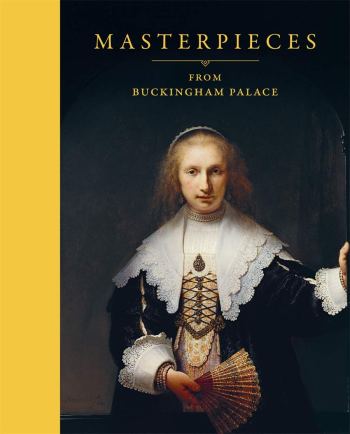 In this beautifully designed book, Desmond Shawe-Taylor, Surveyor of The Queen’s Pictures, and Assistant Curator of Paintings, Isabella Manning, examine 65 of the most celebrated paintings from the Picture Gallery, which sits at the heart of Buckingham Palace. With masterpieces by such artists as Vermeer, Rembrandt, Van Dyck, Rubens, Titian, Jan Steen, Claude, and Canaletto, this publication offers new insights into these world-famous works of art. The authors encourage readers to look at the works in a new way and to consider how Claude paints a sky; how Rubens models the landscape through his use of color; and how Titian uses contrast to add gravitas to a portrait. Rather than re-treading the old boards of provenance and attribution, the authors seek to engage with different, perhaps riskier and more subjective, questions: asking not when were they painted and by whom, but why should we concern ourselves with them? A short introduction gives an account of the creation of the Picture Gallery and tells the story of the monarchs who curated this extraordinary collection of paintings and how the works entered the Collection.
C O N T E N T S
A History of Old Master Paintings at Buckingham Palace
Looking at the Old Masters
The Pictures
Further Reading
Index
◊ ◊ ◊ ◊ ◊
Desmond Shawe-Taylor’s very productive fifteen-year tenure as Surveyor of the Queen’s Pictures came to an end in December 2020, as reported by the BBC, in response to £64m of lost income related to the pandemic. Indeed, the historic Surveyor position—first filled in 1625 during the reign of Charles I—is for now “lost and held in abeyance.” Royal Collection Director, Tim Knox, has taken on “overall responsibility for the curatorial sections, supported by the Deputy Surveyors of Pictures and Works of Art.”
Online Seminar | Collecting and Displaying Rembrandt’s Pictures
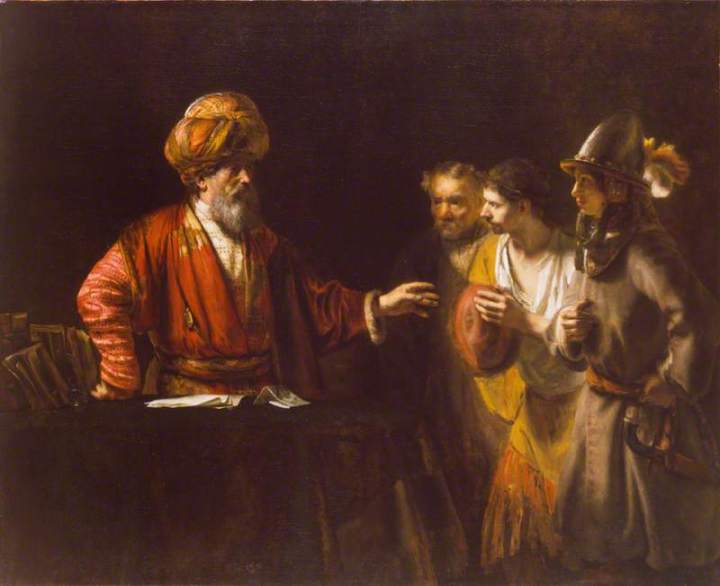
Follower of Rembrandt (1606–1669), The Centurion Cornelius (The Unmerciful Servant), ca. 1660, oil on canvas
(London: The Wallace Collection)
◊ ◊ ◊ ◊ ◊
From the seminar flyer:
Andrea Morgan, Collecting and Displaying Rembrandt’s Pictures in 18th- and 19th-Century England: Charles Jennens of Gopsall Hall and the ‘Rembrandt Room’ at Stowe
Wallace Collection Seminars on the History of Collections and Collecting
Online, Monday, 27 September 2021, 5.30pm
The history of collecting paintings attributed to Rembrandt in eighteenth- century England is especially rich. The English developed such a passion for the Dutch artist by the second half of the century that it led the Reverend Matthew Pilkington to worry in 1770 that “the genuine works of this master are rarely to be met with, and whenever they are to be purchased they afford incredible prices.” This talk will focus on two private collections of paintings attributed to Rembrandt that were formed beginning in the eighteenth century.
Charles Jennens is best remembered as the librettist to the composer George Frederic Handel, but he also owned a massive art collection. Among Jennens’s collection by the 1760s and hanging at his now lost estate, Gopsall Hall, formerly in Leicestershire, were six paintings attributed to Rembrandt and one contemporary copy. The copy was a painting by Pieter Tillemans after Rembrandt’s celebrated picture of Belshazzar’s Feast that was in the eighteenth century owned by the Earl of Derby at Knowsley Hall. While Jennens’s ‘Rembrandt’ pictures have since lost their attribution to the master, I propose some reasons why Jennens in particular might have had a special interest in Rembrandt’s painted oeuvre.
One of the largest but heretofore neglected English collections of paintings attributed to Rembrandt was formerly held at Stowe House, Buckinghamshire, having been amassed by various members of the aristocratic Temple-Grenville family. The first picture was recorded at Stowe as early as 1724, but by 1838 there were a total of ten paintings attributed to the Dutch artist at the estate, along with three said to be by artists in Rembrandt’s circle. I trace the history of this collection and conclude with a discussion of the aptly called ‘Rembrandt Room’ at Stowe.
Please note that this seminar will take place on Zoom and YouTube, and will not be held at the Wallace Collection. Admission is free, and registration is required. More information and details of future seminars can now be found here.
Exhibition | Mary Ronayne: Fool’s Paradise
From the press release, via ArtFix Daily:
Mary Ronayne: Fool’s Paradise
HOFA Gallery, London, 16–29 September 2021

Mary Ronayne, The Farthington Family Portrait with Settee, 2021, enamel and emulsion on wood panel, 120 × 90 cm.
Irish figurative painter and multimedia artist known for her whimsical portraits is billed to unveil new, large-scale artworks at HOFA Gallery, London.
In this solo show, Mary Ronayne elevates comedy, wit, and fun to a level of purpose never seen in her work, paving the way for farcical elements like melting faces and candy pop colours to become celebrations of the fluidity of time, identity, and life. This fluidity, which underpins the resilience of a world gleefully returning to normalcy after the harrowing experience of a pandemic, is both literal and symbolic. Juxtaposed with scenes drawn from historical narratives and classical literature, it affirms the enduring elements of humanity in the carefree spirit fans have come to love about her work.
Ronayne’s technique of combining enamel and domestic paints is as much to credit for her charming style as her widely sourced subject matter. It plays a major role in the look and finish of her works which often contrast a glossy, vitreous shine with a more staid, matte texture. Enamel paint is also how the artist creates the gooey, farcical look, almost like candy—an unmistakable element of her signature style.
Drawing inspiration from a rich and diverse universe that includes magazine cut-outs, classical art, historical literature, movies, plays, and operas, Ronayne’s artworks are a tribute to life even when their undercurrent of Hogarthian satire and allegory are hard to deny. Ronayne has always employed humour as a tool to break the ice, disarming and drawing viewers in for a closer look while also conveying poignant critiques of the times.
Call for Papers and Articles | The Art of Copying
This Call for Papers addresses both a workshop and publication:
The Art of Copying in Early Modern Europe
The Medici Archive Project, Florence, 21 January 2022
Organized by Maddalena Bellavitis and Alessio Assonitis
Proposals due by 1 October 2021
 In recent years, attention has been directed towards copies, with a particular emphasis on their meaning, function, provenance, production, patronage, collecting, and dating. The aesthetic and conceptual tenets underlying this corpus of scholarly research focused primarily on works of art. However, this impulse to recreate images has also been transferred to other artistic and intellectual media. As such, the copy carries within itself a great number of intrinsic nuances, depending on the cultural context and the historical moment.
The organizers of this workshop—Maddalena Bellavitis and Alessio Assonitis—invite papers that address issues that can shed new light and provide new interdisciplinary research trajectories on the mechanisms that regulate the practice and reception of copies. For this reason, we encourage submission for presentation proposals from disciplines other than painting, such as book history, media history, history of science, history of medicine, history of food, and history of diplomacy.
The workshop will take place at The Medici Archive Project, Via dei Benci 10, Florence on 21 January 2022. To be considered for participation, please provide a single document in Microsoft Word, consisting of a one-page proposal for a 20-minute presentation of unpublished work, followed by a short curriculum vitae. Presentations can be in Italian or English. Applications may be sent to education@medici.org by 1 October 2021 (participants will be notified by the end of October).
Furthermore, and separate to that workshop, we are planning a volume with original articles on the topic. We invite papers that address issues that can shed new light and provide new interdisciplinary research trajectories on the mechanisms that regulate the practice and reception of copies. For this reason, we encourage submission for paper proposals from disciplines other than painting, such as book history, media history, history of science, history of medicine, history of food, and history of diplomacy. To be considered for participation, please provide a single document in Microsoft Word or pdf, consisting of a one-page proposal of unpublished work, followed by a short curriculum vitae. Applications (as well as questions) may be sent to maddalena.bellavitis@gmail.com by 1 October 2021 (selected papers will be notified by the second week of October).
New Book | Rubens in Repeat
From The Getty:
Aaron Hyman, Rubens in Repeat: The Logic of the Copy in Colonial Latin America (Los Angeles: Getty Research Institute, 2021), 320 pages, ISBN 978-1606066867, $70.
 This book examines the reception in Latin America of prints designed by the Flemish artist Peter Paul Rubens, showing how colonial artists used such designs to create all manner of artworks and, in the process, forged new frameworks for artistic creativity.
Peter Paul Rubens (1577–1640) never crossed the Atlantic himself, but his impact in colonial Latin America was profound. Prints made after the Flemish artist’s designs were routinely sent from Europe to the Spanish Americas, where artists used them to make all manner of objects.
Rubens in Repeat is the first comprehensive study of this transatlantic phenomenon, despite broad recognition that it was one of the most important forces to shape the artistic landscapes of the region. Copying, particularly in colonial contexts, has traditionally held negative implications that have discouraged its serious exploration. Yet analyzing the interpretation of printed sources and recontextualizing the resulting works within period discourse and their original spaces of display allow a new critical reassessment of this broad category of art produced in colonial Latin America—art that has all too easily been dismissed as derivative and thus unworthy of sustained interest and investigation. This book takes a new approach to the paradigms of artistic authorship that emerged alongside these complex creative responses, focusing on the viceroyalties of New Spain and Peru in the seventeenth and eighteenth centuries. It argues that the use of European prints was an essential component of the very framework in which colonial artists forged ideas about what it meant to be a creator.
Aaron M. Hyman is assistant professor in the Department of the History of Art at Johns Hopkins University.
Exhibition | Canvas & Silk: Historic Fashion
From the press release (10 June 2021) for the exhibition:
Canvas & Silk: Historic Fashion from Madrid’s Museo del Traje
The Meadows Museum, SMU, Dallas, 19 September 2021 — 9 January 2022
Curated by Amanda Dotseth and Elvira González
The Meadows Museum, SMU, has announced a major exhibition of Spanish dress and fashion that will pair paintings from the Meadows’s collection with historic dress and accessories from the Museo del Traje, Centro de Investigación del Patrimonio Etnológico in Madrid. Canvas & Silk: Historic Fashion from Madrid’s Museo del Traje marks the first major collaboration between this important Spanish institution and an American museum and will include approximately 40 works from the Meadows alongside examples of dress and accessories from the Museo del Traje (Spanish National Museum for Fashion). Displayed together, the works in the exhibition not only tell the story of how fashion trends in Spain changed over four hundred years, but also reveal how elements of a country’s history—such as its involvement with global trade or the formation of a national identity—are reflected in its dress.
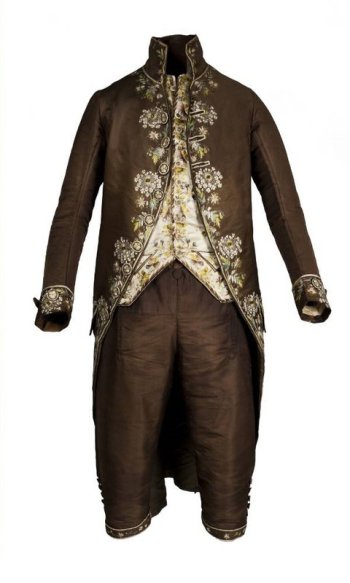
Traje a ‘la francesca’ (calzón, chupa, casaca) / French Costume (Breeches, Vest, Dress Coat), ca. 1795–1800; silk, linen, and cotton (Madrid: Museo del Traje, Centro de Investigación del Patrimonio Etnológico; Calzón, CE000663; chupa, CE000664; casaca, CE000665; photo by Gonzalo Cases Ortega).
Canvas & Silk will be on view at the Meadows from 19 September 2021 until 9 January 2022. Concurrently, the Meadows will also present Image & Identity: Mexican Fashion in the Modern Period, an investigation into Mexican dress spanning from Mexican Independence to modern times through photographs and prints from the collections of the Meadows Museum and SMU’s DeGolyer Library.
“We are thrilled to have the opportunity to gain further insight into the Meadows’s collection of Spanish art through its exhibition with loans from Spain’s premier collection of historic dress,” said Amanda W. Dotseth, curator at the Meadows Museum and co-curator of the exhibition in collaboration with Elvira González of the Museo del Traje. “This exhibition makes it possible to tell a more nuanced story about Spanish society through the presentation of historic paintings with contemporaneous examples of the garments depicted therein. We are as never before able to explore the complex relationships between representation and reality, between image and artifact. Spanish fashion has long been a point of interest for the Meadows Museum, whether in the form of past exhibitions—such Balenciaga and His Legacy: Haute Couture from the Texas Fashion Collection in 2007—or as portrayed in the collection’s prints, paintings, and sculptures. We look forward to continuing our study and display of Spanish fashion with this unprecedented collaboration with the Museo del Traje.”
Canvas & Silk will be divided into themes that elucidate various trends in the history of European fashion in general and Spanish dress in particular over the past five hundred years. These include ‘Precious Things’, featuring accessories like jewelry and combs made from precious metals and other rare materials such as coral; ‘Traditional Dress’ with examples of garments and ensembles that are typically identified with Spain, such as a traje de luces (the suit typically worn by bullfighters) and mantón de Manila (traditional embroidered silk shawls historically traded through Manila); and ‘Stepping Out’ demonstrating the importance of what one wore when presenting themselves in public. Highlights of pairings combining paintings from the Meadows’s collection and historic dress from the Museo del Traje include Ignacio Zuloaga’s The Bullfighter ‘El Segovianito’ (1912) accompanied by a traje de luces of the same color; Zuloaga’s Portrait of the Duchess of Arión, Marchioness of Bay (1918) displayed alongside a mantón de Manila similar to the one the duchess is holding; and Joan Miró’s Queen Louise of Prussia (1929) paired with a vibrantly hand-painted dress and shoes by twentieth-century fashion designer Manuel Piña.
“By pairing the Museo del Traje’s collection with that of the Meadows’s, we are bringing the dress, accessories, and other material objects to life, enabling viewers to see the contexts in which such articles were worn,” said Elvira González, curator of the historic apparel collection at the Museo del Traje. “Viewed together, the clothing allows for a deeper understanding of the painting; for example, the presence of the mantón de Manila (embroidered Manila silk shawl) in Ignacio Zuloaga y Zabaleta’s painting Portrait of the Duchess of Arión, Marchioness of Bay (1918) speaks to the social position of the woman depicted. Not only will our collection be seen by audiences in the U.S. for the first time, but it will also be displayed in a completely new light. We’re excited to see what kind of scholarship and new ideas might be generated by presenting these works in a new environment and alongside these paintings and drawings.”
The accompanying exhibition catalogue will contain an essay co-authored by Dotseth and González that illuminates themes linking the garments, accessories, and corresponding works in the Meadows collection. The publication will feature new photography of key objects by Jesús Madriñán.
Canvas & Silk will be accompanied by a focused exhibition in the museum’s first-floor galleries titled Image & Identity: Mexican Fashion in the Modern Period, curated by Akemi Luisa Herráez Vossbrink, the Center for Spain in America (CSA) Curatorial Fellow at the Meadows Museum. Featuring photographs, prints, books, and gouaches from the 19th and 20th centuries, this exhibition will explore Mexican fashion through images of everyday scenes, festivities, regional types, and occupations. Building on a theme developed in Canvas & Silk, Image & Identity will also show how national identity formation is reflected in fashion and is often accompanied by a resurgence in the popularity of indigenous dress. Works in Image & Identity are drawn from the collections of the Meadows Museum and SMU’s DeGolyer Library, named after Everette L. DeGolyer, Sr. who, with his son, collected maps, books, manuscripts, and photographs related to Mexican exploration and history. Artists featured in the exhibition include Alfred Briquet, Carlos Mérida, Diego Rivera, José Clemente Orozco, Jerry Bywaters, Paul Strand, and Manuel Álvarez Bravo.
Workshop | 18th-C Persianate Albums Made in India

Musical and dance performance in the harem, from an Indo-Persianate album of Antoine Louis Polier, I 4594, fol. 19, Delhi or Faizabad before 1777
(Staatliche Museen zu Berlin, Museum für Islamische Kunst / Johannes Kramer)
◊ ◊ ◊ ◊ ◊
From ArtHist.net (11 September 2021) . . .
18th-Century Persianate Albums Made in India: Audiences – Artists – Patrons and Collectors
Online and In-Person, Museum of Asian Art and Museum of Islamic Art, Berlin, 15–17 September 2021
Organized by Friederike Weis
This workshop will address the role of Indo-Persianate albums (muraqqaʿs) that were assembled for or collected by the Mughal governors of Awadh (Uttar Pradesh): Shujaʿ al-Daula (r. 1754–75) and his successor Asaf al-Daula (r. 1775–97), as well as other local elites in Bengal and Bihar. Europeans also participated in the creation and consumption of albums, as patrons and collectors. In 1882, the Prussian State acquired a group of twenty albums from the twelfth Duke of Hamilton. So far, these artworks have received little study. Eight of them belonged to the Scottish surgeon and interpreter Archibald Swinton (1731–1804) and ten to the Franco-Swiss engineer-architect Antoine Louis Henri Polier (1741–1795)—both were Company officers deeply acquainted with Indo-Persian aristocratic culture. Many more albums are linked to well-known European figures, such as the Governor-General of Bengal Warren Hastings (1732–1818) and the French Company officer (and special agent to Shujaʿ al-Daula in Faizabad) Jean-Baptiste-Joseph Gentil (1726–1799). Numerous interrelated questions arise from the study of this material, concerning audiences, artists, patrons, collectors, and their wish to produce and preserve knowledge.
The workshop will be held as a blended format with a mix of online and on-site presentations at the Museum of Asian Art and the Museum of Islamic Art in Berlin. You are cordially invited to join all presentations via webex (free of charge). We anticipate that the event will be recorded. If you wish to attend the workshop in person, please note that the number of seats at both venues is limited. Advance registration for on-site attendance is essential: f.weis@smb.spk-berlin.de.
Times are listed according to CEST (Central European Summer Time)
W E D N E S D A Y , 1 5 S E P T E M B E R 2 0 2 1
Museum für Asiatische Kunst, 3.00–6.20pm | Link
3.00 Raffael Gadebusch (Berlin) — Welcome
3.15 Friederike Weis (Berlin) — Introduction
3.50 Session 1. Polier’s Albums and Manuscripts: Contents and Contexts
Chair: Friederike Weis
• Susan Stronge (London) — Collecting the Mughal Past
• Malini Roy (London) — Blurred Lines: Looking at the Paintings by the Artist Mihr Chand and Determining the Boundaries between Innovation, Imitation, or Intentional ‘Duplication’
• Firuza Abdullaeva-Melville (Cambridge) — Three Highlights of Polier’s Collection from Cambridge: Treasures or Leftovers
T H U R S D A Y , 1 6 S E P T E M B E R 2 0 2 1
Museum für Asiatische Kunst, 9.30am–4.30pm | Link
9.30 Session 2. Patrons, Collectors, and Compilation Strategies
Chair: Susan Stronge
• Emily Hannam (Windsor) — Fit for a King? Two Late Mughal Albums in the Royal Library at Windsor Castle
• Axel Langer (Zurich) — Obvious or Hidden Narratives in the Large Clive Album
• J.P. Losty (Sussex) — Archibald Swinton’s Indian Paintings and Albums: An Analysis
12.00 Lunch Break
1.20 Session 3. Recurrent Themes and Tropes in Indo-Persianate Albums
Chair: Laura Parodi
• Katherine Butler Schofield (London) — Performing Women in the Polier and Plowden Albums: Pursuing Khanum Jan
• Molly Aitken (New York) — Intoxicating Friendships: Figuring Classical Indian Aesthetic Regimes in Mughal Album Painting
• Yuthika Sharma (Edinburgh) — Topography as Mughal Utopia? Polier’s ‘Garden Series’ and Artistic Exchange in 18th-Century Periphery-Centre Imagination
• Anastassiia Botchkareva (New York) — Tropes and Outliers: Tracing Patterns of Iconography in the Polier Albums
F R I D A Y , 1 7 S E P T E M B E R 2 0 2 1
Archäologisches Zentrum (Offices of the Museum für Islamische Kunst), 9.45am–3.30pm | Link
9.45 Stefan Weber and Deniz Erduman-Çalış (Berlin) — Welcome
10.00 Session 4. Calligraphy in the Berlin Albums: Historicism and Contemporary Mughal Masters
Chair: Axel Langer
• Claus-Peter Haase (Berlin) — The Calligraphies of the 16th-17th Centuries in the Berlin Albums: Reflections on their Origins and Purpose in a Muraqqaʿ
• Will Kwiatkowski (Berlin) — Expanding the Canon: Mir Muhammad Husayn ʿAta Khan and the Polier Albums
11.50 Session 5. Indian Muraqqaʿs Collected by Europeans: Networks and Relationships
Chair: Deniz Erduman-Çalış
• Laura Parodi (Genova) — Allegory and Verisimilitude in Later Indian Albums
• Isabelle Imbert (Manchester) — Like a Garden Bedecked: Floral Margins in 18th-Century Awadhi Albums Produced for European Patrons
1.10 Lunch Break
2.20 Session 5: Indian Muraqqaʿs Collected by Europeans: Networks and Relationships, continued
• Yael Rice (Amherst, MA) — The London Market for South Asian Muraqqaʿs and the Hastings Albums
3.00 Final Discussion










 Enfilade
leave a comment