Online Lecture | Jason Farago, A Global Criticism for a Global Art World
This Wednesday, from YCBA:
Jason Farago, Lytton Lecture: A Global Criticism for a Global Art World
Online, Yale Center for British Art, New Haven, 10 February 2021, 12.00–1.00pm (ET)
In the last 30 years, museums, galleries, fairs, and publications have taken a worldwide approach to art—but how can an art critic make substantive judgements when his or her beat spans the entire globe? In this talk, Jason Farago, art critic for the New York Times, considers how museums should approach the art of foreign cultures, how viewers can appreciate things they don’t fully understand, and how criticism can offer a view of art as a continuous flow of people, images, and ideas.
Generous support for this program has been provided by the Norma Lytton Fund for Docent Education, established in memory of Norma Lytton by her family. Lytton was an active docent at the Center for more than twenty years and subsequently spent a decade engaged in research for the Center’s Department of Paintings and Sculpture.
Jason Farago (Yale BA 2005) has served as an art critic for The New York Times since 2017. Before that, he was the first US-based art critic for The Guardian, and he has been a regular contributor to The New Yorker, The New York Review of Books, and other publications. Farago was also the editor and co-founder of the art and culture magazine Even, whose run is anthologized in Out of Practice: Ten Issues of Even, 2015–18 (Motto Books). He has published catalogue essays on the art of Sheila Hicks, Simon Hantaï, Kishio Suga, Julia Dault, Meleko Mogkosi, and others. In 2017 he was awarded the inaugural Rabkin Prize for art criticism.
Please register for the program here»
Painting Edo: Japanese Art from the Feinberg Collection
The exhibition Painting Edo: Japanese Art from the Feinberg Collection opened briefly at Harvard, before the museum was forced to close due to the pandemic. The catalogue of the collection, however, is scheduled to be published next month, and online programming continues, including a discussion of the film Edo Avant Garde.
Film Discussion: Edo Avant-Garde
Online, Tuesday, 9 February 2021, 7pm (EST)
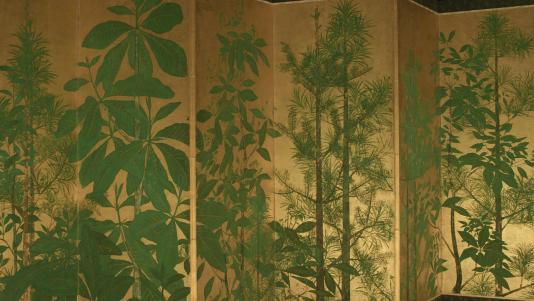
Still from ‘Edo Avant-Garde’ (2019). Master of the I’nen Seal (1600–1630), Sōtatsu school, Trees, Japanese, Edo period, mid-17th century; pair of six-panel folding screens; ink, colors, and gold on paper (Washington, D.C.: Freer Gallery of Art, F1962.30).
Join us on Zoom for a discussion of the film Edo Avant-Garde with curator Rachel Saunders and director Linda Hoaglund, presented in conjunction with the special exhibition Painting Edo: Japanese Art from the Feinberg Collection.
Edo Avant-Garde (2019) reveals the story of how Japanese artists of the explosively creative Edo period (1615–1868) pioneered innovative approaches to painting that many in the west associate most readily with so-called modern art of the 20th century. Through groundbreaking interviews with scholars, priests, art dealers, and collectors in Japan and the United States, the film explores how the concepts of abstraction, minimalism, and surrealism are all to be found in Edo painting. The film’s exquisite cinematography and outstanding original soundtrack, composed in response to individual paintings, present a remarkable immersive experience of some of Japan’s most celebrated and yet least-filmed paintings, many of them outside traditional museum and gallery settings. Simultaneously dynamic and mesmerizing, at its heart Edo Avant-Garde offers a unique opportunity to look closely and see differently.
This conversation will take place online via Zoom. Free admission, but registration is required. To register, please complete this online form.
Edo Avant-Garde will be available to stream for free through the Harvard Art Museums from Friday, February 5 to Friday, February 12. Upon registration, you will receive a link and password to access the film. We encourage you to view the film in advance of the discussion! The film is also available to rent through the Pacific Film Archive at the Berkeley Art Museum (BAMPFA). Please click here for further details.
If you have any questions, please contact am_register@harvard.edu.
◊ ◊ ◊ ◊ ◊
Distributed by Yale University Press:
Rachel Saunders, ed., Catalogue of the Feinberg Collection of Japanese Art (Cambridge: Harvard Art Museums, 2021), 264 pages, ISBN: 978-0300250909, $65.
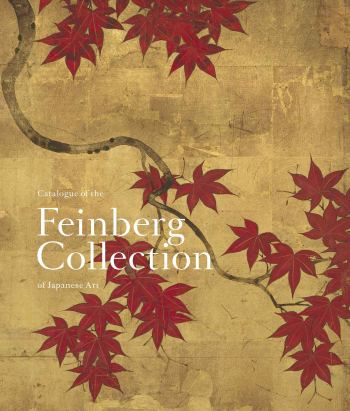 The sophistication and variety of painting in Japan’s Edo period, as seen through a preeminent US collection.
Over more than four decades, Robert and Betsy Feinberg have assembled the finest private collection of Edo-period Japanese painting in the United States. The collection is notable for its size, its remarkable quality, and its comprehensiveness. It represents virtually every stylistic lineage of the Edo-period (1615–1868)—from the gorgeous decorative works of the Rinpa school to the luminous clarity of the Maruyama-Shijo school, from the ‘pictures of the floating world’ (ukiyo-e) to the inky innovations of the so-called eccentrics—in addition to sculpture from the medieval and early modern periods. Hanging scrolls, folding screens, handscrolls, albums, and fan paintings: the objects are as breathtaking as they are varied. This catalogue’s twelve contributors, including established names in the field alongside emerging voices, use the latest scholarship to offer sensitive close readings that bring these remarkable works to life.
Rachel Saunders is the Abby Aldrich Rockefeller Associate Curator of Asian Art at the Harvard Art Museums.
Online Talks | HECAA Emerging Scholars Showcase
HECAA Emerging Scholars Showcase
Online, Saturday, 6 February 2021, 2:00–3:30pm (EST)
Our next HECAA Emerging Scholars Showcase is on Saturday, February 6, 2–3:30pm (EST). Please join us via Zoom (link below) to hear our next seven emerging scholars present their research. Each participant will present for 3–5 minutes, and after the presentations, we will host a question-and-answer session. If you have any questions or concerns, please contact Dani Ezor (dezor@smu.edu).
Best regards,
HECAA Board
◊ ◊ ◊ ◊ ◊
Zoom: https://smu.zoom.us/j/98321231325
• Priscilla Sonnier (University College, Dublin), ‘Ierne’s Ladies of Quality’: Self-Fashioning Elite Female Social Identity in Ascendancy Ireland, 1730–90
• Jennifer Laffick (Southern Methodist University), Sentimentalizing Soldiers: Lamentation and Theatricality in Jean Broc’s Death of General Desaix
• Emily Peikin (University of Delaware), Rubens Peale with a Geranium: Botanical Science and Slavery in the Early Republic
• Damiët Schneeweisz (Rijksmuseum), Coloured Ivory: Portrait Miniatures in the Dutch Atlantic World
• María del Castillo García Romero (University of Seville), Feminae devotae: Artistic Portraits on Religious Female Culture in Baja Andalusia during the 18th Century
• Leo Stefani (Courtauld Institute of Art), Surface Learning: Tables, Royal Education, and Louis XV’s Pavilion at the Tuileries
• Joseph Litts (Princeton University), Afterlives and Francis Parsons’s 1762 Painting of Cherokee Diplomat Cunne Shote
Call for Papers | The Sources of Colour: The Gobelins Dyeing Workshop
From ArtHist.net:
The Sources of Colour: The Gobelins Dyeing Workshop
Institut national d’histoire de l’art (INHA), Paris, 7–8 Octotber 2021
Proposal due by 12 March 2021
The National Institute of Art History (Institut National d’Histoire d’Art, INHA), in conjunction with the Archives Nationales and the Mobilier National, will be holding two study days specifically devoted to the Gobelins dyeing workshop.
Jehan Gobelin, a dyer from Reims, set up a workshop in the mid-fifteenth century not far from the Bièvre River, whose water was particularly suitable for dyeing purposes. His descendants, who were experts in the dyeing of wool in Venice scarlet, soon acquired vast stretches of land that ran alongside the Bièvre and constructed large workshops. Henri IV rented them and had tapestry workshops installed on the sites. In 1662, Colbert acquired the property for the Crown, and he brought together and placed the various workshops under the direction of Charles Le Brun. To reorganise the dyeing workshop, Le Brun solicited the help of a Dutch master dyer, Josse Kerchove. Since this time, the Gobelins dyeing workshop, which is the oldest European workshop of its kind that has been operating continuously since its foundation, has remained in the same place inside the Gobelins enclosure, to the north of the chapel.
This rich diachronic and multidisciplinary history is the topic of these study days, the first ever devoted to the Gobelins dyeing workshop, in its long history. Based on unprecedented sources or sources seen from a fresh perspective, these study days aims to focus on the latest knowledge concerning the dyeing workshop. Using new research findings and sources compiled since 2015 by the teams working at the Mobilier National and made available to researchers, various themes will be addressed during these study days:
• The role of the dyeing workshop in the evolution of regulatory texts relating to the métier of dyer, from Colbert’s reorganisation to the beginning of the twentieth century
• The contributions made by the successive directors of the dyeing workshop; generally speaking, all prosopographical research into the staff working in the dyeing workshop is welcome
• The contributions made by industrial chemistry to all of the fabric preparatory and dyeing processes
• The school of dyeing founded at the beginning of the nineteenth century by the Gobelins and the courses held by Chevreul, which were replaced by instruction in dyeing in Paris, throughout the nineteenth century (similar training was provided by Payen and Persoz at the Centre National des Arts et Métiers (CNAM), and in the 1830s in Lyon, Mulhouse, and Rouen)
• The status of national laboratory of expertise acquired by the dyeing workshop in the nineteenth century, initially during the First Empire in relation to the manufacture of Lyon silks, and subsequently in the context of the development of the dyeing industries in the colonies (madder and cochineal in Algeria; indigo in Senegal), and more generally in the Western world
For each of these themes, information about other dyeing workshops or other international experiences involving the transmission of knowledge and dyeing techniques is very welcome, from a comparative viewpoint. Likewise, the participation of researchers conducting studies into the history of the sciences, history, literature, textile design, and colour, or in the conservation sciences is particularly welcome.
The conference will be held both online and face-to-face, requiring particular care with regard to the way in which the discussions are conducted. We will ask participants to focus on their statements very precisely for fifteen minutes to optimise the discussion times. Participants may communicate in French or in English. Contributions (2,000 characters), accompanied by a short biography/bibliography, must be sent before 12 March 2021 to marie-anne.sarda@inha.fr and alexia.raimondo@culture.gouv.fr.
Sources on the Gobelins dyeing workshop
(More detailed information about the collection may be obtained from the members of the scientific and study day organisation committee)
• The Archives Nationales, the Pierrefitte-sur-Seine site:
Sub-series AF/IV (the Secretariat of State)
Sub-series F/12 (commerce and industry), here and here
Sub-series F/21 (fine arts)
Sub-series O/2, O/3, O/4, and O/5 (the Maison de l’Empereur or Maison du Roi)
• The Mobilier National, Paris (online search tools)
• Several digital sources are currently being published online
• The Bibliothèque Centrale du Muséum National d’Histoire Naturelle, Paris (online Calames union catalogue)
An inventory of the Eugène Chevreul collection is currently being compiled, so any requests for information or requests to view the archives must be sent to patrimoinedbd@mnhn.fr.
• The Manuscript Department of the Bibliothèque Nationale de France (online catalogue)
Scientific and organisational committee
Muriel Barbier (the Mobilier National)
Anne-Laure Carré (the Conservatoire National des Arts et Métiers, CNAM)
Hélène Cavalié (the Mobilier National)
Claude Coupry (the Centre National de la Recherche Scientifique, CNRS)
Joëlle Garcia (the Muséum National d’Histoire Naturelle)
Clémence Lescuyer (the Archives Nationales)
Alexia Raimondo (the Archives Nationales)
Charlotte Ribeyrol (Paris-Sorbonne University)
Marie-Anne Sarda (Institut National d’Histoire d’Art, INHA)
New Book | Living as an Author in the Romantic Period
From Palgrave Macmillan:
Matthew Sangster, Living as an Author in the Romantic Period (London: Palgrave Macmillan, 2021), 384 pages, ISBN: 978-3030370466, £90 / $120.
 This book explores how authors profited from their writings in the late eighteenth and early nineteenth centuries, contending that the most tangible benefits were social, rather than financial or aesthetic. Using previously-underutilised archives, Matthew Sangster shows that during the Romantic period authorship operated principally as a relatively restricted social system, rather than a profession or mode of artistic practice. He discusses the careers of a diverse range of writers, including Robert Southey, Thomas Moore, Felicia Hemans, Robert Heron, Eliza Parsons, Robert Bloomfield, Hannah More, Walter Scott, and Lord Byron—establishing the crucial mediating roles played by larger assemblages, including the publishing industry, political coteries, periodical culture, and privileged families, along with regional, national, and global networks.
Matthew Sangster is Lecturer in Eighteenth-Century Literature and Material Culture at the University of Glasgow. He has published widely on Enlightenment libraries, literary institutions, Romantic metropolitanism, media culture, and the affordances of Fantasy.
C O N T E N T S
Preface: The Life of the Author
Introduction: What Was an Author in the Romantic Period?
1 Publishers, Book Production, and Profits
2 Sociable Alignments
3 Succeeding in ‘the Worst Trade’
4 The Working Writer
5 The Oligarchs of Literature: Authority and the Quarterly Reviews
6 Refashioning Authorship’s Purview
Coda: Print Proliferation and the Invention of the Artist
Online Series | 2021 Wallace Seminars on Collections and Collecting
From The Wallace Collection:
2021 Wallace Collection Seminars on the History of Collections and Collecting
Online, The Wallace Collection, London, last Monday of the Month, 17.30
This seminar series was established in 2006 as part of the Wallace Collection’s commitment to the research and study of the history of collections and collecting, especially in the eighteenth and nineteenth centuries in Paris and London. The seminars—normally held on the last Monday of every month during the calendar year, excluding August and December—act as a forum for the presentation and discussion of new research into the history of collecting. Seminars are open to curators, academics, historians, archivists, and all those with an interest in the subject. Papers are generally 45–60 minutes long.
Please note that the seminars will take place on Zoom and will not be held at the Wallace Collection.
Monday, 22 February
Sara Ayres (Fellow at the Centre for Privacy Studies, University of Copenhagen), Descriptions of Collections and Their Display at the Stuart Court in 1669 in a Manuscript Account of Prince George of Denmark’s Grand Tour (1668–70)
Monday, 29 March
Janet M. Brooke (Independent Scholar, Montreal), The Gilded Age in Canada: Reconstructing the Life and Afterlife of the Sir William Van Horne Collection
Monday, 26 April
Ellinoor Bergvelt (Guest Researcher, University of Amsterdam / Research Fellow, Dulwich Picture Gallery), The Dutch King Willem II (1792–1849) as Collector and Source of Some Important Pictures in The Wallace Collection
Monday, 24 May
Krystle Attard Trevisan (PhD Candidate, Institute of English Studies, School of Advanced Study, University of London), The ‘Primo Costo’ inventory of Count Saverio Marchese (1757–1833): Mapping the Print Market in Malta and Its European Connections
Monday, 28 June
Timothy Schroder (Trustee, The Wallace Collection), Inside the Dragon’s Lair: Henry VIII’s Kunstkammer at Whitehall Palace
Monday, 26 July
Ana Mónica da Silva Rolo (Archaeologist, Archaeology Centre UNIARQ, Lisbon University) and Noé Conejo Delgado (Archaeologist, Numismatist, Archaeology Centre UNIARQ, Lisbon University), A Dactyliothec from Pietro Bracci in the Portuguese Royal Family’s Collections: A Different Look at Art Collecting
Monday, 27 September
Andrea Morgan (PhD Candidate, Queen’s University, Kingston, Ontario), Collecting and Displaying Rembrandt’s Pictures in Eighteenth– and Nineteenth–Century England: Charles Jennens of Gopsall Hall and the ‘Rembrandt Room’ at Stowe
Monday, 25 October
Mark Hall (Collections Officer for Culture Perth & Kinross, Perth Museum & Art Gallery), The Perth Literary and Antiquarian Society, 1784–1914: Collecting Scotland, Collecting the World
Monday, 29 November
Rachel Peat (Assistant Curator of Non-European Works of Art, Royal Collection Trust, London), ‘A Most Distinguished Collector and Patron’: Prince Alfred, Duke of Edinburgh and Japanese Art, 1869–1900
New Book | Ground Layers in European Painting, 1550–1750
From ACC Art Books:
Anne Haack Christensen, Angela Jager, and Joyce Townsend, eds., Ground Layers in European Painting, 1550–1750 (London: Archetype Books, 2021), 150 pages, ISBN: 978-1909492790, £45 / $90.
 Most of the papers in this volume were presented at the CATS international technical art history conference in June 2019 titled Mobility Creates Masters: Discovering Artists’ Grounds 1550–1700, which explored the introduction of, and change to, the colored ground layers in European paintings form the Early Modern period. The title of the conference stemmed from the desire to instigate new research projects within the topic of the influence of artists’ mobility on material choices and techniques related to the preparation of paintings. As well as contributions presented at the conference, this volume includes additional papers from recent research exploring the same topic. The volume begins with several studies on the documentation of grounds. The contributions are then arranged according to the country in which the painter was active, from southern Europe moving northwards. The lavishly illustrated contributions in this volume deal with the above questions and shed light on different methods of preparing painting supports, the purpose of preparatory layers, materials used in different countries, and influence of shifts in fashion or availability of materials on ground layers. This fifth CATS Proceedings will be of interest to scholars and students, and museum professionals including curators, conservators, art historians, and conservation scientists.
C O N T E N T S
• Moorea Hall-Aquitania and Lieve d’Hont — Troubleshooting coloured grounds: developing a methodology for studying Netherlandish ground colours
• Joanna Russell, Marta Melchiorre Di Crescenzo, Joseph Padfield, and Marika Spring — Experiments using image processing software (Nip2) to define the colour of preparatory layers in 16th-century Italian paintings
• Silvia A. Centeno, Dorothy Mahon, Federico Carò, and José Luis Lazarte Luna — New light on the use of ash in the ground preparations of baroque paintings from Spain, North and South America
• Mariana Aurora Calderón Mejía, Dolores González Pondal, Damasia Gallegos, Fernando Marte, and Marcos Tascón — European art in Argentina: the ground of a painting attributed to Salvator Rosa
• Cristina Morilla, Narayan Khandekar, Kate Smith, and Anne Schaffer — Coloured grounds and transfer techniques in 17th-century Spanish royal portraiture: the case of Pantoja de la Cruz’s portrait of Philip III at the Harvard Art Museums
• Maite Jover de Celis and Maria Dolores Gayo — Velázquez and his choice of preparatory layers: different place, different colour?
• Joanna Szpor, Katarzyna Górecka, and Marcin Kozarzewski — To reach the original: technique and materials of the late 17th-century Italian painter of large-scale battle scenes, Martino Altomonte
• Michela Fasce — White, red, grey and brown: colour in Genoese grounds from the mid-16th to the 18th century
• Loa Ludvigsen, David Buti, Anna Vila, and Eva de la Fuente Pedersen — Discovering patterns in Giralamo Troppa’s grounds
• Claire Betelu — Ground layers in French paintings from the second half of the 17th century: colour, stratigraphy, and function
• Lidwien Speleers, Margriet van Eikema Hommes, Ineke Joosten, Suzan de Groot, and Annelies van Loon — The effect of ground colour on the appearance of two paintings by Thomas Willeboirts Bosschaert in the Oranjezaal, Huis Ten Bosch
• Jørgen Wadum — Are the changed appearances of Carel Fabritius’ paintings a consequence of mobility?
• Marya Albrecht, Sabrina Meloni, Annelies van Loon, Ralph Haswell, and Onno de Noord — Discovering trends in Jan Steen’s grounds using principal component analysis
• Claire Toussat — The grounds of Caravaggism? Case study of Theodoor van Loon
• Joyce H. Townsend and Rica Jones — Preparatory layers in British paintings from the 16th to the early 18th century
Online Talk | Robert Darnton, Pirating and Publishing
This Wednesday, from the Boston Athenæum:
Book Talk: Pirating and Publishing: The Book Trade in the Age of Enlightenment
Robert Darnton in Conversation with John Buchtel
3 February 2021, 6:00pm (EST)
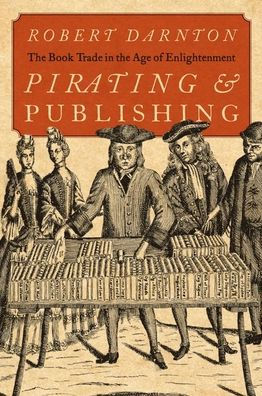 In the late-18th century, a group of publishers in what historian Robert Darnton calls the ‘Fertile Crescent’ countries located along the French border, stretching from Holland to Switzerland pirated the works of prominent (and often banned) French writers and distributed them in France, where laws governing piracy were in flux and any notion of ‘copyright’ very much in its infancy. Piracy was entirely legal and everyone acknowledged tacitly or openly that these pirated editions of works by Rousseau, Voltaire, and Diderot, among other luminaries, supplied a growing readership within France, one whose needs could not be met by the monopolistic and tightly controlled Paris Guild.
Pirating and Publishing: The Book Trade in the Age of Enlightenment focuses on a publisher in Switzerland, one of the largest and whose archives are the most complete. Through the lens of this concern, Darnton offers a sweeping view of the world of writing, publishing, and especially bookselling in pre-Revolutionary France—a vibrantly detailed inside look at a cut-throat industry that was struggling to keep up with the times and, if possible, make a profit off them. Featuring a fascinating cast of characters lofty idealists and down-and-dirty opportunists this new book expands upon on Darnton’s celebrated work on book-publishing in France, most recently found in A Literary Tour de France. Pirating and Publishing reveals how and why piracy brought the Enlightenment to every corner of France, feeding the ideas that would explode into revolution.
Registration is requested. Boston Athenæum Members and VESP holders: free. Visitors: $5.
Robert Darnton is Carl H. Pforzheimer University Professor and University Librarian, Emeritus of Harvard University, and the author of The Great Cat Massacre (1984) and A Literary Tour de France (2018), among others.
John Buchtel is Curator of Rare Books and Head of Special Collections at the Boston Athenaeum.
◊ ◊ ◊ ◊ ◊
Robert Darnton, Pirating and Publishing: The Book Trade in the Age of Enlightenment (Oxford: Oxford University Press, 2021), 400 pages, ISBN: 978-0195144529, $35.
C O N T E N T S
Introduction
Publishing
1 The Rules of the Game and How the Game was Played
2 The Landscape in Paris
3 The Fertile Crescent
Pirating
4 How to Pirate a Book
5 Portraits of Pirates and Their Businesses
6 Underground Geneva
7 A Confederation of Pirates
8 The Struggle to Pirate Rousseau and Voltaire
Inside a Swiss Publishing House
9 Business as Usual
10 Our Man in Paris
11 Relations with Authors
12 Making and Losing Money
Conclusion
New Book | Porcelain: A History from the Heart of Europe
From Princeton UP:
Suzanne Marchand, Porcelain: A History from the Heart of Europe (Princeton: Princeton University Press, 2020), 544 pages, ISBN: 978-0691182339, $35.
 Porcelain was invented in medieval China—but its secret recipe was first reproduced in Europe by an alchemist in the employ of the Saxon king Augustus the Strong. Saxony’s revered Meissen factory could not keep porcelain’s ingredients secret for long, however, and scores of Holy Roman princes quickly founded their own mercantile manufactories, soon to be rivaled by private entrepreneurs, eager to make not art but profits. As porcelain’s uses multiplied and its price plummeted, it lost much of its identity as aristocratic ornament, instead taking on a vast number of banal, yet even more culturally significant, roles. By the nineteenth and twentieth centuries, it became essential to bourgeois dining, and also acquired new functions in insulator tubes, shell casings, and teeth.
Weaving together the experiences of entrepreneurs and artisans, state bureaucrats and female consumers, chemists and peddlers, Porcelain traces the remarkable story of ‘white gold’ from its origins as a princely luxury item to its fate in Germany’s cataclysmic twentieth century. For three hundred years, porcelain firms have come and gone, but the industry itself, at least until very recently, has endured. After Augustus, porcelain became a quintessentially German commodity, integral to provincial pride, artisanal industrial production, and a familial sense of home. Telling the story of porcelain’s transformation from coveted luxury to household necessity and flea market staple, Porcelain offers a fascinating alternative history of art, business, taste, and consumption in Central Europe.
Suzanne L. Marchand is the Boyd Professor of History at Louisiana State University. Her books include German Orientalism in the Age of Empire and Down from Olympus.
C O N T E N T S
List of Illustrations and Tables
Note on Currencies and Other Abbreviations
Acknowledgments
Introduction
1 Reinventing the Recipe
2 The Challenge of Wedgwood and the Rise of the Private Firm
3 Making, Marketing, and Consuming in the ‘Golden Age’
4 Surviving the Revolutions
5 The Discrete Charms of Biedermeier Porcelain
6 Of Capitalism and Cartels: The Glory Days of the Private Producer, 1848–1914
7 Porcelain, the Whilhelmine Plastic
8 The Fragility of Interwar Porcelain
9 From Cold War Wonder to Contemporary White Elephant: Does the Story End Here?
Notes
Bibliography
Image Credits
Index
New Book | The City of Blue and White
From Cambridge UP:
Anne Gerritsen, The City of Blue and White: Chinese Porcelain and the Early Modern World (New York: Cambridge University Press, 2020), 354 pages, ISBN: 978-1108499958, $35.
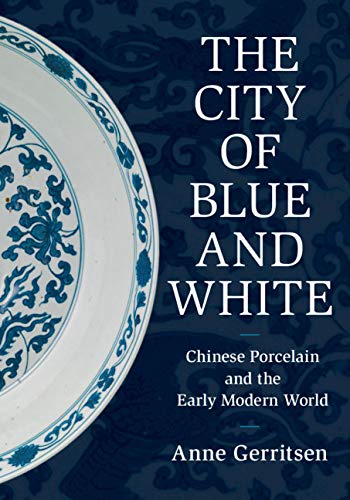 We think of blue and white porcelain as the ultimate global commodity: throughout East and Southeast Asia, the Indian Ocean including the African coasts, the Americas and Europe, consumers desired Chinese porcelains. Many of these were made in the kilns in and surrounding Jingdezhen. Found in almost every part of the world, Jingdezhen’s porcelains had a far-reaching impact on global consumption, which in turn shaped the local manufacturing processes. The imperial kilns of Jingdezhen produced ceramics for the court, while nearby private kilns manufactured for the global market. In this beautifully illustrated study, Anne Gerritsen asks how this kiln complex could manufacture such quality, quantity and variety. She explores how objects tell the story of the past, connecting texts with objects, objects with natural resources, and skilled hands with the shapes and designs they produced. Through the manufacture and consumption of Jingdezhen’s porcelains, she argues, China participated in the early modern world.
Anne Gerritsen is Professor of History and directs the Global History and Culture Centre at the University of Warwick. Since 2013, she has also held the Chair of Asian Art at the Universiteit Leiden where she teaches at the Leiden Institute for Area Studies (LIAS) and the Leiden University Centre for the Arts in Society (LUCAS).
C O N T E N T S
Figures
Maps
Table
Acknowledgements
1 The Shard Market of Jingdezhen
2 City of Imperial Choice: Jingdezhen, 1000–1200
3 Circulations of White
4 From Cizhou to Jizhou: The Long History of the Emergence of Blue and White Porcelain
5 From Jizhou to Jingdezhen in the Fourteenth Century: The Emergence of Blue and White and the Circulations of People and Things
6 Blue and White Porcelain and the Fifteenth-Century World
7 The City of Blue and White: Visualizing Space in Ming Jingdezhen, 1500–1600
8 Anxieties over Resources in Sixteenth-Century Jingdezhen
9 Skilled Hands: Managing Human Resources and Skill in the Sixteenth-Century Imperial Kilns
10 Material Circulations in the Sixteenth Century
11 Local and Global in Jingdezhen’s Long Seventeenth Century
12 Epilogue: Fragments of a Global Past
Notes
Bibliography
Index










 Enfilade
leave a comment