Digital Project | Adam Grand Tour, Letters and Other Writings
From the project website:
Robert & James Adams’ Grand Tour Letters and Writings, 1754–63
Organized by Adriano Aymonino and Colin Thom with Giles Bergel and Harriet Richardson
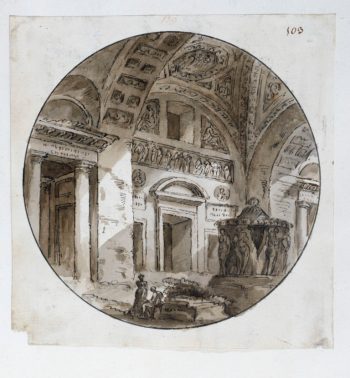
Charles-Louis Clerisseau (attributed), Capriccio, ca.1756–57 (London: Sir John Soane’s Museum, SM Adam volume 56/139, photograph by Hugh Kelly).
The digital project—Robert & James Adams’ Grand Tour Letters and Writings 1754–63—aims to present an online critical edition of all the known Adam brothers’ Grand Tour letters and writings as a freely available, open-access, fully searchable database. This will enable readers to view the letters in their original form alongside new and accurate transcriptions, with contextual scholarly annotations.
The website will be updated periodically as the project progresses through its various phases. The completed online edition of the letters will be hosted from 2022 by Sir John Soane’s Museum, custodians of most of the surviving Grand Tour and architectural drawings from the Adam brothers’ office, and will be licensed under a Creative Commons CC BY-NC-SA licence.
The project is supported by a Digital Project Grant from the Paul Mellon Centre for Studies in British Art and is a collaboration between UCL’s Bartlett School of Architecture and the University of Buckingham’s Department of History and History of Art. It also has the support of Sir John Soane’s Museum, the National Records of Scotland, the Victoria & Albert Museum, the Royal Institute of British Architects and London Metropolitan Archives/City of London. The editors and directors of the project are Dr Adriano Aymonino of the University of Buckingham and Colin Thom of the Survey of London at UCL’s Bartlett School of Architecture. The project’s technical manager is Dr Giles Bergel (UCL and Oxford). The project’s transcriber is Harriet Richardson. Please send any comments or new information to us by email to: editors@adamgrandtour.online.
Call for Papers | Palaces in Eighteenth-Century Madrid
An earlier version of this announcement (from ArtHist.net) appeared yesterday; here’s a more complete version from the Call for Papers, which includes the Spanish. Also, please note the qualification of the date:
Palaces for Rent: Real Estate in Madrid in the Eighteenth Century / Palacios en alquiler: Patrimonio inmobiliario en el Madrid del siglo XVIII
Universidad Nacional de Educación a Distancia (UNED), Madrid, 12 November 2020*
Proposals due by 30 June 2020
This conference is the second in a series devoted to palaces in eighteenth-century European cities. The first conference, which focused on Rome, was hosted by the Art History Department at the UNED (Madrid) last year. In this second edition we seek to explore the case of Madrid during the eighteenth century. On the one hand, the majority of the nobility continued to live in rented palaces at the Court even though they owned properties within the city that they, in turn, rented out to other families. On the other, there was a discrepancy between the magnificence of the Spanish nobility and the quality and decoration of Madrid’s palaces. It was common for nobles to live in rundown old buildings, in most cases only slightly refurbished, which differed from other homes only in size. Over the course of the eighteenth century, and after the Alcázar was destroyed by fire, there was a noticeable change in the location of the city’s palaces. Firstly, the focus of the Court shifted towards the Buen Retiro, fostering the construction of new palaces on the eastern side of the Prado that conformed with both the canons of academic taste and the beautification and modernization of the capital promoted during the reigns of Ferdinand VI and, especially, Charles III. Secondly, during this period, domestic interiors underwent an important renewal as fashionable residences were adapted to new uses and social practices. This phenomenon, which reached its luxurious peak during the reign of Charles IV, provoked intense commercial activity as it spread to other social groups, such as the emerging bourgeoisie, the new administrative elite of the State, and the foreign diplomats who resided in the capital.
The purpose of this second conference is to gather specialists with different areas of expertise in order to delve into the uses and practices of housing in Madrid during the eighteenth century, taking into account the social and urban transformations of the city and the changes in the uses of domestic space in palaces, either coming whether by long-term residents (the nobility, the middle class, or public servants) or short-term ones (diplomats, travelers, businessmen, agents, etc.).
Potential topics for discussion could include but are not limited to:
• Palaces in Bourbon Madrid, architectural and artistic aspects.
• Internal organization of palaces, spaces and etiquette, from theory to practice.
• The palace as the place of courtly sociability and courtly society.
• Supply and demand in the housing market, sales or rentals.
• Decoration and interior design of the residences of the nobility.
• Structure of noble households in Madrid, servants, duties, etc.
• Ambassadors, legates, cardinals and other representatives and their Madrid residences.
• Topographies of noble and diplomatic power.
We invite scholars at all stages of their careers to propose 20-minute presentations, preferably focused on case studies. The official language for the conference is Spanish, but we accept English, Portuguese, Italian, and French. For the sake of clarity all communications with foreign colleagues, as well as their proposals, should be in English.
Candidates are invited to submit their proposals by 30 June 2020 to: palacesforrent@gmail.com. They should include an abstract (up to 500 words) and a brief CV with recent publications (max. 1 page). Unfortunately, it will not be possible to cover travel and accommodation costs for participants. Applicants will be notified of the final selection by 15 July 2020.
* The date could be subject to change in the following months due to COVID-19 crisis and the subsequent health regulations. In case there would be travel restrictions the organization of the congress would provide adequate solutions to allow e-participation for non local speakers.
Scientific Direction
Dra. Miriam Cera Brea, UNED
Dra. Pilar Diez del Corral Corredoira, UNED
Dr. Álvaro Molina Martín, UNED
Scientific Committee
Dra. Natalia González Heras, Universidad Complutense de Madrid
Dra. Giada Lepri, La Sapienza, Roma
Dr. Carlos Sambricio, Universidad Politécnica de Madrid
Dra. Mercedes Simal, Universidad de Jaén
Dr. José Antonio Vigara Zafra, UNED
Call for Papers | The Myth of Versailles and European Courts
From the Château de Versailles:
The Myth of Versailles and European Courts, 18th and 19th Centuries
Château de Versailles, 17–19 June 2021
Proposals due by 31 October 2020
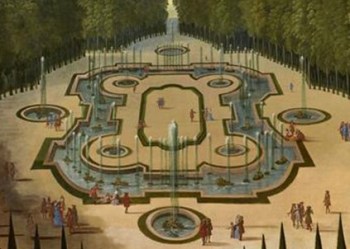
Étienne Allegrain, View of the Feasting Chamber Grove, 1688–93, oil on canvas (Château de Versailles, MV754).
In conjunction with the research programme Court Identities and the Myth of Versailles in Europe: Perception, Adherence, and Rejection (18th-19th centuries) led by the Centre de recherche since 2017.
At the end of the feudal age, the royal and princely courts represented a European phenomenon in terms of political, social and cultural content: monopolisation of power for the benefit of a single figure, gathering of a group of individuals around a sovereign and their family (princes, courtiers, domestic and military officers), development of a specific sociability and way of life, governed by ceremonial procedures, the search for ostentation and entertainment. These courts were as numerous and diverse as the dynasties that ruled them; nevertheless, some acquired a prescriptive value, such as the Court of Burgundy in the 15th century and the Italian courts of the 16th century. In the 17th and 18th centuries, it was the French Court of the Bourbons, and in particular that of Louis XIV, that became archetypal: an illusionary world, based on a reality observed and experienced by the contemporaries of the kings of France, was constructed and maintained for a long time by European monarchies, up until their demise for the most part in the early 20th century, at a time when political configurations were changing, shifting from shared power with assemblies to the establishment of republics.
The two contradictory yet complementary elements that characterise the idea of myth—the real and the reconstruction of the real—are best embodied, in France at least, at Versailles. Both a royal residence, a mode of government and a social whole, Versailles is an architectural, administrative and spectacular expression of the ‘absolute’ power associated with the figure of Louis XIV. The objective of the programme Court Identities and the Myth of Versailles in Europe: Perception, Adherence, and Rejection (18th-19th Centuries), which will conclude this conference, is to analyse the modus operandi of the myth of Versailles in the monarchic Europe of the 18th and 19th centuries. Two fundamental questions must therefore be raised: how did the illusion surrounding Versailles among the contemporaries at court under the Ancien Régime and later visitors in the 19th century develop and what did it entail? And reciprocally, how did this illusion establish itself in the courts of Europe, with all possible nuances, ranging from imitation to rejection and simple adherence? The focus of this conference will therefore be twofold: understanding how the different aspects specific to the identity of Versailles have fuelled an illusion, but also discerning how this illusion gave rise to other accomplishments, whether architectural, ritual or political.
1. The production of the myth, from the real to the imaginary: creation, transformations, challenges (17th–19th centuries)
The myth of Versailles spread across the courts of Europe until the decline of parish civilisation in the early 20th century. It was built up through various accounts given by foreign visitors who established a personal relationship with the Bourbon Court, whether as contemporary witnesses direct from royal Versailles until 1789, or as curious visitors to the remains of a lost time, moved by a wide range of feelings, from nostalgia to castigation. This myth was developed on the basis of illusion, fed by an observed or imagined reality. It differs from the objective historical commentary: it is the subjectivity of the ‘visitor’ that gives rise to the myth.
In October 2019, the Centre de recherche du château de Versailles made available a database entitled Visitors to Versailles among its online resources. One of the aims of the conference will be to draw on this body of works in various ways:
A chronological approach
• Impressions of royal Versailles: contemporaries of the first Versailles of Louis XIV, changing views under Louis XV then Louis XVI and Marie-Antoinette, taking into account the legacy of Louis XIV as well as the changes to parish life and the spatial planning (word in the grounds, retreat to the Petit Trianon, creation of an English landscape garden, etc.).
• Versailles viewed after the Revolution: during the Empire, during the Restoration and in particular during the July Monarchy, a pivotal period that marked the shift from illusion to history with the construction of the musée de l’Histoire de France by Louis-Philippe and the accompanying literature (Alexandre de Laborde, etc…).
A sociological approach
• determine which actors participated in the development of the myth and acted as a vector. To understand their expectations and their perspectives, the discussion could cover the different criteria that forge that specific identity of visitors: their geographical origins, their social background, their language and their political, religious and national culture.
A thematic approach
• Ceremonial customs most often observed: the lever/coucher, public meals, mass, the movements of the king and the royal family between these various moments, as well as festivities and entertainment, etc.
• Locations that draw particular attention: the chateau façades, the Grande galerie, the Chambers of the king and queen, the State apartments, the chapel, the opera, the Petit and the Grand Trianon, the gardens and their ponds.
• More general elements that visitors systematically associate with Versailles: water system and the Machine de Marly, pomp and extravagant expenditure, the vanity of the kings of France and the idolatry of their subjects, Marie-Antoinette and her rural life in Trianon, and, after 1789, the consequences of the Revolution (damage, pillaging, sales, departure of the royal family for Paris).
2. The applications of the myth, from the imaginary to the real: receipt and vagaries of the Versailles paradigm (18th–20th centuries)
The second research focus aims to understand the effectiveness of this illusion of Versailles. By connecting the myth, as it was invented by visitors, to the accomplishments it gave rise to, we will seek to understand how a ‘model’ works and can (or not) become the norm. We therefore wish to examine the impact of Versailles on the courts of Europe by comparing the conduct and structure of these courts with the perceptions of their citizens with regard to the Versailles paradigm. With this in mind, the ways in which Versailles was experienced, transcribed, glamorised, denigrated, accepted, copied or refuted must be identified: how did the myth come about? Did it stimulate practices and creations, participate in the creation of a European and cosmopolitan spirit, while being both admired and hated? And if so, what were the motivations behind this? Why use Versailles as inspiration or conversely, reject it or remain unmoved?
Nevertheless, the aim is not to spark a comparative study, point by point, between a ‘model’ and its possible ‘imitation’ which would seek only to compare factual data. On the contrary: rather than approaching the question from the point of view of influence, we will consider it from the point of view of interactions, in order to understand the interplay between an illusion and its concrete applications in architecture, parish organisation, social and artistic practices (protocol, dance, theatre, music). The objective is to understand the underlying rationale, the motivations and the issues that presided over these dynamics of ownership: why in some cases draw on Versailles rather than on competing models, and conversely, why in other cases favour antagonistic trends over the Versailles paradigm? We must also ensure that this question is differentiated from that of a more global ‘French model’: which elements strike us at the Court of Versailles specifically?
Particular interest will go to proposals that examine European courts in the 18th century and even more so the 19th century, when Versailles had lost its initial vocation. We are notably looking for studies on the following themes:
• The means and challenges of variations on the theme of Versailles, as at Lunéville, Caserte and Herrenchiemsee.
• The legacy of Versailles in France, in the Imperial courts and in the ceremonial functioning of the Third Republic.
• The role of the myth of Versailles on the European stage throughout the 19th century, particularly with regard to recent monarchies: the Kingdom of Belgium (1831), the Kingdom of Greece (1833), the unified Kingdom of Italy (1861), the Kingdom of Romania (1881), the Tsardom of Bulgaria (1908), the Kingdom of Montenegro (1910), among others. The 19th century was the true century of courts, whose multiplication went hand in hand with the rise of nationalism. It was also the century of the dominance of new ‘models’—Prussian and Russian, in particular—to which Versailles could be compared.
Proposals for papers must be sent to Flavie Leroux, before 31 October 2020. The must include in 5,000 characters maximum, the title of the paper, the content of the paper (point of study, method used, sources used), biographical information, and the applicant’s contact details. These proposals for papers will be examined by the coordination committee and the steering committee. Applicants will receive a response regarding their participation in the conference by the end of December 2020.
Joint Coordination
• Gérard Sabatier, Professor Emeritus at the université de Grenoble II, project manager for the programme “Court identities and the myth of Versailles in Europe…”
• Mathieu da Vinha, Scientific Director of the Centre de recherche du château de Versailles
• Flavie Leroux, research fellow for the programme “Court identities and the myth of Versailles in Europe…”
Steering Committee
• Antonio Álvarez-Ossorio, Universidad Autónoma de Madrid
• Maciej Forycki, Uniwersytet Adam Mickiewicz, Poznań
• Mark Hengerer, Ludwig-Maximilians-Universität, Munich
• Christine Jeanneret, Centre de recherche du château de Versailles and Danish National Museum, Frederiksborg, Danemark
• Jean-Marie Le Gall, université Paris 1 Panthéon-Sorbonne
• Francine-Dominique Liechtenhan, Centre national de la recherche scientifique
• Philip Mansel, The Society for Court Studies, President of the GIP-CRCV
• Andrea Merlotti, Centro Studi La Venaria Reale
• Friedrich Polleroß, Universität Wien
• José Luis Sancho Gaspar, Patrimonio Nacional, Madrid
• Marie-Christine Skuncke, Uppsala Universitet
• Jonathan Spangler, Manchester Metropolitan University
• Thomas W. Gaehtgens, Getty Research Institute, Los Angeles
Exhibition | Japan: Courts and Culture
Press release (12 November 2019) for the exhibition from the Royal Collection Trust:
Japan: Courts and Culture
The Queen’s Gallery, Buckingham Palace, London, 8 April 2022 — 26 February 2023
Curated by Rachel Peat
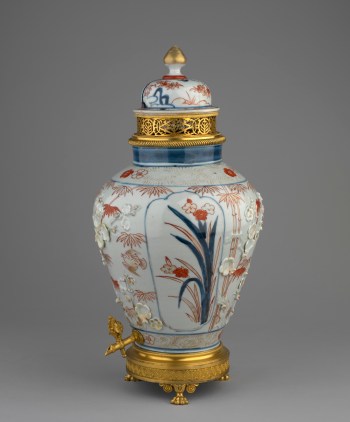
Arita, Hizen Province (Japan), Jar and Cover, 1690–1720, porcelain with moulded relief decoration and painted in underglaze blue, overglaze enamel, and gold; French mounts, 1780–1820, gilt bronze; 42.5 cm high, purchased for George IV in 1820 (Royal Collection Trust, RCIN 39239).
The Royal Collection contains one of the finest holdings of Japanese works of art in the Western world, significant for both the unique provenance and exceptional quality of the objects. Now, for the first time, highlights from the collection are brought together in the exhibition Japan: Courts and Culture, which tells the story of the diplomatic, artistic, and cultural exchanges between Britain and Japan from the reigns of James I to Queen Elizabeth II. Including rare examples of porcelain, lacquer, armour and embroidered screens, the exhibition offers a unique insight into the relationship between the imperial and royal courts over a period of 300 years.
The formation of the East India Company in 1600 paved the way for direct contact between Japan and England. In 1613, the first English ship to reach Japanese shores was captained by John Saris, who brought with him letters and gifts from James I for Shōgun Tokugawa Ieyasu, the military leader who governed Japan on behalf of the imperial family. Saris returned with a letter granting the English permission to live and trade in Japan, and with gifts for the King. These included a samurai armour, the earliest to arrive in Britain and the first surviving non-European work of art to enter the Royal Collection.
This first contact between England and Japan was short-lived. From the 1630s, for some 220 years, Japan closed to the West in an attempt to regulate foreign influence. During this time, the Dutch were the only Europeans permitted to trade directly with Japan through one small enclave at Nagasaki. Demand for exotic East Asian wares remained high in Europe, where the secrets of porcelain and lacquer manufacture were yet to be discovered.
The British royal family led the way in collecting highly prized examples of Japanese lacquer, porcelain, and textiles—much of which was produced specifically for the export market. In the 17th century, Mary II displayed Japanese porcelain in her apartments at Kensington Palace and Hampton Court Palace. In the 18th century, Queen Caroline, consort of George II, formed a significant collection of Japanese lacquer. A century later, George IV incorporated Japanese porcelain into the opulent decorative schemes at Carlton House in London and the Royal Pavilion, Brighton. Many of the pieces acquired by the King were given new functions through the addition of elaborate gilt-bronze mounts, turning a simple jar into a pot-pourri vase and animal figures into incense burners.
 When Japan reopened to the West in the 1850s, goods began to flow freely, and diplomatic and political links were re-established. Queen Victoria’s son, Prince Alfred, Duke of Edinburgh, was the first member of a European royal family to visit Japan when he arrived there in 1869 during a world naval tour. The Prince met the Emperor Meiji at the Imperial Palace, where an exchange of gifts took place, and was presented with samurai armour, including a helmet dating from 1537. In a letter to his mother, Alfred wrote: “To give you any account of this country, I feel quite at a loss. Every thing is so new & so quaint that I am quite bewildered.”
The next members of the British royal family to visit Japan were Queen Victoria’s grandsons Prince George of Wales (the future King George V) and his brother, Prince Albert Victor. In 1881, the teenage Princes were serving as midshipmen aboard HMS Bacchante and were granted shore leave to meet the Emperor Meiji and Empress Shōken. They returned with presents for their family, including a teapot and cups for their father, Albert Edward, Prince of Wales, and with diplomatic gifts from the Emperor. According to the official diary of the tour, compiled by their tutor, the Reverend John Dalton, the Princes had their arms tattooed during their visit to Japan—Albert Victor with ‘a couple of storks’ and George with a dragon and a tiger, a combination said to signify East and West.
In the early 20th century, a defensive Anglo-Japanese Alliance was formed to secure both nations’ interests in the Pacific. This was also a period of growing artistic exchange. The most significant cultural event was the 1910 Japan-British Exhibition in London, which included demonstrations of Japanese crafts, music, sports, and entertainments. More than eight million people visited the exhibition, including Queen Mary, consort of King George V, who was an enthusiastic collector of East Asian art.
The relationship between the Japanese and British imperial and royal families has continued to flourish through reciprocal royal visits, attendance at coronations, and the exchange of gifts. In 1902, Prince Komatsu Akihito attended the coronation of King Edward VII on behalf of the Emperor Meiji and presented the King with an embroidered folding screen of the four seasons. In 1911, Queen Mary received a coronation gift of a miniature cabinet bearing the imperial chrysanthemum crest, created by Akatsuka Jitoku, one of the most accomplished lacquerers of his generation. On the occasion of the coronation of Queen Elizabeth II in 1953, the Emperor Shōwa (Hirohito) sent Her Majesty a cosmetic box decorated with a heron by the great lacquer artist Shirayama Shōsai.
◊ ◊ ◊ ◊ ◊
In the United States and Canada, the catalogue is distributed by The University of Chicago Press:
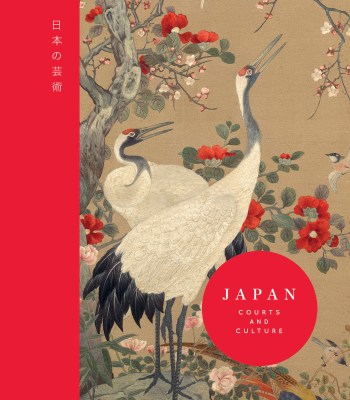
Rachel Peat, ed., Japan: Courts and Culture (London: Royal Collection Trust, 2020), 320 pages, ISBN: 978-1909741683, $70.
Japan: Courts and Culture tells the story of three centuries of British royal contact with Japan, from 1603 to c.1937, when the exchange of exquisite works of art was central to both diplomatic relations and cultural communication. With discussions of courtly rituals, trade relationships, treaties, and other matters of concern between the two nations, this book provides important historical and political context in addition to granting a new look at the works of art in question. Featuring new research on previously unpublished works, including porcelain, lacquer, armor, embroidery, metalwork, and works on paper, this book showcases the unparalleled craftsmanship of these objects, and the local materials, techniques, and traditions behind them. Japan: Courts and Culture is published to accompany a spectacular exhibition of the same name, which opens at The Queen’s Gallery, Buckingham Palace, in June 2020. The book’s stunning photography, contextual essays, and historical insights offer a highly visual record of a royal narrative and history that has not yet been widely documented.
Rachel Peat is assistant curator of non-European works of art at Royal Collection Trust.
C O N T E N T S
Foreword, HRH The Prince of Wales and Princess Akiko of Mikasa
British and Japanese Royal Family Trees
Map of Japan
1 Introduction, Rachel Peat
2 First Encounters, 1600–1639, Rachel Peat
3 Trade, 1639–1854, Rachel Peat
4 Porcelain, Melanie Wilson and Rachel Peat
5 Lacquer, Rachel Peat
6 Travel, 1854–1901, Rachel Peat
7 Samurai, Arms and Armour, Gregory Irvine
8 Metalwork, Kathryn Jones
9 Treaty, 1901–1937, Rachel Peat
10 Artistic Exchange, Kathryn Jones
11 Courtly Ritual, Caroline de Guitaut
12 Coda, Rachel Peat
13 Appendix: The Model of the Taitokuin Mausoleum, William H. Coaldrake
Glossary
Timeline of Key Events
Bibliography
Acknowledgements
Index
◊ ◊ ◊ ◊ ◊
Note (added 8 April 2022) — The posting has been updated to indicate the revised dates of the exhibition, which was originally scheduled to be on view from 12 June until 8 November 2020.
New Book | Aesthetic Science
From The University of Chicago Press:
Alexander Wragge-Morley, Aesthetic Science: Representing Nature in the Royal Society of London, 1650–1720 (Chicago: The University of Chicago Press, 2020), 272 pages, ISBN: 978-0226680729 (hardcover), $120 / ISBN: 978-0226680866 (paper), $40. E-books are also available.
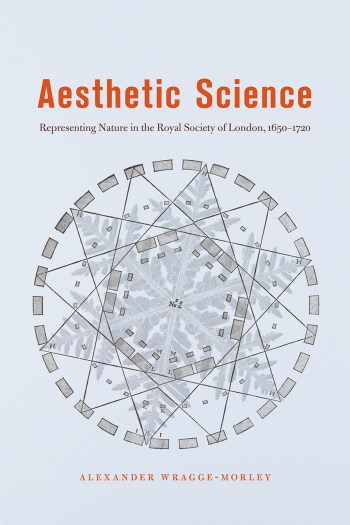 The scientists affiliated with the early Royal Society of London have long been regarded as forerunners of modern empiricism, rejecting the symbolic and moral goals of Renaissance natural history in favor of plainly representing the world as it really was. In Aesthetic Science, Alexander Wragge-Morley challenges this interpretation by arguing that key figures such as John Ray, Robert Boyle, Nehemiah Grew, Robert Hooke, and Thomas Willis saw the study of nature as an aesthetic project.
To show how early modern naturalists conceived of the interplay between sensory experience and the production of knowledge, Aesthetic Science explores natural-historical and anatomical works of the Royal Society through the lens of the aesthetic. By underscoring the importance of subjective experience to the communication of knowledge about nature, Wragge-Morley offers a groundbreaking reconsideration of scientific representation in the early modern period and brings to light the hitherto overlooked role of aesthetic experience in the history of the empirical sciences.
Alexander Wragge-Morley is clinical assistant professor of liberal studies and history at New York University.
C O N T E N T S
Introduction
1 Physico-Theology, Natural Philosophy, and Sensory Experience
2 An Empiricism of Imperceptible Entities
3 In Search of Lost Designs
4 Verbal Picturing
5 Natural Philosophy and the Cultivation of Taste
Conclusion: Embodied Aesthetics
Acknowledgments
Notes
Bibliography
Index
Decorative Arts Trust Prize for Excellence and Innovation
From the Decorative Arts Trust:
Decorative Arts Trust Prize for Excellence and Innovation, $100,000
Application due by 30 June 2020 (extended from the original deadline in March)
To further the Decorative Arts Trust’s mission to foster appreciation and study of the arts, the Trust has established the $100,000 Decorative Arts Trust Prize for Excellence and Innovation. The Prize funds outstanding projects that advance the public’s appreciation of decorative art, fine art, architecture, or landscape.
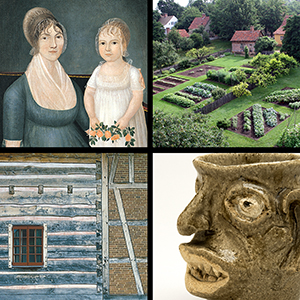
Images from Old Salem and the Museum of Early Southern Decorative Arts.
The Prize shall be awarded to a non-profit organization in the United States or abroad for a scholarly endeavor, such as museum exhibitions, print and digital publications, and online databases. The Trust’s selection committee aims to recognize impactful and original projects that advance scholarship in the field while reaching a broad audience.
“This new award will advance the work of our talented mid- and late-career colleagues as a complement to our efforts to support young scholars through the Emerging Scholars Program,” states Matthew A. Thurlow, the Decorative Arts Trust’s Executive Director. “Thanks to the generosity of three lead donors, we are making a long-term commitment to furthering innovative scholarship in the arts while reinforcing the Trust’s mission and promoting our broader programs. We look forward to celebrating exceptional endeavors in the arts.”
Details and Deadlines
The deadline has been extended: Nominations and self-nominations should be submitted to thetrust@decorativeartstrust.org by June 30. Projects can extend 1–5 years for final completion after the prize is awarded, but no longer. Collaborative endeavors that unite multiple institutions are encouraged to submit nominations. Ongoing projects are suitable for nomination.
Nominations should include:
• clearly defined mission and outcomes
• budget
• timeline
• CVs of key personnel and list of collaborating partners (if applicable)
• list of current funders and other potential fundraising sources (if applicable)
Finalists will be notified by the end of 2020.
Endowing the Prize
The Trust is thrilled to embark on this initiative. We welcome additional contributions to endow the Prize, including appreciated securities and IRA and other retirement fund disbursements.
Call for Papers | La Chiesa di San Rocco
From ArtHist.net (where the posting includes the Italian version of the CFP) . . .
The Church of San Rocco: Confraternal Religious Space and Sanctuary
Churches of Venice: New Research Perspectives, Number 9
Venice, 2–4 December 2021
Organized by Maria Agnese Chiari Moretto Wiel and David D’Andrea
Proposals due by 21 June 2020
The project Churches of Venice: New Research Perspectives (Chiese di Venezia: Nuove prospettive di ricerca)—begun in 2010 and from 2017 supported by the Department of Philosophy and Cultural Heritage at Ca’ Foscari University, Venice and currently sponsored by Save Venice Inc.—consists of a multi-year program of interdisciplinary conferences each focused on a specific Venetian church. The project is designed to engage different disciplines for a deeper understanding of the complex social and religious phenomena embodied in Venetian churches, physical spaces created to serve a variety of religious functions and meanings. In addition to investigating Venetian churches from ‘new research perspectives’, the project also strives to disseminate the latest research to the general public through the publication of the conference proceedings in a dedicated book series published by Viella.
After having studied the churches of San Bartolomeo (2011), Scalzi (2012), San Lazzaro dei Mendicanti (2013), San Zaccaria (2014), San Pietro di Castello (2015), San Giacomo dall’Orio (2017), San Polo (2019), and Santa Maria dei Servi (forthcoming in 2020), the conference scheduled for December 2021 will investigate, for the first time in a systematic way, the history of the church of San Rocco. The conference is scheduled for three days, with the last sessions to take place on site in the church. Participants will have access to a professional photographer who will take images on request for use at the conference and in the subsequent publication.
The church of San Rocco is the only Venetian church that is both a confraternal devotional space and a sanctuary that houses the body of the titular saint, who was translated to Venice in 1485 and located in the main altar since 1520. The power of Saint Rocco to heal those stricken by the plague made the church an international pilgrimage destination. To properly venerate San Rocco, the confraternity adorned the religious space with significant works of art and constructed an organ and choir gallery to foster liturgical devotion focused on the altar-reliquary. The original church, built in 1489, was heavily restructured by Giovanni Scalfarotto between 1726 and 1733. The rebuilt façade, completed by Bernardino Maccaruzzi in 1769, unifies the confraternity’s ritual space, which encompasses the square and the adjacent streets.
The conference proposes to examine, in a broad chronological and interdisciplinary approach, significant aspects of this devotional space, where processions, festivals, and pilgrimages reaffirmed the status of the confraternity and the healing power of San Rocco both in Venetian life and in universal Catholic devotion.
In particular, the organizers would like to examine the following themes:
• Origins of the cult of San Rocco in Venice, the foundation of the Scuola and the building of the church, and the relationship between the church and confraternity.
• The church in the 15th and 16th centuries: architecture, altars, and decorative furnishings. The relationship between the church of San Rocco and the other confraternal churches in Venice.
• The transformations and renovations of the church in the 17th and 18th centuries.
• The church of San Rocco and ritual spaces: San Rocco and the urban context; Venetian festivals and the church; music.
• San Rocco as an international pilgrimage site.
• Liturgy and devotional objects: (the reliquary of San Rocco, the miraculous Crucifix, the miraculous image of Christ Carrying the Cross; devotion to the Holy Eucharist); the Scuola’s printed images; the relationship with Venice’s other devotions for the plague, the Redentore and Madonna della Salute.
• The relationships between the Scuola and clergy: confraternal chaplains; the Franciscans of the Frari, and nearby parish churches (San Tomà and San Pantalon).
• The cult of San Rocco in Venetian territories: San Rocco and the lazzaretti; devotional images, churches and chapels dedicated to San Rocco in the Venetian state; the cult of San Rocco along the Adriatic coasts.
Paper proposals, consisting of a brief abstract (250 words maximum) and a brief CV, should be sent by email attachments to chiesedivenezia@gmail.com by 21 June 2020. Accepted proposals will be announced by 15 September 2020.
At Auction | Horse Racing Tickets
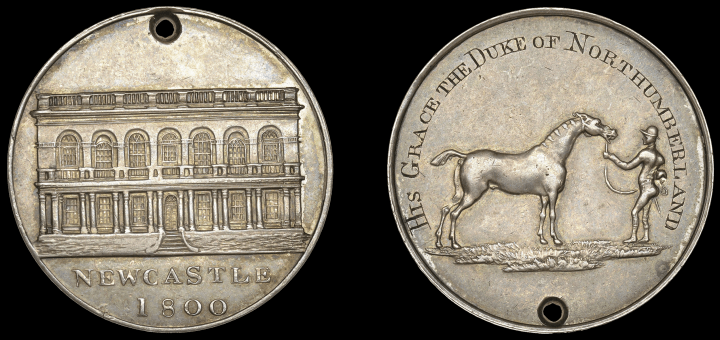
Lot 276: Northumberland, Newcastle-upon-Tyne, Newcastle Grand Stand, 1800, silver, unsigned, grandstand, rev. horse standing right, held by a jockey, named (His Grace the Duke of Northumberland), 31mm, 15.05g (W 1545; D & W 323/17; cf. DNW 157, 1319-20). Pierced for suspension, very fine and toned, very rare, estimate: £300–400.
◊ ◊ ◊ ◊ ◊
Via Art Daily (11 May 2020) . . .
Tokens, Tickets and Passes, Historical Medals — Online Auction
Dix Noonan Webb, London, 26 May 2020
International coins, medals, banknotes, and jewellery specialists Dix Noonan Webb, are encouraging racing enthusiasts to take a gamble on a group of 18th- and 19th-century horse racing tickets and passes (lots 274–294) that will be offered in a live online auction in their sale of Tokens and Historical Medals on Tuesday, 26 May 2020 at 11am on their website.
The collection comprises 20 lots, and estimates range from £40 to £400. Many of the pieces are engraved with names of nobility and well-known figures in the horseracing fraternity such as the Duke of Northumberland (Alnwick Castle); Hon. Egremont Lascelles (Harewood House); Major John St Leger; Henry Fiennes Pelham Clinton, (2nd Duke of Newcastle); the Duke of Portland and Lord Dundas.
As Peter Preston-Morley, Specialist and Associate Director, Dix Noonan Webb, commented: “We are very pleased to be offering this fascinating group of early tokens relating to horseracing—right now, when there’s no racing taking place, it is a perfect opportunity to take a gamble on these!”
The collection, from several different owners, includes pieces dating from throughout the 18th and 19th centuries. Among the highlights is a very rare silver example depicting the Newcastle Grand Stand that belonged to His Grace the Duke of Northumberland. Lt-General Hugh Percy, 2nd Duke of Northumberland (1742–1817), acceded to the title in 1786, and after an illustrious military career, in later life, he became one of the richest men in England (estimate: £300–400). There is a pair of ivory admission tokens to the Ladies Stand at Doncaster bearing the name Honble. Egremont Lascelles. Lascelles, who lived at Harewood, was a prominent figure at race meetings in Yorkshire from the late 1840s until the late 1870s and his pair of tokens, for him and his wife, is estimated at £300–400.
New Book | Art of the United States, 1750–2000
Distributed by The University of Chicago Press:
John Davis and Michael Leja and edited by Francesca Rose, Art of the United States, 1750–2000 (Chicago: Terra Foundation for American Art, 2020), 544 pages, ISBN: 978-0932171689, $39.
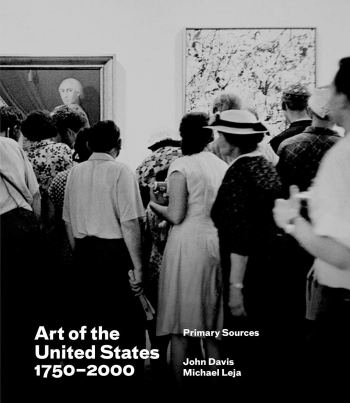 Art of the United States is a landmark volume that presents three centuries of US art through a broad array of historical texts, including writings by artists, critics, patrons, literary figures, and other commentators. Combining a wide-ranging selection of texts with high-quality reproductions of artworks, it offers a resource for the study and understanding of the visual arts of the United States. With contextual essays, explanatory headnotes, a chronology of US historical landmarks, maps, and full-color illustrations of key artworks, the volume will appeal to national and international audiences ranging from undergraduates and museum visitors to art historians and other scholars. Texts by a range of artists and cultural figures—including John Adams, Thomas Cole, Frederick Douglass, Mary Cassatt, Edward Hopper, Clement Greenberg, and Cindy Sherman—are grouped according to historical era alongside additional featured artists.
A sourcebook of unprecedented breadth and depth, Art of the United States brings together multiple voices throughout the ages to provide a framework for learning and critical thinking on US art.
John Davis is the provost and under secretary for museums, education, and research at the Smithsonian Institution and the author or coauthor of numerous catalogs and books, including, with Sarah Burns, the comprehensive volume American Art to 1900. Michael Leja is the James and Nan Wagner Farquhar Professor of History of Art at the University of Pennsylvania and the author of numerous catalogs and books, including Reframing Abstract Expressionism: Subjectivity and Painting in the 1940s and Looking Askance: Skepticism and American Art from Eakins to Duchamp. Francesca Rose is the program director for publications at the Terra Foundation for American Art.
Call for Papers | Enlightening the Plates of the Encyclopédie
From the Call for Papers:
Enlightening the Plates of the Encyclopédie:
Perspectives and Research on the Recueil de planches, 1762–1772
Sorbonne University, Paris, 27–29 May 2021
Proposals due by 30 September 2020
For several decades and due to the impulsion provided by the pioneering work of Jacques Proust, John Lough, Richard N. Schwab and then Frank A. Kafker, the studies on the Encyclopédie, ou Dictionnaire raisonné des sciences, des arts et des métiers (1751–1772) by Diderot and D’Alembert proliferated. Many conferences, books and articles, including those published since 1986 in the review Recherches sur Diderot et sur l’Encyclopédie, testify to this. Easier access to the work thanks to digital editions (the one designed by the Redon company, commercially distributed since 2000, and then the ARTFL edition, freely accessible on the web) have also contributed to this dynamic. The online publication in 2017 of a first critical digital edition of the work (ENCCRE) is a new stage in the interest shown by historians from all disciplines in this essential monument of the Age of Enlightenment.
Despite the founding studies already cited, Madeleine Pinault-Sørensen’s seminal contributions and many other works dedicated to the 11 volumes of plates of the Encyclopedie, the latter remain far less known and studied than the 17 volumes of articles (1751–1765) that came before and refer to them, as if the illustrations and their relationship to the text, although considered as one of the most important innovations of the Encyclopedie, had in the end met less interest than the articles themselves.
Today, ENCCRE—thanks to its high-quality digitization of the engraved plates and its ability to directly relate illustrations and explanations—allows us to rediscover this iconographic treasure with a fresh eye and offers new resources for exploring it. More generally, new technologies encourage us to imagine specific ways of analyzing these illustrations, the explanations that accompany them, their reciprocal links, and their relationship with the volumes of articles. It is therefore essential to hold an international conference to review the research specifically dedicated to the plates of the Encyclopédie.
In this perspective, we launch a call for papers for the conference Les Planches de l’Encyclopédie en lumière which will be held over three days at Sorbonne University from 27 to 29 May 2021 and within the framework of which the common reflection will be organized around four main axes (hereafter, we will refer to the Recueil to designate the 11 volumes of the Recueil de planches sur les sciences et les arts, and to ‘series’ to designate each of the thematic chapters which constitute it, such as ‘Anatomie’, ‘Bouchonnier’, or ‘Draperie’). The questions addressed by each of the axes are not limitative:
1. The manufacture of the engraved plates and series of the Recueil, i.e. all the questions relating to the modalities of their intellectual manufacture and the history of their editorial production: what are the sources of the plates? How were they used (additions, modifications, arrangement)? Have preparatory drawings been preserved? To what extent do these elements shed light on the content of the plates and the intentions of their author(s)? Furthermore, what are the elements that make it possible to reconstruct and, possibly, date the stages of the making of a series?
2. The contributors of the plates, i.e. the Encyclopédie’s draftsmen and engravers: who are they? What place did their work for the Encyclopédie hold in their career? What role(s) have they played in the Encyclopédie? What is their contribution (explicit attributions and attribution hypotheses)? Do they differ from each other according to technical and/or stylistic criteria?
3. The explanations of the plates, i.e. all the questions relating to the ‘Explications’ which form the first part of each series of the Recueil before the corresponding engraved plates. This essential subject can be approached from several angles:
• authors: what do we know about the authors whose explanations bear the explicit signature? To what extent can we attribute to them the many unsigned plates in the book? Are they also contributors for articles on the same subjects?
• editor: question of Diderot’s role, not only as author of explanations, but also as editor of the entire collection (organization of the series, writing of the introductory pieces presenting the volumes, etc.): at the end of the detailed statement of volume II (1763), he states that he “reviewed all the arts and crafts [explanations] on the manuscript and on the plates”;
• relations with the engraved plates: different types of links between explanations and illustrations according to the series? Additional cross-references to the articles (with the effects of repetition, correction or replacement)? There is also the more general question of the relationship between text and image as the Encyclopédie establishes it and, sometimes, takes them up as a central theme.
It is also possible to study in this perspective the relations between articles and plates in a given field: concordance or not between the articles and the figures they describe? Possible replacement of the plates on which the articles were written and for what reasons? Questions which also refer to the problem of the manufacture of a series (axis n° 1), whether or not associated with the writing of the articles.
4. The place of the plates of the Encyclopédie in the history of illustration in the 18th century: can we situate the traditional and innovative parts of the Recueil in relation to the standards of the time, according to the weight, place, and roles of the illustrations in the book? According to the link that the plates maintain within the book with their explanations and the articles associated with them? To what extent can the book be considered as an illustrated corpus? More generally, to what extent the Recueil can be considered as a part of the history of the circulation of knowledge in the 18th century?
The proposed papers must necessarily fall within one or more of the previous axes. They may consist of a case study or address a more general issue.
Proposals should be sent before 30 September 2020 to enccre@gmail.com. Proposals will include a title and an abstract of about fifteen lines, supplemented by some general information: your status within your institution (and department if necessary), main research topics, list of publications related to the themes of the colloquium and/or the French 18th century. The languages of the conference are French and English.
Steering Committee
Alexandre Guilbaud, Sorbonne Université
Alain Cernuschi, Université de Lausanne
Malou Haine, Université Libre de Bruxelles
Christine Le Sueur, Université Claude Bernard Lyon 1 Alain Sandrier, Université de Caen Normandie
Scientific Committee
Alain Cernuschi, Université de Lausanne (responsible for the follow-up)
Malou Haine, Université Libre de Bruxelles (responsible for the follow-up) Emmanuel Boussuge, chercheur associé au CELLF (CNRS, Sorbonne Université) Thierry Depaulis, chercheur indépendant
Alexandre Guilbaud, Sorbonne Université
Charles Kostelnick, Iowa State University
Marie Leca-Tsiomis, Université Paris-Ouest Nanterre
Susan H. Libby, Rollins College
François Pépin, professeur agrégé au Lycée Louis le Grand
Stéphane Schmitt, CNRS, Archives Henri-Poincaré
Yann Sordet, Bibliothèque Mazarine
Pierre Wachenheim, Université de Lorrain










 Enfilade
leave a comment