CAA 2020, Chicago
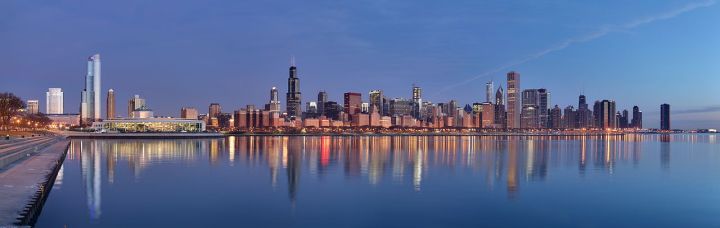
Photo by Daniel Schwen, 18 April 2009
(Wikimedia Commons)
◊ ◊ ◊ ◊ ◊
108th Annual Conference of the College Art Association
Hilton Chicago, 12–15 February 2020
The 2020 College Art Association conference takes place at the Hilton, Chicago (720 S. Michigan Ave), February 12–15. Of particular note is the ASECS session chaired by Kristin O’Rourke and the HECAA session chaired by Danielle Rebecca Ezor and Michael Feinberg. Both take place on Saturday. Other sessions that may be of interest for dixhuitièmistes are also listed. A full schedule of panels is available here»
A S E C S / H E C A A S E S S I O N S
American Society for Eighteenth-Century Studies
Rulers, Consorts, and Mothers: Queens in the Long Eighteenth Century
Saturday, 15 February, 8:30–10:00am, 3rd Floor – Joliet Room
Chair: Kristin M. O’Rourke, Dartmouth College
• The Colonial Adventures of a Queen Anne Miniature, Janine Yorimoto Boldt, American Philosophical Society
• Eighteenth-Century Saxon Consorts and Their Personal Relationships with Porcelain Manufactories in Europe, Heidi C. Nickisher, Rochester Institute of Technology
• ‘Femmes illustres’: The Defense of Queenship and the Public Woman in Revolutionary France, Sarah Elisabeth Lund, Harvard University
• Pose: Royal Bodies and Gendered Accoutrements in Eighteenth-Century Portraiture, Jodi Lynn McCoy, Missouri State University
◊ ◊ ◊ ◊ ◊
Historians of Eighteenth-Century Art and Architecture
Race Beyond the Human Body in the Long Eighteenth Century
Saturday, 15 February, 2:00–3:30, 3rd Floor – Joliet Room
Chairs: Danielle Rebecca Ezor, Southern Methodist University and Michael Feinberg, University of Wisconsin Madison
• ‘Color is only Skin Deep’: Black Pigs and the Rendering of Race in the Early American Republic, Stephen Mandravelis, University of Tennessee at Chattanooga
• The Whiteness Aesthetic and Caste Implications of Ivory Art of South India, Deepthi Murali, University of Illinois at Chicago
• White, Pink, and Pompadour, Oliver Wunsch, Boston College
◊ ◊ ◊ ◊ ◊
O T H E R S E S S I O N S R E L A T E D T O T H E 1 8 T H C E N T U R Y
Society for Paragone Studies
Session in Honor of Sarah Jordan Lippert (1975–2019), Founder of the Society for Paragone Studies
Wednesday, 12 February, 10:30–12:00, 3rd Floor – Waldorf Room
Chair: Liana De Girolami Cheney, Association for Textual Scholarship in Art History
• The Remarkable Tomb of Abbot Meli, Ellen Longsworth, Merrimack College
• Rival Ideologies in Eighteenth Century Exotic Costume, Linda Johnson
• Voice of Authority: Native American Art and Cultural Hegemony in the Art Museum, Mary Kelly
• Image/Text/Sound: The Role of Intermediality and Poeticity in Claes Oldenburg, Nadja Rottner
• Dematerializing Formalism: Lucy Lippard and John Chandler’s Conceptual Challenge to Clement Greenber, Owen Duffy
◊ ◊ ◊ ◊ ◊
Community College Professors of Art and Art History
Taking a New Look: Creating Change in the Studio and Art History Classrooms
Wednesday, 12 February, 2:00–3:30, Lobby Level – Continental B
Chairs: Susan Altman, Middlesex County College, and Monica Anke Hahn, Community College of Philadelphia
• Engaging Students through Narrative Painting, Richard J. Moninski, University of Wisconsin-Platteville
• Recruitment, Retention, and Relocation: The College Arts Fair, Tyrus Clutter, College for Central Florida
• Creative Collaboration for Art History and Studio Art Courses, Rachael Bower, Northwest Vista College
• Changing the Conversation: The Relevancy of Arts Thinking for 21st-Century Students, Ross McClain
◊ ◊ ◊ ◊ ◊
Barriers, Borders, and Boundaries in the Early Modern World
Thursday, 13 February, 8:30–10:00am, 3rd Floor – Wilford C
Chairs: Luis J. Gordo-Pelaez, California State University Fresno and Charles C. Barteet, University of Western Ontario
Discussant: Michael J. Schreffler, University of Notre Dame
• Bordering on Chaos: Order in the Inka Empire and the Virtues of Volatility, Gaby Greenlee, UCSC
• Columbus Unbound: Walls, or their Absence, in the Age/Imaginary of Exploration, Roger J. Crum, University of Dayton
• Picturing Havana: The Early Modern City in Plans and Maps, Guadalupe Garcia, Tulane University
• Ornament and Order in the Spanish Colonial Philippines, Lalaine Bangilan Little, Misericordia University
◊ ◊ ◊ ◊ ◊
Japan Art History Forum
Taking up the Mantle: Lineages and Genealogies in Japanese Art History
Thursday, 13 February, 8:30–10:00am, 4th Floor – 4K
Chairs: Sonia Coman, Smithsonian Institution and Harrison Schley, University of Pennsylvania
Discussant: Julie Davis, University of Pennsylvania
• The Cross-temporal Conversations of Matsumura Goshun (1752–1811): Lineages of Style in Poetry and Visual Representation, Sonia Coman, Smithsonian Institution
• The Power of Indirect Transmission and the Kōrin Hyakuzu (ca. 1815 and 1826), Frank Feltens, Smithsonian Institution
• A New Mold: Mori Yūsetsu and the Genealogy of the Banko Brand, Harrison Schley, University of Pennsylvania
• Futurism as Archaism: Kinoshita Shuichirō (1896–1991) Glorifies a Dancing Girl, Daria Melnikova, Columbia University
◊ ◊ ◊ ◊ ◊
Between Truth and Persuasion: Images and Historical Narration from the Sixteenth to the Nineteenth Century
Thursday, 13 February, 10:30–12:00, Lobby Level – Continental B
Chairs: Alessandra Di Croce, Columbia University and Federica Soletta, Princeton University
Discussant: Alessandro Giardino, Saint Lawrence University
• The Signal Liberties of Copley’s The Death of Major Peirson, Nika Elder, American University
• Historical Inducements and the Pictorial Crusade of Francesco Hayez, Laura Watts Sommer, Daemen College
• Stefano Bardini’s Photo Archive, ‘il Bel Paese,’ and the Golden Age of Tuscan Art, Anita Moskowitz
• The Engraved Photograph as Architectural Evidence, Peter Sealy, University of Toronto
◊ ◊ ◊ ◊ ◊
Politics, Religion, and the Body: Artistic Production, Consumption, and Social Space in China
Thursday, 13 February, 10:30–12:00, 3rd Floor – Joliet Room
• Seeing and Unseeing: Visuality and Mind Games in Ming- Dynasty Arhat Painting, Einor K Cervone, Los Angeles County Museum of Art
• Gao Fenghan’s (1683–1749) Path to Eccentricity and the Growth of Epigraphical Writing in Early Qing Yangzhou, Yun- Chen Lu
• Billiards, Bicycles, and Charity Fairs: Courtesans Staging the Fashionable in Public Gardens in Semi-colonial Shanghai (1880s–1910s), Jinyi Liu, Bard Graduate Center
• From Dalian to Changchun: Official Art Exhibitions in Japanese-Manchuria, Gina Kim, University of California, San Diego
◊ ◊ ◊ ◊ ◊
Black Artists in the Early Modern Americas
Thursday, 13 February, 2:00–3:30, 3rd Floor – Wilford C
Chair: Rachel A Zimmerman, Colorado State University – Pueblo
• ‘The Head of a Hogshead’: Neptune Thurston and Enslaved Artistic Labor in British North America, Jennifer C. Van Horn, University of Delaware
• José Campeche, the 1797 British Attack on San Juan, and Portraiture in late Eighteenth-Century Puerto Rico, Emily K. Thames, Florida State University
• Collecting Fears: Paper Amulets in Brazil’s Malê Uprising, Angie M. Epifano, Yale University
◊ ◊ ◊ ◊ ◊
Historians of British Art
Past & Present: Britain and the Social History of Art
Thursday, 13 February, 2:00–3:30, 4th Floor – 4K
Chairs: Meredith J. Gamer, Columbia University and Esther Alice Chadwick, Courtauld Institute of Art
• Pictures Exchanged for Windows: Ruskin, Dilke, and Social History of Symbols, Andrei Pop, University of Chicago
• Gerard Baldwin Brown and the Origins of the Social History of Art in Great Britain, Barbara J. Larson, University of West Florida
• ‘It was, like any other period, a time of transition’: 1970s Britain and the ‘Native Art-Historical Journal’, Samuel Bibby, Association for Art History
• Islands of Art History, Douglas R. Fordham, University of Virginia
◊ ◊ ◊ ◊ ◊
International Art Market Studies
Market Data: Beyond Prices and Provenance
Thursday, 13 February, 2:00–3:30, 8th Floor – Lake Erie
Chairs: Diana Seave Greenwald, Isabella Stewart Gardner Museum and Kim Oosterlinck, Université libre de Bruxelles
• What To Say When Trying To Sell Paintings: Text Models and Rhetoric Strategies in British and French Auction Sales Catalogues (1750–1820), Sandra Van Ginhoven, Getty Research Institute
• What To Say When Trying To Sell Paintings: Text Models and Rhetoric Strategies in British and French Auction Sales Catalogues (1750–1820), Matthew Lincoln, Carnegie Mellon University
• The (R)emigration of Jewish Art Dealers and the Shape of the German Art Market Scene: Approaching a Difficult Topic, Meike Hopp, ZI Munich
• Subversion in the Fine Print: ‘The Artist’s Reserved Rights Transfer and Sale Agreement’ at Auction, Lauren van Haaften-Schick, Cornell University
• Conflict, Looting, and the Market in Mesopotamian Antiquities, Oya Topçuoğlu, Northwestern University
◊ ◊ ◊ ◊ ◊
Committee on Intellectual Property
Defining Open Access
Thursday, 13 February, 4:00–5:30, Lobby Level – Continental A
Chair: Anne Collins Goodyear
• What Open Access Principles Do We Need for Cultural Heritage?, Evelin Heidel, Independent
• How Open is Open Enough? Rationalizing Open Access at the Project Level, Mikka Gee Conway, J. Paul Getty Trust
• Two Sides of the Same Coin? Open Access and Fair Use, Anne M. Young, Indianapolis Museum of Art at Newfields
• Case Study: The Art and Architectural ePortal, Patricia J. Fidler, Yale University Press
• Sharing Digital Content through International Museum, Library, and Archives Networks Today: An IMLS Examination of Copyright’s Implications, Nancy Elaine Weiss, Institute of Museum and Library Services
◊ ◊ ◊ ◊ ◊
Shifting Tides: Visual Semantics in the Atlantic World, 1600–1900
Thursday, 13 February, 6:00–7:30pm, 3rd Floor – Williford A
• Cicero in the Land of Coatlicue: Renaissance Humanism in Colonial Mexico, JoAnna Reyes Walton, University of California, Los Angeles
• Dyer Beware: Processing Indigo and the Limits of Diagram, Colleen M. Stockmann
• Visual Histories of the Spanish Caribbean in the Age of the Enlightenment, Jennifer A Baez, Florida State University
• Potted Pre-Raphaelites: Britain’s Colonial Plant Trade and the Victorian Avant-Garde, Lindsay Wells, University of Wisconsin-Madison
◊ ◊ ◊ ◊ ◊
Altered Terrains: Landscapes of Colonial America
Friday, 14 February, 8:30–10:00am, Lower Level – Salon C5
Chairs: Theresa Avila, CSU Channel Islands and Emmanuel Ortega, University of New Mexico
Discussant: Kirsten P. Buick, The University of New Mexico
• Social and Political Landscapes within European Colonial Maps, Theresa Avila, CSU Channel Islands
• The Invisible-Substantial-Presence of Painted Landscapes in Seventeenth-Century Cuzco, Natalia Vargas Márquez, University of Minnesota
• Decolonizing Aeriality in Colonial El Salvador: Indigenous Geospatial Knowledge in the “Descripcion Geografico-Moral de la Diocesis de Goathemala,” 1768–70, Carlos Anílber Rivas, University of Los Angeles
• The Mexican Picturesque: Nineteenth-Century Sentimentality and the Visual Construction of the Nation, Emmanuel Ortega, University of New Mexico
◊ ◊ ◊ ◊ ◊
Undergraduate Research and Mentoring Undergraduate Research – Poster Presentations, Part 2
Friday, 14 February, 2:00–3:30, Lower Level Lobby
Chair: Alexa K. Sand, Utah State University
• At the Pleasure of the Pharaoh: Decoding the Reliefs of the Medinet Habu Eastern High Gate, Chloe Jayne Landis
• The Case of Der hammer: Aesthetic Influences on Art and Culture in the Yiddish Communist Press, Goldie Gross
• Mapping Social and Spatial Encounters in Eighteenth-Century Venice, Noah Scott Michaud, Wired! Lab . . .
◊ ◊ ◊ ◊ ◊
Society for the Study of Early Modern Women and Gender
Early Modern Women in the Streets? Women’s Visibility in the Public Sphere
Friday, 14 February, 2:00–3:30, Lower Level – Salon C5
Chair: Maria F. Maurer, University of Tulsa
• Bitter Tears, Carnal Traces: Female Poets at Michelangelo’s Funeral, Laura C. Agoston, Trinity University
• Visibility and Enclosure in the Vida of the Painter and Nun, Estefanía de la Encarnación (ca. 1597–1665), Tanya J. Tiffany, University of Wisconsin-Milwaukee
• Asserting Female Agency in the Spanish Colonies: Doña Rosalía de Medina and the Confraternity of Saint Rosalía in Eighteenth-Century Cuenca, Isabel Oleas-Mogollon, Independent
◊ ◊ ◊ ◊ ◊
Objects from Elsewhere: Transcultural Constructions of Identity
Saturday, 15 February, 8:30–10:00am, 3rd Floor – Private Dining Room 2
Chairs: Robert Wellington and Alex Thomas Burchmore, Australian National University
• Between Imperial Self-Fashioning and Military Alliance: The Gift of a Turquoise Glass Bowl from Persia to the Republic of Venice, Negar Sarah Rokhgar, Rutgers University
• Art and Science in the Palace of the Empress Dowager: An Investigation of the Ningshou Gong Display Archives from the Kangxi Reign (1661–1722), Joyce Yusi Zhou, Bard Graduate Center
• Framing Self/Other Relations through Curatorial Strategies of Containment and Classification in Eighteenth-Century Porcelain Display, Alex Thomas Burchmore, Australian National University
◊ ◊ ◊ ◊ ◊
Sensual Texts, Material Histories: Language in the Long Eighteenth Century
Saturday, 15 February, 10:30–12:00, 3rd Floor – Joliet Room
Chair: Elizabeth Bacon Eager, Southern Methodist University
• Composing Type, Throwing Pigments: The Revolutionary Potential of Marbling in Early America, Jennifer Chuong
• Giambattista Bodoni’s Abstract Types: The Role of ‘Exotic’ Writing Systems, Craig D. Eliason, University of St. Thomas
• Making and Writing the Romain du Roi Typeface, Sarah Simpson Grandin, Harvard University
• Worshiping Myriad Gods for Longevity: Carved Lacquer Boxes with the Qianlong Emperor’s Religious Pantheons and Scripture Offerings, Zhenpeng Zhan, Sun Yat-sen University
◊ ◊ ◊ ◊ ◊
The Fragmented Self: Objects from Elsewhere and the Search for New Identities
Saturday, 15 February, 10:30–12:00, 3rd Floor – Private Dining Room 2
Chairs: Robert Wellington, Australian National University, and Alex Thomas Burchmore, Australian National University
• Carlos Villa: Trans-Pacific Imaginaries in Filipino American Art, Margo L. Machida, University of Connecticut
• From Modernism to Transculturalism: Reclaiming African Sculptures as Found Objects in Contemporary Art, Lisa S. Wainwright, School of the Art Institute of Chicago
• ‘Connected and Interwoven’: Transculturality and the Performance of Identity in the Mughal Court of Awadh, Monica Anke Hahn, Community College of Philadelphia
• The ‘Cosey Corner’: The American New Woman’s Exotic Imaginary, Sarah Wheat, University of Michigan
◊ ◊ ◊ ◊ ◊
Seeking Narrative Justice: Idiosyncrasies and Contradictions of Black Body Representation
Saturday, 15 February, 4:00–5:30, Lower Level – Salon C6
• Aesthetics of Abolition in Late Eighteenth-Century England, Alyssa M Fridgen, Independent
• Tethering the Flag: Visual Aesthetics of Black Citizenship in the U.S., Nnaemeka Ekwelum, Northwestern University
• Becoming (Un)Masked: Semiotics of Identification in Nick Cave’s Hye-Dyve (2017), Cristina Albu, University of Missouri-Kansas City
New Book | Mural Painting in Britain, 1630–1730
Forthcoming from Routledge:
Lydia Hamlett, Mural Painting in Britain 1630–1730: Experiencing Histories (London: Routledge, 2020), 184 pages, ISBN: 978-1138205833, £120 / $155.
 This book illuminates the original meanings of seventeenth- and early eighteenth-century mural paintings in Britain. At the time, these were called ‘histories’. Throughout the eighteenth century, though, the term became directly associated with easel painting and, as ‘history painting’ achieved the status of a sublime genre, any link with painted architectural interiors was lost. Whilst both genres contained historical figures and narratives, it was the ways of viewing them that differed. Lydia Hamlett emphasises the way that mural paintings were experienced by spectators within their architectural settings. New iconographical interpretations and theories of effect and affect are considered an important part of their wider historical, cultural, and social contexts.
Lydia Hamlett is Academic Director in Visual Culture at the Institute of Continuing Education, University of Cambridge, and a Fellow of Murray Edwards College.
C O N T E N T S
Introduction: Re-experiencing British Murals
1 Animating Histories
2 Triumph and Return: Bringing the Gods onto Man’s Stage
3 Murals and Metamorphoses
4 Poetry, Painting, and Politics: The Early 1700s
5 The Frenzied Age of Mural Painting
Conclusion: Defining Mural Painting as a Genre
Exhibition | British Baroque: Power and Illusion

John James Baker, The Whig Junto, 1710, oil on canvas, 319 × 365 (London: Tate, from the collection of Richard and Patricia, Baron and Baroness Sandys, accepted by HM Government in Lieu of inheritance tax and allocated to Tate in 2018, T15046).
◊ ◊ ◊ ◊ ◊
From the press release (3 February 2020) for the exhibition:
British Baroque: Power and Illusion
Tate Britain, London, 4 February — 19 April 2020
Curated by Tabitha Barber, with David Taylor and Tim Batchelor
British Baroque: Power and Illusion is the first ever exhibition to focus on baroque culture in Britain. From the Restoration of Charles II in 1660 to the death of Queen Anne in 1714, the exhibition explores the rich connections between art and power in this often-overlooked era. The show includes many new discoveries and works displayed in public for the first time, many on loan from the stately homes for which they were originally made.
 The baroque is usually associated with the pomp and glory of European courts, epitomised by that of Louis XIV, but baroque visual culture also thrived in Britain under very different circumstances. From the royal court’s heyday as the brilliant epicentre of the nation’s cultural life, to the dramatic shift in power that saw the dominance of party politics, this exhibition shows how magnificence was used to express status and influence. As well as outstanding paintings by the leading artists of the day, including Sir Peter Lely, Sir Godfrey Kneller and Sir James Thornhill, the show also uncovers pivotal works by lesser known names.
British Baroque begins by exploring art’s role in the construction of a renewed vision of monarchy, including portraits of Charles II and idealised representations of his power. It looks at the splendour, colour and vivacity of the Restoration court, as well as the critiques of its tone and morals. Portraits by Lely, including Barbara Villiers, Duchess of Cleveland with her son, as the Virgin and Child 1664, were used to illustrate the important position held by royal mistresses while works by Jacob Huysmans, such as Catherine of Braganza c.1662–64, shaped the independent visual identity of the Queen consort.
The visual and devotional differences between Protestant and Catholic worship are examined in the religious art of the period. Emotionally charged altarpieces from the contentious Catholic chapels of Mary of Modena and James II are on show, as well as beautiful carvings by Grinling Gibbons and Thornhill’s designs for the painted dome of St Paul’s Cathedral. Another theme explored is the wonder and artifice of still life and perspective trompe l’oeil, including works by Samuel van Hoogstraten collected by members of the Royal Society, Chatsworth’s famous violin painted as if hanging on the back of a door, and the hyper-real flower paintings of Simon Verelst which looked so real that they fooled the diarist Samuel Pepys.

Godfrey Kneller, Portrait of Matthew Prior, 1700 (Cambridge, Trinity College).
The profound visual impact and drama of baroque architecture is represented with works by the great architects of the age: Wren, Hawksmoor, and Vanbrugh. Architectural designs, lavish prints, and wooden models relating to the significant buildings of the age, such as St Paul’s Cathedral, Hampton Court Palace, and Blenheim Palace, are shown alongside vast painted birds-eye views of estates. As well as architecture, the exhibition looks at the awe-inspiring illusion of painted baroque interiors. Mythological mural paintings, which frequently carried contemporary political messages, were designed to overwhelm spectators and impress upon them the power, taste, and leadership of their owners.
War and politics dominated the reigns of William III and Anne. The exhibition includes heroic equestrian portraiture, panoramic battle scenes, and accompanying propaganda. Victories such as Blenheim celebrated individuals such as the Duke of Marlborough, but they also embodied the might of the nation on a European stage. The show concludes with the dignified grandeur of portraiture made in the last two decades of the Stuart period, when party politics offered an alternative avenue to power. As well as imposing portraits of courtiers and aristocrats, the new political elite is seen in Kneller’s depiction of the Whig Kit-Cat Club and John James Baker’s enormous group portrait The Whig Junto from 1710.
British Baroque: Power and Illusion is curated by Tabitha Barber, Curator, British Art 1550–1750, Tate Britain, with David Taylor, Curator of Pictures and Sculpture, National Trust, and Tim Batchelor, Assistant Curator, British Art 1550–1750, Tate Britain. It is accompanied by a fully illustrated catalogue and a programme of talks and events in the gallery.
Tabitha Barber and Tim Bachelor, British Baroque: Power and Illusion (London: Tate Publishing, 2020), 176 pages, ISBN 978-1849766814, £25 / $35.
Call for Papers | The Art of the Dealer: Selling Antique Ceramics

John Dixon Piper, Old Curiosity Shop, Bury St Edmunds, ca. 1860
(Los Angeles: The J. Paul Getty Museum, digital image courtesy of the Getty’s Open Content Program)
◊ ◊ ◊ ◊ ◊
From the Call for Papers:
The Art of the Dealer: Selling Antique Ceramics
Masterpiece Fair, London, 26 June 2020
Proposals due by 1 March 2020
The French Porcelain Society is proud to announce its second study morning at the prestigious Masterpiece Fair to be held on Friday, 26th June 2020. It will focus on the pivotal role played by dealers trading in antique and second-hand ceramics in Europe and America from the 1880s to the present day in the formation of both private and public collections, in influencing taste, and furthering knowledge and scholarship. Confirmed speakers include Dr Charlotte Vignon (shortly to take up her position as director of the Cité de la céramique Sèvres), who will speak on Duveen Brothers, and John Whitehead, who will speak on the Antique Porcelain Company. The morning will conclude with a round-table discussion between leading dealers, curators, and collectors. Tickets will include entrance to the fair and participants will have the opportunity to join a tour of the ceramics stands after the study morning. Details of the programme and booking information will be announced on the society’s website.
We invite submissions for 20-minute illustrated papers on any aspect of selling antique ceramics, from the 1880s to the present. Possible topics include:
• case studies of notable dealers and the collectors they served
• the market for specific types of ceramics including Sèvres, maiolica, blue and white, Wedgwood, and oriental porcelain
• trans-national trading networks
• the role of the auction house, provenance, and price trends
• scholar dealers and the retailing of ceramics
• the role of the dealer in helping to establish museum collections
• the evolution of art and antique fairs and dealer exhibitions
• buying back Sèvres for the French Nation
Please send your submission, of no more than 300 words, together with a brief CV to: patricia.ferguson@earthlink.net; C.McCaffrey-Howarth@leeds.ac.uk; and diana_davis@hotmail.co.uk by 1 March 2020.
Lecture | Jane Raisch on Early Modern Facsimiles

This month at UT Austin’s Ransom Center:
Jane Raisch, Original Copies: The Facsimile before Photography
Harry Ransom Center, The University of Texas at Austin, 27 February 2020
Called “the nightmare of book collectors” by John Carter and Nicolas Barker, facsimiles do not hold a particularly revered position in bibliography and book history. The opposite of the venerated ‘original’, facsimiles are seen as a compromise at best and downright deception at worst. And, yet, people have long been driven to make reliable copies of old documents. Raisch’s lecture will delve into the pre-history of today’s digital reproductions, looking in particular at the creative technical strategies that 16th- through 18th-century scholars and printers devised to reproduce the visual qualities of inscriptions and manuscripts. It will ask how and why early print copied material objects that came before—and, in the process, it will rethink and expand our understanding of what facsimile can mean today. Lecture in the Prothro Theater. Reception to follow. Thursday, 27 February, 4.30–7.00pm.
Jane Raisch, PhD is Lecturer in the Department of English at The University of York in the United Kingdom.
New Book | The Age of Undress
From Yale UP:
Amelia Rauser, The Age of Undress: Art, Fashion, and the Classical Ideal in the 1790s (New Haven: Yale University Press, 2020), 216 pages, ISBN: 9780300241204, $50.
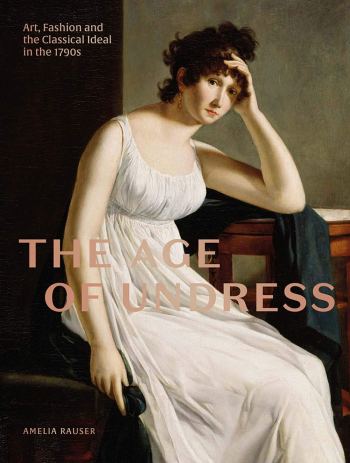 Neoclassicism recast as a feminine, progressive movement through the lens of empire-style fashion, as well as related art and literature
The Age of Undress explores the emergence and meaning of neoclassical dress in the 1790s, tracing its evolution from Naples to London and Paris over the course of a single decade. The neoclassical style of clothing—often referred to as robe à la grecque, empire style, or ‘undress’—is marked by a sheer, white, high-waisted muslin dress worn with minimal undergarments, often accessorized with a cashmere shawl. This style represented a dramatic departure from that of previous decades and was short lived: by the 1820s, corsets, silks, and hoop skirts were back in fashion.
Amelia Rauser investigates this sudden transformation and argues that women styled themselves as living statues, artworks come to life, an aesthetic and philosophical choice intertwined with the experiments and innovations of artists working in other media during the same period. Although neoclassicism is often considered a cold, rational, and masculine movement, Rauser’s analysis shows that it was actually deeply passionate, with women at its core—as ideals and allegories, as artistic agents, and as important patrons.
Amelia Rauser is professor of art history at Franklin and Marshall College.
Mei Mei Rado Named Costume & Textile Curator at LACMA
Starting this month at LACMA:
 Los Angeles County Museum of Art (LACMA) has appointed Mei Mei Rado as the new Associate Curator of Costume and Textiles. Dr. Rado received her M.A. from the University of Chicago and her Ph.D. from the Bard Graduate Center in New York. She specializes in the history of both Western and Eastern Asian textiles and dress from the eighteenth to the twentieth centuries, with a focus on intercultural exchanges. She is currently working on her book manuscript The Empire’s New Cloth: Western Textiles at the Eighteenth-Century Qing Court, which was supported by a postdoctoral grant from the American Council of Learned Societies.
Dr. Rado was awarded the J. S. Lee Memorial Fellowship for Chinese Art at The Palace Museum in Beijing, a Predoctoral Fellowship at The Metropolitan Museum of Art in the Department of European Sculpture and Decorative Arts, and a Postdoctoral Fellowship at the Freer/Sackler Galleries (now the National Museum of Asian Art, Smithsonian Institution). Her contributions to exhibitions and exhibition catalogues include Interwoven Globe: Worldwide Textile Trade, 1500–1800, and China: Through the Looking Glass (Metropolitan Museum of Art, New York); Shanghai Glamour: New Women, 1910s–40s (Museum of Chinese in America, New York); Performing Images: Opera in Chinese Visual Culture (The Smart Museum, The University of Chicago); The 1930s: Elegance in an Age of Crisis (Museum of Fashion Institute of Technology, New York); and Far-Reaching Elegance: Magnificent Chinese Export Silk (China National Silk Museum, Hangzhou). From 2017 to 2019, she taught at The School of Art and Design History and Theory at Parsons School of Design in New York.
A selection of Dr. Rado’s publications can be found on her Academia site. Her forthcoming article “Fabric of Light, Surface of Displacement: Lamé and Its Shine in Early Twentieth-Century Fashion” will appear in an edited volume Materials, Practices and Politics of Shine in Modern Art and Popular Culture (Bloomsbury).
Exhibition | In Pursuit of the Picturesque

Samuel Daniell, Scene in Sitsikamma, Elephants with Herons at a Pool, color lithograph from African Scenery and Animals, 1804
(Princeton University Library, Promised Gift from the Collection of Leonard L. Milberg)
◊ ◊ ◊ ◊ ◊
Press release for the exhibition now on view at Princeton’s Firestone Library:
In Pursuit of the Picturesque
Firestone Library, Princeton University, 22 January — 1 March 2020
Curated by Stephen Ferguson, Jennifer Meyer, and Emma Sarconi
In Pursuit of the Picturesque, an exhibition featuring British color plate books published between 1776 and 1868, is on view at the Ellen and Leonard Milberg Gallery, located in the Firestone Library lobby, from January 22 until 1 March 2020. Showcasing selected items from the collection of Leonard L. Milberg (Princeton University Class of 1953), the exhibition includes nearly 40 large books with colorful, detailed imagery from the British Empire at the turn of the 19th century. This selection from Milberg’s collection of 115 color plate books portrays an expanding global empire at the advent of lithographic printing, which captured color and imagery with more beauty and ease than ever before.
Milberg has collected color plate books since the 1980s, though his love of art began in the 1950s. During his Army days in Alaska, he devoted his time to reading American art books. Milberg started collecting American prints, then discovered American printmakers who were English emigres, which led to his interest in British color plates. “They tell a wonderful story through pictures,” said Milberg. “If you take a book in your hands, you can hold Edward Lear’s parrots and hear the crackling of the old paper. It’s much different from a painting, which is only a visual experience.”
Princeton University Library’s Emma Sarconi, reference professional for Special Collections, who co-curated the exhibition with Stephen Ferguson, associate university librarian for external engagement, and Jennifer Meyer, curatorial assistant for Special Collections, said topics range from history to horticulture, from martial achievements to topographical scenery. “These color plates were not just beautiful objects,” explained Sarconi. “They also created a vision of empire that could be exotic, romantic, and picturesque.” To Milberg, “it satisfies traveling because the color plates cover all over the world, from the Mexican Yucatán, to the South Seas, from Sicily to South Africa.”
Beyond their beauty, the color plate illustrations were scientific, political, and historical knowledge during a period of British expansion. “Very often, the books reflect expeditions like Captain Cook’s voyages,” said Milberg, “with the naturalist historian, Sir Joseph Banks, reporting back to England’s Royal Society.” From the comfort of their homes, the British public could be transported to faraway lands through these lavish, vibrant prints, kindling national pride and patriotism. Meyer commented, “Love of the monarchy and British homeland, as well as pride of a powerful military and expanding global empire, are on full display in these volumes.” Moreover, the illustrations began to normalize far off places and the people who lived there, envoking a sense of enchantment and exocitism.
According to Sarconi, “At the same time that these images inspired the viewer, they did so by silencing the horrific aspects of colonial expansion, composed without signs of the struggle, strife, and subjugation that made the empire possible.”
In a gesture of great generosity, Milberg has promised to give his collection of color plate books to Princeton University Library. The promised gift will add greatly to the Library’s holdings of British art of this period and will be a new resource for students and scholars in art, cultural, and other fields of history.
Milberg declared in his 30th reunion book entry, “I have belatedly, but passionately discovered books, prints, and the Princeton University Rare Book Library.”
During the past 37 years, he has shared the fruits of this passion with our community, said Ferguson. Milberg’s gifts (13,000 items plus) range from 19th-century American prints and drawings to several book collections: American poetry, Irish poetry, prose, and theatre as well as two Judaica collections.
Research Lunch | Rebecca Tropp on the Picturesque and Country Houses
This spring at the Mellon Centre:
Rebecca Tropp, Accommodating the Picturesque: The Country Houses of James Wyatt, John Nash, and Sir John Soane, 1793–1815
Paul Mellon Centre for Studies in British Art, London, 20 March 2020

James Wyatt, Ashridge House, commissioned by the 7th Earl of Bridgewater.
Whilst much has been written about the development of Picturesque theory at the end of the eighteenth century, regarding both the landscape itself and prescriptions for the siting of buildings within it, these discussions have generally been limited to two-dimensional snapshots, such as those represented in Humphry Repton’s Red Books. This paper, based upon ongoing research for my doctoral dissertation, seeks to push beyond the visual to investigate some of the physical implications and repercussions of the Picturesque ideal—the intersection between the visual two-dimensional picture-plane and the practical three-dimensional architectural response—on the design and construction of country houses at the turn of the nineteenth century.
Focusing on the work of James Wyatt (1746–1813), John Nash (1752–1835), and Sir John Soane (1753–1837), and limiting my investigation to those country houses designed during the pivotal period from 1793 to 1815, I investigate two specific implications related to the lowering of the principal floor from piano nobile to ground level, as part of a general repositioning of the house within the landscape. First is the use of level changes within the ground floor—the inclusion of a few steps up or down in entrance halls or between rooms, as distinct from staircases between floors—considering some possible reasons for their incorporation and the purposes they served. Second, and sometimes connected to these level changes, is an increase in permeability between interior and exterior, through the use of full-length windows, loggias and attached conservatories—social/botanical spaces that were first incorporated into the design of the house during this period. Taken together, these developments furthered the evolving relationship between house and landscape and, as a result, the experience of moving through and between those spaces.
Research Lunches are a series of free lunchtime research talks. All are welcome, but please book a ticket in advance. 1:00–2:00pm, Seminar Room, Paul Mellon Centre.
Rebecca Tropp is a fourth-year PhD student in History of Art at St John’s College, University of Cambridge, working under the supervision of Dr Frank Salmon. She completed her MPhil in History of Art and Architecture at Cambridge in 2015, investigating recurring spatial arrangements and patterns of movement in the country houses of John Nash. Prior to commencing postgraduate studies in the UK, she received her bachelor’s degree from Columbia University in New York, where she majored in the History and Theory of Architecture.
Call for Papers | Cultivating Science in the Early Modern Garden
From the Call for Papers:
Cultivating Science in the Early Modern Garden, 16th–18th Centuries
National Library of Portugal, Lisbon, 20–21 July 2020
Organized by Denis Ribouillault and Ana Duarte Rodrigues
Proposals due by 30 April 2020
“[The knowledge of the Royal Society derived ] not onely by the hands of the Learned and profess’d philosophers; but from the Shops of Mechanicks; from the Voyages of Merchants; from the ploughs of Husbandmen; from the Sports, the Fishponds, the Parks, the Gardens of the Gentlemen.”
–Thomas Sprat, History of the Royal Society (London: J. Martyn and J. Allestry, 1667), p. 72.
Although the history of early modern gardens has benefited in recent decades from an increasingly wide range of methodologies, the role played by these spaces in the development of science has been the subject of a relatively small number of inquiries. A majority of them concentrates on botanical gardens and the history of botany (Baldassari 2017), though it is now recognized that mathematics, pneumatics or astronomy found in gardens a priviledge ground for experimentation and display (Fischer et al. 2016; Ferdinand 2016).
A primary aim of this workshop is to interrogate and document what we could call (anachronistically) ‘scientific practice’ in early modern European gardens. How were gardens used to advance scientific knowledge? Examples range from the growing of medicinal plants, astronomical observation, physical experiments and so forth. Gardens were also privileged places for teaching and for debates and discussion pertaining to the various branches of natural philosophy. Furthermore, we encourage scholars to pay attention to how this function of gardens as ‘academies’, as platforms for the production and display of knowledge, as stages of scientific sociability and as pedagogical tools, affected the gardens from a formal, artistic, iconographic and hermeneutic point of view. It is not just a matter of documenting and reconstructing what happened in gardens. More precisely, it is a question of showing how what happened in gardens can lead us to a renewed understanding of the physical appearance (at a given moment) of the gardens themselves. This calls for a fruitful—yet difficult-to-achieve—intermingling of the methodologies of the history of science and of the history of art under the aegis of garden history.
• Fabrizio Baldassarri and Oana Matei, eds., Gardens as Laboratories: A History of Botanical Sciences, Journal of Early Modern Studies 6.1 (Spring 2017).
• Juliette Ferdinand, From Art to Science: Experiencing Nature in the European Garden, 1500–1700 (Treviso: Zel Edizioni, 2016).
• Hubertus Fischer, Volker R. Remmert, and Joachim Wolschke-Bulmahn, eds., Gardens, Knowledge and the Sciences in the Early Modern Period (Basel, Birkhäuser, 2016).
Papers should be about 25 minutes long. Q&A and intensive discussion will follow each presentation. We intend to publish the proceedings of the workshop. Contributors’ travel and accommodation costs will be covered. Please send a proposal of 550 words max. with a title and a short bio to denis.ribouillault@umontreal.ca before April 30, 2020.
This event is sponsored by the research project led by Denis Ribouillault, Before the ‘Great Divide’: The Shared Language(s) of Art and Science in the Early Modern Period, funded by a SSHRC (Social Sciences and Humanities Research Council of Canada) Insight Grant (2019–2024) and the Centro Interuniversitário de História das Ciências e Tecnologia, University of Lisbon. The workshop will take place during the exhibition at the National Library Jardins Históricos em Portugal, organized by the Associação de Jardins Históricos and the landscape architect Teresa Andersen, with the collaboration of Ana Duarte Rodrigues, as part of the programme Lisboa Verde 2020. Visits of the exhibition and of relevant gardens and monuments are planned for the workshop participants.
Organizers : Denis Ribouillault (University of Montréal, Department of Art History) and Ana Duarte Rodrigues (University of Lisbon, Centro Interuniversitário de História das Ciências e Tecnologia).










 Enfilade
leave a comment