DMA Names Julien Domercq Assistant Curator of European Art
Press release (29 April 2019) from the DMA:
 Julien Domercq has been named The Lillian and James H. Clark Assistant Curator of European Art at the Dallas Museum of Art. The appointment was announced today by Dr. Agustín Arteaga, the DMA’s Eugene McDermott Director. Domercq joins the DMA after serving as the Vivmar Curatorial Fellow at the National Gallery in London from 2016 to 2018. He will begin his new role in Dallas on May 14, 2019.
Under the direction of Dr. Nicole R. Myers, the Museum’s Barbara Thomas Lemmon Senior Curator of European Art, Domercq will actively contribute to the European department’s robust research, exhibition, and collection programs. The DMA’s European collection encompasses more than 1,900 paintings, sculptures, and works on paper from the Renaissance to the mid-20th century. Domercq will focus his efforts on the Old Master collection, rethinking its presentation and interpretation in the galleries and strategizing on collection growth in this area. Among his first exhibition projects are focused presentations of master paintings by Caravaggio and Frans Hals.
“Julien is a remarkable young talent, with impressive scholarship and international experience working in one of Europe’s most important public art institutions,” said Arteaga. “He has an incredible passion for making the presentation of European art exciting and accessible to a wide and multi-generational audience. This practice aligns well with the DMA’s mission to connect people and art. As we usher in a dynamic chapter in the European Art Department that was announced by the extraordinarily generous gift in 2013 of the Marguerite and Robert Hoffman Fund for European Art Before 1700, we are excited to welcome Julien to Dallas, and look forward to the work that he and Nicole Myers will accomplish together.”
At the National Gallery, London, Domercq curated the exhibition Drawn in Colour: Degas from the Burrell (2017), a presentation of 23 works by Edgar Degas loaned from the Burrell Collection in Glasgow paired with selections from the National Gallery’s collection. The Guardian praised the exhibition as “a ravishing, revealing window on Degas’s inner world.” He assisted in the final stages of the exhibition Painters’ Paintings: From Freud to Van Dyck (2016) and also worked on major redisplays of the post-1800 and Italian Renaissance galleries, including reimagining the presentation of the National Gallery’s paintings by Titian and Raphael.
“With his breadth in European Old Masters, Julien will bring fresh eyes and new scholarship to the extant collection while expanding our holdings to reflect the DMA’s encyclopedic aim. I am excited for us to work together to reinvigorate the Museum’s Old Master exhibition program, an area that has been relatively underserved,” added Myers. “We are thrilled to welcome him to the curatorial team.”
Additionally, Domercq has contributed to a number of catalogues published by the National Gallery, London; Houghton Hall, Norfolk; and the Royal Academy of Arts, London. He has written articles as well as online reviews for Apollo magazine.
Domercq earned his bachelor’s (with first class honors) and master’s (with distinction) degrees in art history from King’s College, Cambridge, where he is currently completing his PhD. While there, his doctoral research was supported by a prestigious Gates Scholarship. His dissertation research explores shifts in European depictions of indigenous people in the Pacific Islands at the end of the 18th century.
“I am delighted to be moving to Dallas to join the curatorial team of the DMA at a time it is being dynamically reimagined under Dr. Arteaga’s direction,” said Domercq. “From my very first visit to Dallas, I was impressed by the central role the Museum plays for its community. Today, I am thrilled to be joining this great civic institution, with encyclopedic collections that reflect the vibrant multicultural city it serves. I am looking forward to immersing myself in the Dallas community and to devising ambitious Old Master exhibitions in partnership with other institutions internationally, collaborating on innovative programming and research with my new colleagues, and caring for, interpreting, and growing the DMA’s European Old Master collection, making it ever more accessible to the people of Dallas, and beyond.”
Journée d’étude | Le marché de l’art, 1750–1800
From H-ArtHist:
Le marché de l’art dans la seconde moitié du XVIIIe siècle: Expertises, négociations et controverses
Institut national d’histoire de l’art, Paris, 5 June 2019
Les marchands se trouvent au cœur d’un vaste réseau culturel et artistique à cette période et deviennent les premiers intermédiaires entre l’œuvre et l’amateur d’art. Objets de curiosité, arts décoratifs, tableaux, dessins et gravures font tous partie des biens constituant ce négoce. Durant cette époque particulièrement dynamique, tant du point de vue historique que culturel, plusieurs controverses se font jour en lien avec ce commerce florissant. De nombreuses polémiques émergent entre différentes figures de marchands influents, certains qualifiant même leurs confrères de « brocanteurs ». Ces polémiques signalent-elles une volonté de s’imposer dans un secteur devenu fortement concurrentiel ? Où ne sont-elles que la manifestation de l’ambition de voir reconnaître une réelle distinction de compétences entre les marchands ? Des débats éclatent aussi entre les marchands et leur clientèle. Les amateurs, à la recherche constante d’œuvres authentiques, originellement créées par un artiste, sont ainsi confrontés aux problèmes que posent la copie et le faux, et à l’honnêteté parfois contestable des négociants. S’agit-il alors d’un problème de connaissances et de compétences des marchands ou d’un manque manifeste de sincérité au profit d’un désir grandissant d’enrichissement ? Enfin, cette journée s’intéressera aux échanges entre la France et ses pays voisins et, plus particulièrement, à la visibilité des pratiques marchandes contestées et à la manière dont les Français sont perçus à l’étranger durant cette période.
Journée d’étude organisée par le GRHAM (Groupe de Recherche en Histoire de l’Art Moderne)
• Florence Fesneau (université Paris 1 – Panthéon-Sorbonne)
• Barbara Jouves (université Paris 1 – Panthéon-Sorbonne)
• Maxime Georges Métraux (Sorbonne université)
• Alice Ottazzi (université Paris 1 – Panthéon-Sorbonne / Université de Turin), Marine Roberton (université Paris 1 – Panthéon-Sorbonne)
• Maël Tauziède-Espariat (université de Bourgogne)
P R O G R A M M E
9.00 Accueil des participants et du public
9.15 Introduction du GRHAM
9.30 Session 1: Réputation et autorité
Modération: Darius Spieth
• Ginevra Odone (Doctorante en histoire de l’art, Université de Lorraine / Università La Sapienza di Roma), Processus de négociation et renommé des Antiquaires à travers les lettres du comte de Caylus
• Moana Weil-Curiel (Historien de l’art indépendant), De Strasbourg à Paris, ascension et chute de Jean-Henri Eberts (1726–1803): De la banque au négoce, des tableaux au mobilier de la couronne
10.45 Pause
11.00 Session 2: Création de valeurs
Modération: Darius Spieth
• Patrick Michel (Professeur des universités, Université de Lille 3), Les marginalia d’un exemplaire du catalogue de la vente du prince de Conti: Un regard critique sur l’une des grandes ventes publiques de la seconde moitié du XVIIIe siècle
• Vincent Chenal (Chargé d’enseignement pour la Maîtrise d’études avancées en conservation du patrimoine et muséologie, Université de Genève), Établir une « échelle moyenne » de la valeur des œuvres d’art dans la « patrie des fantaisies et de l’inconstance dans les goûts » : Quelques aspects de cette pratique Jean-Baptiste-Pierre Lebrun prêteur sur gages
12.45 Déjeuner
14.00 Session 3: L’objet en question
Modération: Patrick Michel
• Jean-Baptiste Corne (Doctorant, École Pratique des Hautes Etudes /École du Louvre), De bric et de broc: Aux origines du marché de la boiserie
• Darius Spieth (San Diego Alumni Association Chapter Alumni Professor of Art History), Le paradoxe du marché de l’estampe pendant la Révolution française
15.15 Pause
15.30 Session 4: Regards sur le marché de l’art européen
Modération: Patrick Michel
• Bénédicte Miyamoto (Maître de conférences, Université Sorbonne Nouvelle –Paris 3), Visibilité des pratiques marchandes controversées outre-Manche: Intermédiaires polémiques, lots ravalés, et transparence
• Paolo Coen (Professor, Università degli studi di Teramo), The Art Market in Rome in the Second Half of the Eighteenth Century: Some Internal and External Communication Tools
16.45 Conclusion du GRHAM
• Claude Aguttes (Commissaire-priseur), Passé-présent, réflexion sur le marché de l’art
Cambridge Launches Inquiry into Historical Links to Slavery
I learned of this press release from the University of Cambridge through The Society of Antiquaries of London Online Newsletter (Salon) issue 426 (30 April 2018), which also notes that the University of Glasgow recently completed a similar study of its own historical ties to slavery. The report “Slavery, Abolition and the University of Glasgow,” published in September 2018, concludes that “although the University of Glasgow never owned enslaved people or traded in the goods they produced, it is nonetheless clear that the university received significant financial gifts and support from people who derived some or occasionally much of their wealth from slavery. . . The issue facing the university today is how to address this history? We deeply regret that during a crucial period of its growth and development the University of Glasgow indirectly benefitted from racial slavery, and this is a past which clashes with our proud history of support for the abolition of both the Slave Trade and slavery itself. We believe that what is most important, however, is how we intend to use our knowledge of this past in a ‘Programme of reparative justice’.” –CH
From the Cambridge press release (30 April 2019) . . . .

Josiah Wedgewood, Emancipation Badge, 1787, jasperware, commissioned by the Society for Effecting the Abolition of the Slave Trade, designed by Henry Webber and modelled by William Hackwood (Cambridge: Fitzwilliam Museum).
The University of Cambridge will conduct an in-depth academic study into ways in which it contributed to, benefited from or challenged the Atlantic slave trade and other forms of coerced labour during the colonial era.
The two-year inquiry will explore University archives and a wide range of records elsewhere to uncover how the institution may have gained from slavery and the exploitation of labour, through financial and other bequests to departments, libraries, and museums. It will also investigate the extent to which scholarship at the University of Cambridge, an established and flourishing seat of learning before and during the period of Empire, might have reinforced and validated race-based thinking between the 18th and early 20th century.
A specially commissioned Advisory Group appointed by the Vice-Chancellor, Professor Stephen J Toope, has been asked to recommend appropriate ways to publicly acknowledge past links to slavery and to address its impact. The eight-member Advisory Group overseeing the work is being chaired by Professor Martin Millett, the Laurence Professor of Classical Archaeology, and draws its membership from relevant academic departments across the University. The panel will call on further external expertise as necessary. The inquiry will be conducted by two full-time postdoctoral researchers, based in the Centre of African Studies, part of the School of Humanities and Social Sciences. The research will examine specific gifts, bequests, and historical connections with the slave trade. Researchers will also look into the University’s contribution to scholarship and learning that underpinned slavery and other forms of coerced labour.
Professor Millett said: “This will be an evidence-led and thorough piece of research into the University of Cambridge’s historical relationship with the slave trade and other forms of coerced labour. We cannot know at this stage what exactly it will find but it is reasonable to assume that, like many large British institutions during the colonial era, the University will have benefited directly or indirectly from, and contributed to, the practices of the time. The benefits may have been financial or through other gifts. But the panel is just as interested in the way scholars at the University helped shape public and political opinion, supporting, reinforcing and sometimes contesting racial attitudes which are repugnant in the 21st century.”
Professor Toope, the Vice-Chancellor, said: “There is growing public and academic interest in the links between the older British universities and the slave trade, and it is only right that Cambridge should look into its own exposure to the profits of coerced labour during the colonial period. We cannot change the past, but nor should we seek to hide from it. I hope this process will help the University understand and acknowledge its role during that dark phase of human history.”
The Advisory Group’s work comes amid a wider reflection taking place in the United States and Britain on the links between universities and slavery. It is among a number of race equality initiatives currently being pursued at the University of Cambridge. In February, the Centre of African Studies hosted a round table on ‘Slavery and its Legacies at Cambridge’. The Advisory Group is expected to deliver its final report to the Vice-Chancellor in autumn 2021. Alongside its findings on historical links to the slave trade, the report will recommend appropriate ways for the University to publicly acknowledge such links and their modern impact.
Lecture | Wolf Burchard on the Rothschild Savonneries
From Waddesdon Manor:
Wolf Burchard, The Rothschild Savonneries: An Encyclopaedia of French Royal Carpet Weaving
Spencer House, 27 St James’s Place, London, 13 May 2019
 Join Wolf Burchard for this Spencer House Lecture, The Rothschild Savonneries: An Encyclopaedia of French Royal Carpet Weaving. The Rothschild Collection at Waddesdon Manor comprises the largest and most comprehensive collection of Savonnerie carpets and upholstered furniture outside France. Dr Burchard will revisit the history of the Savonnerie manufactory for its beginnings under Henri IV and Louis XIII to the present day, focusing on its major commissions for the Louvre, Versailles, and Notre Dame. His talk will also examine the dispersal of many of these weavings after the French Revolution in 1789, both through sale and as diplomatic gifts, as well as the rising British and American taste for Savonnerie carpets beginning around 1900.
The lecture will take place on Monday, 13 May at 6.30pm (doors open at 6.00pm). It will be followed by drinks and an opportunity to look at the restored 18th-century State Rooms at Spencer House. Adult ticket price (£15) includes one complimentary drink.
Wolf Burchard is Associate Curator of European Sculpture and Decorative Arts at The Metropolitan Museum of Art, New York, formerly Furniture Research Curator at the National Trust. He is the author of The Sovereign Artist: Charles Le Brun and the Image of Louis XIV, which was partly funded by The Rothschild Foundation. Burchard has worked extensively on the Savonnerie manufactory and in 2012 published an update of Pierre Verlet’s catalogue of Louis XIV’s carpets for the Louvre’s Long Gallery, adding newly discovered carpets, carpet fragments, and designs.
Display | Madame de Pompadour in the Frame
Opening in a few weeks at Waddesdon Manor:
Madame de Pompadour in the Frame
Waddesdon Manor, Buckinghamshire, 23 May – 27 Octotber 2019
 This exhibition will shine a spotlight on how technology is being used to enhance our understanding of art history, enabling masterpieces which have been victims of circumstance or history to be seen as they were once intended.
François Boucher’s famous portrait of Madame de Pompadour (1756) is today one of the most prized paintings on display at the Alte Pinakothek in Munich*, yet this monumental portrait was once owned by Baron Ferdinand de Rothschild. Ferdinand had acquired it in 1887, and displayed it in his London house, 143 Piccadilly. Either before, or shortly after he acquired it, the portrait was re-framed. When he died, Ferdinand bequeathed the painting to his brother Nathaniel, but while the canvas eventually found its way to Germany, the impressive 18th-century frame was retained and ended up at Waddesdon Manor.
Now, thanks to a collaboration with Factum Foundation, specialists in high-resolution digital scanning technology, and with the support of the Alte Pinakothek, this new exhibition will recreate the masterpiece as it would have been known in the 19th century by Baron Ferdinand. In a marriage of traditional conservation and restoration techniques with the most advanced 3D digital reproduction technology, it will place a facsimile of the portrait back in Baron Ferdinand’s frame, which has been conserved especially for the show. Visitors will be able to explore for themselves other digital and 3D reproductions in touch displays, and a film will illustrate Factum Foundation’s process of re-creating Madame de Pompadour.
The exhibition will also explore the historical connection between the Madame de Pompadour painting and frame and Waddesdon and the Rothschild family. A particular highlight will be a 1757 Charles-Germain de Saint-Aubin caricature from a unique book of satirical cartoons, which is seldom on display.
* François Boucher’s Madame de Pompadour (1756) is on display at the Alte Pinakothek in Munich (on permanent loan from the HypoVereinsbank, Member of UniCredit).
New Book | Textiles of Japan
From Prestel:
Thomas Murray and Virginia Soenksen, with a foreword by Anna Jackson, Textiles of Japan (London: Prestel, 2018), 520 pages, ISBN: 978-3791385204, $85 / £65.
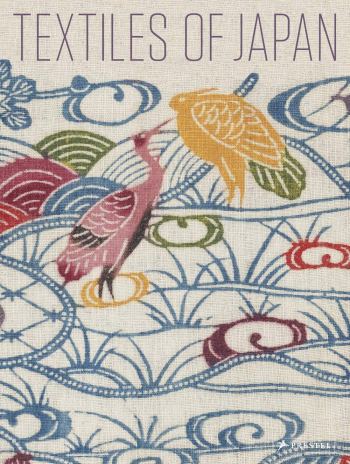 From rugged Japanese firemen’s ceremonial robes and austere rural work-wear to colorful, delicately-patterned cotton kimonos, this lavishly illustrated volume explores Japan’s rich tradition of textiles.
Textiles are an eloquent form of cultural expression and of great importance in the daily life of a people, as well as in their rituals and ceremonies. The traditional clothing and fabrics featured in this book were made and used in the islands of the Japanese archipelago between the late 18th and the mid 20th century. The Thomas Murray collection featured in this book includes daily dress, work-wear, and festival garb and follows the Arts and Crafts philosophy of the Mingei Movement, which saw that modernization would leave behind traditional art forms such as the hand-made textiles used by country people, farmers, and fisherman. It presents subtly patterned cotton fabrics, often indigo dyed from the main islands of Honshu and Kyushu, along with garments of the more remote islands: the graphic bark cloth, nettle fiber, and fish skin robes of the aboriginal Ainu in Hokkaido and Sakhalin to the north, and the brilliantly colored cotton kimonos of Okinawa to the far south. Numerous examples of these fabrics, photographed in exquisite detail, offer insight into Japan’s complex textile history as well as inspiration for today’s designers and artists. This volume explores the range and artistry of the country’s tradition of fiber arts and is an essential resource for anyone captivated by the Japanese aesthetic.
Thomas Murray is a dealer of Asian and tribal art and has an extensive personal collection of Japanese and Indonesian textiles. He is a past president of the Antique Tribal Art Dealers Association (ATADA), and served on President Obama’s Cultural Property Advisory Committee at the Department of State in Washington, D.C.
Virginia Soenksen is Associate Director of the Madison Art Collection at James Madison University in Virginia.
Anna Jackson is Keeper of the Asian Department at The Victoria and Albert Museum in London, where she is responsible for the museum’s collection of Japanese textiles and dress.
Exhibition | Madame de Maintenon
Now on view at Versailles:
Madame de Maintenon: In the Corridors of Power
Château de Versailles, 16 April — 21 July 2019
Curated by Alexandre Maral and Mathieu da Vinha
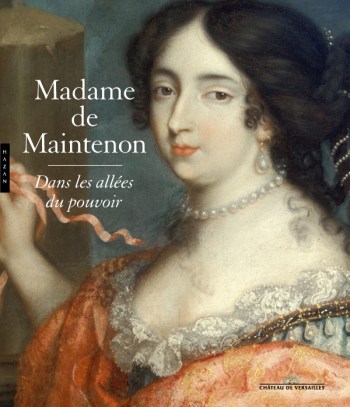 The first exhibition entirely devoted to the Marquise of Maintenon, on the tercentenary of her death on 15 April 1719, recounts the extraordinary life of Françoise d’Aubigné (1635–1719). She was born in a prison yet went on to become the Sun King’s wife in 1683.
The different stages of her life are shown in around 60 works from the collections of Versailles and other museums, including paintings, drawings, engravings, books, sculptures, medals, and so on. The visit passes through the four adjoining rooms of the apartment she lived in from 1682 until 1715, on the first floor of the Palace’s central section.
The scenography returns the walls to their original colours at the time. They are richly draped in alternating silk panels as described in the Furniture Store-House inventories from 1708: red damask, crimson damask, and red taffeta for the second antechamber; green and gold damask for the bedroom; and crimson and gold flower damask for the Chambers. This installation was made possible thanks to the restoration of these wall hangings by Tassinari et Chatel, the nation’s oldest silk manufacturer, founded in Lyon by Louis XIV.
The exhibition is curated by Alexandre Maral (Head Curator for Heritage and Director of the Centre de recherche du château de Versailles) and Mathieu da Vinha (Scientific Director of the Centre de recherche du château de Versailles), with scenography by Jérôme Dumoux.
Alexandre Maral and Mathieu da Vinha, Madame de Maintenon: Dans les allées du pouvoir (Paris: Hazan, 2019), 192 pages, ISBN: 978-2754110723, 35€.
The exhibition brochure (in French and English) is available as PDF file here
◊ ◊ ◊ ◊ ◊
Symposium | Madame de Maintenon, 1719–2019
Château de Versailles, 21–23 March 2019
This international symposium offered a fresh look at this multifaceted historical figure, reviewing the biographical aspects of the Marquise, as well as her correspondence and the literary and iconographic legend surrounding her.
Details along with audio recordings are available here.
Exhibition | The Taste of Marie Leszczyńska
Now on view at Versailles:
Le Goût de Marie Leszczyńska
Château de Versailles, open from 16 April 2019
Curated by Gwenola Firmin and Marie-Laure de Rochebrune, with Vincent Bastien
 During the 42 years she spent at Versailles, Marie Leszczyńska (1703–1768) had a profound impact on both the layout of the Palace and artistic life at the time. Her influence has inspired this dedicated exhibition. A Taste of Marie Leszczyńska is presented in the Dauphine’s Apartments, which have been reopened for the occasion. Although few traces of her 42 years at the Palace remain—most were wiped out as a result of the changes wrought by Marie-Antoinette—the wife of King Louis XV nevertheless made her mark through the art she commissioned and the private chambers she created.
The exhibition gathers together around 50 paintings and other works of art, most of which are from the Palace collections and include several recent acquisitions of great significance for the Musée National des Châteaux de Versailles et de Trianon. The aim is to illustrate how her personal taste evolved throughout the course of her reign and thus get to know her better.
In Pursuit of Privacy
Throughout her reign, Marie Leszczyńska abided by the ceremonial rules required in the Queen’s State Apartment, endeavouring always to lead an exemplary life free of any scandal. As for the layout of the Palace, from 1725 she set about redesigning her chamber in the style of the time: wood panelling carved by Vassé was installed over the fireplace, which was replaced with one in Sarrancolin marble. The décor between the windows was created by the master sculptors Verbeckt, Dugoulon, and Le Goupil. The overdoor panels, which are still in place today, were commissioned by the Queen in 1734 from Jean-François de Troy—whose La Gloire des princes s’empare des Enfants de France features the Dauphin and his two eldest sisters—and Charles-Joseph Natoire, who painted La Jeunesse et la Vertu présentent les deux princesses à la France.
In 1735, Gilbert de Sève’s ceiling painting of Apollon au milieu des Heures was replaced by a geometric design adorned with intertwined figures of the royal couple. At the same time, on the order of Louis XV, the managers of the King’s buildings asked François Boucher to decorate the arches with four grisaille paintings representing the Virtues: Prudence, Piety, Charity, Generosity. But Marie Leszczyńska had to wait another 13 years, until 1764, before the tarnished gilt was restored under the supervision of François Vernet.
The Queen liked to live a simple life, even if only for a few hours a day, so she had private chambers installed directly behind her parade apartment, and it was to these she withdrew for a number of hours each day to pray, meditate, read, and spend time with those closest to her.
Painting, Master of Arts

Marie Leszczyńska after the work by jean-Baptiste Oudry, The Farm (Château de Versailles; photo by Gérard Blot).
Marie Leszczyńska spoke several languages and was highly cultured, with a great interest in the creative occupations, literature, music and art—especially painting. Indeed, one of the rooms in her private apartment was laid out as a studio. Her ‘colourist’, Etienne Jeaurat, guided her paintbrush for 15 years, and she was advised by Jean-Baptiste Oudry. Among other works attributed to the Queen is a faithful rendition of a painting by the latter, called Une Ferme (A Farm).
One of her favourite painters was Jean-Marc Nattier, whose portrait of her wearing ‘town clothing’ was completed in 1748. But the one she regarded most highly was Charles-Antoine Coypel, who produced no fewer than 34 religious paintings for the Queen’s private chambers. She also liked to contemplate lightweight subjects, chinoiserie, pastoral scenes, and landscapes.
A Touch of the Exotic
Marie Leszczyńska had a particular affinity for China. In 1747, she created an oriental chamber in her ‘laboratory’, in the heart of her private apartment. In 1761, she decided to replace it with a collection of canvases known as the Chinese Chamber. The paintings were produced by five painters of the King’s State Apartments—Coqueret, Frédou, de la Roche, Prévost and Jeaurat—as well as Marie Leszczynska herself. They portray a picturesque image of China, inspired by the tales of travellers to the land of Cathay. The tea ceremony, evangelisation of the Chinese by the Jesuits, and a fair in Nanking are among the events depicted. Chinese architecture, dress and landscapes are portrayed in minute detail, while the bird’s-eye perspective is taken directly from Chinese painting.
During the last 15 years of her reign, a new artistic trend emerged in France, which, from the 18th century, was referred to as à la grecque (‘in the Greek style’). The trend marked the onset of the neoclassical movement and rejected the outmoded Rococo style in favour of a deliberate return to the simplicity of classical antiquity and a more decorative repertoire of subjects drawn from Greek art. The Queen participated in this movement in her own way.
For example, in 1753, she commissioned an overdoor panel for her chamber, depicting the arrival of Saint Francis Xavier in China, from Joseph Marie Vien (1716–1809), who would go on to become the leading exponent of this style in terms of painting. Later, in 1766, she appointed Richard Mique (1728–1794) to carry out a project that was particularly close to her heart: the construction at Versailles of a convent for the canonesses of Saint Augustine, who provided education for young girls (it is now the Hoche school). It was decided to lay the convent chapel out in the form of a Greek cross within a square, accessed by an entrance portal comprising an arcade of Ionic columns capped by a pediment. The chapel was completed after the Queen’s death thanks to the determined efforts of her daughter, Madame Adelaide.
From the early 1760s, the new style was also adopted by the Royal Sèvres porcelain manufacture for its service pieces, as well as vases and sculpted ornaments. Étienne-Maurice Falconet (1716–1791), head of the sculpture studio from 1757 to 1766, produced many bisque figures and vases with a neoclassical look and feel.
Through her architectural alterations, her style and, above all, the way in which she conducted herself as queen, Marie Leszczyńska led a quiet revolution.
The exhibition is curated by Gwenola Firmin, chief curator at the Musée National des Châteaux de Versailles et de Trianon, and Marie-Laure de Rochebrune, chief curator at the Musée National des Châteaux de Versailles et de Trianon, with assistance from Vincent Bastien, doctor of art history.
The exhibition brochure (in French and English) is available as PDF file here»
Brooklyn Museum Acquires Portrait by Vigée Le Brun
From the press release (26 April 2019) . . .

Elisabeth Louise Vigée Le Brun, Portrait of Countess Maria Theresia Czernin, 1793, oil on canvas, 54 x 39 inches (Brooklyn Museum, Gift of Lilla Brown in memory of her husband John W. Brown, Mrs. Watson B. Dickerman, A. Augustus Healy, Helen Babbott MacDonald, Charles H. Schieren, and L.L. Themal, by exchange, 2018.53).
The Brooklyn Museum announced significant new acquisitions that emphasize the institution’s dedication to presenting diverse narratives through its collection. The artists represented by these acquisitions span a wide range of aesthetic styles, mediums, eras, and nationalities. Highlights include over 3,000 vernacular photographs documenting a century of women’s history from the Kaplan-Henes Collection; a work by eighteenth-century French portrait painter Elisabeth Louise Vigée Le Brun; a portrait gifted by Supreme Court Justice Ruth Bader Ginsburg; a significant gift of over fifty photographs by experimental Chinese contemporary artists; and a painting created specifically for the Brooklyn Museum by one of China’s most important living artists, Xu Bing. Works by Al Held, Chris Martin, and Joan Snyder also join the collection.
Anne Pasternak, Shelby White and Leon Levy Director, Brooklyn Museum, says, “We are so excited by these transformational works of art that add significantly to the strengths of our exceptional collections, and we are tremendously grateful to the generous donors behind them who make it possible for our institution to continue telling trailblazing stories of inclusion through art.”
Portrait of Countess Maria Theresia Czernin by Elisabeth Louise Vigée Le Brun
Elisabeth Louise Vigée Le Brun is one of the most celebrated portrait painters of late eighteenth- and early nineteenth-century Europe. She secured the patronage of the French aristocracy and served as portrait painter to Marie Antoinette. Vigée Le Brun became one of only four women members of the French Royal Academy in 1783 and spent her later years enjoying fame and financial success. This large, striking portrait by Vigée Le Brun is notable for the way it presents the sitter, Countess Maria Theresia Czernin. Vigée Le Brun paints the countess holding an open book about ancient Greece, suggesting that she was engaged in scholarship and history, qualities that were more often seen in portraits of men at the time.
The portrait allows the Brooklyn Museum to present a more inclusive narrative of European art with regard to the contributions of women and to further explore how identity in portraiture is visually constructed and constituted along cultural, class, political, and gender lines. It will strengthen the current presentation of historical portraiture in the Museum’s European Art galleries. It also provides an important link between our historical collections and Judy Chicago’s The Dinner Party, where Vigée Le Brun is referenced on the floor of the work and in the historical timeline. . . .
The full press release is available here»
Exhibition | A Return to the Grand Tour: Micromosaic Jewels
Opening this weekend at the VMFA:
A Return to the Grand Tour: Micromosaic Jewels from the Collection of Elizabeth Locke
Virginia Museum of Fine Arts, Richmond, 27 April — 2 September 2019
The Gibbes Museum of Art, Charleston, 2020
Curated by Susan Rawles
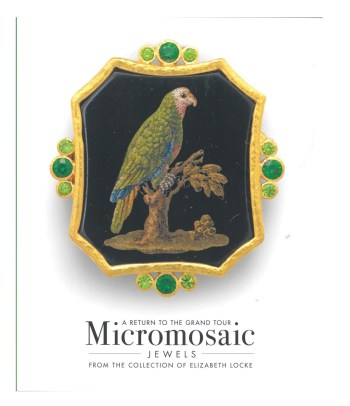 The wide range of subjects depicted in these 92 intricately crafted works of art—precious souvenirs designed for Grand Tour travelers of the mid-18th to late-19th centuries—include Renaissance paintings, architecture, birds, animals, historical sites, landscapes, and portraits. These micromosaic jewels reflect the sophisticated pursuits of elite Europeans for whom travel was a rite of passage.
Diminutive forms of ancient Roman, Grecian, and Byzantine mosaics, ‘micromosaics’—a term coined in the 1970s by collector Sir Arthur Gilbert—are made using a painstaking technique that involves tesserae, small pieces of opaque enamel glass. The tiny mosaics were first developed with regularity in the second half of the 18th century by the Vatican Mosaic Workshop. By the 19th century, numerous independent studios devoted to the production of these small keepsakes were established to meet travelers’ demands and to capitalize on the increasing popularity of micromosaics as symbols of status, sophistication, and social polish. For an English traveler to Rome, Venice, or Milan, for example, a micromosaic of an Italian Renaissance painting or ancient architectural monument captured the journey and today reflects that era’s fascination with the classics and societal requisite travel to the ‘cradle of western civilization’.
The works of art on view in this exhibition, which are predominantly stunning pieces of jewelry, are dazzling in their exquisite detail and craftsmanship. In addition to the tiny enameled glass that forms the mosaic, eye-catching designs include gold, precious stones, and diamonds. VMFA is pleased to present this decorative arts exhibition and to share these fine works of art from the Elizabeth Locke Collection of Micromosaics.
The exhibition is organized by the Virginia Museum of Fine Arts and curated by Dr. Susan J. Rawles, Associate Curator of American Painting and Decorative Arts, VMFA.
Susan Rawles, with a foreword by John Guare, A Return to the Grand Tour: Micromosaic Jewels from the Collection of Elizabeth Locke (Richmond: Virginia Museum of Fine Arts, 2019), 118 pages, ISBN: 978-1934351154, $25.










 Enfilade
leave a comment