Enfilade

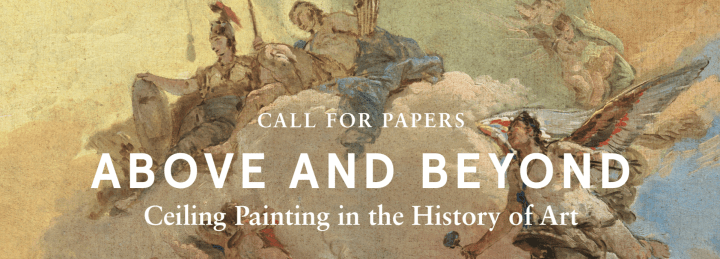
Call for Papers | Above and Beyond: Ceiling Painting in the History of Art

Posted in Calls for Papers by Editor on April 1, 2019

From the Call for Papers:

Above and Beyond: Ceiling Painting in the History of Art
The Frick Collection, New York, 27 June 2019

Proposals due by 2 May 2019

The Frick Collection is pleased to invite submissions for Above and Beyond: Ceiling Painting in the History of Art, a public symposium organized in conjunction with the special exhibition Tiepolo in Milan: The Lost Frescoes of Palazzo Archinto (April 16 to July 14, 2019). Tragically destroyed during World War II, Giambattista Tiepolo’s ceiling paintings for Palazzo Archinto (1730–31) represented allegorical and mythological scenes in magnificent, light-filled skies. The in situ effects of these grand frescoes may forever be lost, but the related oil sketches and drawings assembled for the exhibition provide insight into the absent originals—and into the particular challenges the ceiling poses as a site for painting.

Ceiling paintings tested early modern artists’ abilities to realize complex projects, demanding collaboration among painters, architects, carpenters, and legions of assistants on some of the largest paintings ever created. Seen from below, subjects such as triumphs and apotheoses required artists to resolve tensions between naturalism and abstraction in picturing the firmament, and to engage space in ways wholly foreign to easel painting.

An heir to the illusionistic tradition of Correggio, Charles Le Brun, and Baciccio, Tiepolo has long been recognized for his ‘pictorial intelligence’. Yet the practice of ceiling painting has an even longer history—from the miniaturist figuration of the Alhambra’s Sala de los Reyes to the historiated ceiling of the ex-monastery at Tecamachalco in Puebla to Yoko Ono’s Ceiling Painting, Yes Painting of 1966. Inspired by this expansive history, we welcome proposals for twenty-minute papers on the making and reception of ceiling paintings across time and place. Please send a CV and 250-word abstract by Thursday, 2 May 2019, to academic@frick.org. Submissions from emerging scholars, including early-career university and museum professionals and advanced doctoral students, are encouraged.

Possible topics and lines of inquiry include, but are not limited to:
• Issues of site and execution, from technologies of transfer to the collaborations and workshop models that facilitated projects of such a large scale and long duration
• Often-vexed connections between ceiling painting and theatricality, trompe l’oeil and architecture
• Modes of spectatorship; the impact of light and movement and liturgical or court activities on the viewer’s perception and circulation
• The sky as subject in both ecclesiastic and secular contexts
• Ceiling sculpture, particularly the role of stuccowork and coffering
• Ceiling painting’s place in art-critical discourse and treatises (Bosse, Lomazzo, de Piles); its status vs. that of easel painting
• Perspectival theories and techniques
• Ceiling paintings as vehicles for glorification of absolute rule, familial pride, the divine
• Challenges to the critical fortune of ceiling paintings, such as the difficulty of reproduction

Lecture | Adrian Seville on Georgian Board Games

Posted in lectures (to attend) by Editor on April 1, 2019

From the Society of Antiquaries of London:

Adrian Seville, The Shows and Sights of Georgian London: A Board Game Tour of the Metropolis
Society of Antiquaries of London, Burlington House, 7 May 2019

Printed board games—race games, played with dice or a teetotum and offering no choice of move—are a well-recognised feature of Victorian childhood. Yet similar games were also significant in late Georgian England. Of such games printed from 1790 to 1830, over 100 different examples have survived, covering a wide range of cultural themes. The presentation will highlight a group of these games, all with themes relevant to the shows and sights of Georgian London.

A short introduction will trace the history of spiral race games in England, beginning with John Wolfe’s registration of the Game of the Goose at Stationers’ Hall in 1596 up to the publication by John Wallis and Elizabeth Newbery of the New Game of Human Life in 1790, shamelessly copied from the French original, but with variations to suit the English market.

Of the games then to be presented in detail, the earliest is concerned with the first English pantomime, Harlequin and Mother Goose: or, The Golden Egg, first performed in 1806. The others, with dates from 1809 to 1825, each propose a ‘virtual’ sight-seeing tour of London. All these games present finely-detailed hand-coloured engravings of their shows and sights, the choice of subjects indicating the main public attractions of the time. Their rules often hint at how the various attractions were regarded in the affluent society in which these expensive games circulated. And several of the games have booklets giving detailed descriptions and observations, not commonly found elsewhere. Somteimes, as in the games published by the Dartons, a Quaker family, these booklets contain strongly-expressed moral views on such controversial matters as war, colonial exploitation, and wealth: all are the subject of polemics aimed at a junior audience.

This lecture will demonstrate how these simple games, played in the nursery or at the fireside, serve as mirrors of the real world outside, so contributing to the understanding of cultural history in late Georgian England.

Lecture | Robin Myers on Andrew and James Ducarel

Posted in books, lectures (to attend) by Editor on March 31, 2019

From Eventbrite:

Robin Myers, Dr Andrew Ducarel, Lambeth Librarian 1757–85, Seen through His Brother’s Eyes
Lambeth Palace, London, 8 May 2019

Andrew Ducarel (1713–1785), the eldest of three Huguenot brothers, was a successful ecclesiastical lawyer, Librarian at Lambeth, historian of the palaces of Lambeth and Croydon and of the architecture of Normandy. In Robin Myers’s new book The Two Brothers, it is Andrew’s younger brother James who takes centre stage, writing letters to Andrew in London about his life in France. Wednesday, 8 May 2019, 6pm (admittance not before 5.30pm). Guests should arrive via the main Gatehouse of Lambeth Palace. For any queries, please email melissa.harrison@churchofengland.org.

Robin Myers is a Past President of the Bibliographical Society and Archivist Emeritus of the Worshipful Company of Stationers. Her principal research interests are the history of the Company and its archive, on which she has published widely. She has also worked on Andrew Ducarel for more than twenty years. Her edition, with Gerard de Lisle, of Two Huguenot Brothers: Letters of Andrew and James Coltee Ducarel (1732–1773) has recently been published by Bernard Quaritch.

Exhibition | The Tale of Genji

Posted in books, catalogues, exhibitions by Editor on March 31, 2019

Press release (26 February 2019) from The Met:

The Tale of Genji: A Japanese Classic Illuminated
The Metropolitan Museum of Art, New York, 5 March — 16 June 2019

Curated by John Carpenter and Melissa McCormick with Monika Bincsik and Kyoko Kinoshita

A major international loan exhibition focusing on the artistic tradition inspired by Japan’s most celebrated work of literature will go on view at The Metropolitan Museum of Art beginning March 5, 2019. Bringing together more than 120 works of art from 32 public and private collections in Japan and the United States—including National Treasures and Important Cultural Properties, most of which have never left Japan—The Tale of Genji: A Japanese Classic Illuminated explores the tale’s continuing influence on Japanese art since it was written around the year 1000 by the noblewoman Murasaki Shikibu (ca. 978–ca. 1014). Often referred to as the world’s first novel, The Tale of Genji has captivated readers for centuries through its sophisticated narrative style, humor and wit, and unforgettable characters, beginning with the ‘radiant prince’ Genji, whose life and loves are the focus of the story.

Tosa Mitsunari (Japanese, 1646–1710), ‘Murasaki Shikibu’, late 17th–early 18th century, one of a triptych of hanging scrolls, ink and color on silk (Ishiyamadera Temple).

The Tale of Genji has inspired generations of artists over centuries, and ours is the first exhibition to explore this phenomenon in such a comprehensive way,” said Max Hollein, Director of The Met. “The magnificent works of art in the show will also offer a view into the development of Japanese art, a testament to the prevalence and impact of the renowned story.”

The exhibition is organized by The Metropolitan Museum of Art and The Japan Foundation, with the cooperation of the Tokyo National Museum and Ishiyamadera Temple. It is made possible by the Mary Livingston Griggs and Mary Griggs Burke Foundation Fund, 2015; the Estate of Brooke Astor; the E. Rhodes and Leona B. Carpenter Foundation; and Ann M. Spruill and Daniel H. Cantwell.

The exhibition presents the most extensive introduction to the visual world of Genji ever shown outside Japan. It features nearly one thousand years of Genji-related art—an astonishing range of works including paintings, calligraphy, silk robes, lacquerware, a palanquin for a shogun’s bride, and popular art such as ukiyo-e prints and contemporary manga—and provide viewers with a window into the alluring world of the Heian imperial court (794–1185) that was created by the legendary authoress.

Comprising 54 chapters, The Tale of Genji describes the life of the prince, from the amorous escapades of his youth to his death, as well as the lives of his descendants, introducing along the way some of the most iconic female characters in the history of Japanese literature.  Organized thematically in eight sections, the exhibition pays special attention to the Buddhist reception of the tale, while also giving prominence to Genji’s female readership and important works by female artists.

Among the works on view, highlights include two of Japan’s National Treasures. The first, on loan from Seikado Bunko Art Museum, is a pair of screens by the Rinpa master Tawaraya Sotatsu (ca. 1570-ca. 1640)—Channel Markers and The Barrier Gate—depicting two chance encounters between Genji and a former lover. The second is the breathtaking Heian-period Lotus Sutra with Each Character on a Lotus, from the Museum Yamato Bunkakan. These works will be on view for six weeks and then rotated with other masterpieces over the course of the exhibition. A number of works recognized as Important Cultural Properties will be on view throughout the exhibition, including beautifully preserved album leaves by Tosa Mitsuyoshi (1539–1613), from the Kuboso Memorial Museum of Arts, Izumi, which will be shown together with rare Tosa School album paintings from the Harvard Art Museums and The Met’s own collection.

The exhibition also includes a section featuring important works of art from Ishiyamadera Temple whose hall contains a ‘Genji Room’ that commemorates the legend that Murasaki started writing the novel within the temple precincts. And the final section of the exhibition features a series of original manga drawings by Yamato Waki that were inspired by The Tale of Genji. She translated Genji into the comic book idiom, making Murasaki’s tale accessible to a whole new generation of readers.

A site-specific opera entitled Murasaki’s Moon—commissioned by MetLiveArts, On Site Opera, and American Lyric Theater in conjunction with the exhibition—will be presented in The Met’s Astor Court on May 17, 18, and 19.

This exhibition will be the opening highlight of Japan 2019, a series of events organized by The Japan Foundation to introduce Japanese arts and culture in the United States throughout 2019.

The Tale of Genji: A Japanese Classic Illuminated will be accompanied by a fully illustrated catalogue, made possible by The Andrew W. Mellon Foundation; the Florence and Herbert Irving Fund for Asian Art Publications; the Charles A. Greenfield Fund; The Miriam and Ira D. Wallach Foundation; the Mary Livingston Griggs and Mary Griggs Burke Foundation Fund, 2015; the Parnassus Foundation; and Richard and Geneva Hofheimer Memorial Fund.

The exhibition is curated by John T. Carpenter, Mary Griggs Burke Curator of Japanese Art in the Department of Asian Art at The Met; and guest curator Melissa McCormick, Professor of Japanese Art and Culture at Harvard University; with Monika Bincsik, Diane and Arthur Abbey Assistant Curator for Japanese Decorative Arts at The Met; and Kyoko Kinoshita, Professor of Japanese Art History at Tama Art University.

John Carpenter and Melissa McCormick, The Tale of Genji: A Japanese Classic Illuminated (New York: The Metropolitan Museum of Art, 2019), 368 pages, ISBN: 978-1588396655, $65.

Rijksmuseum Acquires Portrait by Joseph-François Ducq

Posted in museums by Editor on March 31, 2019

Press release (25 March 2019) from the Rijksmuseum:

Joseph-François Ducq, Portrait of the Engraver Joseph-Charles de Meulemeester at Work in the Raphael Loggia in the Vatican, 1813 (Amsterdam: Rijksmuseum).

Last week the Rijksmuseum was able to acquire several remarkable works of art at TEFAF Maastricht, thanks to the generosity of private donors. The objects include two 16th-century panels by Maarten van Heemskerck, a book published in 1627 on locks and keys made by the French locksmith Mathurin Jousse, and an 1813 painting by Joseph-François Ducq of the engraver Joseph-Charles de Meulemeester. . . .

Through the support of the Gerhards Fund/Rijksmuseum Fund, Rijksmuseum has acquired a painting by Joseph-François Ducq (1762–1829), an artist from the Southern Netherlands (Flanders). Portrait of the Engraver Joseph-Charles de Meulemeester at Work in the Raphael Loggia in the Vatican was made in Rome in 1813. Ducq portrayed his fellow artist full-length, resting one foot on the stretcher of a chair. On the seat are his palette, a box of watercolours, a glass of water and a brush. De Meulemeester (1771–1836) had set himself the aim of reproducing Raphael’s entire oeuvre, and he can be seen here working on a drawing of a section of the ceiling above him—the Rijksmuseum collection contains a print by De Meulemeester of Rapheal’s The Ecstasy of St. Cecilia. Further along the arcade we can see one artist standing with a drawing folder under his arm and another on a tall scaffold, making a drawing of the ceiling. At the far end, a Swiss Guardsman can be seen guarding the large door.

De Meulemeester and Ducq belonged to a group of artists from the Southern Netherlands whom the government had sent to Rome to complete their education and to study the Italian masterpieces. This fine depiction of the activities of an artist in Italy is also a historical document, because on the shadowed pillar on the left we can see, written in red and brown paint, the names of all the artists who had come from the Southern Netherlands to Rome, with their year of arrival.

The Rijksmuseum collection contains works sent back by artists from the Northern Netherlands who went to Rome in about the same period. There were many contacts between these artists and their counterparts in the Southern Netherlands. However, except for a single painting by Frans Vervloet, these compatriots are not represented in our collection. This portrait of De Meulemeester serves as the desired link between North and South. This painting will be an attractive and valuable addition to the Waterloo Gallery, which is partly dedicated to Dutch artists in Italy.

Exhibition | Yinka Shonibare CBE: The American Library

Posted in exhibitions, today in light of the 18th century by Editor on March 30, 2019

Yinka Shonibare CBE, The American Library, 2018; hardback books, Dutch wax printed cotton textile, gold foiled names, headphones, interactive application; installation view at The Cleveland Public Library, 2018; commissioned by FRONT International: Cleveland Triennial for Contemporary Art. © Yinka Shonibare CBE. Courtesy James Cohan Gallery, New York and FRONT International: Cleveland Triennial for Contemporary Art with funds from VIA Art Fund, Cleveland Public Library and The City of Cleveland’s Cable Television Minority Arts and Education Fund. Photography by Field Studio.

◊  ◊  ◊  ◊  ◊

Press release (via Art Daily) for the exhibition:

Yinka Shonibare CBE: The American Library
The Cleveland Public Library, 14 July — 30 September 2018
Van Every/Smith Galleries, Davidson College, 25 October — 14 December 2018

Speed Art Museum, Louisville, 29 March — 15 September 2019

Opening on March 29, 2019, 21c Museum Hotel and the Speed Art Museum in Louisville, Kentucky will present a co-curated exhibition of British-Nigerian artist Yinka Shonibare CBE’s The American Library, a large-scale installation of thousands of books covered in the artist’s signature textiles with the names of people who have contributed to our collective understanding of diversity and immigration in the United States embossed in gold on the spines. The immersive installation will be on view in the Speed Art Museum’s original galleries from 1927, which formerly housed an art library, activating the historic space. Additional works by Shonibare from the 21c Museum Hotel and Speed collections will provide further context. Commissioned by Front International: Cleveland Triennial for Contemporary Art, the work was recently on view at the Van Every/Smith Galleries, Davidson College, North Carolina ahead of its forthcoming presentation at the Speed Art Museum this spring. This exhibition marks the first time the Speed Art Museum and 21c Museum Hotel have co-organized a major exhibition.

The American Library is inspired by ongoing debates about immigration and diversity in the United States. The installation comprises bookshelves holding over 6,000 volumes covered in Shonibare’s signature Dutch wax printed cotton, a material whose mixed origins reflect the history of colonization, and are printed with gilded names of figures who have made significant contributions to American culture and/or have influenced public discourse on immigration. The selected names, which include W. E. B. Du Bois, Maria Goeppert Mayer, Steve Jobs, Bruce Lee, Ana Mendieta, Joni Mitchell, Toni Morrison, Barack Obama, Steven Spielberg, Carl Stokes, Donald Trump, and Tiger Woods, fall into the following categories: people who immigrated or whose parents immigrated to the U.S., African Americans who relocated or whose parents relocated out of the American south during the Great Migration, or people who have spoken out against immigration, equality, or diversity in the United States. In the gallery, visitors can access a website that provides additional information on each individual represented on the shelves.

“We at 21c are thrilled to collaborate with the Speed to present The American Library,” says 21c Chief Curator and Museum Director Alice Gray Stites. “In the face of the growing refugee crisis and resistance to immigration across the globe, we feel an urgency to share this work that celebrates the spectrum of voices that have created our nation’s culture and history, while simultaneously acknowledging that there are others who have spoken out against diversity. We hope this exhibition will provide opportunities to better understand the complexity of these political and cultural debates.”

“It feels both timely and meaningful to be collaborating with 21c on an exhibition that acknowledges the many facets of the debate surrounding immigration and the innumerable ways that the United States has benefited from the contributions of migrants and immigrants,” says Miranda Lash, Curator of Contemporary Art at the Speed Art Museum. “Empathy is often enhanced by education, and Shonibare’s masterful installation of books, and his online database of names, illuminates that this country was built by individuals coming from many different backgrounds and places.”

Yinka Shonibare CBE’s work examines race, class, and cultural identity and explores the history of colonialism and post-colonialism within the contemporary context of globalization. Working across media, including painting, sculpture, photography, film, and installation, Shonibare’s work provides insightful political commentary on the tangled interrelationship between Africa and Europe and their respective economic and political histories. In addition to The American Library, the 21c and Speed exhibition will feature other works by Shonibare, including:

Yinka Shonibare CBE, ‘The Age of Enlightenment — Gabrielle Émile Le Tonnelier de Breteuil, Marquise du Châtelet’, 2008; life-size fiberglass mannequin, Dutch wax printed cotton, mixed media (Collection of Laura Lee Brown and Steve Wilson, 21c Museum Hotels, and Collection of Jim Gray, © Yinka Shonibare CBE).

The Three Graces (2001), depicting three headless mannequins dressed in Shonibare’s signature Dutch wax fabric, was inspired by a photograph of three women in Edwardian dress that the artist found in the archives of the Hendrik Christian Andersen Museum in Rome, Italy. As a trio, the sculptures allude to the archetype of ‘The Three Graces’ found in classical ancient Greek sculpture, while their Edwardian dresses speak to the history of Great Britain’s colonization of the African continent.

The Age of Enlightenment — Gabrielle Émilie Le Tonnelier de Breteuil, Marquise du Châtelet (2008), a sculpture from Shonibare’s series inspired by key historic figures and thinkers from the 18th century, presented as headless mannequins, dressed in his signature Dutch wax fabrics, questions and interrogates the ideas embraced during the Age of Reason that supported and justified colonial expansion. This sculpture depicts female mathematician, physicist, and author Gabrielle Émilie Le Tonnelier de Breteuil, Marquise du Châtelet and comments upon her status and treatment as an intellectual woman in this period.

Food Faerie (2010) is a sculptural representation of a winged child carrying mangoes in a leather pouch, with one arm held aloft as if holding a spear. Dressed in the style of Victorian England and Dutch wax fabric designed by the artist, this sculpture examines how identity is shaped by both mythology and by capital markets, alluding to England’s colonial control of regions and resources in West Africa.

The Sleep of Reason Produces Monsters (2008) combines references to Goya’s 18th-century critiques of the Spanish Church and State with allusions to Shakespeare’s The Tempest. Shonibare questions the ongoing impact of the theories of the Enlightenment period on world history and on contemporary geo-politics.
 

Exhibition | Making Time: The Art of the Kentucky Tall Case Clock

Posted in books, catalogues, conferences (to attend), exhibitions by Editor on March 30, 2019

Now on view at the Speed Art Museum:

Making Time: The Art of the Kentucky Tall Case Clock, 1790–1850
Speed Art Museum, Louisville, 2 February — 16 June 2019

Curated by Scott Erbes

Case attributed to Daniel Spencer (American, about 1741–1796), Lexington, Fayette County, Kentucky, Tall Case Clock, 1793–96; cherry, poplar, chestnut, walnut; eight-day brass and steel movement, 98 inches high (Cox Collection).

Making Time: The Art of the Kentucky Tall Case Clock, 1790–1850 is a first-of-its-kind exhibition devoted to early Kentucky tall case, ‘grandfather’ clocks. The exhibition showcases twenty-seven clocks made across a wide swath of Kentucky from the 1790s through the 1840s. The majority of the clocks come from family and private collections and have rarely, if ever, been shared with the public. The exhibition is accompanied by a fully illustrated scholarly catalog that presents significant new research on early Kentucky cabinetmaking and the state’s watch and clock trade.

When shown side-by-side, the clocks reveal the expert hands of many Kentucky artisans; illustrate the hidden world of gears, bells, weights, and pendulums that kept the clocks running and chiming; and record the complex webs of craft, taste, trade, and technology needed to make these practical works of art. Throughout the exhibition, the clock cases illustrate the talents of early Kentucky cabinetmakers, both native-born and those who came to the state in search of success. These artisans transformed local woods like cherry and walnut into towering cases that frequently incorporate flourishes like inlaid decoration, carved ornament, and richly figured veneers. The results range from urbane, Federal-style creations to more idiosyncratic, often boldly inlaid forms. Numerous Kentucky silversmiths are associated with the intricate movements housed within the various clocks.

Just in Time: Exploring Kentucky Tall Case Clocks
Speed Art Museum, Louisville, 18 May, 9:00–3:00

Come join us for a study day exploring the backstories behind early Kentucky tall case clocks with the experts who created the exhibition Making Time: The Art of the Kentucky Tall Case Clock, 1790–1850. Enjoy a morning of presentations focused on the art, history, and technology of these Kentucky treasures; an opportunity to purchase signed copies of the exhibition’s accompanying catalog; and an afternoon tour of the exhibition with its creators. $75.

Scott Erbes (Curator of Decorative Arts and Design, Speed Art Museum), From the Beginning: An Introduction to Kentucky Tall Case Clocks

Early Kentucky tall case clocks tell many stories: of the talented artisans who created them, of local and regional practices, of fashionable taste, of international trade, of the nature of time and timekeeping in Federal America, and of family memory. This overview will touch on these themes and others, setting the stage for the day’s conversations.

Mack Cox (independent researcher and collector), Making the Case for the Art in Kentucky Tall Case Clocks

Kentucky tall case clocks consist of locally made cases mated with clock movements, dials, and other components often made elsewhere. While the latter are often well documented, the Kentucky-made portions and artistic expressions of early Kentucky craftsmen are nearly unknown. Based on over a decade of serious study of Kentucky furniture, this lecture will shed light on the art and Kentucky parts of the Kentucky tall case clock.

Bob Burton (independent researcher and collector), What Makes It Tick: Inside Kentucky Tall Case Clocks

The movements and related parts in Kentucky tall case clocks vary widely in type, materials, and origins. This discussion will reveal these secrets, exploring the time-keeping mechanisms, painted dials, and other components that marked the time in early Kentucky clocks.

Greg Black (independent researcher and collector), Will the Real Elijah Warner Please Stand Up?

Over the past decades, much has been written about Elijah Warner of Lexington, Kentucky, especially that he was a cabinetmaker and clockmaker. The recent discovery of nineteenth-century documents and advertisements cast new light on Warner’s training and occupation and the goods he produced and sold. This presentation will review this information to bring the real Elijah Warner into better focus.

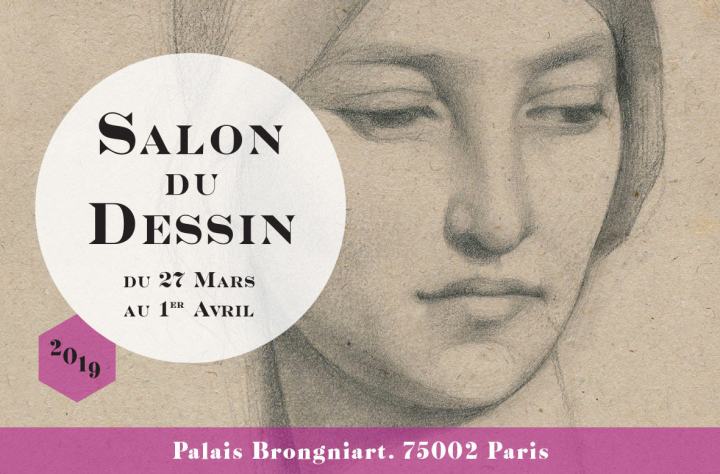
Salon du Dessin 2019

Posted in Art Market, conferences (to attend), exhibitions by Editor on March 28, 2019

From the press kit:

Salon du Dessin 2019
Palais Brongniart, Paris, 27 March — 1 April 2019

The eagerly anticipated Salon du Dessin will take place again this spring under the vaulted roof of Paris’s Palais Brongniart and will once again feature a selection of outstanding works on paper. among the 39 exhibitors from around the world will be four handpicked new galleries and two that are returning after an absence of a few years. Among the treasures on display will be rare drawings by egon schiele and Gustav Klimt, presented by the Austrian gallery Wienerroither & Kohlbacher, and a solo show of the work of contemporary artist Jean-Baptiste Sécheret on the stand of Galerie Jacques Elbaz. The German dealer Martin Moeller will celebrate 100 years of drawings from his country, while the Galerie de la Présidence features drawings by sculptors.

Juan Antonio Conchillos y Falcó, Academic Study, 1703; offered by Artur Ramon Art ($36,000).

The 28th edition of the art fair will also host two museum-level exhibitions. Festivities in Paris will feature drawings from the collection of the Musée Carnavalet-Histoire de Paris (currently closed for renovation until late 2019), while the Maison Chaumet will exhibit drawings of its jewelry in an exhibition on the theme of nature, curated by botanist Marc Jeanson, who worked on the magnificent exhibition Jardins at the Grand Palais in 2017.

Other highlights of the Salon du Dessin will be the presentation of the 12th Daniel and Florence Guerlain Drawing Prize and the return of a program of international symposia, which will focus on the performing arts this year. Drawing Week, a highly popular off-site event organized in partnership with over 20 museums and institutions, will offer access to graphic arts collections that are usually off-limits to the public.

W E D N E S D A Y ,  2 7  M A R C H  2 0 1 9

Occupying the Stage: Sets and Costumes
Chair: Jean-Claude Yon (Professor at the University of Saint-Quentin-en-Yvelines)

• Emmanuelle Brugerolles (Curator General at the École Nationale Supérieure des Beaux-Arts, Paris), Georges Focus and the Theater: Sets and Staging
• Rudi Risatti (Curator at the Theatermuseum in Vienna), The Magic Space: Technical and Aesthetic Solutions in Baroque Scenography as Seen in Drawings from the Theatermuseum in Vienna
• Marc-Henri Jordan (independent art historian, doctoral student, University of Lausanne), The Royal Academy of Music in Search of Draftsmen and Painters: Identification of Decorative Drawings and Clothing, ca. 1780
• Catherine Join-Diéterle (Curator General, former director of the Musée Galliera, Paris), Theater Sets in the Romantic Era: A New Approach to the Stage Area
• Marine Kisiel (Painting Curator at the Musée d’Orsay), ‘A Unique System of Lines’: The Body in Space in the Work of Edgar Degas
• Mathias Auclair (Director of the Music Department at the Bibliothèque Nationale de France, Paris), The Stage Seen as a Painting: The Birth of Scenography at the Paris Opera, 1914–1972

T H U R S D A Y ,  2 8  M A R C H  2 0 1 9

Occupying the City: Festivities and Ceremonies
Chair: Michel Delon (Professor at the University of Paris-IV Sorbonne)

• Franca Varallo (Professor at the university of Turin), Onorato Tiranti’s Il Laberinto de Groppi and Drawings for Festivities by Tommaso Borgonio
• Jérôme de La Gorce (Emeritus Research Director, CNRS- Centre André Chastel), Collections of Drawings Held in Paris and Madrid Illustrating Important Celebrations of the Marriage of Madame to the Infant of Spain, 1739
• Maria Ida Biggi (Director of the Centro Studi per la Ricerca Documentale sul Teatro Europeo Fondazione Cini, Venice), Le feste sull’acqua: Apparati per Napoleone
• Gaëlle Lafage (Postdoctoral Researcher, Université de Paris Sorbonne), Drawing as a Source of Study of Fireworks
• José de Los Llanos (Chief Curator, Head of the Musée Carnavalet’s Graphic art Department) and David Simonneau (Conservation Assistant, Musée Carnavalet Graphic art department), Festivals and Spectacles in the Collection of the Musée Carnavalet-Histoire de Paris, 17th–19th Centuries

Conference | 1802: Cultural Exchange between Paris and London

Posted in conferences (to attend) by Editor on March 28, 2019

Thomas Girtin, View of Pont de la Tournelle and Notre Dame, etching and aquatint, from A Selection of Twenty of the Most Picturesque Views in Paris, and Its Environs (London, 1803), RB 400000, (San Marino: The Huntington Library, Art Collections, and Botanical Gardens).

◊  ◊  ◊  ◊  ◊

From the program for the upcoming conference:

1802: Cultural Exchange between Paris and London during the Peace of Amiens
The Huntington Library, Art Collections, and Botanical Gardens, San Marino, 17–18 May 2019

This interdisciplinary conference illuminates the movement of writers, artists, scientists, and cultural goods between Paris and London during the fourteen months of peace ushered in by the Treaty of Amiens, from March 1802 through May 1803—the first break in hostilities after a decade of Revolutionary warfare. Registration information is available here.

Funding provided by The Dibner History of Science Program at The Huntington

F R I D A Y ,  1 7  M A Y  2 0 1 9

9:00  Registration and Coffee

9:30  Welcome by Steve Hindle (The Huntington) and Opening Remarks by Cora Gilroy-Ware (Isaac Julien Studio) and Paris Spies-Gans (Harvard University)

10:00  Session 1: Writers
Moderator: Kevin Gilmartin (California Institute of Technology)
• Susan Lanser (Brandeis University), Helen Maria Williams, Radical Sociability, and the Uneasy Peace of Amiens
• Kelly Summers (MacEwan University), Between Amiens and Amnesty: The Parisian Wanderings of the d’Arblays, c. 1802

12:00  Lunch

1:00  Session 2: Artists
Moderator: Hector Reyes (University of Southern California)
• Cora Gilroy-Ware (Isaac Julien Studio), Inferior Beauty: The (British) Artist’s Gaze on the Streets and in the Louvre
• Catherine Roach (Virginia Commonwealth University), ‘Great National Establishments’: Amiens and the Foundation of the British Institution

3:00 Break

3:15  Session 3: Publication
Moderator: Paula Radisich (Whittier College)
• Melinda McCurdy (The Huntington), Thomas Girtin’s Paris Venture
• Susan Siegfried (University of Michigan), Amelia Opie’s ‘Recollections of a Visit to Paris in 1802’

S A T U R D A Y ,  1 8  M A Y  2 0 1 9

9:30  Registration and Coffee

10:00  Session 4: Intellectual Exchanges
Moderator: Alexander Statman (Dibner Long-Term Research Fellow, The Huntington)
• Dena Goodman (University of Michigan), French Scientists Cross the Channel: Peace and the Advancement of Knowledge, Industry, and Agriculture
• Joshua Ehrlich (University of Macau), Alexander Hamilton, Asian Knowledge, and Anglo-French Competition

12:00  Lunch

1:00  Session 5: Material Culture
Moderator: Mary Terrall (University of California, Los Angeles)
• Courtney Wilder (University of Michigan), Revolutions and Rivalries in the Printed Textile Trade before, during, and after the Peace of Amiens
• Renaud Morieux (University of Cambridge), The ‘Obscene’ and ‘Infamous’ Trade between Britain and Europe around the Peace of Amiens

3:00  Break

3:15  Session 6: Shaping the Narrative
Moderator: Nathan Perl-Rosenthal (University of Southern California)
• Simon Macdonald (Queen Mary University of London), The Argus, or London Review’d in Paris: Mediascape between France and Britain during the Peace of Amiens
• Paris Spies-Gans (Harvard University), ‘In this Country the Law is on my Side:’ Marie Tussaud, the Peace of Amiens, and the Formation of a Wax Empire

5:15  Closing Remarks by Cora Gilroy-Ware, Dena Goodman, and Paris Spies-Gans

New Book | Art Crossing Borders

Posted in books by Editor on March 27, 2019

From Brill:

Jan Dirk Baetens and Dries Lyna, eds., Art Crossing Borders: The Internationalisation of the Art Market in the Age of Nation States, 1750–1914, Series: Studies in the History of Collecting & Art Markets, Volume 6 (Leiden: Brill, 2019), 351 pages, ISBN: 978-9004291980, €127 / $153.

Art Crossing Borders offers a thought-provoking analysis of the internationalisation of the art market during the long nineteenth century. Twelve experts, dealing with a wide variety of geographical, temporal, and commercial contexts, explore how the gradual integration of art markets structurally depended on the simultaneous rise of nationalist modes of thinking, in unexpected and ambiguous ways.

Jan Dirk Baetens (PhD, University of Leuven, 2011), is Assistant Professor at Radboud University Nijmegen. He has published widely on the nineteenth-century art market and on nineteenth-century historicism. He is preparing a book-length study on the Belgian history and historical genre painter Henri Leys.

Dries Lyna (PhD, University of Antwerp, 2010), is Assistant Professor at Radboud University Nijmegen. He has published on the art markets and material culture of eighteenth-century cities in the Low Countries, co-editing Concepts of Value in European Material Culture, 1500–1900 (2015). He is currently preparing a book on the rise of art auctions in the Austrian Netherlands.

C O N T E N T S

Acknowledgements
Figures
Contributors

• Jan Dirk Baetens and Dries Lyna, Towards an International History of the Nineteenth-Century Art Trade
• Jan Dirk Baetens and Dries Lyna, The Education of the Art Market: National Schools and International Trade in the ‘Long’ Nineteenth Century
• Bénédicte Miyamoto, ‘Directions to Know a Good Picture’: Marketing National School Categories to the British Public in the ‘Long’ Eighteenth Century
• Leanne Zalewski, Creating Cultural and Commercial Value in Late Nineteenth-Century New York Art Catalogues
• Barbara Pezzini, (Inter)national Art: The London Old Masters Market and Modern British Painting (1900–14)
• Camilla Murgia, The Artistic Trade and Networks of the Italian Community in London around 1800
• Lukas Fuchsgruber, Berlin – Paris: Transnational Aspects of French Art Auctions in the Middle of the Nineteenth Century
• Adriana Turpin, Appropriation as a Form of Nationalism? Collecting French Furniture in the Nineteenth Century
• Sharon Hecker, The Modern Italian Sculptor as International Entrepreneur: The Case of Medardo Rosso (1858–1928)
• Robert Verhoogt, Art Reproduction, and the Nation: National Perspectives in an International Art Market
• Pamela Fletcher and Anne Helmreich, Reframing the ‘International Art Market’

Index