Symposium | Water in Historic Gardens
From H-ArtHist:
Water in Historic Gardens as an Aesthetic Category and Natural Resource
Berlin-Brandenburg Academy of Sciences and Humanities, 19 June 2018
Registration due by 13 June 2018
In historic gardens and parks, water is both an essential aesthetic category and an indispensable natural resource. Water appears in a wide range of forms: outstretched lakes, bubbling fountains, or gentle ponds. Exploring a garden from its waterways optimally complements a stroll through the grounds—something visitors still love to do up to the present day.
Historic gardens—traditionally created as a Gesamtkunstwerk, embracing architecture, architectural staffages, and monuments within a natural setting—are highly dependent on the supply of water for very different types of vegetation. Consequently, the increasing number of drought events in the growing season and extreme summer heat as well as rapidly sinking groundwater tables may seriously affect the vitality of plants and trees. Likewise, raising groundwater can also be a major threat by impeding trees to grow roots into the deeper soil, hence, losing anchorage and thus becoming more susceptible to windthrow during storms.
This international symposium provides an opportunity to discuss such impacts and possible solutions to safeguard our historic parks and gardens with experts from Eastern Europe, with special focus on their relevance and applicability to the region of Berlin-Brandenburg.
Registration is available here»
P R O G R A M M E
2.00 Christoph Markschies (Vice-President of the Academy, HU Berlin), Introduction
2.15 Session 1
• Alexandra Veselova (Russian Academy of Sciences, St. Petersburg), The Water System of the 18th-Century Garden in Bogoroditsk (Tula region)
• Andrej Reyman (St. Petersburg), Water Fantasy in the Neva Delta: A Variety of Water Devices in the Gardens of St. Petersburg, 18th–20th Centuries
4.00 Coffee break
4.25 Session 2
• M. Norton Wise (University of California, Los Angeles), On the Social Aesthetics of Water and Steam in the Landscape Gardens of 19th-Century Berlin
• Vela Portugalskaya (The State Russian Museum, St. Petersburg), Hydrosystem of the Gardens of the Russian Museum in St. Petersburg: Its Transformation and Impact
• Boris Sokolov (Russian State University for the Humanities, Moscow), Aesthetics and Sustainability in the Russian Water Parks, from the Baroque to 21st Century
7:00 Closing Discussion
Chair: Christoph Markschies (Vice-President of the Academy, HU Berlin)
New Book | Jacques Pierre Jean Rousseau
From GHAMU and available from ArtBooks.com:
Jean-Loup Leguay, Jacques Pierre Jean Rousseau (1733–1801): Ingénieur et architecte en Picardie au siècle des lumières (Heule: Snoeck, 2018), 256 pages, ISBN: 978-9461614445, 32€ / $55.
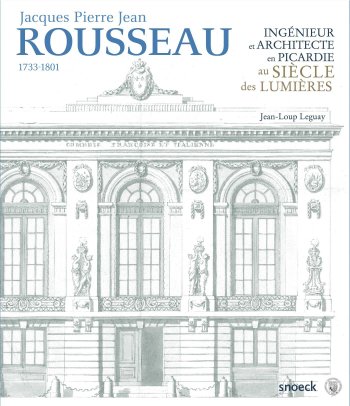 La monographie que Jean-Loup Leguay a consacré à Jacques Pierre Jean Rousseau (1733–1801), ingénieur et architecte en Picardie au Siècle des lumières, fera sa sortie en librairie au début du mois de mai 2018 ; il s’agira là du nouveau volume de la collection des Mémoires de la Société des Antiquaires de Picardie, publié en partenariat avec les éditions Snoeck.
Né à Saumur, Jacques Pierre Jean Rousseau arrive à Paris en 1752 et entre à l’École des ponts et chaussées. Formé au métier d’ingénieur des routes, il est désigné en 1757 pour servir en Picardie, région qu’il ne quittera plus. Vingt ans plus tard, il démissionne des Ponts et Chaussées et devient ingénieur municipal d’Amiens où il construit, tout comme à Abbeville, les derniers grands édifices publics du XVIIIe siècle. L’extraordinaire château de Saint-Gratien témoigne, quant à lui, de sa contribution à l’architecture privée.
Membre résidant de la Société des Antiquaires de Picardie, Jean-Loup Leguay est historien de l’art, spécialiste de l’architecture française au Siècle des lumières. Auteur de nombreux articles, il participe régulièrement aux différents colloques et publications organisés sur le sujet. Il a publié en 2010 le Guide de l’hôtel Biron : Musée Rodin.
Exhibition | Winckelmann and Curiosity
From Christ Church:
Winckelmann and Curiosity in the 18th-Century Gentleman’s Library
Upper Library at Christ Church, Oxford, 29 June — 26 October 2018
Curated by Amy Smith, K. C. Harloe, and Cristina Neagu
 To commemorate the Winckelmann anniversaries 2017/2018, Christ Church Library is preparing an exhibition and series of events in collaboration with the Faculty of Medieval and Modern Languages, University of Oxford and the Ure Museum of Greek Archaeology, University of Reading (a particularly appropriate partnership, since the University of Reading owes its origins to an extension college—University Extension College, Reading—founded by Christ Church in 1892).
Like many antiquarians of his day, the German art historian and archaeologist Johann Joachim Winckelmann (1717–1768) first learned about the ancient world through immersion in literature. As a teacher and then librarian in his native Germany, Winckelmann encountered the classics primarily through literary texts, as well as the souvenirs—coins, gems, and figurines—that grand tourists and other travellers had brought north from their visits to Italy. Once he arrived in Rome, where he rose to prominence at Prefect of Antiquities in the Vatican, Winckelmann studied the remains of Greek, Graeco-Roman, and Roman art on a larger scale. Through personal contacts, letters, and other writings, Winckelmann influenced his and subsequent generations of scholars, aesthetes, collectors, craftsmen and artists both within and beyond Italy.
Winckelmann and Curiosity in the 18th-Century Gentleman’s Library explores the scholar’s varied influence on the arts in Britain, through printed media, architecture, and decorative arts. This exhibition is part of the anniversary celebrations of the work of Winckelmann and particularly his impact on the reception of classical art in Britain. The exhibition will be launched with a symposium on Ideals and Nations: New perspectives on the European Reception of Winckelmann’s Aesthetics.
More information on the series of Winckelmann celebrations is available here»
Symposium | Ideals and Nations: Reception of Winckelmann’s Aesthetics
From Christ Church (with a PDF file of the program available here). . .
Ideals and Nations: New Perspectives on the European Reception of Winckelmann’s Aesthetics
Sir Michael Dummet Lecture Theatre, Christ Church College, University of Oxford, 29 June 2018
Organized by Fiona Gatty and Lucy Russell
To commemorate the Winckelmann anniversaries 2017/2018, Christ Church Library is preparing an exhibition and series of events in collaboration with the Faculty of Medieval and Modern Languages, University of Oxford and the Ure Museum of Greek Archaeology, University of Reading. Winckelmann and Curiosity in the 18th-Century Gentleman’s Library explores the scholar’s varied influence on the arts in Britain, through printed media, architecture, and decorative arts. The exhibition will be launched with a symposium on Ideals and Nations: New Perspectives on the European Reception of Winckelmann’s Aesthetics.
Registration information is available here»

Anton von Maron, Portrait of Johann Joachim Winckelmann, 1767, oil on canvas, 136 × 99 cm (Weimar: Stadtschloss).
P R O G R A M M E
9.30 Registration
10.15 Welcome from Martyn Percy (The Dean of Christ Church), Fiona Gatty (Oxford), and Lucy Russell (Oxford)
10.30 Session 1: Keynote Lecture
• Alex Potts (Michigan), Winckelmann: Historicity and Multiple Temporalities in the Art of Antiquity
11.15 Coffee and Biscuits
11.45 Session 2: France and Italy
• Fiona Gatty (Oxford), Clothing the Ideal: Winckelmann and the Costume Dictionaries of Late 18th-Century France
• Lucy Russell (Oxford), The Winckelmann Dilemma: Italy’s Nationalistic Response, 1755–1834
13.00 Lunch
14.30 Session 3: Germany and England
• TBC, From Winckelmania to the Wehrmacht: Receptions of Winckelmann in the German-Speaking World
• Helen Slaney (Roehampton), Winckelmann in English Travel Writing
15.45 Tea and Biscuits
16.15 Session 4: Keynote Lecture
• Elisabeth Décultot (Halle), History of Art and Ethnology: Winckelmann’s Panorama of the Ancient Peoples and Its Reception in the 18th Century
17.30 Drinks reception to launch the Ure Museum (University of Reading)/Christ Church Library collaborative exhibition Winckelmann in Italy: Curiosity and Connoisseurship in the 18th-Century Gentleman’s Study
19.30 Conference Dinner
Conference | Frenemies in British Art, 1769–2018
From EventBrite:
Frenemies: Friendship, Enmity, and Rivalry in British Art, 1769–2018
The Royal Academy of Arts, Lecture Theatre, London, 19–20 July 2018
Organized by Georgina Cole, Mark Hallett, Mark Ledbury, and Sarah Victoria Turner

Joshua Reynolds, Colonel Acland and Lord Sydney: The Archers, 1769, oil paint on canvas, 236 × 180 cm (London: Collection of Tate, T12033).
From the earliest histories of art, the friendships and rivalries of artists have been the subject of anecdote and gossip. For that reason they have been associated with the popular storylines of art, rather than with the scholarly discourse of art history. However, the wide-ranging re-evaluation of affect and emotion that is taking place in the humanities, and the increasing recognition of a synchronic, network model of understanding rather than a diachronic, emulative one in art history, have served to suggest that artistic friendships and rivalries are key agents in the production and reception of works of art. This methodological shift has helped art historians perceive the significance of interpersonal relationships to art-making. It has drawn attention to the sociability of artists, and to the entwining of their personal and professional networks. Meanwhile, across other disciplines, the impact of friendship, personal networks and communities of rivalry upon cultural production have been the subject of important studies. Furthermore, the idea of productive or inhibiting enmities (a more awkward but still profoundly important category of affective relationship) is also becoming a fruitful avenue of exploration.
The long history of British art furnishes many examples of complex and productive friendships and bitter, crushing rivalries. The Royal Academy, from its foundation to today, is one major locus of such complex affective networks, as has been its annual summer exhibition. In conjunction with the exhibition The Great Spectacle: 250 years of the Summer Exhibition, to be held at the Royal Academy between June and August of 2018, and curated by the Paul Mellon Centre’s Mark Hallett and Sarah Victoria Turner, this conference seeks to explore the impact of friendships and enmities on subject matter and artistic method, as well as on the formation of artistic careers and on the reception of works of art. We aim to re-evaluate elevate these relationships, shifting them from the peripheral status of cultural gossip to central aspects of making and meaning.
The symposium is funded by the Paul Mellon Centre for British Art and convened by Georgina Cole (The National Art School, Sydney), Mark Hallett, Mark Ledbury (The Power Institute, University of Sydney) and Sarah Victoria Turner.
T H U R S D A Y , 1 9 J U L Y 2 0 1 8
11.00 Registration and coffee
11.30 Welcome and Introduction
11.45 Session 1: Antagonism in the Academy, Part I
Chair: Georgina Cole (The National Art School, Sydney)
• Martin Postle ‘Alas, Poor Sir Joshua!’: James Barry and the Gentle Art of Making Frenemies
• Esther Chadwick, Mortimer’s Reynolds: Imitation and Independence in the Fifteen Etchings (1778)
12.45 Lunch break
14.15 Session 2: Antagonism in the Academy, Part II
Chair: Mark Ledbury (The Power Institute, University of Sydney)
• Wendy Bellion, Formal Old Fools? Joseph Wilton Sculpts William Pitt
• Zoë Dostal, Alliances, Grievances, and Failed Ambitions in Henry Singleton’s Royal Academicians
15.15 Break
15.30 Session 3: Victorian Networkers
Chair: Sarah Victoria Turner (Paul Mellon Centre)
• Pamela Fletcher, A Victorian Networker: The Case of Augustus Egg
• Robert Wilkes, ‘My quondam friend’: Frederic George Stephens, William Holman Hunt, and the Pre-Raphaelitism Controversy
16.30 Tea break
17.00 Final Panel with Mark Hallett (Paul Mellon Centre) and Georgina Cole
F R I D A Y , 2 0 J U L Y 2 0 1 8
8.30 Private view of The Great Spectacle: 250 Years of the Summer Exhibition
10.00 Coffee break
10.30 Session 5: Friendship and Difference
Chair: Sarah Victoria Turner
• David Cottington, Affective Relations and Professionalism: Friendship and the Artistic Avant-garde in London and Paris, c. 1888–1915
• Eleanor Jones, Barbara Ker-Seymer and Edward Burra: Staging and Framing Friendship in Interwar British Art
11.30 Break
11.45 Session 6: Formal Relations
Chair: Mark Ledbury
• Benjamin Harvey, The Society of Frenemies: Roger Fry, Walter Sickert, and the Art of Paul Cézanne
• Helen Ritchie, ‘Upholding the Dignity of Pots’ vs. ‘Flash and Bombastic’: Bernard Leach and William Staite Murray
12.45 Lunch break
14.00 Session 7: Family and Friends
Chair: Mark Hallett
• Hester Westley, The Family We Choose: Informing Friendships in the Art School Studio from the ‘Artist’s’ Lives’ Archive
• Hammad Nasar, Cumbrian Cosmopolitanisms: Li Yuan-chia & Friends
• Amy Tobin, Sibling Rivalry in the Women’s Art Movement
15.30 Tea break
16.00 Wrap-up discussion with Georgina Cole, Mark Ledbury, Sarah Victoria Turner, and Mark Hallett
Exhibition | Eternal Blooms: Chinese Painted Enamels

Round Potpourri, 18th century, Qing dynasty (1644–1911), enamel on copper (Cincinnati: Taft Museum of Art, bequest of Compton Allyn, 2014.001.49).
◊ ◊ ◊ ◊ ◊
From the Taft:
Eternal Blooms: Chinese Painted Enamels on Copper
Taft Museum of Art, Cincinnati, 2 March — 24 June 2018
Celebrate springtime with a lavish array of brightly colored flowers, fruits, and insects, all found decorating small utilitarian objects such as plates, bowls, and boxes. In the 17th century, Jesuit missionaries exported the painted enamel technique, which originated in Limoges, France, to Chinese workshops in Beijing and Guangzhou. During the 18th century, Chinese enamellers illustrated auspicious symbols drawn from the natural world as wishes for happiness, abundance, and long life in a wide range of newly available pastel colors. These rare and beautiful treasures are part of a generous bequest made in 2014 to the Taft Museum of Art from the late Reverend Compton Allyn, a collector and steadfast friend of the Taft. On view for the first time, this selection from his recent gift inaugurates a sequence of exhibitions to be held over the coming years, each of which will feature a different group of enamels.
Symposium | The Architecture of James Gibbs
From The Georgian Group:
The Architecture of James Gibbs
Society of Antiquaries of London, 29 September 2018
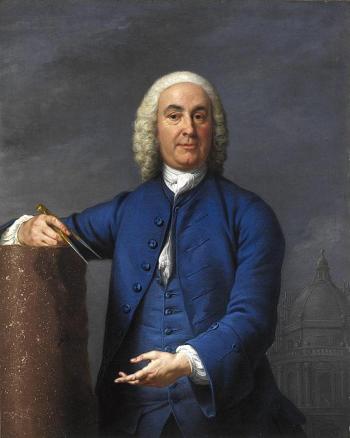
Andrea Soldi, Portrait of James Gibbs, ca. 1750 (Edinbrugh: National Galleries of Scotland, Scottish National Portrait Gallery).
Following successful conferences sponsored by the Group in previous years on John Nash and the Adam Brothers, the Georgian Group is organising a day-long symposium on the work of James Gibbs (1682–1754). Born in Scotland and trained in Rome, Gibbs was one of the most important British architects of the eighteenth century, responsible for such well-known buildings such as the church of St Martin-in-the-Fields in London and the Radcliffe Camera in Oxford, and for many other commissions, both public and private, throughout the British Isles. He also published one of the most influential of all eighteenth-century architectural pattern books, as a result of which his influence spread throughout the worldwide British diaspora. Drawing upon recent research, the symposium will reassess, and throw new light upon, his achievement and its significance for the understanding of Georgian architecture.
The symposium will be held from 10am to 5.15pm and will be led by Dr Geoffrey Tyack, editor of The Georgian Group Journal. Speakers will include leading authorities on eighteenth-century British architecture and decorative art—among them Andrew Martindale, Peter Guillery, Richard Hewlings, Charles Hind, Hugh Petter, and Alec Cobbe—and younger scholars. There will be papers on Gibbs’s Scottish background and his training in Rome; his work in London; his university buildings in Oxford and Cambridge; his country houses in both Britain and Ireland; his contribution to interior design, with special reference to plasterwork; his transatlantic influence; his portrait busts; and his relevance to the classical architecture of our own day.
Following the symposium there will be a reception at the church of St Peter, Vere Street (just north of Oxford Street), built to Gibbs’s designs in 1721–24, with superb plasterwork by the Swiss-Italian plasterers Artari and Bagutti.
Student tickets: A number of tickets at reduced rates are available for students registered on a degree-level course (both full-time and part-time).
P R O G R A M M E
9.30 Registration
10.00 Opening address
Session 1
• Andrew Martindale, ‘Mr Gibbs, the Scottish Architect’
• William Aslet, Gibbs: Knowledge and the Fashioning of a Professional Reputation in London
• Alex Echlin, James Gibbs and the historiography of Early Eighteenth-Century English Architecture
Break
Session 2
• Peter Guillery, James Gibbs and the Cavendish-Harley Estate in Marylebone
• Geoffrey Tyack, Gibbs in Cambridge and Oxford
• Ann-Marie Akehurst, Inferior to None: James Gibbs, the Royal Naval Hospital at Stonehouse, and l’affaire de l’Hotel-Dieu
Session 3
• Richard Hewlings, Gibbs’s Scale Bars
• Jenny Saunt, Ornament and the Architect: James Gibbs’s Interactions with Decorative Plasterwork and Furniture
Lunch
Session 4
• Ricky Pound, James Gibbs and the Octagon Room at James Johnston’s Villa at Twickenham
• Pete Smith, Gibbs at Kiveton Park, Yorkshire
• Alec Cobbe, The Path of a James Gibbs Discovery: Newbridge House, Ireland
Break
Session 5
• Michael Bevington, James Gibbs and His Garden Buildings at Stowe: Inventor and Mentor
• Charles Hind, Transatlantic Influence: A Book of Architecture and the American Colonies
• Dana Josephson, Portrait Busts of Gibbs: New Discoveries
• Hugh Petter, James Gibbs and the Enduring Legacy of Popular Classical Architecture
5.45 Reception at St Peter, Vere Street
New Book | Cadogan & Chelsea
Published by Unicorn and distributed by The University of Chicago Press:
Beatrice Behlen, Amber Butchart, John Julius Cooper, Brent Elliott, Alan Powers, John Simpson, and Alwyn Turner, Cadogan & Chelsea: The Making of a Modern Estate (London: Unicorn Publishing, 2017), 224 pages, ISBN: 978-1910787434, £50 / $75.
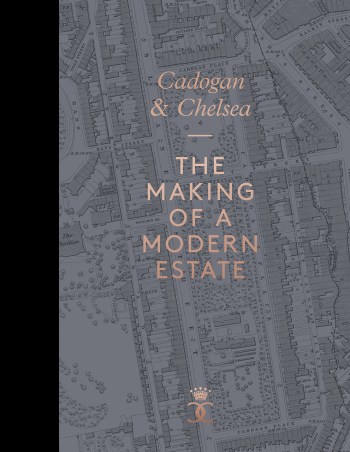 The Cadogan Estate in Chelsea is one of the few remaining ancient family estates in London, covering one of the capital’s most dynamic, thriving and fashionable districts. Its foundations were laid in 1717, when Charles, Second Baron Cadogan married the daughter of Sir Hans Sloane, who had purchased the Manor of Chelsea in 1712. This lavish book celebrates the family’s three-hundred-year stewardship of the estate, which today is in the hands of the present Viscount Chelsea, who succeeded his father, Earl Cadogan, as group chairman in 2012.
Beautifully illustrated, this collection of essays by expert commentators looks at the history and lineage of this noble family and the formation of the Estate as we know it today.
Exhibition | Afro-Atlantic Histories
From ArtForum:
Histórias Afro-Atlânticas / Afro-Atlantic Histories
Museu de Arte de São Paulo (MASP) and concurrently at Instituto Tomie Ohtake, São Paulo, 28 June — 21 October 2018
Curated by Adriano Pedrosa, Ayrson Heráclito, Hélio Menezes, Lilia Schwarcz, and Tomás Toledo
In the most violent and uncertain times of its recent history, Brazil is revisiting the origins of its racial frictions: the slave trade. Histórias afro-atlânticas (Afro-Atlantic Histories) is a massive, 380-work survey of African, Latin American, and European art from the past five centuries, chronicling the largest diaspora in modern history. Nearly half of all Africans captured by slave traders were brought to Brazil, from the time the Portuguese arrived, in the sixteenth century, all the way through the nineteenth century. The show is a sequel to Histórias mestiças (Mestizo Histories), staged four years ago at the Instituto Tomie Ohtake, the cultural center that is also cohosting the current exhibition. Its scope is far-reaching, with pieces by colonial-era Dutch master Albert Eckhout and modern greats Théodore Géricault and Paul Cézanne, as well as contemporary art-world darlings Glenn Ligon, Kara Walker, and Hank Willis Thomas. A fully illustrated catalogue and companion reader will help sharpen our perspective on it all.
As noted in the May–August 2018 bulletin from the Yale Center for British Art, the YCBA has loaned six works including four paintings by Agostino Brunias (1728–1796).
Note (added 14 October 2018) — Reviewing the exhibition for The New York Times (12 October 2018), Holland Cotter describes it as “a hemispheric treasure chest, a redrafting of known narratives, and piece for piece one of the most enthralling shows I’ve seen in years, with one visual detonation after another.” The full review is available here.
Call for Papers | Hidden in Plain Sight
From the conference flyer:
Hidden in Plain Sight: Meanings and Messages in Ceramics, 1650–1950
Rienzi Biennial Symposium, Museum of Fine Arts, Houston, 21–22 September 2018
Proposals due by 15 July 2018

Chinese, Masonic Punch Bowl, ca. 1750–70, hard-paste porcelain (The Museum of Fine Arts, Houston, the Rienzi Collection, 74.216).
Rienzi, the house museum for European decorative arts of the Museum of Fine Arts, Houston, begins the celebrations for its 20th anniversary as a public collection with a symposium featuring international emerging scholars, Hidden in Plain Sight: Meanings and Messages in Ceramics, 1650–1950. Scholars are asked to discuss objects made for rare or unlikely uses, display, or celebration. We ask participants to examine the use of ceramics as vehicles for concealed language regarding humor, courtship, diplomacy, learning, class, and contemporary culture.
Rienzi houses a significant collection of European paintings, sculpture, furniture, porcelain, and silver from the mid-17th through mid-19th centuries. Built in 1953 as a residence and opened to the public as a house museum in 1999, Rienzi evokes fine European houses of the 18th century with architecture reminiscent of the Italian Palladian style, surrounded by period European decorative arts and paintings. Rienzi is particularly rich in 18th-century European porcelains, thanks to the collecting interests of Harris and Carroll Masterson, its founding collectors. This scholarly exploration of ceramics honors their legacy and philanthropic spirit.
Master’s and doctoral students as well as entry level and mid-career professionals are invited to submit a 400-word abstract outlining a 20-minute presentation, along with a CV, to sniemeyer@mfah.org by 15 July 2018. Selected participants will be notified by 1 August 2018 and will be offered a $600 stipend for travel and lodging. All presentations are given Saturday, 22 September 2018, at the Museum of Fine Arts, Houston. The keynote lecture is held Friday evening, followed by a reception at the Museum of Fine Arts, Houston.
Possible themes of investigation may include, but are not limited to
• Display
• Dining
• Privacy
• Social pastimes
• Etiquette
• Gender
• Travel
• Economics
• Politics
• Beauty
• Print culture
• Secret societies










 Enfilade
leave a comment