Cleveland Acquires Wright’s Portrait of Charles Heathcote
From the museum’s press release (27 September 2017). . .

Joseph Wright of Derby, Portrait of Colonel Charles Heathcote, ca. 1771–72; oil on canvas, 50 × 40 inches (The Cleveland Museum of Art).
The Cleveland Museum of Art’s recent acquisitions include a portrait of Colonel Charles Heathcote by British artist Joseph Wright of Derby; a drawing by German Expressionist Oskar Kokoschka; a 14th-century Japanese hanging scroll featuring the Buddhist deity Aizen Myōō, Wisdom King of Passion; and a monumental oil painting on canvas by contemporary Chinese artist Liu Wei.
Often described as among the artist’s most successful and appealing portraits, Joseph Wright of Derby’s Portrait of Colonel Charles Heathcote is one of a limited group of small-scale likenesses made in the early 1770s, depicting the figures at full length in a landscape setting. The subject, Charles Heathcote, of Derby, joined the army in 1745 at the age of 15 and rose through the ranks. At the time of his retirement in 1772, Heathcote was a Lieutenant-Colonel in the 35th Foot (Royal Sussex).
The figure is painted in a relatively soft and smooth technique: facial features are carefully characterized and minute attention paid to rendering details of costume. However, the landscape is painted in a more energetic, almost impressionistic, technique. Indeed, Wright gave the landscape as much personality and presence as he did Heathcote himself. The group of small-scale portraits to which the Portrait of Colonel Charles Heathcote belongs mark the beginnings of Wright’s interest in landscape painting.
This innovative approach to combining figure and landscape was not particularly well received by critics at the time, who were more accustomed to portraits entirely dominated by a figure alone. When viewed close up, the variance in technique can seem jarring, but when viewed from the intended few steps away, Wright’s radical approach results in a compelling image of an elegant figure in verdant natural surroundings. Wright painted the landscape in bold, broad brushstrokes that call attention to artistic process in a way that seems dazzlingly modern for a painting executed in 1771–72.
Joseph Wright’s Portrait of Colonel Charles Heathcote makes a striking addition to the museum’s display of eighteenth-century British art. It complements and offers a counterpoint to the full-length, life-sized Grand Manner portraits by Thomas Gainsborough, Thomas Lawrence, and Joshua Reynolds in the collection. . .
The full press release is available here»
Exhibition | Chaekgeori: Korean Painted Screens
In terms of objects, it is a nineteenth-century exhibition, but this fascinating genre dates to the late eighteenth century. From SUNY Press:
Chaekgeori: Pleasure of Possessions in Korean Painted Screens
Charles B. Wang Center, Stony Brook University, 29 September — 23 December 2016
Spencer Museum of Art, The University of Kansas, 15 April — 11 June 2017
The Cleveland Museum of Art, 5 August — 5 November 2017
 Chaekgeori explores the genre of Korean still-life painting known as chaekgeori (loosely translated as ‘books and things’). Encouraged and popularized by King Jeongjo (1752–1800, r. 1776–1800) as a political tool to promote societal conservatism against an influx of ideas from abroad, chaekgeori was one of the most enduring and prolific art forms of Korea’s Joseon dynasty (1392–1910). It depicts books and other material commodities as symbolic embodiments of knowledge, power, and social reform.
Chaekgeori has maintained its popularity in Korea for more than two centuries, and remains a force in Korean art to this day. No other genre or medium in the entirety of Korean art, including both court and folk paintings, has so engaged and documented the image of books and collectable commodities and their place in an ever-evolving Korean society. When it transitioned into folk-style painting, unexpected and creative visual elements emerged. Folk versions of chaekgeori from the eighteenth and nineteenth centuries often show an exquisite fusion of Korean and Western composition that feels modern to our contemporary eyes. Not only books but many other commodities are depicted to represent the commoner’s desire for higher social status, wealth, and knowledge.
The first large-scale traveling exhibition of its kind to be published, The Power and Pleasure of Possessions in Korean Painted Screens is made possible by generous grants from the Korea Foundation and the Gallery Hyundai.
Byungmo Chung and Sunglim Kim, eds., Chaekgeori: The Power and Pleasure of Possessions in Korean Painted Screens (Albany: State University of New York Press, 2017), 250 pages, ISBN: 978 14384 68112, $60.
Byungmo Chung is Professor in the Department of Cultural Assets at Gyeongju University, Korea. He was a visiting scholar in the Department of Asian Cultures and Languages at Rutgers University and President of the Korean Folk Painting Society. His scholarship focuses on the genre paintings and Minhwa—the folk painting of Korea. He has organized several Minhwa exhibitions in Korea and written numerous articles and books about Korean folk and genre paintings, including Chaesaekhwa: Polychrome Paintings of Korea.
Sunglim Kim is Assistant Professor of Korean Art History in the Department of Art History and the Asian and Middle Eastern Studies Program, Dartmouth College. Her scholarship focuses on premodern and early twentieth-century Korean art and culture, including the rise of consumer culture and the role of professional nouveau riche in late Joseon Korea, Japanese colonial photographs of Korea, and Korean women artists. She has curated several exhibitions in the United States and written numerous publications on Korean art.
Exhibition | Théâtre du Pouvoir
Press release (via Art Daily) for the exhibition now on view at the Petite Galerie of the Louvre:
Power Plays / Théâtre du Pouvoir
Musée du Louvre, Paris, 27 September 2017 — 2 July 2018
Curated by Paul Mironneau and Jean-Luc Martinez with Florence Dinet
 The Petite Galerie exhibition for 2017–18 focuses on the connection between art and political power. Governing entails self-presentation as a way of affirming authority, legitimacy, and prestige. Thus, art in the hands of patrons becomes a propaganda tool; but it can also be a vehicle for protest and subverting the established order. Spanning the period from antiquity up to our own time, forty works from the Musée du Louvre, the Musée National du Château de Pau, the Château de Versailles, and the Musée des Beaux-arts de la Ville de Paris illustrate the evolution of the codes behind the representation of political power.
The exhibition is divided into four sections. ‘Princely Roles’: The first room presents the king’s functions—priest, builder, warrior/protector—as portrayed through different artistic media. Notable examples are Philippe de Champaigne’s Portrait of Louis XIII, Léonard Limosin’s enamel Crucifixion Altarpiece, and the Triad of Osorkon II from ancient Egypt.
‘Legitimacy through Persuasion’: The focus in the second room is on the emblematic figure of Henri IV, initially a king in search of legitimacy, then a model for the Bourbon heirs from Louis XVI to the Restoration. Features include sculptures by Barthélémy Prieur and François-Joseph Bosio and paintings by Frans Pourbus the Younger, Ingres, and others.

Antoine-François Callet, Portrait of Louis XVI, 1778, oil on canvas (Château du Versailles).
‘The Antique Model’: The theme of the third room is the equestrian statue. The Louvre is home to several remarkable examples, among them the Barberini Ivory leaf, a bronze of Charles the Bald, and François Girardon’s Louis XIV.
‘The Insignia of Power’: In the fourth room majestic portraits of monarchs, including Antoine-François Callet’s Portrait of Louis XVI, François Gérard’s Portrait of Napoleon I, and Franz-Xaver Winterhalter’s Portrait of Louis Philippe, are accompanied by the regalia used during the coronation of the kings of France. This final section also highlights the dramatic historical and representational changes that came with the French Revolution.
“By providing keys to the observation and explanation of different artworks, the Petite Galerie sets out to make the visit to the museum an enjoyable and enlightening experience” says Jean-Luc Martinez, president-director of the Musée du Louvre. Informative labels and digital touchscreen displays encourage attention to detail and help to establish context. In addition, five themed tours of the Louvre’s permanent collection are proposed: 1) Royal Roles and Representational Codes in the Ancient East, 2) The Pharaoh, 3) The Powers of the Roman emperor, 4) The Islamic Sovereign, and 5) The King as Artist and Patron.
◊ ◊ ◊ ◊ ◊
The Louvre’s Petite Galerie opened in 2015:
A new exhibition space at the heart of the museum, the Petite Galerie is designed to be open to all with particular focus on young visitors and their accompanying adults. An unprecedented project, the Petite Galerie draws on the museum’s experience gained in the field of art and cultural education. Each year, this ambitious project develops an overarching theme to give visitors a unique encounter with a variety of artworks and enrich the way they look at them. From October to June, an exhibition of around forty original and multidisciplinary works from the collections of the Louvre and other French national museums will be presented on a chosen theme.
In addition to the temporary exhibition, the project will also be rolled out in two other areas:
• online via a Web site and an innovative digital environment (applications, e-learning, collaborative platforms, etc.),
• and beyond the museum walls through traveling outreach initiatives for all audiences (cultural institutions, companies, schools, etc.).
A budget of 5 million euros has been allocated for the gallery program and its first five years of operation. Resources and publications will be available to all visitors, while activities and events will also be organized to engage audiences of different ages. Readings, storytelling, films, concerts, conferences, and talks held in the Louvre Auditorium will also reflect the year’s chosen theme. In keeping with French Ministry of Culture and Ministry of Education guidelines, the Petite Galerie will also provide an opportunity for the Louvre to strengthen cooperation with major partners (institutions, museums, media), as well as associations and local authorities, to forge ties that extend the project’s reach outside of the museum.
New Book | The Conversation Piece
From Yale UP:
Kate Retford, The Conversation Piece: Making Modern Art in Eighteenth-Century Britain (London: Paul Mellon Centre for Studies in British Art, 2017), 440 pages, ISBN: 978 030019 4807, $75.
 Pioneered by William Hogarth (1697–1764) and his peers in the early eighteenth century, and then revitalized by Johan Zoffany (1733–1810), the conversation piece was an innovative mode of portraiture, depicting groups posed in landscape or domestic settings. These artists grappled with creating complex multi-figured compositions and intricate narratives, filling their paintings with representations of socially, nationally, and temporally precise customs. Paying particular attention to the vibrant (and at times fabricated) interior and exterior settings in these works, Kate Retford discusses the various ways that the conversation piece engaged with the rich material culture of Georgian Britain. The book also explores how these portraits served a wide array of interests and concerns among familial networks and larger social groups. From codifying performances of politeness to engaging in cross-cultural exchanges, the conversation piece was a complex and nuanced expression of a multifaceted society.
Kate Retford is senior lecturer in 18th- and early 19th-century art at Birkbeck, University of London.
Survey of Scholarly Reading Practices
Dear Colleagues,
 Oxford University Studies in the Enlightenment (formerly, Studies on Voltaire and the Eighteenth Century) is undertaking our first-ever reader survey, and we are seeking your help to complete the Oxford University Studies in the Enlightenment survey of scholarly reading practices.
Published by the Voltaire Foundation at the University of Oxford, the Studies has been publishing scholarly work on the Enlightenment since 1955. This longevity is due in good part to its strong bond with you—our readers, authors and reviewers. As we move forward into our seventh decade, the editorial team seeks to ensure that we continue to publish innovative research on topics at the forefront of the field—and to make this work as widely accessible as possible. Hence we are asking, in this survey, how our community accesses scholarship—both print and digital. The survey requires fewer than 15 minutes to complete and can be taken in either English or French. It opens for responses on Wednesday, September 27, and will remain open until Sunday, October 29.
No identifying information about respondents will be retained outside of the survey responses. All responses will be kept anonymous and confidential. Aggregated findings will be shared with the scholarly community in due course. Further details concerning the survey are available here.
To take the survey, please follow this link: Oxford University Studies in the Enlightenment survey of scholarly reading practices
In recognition of your commitment to Enlightenment values of tolerance and international humanism, the Voltaire Foundation will make charitable contributions to Amnesty International and Médecins Sans Frontières, for each survey completed.
Please address any questions or concerns to Gregory.Brown@voltaire.ox.ac.uk. Thank you for your support of Oxford University Studies in the Enlightenment!
Exhibition | Opera: Passion, Power, and Politics
Press release for the exhibition opening this weekend at the V&A:
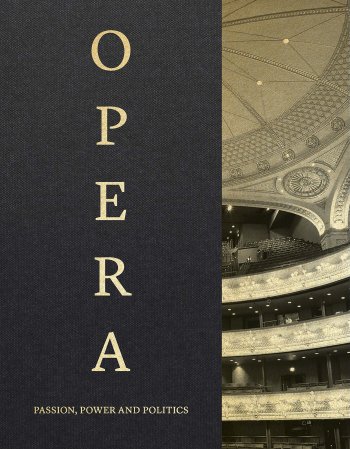
Opera: Passion, Power and Politics
Victoria and Albert Museum, London, 30 September 2017 — 25 February 2018
Curated by Kate Bailey
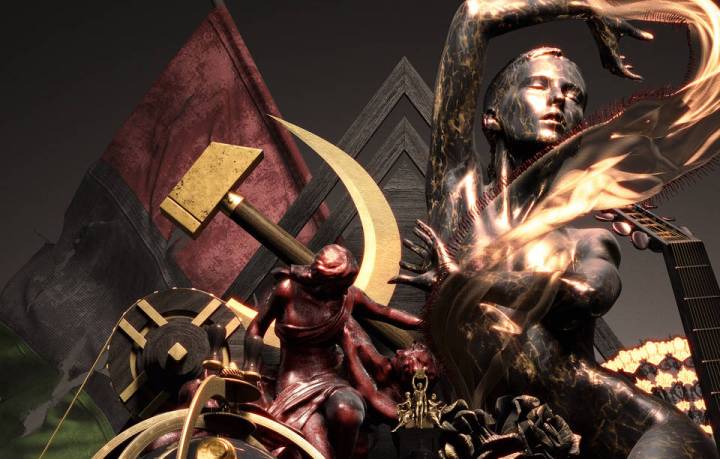
This autumn the Victoria and Albert Museum, in collaboration with the Royal Opera House, will create a vivid and immersive journey through nearly 400 years of opera, exploring its passion, power and politics. The only exhibition ever to explore opera on a grand scale, it will immerse visitors in some key moments of the history of European opera from its roots in Renaissance Italy to its present-day form, by focusing on seven operatic premieres in seven cities. It will reveal how opera brings together multiple art forms to create a multi-sensory work of art, and show how social, political, artistic and economic factors interact with great moments in the history of opera to tell a story of Europe over hundreds of years.
 More than 300 extraordinary objects, including important international loans, will be shown alongside digital footage of compelling opera performances. Objects on display include Salvador Dali’s costume design for Peter Brook’s 1949 production of Salome; Music in the Tuileries Gardens by Edouard Manet, a masterpiece of modernist painting contextualising Wagner’s modern approach to music in 1860s Paris; the original score of Verdi’s Nabucco from the Archivio Storico Ricordi in Milan; and one of two surviving scores from the first public opera (L’incoronazione di Poppea) will be on display. Original material from the 1934 St Petersburg premiere of Shostakovich’s avant-garde Lady Macbeth of Mtsensk will be reunited and displayed outside Russia for the first time: these include the composer’s original autograph score, along with stage directions, libretto, set models and costume designs.
World-leading opera performances will be played via headphones, dynamically changing as you explore the cities and objects, to create an evocative and fully immersive sound experience. The exhibition will include a powerful new recording of the Royal Opera Chorus singing ‘Va pensiero’ (the Chorus of the Hebrew Slaves) from Giuseppe Verdi’s Nabucco, experienced in a 360-degree sound installation.
Opera: Passion, Power and Politics will be the first exhibition staged in the V&A’s purpose-built Sainsbury Gallery, one of the largest exhibition spaces in Europe, opening beneath the new Sackler Courtyard as part of the Exhibition Road Building Project. It will be accompanied by live events and other digital initiatives from BBC Arts in collaboration with the V&A, Royal Opera House and high-profile opera companies from across the UK to convey opera to a wider audience. To coincide, BBC Music will be working with the V&A interpreting themes from the exhibition across television and radio, including a landmark BBC Two documentary series exploring many of the same operas and cities, presented by Lucy Worsley and featuring The Royal Opera’s Music Director and Music Director of the V&A exhibition, Sir Antonio Pappano. Other activity will include live outside broadcasts, recordings of live performances of all seven featured operas on BBC Radio 3, and episodes of its flagship In Tune and Music Matters programmes—broadcast live from the museum. A partnership with King’s College London, the Royal Opera House and the V&A will create a free MOOC (Massive Open Online Course) introducing the core tenets of opera.
Kate Bailey, V&A curator of the exhibition, said: “Opera: Passion, Power and Politics will be an ambitious exhibition from the V&A, the world-leader in innovative performance exhibitions. We are delighted to be working so closely with the Royal Opera House, drawing together their expertise with the V&A’s broad collections to bring the total art form of opera to life in a stunning new space.”
Kasper Holten, The Royal Opera’s outgoing Director of Opera, said: “One of the first things I did when I arrived in London in 2011 was to reach out to leaders of other important cultural organisations. But I could not have imagined then that my first meeting with Martin Roth (then director of the V&A) would have resulted in an incredible collaborative journey that now results in this marvellous and immersive exhibition being born. The exhibition will show us opera as the soundtrack to the history of Europe. We hope to show audiences—both those in love with opera already and those who are still missing out—that the art form is alive and kicking and has as much to say to the society around it today as it did 400 years ago.”
The seven cities and premieres are:
Venice — Monteverdi’s L’incoronazione di Poppea, 1642. The narrative of the exhibition will begin in Venice, a Renaissance centre of entertainment, gambling and disguise, with a sumptuous painting of composer Barbara Strozzi depicted as a courtesan. The original surviving manuscript score of Monteverdi’s L’incoronazione di Poppea—an opera exploring scandal and ambition, which premiered in Venice’s Carnival season 1642-43—represents opera’s transition from private court entertainment to the public realm.

Louis François Roubiliac, George Frideric Handel, before 1738, terracota (The Fitzwilliam Museum, University of Cambridge, M.3-1922).
London — Handel’s Rinaldo, 1711. In 1711 Handel’s Rinaldo was premiered—one of the first Italian language operas performed in London, as the city emerged as a global trade centre. A dramatic, kinetic set will re-create the premiere’s elaborate staging, which caused a sensation at the time. The fashion for castrat0 singers will be shown through paintings and rare surviving costumes. Tensions at the time between the incoming European-inspired opera and traditional theatre are highlighted in a Hogarth engraving depicting crowds attending the opera as Shakespeare’s plays are wheeled away.
Vienna — Mozart’s Le nozze di Figaro, 1786. Mozart’s comic opera Le nozze di Figaro premiered in 1786 in Vienna, a centre of the Enlightenment. Its characters were drawn from everyday life and the singers wore contemporary costume on stage. Fashionable dress as worn by Mozart’s Count and Countess Almaviva will be on display. The role of the composer will be examined through the figure of Mozart, and a piano he played on a visit to Prague will travel for the first time for the exhibition.
Milan — Verdi’s Nabucco, 1842. The growing importance of the chorus is explored through Giuseppe Verdi’s Nabucco which premiered in Milan in 1842. The opera’s ‘Chorus of the Hebrew Slaves’ (‘Va pensiero’) became an unofficial national anthem for Italy after the events of the Risorgimento led to the country’s unification.
Paris — Wagner’s Tannhäuser, 1861. In the 1860s opera enjoyed a high status in Paris, a city undergoing huge transformations. The 1861 Paris premiere of Richard Wagner’s Tannhäuser, which he had revised specially for performances in the city, polarised audiences, but Wagner’s vision for the art form proved inspirational for artists and writers.
Dresden — Strauss’s Salome, 1905. Richard Strauss’s explosive modernist opera Salome premiered in 1905 in Dresden, a progressive city in the grip of artistic expressionism, as depicted in Erich Heckel’s painting of the suburbs. The opera’s reception and the shifting perceptions of women that the story reflected will be examined. The exhibition also includes many depictions of Salome, from Aubrey Beardsley’s illustrations to a Versace costume design.
St Petersburg — Shostakovich’s Lady Macbeth of Mtsensk, 1934. The final opera explored in detail is Shostakovich’s Lady Macbeth of Mtsensk. Initially embraced by audiences at its St Petersburg premiere in 1934 as an expression of new Soviet opera, it was banned under political censorship in 1936. Shostakovich did not write another opera. Both avant-garde and propaganda material will be on display alongside a painting inspired by Shostakovich’s First Symphony by Pavel Filonov, rarely seen outside Russia.
Footage from 20th- and 21st-century premieres will create a finale showing how opera has moved from Europe across the world and continues to take on new forms. The operas include Benjamin Britten’s Peter Grimes, Philip Glass’s Einstein on the Beach, Stockhausen’s Mittwoch aus Licht, and George Benjamin’s Written on Skin.
Kate Bailey, ed., Opera: Passion, Power, Politics (London: Bloomsbury, 2017), 304 pages, ISBN: 9781851779284, $75.
Exhibition | The Princes of Rambouillet: Family Portraits
From Versailles:
The Princes of Rambouillet: Family Portraits
Château de Versailles, 15 September 2017 — 22 January 2018
 On the occasion of the reopening of the Château de Rambouillet, the Centre des Monuments Nationaux and the Palace of Versailles present the The Princes of Rambouillet: Family Portraits, on view from 15 September 2017 to 22 January 2018. Ten or so portraits from the collections of the Palace of Versailles will cast a spotlight on the Bourbon-Toulouse-Penthièvre family, who owned Rambouillet for almost all of the 18th century. The château was embellished and the estate largely extended over two generations, first by the Count of Toulouse, the legitimated son of Louis XIV and Madame de Montespan who bought the marquisate of Rambouillet from Fleuriau d’Armenonville in 1706, and then by his son, the Duke of Penthièvre, who was obliged to part with the estate in 1783 upon command by Louis XVI.
The exhibition will feature famous works such as the Portrait of the Count of Toulouse as a Sleeping Putto by Mignard and the famous Cup of Hot Chocolate by Charpentier, alongside lesser-known but just as evocative portraits like that of the Princess of Lamballe by Ducreux or the Duke of Valois in the Cradle by Lépicié, the latter being displayed for the first time since its recent purchase by the Palace of Versailles.
Raphaël Masson, Les Princes de Rambouillet: Portraits de Famille (Paris: Éditions du Patrimoine, 2017), 36 pages, ISBN : 9782757705742, 6€.
Lunch Lecture | Ulrich Leben on German Cabinetmakers in Paris
Upcoming at the BGC (the lecture is scheduled to be livestreamed; see the website for details). . .
Ulrich Leben, Cabinetmakers of German Origin in Eighteenth-Century Paris
A Chapter in European History of Migration and Transfer of Knowledge and Craft in the Age of Enlightenment
Bard Graduate Center, New York, 9 October 2017
Ulrich Leben will be giving a Brown Bag Lunch presentation on Monday, October 9, at 12:15pm. His talk is entitled “Cabinetmakers of German Origin in Eighteenth-Century Paris: A Chapter in European History of Migration and Transfer of Knowledge and Craft in the Age of Enlightenment.”
The fact that a large number of cabinetmakers working in Paris during the eighteenth century were of German origin is well known. It is therefore surprising that there has never been research on the lives and work of these more than one hundred craftsmen. This talk will present various aspects of a project currently being undertaken by Dr. Ulrich Leben and Miriam Schefzyk on these craftsmen and provide insight into archive-based research in France and abroad exploring questions regarding social, economic, and cultural circumstances. A major goal of this project is the publication of a dictionary of these craftsmen that will be a tool for further work in the field.
E. Ulrich Leben is an independent art historian based in Paris and Associate Curator for the Rothschild Collection at Waddesdon Manor in Buckinghamshire. He teaches classes on French and German decorative arts and interior architecture for the European programs of Parsons, The New School. From 2010 to 2015 he was Visiting Professor and Special Exhibitions Curator at Bard Graduate Center, where in 2013 he co-curated the exhibition Salvaging the Past: Georges Hoentschel and French Decorative Arts from The Metropolitan Museum of Art. After an apprenticeship as a cabinetmaker in Germany he studied the History of Art at the École du Louvre in Paris and received his PhD at the Rheinische Friedrich Wilhelm Universität in Bonn. He is the author of numerous articles and exhibition catalogues on the history of French and German interiors and furniture design.
Call for Nominations | Eldredge Book Prize
2018 Charles C. Eldredge Prize
Nominations due by 1 December 2017
The Smithsonian American Art Museum is now accepting nominations for the 2018 Charles C. Eldredge Prize. The prize is given annually by the museum for outstanding scholarship in the field of American art. A cash award of $3,000 is made to the author of a recent book-length publication that provides new insights into works of art, the artists who made them, or aspects of history and theory that enrich our understanding of the artistic heritage of the United States. The Eldredge Prize seeks to recognize originality and thoroughness of research, excellence of writing, clarity of method, and significance for professional or public audiences. It is especially meant to honor those authors who deepen or focus debates in the field, or who broaden the discipline by reaching beyond traditional boundaries.
Single-author books devoted to any aspect of the visual arts of the United States and published in the three previous calendar years (2015–2017) are eligible. To nominate a book, please send a one-page letter explaining the work’s significance to the field of American art history and discussing the quality of the author’s scholarship and methodology. Nominations by authors or publishers for their own books will not be considered. The deadline for nominations is December 1, 2017. Please send them to: The Charles C. Eldredge Prize, Research and Scholars Center, Smithsonian American Art Museum, P.O. Box 37012, MRC 970, Washington, D.C. 20013-7012. Nominations will also be accepted by email: eldredge@si.edu, or fax: (202) 633-8373. Further information about the prize may be found here.
New Book | Longford Castle
With the Bouverie family’s purchase of Longford Castle in 1717, the launch of the book coincides with the tercentenary of the family’s ownership of the house. From Unicorn Publishing:
Amelia Smith, Longford Castle: The Treasures and the Collectors (London: Unicorn Publishing, 2017), 208 pages, ISBN: 9781910787687, £40.
 Longford Castle is a fine Elizabethan country house, home to a world-class collection of art built up in the eighteenth and nineteenth centuries by the Bouverie family and still owned today by their descendants. Until now, it has been relatively less known amongst the pantheon of English country houses. This book, richly illustrated and based on extensive scholarly research into the family archive, tells a comprehensive story of the collectors who amassed these treasures. It explores the acquisition and commission of works of art from Holbein’s Erasmus and The Ambassadors, to exquisite landscapes by Claude and Poussin, and family portraits by Thomas Gainsborough and Sir Joshua Reynolds. It explores how Longford, an unusual triangular-shaped castle that inspired Sir Philip Sidney’s Arcadia and Disney’s The Princess Diaries, was decorated and furnished to house these works of fine art. The book brings the story up to the present day, with an introduction and conclusion by the current owner, the 9th Earl of Radnor, himself a keen collector of art, to celebrate this remarkable house and collection.
Amelia Smith grew up in Surrey and attended university in London. She recently completed a PhD on the Longford Castle art collections at Birkbeck College in collaboration with the National Gallery. Amelia Smith graduated in 2012 with a first class degree in History of Art from University College London, where she was awarded the Gombrich Prize and Zilkha Prize. She went on to gain an MA in Curating the Art Museum at the Courtauld Institute of Art in 2013 and undertook a curatorial internship at the National Portrait Gallery, researching for the exhibition The Great War in Portraits (2014).
◊ ◊ ◊ ◊ ◊
From the National Gallery:
Longford Castle: Past and Present
National Gallery, London, Friday, 13 October 2017, 6pm
Join art historian Amelia Smith as she introduces her new book on Longford Castle, its treasures and its collectors, and also Lord Radnor, the castle’s owner, in discussion about his current art collecting. The evening begins with a short interview between Lord Radnor and Susanna Avery-Quash. Amelia Smith’s lecture will follow, and the event will end with a drinks reception, where you will have the opportunity to buy a copy of Smith’s book, signed by the author. The event is free, though tickets are required.
Longford Castle sits on the banks of the River Avon in Wiltshire and is home to a world-class collection including works by Holbein, Claude, Poussin, Gainsborough, and Reynolds. The National Gallery has a long-standing relationship with the Castle, having acquired and enjoyed works of art from its collection over the years. In recent years, visitors have enjoyed guided tours of the Castle, organised by the Gallery.










 Enfilade
leave a comment