Exhibition | Opera: Passion, Power, and Politics
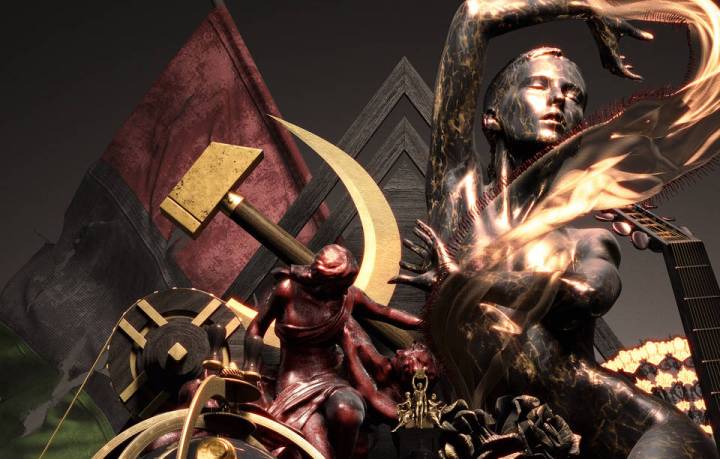
Press release for the exhibition opening this weekend at the V&A:
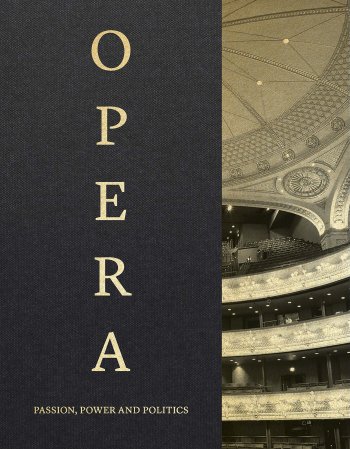
Opera: Passion, Power and Politics
Victoria and Albert Museum, London, 30 September 2017 — 25 February 2018
Curated by Kate Bailey
This autumn the Victoria and Albert Museum, in collaboration with the Royal Opera House, will create a vivid and immersive journey through nearly 400 years of opera, exploring its passion, power and politics. The only exhibition ever to explore opera on a grand scale, it will immerse visitors in some key moments of the history of European opera from its roots in Renaissance Italy to its present-day form, by focusing on seven operatic premieres in seven cities. It will reveal how opera brings together multiple art forms to create a multi-sensory work of art, and show how social, political, artistic and economic factors interact with great moments in the history of opera to tell a story of Europe over hundreds of years.
 More than 300 extraordinary objects, including important international loans, will be shown alongside digital footage of compelling opera performances. Objects on display include Salvador Dali’s costume design for Peter Brook’s 1949 production of Salome; Music in the Tuileries Gardens by Edouard Manet, a masterpiece of modernist painting contextualising Wagner’s modern approach to music in 1860s Paris; the original score of Verdi’s Nabucco from the Archivio Storico Ricordi in Milan; and one of two surviving scores from the first public opera (L’incoronazione di Poppea) will be on display. Original material from the 1934 St Petersburg premiere of Shostakovich’s avant-garde Lady Macbeth of Mtsensk will be reunited and displayed outside Russia for the first time: these include the composer’s original autograph score, along with stage directions, libretto, set models and costume designs.
World-leading opera performances will be played via headphones, dynamically changing as you explore the cities and objects, to create an evocative and fully immersive sound experience. The exhibition will include a powerful new recording of the Royal Opera Chorus singing ‘Va pensiero’ (the Chorus of the Hebrew Slaves) from Giuseppe Verdi’s Nabucco, experienced in a 360-degree sound installation.
Opera: Passion, Power and Politics will be the first exhibition staged in the V&A’s purpose-built Sainsbury Gallery, one of the largest exhibition spaces in Europe, opening beneath the new Sackler Courtyard as part of the Exhibition Road Building Project. It will be accompanied by live events and other digital initiatives from BBC Arts in collaboration with the V&A, Royal Opera House and high-profile opera companies from across the UK to convey opera to a wider audience. To coincide, BBC Music will be working with the V&A interpreting themes from the exhibition across television and radio, including a landmark BBC Two documentary series exploring many of the same operas and cities, presented by Lucy Worsley and featuring The Royal Opera’s Music Director and Music Director of the V&A exhibition, Sir Antonio Pappano. Other activity will include live outside broadcasts, recordings of live performances of all seven featured operas on BBC Radio 3, and episodes of its flagship In Tune and Music Matters programmes—broadcast live from the museum. A partnership with King’s College London, the Royal Opera House and the V&A will create a free MOOC (Massive Open Online Course) introducing the core tenets of opera.
Kate Bailey, V&A curator of the exhibition, said: “Opera: Passion, Power and Politics will be an ambitious exhibition from the V&A, the world-leader in innovative performance exhibitions. We are delighted to be working so closely with the Royal Opera House, drawing together their expertise with the V&A’s broad collections to bring the total art form of opera to life in a stunning new space.”
Kasper Holten, The Royal Opera’s outgoing Director of Opera, said: “One of the first things I did when I arrived in London in 2011 was to reach out to leaders of other important cultural organisations. But I could not have imagined then that my first meeting with Martin Roth (then director of the V&A) would have resulted in an incredible collaborative journey that now results in this marvellous and immersive exhibition being born. The exhibition will show us opera as the soundtrack to the history of Europe. We hope to show audiences—both those in love with opera already and those who are still missing out—that the art form is alive and kicking and has as much to say to the society around it today as it did 400 years ago.”
The seven cities and premieres are:
Venice — Monteverdi’s L’incoronazione di Poppea, 1642. The narrative of the exhibition will begin in Venice, a Renaissance centre of entertainment, gambling and disguise, with a sumptuous painting of composer Barbara Strozzi depicted as a courtesan. The original surviving manuscript score of Monteverdi’s L’incoronazione di Poppea—an opera exploring scandal and ambition, which premiered in Venice’s Carnival season 1642-43—represents opera’s transition from private court entertainment to the public realm.

Louis François Roubiliac, George Frideric Handel, before 1738, terracota (The Fitzwilliam Museum, University of Cambridge, M.3-1922).
London — Handel’s Rinaldo, 1711. In 1711 Handel’s Rinaldo was premiered—one of the first Italian language operas performed in London, as the city emerged as a global trade centre. A dramatic, kinetic set will re-create the premiere’s elaborate staging, which caused a sensation at the time. The fashion for castrat0 singers will be shown through paintings and rare surviving costumes. Tensions at the time between the incoming European-inspired opera and traditional theatre are highlighted in a Hogarth engraving depicting crowds attending the opera as Shakespeare’s plays are wheeled away.
Vienna — Mozart’s Le nozze di Figaro, 1786. Mozart’s comic opera Le nozze di Figaro premiered in 1786 in Vienna, a centre of the Enlightenment. Its characters were drawn from everyday life and the singers wore contemporary costume on stage. Fashionable dress as worn by Mozart’s Count and Countess Almaviva will be on display. The role of the composer will be examined through the figure of Mozart, and a piano he played on a visit to Prague will travel for the first time for the exhibition.
Milan — Verdi’s Nabucco, 1842. The growing importance of the chorus is explored through Giuseppe Verdi’s Nabucco which premiered in Milan in 1842. The opera’s ‘Chorus of the Hebrew Slaves’ (‘Va pensiero’) became an unofficial national anthem for Italy after the events of the Risorgimento led to the country’s unification.
Paris — Wagner’s Tannhäuser, 1861. In the 1860s opera enjoyed a high status in Paris, a city undergoing huge transformations. The 1861 Paris premiere of Richard Wagner’s Tannhäuser, which he had revised specially for performances in the city, polarised audiences, but Wagner’s vision for the art form proved inspirational for artists and writers.
Dresden — Strauss’s Salome, 1905. Richard Strauss’s explosive modernist opera Salome premiered in 1905 in Dresden, a progressive city in the grip of artistic expressionism, as depicted in Erich Heckel’s painting of the suburbs. The opera’s reception and the shifting perceptions of women that the story reflected will be examined. The exhibition also includes many depictions of Salome, from Aubrey Beardsley’s illustrations to a Versace costume design.
St Petersburg — Shostakovich’s Lady Macbeth of Mtsensk, 1934. The final opera explored in detail is Shostakovich’s Lady Macbeth of Mtsensk. Initially embraced by audiences at its St Petersburg premiere in 1934 as an expression of new Soviet opera, it was banned under political censorship in 1936. Shostakovich did not write another opera. Both avant-garde and propaganda material will be on display alongside a painting inspired by Shostakovich’s First Symphony by Pavel Filonov, rarely seen outside Russia.
Footage from 20th- and 21st-century premieres will create a finale showing how opera has moved from Europe across the world and continues to take on new forms. The operas include Benjamin Britten’s Peter Grimes, Philip Glass’s Einstein on the Beach, Stockhausen’s Mittwoch aus Licht, and George Benjamin’s Written on Skin.
Kate Bailey, ed., Opera: Passion, Power, Politics (London: Bloomsbury, 2017), 304 pages, ISBN: 9781851779284, $75.
Exhibition | The Princes of Rambouillet: Family Portraits
From Versailles:
The Princes of Rambouillet: Family Portraits
Château de Versailles, 15 September 2017 — 22 January 2018
 On the occasion of the reopening of the Château de Rambouillet, the Centre des Monuments Nationaux and the Palace of Versailles present the The Princes of Rambouillet: Family Portraits, on view from 15 September 2017 to 22 January 2018. Ten or so portraits from the collections of the Palace of Versailles will cast a spotlight on the Bourbon-Toulouse-Penthièvre family, who owned Rambouillet for almost all of the 18th century. The château was embellished and the estate largely extended over two generations, first by the Count of Toulouse, the legitimated son of Louis XIV and Madame de Montespan who bought the marquisate of Rambouillet from Fleuriau d’Armenonville in 1706, and then by his son, the Duke of Penthièvre, who was obliged to part with the estate in 1783 upon command by Louis XVI.
The exhibition will feature famous works such as the Portrait of the Count of Toulouse as a Sleeping Putto by Mignard and the famous Cup of Hot Chocolate by Charpentier, alongside lesser-known but just as evocative portraits like that of the Princess of Lamballe by Ducreux or the Duke of Valois in the Cradle by Lépicié, the latter being displayed for the first time since its recent purchase by the Palace of Versailles.
Raphaël Masson, Les Princes de Rambouillet: Portraits de Famille (Paris: Éditions du Patrimoine, 2017), 36 pages, ISBN : 9782757705742, 6€.
Lunch Lecture | Ulrich Leben on German Cabinetmakers in Paris
Upcoming at the BGC (the lecture is scheduled to be livestreamed; see the website for details). . .
Ulrich Leben, Cabinetmakers of German Origin in Eighteenth-Century Paris
A Chapter in European History of Migration and Transfer of Knowledge and Craft in the Age of Enlightenment
Bard Graduate Center, New York, 9 October 2017
Ulrich Leben will be giving a Brown Bag Lunch presentation on Monday, October 9, at 12:15pm. His talk is entitled “Cabinetmakers of German Origin in Eighteenth-Century Paris: A Chapter in European History of Migration and Transfer of Knowledge and Craft in the Age of Enlightenment.”
The fact that a large number of cabinetmakers working in Paris during the eighteenth century were of German origin is well known. It is therefore surprising that there has never been research on the lives and work of these more than one hundred craftsmen. This talk will present various aspects of a project currently being undertaken by Dr. Ulrich Leben and Miriam Schefzyk on these craftsmen and provide insight into archive-based research in France and abroad exploring questions regarding social, economic, and cultural circumstances. A major goal of this project is the publication of a dictionary of these craftsmen that will be a tool for further work in the field.
E. Ulrich Leben is an independent art historian based in Paris and Associate Curator for the Rothschild Collection at Waddesdon Manor in Buckinghamshire. He teaches classes on French and German decorative arts and interior architecture for the European programs of Parsons, The New School. From 2010 to 2015 he was Visiting Professor and Special Exhibitions Curator at Bard Graduate Center, where in 2013 he co-curated the exhibition Salvaging the Past: Georges Hoentschel and French Decorative Arts from The Metropolitan Museum of Art. After an apprenticeship as a cabinetmaker in Germany he studied the History of Art at the École du Louvre in Paris and received his PhD at the Rheinische Friedrich Wilhelm Universität in Bonn. He is the author of numerous articles and exhibition catalogues on the history of French and German interiors and furniture design.
Call for Nominations | Eldredge Book Prize
2018 Charles C. Eldredge Prize
Nominations due by 1 December 2017
The Smithsonian American Art Museum is now accepting nominations for the 2018 Charles C. Eldredge Prize. The prize is given annually by the museum for outstanding scholarship in the field of American art. A cash award of $3,000 is made to the author of a recent book-length publication that provides new insights into works of art, the artists who made them, or aspects of history and theory that enrich our understanding of the artistic heritage of the United States. The Eldredge Prize seeks to recognize originality and thoroughness of research, excellence of writing, clarity of method, and significance for professional or public audiences. It is especially meant to honor those authors who deepen or focus debates in the field, or who broaden the discipline by reaching beyond traditional boundaries.
Single-author books devoted to any aspect of the visual arts of the United States and published in the three previous calendar years (2015–2017) are eligible. To nominate a book, please send a one-page letter explaining the work’s significance to the field of American art history and discussing the quality of the author’s scholarship and methodology. Nominations by authors or publishers for their own books will not be considered. The deadline for nominations is December 1, 2017. Please send them to: The Charles C. Eldredge Prize, Research and Scholars Center, Smithsonian American Art Museum, P.O. Box 37012, MRC 970, Washington, D.C. 20013-7012. Nominations will also be accepted by email: eldredge@si.edu, or fax: (202) 633-8373. Further information about the prize may be found here.
New Book | Longford Castle
With the Bouverie family’s purchase of Longford Castle in 1717, the launch of the book coincides with the tercentenary of the family’s ownership of the house. From Unicorn Publishing:
Amelia Smith, Longford Castle: The Treasures and the Collectors (London: Unicorn Publishing, 2017), 208 pages, ISBN: 9781910787687, £40.
 Longford Castle is a fine Elizabethan country house, home to a world-class collection of art built up in the eighteenth and nineteenth centuries by the Bouverie family and still owned today by their descendants. Until now, it has been relatively less known amongst the pantheon of English country houses. This book, richly illustrated and based on extensive scholarly research into the family archive, tells a comprehensive story of the collectors who amassed these treasures. It explores the acquisition and commission of works of art from Holbein’s Erasmus and The Ambassadors, to exquisite landscapes by Claude and Poussin, and family portraits by Thomas Gainsborough and Sir Joshua Reynolds. It explores how Longford, an unusual triangular-shaped castle that inspired Sir Philip Sidney’s Arcadia and Disney’s The Princess Diaries, was decorated and furnished to house these works of fine art. The book brings the story up to the present day, with an introduction and conclusion by the current owner, the 9th Earl of Radnor, himself a keen collector of art, to celebrate this remarkable house and collection.
Amelia Smith grew up in Surrey and attended university in London. She recently completed a PhD on the Longford Castle art collections at Birkbeck College in collaboration with the National Gallery. Amelia Smith graduated in 2012 with a first class degree in History of Art from University College London, where she was awarded the Gombrich Prize and Zilkha Prize. She went on to gain an MA in Curating the Art Museum at the Courtauld Institute of Art in 2013 and undertook a curatorial internship at the National Portrait Gallery, researching for the exhibition The Great War in Portraits (2014).
◊ ◊ ◊ ◊ ◊
From the National Gallery:
Longford Castle: Past and Present
National Gallery, London, Friday, 13 October 2017, 6pm
Join art historian Amelia Smith as she introduces her new book on Longford Castle, its treasures and its collectors, and also Lord Radnor, the castle’s owner, in discussion about his current art collecting. The evening begins with a short interview between Lord Radnor and Susanna Avery-Quash. Amelia Smith’s lecture will follow, and the event will end with a drinks reception, where you will have the opportunity to buy a copy of Smith’s book, signed by the author. The event is free, though tickets are required.
Longford Castle sits on the banks of the River Avon in Wiltshire and is home to a world-class collection including works by Holbein, Claude, Poussin, Gainsborough, and Reynolds. The National Gallery has a long-standing relationship with the Castle, having acquired and enjoyed works of art from its collection over the years. In recent years, visitors have enjoyed guided tours of the Castle, organised by the Gallery.
New Book | John Baskerville: Art and Industry
From Liverpool UP: (with a book launch scheduled for Sunday, 8 October, at 5pm at Waterstone’s Birmingham).
Caroline Archer-Parré and Malcolm Dick, John Baskerville: Art and Industry in the Enlightenment (Liverpool: Liverpool University Press, 2017), 288 pages, ISBN: 978 17869 40643, £80.
 This book is concerned with the eighteenth-century typographer, printer, industrialist, and Enlightenment figure John Baskerville (1707–1775). Baskerville was a Birmingham inventor, entrepreneur, and artist with a worldwide reputation who made eighteenth-century Birmingham a city without typographic equal, by changing the course of type design. Baskerville not only designed one of the world’s most historically important typefaces; he also experimented with casting and setting type, improved the construction of the printing-press, developed a new kind of paper, and refined the quality of printing inks. His typographic experiments put him ahead of his time, had an international impact, and did much to enhance the printing and publishing industries of his day. Yet despite his importance, fame, and influence many aspects of Baskerville’s work and life remain unexplored and his contribution to the arts, industry, culture, and society of the Enlightenment are largely unrecognized. Moreover, recent scholarly research in archaeology, art and design, history, literary studies, and typography is leading to a fundamental reassessment of many aspects of Baskerville’s life and impact, including his birthplace, his work as an industrialist, the networks which sustained him, and the reception of his printing in Britain and overseas. The last major, but inadequate publication of Baskerville dates from 1975. Now, forty years on, the time is ripe for a new book. This interdisciplinary approach provides an original contribution to printing history, eighteenth-century studies, and the dissemination of ideas.
Caroline Archer-Parré is Professor of Typography at Birmingham City University, Director of the Centre for Printing History & Culture and Chairman of the Baskerville Society. She is the author of The Kynoch Press, 1876–1982: The Anatomy of a Printing House (British Library, 2000); Paris Underground (MBP, 2004); and Tart Cards: London’s Illicit Advertising Art (MBP, 2003). Caroline is currently Co-investigator on the AHRC-funded project, ‘Letterpress Printing: past, present, future’.
Malcolm Dick is Director of the Centre for West Midlands History at the University of Birmingham. He directed two history projects in Birmingham between 2000 and 2004: the ‘Millennibrum Project’, which created a multi-media archive of post-1945 Birmingham history, and ‘Revolutionary Players’, which produced an online resource of the history of the West Midlands region. Malcolm has published books on Joseph Priestley, Matthew Boulton, and the history of Birmingham; he co-directs the Centre for Printing History & Culture.
C O N T E N T S
List of Figures
Acknowledgements
Foreword
Timeline
Baskerville Family Tree
Introduction: John Baskerville: Art and Industry of the Enlightenment, Caroline Archer-Parré and Malcolm Dick
1 The Topographies of a Typographer: Mapping John Baskerville since the Eighteenth Century, Malcolm Dick
2 Baskerville’s Birmingham: Printing and the EnglishUrban Renaissance, John Hinks
3 Place, Home and Workplace: Baskerville’s Birthplace and Buildings, George Demidowicz
4 John Baskerville: Japanner of ‘Tea Trays and other Household Goods’, Yvonne Jones
5 John Baskerville, William Hutton and their Social Networks, Susan Whyman
6 John Baskerville the Writing Master: Calligraphy and Type in the Seventeenth and Eighteenth Centuries, Ewan Clayton
7 A Reappraisal of Baskerville’s Greek Types, Gerry Leonidas
8 John Baskerville’s Decorated Papers, Barry McKay and Diana Patterson
9 The ‘Baskerville Bindings’, Aurélie Martin
10 After the ‘Perfect Book’: English Printers and their Use of Baskerville’s Type, 1767–90, Martin Killeen
11 The Cambridge Cult of the Baskerville Press, Caroline Archer-Parre
Appendix 1 The ‘Baskerville Bindings’
Appendix 2 Members of the Baskerville Club
Appendix 3 Comparative Bibliography
Further Reading
General Bibliography
Notes on the Contributors
Index
Colloquium | Eighteenth-Century Court Culture

From Munich’s Zentralinstitut für Kunstgeschichte:
Hofkultur des 18. Jahrhunderts
Teil I: Dresden, Nymphenburg, Benrath: Schlösser und Bäder
Zentralinstitut für Kunstgeschichte München, Munich, 25 October 2017
17.30 Peter Heinrich Jahn (Dresden/München), ‘Die Begierde, den Beifall aller zu erheischen, lässt ihn häufig den Plan ändern’: Der Dresdner Zwinger als Planungsproblem
Der berühmte Dresdner Zwinger war 1709 als Orangeriegarten des benachbarten Residenzschlosses begonnen worden und endete zwei Jahrzehnte später nach mehreren Konzeptwechseln, ohne dass die Ursprungsfunktion jemals aufgegeben worden wäre, als unvollendet gebliebenes Sammlungsgebäude, das einen Turnierplatz umschloss. Als sprunghaft agierender Dilettantenarchitekt war der als August der Starke bekannte königliche Auftraggeber Impulsgeber für zahlreiche „Planungsprobleme“, die sein Hofarchitekt Matthäus Daniel Pöppelmann durch In-die-Form-Bringen zu lösen hatte. Das heutzutage in durcheinander geratener Ordnung überlieferte historische Planmaterial zum Dresdner Zwinger lässt dessen kunsthistorische Auswertung ebenfalls zu einem „Planungsproblem“ werden, das durch Rekonstruktion einer logischen Planungsabfolge gelöst werden will.
18.30 Kristina Deutsch (Münster), Zwischen Rückzug und Repräsentation: Schlossbäder der Wittelsbacher in Nymphenburg und Benrath
Keine andere Dynastie des Alten Reichs hat uns so viele Schlossbäder hinterlassen, wie die Wittelsbacher. Diese sehr kunstvoll gestalteten Räume waren als Orte des Rückzugs konzipiert, zuweilen dienten sie aber auch gesellschaftlichen Anlässen. In beiden Fällen vermitteln Architektur und Ausstattung höfischer Bäder ein bestimmtes Bild des Herrschers oder der Herrscherin, das es im Rückgriff auf die tatsächliche Nutzung zu analysieren gilt.
Hofkultur des 18. Jahrhunderts
Teil II: Rom und Paris in Schwerin: Jean-Laurent Le Geay (1710–1786), Architektur und Gartenkunst
Zentralinstitut für Kunstgeschichte München, Munich, 6 December 2017
16.30 Johannes Erichsen (München), Jean-Laurent Le Geay: Architektur für den Schweriner Hof und die Quellen der Inspiration
17.30 Iris Lauterbach (München), Le spectacle de la nature: Die Gärten des Schweriner Hofes im 18. Jahrhundert im europäischen Kontext
18.30 Hans Lange (München), Die grüne Pyramide für Ludwigslust
19.00 Sigrid Puntigam (Schwerin), Herzog Friedrich von Mecklenburg-Schwerin als dilettierender Architekt
Die Teilnahme ist frei. Wir bitten um Ihre Anmeldung unter hofkultur@zikg.eu.
New Book | Eighteenth-Century Neapolitan Staircases
From ArtBooks.com:
Dirk De Meyer, Eighteenth-Century Neapolitan Staircases: Showpiece and Utility (Gent: A&S Books, 2017), 128 pages, ISBN: 978 90767 14493, $48.
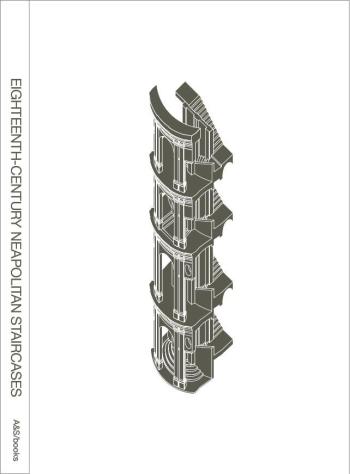 Eighteenth-century Neapolitan staircases present a shift from the traditional, monumental Baroque palace stairs towards the staircase serving four, five, or more levels of apartments of different social standing. While prefiguring stairs in modern apartment buildings, they solve issues of aristocratic etiquette as well as practical plan arrangements. They are showpiece and utility in one. At times grand and imposing, at times cramped in tapered courtyards, these staircases are numerous and disparate in form. Eighteenth-Century Neapolitan Staircases: Showpiece and Utility documents seven sets of stairs by Neapolitan architects such as Ferdinando Sanfelice. It is the outcome of a master seminar in Architectural History at the Department of Architecture and Urban Planning of Ghent University.
Study Day | Collectors and the Country House Library
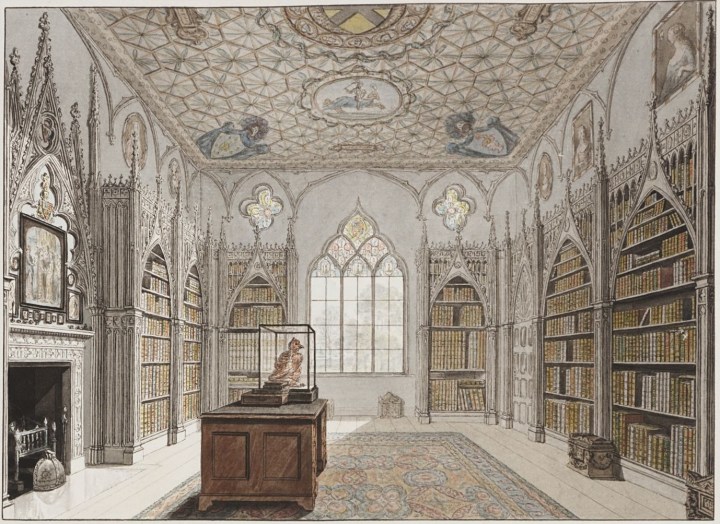
John Carter, View of the Library at Strawberry Hill, watercolour, 23.7 × 28.8 cm, from Horace Walpole, A Description of the Villa … at Strawberry-Hill (Strawberry Hill, 1784). The Lewis Walpole Library, Yale University.
◊ ◊ ◊ ◊ ◊
From Strawberry Hill:
Collectors and the Country House Library
Strawberry Hill, 19 October 2017
The shelves of Horace Walpole’s Library at Strawberry Hill, emptied in the great sale of 1842, have recently been filled with the loan of books from the library of Aske Hall, North Yorkshire. To celebrate this event, we are holding a study day on Collectors and the Country House Library. Particular themes are the evolution of country house libraries and how the libraries of art collectors such as Walpole support and enrich our understanding of their broader collections. Country house libraries may develop over generations of owners, but they may also strongly reflect the personality and interests of one collector, whether as bibliophile or in the broader history of collections of works of art. We will be looking not only at Walpole, but at a broad range of other collectors and their collections to show how much these libraries can reveal. Refreshments including a light lunch will be provided. For further information, please contact claire.leighton@strawberryhillhouse.org.uk. This event is kindly sponsored by the Delmas Foundation
P R O G R A M M E
9.30 Coffee
9.50 Welcome
10.00 Morning Papers
• Megan Aldrich, Saxon or Gothic? An Antiquarian Library at Stowe
• Stephen Clarke, ‘Quite a Paradise of Well-Conditioned, Beautiful Books’? Horace Walpole’s Library at Strawberry Hill
11.00 Break
11.10 Keynote Paper
• Mark Purcell, The Country House Library
12.05 Claire Reed, The Library at Osterley Park House
12.35 Lunch and tours of the house
2.15 Afternooon Papers
• Giles Mandelbrote, A Metropolitan Collector: The Library of Sir Richard Ellys (1682–1742) at Blickling Hall
• David Pearson, Bugs and Bindings: Eighteenth-Century Insect Rolls
• Stephen Lloyd, The Library of the Earls of Derby at Knowsley Hall
3.30 Questions and final discussion
Symposium | Basic Instincts

Joseph Highmore, Pamela in the Bedroom with Mrs Jewkes and Mr B. (detail), 1743–44, oil on canvas, 62.7 × 75.7 cm (London: Tate). Part of the series Four Scenes from Samuel Richardson’s Pamela.
◊ ◊ ◊ ◊ ◊
From The Foundling Museum:
Basic Instincts: Art, Women, and Sexuality in the Eighteenth Century
Keynes Library, School of Arts, Birkbeck, University of London, 20 November 2017
This symposium has been organised alongside the Foundling Museum exhibition Basic Instincts (on view from 29 September 2017 until 7 January 2018). Curated by Jacqueline Riding, historical consultant, author, and Honorary Research Fellow in the School of Arts at Birkbeck, University of London, Basic Instincts explores Georgian attitudes to love, desire, and female respectability through the radical paintings of Joseph Highmore (1692–1780). The symposium will draw out some of the key themes of the exhibition, focusing on the depiction of women and sexuality in eighteenth-century culture. Tickets are £40 (£30 concessions and Foundling Friends), with booking information available here.
P R O G R A M M E
10.00 Coffee and registration
10.20 Welcome from Kate Retford (History of Art Department, Birkbeck, University of London)
10.30 Jacqueline Riding (Curator of Basic Instincts, and Honorary Research Fellow in the School of Arts, Birkbeck, University of London), Basic Instincts: Love, Passion, Violence
11.00 Panel 1 | Highmore and His Context
• Kate Retford (Senior Lecturer in Art History at Birkbeck, University of London), Joseph Highmore, Time, and Miss Whichcote’s Marriage
• Kirsten Tambling (PhD candidate, History of Art, Birkbeck, University of London), ‘Into the Thickest Part of the Grove’: Hogarth’s ‘outdoor’ Before and After’
• Emma Barker (Senior Lecturer in Art History at the Open University), Sentiment and Seduction: Cross-Channel Connections in Art and Literature
12.30 Lunch
14.00 Tour of Basic Instincts exhibition with Kathleen Palmer (Curator at the Foundling Museum)
15.30 Panel 2 | Art, Women, and Sexuality
• Joanne Begiato (Professor in History, Oxford Brookes University), The Tender Mother in the Eighteenth Century: Bosoms and Bliss?
• Mary Peace (Senior Lecturer in English, Sheffield Hallam University), Reversing the Harlot’s Progress? The Figuring and Refiguring of Magdalens at the London Magdalen Hospital in the Eighteenth Century
• Karen Lipsedge (Associate Professor in English Literature, Kingston University), ‘Imagine They See’: Pamela and Visual and Literary Depictions of the Eighteenth-Century Interior
17.00 Closing remarks










leave a comment