Exhibition | The Temple of Flora
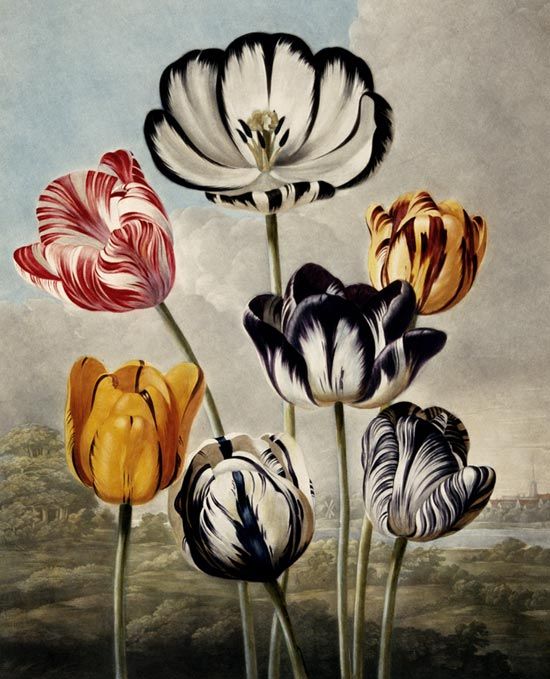
Richard Earlom, after Philip Reinagle, Tulips, 1798; color mezzotint with hand coloring (Milwaukee Art Museum, M1973.99)
Now on view at the Milwaukee Art Museum:
The Temple of Flora
Milwaukee Art Museum, 4 August — 10 December 2017
Fifteen large-scale color prints from the illustrated book The Temple of Flora (1812) reflect the true passion of English doctor John Robert Thornton: botany. The plants pictured are dramatically rendered and set against romantic landscapes—as opposed to the plain backgrounds that were typical of botanical images at the time. In honor of the Swedish botanist Carl Linnaeus (1707–1778), Thornton had hired eminent artists to produce the engravings, which later inspired American artist Jim Dine (b. 1935). Dine’s illustrated book from 1984 is featured alongside the prints.
New Book | Bernardo De Dominici e le vite degli artisti napoletani
From Officina Libraria:
Andrea Zezza, Bernardo De Dominici e le vite degli artisti napoletani: Geniale imbroglione o conoscitore rigoroso? (Milan: Officina Libraria, 2017), 112 pages, ISBN: 978 889976 5392, $30.
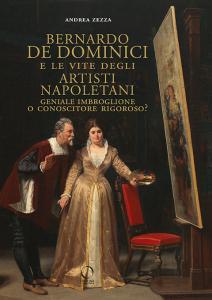 Bernardo De Dominici (Napoli, 1683–1759) è tra le personalità più controverse della storiografia artistica italiana. Modesto pittore di paesaggi, mercante di disegni ed aspirante letterato, pubblicò dopo una lunga elaborazione, tre tomi di Vite de’ pittori, scultori e architetti napoletani (1742–45). Concepita nel momento di maggior successo della scuola napoletana di pittura, tra i clamori dei successi internazionali di Luca Giordano, Paolo De Matteis, Francesco Solimena, l’opera costituisce il primo e il più ambizioso tentativo di costruire una storia dell’arte napoletana.
Nonostante qualche perplessità suscitata già al tempo della prima pubblicazione, le Vite costituiscono da allora un punto di riferimento essenziale per chiunque sia interessato alla storia dell’arte in Italia meridionale. Costruite attraverso un uso estremamente disinvolto delle fonti, con largo ricorso a manoscritti ignoti e più che sospetti, le Vite non passarono il severo vaglio critico degli studiosi del secondo Ottocento, che dimostrarono l’inaffidabilità di larga parte del testo, soprattutto delle parti relative al Medioevo e al primo Rinascimento, e bollarono il loro autore come ‘Il falsario’ (così si intitolava un saggio di Benedetto Croce sul nostro autore). Nel corso del Novecento, a cominciare dai primi studi di Roberto Longhi, l’opera è stata largamente riabilitata, soprattutto per le sue parti sei e settecentesche.
Il libro, elaborato al termine di un lungo lavoro di edizione e commento dell’opera, condotto dall’autore in collaborazione con Fiorella Sricchia Santoro e con altri studiosi, offre per la prima volta una approfondita analisi della storia dell’opera, del contesto in cui fu concepita, dei metodi utilizzati dal biografo, della sua altalenante fortuna e del ruolo che ancora oggi può e deve svolgere per la conoscenza e la comprensione dell’arte napoletana.
Andrea Zezza è professore associato di Storia dell’Arte Moderna presso l’Università della Campania ‘Luigi Vanvitelli’. Si occupa prevalentemente di storia dell’arte in Italia meridionale tra Cinquecento e Settecento. Con Fiorella Sricchia Santoro ha curato l’edizione commentata delle Vite de’ pittori, scultori e architetti napoletani (Napoli 2003–14). Tra i suoi scritti ricordiamo la monografia Marco Pino: L’opera completa (Napoli 2003).
New Book | De Dominici, Vite de’ pittori, scultori ed architetti napoletani
From ArtBooks.com:
Bernardo De Dominici, Vite de’ pittori, scultori ed architetti napoletani, edited by Fiorella Sricchia Santoro and Andrea Zezza (Naples: Paparo, 2017), 5 vols., 3206 pages, ISBN: 9788899130336, $340.
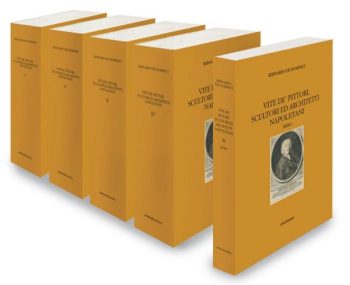 ‘Stomachevole’, ‘geniale imbroglione’, oppure scrittore ‘a cui siamo sempre disposti a concedere credito’; ‘la cui posizione e i cui meriti nei riguardi della storia artistica di Napoli non sono lontani da quelli Boschini per Venezia e di Malvasia per Bologna’: Bernardo De Dominici e la sua opera sono stati per due secoli e mezzo oggetto di feroci stroncature e di risolute riabilitazioni, restando sempre al centro dell’attenzione di chiunque si sia interessato alla storia dell’arte napoletana tra il Medioevo e l’età moderna. Nel 1950 Giuseppe Ceci, studioso di non comune rigore, invitò a fuggire dalle facili generalizzazioni e a intraprendere ‘l’umile ma indispensabile lavoro’ di una analisi completa delle Vite, un testo che rimane unico e insostituibile, pur con tutte le sue pecurialità e i suoi difetti. Da allora, mentre aumentava la consapevolezza della utilità dell’opera per gli studi, si è fatta sempre più presente la richiesta di una edizione commentata, che ne favorisse la lettura e insieme un uso cauto e criticamente avvertito: a questa esigenza vuole rispondere l’edizione commentata che, dopo un lavoro quindicennale, viene finalmente conclusa con questo tomo dedicato agli indici
Prima edizione moderna, commentata, di un’opera fondamentale per la storia dell’arte napoletana, stampata per la prima volta tra il 1742 e il 1745. L’opera si compone di due volumi: il primo dalle origini all’inizio del Seicento, il secondo (diviso in due tomi) dal Seicento al Settecento, il terzo dedicato agli indici.
Edizione a cura di Fiorella Sricchia Santoro e Andrea Zezza. Coordinatore al commento del primo tomo Francesco Aceto. Coordinatore al commento del secondo e terzo tomo Andrea Zezza. Testi a cura di Daria Di Bernardo, Marina Milella Consulenza filologica Nicola De Blasi. Autori delle introduzioni e delle note di commento delle singole vite Anna Bisceglia, Paola D’Agostino, Rosanna De Gennaro, Daniela del Pesco, Ippolita di Majo, Stefano D’Ovidio, Viviana Farina, Pierluigi Feliciano, Elena Fumagalli, Paolo Giannattasio, Fabiola Lagalla, Riccardo Naldi, Cristiana Pasqualetti, Maria Gabriella Pezone, Valter Pinto, Antonella Putaturo Murano, Concetta Restaino, Renato Ruotolo, Donato Salvatore, Fabio Speranza, Fiorella Sricchia Santoro, Andrea Zezza.
• Dalle Origini alla prima metà del Seicento
• Seicento (da J. de Ribera a L. Giordano)
• Seicento e Settecento (da G. Farelli a F. Solimena)
• Indici
Exhibition | Becoming a Woman in the Age of Enlightenment
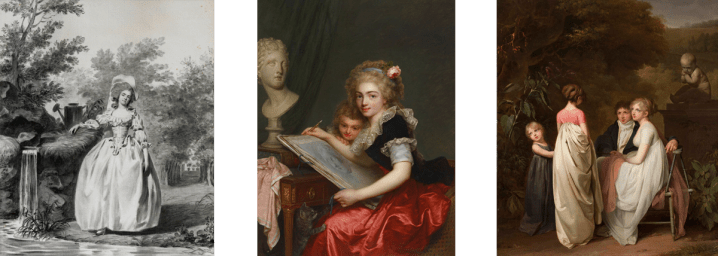
Jacques-Antoine-Marie Lemoine, Woman Standing in a Garden, 1783, black chalk and brush with gray wash on off-white laid paper; Antoine Vestier, Allegory of the Arts, 1788, oil on canvas; and Louis-Léopold Boilly, Conversation in a Park, oil on canvas. All on loan from The Horvitz Collection.
◊ ◊ ◊ ◊ ◊
From the Harn Museum of Art:
Becoming a Woman in the Age of Enlightenment: French Art from The Horvitz Collection
Harn Museum of Art, University of Florida, Gainesville, 6 October — 31 December 2017
Ackland Art Museum, The University of North Carolina at Chapel Hill, 26 January — 8 April 2018
Crocker Art Museum, Sacramento, 13 May — 19 August 2018
Smith College Museum of Art, Northampton, MA, dates TBA
Curated by Melissa Hyde and Mary D. Sheriff
Organized by Alvin Clark
Becoming a Woman in the Age of Enlightenment: French Art from the Horvitz Collection is primarily an exhibition of drawings but will include pastels, paintings, and sculptures selected from one of the world’s best private collections of French drawings. The exhibition will feature nearly 120 works by many of the most prominent artists of the eighteenth century, including Antoine Watteau, Nicolas Lancret, François Boucher, Jean-Honoré Fragonard, as well as lesser-known artists both male and female, such as Anne Vallayer-Coster, Gabrielle Capet, François-André Vincent, Philibert-Louis Debucourt. Ranging from spirited, improvisational sketches and figural studies, to highly finished drawings of exquisite beauty, the works included in the exhibition vary in terms of style, genre, and period.
Becoming a Woman will be organized into thematic sections that address some of the most important and defining questions of women’s lives in the eighteenth century. These include: how the stages of a woman’s life were measured; what cultural attitudes and conditions in France shaped how women were defined; what significant relations women formed with men; what social and familial rituals gave order to their lives; what pleasures they pursued; and what work they accomplished. The aim is to bring new insights to the questions of what it meant to be a woman in this period, by offering the first exhibition to focus specifically on representations of women of a broad range of ages and conditions.
The exhibition will offer fresh perspectives on a subject that still has direct relevance to our times but that has not been the focus of a significant exhibition for decades. Through its conceptual framework, thematic organization, and its emphasis on historical context, the exhibition will provide viewers opportunities to consider what issues pertaining to women’s lives seem to have changed or persisted through time and across space. Although the circumstances and the specifics have changed, many issues remain with us today and can still provoke contentious debates. Pay equity, reproductive rights, gender-discrimination, violence against women, work-family balance, the ‘plight’ of the alpha-female, and the devaluation of the stay-at-home mom, are but a few of the women’s issues that are still hotly contested in the media, in cultural production of all kinds, in politics, and in public and private life.
Becoming a Woman is curated by Melissa Hyde, Professor of Art History, University of Florida Research Foundation Professor, University of Florida, and the late Mary D. Sheriff, W.R. Kenan J. Distinguished Professor of Art History, University of North Carolina, Chapel Hill; the exhibition is organized by Alvin L. Clark, Jr, Curator, The Horvitz Collection and The J.E. Horvitz Research Curator, Harvard Art Museums/Fogg.
The catalogue is available from ArtBooks.com:
Melissa Hyde, Mary D. Sheriff, and Alvin Clark, Becoming a Woman in the Age of Enlightenment: French Art from The Horvitz Collection (Boston: The Horvitz Collection, 2017), 208 pages, ISBN: 978 099126 2526, $39.

François Boucher, Young Travelers, black chalk on cream antique laid paper, framing line in black ink, laid down on a decorated mount, 295 × 188 mm; Jacques-Louis David, Andromache Mourning the Death of Hector, pen with black ink and brush with gray wash over traces of black chalk on cream antique laid paper, 293 × 248 mm; Jean-Baptiste Greuze, The Chestnut Vendor, brush with gray and brown wash on cream antique laid paper, 385 × 460 mm. All works on loan from The Horvitz Collection.
◊ ◊ ◊ ◊ ◊
From the Lecture and Symposium Schedule:
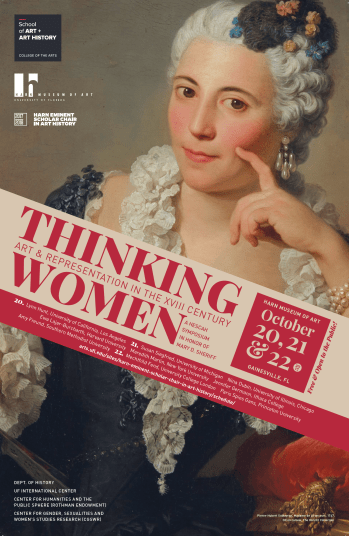
Thinking Women: Art and Representation in the Eighteenth Century
A Symposium in Honor of Mary D. Sheriff
Harn Museum of Art, University of Florida, Gainesville, 20–22 October 2017
• Keynote Address: “The Woman Artist and the Uncovering of the Social World,” Lynn Hunt, Distinguished Research Professor, University of California, Los Angeles
Art, women, and society came together in surprising ways at the end of the eighteenth century. ‘Society’ only began to be conceptualized as an object for study at the end of the 1700s, in particular in reaction to the French Revolution. Art, especially engraving and painting, helped make society visible to itself. Women could join the art world but rarely as fully fledged members, and as a consequence they occupied a kind of in-between position that made them especially attuned to social relations. The life and work of Marie-Gabrielle Capet will be highlighted to show how the social world could be uncovered.
 • “Fashion in Time: Visualizing Costume in the Eighteenth Century,” Susan Siegfried, Denise Riley Collegiate Professor of the History of Art and Women’s Studies, Department of Art History, University of Michigan
• “Beauty Is a Letter of Credit,” Nina Dubin, Associate Professor, Department of Art and Art History University of Illinois, Chicago
• “Chardin: Gender and Interiority,” Ewa Lajer-Burcharth, William Dorr Boardman Professor of Fine Arts, Department of History of Art and Architecture, Harvard University
• “The Global Allure of the Porcelain Room,” Meredith Martin, Department of Art History, New York University
• “Pictured Together? Questions of Gender, Race, and Social Rank in the Portrait of Dido Elizabeth Belle and Lady Elizabeth Murray,” Jennifer Germann, Associate Professor, Department of Art History, Ithaca College
• “Becoming an Animal in the Age of Enlightenment,” Amy Freund, Associate Professor & Kleinheinz Family Endowed Chair in Art History, Southern Methodist University
• “Marguerite Lecomte’s Smile: Portrait of a Woman Engraver,” Mechthild Fend, Reader in the History of Art, Department of History of Art, University College London
• “Exceptional, but not Exceptions: Women Artists in the Age of Revolution,” Paris Spies Gans, Doctoral Candidate, Department of History, Princeton University
The final program, with times, is available here»
At the Ackland Art Museum at UNC, Chapel Hill, there will be a sister symposium in Mary’s honor entitled “Taking Exception: Women, Gender, Representation in the Eighteenth Century,” 1–3 February 2018.
◊ ◊ ◊ ◊ ◊
Note (added 14 October 2017) — The posting has been updated with additional information, including details on the catalogue, venues, and the conferences.
New Book | Chinese Wallpaper in Britain and Ireland
From I. B. Tauris:
Emile de Bruijn, Chinese Wallpaper in Britain and Ireland (London: Philip Wilson Publishers, 2017), 272 pages, ISBN: 978 17813 00541, £30 / $55.
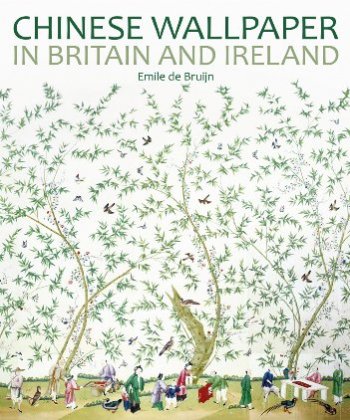 Chinese wallpaper has been an important element of western interior decoration for three hundred years. As trade between Europe and China flourished in the seventeenth century, Europeans developed a strong taste for Chinese art and design. The stunningly beautiful wall coverings now known as ‘Chinese wallpaper’ were developed by Chinese painting workshops in response to western demand. In spite of their spectacular beauty, Chinese wallpapers have not been studied in any depth until relatively recently. This book provides an overview of some of the most significant Chinese wallpapers surviving in the British Isles. Sumptuously illustrated, it shows how these wallpapers became a staple ingredient of high-end interiors while always retaining a touch of the exotic.
Emile de Bruijn studied Japanese and museology at the universities of Leiden and Essex. He worked in the Japanese and Chinese departments of the auctioneers Sotheby’s in London before joining the National Trust, where he is now a member of the central collections management team. Emile has lectured and published on many different aspects of chinoiserie in historic houses and gardens. He was co-author (with Andrew Bush and Helen Clifford) of the catalogue Chinese Wallpaper in National Trust Houses (National Trust, 2014)
Exhibition | Jean-Baptiste Perronneau
Now on view in Orléans:
Jean-Baptiste Perronneau: Portraitiste de génie dans l’Europe des Lumières
Musée des Beaux-Arts d’Orléans, 17 June — 22 October 2017
Curated by Dominique d’Arnoult with Valérie Luquet and Olivia Voisin
 Du 17 juin et au 17 septembre 2017, le musée des Beaux-Arts d’Orléans présente la première rétrospective consacrée à Jean-Baptiste Perronneau (v. 1715–1783), véritable portraitiste de génie à la personnalité artistique singulière et exigeante.
Cette exposition invite à visiter l’Europe des Lumières—moment du plus extraordinaire engouement pour le portrait jamais connu—à travers 120 oeuvres provenant de prestigieuses collections publiques (musée du Louvre, National Gallery…) et privées, souvent inédites, mais aussi du musée des Beaux-Arts d’Orléans qui conserve le fonds le plus riche d’oeuvres de l’artiste.
Dans un parcours chronologique, l’exposition retrace l’incroyable carrière de Perronneau (depuis sa formation et ses débuts fulgurants à Paris, marqués par sa réception à l’Académie royale en 1753, jusqu’aux voyages qui lui feront aborder les villes de France (Lyon, Toulouse, Bordeaux, Orléans) et d’Europe (Bruxelles, Rome, Londres) avant de faire d’Amsterdam un port d’attache et de départ vers les villes hanséatiques comme Hambourg ou vers Saint-Pétersbourg et Varsovie.
Illustrant le goût du XVIIIe siècle pour le brillant et l’éclat, les pastels de Perronneau côtoient ici ses portraits peints à l’huile et comme chez leurs commanditaires de l’époque, des peintures des maîtres anciens, des oeuvres de peintres et de sculpteurs contemporains de l’artiste, ainsi que des objets d’arts décoratifs. Tous réunis, ils offrent un regard neuf sur ce portraitiste trop rapidement classé comme le rival malheureux de Maurice Quentin Delatour (1704–1788) et qui s’avère être, au contraire, un artiste virtuose dont le parcours se distingue nettement de ses contemporains.
Ses réseaux de sociabilité embrassent en effet le siècle de manière plus complète que pour d’autres peintres, avec cette nouvelle composante de sa clientèle que représentent les acteurs du négoce et du grand commerce, qu’ennoblit la sociabilité artistique.
L’exposition reconstitue les liens que noue Perronneau lors de ces nombreux voyages avec les amateurs d’art et notamment sa longue amitié avec Aignan Thomas Desfriches—riche entrepreneur orléanais et futur fondateur du musée des Beaux-Arts d’Orléans—de laquelle naîtra une série de pastels parmi les plus importants de sa carrière.
Depuis 1860, le musée des Beaux-Arts d’Orléans, n’a cessé d’acquérir des oeuvres de Perronneau, jusqu’à l’achat en juin 2016 d’un chef-d’oeuvre—le portrait d’Aignan Thomas Desfriches—à la suite duquel le musée a souhaité restituer l’oeuvre de Perronneau dans son siècle avec cette première rétrospective.
Olivia Voisin and Dominique d’Arnoult, eds., Jean-Baptiste Perronneau: Portraitiste de génie dans l’Europe des Lumières (Paris: Réunion des Musées Nationaux, 2017), 192 pages, ISBN: 978 23590 62021, 29€.
Neil Jeffares provides a glowing review (in English) here»
New Book | Wedgwood: A Story of Creation and Innovation
From Rizzoli:
Gaye Blake-Roberts and Mariusz Skronski, with a foreword by Alice Rawsthorn, Wedgwood: A Story of Creation and Innovation (New York: Rizzoli, 2017), 304 pages, ISBN: 978 08478 60104, $60.
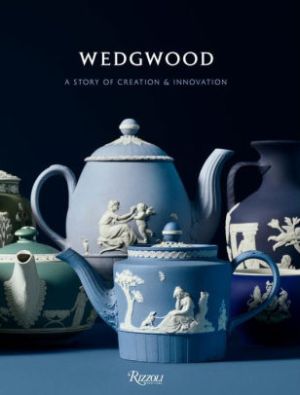 Founded in 1759, Wedgwood has a deep heritage in pottery making that represents timeless design and enduring style. The eponymous founder, Josiah Wedgwood, was an entrepreneur and visionary who quickly became Britain’s most successful ceramics pioneer, elevating pottery from a cottage craft into a luxury good and an art form. He was the mastermind behind Wedgwood’s most enduring pieces, including Queen’s Ware, Black Basalt, and Jasperware. That tradition of master craftsmanship and innovation continues today as Wedgwood works with celebrated designers such as Vera Wang and Jasper Conran.
With historic photographs, drawings, and watercolors from Wedgwood’s extensive archive, which display the craftsmanship and technical innovation, this book is a visual celebration of English design. It offers a lavish look at some of the most timeless china creations in history with a focus on Wedgwood’s 100 icons, in-depth essays on the brand and its history, and pattern books and sketches from the Wedgwood archives. While paying homage to the pioneering spirit of Wedgwood, this volume documents the achievements of a brand that is a symbol of elegance and timelessness, infusing classic craftsmanship with fresh design, and promises to impress fans of Wedgwood, old and new.
Gaye Blake-Roberts is a design historian and the curator of the Museum at Wedgwood. Alice Rawsthorn, OBE, is a British design critic who writes for the international edition of The New York Times. Mariusz Skronski is the creative and strategic director at Fiskars Living Brands.
Conference | Collections, Displays and the Agency of Objects
From the conference programme:
Collections, Displays and the Agency of Objects
Cambridge University, 20–22 September 2017
Registration due by 10 September 2017
Conference organized as part of the BMBF project Parerga and Paratexts – How Things Enter Language: Practices and Forms of Presentation in Goethe’s Collections in collaboration with the Department of Art History in Cambridge.
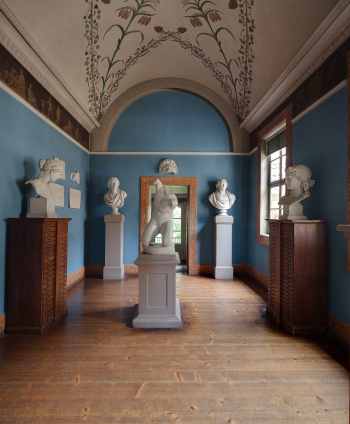
Brückenzimmer of Goethe’s House, Weimar.
2 0 S E P T E M B E R 2 0 1 7
6:00 Welcome and Introduction
6:30 Opening Lecture
• Ivan Gaskell (Bard Graduate Center), Display Displayed
2 1 S E P T E M B E R 2 0 1 7
9:00 Session I
Moderator: Johannes Grave (Universität Bielefeld)
• Ruth Bielfeldt (Ludwig-Maximilians-Universität München), Do Things Talk? On the Practice of Epigraphein in Greek Sanctuaries
• Elsje van Kessel (University of St. Andrews), The Street as Frame
• Peter Schade (National Gallery, London), The Framing of Sebastiano del Piombo’s The Raising of Lazarus
• Hannah Williams (Queen Mary University of London), Staging Belief: Immersive Encounters and the Agency of Religious Art in 18th-Century Paris
12:15 Lunch break
2:00 Encounters with Objects
4:15 Session II
Moderator: Wolfgang Holler (Klassik Stiftung Weimar)
• Eelco Nagelsmit (ETH Zürich), Interiority on Display: Models of Holy Sites in Halle Pietism
• Thomas Schmuck (Klassik Stiftung Weimar), Vestiges of Earth History: Objects and Order in Goethe’s Geological Collections
• Diana Stört (Martin-Luther-Universität Halle-Wittenberg), Goethe’s Cabinets as Epistemic Furniture
2 2 S E P T E M B E R 2 0 1 7
9:00 Session III
Moderator: Cindy Kang (The Barnes Collection)
• Mechthild Fend (University College London), Order and Affect: The Museum of Dermatological Wax Moulages at the Hôpital Saint Louis in Paris
• Juliet Carey (Waddesdon Manor, The Rothschild Collection), Staging Things: Framing the Rothschild Collection at Waddesdon Manor
• Dario Gamboni (Université de Genève), Ready-made Eye-opener: Models, Functions and Meanings of the Ironwork in Albert C. Barnes’s Displays
11:45 Lunch break
2:00 Encounters with Objects
4:15 Session IV
Moderator: Valérie Kobi (Universität Bielefeld)
• Noémie Étienne (Universität Bern), Unfolding the Specimen: Display and Diorama in New York, 1900
• Angela Matyssek (Philipps-Universität Marburg), Death by/Life by Wall Label
5:45 Final Discussion and Conclusions
Eike Schmidt Named Director of Vienna’s Kunsthistorisches Museum
As reported by The Art Newspaper (1 September 2017). . .
The director of the Uffizi galleries in Florence, Eike Schmidt, is stepping down to become head of Vienna’s Kunsthistorisches Museum (KHM). The German-born sculpture specialist will replace Sabine Haag in 2019, announced the Austrian culture minister, Thomas Drozda, at a press conference today (1 September).
Schmidt made waves when he was named the first non-Italian to lead the Uffizi in 2015, among 20 new ‘super directors’ appointed to modernise Italy’s top museums and heritage sites. Following curatorial posts at the National Gallery of Art in Washington, DC (2001–06), the J. Paul Getty Museum in Los Angeles (2006–08), and the Minneapolis Institute of Arts (2009–15), and a stint in charge of the European sculpture and works of art department at Sotheby’s London (2008–09), it was his first museum directorship. . .
The full article is available here»
New Book | Picturing India
From the University of Washington Press in conjunction with the British Library:
John McAleer, Picturing India: People, Places, and the World of the East India Company (Seattle: University of Washington Press, 2017), 224 pages, ISBN: 978 029574 2939, $40.
 The British engagement with India was an intensely visual one. Images of the subcontinent, produced by artists and travelers in the eighteenth- and nineteenth-century heyday of the East India Company, reflect the increasingly important role played by the Company in Indian life. And they mirror significant shifts in British policy and attitudes toward India. The Company’s story is one of wealth, power, and the pursuit of profit. It changed what people in Europe ate, what they drank, and how they dressed. Ultimately, it laid the foundations of the British Raj.
Few historians have considered the visual sources that survive and what they tell us about the link between images and empire, pictures and power. This book draws on the unrivalled riches of the British Library-both visual and textual-to tell that history. It weaves together the story of individual images, their creators, and the people and events they depict. And, in doing so, it presents a detailed picture of the Company and its complex relationship with India, its people and cultures.
John McAleer is lecturer in history at the University of Southampton. He was previously curator of imperial and maritime history at the National Maritime Museum, Greenwich. He is the author of Britain’s Maritime Empire: Southern Africa, the South Atlantic and the Indian Ocean 1763–1820.










leave a comment