At Sotheby’s | Four Paintings of the British Siege and Capture of Havana

Dominic Serres, The Cathedral at Havana, August–September 1762: View of the Church of San Francisco de Asís, oil on canvas, 83.5 × 122.3 cm (estimate: £300,000–400,000)
◊ ◊ ◊ ◊ ◊
Press release (6 June 2016) from Sotheby’s:
This summer, Sotheby’s will present for sale some of the earliest views of Havana, Cuba (Evening Sale of Old Master and British Paintings, London, 6 July 2016, Sale L16033). Painted by Dominic Serres between 1770 and 1775, the four spectacular pictures depict specific stages of the British siege and capture of Havana in 1762. There were made either for General George Keppel, 3rd Earl of Albemarle (1724–1772) or for his brother, Admiral Augustus Keppel, 1st Viscount Keppel (1725–1786), both of whom played a decisive role in the British victory. Unseen on the market for almost 250 years, the works boast exceptional provenance, having remained in the possession of the Keppel family ever since they were painted.
Talking about the sale of the paintings, Julian Gascoigne, Specialist, British Paintings at Sotheby’s, commented: “These four views are not only of great historical significance; they are also remarkable works of art and some of the greatest British marine pictures ever painted, demonstrating the influence on Serres’s work of both Canaletto and Vernet, two masters of eighteenth-century Europe.”
Based on drawings made on the spot as events unfolded, the works belong to a group of eleven paintings depicting the siege and capture of Havana, all of which were—from 1948 onwards—on loan to the National Maritime Museum in Greenwich, London, and six of which now remain in the permanent collection there. The Albermale Havana Views demonstrate how Serres was intimately acquainted with the topography of the city and its surrounding environs. The French-born painter went to the West Indies as a young man and spent several years in Havana working as a ship’s captain on Spanish galleons, before being captured by the British and taken to London. In 1752 he returned to Havana once again, this time as master of an English merchantman.
The British capture of Havana in 1762 was the last major engagement of the Seven Years’ War and the decisive military action that finally brought to an end a conflict that ravaged the globe between 1756 and 1763. A contest for global supremacy, the war involved most of the major European powers of the day, as well as their colonies, divided into two giant coalitions led by Britain and France respectively. In 1761 Spain joined the conflict as an ally of France, and between March and August 1762 British naval and ground forces—under the joint command of General George Keppel, 3rd Earl of Albemarle and Admiral Sir George Pocock—besieged and captured the city of Havana, the capital of Spanish Cuba and Spain’s principal naval base in the West Indies. Also serving among the British forces were two of Albemarle’s younger brothers: Admiral Augustus Keppel, later 1st Viscount Keppel, who was second-in-command of the fleet, and Colonel William Keppel, who was one of his eldest brother’s two divisional commanders and later succeeded him as British Governor of Cuba.
Dominic Serres, View of the Morro Castle and Boom Defence before the Attack, 1770, oil on canvas, 85.5 × 176.5 cm (estimate: £400,000–600,000)
This painting shows the Spanish preparations before the siege. The port of Havana was a vitally important strategic target as both the capital of Spanish Cuba and Spain’s principal naval base in the Caribbean. On 6th June 1762, the British fleet was spotted approaching the city from the North. The Spanish garrison at Havana had expected an attack from the West, and the unexpected sighting of the fleet in the North created panic among the city’s defenders. A council of war was held by the Spanish governor, Juan de Prado Mayera Portocarrero y Luna (1716–1770), at which it was decided to sink three large ships across the narrow mouth of the harbour to block the British from entering but also trapping the Spanish fleet inside. To the left of the painting can be seen the Castillo de los Tres Reyes de Morro, known to the British as the Morro Castle, guarding the mouth of the harbour. On the right is the narrow channel that gave entrance to the harbour itself, blocked by the sunken ships and a floating boom defence strung across its mouth, whilst men and supplies are loaded into the fort. The large cloud of smoke rising from behind the fort indicates that the British bombardment from the landward side has begun.
Dominic Serres, The English Battery before the Morro Castle, 1770, oil on canvas, 84 × 122 cm (estimate: £200,000–300,000)
The British forces under General Albemarle had the benefit of a fairly detailed report on the defences at Havana. He knew that the weakest point in the Spanish defences was the rocky ridge of the Cabana hills, known to the Spanish as Los Cavannos. On high ground to the South-East of the city, the Cabana heights overlooked the Morro Castle, which commanded both the entrance to the harbour and the town on the west side of the bay. Whilst the castle itself was virtually impregnable, the Spanish defences on the ridge were relatively light. The British landed troops on 7th June, and on the 11th a successful assault was made on the heights. This painting shows the inside of the British battery. Beyond can be seen the fortress of El Morro, with its formidable ramparts. On the left is the bell tower of Havana cathedral silhouetted against the hills beyond.
Dominic Serres, The Taking of the Havana by British Forces under the Command of the Earl of Albemarle, 14 August 1762, oil on canvas, 125.7 × 187.9 cm (estimate: £800,000–1,200,000)
On 22nd June 1762, four British batteries of 12 heavy cannon and 38 mortars opened fire from their newly captured Cabana heights on the Morro Castle. By the end of the month, British gunners were scoring 500 direct hits a day, inflicting heavy casualties and exhausting Spanish efforts to repair the Castle walls. Finally on 29th July the British stormed El Morro, mortally wounding the Spanish commander during the fierce hand to hand fighting that ensued. With the fort captured, the British began their domination of the city. On the 11th August, following Spanish refusals to surrender, Albemarle opened fire on Havana. By 2pm, the Spanish governor was forced to surrender. This painting shows British land forces sailing to take possession of the Castle and the north gates of the city following conclusion of Spain’s capitulation terms on 13th August. On the left, the Union Jack fly from the flagpole atop the Morro Castle, whilst to the right is a magnificently detailed panoramic view of the walled city of Old Havana, arguably the finest and most important of its kind.
Dominic Serres, The Cathedral at Havana, August–September 1762: View of the Church of San Francisco de Asís, oil on canvas, 83.5 × 122.3 cm (estimate: £300,000–400,000)
This is one of two scenes painted by Serres depicting Havana after its capture by the British, the other being part of the National Maritime Museum’s collection. The central building is the monastic church of San Francisco de Asís, dating from the 1730s. In this picture, Serres is at pains to show British troops and Spanish civilians in harmony, reflecting the contemporary concern to grant the defeated Spanish magnanimous terms. The composition is taken from one of six prints produced by Elias Durnford, an engineer stationed in Havana under General Albemarle. The composition shows a debt to the work of the artist’s close friend Paul Sandby, as well as to Canaletto.
The works will be on view in London, 2–6 July 2016.
Exhibition | Olafur Eliasson at Versailles
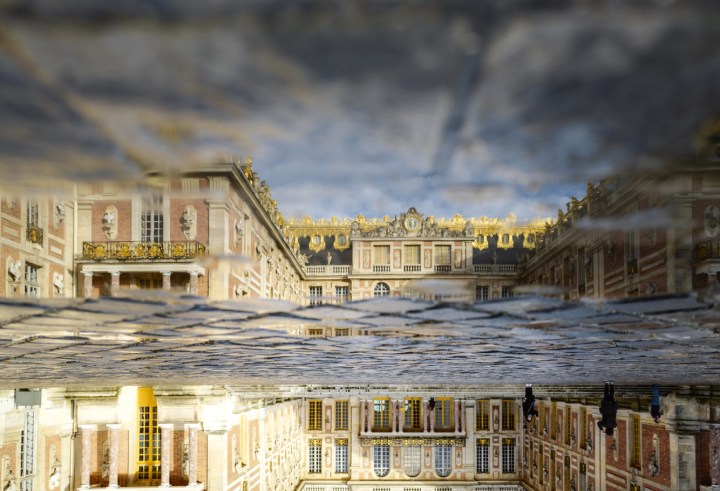
Olafur Eliasson, Versailles 2016 © Olafur Eliasson
◊ ◊ ◊ ◊ ◊
Press release from Versailles:
Olafur Eliasson at the Palace of Versailles
Château de Versailles, 7 June — 30 October 2016
Curated by Alfred Pacquement
The work of internationally acclaimed visual artist Olafur Eliasson investigates perception, movement, embodied experience, and feelings of self. He is best known for striking installations such as the hugely popular The Weather Project (2003) in the Turbine Hall of Tate Modern, London, which was seen by more than two million people, and The New York City Waterfalls (2008), four large-scale artificial waterfalls which were installed on the shorelines of Manhattan and Brooklyn.
Since 2008 the Palace of Versailles has put on a number of exhibitions dedicated to French or foreign artists, each one lasting a few months. Jeff Koons in 2008, Xavier Veilhan in 2009, Takashi Murakami in 2010, Bernar Venet in 2011, Joana Vasconcelos in 2012, Giuseppe Penone in 2013, Lee Ufan in 2014, and Anish Kapoor in 2015: these artists have all created a special dialogue between their works and the Palace and Gardens of Versailles. Since 2013 Alfred Pacquement is the curator of these exhibitions.
“With Olafur Eliasson, stars collide, the horizon slips away, and our perception blurs. The man who plays with light will make the contours of the Sun-King’s palace dance” says Catherine Pegard, President of the Château de Versailles.
“I am thrilled to be working with an iconic site like Versailles,” explains Olifur Eliasson. “As the palace and its gardens are so rich in history and meaning, in politics, dreams, and visions, it is an exciting challenge to create an artistic intervention that shifts visitors’ feeling of the place and offers a contemporary perspective on its strong tradition. I consider art to be a co-producer of reality, of our sense of now, society, and global togetherness. It is truly inspiring to have the opportunity to co-produce through art today’s perception of Versailles.”
Over the years, Eliasson has had significant exhibitions in France, from Chaque matin je me sens différent, chaque soir je me sens le même (2002) at the Musée d’art moderne de la ville de Paris, to Contact (2014), the first solo exhibition at the newly built Fondation Louis Vuitton, where Eliasson also created the permanent installation Inside the Horizon (2014). On the occasion of the COP21 United Nations Conference on Climate Change in Paris in December 2015, Eliasson made climate change tangible by leaving twelve massive blocks of Greenlandic glacial ice to melt in the Place du Panthéon for the installation Ice Watch.
In 2012, Eliasson and engineer Frederik Ottesen founded Little Sun. This social business and global project provides clean, affordable light to communities without access to electricity; encourages sustainable development through sales of the Little Sun solar-powered lamp and mobile charger, designed by Eliasson and Ottesen; and raises global awareness of the need for equal access to energy and light. Earlier this month in Davos, Eliasson received the prestigious Crystal Award for “creating inclusive communities”—a tribute to his work with Little Sun.
From 2009 to 2014, Eliasson ran the Institut für Raumexperimente (Institute for Spatial Experiments), an innovative model for art education affiliated with the Berlin University of the Arts. A comprehensive archive of the institute’s activities can be found online. In 2014, together with architect Sebastian Behmann, Eliasson founded Studio Other Spaces, an international office for art and architecture. As an architectural counterpart to Studio Olafur Eliasson, Studio Other Spaces focuses on interdisciplinary and experimental building projects and works in public space. Established in 1995, Eliasson’s studio today employs ninety craftsmen, specialised technicians, architects, archivists, administrators, and cooks. They work with Eliasson to develop and produce artworks and exhibitions, as well as to archive and communicate his work, digitally and in print. In addition to realising artworks in-house, the studio contracts with structural engineers and other specialists and collaborates worldwide with cultural practitioners, policy makers, and scientists.
A plan is available as a PDF file here»

The Coach Gallery at Versailles Open Once Again

Baptism Sedan of the Duc of Bordeaux
(Château de Versailles)
◊ ◊ ◊ ◊ ◊
The coaches at Versailles are once again on view:
The Coach Gallery of the Palace of Versailles, situated in the King’s Great Stables and closed to the public since 2007, will once again be opening its doors in the spring of 2016, thanks to sponsorship by the Michelin Corporate Foundation. This recently restored collection of coaches is one of the largest in Europe but is still very little known by the general public, and will be on display in a new and fully redesigned space.
Designed to be noticed, the carriages of Versailles are artistic masterpieces. Ostentatiously luxurious and extravagantly decorated with gold and sculpted detail, they were produced by the best artists of the French Court, including architects, carpenters, sculptors, cabinet-makers, bronze workers, chasers, gilders, upholsterers, embroiderers, and trimmings suppliers.
Besides its artistic quality, the collection is also a sort of ‘Vehicle Exhibition from the 18th and 19th centuries’, containing the finest prototypes and cutting-edge advances in French coach-making in terms of comfort, level of performance, and technique including traction, steering and suspension, and the first coupés and convertibles.
In addition, each coach tells a bit of French history through dynastic or political events such as christenings, marriages, coronations or funeral ceremonies. Above all else, the collection is a living testimony to life in the French Court and sumptuousness during the Ancien Régime, the French Empire, and the Restoration.
Visitors will discover these magnificent vehicles up close, such as the Berlins from the marriage of Napoleon I, the coach from the coronation of Charles X and the funeral carriage for Louis XVIII. They will also see finely decorated harnesses with gilded bronze, litters, the small coaches belonging to Marie-Antoinette’s children and an incredible collection of fantastical sledges made during the reign of Louis XV.
During the Ancien Régime the royal stables were located in the King’s Small Stables and Great Stables, a pair of buildings built opposite the Palace of Versailles by Jules Hardouin-Mansart. Pearls of classic French architecture, these two constructions were designed to house the horses and coaches of the King and the Court as well as the thousand or so people who formed the Institution, including horsemen, drivers, blacksmiths, wheelwrights, saddlers, doctors and even musicians.
At the time of the revolution, hundreds of vehicles that once served the King and Court were sold and dispersed, and then re-used during the War in the Vendée and to serve the needs of the revolutionary government. In 1837, when Louis-Philippe turned the Palace of Versailles into a museum dedicated to ‘All the glory of France’, he re-assembled the collection of historical Coaches.
The success of the exhibition Roulez Carrosses! in 2011–13 at the Arras Musée des Beaux-Arts revealed both the richness of the exhibition and the public’s interest in these works of art. It also brought to light the need to exhibit them in the Palace of Versailles and make them permanently available to the public.
The exhibition space is composed of two galleries and currently covers nearly 1000 m², allowing the collection to be comfortably spread out. The scenography will respect the spirit and architecture of the setting: the Royal Stables built by Jules Hardouin-Mansart between 1679 and 1682.
New Book | Fashionable Encounters
This collection of essays appeared in 2014, but I learned of it just a a few days ago—thanks to Michael Yonan’s Instagram: he’s in Denmark this week, participating in Attingham’s Study Programme. I’m hoping to start a list of Instagram feeds relevant to eighteenth-century art and architecture in the coming weeks, so please feel free to send me any of your favorites! -Craig Hanson
◊ ◊ ◊ ◊ ◊
From Oxbow Books:
Tove Engelhardt Mathiassen, Marie-Louise Nosch, Maj Ringgaard, Kirsten Toftegaard, and Mikkel Venborg Pederson, eds., Fashionable Encounters: Perspectives and Trends in Textile and Dress in the Early Modern Nordic World (Oxford: Oxbow Books, 2014), 256 pages, ISBN: 978-1782973829, £40.
 At the heart of this anthology lies the world of fashion—a concept that pervades the realm of clothes and dress, appearances and fashionable manners, interior design, ideas and attitudes. Here sixteen papers focus on the Nordic world (Denmark, Norway, Sweden Finland, Iceland, the Faroe Isles and Greenland) from 1500 to 1850. This was a period of rapid and far-reaching social, political and economic change, from feudal Europe through political revolution, industrialisation, development of international trade, religious upheaval, and technological innovation—changes impacting on every aspect of life and reflected in equally rapid and widespread changes in fashion at all levels of society. These papers present a broad image of the theme of fashion as a concept and as an empirical manifestation in the Nordic countries in early modernity, exploring a variety of ways in which that world encountered fashionable impressions in clothing and related aspects of material culture from Europe, the Russian Empire, and far beyond. The chapters range from object-based studies to theory-driven analysis. Elite and sophisticated fashions, the importation of luxuries and fashion garments, christening and bridal wear, silk knitted waistcoats, woollen sweaters and the influence of the whaling trade on women’s clothing are some of the diverse topics considered, as well as religious influences on perceptions of luxury and aspects of the garment trade and merchant inventories.
◊ ◊ ◊ ◊ ◊
C O N T E N T S
Prologue (Mikkel Venborg Pedersen)
1 The World of Foreign Goods and Imported Luxuries: Merchant and Shop Inventories in Late 17th-Century Denmark-Norway (Camilla Luise Dahl and Piia Lempiäinen)
2 Foreign Seductions: Sumptuary Laws, Consumption and National Identity in Early Modern Sweden (Eva I. Andersson)
3 Fashion from the Ship: Life, Fashion and Fashion Dissemination in and around Kokkola, Finland in the 18th Century (Seija Johnson)
4 Creating fashion: Tailors’ and Seamstresses’ Work with Cutting and Construction Techniques in Women’s Dress, ca. 1750–1830 (Pernilla Rasmussen)
5 Silk Knitted Waistcoats: A 17th-Century Fashion Item (Maj Ringgaard)
6 Fashioning the Early Modern Swedish Nobility, Mirrored in Preserved 17th-Century Liturgical Textiles (Lena Dahrén)
7 Reflections on Dress Practices and How to Get to Know the Past (Bjørn Sverre Hol Haugen)
8 The Queen of Denmark: An English Fashion Doll and Its Connections to the Nordic Countries (Cecilie Stöger Nachman)
9 At the Nordic Fringe of Global Consumption: A Copenhagen Bourgeois’ Home and the Use of New Goods in the Mid-18th Century (Mikkel Venborg Pedersen)
10 The Theft of Fashion: Circulation of Fashionable Textiles and Garments in 18th-Century Copenhagen (Vibe Maria Martens)
11 Bolette-Marie Harboe’s Bridal Dress: Fashionable Encounters Told in an 18th-Century Dress (Kirsten Toftegaard)
12 Luxurious Textiles in Danish Christening Garments: Fashionable Encounters across Social and Geographical Borders (Tove Engelhardt Mathiassen)
13 Fish-bones and Fashion: The Influence of Whaling on Women’s Clothes in Early Modern Europe (Christina Folke Ax)
14 From Doll Cups to Woollen Sweaters: Trends, Consumption, and Influentials in early 19th-Century Southern Disko Bay, Greenland (Peter Andreas Toft and Maria Mackinney-Valentin)
15 Abundance to Asceticism: Religious Influences on Perceptions of Luxury in Denmark and Great Britain in the 18th Century (Juliane Engelhardt)
16 Circulating Images of Unmanliness and Foreignness: Collector Niclas Holterman and European Caricatures in Sweden around 1800 (Patrik Steorn)
Acknowledgements
Illustrations
Contributors
New Book | The Royal Garden: Identity, Power and Pleasure
From the Ax:son Johnson Foundation:
Kurt Almqvist and Susanna Hakelius Popova, eds., The Royal Garden: Identity, Power and Pleasure (Stockholm: Axel and Margaret Ax:son Johnson Foundation, 2016), 193 pages, 250SEK.
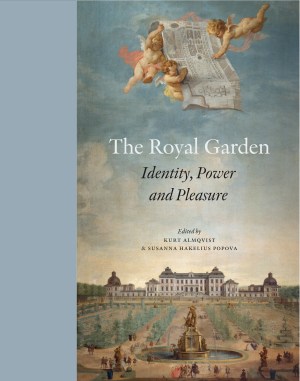 Throughout history, royals have strongly influenced the form and content of gardens and parks. Our strong connection to these cultivated places is not only due to our fascination with nature itself, but reveals our relationship to royal houses, monarchy and the nation. Through the conservation of these places we do not only see and view nature, but our own cultural heritage.
In this book, eight garden experts from five countries provide important examples of how kings and regents—through their extraordinary creations—have shaped history, communicated with the world, and mirrored themselves in their respective eras. The essays stem from a seminar, The Royal Garden, arranged by The Axel and Margaret Ax:son Johnson Foundation for Public Benefit and held at Drottningholm Palace near Stockholm in 2015.
The conference included these presentations:
• John Dixon Hunt — The Royal Garden as an Historic Concept
• Göran Alm — The Paradise: A Swedish Royal Garden Recreation
• Magnus Olausson — Travels, Tournaments, and Freemasonry: National and International
• Åsa Ahrland — The Royal Park: From Regal Pursuit to Public Recreation
• Renske Ek — The Royal Baroque Garden at Het Loo as a Work of Art
• Patricia Bouchenot-Déchin — Louis XVI, André Le Nôtre, and the Royal Garden of Versailles
• Todd Longstaffe-Gowan — Sweet Prospects and Stately Avenues: The Role and Importance of the Lime Tree Avenues at Hampton Court
• Peter Wirtz — Case Study Domaine de Wideville: Revamping a Louis XIII Garden
• George Plumptre — Overview of, and Differences in, Ten Interesting Royal European Gardens
Exhibition | In the Course of Time: 400 Years of Royal Clocks
Now on view at the Royal Palace in Stockholm:
In the Course of Time: 400 Years of Royal Clocks / I tiden: Kungliga klockor under 400 år
Royal Palace of Stockholm, 22 January — 25 September 2016

Marble and gold-plated bronze table clock with portrait medallions of King Gustav I, King Gustav II Adolf and King Gustav III. Made for King Gustav III by the Swedish-born clockmaker André Hessén in Paris. Photo: Alexis Daflos/Royalcourt.se
The exhibition In Course of Time: 400 Years of Royal Clocks features more than 50 royal clocks—some of which are on show for the first time—dating from the 16th century to the present day. The exhibition marks the 70th birthday of King Carl XVI Gustaf of Sweden (30 April 2016).
Clockmaking is a precise trade, and clocks have long been seen as extremely exclusive objects. They have therefore often been designed with a great degree of artistic skill. The clock as an objet d’art is one aspect of the exhibition. With the dawn of the modern era, clocks also became useful tools for coordinating work at the palace. For example, the exhibition includes the clock that governed the palace guards’ routines during the 19th century. Today, clocks remain part of day-to-day palace life. Most of the clocks in the collections still work, continuing to perform their function centuries later as timekeepers at a number of the royal palaces.
Conference | Auricular Style: Frames
From the conference website:
Auricular Style: Frames
The Wallace Collection, London, 5–6 October 2016
Organized by Gerry Alabone and Lynn Roberts
This two-day international conference is the first dedicated to the Auricular style, centring on one of its most significant manifestations, the picture frame. The conference aims to stimulate awareness and study of this important but neglected style by bringing together research in fine and decorative art histories. Speakers from Europe, UK, and USA will consider the origins and development of the Auricular style in different materials, including silver, wood, stucco, and leather. Papers will explore how other areas of the decorative and applied arts fed into the creation of picture frames. They will examine the influence of prints, drawings, ad the style’s dissemination between European centres in Bohemia, Germany, Italy, France, the Netherlands, and Britain. Poster presentations will be exhibited during the conference. These will be edited with the papers and published, fully illustrated, for free download on Auricular Style: Frames—which, it is hoped, will become a hub for future related research.
Early bird registration is now open. Early bird ticket prices (including Eventbrite’s commission): £100 regular, £90 Icon members, £50 students (ID to be shown at conference). Early bird option ends and prices rise after 30 June. The theatre’s capacity is 150; therefore, early registration is recommended. No refunds will be made after 23 September. If you do not wish your email address to be included in the Delegates list, please contact the event coordinator at gdsg.events@gmail.com.
Convenors: Gerry Alabone (Tate / City and Guilds of London Art School) and Lynn Roberts (The Frame Blog) in association with the Institute of Conservation (Gilding and Decorative Surfaces Group).
◊ ◊ ◊ ◊ ◊
5 O C T O B E R 2 0 1 6
9.00 Registration and coffee
• On the Inception of Auricular Ornament: Paulus van Vianen’s Metamorphic Bodies and the Fleshy Frame (Allison Stielau, McGill University)
• Object Bodies, Metal Mounts and the Skins of Things (Anna Grasskamp, Heidelberg University)
Coffee
• A French Auricular? A Brief History of a Style (Marika Knowles, Harvard University)
• German Knorpelwerk: Auricular Dissemination in Prints, Woodcarving, Stucco and Painted Wall Decorations, 1620–1670 (Daniela Roberts, Würzburg University)
• The Auricular Style in Dutch Furniture (Reinier Baarsen, Leiden University / Rijksmuseum)
Lunch break
• Gilt Leather: A Creative Industry avant la lettre (Eloy Koldeweij, Cultural Heritage Agency, the Netherlands)
• Material Research on Auricular Frames in the Netherlands (Hubert Baija, Rijksmuseum)
• The Auricular Frame Depicted in Paintings (Lynn Roberts, The Frame Blog)
Tea
• Between Amsterdam, Paderborn and Rome: A Remarkable Frame in the Collections of the Louvre (Charlotte Chastel-Rousseau, Louvre)
• Dutch Auricular Woodcarving (Ada de Wit, Radboud University / Wallace Collection)
6 O C T O B E R 2 0 1 6
9.55 Welcome and introduction
• The Development of an Auricular Style in Florence (Adriana Turpin, Institut d’Études Supèrieures des Arts)
• Anthropomorphism and Zoomorphism in the Medici Picture Frames (Marilena Mosco, former Director of Palazzo Pitti)
Coffee
• Florentine Auricular Frames: Techniques and Aesthetics (Aviv Fürst, Palazzo Pitti)
• Documenting Developments in the Taste for Auricular Framing in England, 1620–1700 (Jacob Simon, National Portrait Gallery)
• Looking at Material and Visual Evidence of English Auricular Frames (Gerry Alabone, Tate / City and Guilds of London Art School)
Lunch break
• An Auricular Frame amongst the Founder’s Collection of the Ashmolean Museum (Tim Newbery and Jevon Thistlewood, Ashmolean Museum)
• Picture Galleries in Seventeenth-Century Britain (Honorary Professor Karen Hearn, University College London)
• Notes on the Revival of the Auricular Style for Picture Frames (Christopher Rowell, National Trust)
Tea
• The Auricular Today: Putting an Ear to the Ground (Steve Shriver, art+works)
• Panel discussion with all speakers (to finish at 5.00pm)
Exhibition | The Emperor’s Gold
◊ ◊ ◊ ◊ ◊
From the Kunsthistorisches Museum:
The Emperor’s Gold / Das Gold des Kaisers
Kunsthistorisches Museum, Wien, 24 May 2016 — 5 March 2017
The great fame that the imperial coin collection already enjoyed throughout Europe around 1800 derived from its size and quality as well as from the rarity of the objects it contained. It was the collecting passion of the Emperors Charles VI (reigned 1711–1740) and Francis I (reigned 1745–1765), which already fascinated contemporaries, and to which the Vienna Coin Cabinet owes its world-class status today. On the occasion of the 125th anniversary of the Kunsthistorisches Museum, the Vienna Coin Cabinet presents a special exhibition of the highest-carat gold pieces from its once-imperial coin collection.
From Antiquity to the Modern Period
The gamut ranges from gold coins in everyday circulation through multiples, true gold giants, and singular commemorative issues. Many of the imprints on display were honorific gifts to the emperor or were targeted acquisitions for the imperial collection. Antique treasure hordes also played an important role in the expansion and enrichment of the imperial coin collection. The spectacular find at Szilágysomlyó in Transylvania, for instance, contained the heaviest gold medals from antiquity ever discovered.
All That Glitters Is Not Gold
The so-called ‘splendid’ medals (Prunkmedaillen) represent a highlight of the exhibition. These were produced in only a few exemplars and presented as precious gifts to important personages. Due to their enormous sizes, they offer images with a richness of detail that is otherwise unknown. Today their exclusive value lies not only in their precious metal content and artistic quality, but also in their singular provenance.
The Birthplace of Numismatics
In addition to its purely representative function, the Vienna Coin Cabinet was also the birthplace of numismatics as a modern scholarly discipline during the eighteenth century. The custodians of the imperial coin collection penned the first printed coin catalogues. They were concerned with the organization of antique and modern coins, and developed systems that still remain relevant.
Replica of the ‘Gotheborg’ for Sale

The Gothenburg III on its journey to China, October 2005
(Photo: Wikimedia Commons)
◊ ◊ ◊ ◊ ◊
As reported by AFP, via Art Daily (27 May 2016) . . .
The world’s largest seaworthy wooden ship of its class, a replica of a merchant vessel that sank in 1745 off the coast of Sweden for reasons still unknown, is up for sale after years on the seas. The Swedish foundation that owns the vessel Gotheborg, a replica of the 18th-century galleon from the Swedish East India Company, announced Thursday it could no longer afford the upkeep.
“This is a tough decision that we’ve been forced to make,” said Lars Malmer, chairman of the Ostindiefararen Gotheborg foundation. “We would have preferred it to continue sailing, but can confirm that the financial conditions do not exist,” he said in a statement.
The original, the East Indiaman Gotheborg, sank in 1745 within sight of its home port of Gothenburg on Sweden’s west coast after nearly completing a two-year voyage home from China. . .
The full article is available here»
Exhibition | Porcelain, No Simple Matter

Left: Royal Meissen manufactory, a pair of four-sided bottles with stoppers, ca. 1724, Collection of Henry H. Arnhold; photo by Michael Bodycomb. Right: Arlene Shechet, Three Hundred Years, 2012, © Arlene Shechet, courtesy of Sikkema Jenkins & Co., New York; photo by Alan Wiener.
◊ ◊ ◊ ◊ ◊
Now on view at The Frick:
Porcelain, No Simple Matter: Arlene Shechet and the Arnhold Collection
The Frick Collection, New York, 24 May 2016 — 2 April 2017
Curated by Charlotte Vignon
The Frick will present a year-long exhibition exploring the complex history of making, collecting, and displaying porcelain. Included are 130 pieces produced by the renowned Royal Meissen manufactory, which led the ceramic industry in Europe, both scientifically and artistically, during the early to mid-eighteenth century. Most of the works date from 1720 to 1745 and were selected by New York−based sculptor Arlene Shechet from the promised gift of Henry H. Arnhold. Twelve works in the exhibition are Shechet’s own sculptures—exuberant porcelain she made during a series of residencies at the Meissen manufactory in 2012 and 2013. Designed by Shechet, the exhibition avoids the typical chronological or thematic order of most porcelain installations in favor of a personal and imaginative approach that creates an intriguing dialogue between the historical and the contemporary, from then to now. With nature as the dominant theme, the exhibition will be presented in the Frick’s Portico Gallery, which overlooks the museum’s historic Fifth Avenue Garden.
Porcelain, No Simple Matter: Arlene Shechet and the Arnhold Collection is organized by Charlotte Vignon, Curator of Decorative Arts, The Frick Collection. Major support for the exhibition is generously provided by Chuck and Deborah Royce, Melinda and Paul Sullivan, Margot and Jerry Bogert, and Monika McLennan. A fully illustrated booklet featuring installation views and a conversation with Arnhold, Shechet, and Vignon will be available in July.
Additional information and images are available from Meghan Dailey’s piece: “Contemporary Ceramics, Up Against 18th-Century Pieces — Literally,” T: The New York Times Style Magazine (24 May 2016).










leave a comment