Exhibition | Turner in January
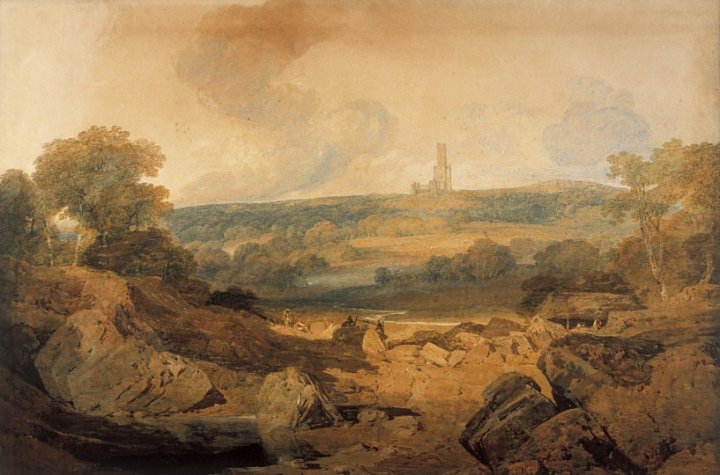
Joseph Mallord William Turner, East View of Fonthill Abbey, Noon, 1800, watercolour on paper
(Edinburgh: Scottish National Gallery)
◊ ◊ ◊ ◊ ◊
Press release for the exhibition:
Turner in January
Scottish National Gallery, Edinburgh, 1–31 January 2016
In keeping with a long-standing tradition now stretching over a century, New Year’s Day at the Scottish National Gallery will be marked by the opening of Turner in January: The Vaughan Bequest, an annual display of works by the artist Joseph Mallord William Turner (1775–1851).
 An outstanding collection by one of the great masters of British painting was bequeathed to the Gallery in 1900 by Henry Vaughan, a London art collector with a passion for Turner and a connoisseur’s eye for quality. Vaughan stipulated that the 38 exquisite works—which encapsulates the artist’s entire career—could not be subjected to permanent display, since continual exposure to light would result in their fading. Instead, these precious works were to be exhibited to the public “all at one time, free of charge, during the month of January,” when daylight in Edinburgh is at its lowest levels. Faithfully following Vaughan’s request, all of the works will be exhibited and Turner in January runs throughout the month, providing a welcome injection of light and colour during the darkest month of the year.
Clara Govier, Head of Charities at People’s Postcode Lottery (PPL), said: “This is the fourth year that players of PPL have supported Turner in January at the Scottish National Gallery, and we’re thrilled—even as relative newcomers in the grand scheme of things—to be involved in such an established tradition. It’s great for players to see that their valuable support is helping to provide thousands of visitors—some who come to see the exhibition every year, some for the very first time—with the opportunity to keep playing a part in this wonderful legacy.”
Recognised as perhaps the greatest of all British artists, Turner was born in London in 1775 and proved himself as an accomplished draughtsman while still a youth, exhibiting at the Royal Academy at the tender age of fifteen. He was a prolific and innovative artist who went on to exploit every possibility of the watercolour medium to create stunning land-and seascapes. Travelling widely, at first with sketching tours in England, Wales and Scotland and then later across Europe, Turner gathered material for masterful watercolours and oil paintings, discovering the awe-inspiring mountainous landscapes which became a major pre-occupation in his work.
Many of the works in the display reveal a youthful Turner’s artistic talents, such as the early wash drawings of the 1790s, while others show how this skill would come to be fused with the peripatetic lifestyle which dominated Turner’s life and career, resulting in colourful and atmospheric watercolour sketches of Continental Europe, such as Chatel Argent, in the Val d’Aosta, near Villeneuve (after 1836) and Falls of the Rhine at Schaffhausen, Side View (ca. 1841).
In his lifetime, Turner also managed three trips to Venice, first arriving there in 1819. The Vaughan Bequest features six of the artist’s stunning views of the city. In The Piazzetta, Venice (ca. 1835), one of Turner’s most spectacular Venetian studies, the Doge’s Palace and renowned St. Mark’s Basilica are dramatically illuminated by a bolt of lightning, an effect innovatively created by the artist by scratching away to reveal the paper once he had painted on it. Often, Turner would use his thumbnail and is reputed to have grown like an ‘eagle-claw’ for such a purpose. His third and final visit to the city in 1840 would see the artist produce a series of incredible works in which light itself appeared to have become the main subject, such as in The Grand Canal by the Salute, Venice (ca. 1840) and Venice from the Laguna (1840) where Turner’s consummate mastery of atmospheric lighting effects is clearly demonstrated.
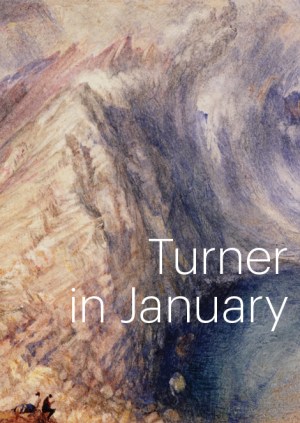
As with many artists at the end of the 18th century, for Turner the vastness and tumultuous conditions of nature inspired senses of awe and terror. This life-long fascination—of the savageness of elemental forces—poured out of Turner’s art, namely in the form of avalanches, storms and mountainous seas. This can be seen in works from the bequest, such as Loch Coruisk, Skye (1831–34), with its miniature human figures set against a grand, stretching backdrop of painted swirls.
Turner’s Heidelberg (ca. 1846), a glowing, almost hallucinatory image of the ancient university town on the Rhine and one of his finest late works, will also be on display.
Also joining those from the bequest is the work East View of Fonthill Abbey, Noon (1800), a romantic view of the Gothic novelist William Beckford’s extraordinary cathedral-like mansion in rural Wiltshire, which was accepted by HM Government in lieu of inheritance tax in 1988 and loaned to National Trust for Scotland at Brodick Castle.
◊ ◊ ◊ ◊ ◊
Christopher Baker, J.M.W. Turner: The Vaughan Bequest (Edinburgh: National Galleries of Scotland, 2007), 120 pages, ISBN: 978-1903278895, £10.
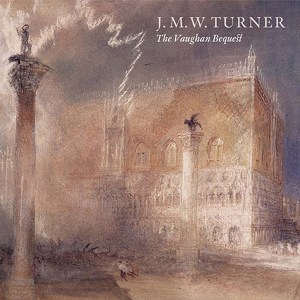 J.M.W. Turner (1775–1851) was perhaps the most prolific and innovative of all British artists. His outstanding watercolours in the collection of the National Gallery of Scotland are one of the most popular features of its collection. Bequeathed to the Gallery in 1899 by the distinguished collector Henry Vaughan, they have been exhibited, as he requested, every January for over 100 years at the National Galleries of Scotland. Renowned for their excellent state of preservation, they provide a remarkable overview of many of the most important aspects of Turner’s career.
This richly illustrated book, provides an authoritative commentary on the watercolours, taking account of recent research, and addressing questions of technique and function, as well as considering some of the numerous contacts Turner had with other artists, collectors and dealers. The introduction concentrates on Henry Vaughan, one of the greatest enthusiasts for British art in the late nineteenth century, whose diverse collections have not previously been fully studied and appreciated. The book accompanies the annual display every January of this bequest of Turner watercolours.
Exhibition | Venetian Painting in Honor of David Rosand
In Light of Venice: Venetian Painting in Honor of David Rosand
Otto Naumann Gallery, New York, 11 January — 12 February 2015

Bernardo Bellotto, Architectural Capriccio with a Self-Portrait in the Costume of a Venetian Nobleman, ca. 1762–65, oil on canvas, 61 x 44 inches.
New York: Otto Naumann and Robert Simon jointly announce that their exhibition In Light of Venice: Venetian Painting in Honor of David Rosand, will open on January 11th, 2016 at the Otto Naumann Gallery, 22 East 80th Street in New York. More than thirty important works of the Renaissance, Baroque, and Rococo periods—many never before seen publicly—will be on view for this milestone event. A portion of the proceeds of sales will benefit the David Rosand Tribute Fund at Columbia University, which was formed last year establishing a Professorship in Italian Renaissance Art History in David Rosand’s honor, as well as to fund other programs important to Venetian studies and to the teaching of art history. These include support for Casa Muraro, Columbia’s residence and study center in Venice, Italy that Professor Rosand first conceived and developed.
Both Naumann and Simon studied art history at Columbia and have continued their scholarly work while operating their eponymous art galleries devoted to Old Master paintings. Simon notes that with the changing focus of academic art history, support is needed to maintain the teaching of the crucial Renaissance period. “With the establishment of the Rosand Professorship in the Italian Renaissance, the subject is insured to be taught in perpetuity by distinguished scholars.”
Adds Naumann: “The exhibition demonstrates that important works by some of the greatest masters of the period are still on the market and many are certain to find homes in private collections, as well as in museums.”
While the exhibition will feature paintings from the fourteenth to the eighteenth centuries, the focus will be on the 1500s, the period most studied by Professor Rosand in his many books and publications. Featured artists include Carpaccio, Giovanni Bellini, Palma il Vecchio, Titian, Tintoretto, Paolo Veronese, and Jacopo Bassano. Other sixteenth-century paintings to be exhibited are by Palma il Giovane, the subject of Professor Rosand’s doctoral dissertation, Bonifazio Veronese, and Paris Bordone. Later Venetian paintings include significant works by Amigoni, Bambini, Guardi, Diziani, and Bernardo Bellotto. All paintings will be for sale.
David Rosand received his undergraduate and graduate education at Columbia, earning his Ph.D. in 1965. He was on the faculty there from that time until his death in August 2014, when he held the title of Meyer Schapiro Professor of Art History Emeritus. His impact on students at Columbia and in the field of Venetian Studies has been enormous—through his teaching, his groundbreaking publications on Venetian art, and his studies on the making of art spanning all periods.
New Acquisition | MFA Acquires Extraordinary Desk and Bookcase
Press release via Art Daily (30 December 2015). . .
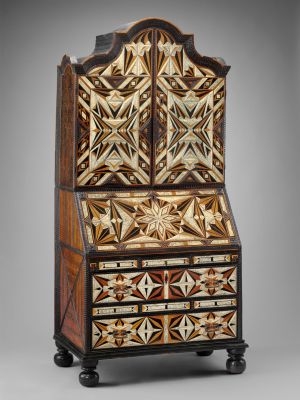
Desk and bookcase, mid-18th century, Mexico. Inlaid woods and incised and painted bone, maque, gold and polychrome paint, metal hardware (Museum of Fine Arts, Boston).
The Museum of Fine Arts, Boston, has acquired a rare and important desk and bookcase (mid-18th century, Mexico) from the Ann and Gordon Getty Collection. Originally made in Puebla de los Ángeles, this work is a remarkable piece of furniture that displays influences from Europe, Asia, Africa and the Americas. The striking geometric exterior looks toward Europe with its wood-and-bone Mudéjar designs—a Hispano-Moresque style popular during the era. Opening the doors reveals a dramatic interior of chinoiserie-style painting in gold on a red background. The inside recalls early colonial mapping traditions of Nahuatl-speaking artists, showing views of an extensive hacienda in Veracruz drawn in an indigenous style. The estate, once owned by a wealthy Spaniard, was the site of one of the earliest free African settlements in Mexico; the maps may depict descendants of these early African slaves or free blacks. This truly global mix of sources extends to the object’s material: the red background is likely maque (from the Japanese word for lacquer, maki-e), a resin created using local materials in the style of Asian painting.
The work is among the most rare pieces of furniture currently on view in the exhibition, Made in the Americas: The New World Discovers Asia, the first major, pan-American exhibition to examine the profound influence of Asia on the arts of the colonial Americas (on view through February 15).
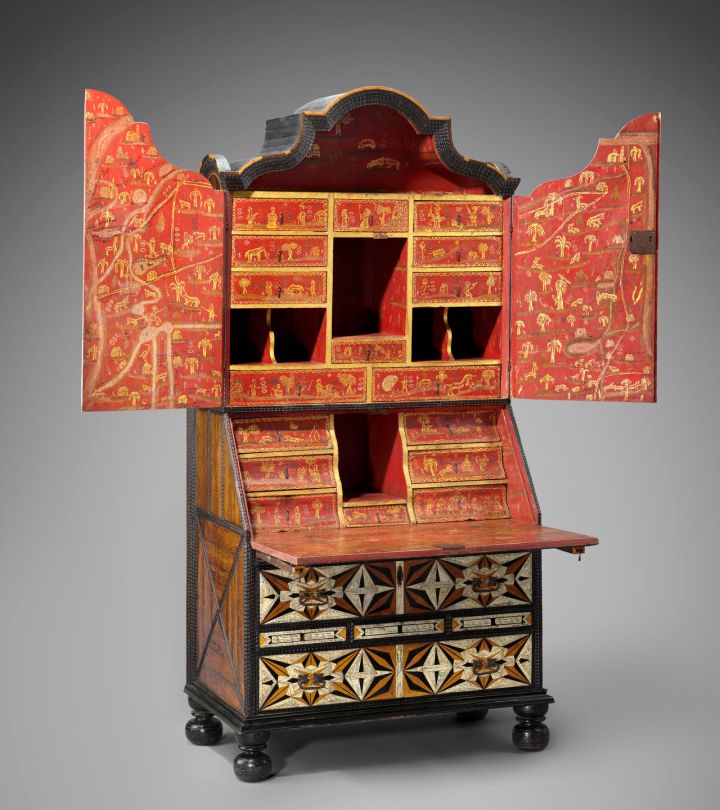
Desk and bookcase, mid-18th century, Mexico. Inlaid woods and incised and painted bone, maque, gold and polychrome paint, metal hardware (Museum of Fine Arts, Boston)
Exhibition | Reigning Men: Fashion in Menswear, 1715–2015
From LACMA:
Reigning Men: Fashion in Menswear, 1715–2015
Los Angeles County Museum of Art, 10 April — 21 August 2016
Powerhouse Museum, Sydney, 3 December 2016 — 12 March 2017
Saint Louis Art Museum, 25 May — 17 September 2017
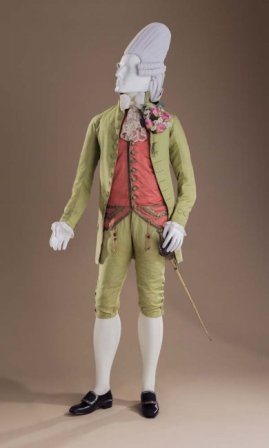
The Macaroni ensemble: Man’s Three-piece Suit, ca. 1770. Sword with Chatelaine, late 18th century. Men’s Pair of Shoe Buckles, late 18th century (LACMA)
Reigning Men: Fashion in Menswear, 1715–2015 explores the history of men’s fashionable dress from the eighteenth century to the present and re-examines the all-too-frequent equation of ‘fashion’ with ‘femininity’.
Beginning with the eighteenth century, the male aristocrat wore a three-piece suit conspicuous in make and style, and equally as lavish as the opulent dress of his female counterpart. The nineteenth-century ‘dandy’ made famous a more refined brand of expensive elegance which became the hallmark of Savile Row. The mid-twentieth-century ‘mod’ relished in the colorful and modern styles of Carnaby Street, and the twenty-first century man—in an ultra-chic ‘skinny suit’ by day and a flowered tuxedo by night—redefines today’s concept of masculinity.
Drawing primarily from LACMA’s renowned permanent collection, Reigning Men makes illuminating connections between history and high fashion. The exhibition traces cultural influences over the centuries, examines how elements of the uniform have profoundly shaped fashionable dress, and reveals how cinching and padding the body was, and is, not exclusive to women. The exhibition features 200 looks, and celebrates a rich history of restraint and resplendence.
This exhibition was organized by the Los Angeles County Museum of Art and made possible by Ellen A. Michelson. Additional support is provided by the Wallis Annenberg Director’s Endowment Fund.
◊ ◊ ◊ ◊ ◊
From Prestel:
Sharon Sadako Takeda, Kaye Durland Spilker, and Clarissa Esguerra, with contributions by Tim Blanks and Peter McNeil, Reigning Men: Fashion in Menswear, 1715–2015 (New York: Prestel, 2016), 272 page, ISBN: 978–3791355207, $55 / £35.
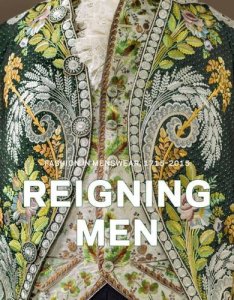
This fully illustrated book accompanies one of the most comprehensive exhibitions dedicated solely to three centuries of men’s fashion. The fashionable male may be making a comeback, but early fashion trends centered around what men—not women—were wearing. This intriguing book traces the history of men’s fashion since the 18th century, when young Englishmen imitated foreign dress and manners after touring the European continent. This phenomenon is only one of many explored in sections titled ‘Revolution/Evolution’, ‘East/West’, ‘Uniformity’, ‘Body Consciousness’, and ‘The Splendid Man’. In addition to numerous illustrations of extant menswear, the book captures the 19th-century dandy, a more restrained brand of expensive elegance which became the hallmark of Savile Row; the post-WWII mod, who relished the colorful styles of Carnaby Street; and the 21st-century man—ultra-chic in a sleek suit by day, wearing a flowered tuxedo by night. Reigning Men illuminates connections between history and high fashion, traces cultural influences over the centuries, examines how uniforms have profoundly shaped fashionable dress, and reveals that women aren’t the only ones who cinch and pad their bodies.
Sharon Sadako Takeda is Senior Curator and Head of the Costume and Textiles Department at the Los Angles County Museum of Art. Kaye Durland Spilker is Curator, and Clarissa Esguerra is Assistant Curator of the Costume and Textiles Department at the Los Angles County Museum of Art. They are the authors of Fashioning Fashion: European Culture in Detail, 1700–1915 (Prestel, 2010).
◊ ◊ ◊ ◊ ◊
Thomas John Bernard, . . . a theatrical costume designer, worked with the curators and conservators of the Costume and Textiles Department at LACMA to draw these patterns approximating the design of garments in the collection.
PDF documents with annotated patterns are available here»
New Book | Von der Kunst des sozialen Aufstiegs
From ArtBooks.com:
Almut Goldhahn, Von der Kunst des sozialen Aufstiegs: Statusstrategien und Kunstpatronage der venezianischen Papstfamilie Rezzonico (Vienna: Böhlau Verlag, 2016), 408 pages, ISBN: 978-3412503529, $135.
 Als Angehörige der ‘nobilità nuova’ hatten es die Rezzonico schwer, sich innerhalb des oligarchischen Systems der Adelsrepublik Venedig zu behaupten. Schon früh orientierten sie sich daher nach Rom, um parallel zur angestrebten Etablierung der Familie in Venedig eine familiäre Verankerung an der Kurie voranzutreiben. Dieses zweigleisige Modell sollte sich schließlich als tragfähig erweisen: 1758 wurde Clemens XIII. Rezzonico zum Papst gewählt. Über einen Zeitraum von 150 Jahren zeichnet das Buch den Aufstieg der Rezzonico von einer venezianischen Kaufmannsfamilie zu einer römischen Papstfamilie nach. Dabei werden die generationen- und systemübergreifenden Etablierungsstrategien der Familie offengelegt und mit ihrer Kunstpatronage abgeglichen, die gezielt zur visuellen Manifestierung ihres sozialen Status eingesetzt wurde. (Studien zur Kunst, 37).
Almut Goldhahn ist Wissenschaftliche Mitarbeiterin in der Photothek des Kunsthistorischen Instituts in Florenz – Max Planck Institut.
Rijksmuseum Research Fellowship Programme, 2016–17
The Rijksmuseum Fellowship Programme, 2016–17
Applications due by 13 March 2016
The Rijksmuseum operates a research Fellowship Programme for outstanding candidates working on the art and history of the Low Countries whose principal concern is object-based research. The aim of the programme is to train a new generation of museum professionals: inquisitive object-based specialists who will further develop understanding of art and history for the future. The focus of research should relate to the Rijksmuseum’s collection, and may encompass any of its varied holdings, including Netherlandish paintings, sculpture, decorative arts, prints, drawings, photography and historical artefacts. The purpose of the programme is to enable applicants to base part of their research at the Rijksmuseum, to strengthen the bonds between the universities and the Rijksmuseum, and to encourage the understanding of Netherlandish art and history. The programme offers students and academic scholars access to the museum’s collections, library, conservation laboratories and curatorial expertise.
Please review the eligibility, funding and application requirements by visiting the Rijksmuseum website. For the 2016–2017 academic year, candidates can apply for:
• Andrew W. Mellon Fellowship for art historical research
• Johan Huizinga Fellowship for historical research
• Migelien Gerritzen Fellowship for conservation research
• Manfred & Hanna Heiting Fellowship for photo-historical research
The closing date for all applications is 13 March 2016, at 6:00 p.m. (Amsterdam time/CET). No applications will be accepted after this deadline. All applications must be submitted online and in English. Applications or related materials delivered via email, postal mail, or in person will not be accepted. Selection will be made by an international committee in April 2016. The committee consists of eminent scholars in the relevant fields of study from European universities and institutions, and members of the curatorial staff of the Rijksmuseum. Applicants will be notified by 1 May 2016. All Fellowships will start in September 2016. Further information and application forms are available here.
New Book | Louis XIV Outside In
From Ashgate:
Tony Claydon and Charles-Édouard Levillain eds., Louis XIV Outside In: Images of the Sun King Beyond France, 1661–1715, (Farnham: Ashgate), 231 pages, ISBN: 978-1472431264, $125.
 Louis XIV—the ‘Sun King’—casts a long shadow over the history of seventeenth- and eighteenth-century Europe. Yet while he has been the subject of numerous works, much of the scholarship remains firmly rooted within national frameworks and traditions. Thus in France Louis is still chiefly remembered for the splendid baroque culture his reign ushered in, and his political achievements in wielding together a strong centralised French state; whereas in England, the Netherlands and other protestant states, his memory is that of an aggressive military tyrant and persecutor of non-Catholics.
In order to try to break free of such parochial strictures, this volume builds upon the approach of scholars such as Ragnhild Hatton who have attempted to situate Louis’ legacy within broader, pan-European context. But where Hatton focused primarily on geo-political themes, Louis XIV Outside In introduces current interests in cultural history, integrating aspects of artistic, literary and musical themes. In particular it examines the formulation and use of images of Louis XIV abroad, concentrating on Louis’ neighbours in northwest Europe. This broad geographical coverage demonstrates how images of Louis XIV were moulded by the polemical needs of people far from Versailles and distorted from any French originals by the particular political and cultural circumstances of diverse nations. Because the French regime’s ability to control the public image of its leader was very limited, the collection highlights how—at least in the sphere of public presentation—his power was frequently denied, subverted, or appropriated to very different purposes, questioning the limits of his absolutism which has also been such a feature of recent work.
Tony Claydon is Professor of Early Modern History at Bangor University, Wales. He is author of several books including, William III and the Godly Revolution; (with Ian McBride) ed., Protestantism and National Identity: Britain and Ireland, c.1650–c.1850; William III: Profiles in Power; and Europe and the Making of England, 1660–1760.
Charles-Édouard Levillain is Professor of History at the Université Paris VII Denis Diderot, France. A historian of early modern Britain and Europe, he works primarily on Anglo-Dutch politics in the late seventeenth and early eighteenth centuries. He is author of Vaincre Louis XIV: Angleterre-Hollande-France: Histoire d’une relation tiangulaire (1665–1688) (Champ Vallon, 2010); and Un glaive pour un royaume: La querelle de la milice dans l’Angleterre du XVIIe siècle (Honoré Champion, 2014).
◊ ◊ ◊ ◊ ◊
C O N T E N T S
List of Illustrations
Notes on Contributors
Acknowledgments
Introduction: Louis XIV Upside Down? Interpreting the Sun King’s Image, Tony Claydon and Charles-Édouard Levillain
1 Image Battles under Louis XIV: Some Reflections, Hendrik Ziegler
2 Francophobia in Late-17th-Century England, Tim Harris
3 ‘We Have Better Materials for Clothes, They, Better Taylors’: The Influence of La Mode on the Clothes of Charles II and James II, Maria Hayward
4 The Court of Louis XIV and the English Public Sphere: Worlds Set Apart?, Stéphane Jettot
5 Popular English Perceptions of Louis XIV’s Way of War, Jamel Ostwald
6 Louis XIV, James II and Ireland, D.W. Hayton
7 Lampooning Louis XIV: Romeyn de Hooghe’s Harlequin Prints, 1688–89, Henk van Nierop
8 Foe and Fatherland: The Image of Louis XIV in Dutch Songs, Donald Haks
9 Amsterdam and the Ambassadors of Louis XIV 1674–85, Elizabeth Edwards
10 Millenarian Portraits of Louis XIV, Lionel Laborie
Index
Call for Papers | Between Revolution and Reaction: French Art
Details of this graduate student colloquium are available at H-ArtHist:
Between Revolution and Reaction: French Art in the European Context, 1750–1830
Zentralinstitut für Kunstgeschichte, Munich, 1 June 2016
Proposals due by 15 February 2016
Due to political and social Umwälzungen/alterations, between ca. 1750 and 1830 political key notions and aesthetic conceptions of the modern era changed considerably. It therefore seems legitimate to consider the decades around 1800 as an epoch-making turn. The colloquium offers insights into current research concerning French art of this period. It focuses on the dynamics between revolution and reaction as well as on functions of the cultural policy during the French revolutionary period and on the establishment of new artistic pictorial/Zeichen- and symbolic systems.
The half-day colloquium offers six doctoral students the possibility to present their dissertation project in a paper that should not be longer than 10 minutes. Papers and discussions can be in German, French, and English. Speakers residing outside Munich will receive a lump sum of 200,- euro covering travel expenses. Applications containing a short cv and an abstract of the paper (not to exceed 3000 signs in length) must be sent to frz1800@zikg.eu by February 15, 2016.
Organized by Iris Lauterbach and Christine Tauber, Zentralinstitut für Kunstgeschichte, Munich
Exhibition | From Poussin to Monet: The Colors of France
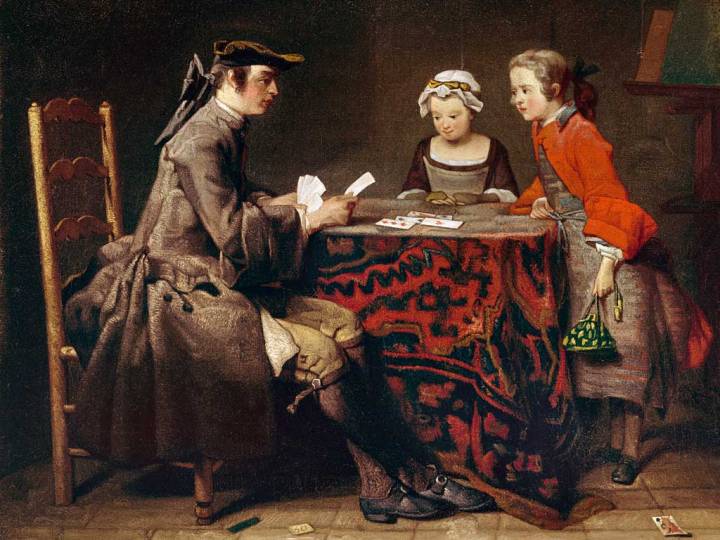
Jean-Siméon Chardin, Les Tours de Cartes (Card Tricks), ca.1735, oil on canvas, 31 x 39 cm
(Dublin: National Gallery of Ireland, NGI.478)
◊ ◊ ◊ ◊ ◊
Press release (via Art Daily) from the Bucerius Kunst Forum:
From Poussin to Monet: The Colors of France
Arp Museum Bahnhof Rolandseck, Remagen, 22 March — 6 September 2015
Bucerius Kunst Forum, Hamburg, 10 October 2015 — 17 January 2016
In the seventeenth century, French painting began to set the standards for all of Europe. Values in France during the Enlightenment began to shift toward a bourgeois society where painters were exposed to new themes and new artistic experiments. The French Revolution, the prototype of all struggles for liberation, marked a new era that became deeply entrenched in the development of French painting. The exhibition From Poussin to Monet: The Colors of France focuses on the effect that this dramatic social upheaval had on art.
During Poussin’s time, an argument broke out regarding the role of color in painting. Sensory experience and subjective perception became increasingly important until color was freed entirely by the Impressionists at the end of the nineteenth century. Paul Cézanne viewed nature as an arrangement of planes of color. Paintings no longer told a narrative; instead they gave to see. Color no longer depicted light; it became light. The exhibition demonstrates France’s path to modern art with paintings and drawings by Poussin, Watteau, Chardin, Delacroix, Corot, Courbet, Monet, Renoir, Cézanne, Van Gogh and others.
In cooperation with the National Gallery of Ireland in Dublin, and the Collection Rau for UNICEF at the Arp Museum Bahnhof Rolandseck in Remagen, Germany, where the exhibition ran from March 22 to September 6, 2015 under the title Revolution of Image: From Poussin to Monet.
Exhibition | Works from the Nationalmuseum in Stockholm

François Boucher, The Triumph of Venus, 1740, oil on canvas, 130 x 162 cm
(Nationalmuseum, Stockholm)
◊ ◊ ◊ ◊ ◊
Press release (24 December 2015) from The Morgan (with information for the show at the Louvre available here):
Paintings and Drawings from the Nationalmuseum in Stockholm (title forthcoming)
Musée du Louvre, Paris, 20 October 2016 — 16 January 2017
The Morgan Library & Museum, New York, 5 February — 14 May 2017
Seventy-six masterpieces of painting and drawing from the Nationalmuseum in Stockholm will make a rare appearance in New York beginning February 5, 2017 at the Morgan Library & Museum. The Nationalmuseum is Sweden’s largest and most distinguished museum, and it is lending to the Morgan outstanding works by Dürer, Raphael, Rubens, Rembrandt, Antoine Watteau, and François Boucher, among many celebrated artists. It is the first collaboration between the two institutions in almost fifty years.
“We are delighted to host this exhibition of treasures from the Nationalmuseum of Stockholm,” said Colin B. Bailey, director of the Morgan Library & Museum. “The selection of paintings and drawings is of extraordinary quality. Fine examples of work from the Italian, French, and Northern European schools are represented, with a group of sixty master drawings forming the heart of the show. We are deeply grateful to the museum’s director general Berndt Arell and his curatorial staff for making this collaboration possible.”
The exhibition will run through May 14, 2017 and continues a tradition at the Morgan of presenting drawings and other work from some of Europe’s most august institutions. Over the last several years, the Morgan has featured critically acclaimed shows from the Uffizi in Florence, the Louvre, and the Staatliche Graphische Sammlung in Munich.
The Nationalmuseum’s core holdings were assembled by Count Carl Gustav Tessin (1696–1770), a diplomat and one of the great art collectors of his day. The son and grandson of architects, Tessin held posts in Vienna, Berlin, and Paris, where he came into contact with the leading Parisian artists of the time and commissioned many works from them. By the time he left Paris in 1742, he had amassed a truly impressive collection of paintings and drawings.
Among the fourteen paintings in the exhibition are three commissioned by Tessin and exhibited at the 1740 Parisian Salon. These include Boucher’s Triumph of Venus, Jean-Baptiste Oudry’s Dachshound Pehr with Dead Game and Rifle, and a Portrait of Count Tessin by Jacques-André Joseph Aved, in which the collector is shown among his art, books, and medals. The group of paintings will also include six works by Jean-Siméon Chardin.
The drawings in the exhibition include works by Italian masters such as Domenico Ghirlandaio, Raphael, Giulio Romano, and Annibale Carracci. Northern European artists are represented by Dürer, Hendrik Goltzius, Peter Paul Rubens, Rembrandt, and Anthony van Dyck, among others. The French drawings begin with Primaticcio and practitioners of the Fountainebleau school and include works by Jacques Callot and Nicholas Poussin, as well as Count Tessin’s French contemporaries, Boucher, Chardin, and Antoine Watteau.
In the years following his return from France, Tessin encountered financial difficulties and was forced to sell much of his collection, with many of the finest works being acquired by the Swedish royal family. After the Count’s death, Swedish King Gustav III purchased most of his remaining works. Tessin’s holdings thus formed the nucleus of the Royal Museum of Sweden when it was created in 1794. It was later renamed the Nationalmuseum.










 Enfilade
leave a comment