Conference | Yankee Ingenuity and New England Decorative Arts
From Historic Deerfield:
Yankee Ingenuity and New England Decorative Arts, 1790–1840
Historic Deerfield, Deerfield, Massachusetts, 13–15 November 2015
Join us for an in-depth examination of the decorative arts of New England’s inventors, merchants and peddlers during the late 18th and early 19th centuries.
When President Adams moved into the new White House in 1800, innovation and adaptation already drove the creative designs of many New England-made objects. Even as elite tastes maintained traditional ties to European styles and materials, the consumer demands of an expanding middle class fueled inventive entrepreneurial approaches to making and selling cheaper, attractive, American-made goods. At times protected or even encouraged by embargo, war, and westward expansion, New Englanders made and sold a profusion of wares including patent clocks, popular prints, glassware, stoneware, tinware, pewter, cast iron stoves, and stenciled and painted furniture. First competing with and ultimately replacing European manufactures for many families, they infused their products with artistic energy and excitement that spurred a national impulse to ‘Buy American’. Forum speakers and demonstrators will include Peter Benes, Deborah Child, David Jaffee, Amanda Lange, Ned Lazaro, William McMillen, Mary Cheek Mills, Sumpter Priddy, Andrew Raftery, Christine Ritok, and Philip Zea.
◊ ◊ ◊ ◊ ◊
F R I D A Y , 1 3 N O V E M B E R 2 0 1 5
Participants who arrive early are welcome to walk The Street and enjoy Deerfield’s historic houses. The museum exhibits ingenious examples of New England decorative arts in the Museum’s Attic of the Flynt Center of Early New England Life and in the exhibition Into the Woods: Crafting Early American Furniture. Before the Forum begins, four optional workshops (additional fee required) and one estate planning workshop (no fee) are offered on Friday afternoon, November 13.
1:00–2:30 Optional Workshop: “Connoisseurship of Antique Tinware: The Trade, Materials, Tradesmen, Tools, and Products,” William McMillen, Master Tinsmith, Glenmont, NY
1:00–2:30 Optional Workshop: “Yankee Potters: New England-Made Ceramics,” Amanda Lange, Curatorial Department Director, Historic Deerfield
3:00–4:30 Optional Workshop: “Peddling Fashion: Accessories in Early New England, 1790–1840,” Ned Lazaro, Associate Curator of Textiles and Collections Manager, Historic Deerfield
3:00–4:30 Optional Workshop: “Glass in Early America: An Introduction to History and Technology,” Mary C. Mills, Historic Glass Specialist, Cultural Resources Management, AECOM
5:00 Opening Reception
6:00 Welcome by Philip Zea, President, Historic Deerfield, Inc.
6:10 Keynote Lecture: “Fashioning the New Nation in Post-Revolutionary New England,” David Jaffee, Professor and Head of New Media Research, Bard Graduate Center
7:30 Dinner on own or prix fixe dinner at the Deerfield Inn
S A T U R D A Y , 1 4 N O V E M B E R 2 0 1 5
8:30 Registration, coffee, and refreshments
9:30 Lecture: “American Fancy and Rural New England Creativity,” Sumpter Priddy, Historic Furnishings Consultant, Alexandria, VA
10:30 Break
11:00 Lecture: “Elegance and Innovation in Early New England Glassmaking,” Mary C. Mills, Historic Glass Specialist, Cultural Resources Management, AECOM
12:15 Lunch
2:00 Lecture: “Richard Brunton—Engraver to Early America –Legitimate and Otherwise,” Deborah M. Child, Author, Lecturer and Independent Curator
3:00 Break
3:30 Demonstration: “The Art and Craft of Copperplate Engraving,” Andrew Raftery, Professor of Printmaking, Rhode Island School of Design
5:30 Reception
6:45 Dinner on own or prix fixe dinner at the Deerfield Inn
S U N D A Y , 1 5 N O V E M B E R 2 0 1 5
8:30 Coffee and refreshments
9:30 Lecture: “’Rich and Tasty’ Vermont Furniture: Revolution to Reinvention,” Philip Zea, President, Historic Deerfield
10:30 Break
11:00 Lecture: “Inspiration/Innovation: Exemplary Furniture on The Street,” Christine Ritok, Associate Curator, Historic Deerfield
11:30 Lecture: “The ‘Yankee Peddler’: Notes Toward a Multicultural Perspective,” Peter Benes, Director of the Dublin Seminar for New England Folklife
Lunch
2:00 Optional Guided Tour: “Exploring Historic Deerfield’s Collection of New England Folk Portraiture: Paintings, Drawings, Watercolors, and Silhouettes,” Flynt Center of Early New England Life
Seminar | FHS Research Seminar on European Furniture
From the seminar programme:
The Furniture History Society’s Research Seminar on European Furniture
The Wallace Collection, London, 20 November 2015
Following the success of its two previous FHS Research Seminars, held in London in 2012 and in New York in 2014, The Furniture History Society is delighted to announce that a third Research Seminar will take place, once again hosted by the Wallace Collection, on 20 November 2015. This year, the Seminar will be held in honour of Sir Nicholas Goodison, in celebration of his 25 years as President of the Society. Ten speakers—all at an early stage of their career—will present short papers on their current research, with papers encompassing a broad chronological and geographical representation of European furniture history.
Tickets are priced at £15 (£5 for student concessions) and are available from the Grants Secretary, Joanna Norman, grants@furniturehistorysociety.org or 07790 669240. The FHS Research Seminar is generously supported by the Oliver Ford Trust and the Wallace Collection.
◊ ◊ ◊ ◊ ◊
P R O G R A M M E
10.00 Registration and coffee
10.20 Welcome
10.30 Ada de Wit (Radboud University, Nijmegen / The Wallace Collection), Anglo-Dutch relationships in seventeenth-century wood carving
10.55 Olivia Fryman (Historic Royal Palaces), A leather chest of drawers from the household of Queen Anne
11.20 Esther van der Hoorn (Rijksmuseum), Patterns of production, invention and taste in a late 17th-century design for a chaise à porteurs in the Rijksmuseum
11.45 Jean-Baptiste Corne (Ecole du Louvre), Georges Jacob and the Rousseau Brothers: Enlightenment of a brief cooperation
12.10 Annemarie Klootwijk (Duivenvoorde Castle, The Netherlands), A set of rococo trumeaus at Duivenvoorde castle
12.35 Discussion
13.00 Lunch (not included in ticket price)
14.00 Julie Godin (Université de Nantes), Regency furniture at Chatsworth: From classical revival to chinoiserie
14.25 Christiane Ernek-van der Goes (Staatliche Kunstsammlungen Dresden), Johann August Türpe: Rebel, entrepreneur and court cabinetmaker
14.50 Tea
15.15 Thomas Deshayes (Cultural Property section, Ministry of Defence, Paris), Léopold Double: A French Lord Hertford?
15.40 Caroline McCaffrey (University of Leeds), Design influences on the furniture of Robert Lorimer
16.05 Benjamin Zurstrassen (Musée Horta, Brussels), Henry van de Velde’s furniture: Between making and thinking
16.30 Discussion
16.50 Concluding remarks
Call for Papers | Placing Prints: New Developments, 1400–1800
From The Courtauld:
Placing Prints: New Developments in the Study of Print, 1400–1800
The Courtauld Institute of Art, London, 12–13 February 2016
Proposals due by 22 November 2015
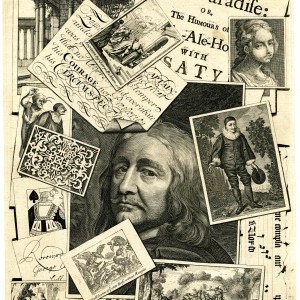 Traditionally, the history of printmaking has fallen in the space between art history and the history of the book. Often ‘reproductive’ and multiple in nature, prints have long been marginalized in art historical scholarship in favour of the traditional ‘high’ arts. The inherent complexities in the manufacture and sale of print, often involving multi-faceted networks of specialist craftsmen, artists, publishers and sellers, has also led to much confusion. Not knowing how prints are made has affected our ability to understand the medium and its aesthetic qualities. However, recent scholarship has opened up new avenues for placing prints in Renaissance and Early Modern Europe. From the techniques applied in the making of prints to the individuals involved in their production, distribution and use, current research is continuing to shape our understanding of this complex field.
This conference aims to showcase new developments in the study of prints, challenging and developing traditional approaches. We are looking for papers that address a wide variety of issues and plan, over
the course of the two-day conference, to have a series of panels devoted to different themes. Some issues to consider include, but are not limited to, the following:
• the question of the ‘reproductive’ print and the idea of originality in printmaking
• the print in art criticism
• the development of new genres of print
• the question of the ‘popular’ print and the place of cheap prints on the early modern market
• the relationship between word and image in print
• the social uses of prints, in collections and other environments
• seriality and sequencing in prints
• the role of prints as transmedial agents, triggering the production of the same composition in different media
• techniques and innovations in the making of prints
• networks and relationships behind the production and sale of prints; the notion of collaboration
• colour: coloured printing, hand-coloured prints and processes of translating colour into in a monotone linear medium
The conference will include a pop-up display in the Courtauld Gallery’s print room, curated for the occasion. This will provide the opportunity to engage directly with objects related to the themes discussed.
We invite papers from both established and emerging scholars in universities, museums and galleries. Our aim is to provide a platform for sharing approaches and developing future collaborations between scholars working with prints. For this reason, we are also willing to consider papers delivered in French, Italian and German. However, speakers must provide an English translation of their text and be willing to answer questions and contribute to discussions in English. Unfortunately, funding for speakers is not available and speakers from outside London are encouraged to apply to their institutions for subsidies to attend the colloquium.
Abstracts for 20-minute papers, not exceeding 250 words should be sent with a brief academic CV (100 words) by 22 November to: placingprints@courtauld.ac.uk.
Organised by Naomi Lebens, Tatiana Bissolati, Bryony Bartlett-Rawlings and Chloe Gilling (The Courtauld Institute of Art).
Online Learning | Sexing the Canvas: Art and Gender

Giovanni Battista Tiepolo, The Banquet of Cleopatra, 1744
(Melbourne: National Gallery of Victoria)
◊ ◊ ◊ ◊ ◊
Now in progress through Coursera (directed by Jeanette Hoorn with familiar faces including Jennifer Milam). . .
Coursera: Sexing the Canvas: Art and Gender
Directed by Jeanette Hoorn, 26 October — 13 December 2015
What do paintings tell us about sex? How is art gendered? Here we get up close to some of the great paintings in the world’s most famous museums, giving you insight into how art speaks to us about sex, sexuality and gender.
This course teaches masterpieces through the lens of sex and gender. We take you to the rich collections of New York’s Museum of Modern Art, Melbourne’s National Gallery of Victoria and California’s Huntington Library giving you access to outstanding works from the western tradition and expert tuition from specialist curators and renowned art historians.
Each unit will examine the circumstances in which paintings are produced and received, and how contemporary spectators and consumers of art view them. Why do works of art made centuries ago continue to speak so profoundly to us today? What do art historians mean when they talk about ‘the gaze’? Are Matisse’s paintings ‘sexy’? What do the nude and the sleeping gypsy signify in Henri Rousseau’s extraordinary pictures? Why do viewers find Frida Kahlo’s small and very personal paintings so powerful? What do Gainsborough’s portraits tell us about masculinity and sensibility in eighteenth century Britain? How is the Australian ‘dreaming’ gendered? These are some of the intriguing questions you will study in Sexing the Canvas: Art and Gender.
Course Syllabus
The course is taught over 7 weeks and is made up of 9 modules:
1 Introduction: Tiepolo’s Cleopatra: Painting, Agency and the Gaze
2 The Culture of Sensibility and the ‘Man of Feeling’: Thomas Gainsborough’s Portrait of the Officer of the Fourth Regiment of Foot
3 Gainsborough at the Huntington: The Role of Music, Costume, Theatre, Charity and Passion in the Gendered Culture of Sensibility
4 Sexual Codes in French Courtly Painting of the Eighteenth Century
5 Orientalism, Gender and Display: Painting in Morocco
6 Henri Rousseau: Challenging the Myth of the Passive Woman
7 Henri Matisse, Paul Cezanne and Max Dupain: Modernism, Gender and the Science of Movement
8 Sexuality and Dissonance: Frida Kahlo and the Struggle to Paint
9 What is Women’s Business?: Australian Indigenous Art and the Dreaming
Recommended Background
No background is required; all are welcome. Visit your local art museum or gallery and look at some paintings.
Suggested Readings
All readings needed to successfully complete the course will be supplied. A rich list of resources will also be supplied within the course to assist you with you study for this subject.
Course Format
The class will consist of lecture videos, which are between 8 and 12 minutes in length. Each unit has key readings, which, with the lectures, provide the content for the short weekly quizzes based on a multiple choice format.
Exhibition | Georgia’s Girlhood Embroidery
Press release (21 September 2015) from the Georgia Museum of Art:
Georgia’s Girlhood Embroidery: ‘Crowned with Glory and Immortality’
Georgia Museum of Art, University of Georgia, Athens, 31 October 2015 — 28 February 2016
Curated by Kathleen Staples and Dale Couch

Frances Roe (Savannah, Georgia), Sampler, ca. 1815 (Georgia Museum of Art, University of Georgia)
The Georgia Museum of Art at the University of Georgia will present the exhibition Georgia’s Girlhood Embroidery: ‘Crowned with Glory and Immortality’ October 31, 2015, through February 28, 2016. Organized by curators Kathleen Staples, independent scholar, and Dale Couch, curator of decorative arts at the museum, it focuses on ornamental needlework created in Georgia and is the first comprehensive exhibition of Georgia samplers.
Girls between the ages of 8 and 12 created embroidered samplers during the 18th and 19th centuries in Georgia as an exercise to gain skills in sewing, needlework and embroidery. Wealthier girls were expected to possess such skills as part of their participation in polite society. Girls from humbler backgrounds and free African Americans could use their skills to find paid employment. The samplers include rows of alphabets, quotations in prose and verse, images of architecture and embellished floral borders. Written documents from the period show that needlework took part in many different settings: public and private, elective and required, urban and rural.
Couch said, “The Henry D. Green Center for the Study of the Decorative Arts, at the Georgia Museum of Art, is keen to examine and present the art of all groups of people who were present in Georgia’s history. My predecessor Ashley Callahan and I searched for embroidery examples that represented the work of Georgia’s women for more than a decade. With the help of textile specialist Kathy Staples, we have been able to decipher the needlework done by elite women in early Georgia. These women were literate and educated, which provided them with the means of creating such ornamental needlework. In spite of the elite nature of embroidery, Staples has touched on many important tangents of Georgia experience, including African American sewing and girlhood education.”
The exhibition includes about two dozen samplers created in Georgia or by Georgians between the mid-18th century and about 1860, on loan from public and private collections, including those of the Museum of Early Southern Decorative Arts (MESDA), the Midway Museum, the Charleston Museum, the Telfair Museums, St. Vincent’s Academy (Savannah, Georgia) and the President James K. Polk Home and Museum. It will be accompanied by a fully illustrated catalogue published by the museum and for sale through the Museum Shop.
One example, worked by Martha ‘Patsey’ Bonner McKenzie (1775–1851), was used as evidence by its maker to claim a Revolutionary War widow’s pension. Another, by Eliza S. Blunt, consisted of architectural embroideries, which were very uncommon in Georgia at the time. Blunt’s needlework probably shows the Eatonton Academy, built ca. 1807.
Associated museum events include a public tour at 2 p.m. on November 11; a Family Day focusing on embroidered holiday ornaments at 10 a.m. on December 5; and the eighth biennial Henry D. Green Symposium of the Decorative Arts, organized by the museum and held at the UGA Hotel and Conference Center February 2–4, 2016. The museum will also host and co-organize this year’s MESDA Textile Seminar, Interwoven Georgia: Three Centuries of Textile Traditions, to be held January 14–16, 2016.
The exhibition is sponsored by the National Endowment for the Arts, the W. Newton Morris Charitable Foundation and the Friends of the Georgia Museum of Art.
YCBA Visiting Scholar Awards
The YCBA Visiting Scholars Program is now accepting applications for the award period from July 1, 2016 to June 30, 2017. The program offers short-term residential awards to scholars in the humanities from predoctoral to senior levels.
Yale Center for British Art Visiting Scholar Awards
New Haven, 1 July 2016 — 30 June 2017
Applications due by 11 January 2016
Visiting Scholar Awards are intended to enable scholars and doctoral students working in a variety of disciplines to study the Center’s collections. Awards are offered to scholars and predoctoral students working in any discipline, including history, the history of art, literature, and other fields related to British visual and material culture. Predoctoral applicants from North America must be ABD to qualify.
One award per annum is reserved for a member of the American Society for Eighteenth-Century Studies. In addition, scholars may apply to the Huntington Library, San Marino, California, and the Delaware Art Museum, Wilmington, for awards in the same year; every effort will be made to offer consecutive dates.
Postdoctoral awards may be held between one to four months. While all applications are given equal consideration, stays of at least two months are encouraged. Predoctoral awards may be held from one to two months.
Awards cover the cost of travel to and from New Haven, and provide accommodation as well as a living allowance. Recipients are required to be in residence in New Haven for the duration of their award and must be free of all other significant professional responsibilities during their stay.
The closing date for awards is Monday, January 11, 2016. Applicants should complete the online application and upload a cover letter, a curriculum vitae, and a statement of no more than two thousand words (single-spaced) outlining the proposed research project and the preferred months of tenure. Applicants should provide a title for their research project and place their full name on each page of the application. Two confidential letters of recommendation should be e-mailed to Research (ycba.visitingscholars@yale.edu) under separate cover by the same deadline. For further information, please contact Research, ycba.visitingscholars@yale.edu.
Call for Papers | Nouveau Reach: Past, Present, and Future of Luxury
From the conference website:
Nouveau Reach: Past, Present, and Future of Luxury / Passé, présent et avenir du luxe
Ryerson University, Toronto, 11–14 May 2017
Proposals for complete panels and individual papers due by 15 March 2016
Nouveau Reach: Past, Present, and Future of Luxury brings together leading thinkers in luxury studies and industry to explore the future of luxury in the Canadian and global contexts. Taking place in Toronto, Canada from 11 to 14 May 2017, we invite scholars of anthropology, business, fashion, fine art, history, modern languages, museum studies, material art & design, and social sciences to share findings on historical and contemporary developments in luxury studies. We also invite established professionals currently working in luxury market—via fashion, curatorship, fine arts, auctioneering, design, commerce, and travel—to contribute their expertise and insight on the future of luxury in the global context.
The three-day conference is co-organized by Brock University and The School of Fashion at Ryerson University. It features both traditional panels of 20-minute papers and interactive workshops led by leading industry experts. Please submit 4-member panel proposals that include 300-word (max) abstracts per presenter and a 200-word rationale for the panel, as well as a brief curriculum vitae for all presenters by 15 March 2016. Proposals for individual papers will also be considered. Graduate students are strongly encouraged to apply. Participants will be asked to submit completed papers in January 2017 for consideration for a special issue of Luxury: History, Culture, Consumption by Bloomsbury Publishing.
Topics can include, but are not limited to:
• The history of and new frontiers in luxury
• Trajectories in Canadian luxury
• Luxury and global markets
• Luxury and the public
• Luxury as business model
• Curating luxury
• Luxury and nation, race, and/or sex
• Cultural/literary/artistic representations of luxury
• Luxury consumption and/or production
• Luxury and space
• Scandals, ruptures, and slippages in the pursuit of luxury
Please submit proposals, in Word format, to NouveauReachCAN@gmail.com.
Organizing Committee
Jessica Clark, History, Brock University
Nigel Lezama, Modern Languages, Literatures & Cultures, Brock University
Alison Matthews David, The School of Fashion, Ryerson University
Robert Ott, The School of Fashion, Ryerson University
Plenary Speakers
Jonathan Faiers, University of Southampton, Editor, Luxury: History, Culture, Consumption
Giorgio Riello, University of Warwick, The Luxury Network
Jana Scholze, Victoria & Albert Museum, Co-curator of the 2015 exhibition What is Luxury?
Exhibition | The Châtelet Family Archives

◊ ◊ ◊ ◊ ◊
Now on display just outside of Chaumont:
Dans les arcanes d’une famille illustre: les archives Du Châtelet révélées
Archives départementales de la Haute-Marne, Chaumont, 20 June — 18 December 2015
Après trois années d’acquisitions et de classement aux Archives départementales de la Haute-Marne, ce fonds riche de plusieurs milliers de documents allant du XIIIe au XVIIIe siècle, complété par des prêts d’objets en provenance de musées ou de collections privées et d’autres pièces rares des Archives, est présenté au grand public pour la première fois !
Si de nombreuses pièces concernent Cirey-sur-Blaise et la personnalité la plus connue de la famille, Émilie Le Tonnelier de Breteuil, marquise Du Châtelet et amie proche de Voltaire, l’ensemble du fonds reflète plus globalement un art de vivre en Haute-Marne sur une période de six siècles.
L’exposition aborde sept grands thèmes : la famille Du Châtelet et ses possessions domaniales ; la carrière des Du Châtelet au service de la Lorraine et de la monarchie française ; l’histoire du château et des jardins de Cirey ; les sources de revenu de la famille (bois, métallurgie…) ; les aspects littéraires et scientifiques liés à Émilie du Chatelet et Voltaire ; la vie quotidienne au château de Cirey ; madame de Simiane et Cirey au XIXe siècle. Chaque thème reposera avant tout sur les éléments du fonds d’archives familial, mais pourra s’enrichir de pièces provenant d’autres fonds des Archives départementales ou d’objets prêtés par des établissements extérieurs.
Pour plus d’information, téléchargez le communiqué de presse.
At Christie’s | Rebranding and Rescheduling the Old Masters
‘Classic Art’ and ‘Revolution’ are the latest labels chosen to make Old Master paintings more appealing to collectors of contemporary art. From The NY Times:
Scott Reyburn, “A New Battleground for ‘Classic Art’,” The New York Times (30 October 2015).
. . . Last month, Christie’s jolted the auction calendar by announcing that it would be introducing a new themed week devoted to auctions of historic artworks in New York in April. Instead of holding its old master paintings sales in January in the same week as Sotheby’s, Christie’s will offer them three months later, at the same time that it previews highlights of its May Impressionist, modern and contemporary auctions.
Traditionally, for the convenience of dealers and collectors, Sotheby’s and Christie’s, the two rival auction houses, have held their most important sales in the same week. . . .
[But] Christie’s is now going its own way with old masters, or what it now re-brands as “classic art.”
“There’s a sense that classical paintings aren’t fashionable,” said Jussi Pylkkanen, global president of Christie’s International. “But we’ve been selling them at the wrong time of year, when we haven’t been able to show them to our buyers of 20th-century art.” . . .
This shake-up of the New York auction calendar is the latest attempt—the Frieze Masters fair in London is another—to re-energize demand for historic works by exposing them to the wealthy collectors of 20th- and 21st-century art who dominate the buying. With that audience in mind, the April 2016 “Classic Art Week” will be given a modernist edge with a new themed “Revolution” sale comprising stand-out works from the 18th to 20th centuries, including photographs. . . .
Christie’s press release (6 October 2015) for the “Revolution” sale (New York, #11932, 13 April 2016) is available here»
Newly Refurbished Paul Mellon Centre Opens to the Public
From the Paul Mellon Centre (27 October 2015) . . .
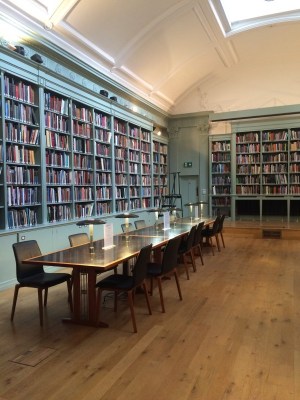 After our ten-month-long refurbishment and expansion project, the Paul Mellon Centre for Studies in British Art has re-opened its doors.
One of the jewels in the Centre’s crown is the Public Study Room (PSR), which, newly decorated, is once again open to readers from 10am to 5pm, Monday to Friday. Users of our PSR will enjoy improved, highly-convenient open-shelf access to the books that provide the mainstay or our rich library collections, and that cover all periods of British art and architecture. However, some of our Research Collection material is not yet installed on the premises; this includes journals, auction catalogues, rare books, and all of our archive and photographic archive collections. We hope that all of this material will be fully integrated into our collections, and available for use by readers, over the next few months. Please call 020 7580 0311 or email collections@paul-mellon-centre.ac.uk for further information.
◊ ◊ ◊ ◊ ◊
In addition to the renewed Public Study Room, the renovation project—completed by Wright and Wright—has doubled the size of the Centre’s listed Grade I premises with the acquisition of the lease of 15 Bedford Square, just next door. Bedford Square (built between 1775 and the 1780s) has been home to the Centre since 1996 (the Centre having previously been based at 20 Bloomsbury Square). The space that now serves as the Study Room had been heavily reworked in the 1920s; and as noted at the Mellon’s Centre’s website, based on “the evidence of the plaster ‘proscenium arch’ at the north end,” it “may well have been designed as a private cinema.” After nearly two decades, the unforgettable green room has been reborn, with this clever video showing the books going back onto the newly painted shelves. I can’t wait until my next visit. –CH
◊ ◊ ◊ ◊ ◊










 Enfilade
leave a comment