New Book | Artful Virtue
From Ashgate:
Leslie Ellen Brown, Artful Virtue: The Interplay of the Beautiful and the Good in the Scottish Enlightenment (Farnham: Ashgate Publishing, 2015), 284 pages, ISBN: 978-1472448484, $120.
 During the Scottish Enlightenment the relationship between aesthetics and ethics became deeply ingrained: beauty was the sensible manifestation of virtue; the fine arts represented the actions of a virtuous mind; to deeply understand artful and natural beauty was to identify with moral beauty; and the aesthetic experience was indispensable in making value judgments. This book reveals the history of how the Scots applied the vast landscape of moral philosophy to the specific territories of beauty—in nature, aesthetics and ethics—in the eighteenth century. The author explores a wide variety of sources, from academic lectures and institutional record, to more popular texts such as newspapers and pamphlets, to show how the idea that beauty and art made individuals and society more virtuous was elevated and understood in Scottish society.
Leslie Ellen Brown is Professor Emerita of Music at Ripon College. Her earliest publications were in the field of early eighteenth-century French opera, with her later work concentrating on eighteenth-century Scottish studies.
◊ ◊ ◊ ◊ ◊
C O N T E N T S
Introduction
1 The Senses
2 Virtue
3 Beauty
4 Sentiment
5 Taste
6 Experience
7 Cultivation
8 Traditions
Afterword
Select Bibliography
Index
Helen Jacobsen on The Wallace Collection’s Sphinx Clock, 1781

◊ ◊ ◊ ◊ ◊
This afternoon at The Wallace Collection:
The Wallace Collection Treasure of the Month, April 2015 | Sphinx Clock, France, 1781
Gallery Talk by Helen Jacobsen, The Wallace Collection, London, 27 April 2015
In the late summer of 1777, Queen Marie-Antoinette wagered her brother-in-law 100,000 livres that he could not build a ‘pleasure house’ in less than 100 days; she lost the bet and the charming Pavillon de Bagatelle in the Bois de Boulogne was the result, although the interiors took several years to complete. Designed by the comte’s architect, François-Joseph Bélanger (1744–1818), it was intended for parties and enjoyment, with a billiard room, a dining room and a salon on the ground floor. Everything was in the latest neo-classical taste, executed by the group of talented decorators, sculptors and cabinet-makers around Bélanger and d’Artois.
The walls of the circular salon were decorated with panels of painted and gilded stucco decoration in the Antique style made fashionable by English and French architects such as Robert Adam and Charles-Louis Clérisseau, while the silk curtains and velvet chairs were of ‘English green’. Bélanger designed a clock for the room that reflected this decoration and when it was finally delivered in 1781 it was considered to be of such superb workmanship that it sat under a glass shade on the chimneypiece. The king’s clock-maker, Jean-Baptiste Lepaute (1727–1801), charged d’Artois the enormous sum of 7,500 livres for the clock, and also made one for his older brother, the comte de Provence. This clock is most likely the one made for Bagatelle. . . .
More information about the clock is available here»
A gallery talk on the clock by Helen Jacobsen, Senior Curator and Curator of 18th-Century Decorative Arts will take place Monday, 27 April 2015, at 1:00pm.
Exhibition | Handel: A Life with Friends
From the Handel House Museum:
Handel: A Life with Friends
Handel House Museum, London, 1 July 2015 — 10 January 2016
Curated by Ellen Harris
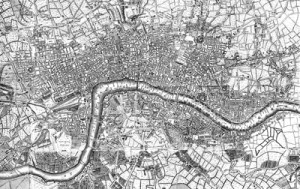 What was it like to live next to the great composer Handel? Who would call at his house? Who did he visit? In this new exhibition, Handel scholar Ellen Harris will explore the composer’s domestic life at 25 Brook Street and the many friends and neighbours who visited him at the new, fashionable residential district called ‘May Fair’.
Handel’s music brought this disparate group of men and women together, as amateur performers in their own homes and as audiences at performances of his operas and oratorios. With important loans from national, local and private collections, the exhibition—inspired by Ellen Harris’s new book George Frideric Handel: A Life With Friends—will offer a rare glimpse into the public and private lives of some of Handel’s closest friends.
◊ ◊ ◊ ◊ ◊
From Norton:
Ellen T. Harris, George Frideric Handel: A Life with Friends (New York: Norton, 2014), 496 pages, ISBN: 978-0393088953, $40.
 An intimate portrait of Handel’s life and inner circle, modeled after one of the composer’s favorite forms: the fugue.
During his lifetime, the sounds of Handel’s music reached from court to theater, echoed in cathedrals, and filled crowded taverns, but the man himself—known to most as the composer of Messiah—is a bit of a mystery. Though he took meticulous care of his musical manuscripts and even provided for their preservation on his death, very little of an intimate nature survives.
One document—Handel’s will—offers us a narrow window into his personal life. In it, he remembers not only family and close colleagues but also neighborhood friends. In search of the private man behind the public figure, Ellen Harris has spent years tracking down the letters, diaries, personal accounts, legal cases, and other documents connected to these bequests. The result is a tightly woven tapestry of London in the first half of the eighteenth century, one that interlaces vibrant descriptions of Handel’s music with stories of loyalty, cunning, and betrayal.
With this wholly new approach, Harris has achieved something greater than biography. Layering the interconnecting stories of Handel’s friends like the subjects and countersubjects of a fugue, Harris introduces us to an ambitious, shrewd, generous, brilliant, and flawed man, hiding in full view behind his public persona.
Ellen T. Harris is professor emeritus at MIT and has served on the music faculties of Columbia University and The University of Chicago. Her previous books include Handel as Orpheus: Voice and Desire in the Chamber Cantatas, and she has spoken at Lincoln Center and appeared on PBS NewsHour and BBC Radio 3. She lives in Newton, Massachusetts.
Exhibition | A Year in the Life of Handel: 1738
 From the Handel House Museum:
A Year in the Life of Handel: 1738
Handel House Museum, London, 1 October 2014 — 28 June 2015
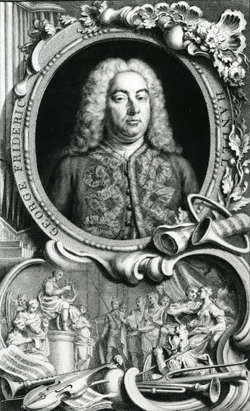
Our series of exhibitions looking in depth at a single year in Handel’s life continues with 1738. It was a year of varying fortunes for Handel—the Italian opera was failing and he was turning increasingly to the new form of the English oratorio. But at the same time a magnificent statue of him was unveiled at Spring Gardens in Vauxhall, celebrating his pre-eminent position in London society. It was the year in which Handel helped create the Fund for Decay’d Musicians, the roots of the new Methodist ministry were established, and Fortnum and Mason invented the Scotch Egg.
Once again a team of Handel House Volunteers will research and curate the exhibition, and the story of 1738 will be told through images and objects from the Handel House Collection, together with loans from other museums.
Exhibition | Pope Pius VII and Napoleon at Fontainebleau
From Napoleon.org and the Château de Fontainebleau:
Pie VII Face à Napoléon: La Tiare dans les Serres de l’Aigle
Château de Fontainebleau, 28 March — 29 June 2015
Curated by Christophe Beyeler and Jean Vittet
The Château of Fontainebleau hosted Pope Pius VII twice: first as a guest as he travelled to Napoleon’s coronation in 1804 and then as prisoner between 1812 and 1814. From 1796 until 1814, Rome and Paris were most notably embroiled in a bitter struggle over iconography. The exhibition at Fontainebleau looks at their diplomatic gifts, stolen artistic treasures, and the official French propaganda celebrating the Concordat of 1801 and defending the invasion of the Papal States in 1808 and the arrest of Pius VII in 1809. Napoleon I and Pius VII finally came head-to-head in 1812 at Fontainebleau. The exhibition contains nearly 130 items, some never displayed before, including loans from the Vatican museum and the papal sacristy.
◊ ◊ ◊ ◊ ◊
Le château de Fontainebleau a accueilli par deux fois le pape Pie VII, comme hôte sur le chemin du sacre en 1804, puis comme prisonnier entre 1812 et 1814. L’appartement des Reines-Mères, baptisé depuis lors « appartement du Pape », en conserve aujourd’hui le souvenir.
 Fontainebleau est à cet égard l’un des lieux qui incarne le mieux les relations tumultueuses entre Rome et Paris, dont l’une des expressions est la « guerre d’image » que se livrent les deux puissances, de 1796 à 1814.
L’exposition évoque d’abord la mainmise des Français sur quelques-uns des trésors de la collection pontificale, la célébration du concordat de 1801 par l’imagerie officielle ou encore l’iconographie subtile des cadeaux diplomatiques lors du sacre de 1804. La guerre de propagande, qui atteint son paroxysme avec l’invasion des États pontificaux en 1808 et l’arrestation de Pie VII en 1809, est ensuite décryptée à travers l’image d’une Rome antique renaissant grâce au « César moderne ». Le Pape, retenu à Savone depuis 1809, est conduit à Fontainebleau en 1812, où les deux protagonistes s’affrontent. L’Empereur parvient à arracher en janvier 1813 un éphémère concordat au Pape qui, libéré en 1814, est accueilli à Rome par une imagerie triomphaliste.
Près de 130 œuvres, parmi lesquelles des acquisitions inédites, ainsi que des prêts exceptionnels des musées du Vatican ou de la Sacristie pontificale, illustrent un affrontement où se combinent enjeux religieux, politiques et artistiques. En écho, sur les lieux mêmes de sa détention, les éléments retrouvés et restaurés du mobilier qu’a connu Pie VII sont rassemblés pour la première fois depuis le Premier Empire.
The 13-page press package is available here»
◊ ◊ ◊ ◊ ◊
The catalogue is available from Dessin Original:
Christophe Beyeler, ed., Pie VII Face à Napoléon: La Tiare dans les Serres de l’Aigle (Paris: RMN, 2015), 248 pages, ISBN: 978-2711862474, 39€.
The Burlington Magazine, April 2015
The eighteenth century in The Burlington:
The Burlington Magazine 157 (April 2015)
 A R T I C L E S
• Marie-Anne Dupuy-Vachey, “Fragonard’s ‘Fantasy Figures’: Prelude to a New Understanding,” pp. 241–47.
• Yuriko Jackall, John K. Delaney, and Michael Swicklik, “Portrait of a Woman with a Book: A Newly Discovered ‘Fantasy Figure’ by Fragonard at the National Gallery of Art, Washington,” pp. 248–54.
R E V I E W S
• Richard Wrigley, “Reassessing François-André Vincent,” — Review of recent exhibitions of Vincent’s work at Montpellier, Tours, and Paris and two books: Jean-Pierre Cuzin, François-André Vincent, 1746–1816: Un Peintre entre Fragonard et David (Arthéna, 2013) and Elizabeth Mansfield, The Perfect Foil: François-André Vincent and the Revolution in French Painting (University of Minnesota Press, 2012), pp. 265–68.
• François Marandet, Review of Christian Michel, L’Académie Royale de Peinture et de Sculpture (Librairie Droz, 2012), p. 276.
• Julia Poole, Review of Joanna Gwilt, Vincennes and Early Sèvres Porcelain from the Belvedere Collection (V&A Publishing, 2014), pp. 276–77.
• Stephen Duffy, Review of France Nerlich and Alain Bonnet, eds., Apprendre à Peindre: Les ateliers Privés à Paris, 1780–1863 (Université Francois Rabelais, 2013), p. 277.
• Reinier Baarsen, Review of the exhibition Eighteenth Century, Birth of Design, Furniture Masterpieces, 1650–1789 / 18e, aux sources du design, chefs-d’œuvre du mobilier 1650 à 1790 (Château de Versailles, 2014–15), pp. 285–86.
• Gauvin Alexander Bailey, Review of the exhibition With Body and Soul / Mit Leib und Seele (Munich: Kunsthalle, 2014–15), pp. 286–88. Available at The Burlington website for free.
• Xavier Salomon, Review of the exhibition Goya’s Tapestry Cartoons in the Context of Court Painting / Goya en Madrid: Cartones para Tapices (Madrid: Prado, 2014–15), pp. 290–91.
• Catherine Whistler, Review of the exhibition, The Poetry of Light: Venetian Drawings from the National Gallery of Art, Washington / La Poesia della Luce: Disegni Veneziani dalla National Gallery of Art di Washington (Venice: Museo Correr, 2014–15), pp. 293–94.
Colloquium | Charles de La Fosse and the Arts in France, ca. 1700
I posted notice of the exhibition last week; here’s the programme for the colloquium, with additional information available from the Centre de recherche du château de Versailles. –CH
Charles de La Fosse et les arts en France autour de 1700
Château de Versailles, 18–19 May 2015
 En complément de l’exposition Charles de La Fosse, le triomphe de la couleur, le Musée national des châteaux de Versailles et de Trianon et le Centre recherche du château de Versailles ont souhaité organiser un colloque international sur l’artiste. L’exposition, organisée en cinq grandes sections (les commandes pour les maisons royales ; La Fosse dessinateur ; la tradition académique ; le triomphe du coloris ; un précurseur du XVIIIe siècle) a été l’occasion de faire le point sur un artiste majeur de la seconde moitié du règne de Louis XIV. Le colloque doit permettre, quant à lui, de mieux situer Charles de La Fosse (1636–1716) dans les enjeux de la pratique artistique autour de 1700 dont l’étude a été profondément renouvelée depuis les travaux d’Antoine Schnapper.
◊ ◊ ◊ ◊ ◊
L U N D I , 1 8 M A I 2 0 1 5
9:00 Accueil
9:30 Introduction
• Les enjeux du colloque, Béatrice Sarrazin, conservateur général du patrimoine, chargé des peintures du xviie siècle, musée national des châteaux de Versailles et de Trianon; et Olivier Bonfait, professeur en histoire de l’art moderne, université de Bourgogne, Centre Georges Chevrier (CNRS)
• Charles de La Fosse, dix ans après, Clémentine Gustin-Gomez, docteur en histoire de l’art
10:30 L’art de Charles de La Fosse
Présidents de séance : Clémentine Gustin-Gomez et Nicolas Milovanovic, conservateur en chef, département des Peintures, musée du Louvre, Paris
• Charles de La Fosse et la peinture d’histoire autour de 1700, Karen Chastagnol, docteur en histoire de l’art
• Between ‘coloris’ and ‘dessein’, Hector Reyes, Assistant Professor, University of Southern California, Los Angeles
• La peinture religieuse de La Fosse et de Jouvenet, ou les vicissitudes de la grâce, Aaron M. Wile, Ph.D. candidate, Harvard University, Cambridge
13:00 Pause
14:30 Charles de La Fosse et le grand décor
Présidents de séance : Thomas Kirchner, directeur, Centre allemand d’histoire de l’art de Paris et Béatrice Sarrazin
• Le décor plafonnant à l’époque de Charles de La Fosse: vers une émancipation des influences italiennes? Moana Weil-Curiel, docteur en histoire de l’art
• Les galeries de Charles de La Fosse, Bénédicte Gady, collaboratrice scientifique, département des
Arts graphiques, musée du Louvre, Paris
• Vendages de Malapeire, le décor de la chapelle du Mont-Carmel à Toulouse et sa description, Stéphanie Trouvé, docteur en histoire de l’art
M A R D I , 1 9 M A I 2 0 1 5
9:00 Accueil
9:30 Charles de La Fosse et la mythologie
Présidents de séance : Olivier Bonfait et Patrick Dandrey, professeur de littérature française du xviie siècle, université Paris-Sorbonne
• La tenture des Métamorphoses des Gobelins : émulation artistique et stratégies commerciales, Pascal-François Bertrand, professeur d’histoire de l’art, université Bordeaux Montaigne (EA 538)
• The Fall of Gods: Charles de La Fosse’s Allegory of Autumn as Theme and Variation, Tatiana Senkevitch, The Sarah Campbell Blaffer Foundation, Museum of Fine Arts, Houston, Research Associate Rice University, Lecturer
• Le royaume des dieux : la représentation de l’Olympe dans les grands décors de Charles de La Fosse, Nicolas Milovanovic, conservateur en chef, département des Peintures, musée du Louvre, Paris
12:00 Pause
14:00 Charles de La Fosse et les capitales artistiques
Présidents de séance : Pierre Rosenberg, de l’Académie française, président-directeur honoraire, musée du Louvre, Paris et Margret Stuffmann, conservateur émérite, Städel Museum, Francfort-sur-le-Main
• Jacques Rousseau et Charles de La Fosse chez le duc de Montagu à Londres, Virginie Bergeret, diplômée de master II, École du Louvre
• Nouvelles hypothèses sur le décor peint de la salle à manger de Pierre Crozat, François Marandet, enseignant, Institut Supérieur des Arts (IESA), Warwick
• Charles de La Fosse et Venise : regards croisés au xviiie siècle, Valentine Toutain-Quittelier, docteur en histoire de l’art, chargée de cours, université de Poitiers
16:30 Conclusion et synthèse
• Olivier Bonfait et Béatrice Sarrazin avec Pierre Rosenberg
Edouard Kopp Appointed Curator of Drawings, Harvard Art Museums
Press Release (21 April 2015) from the Harvard Art Museums:
 The Harvard Art Museums are pleased to announce the appointment of Edouard Kopp as the Maida and George Abrams Associate Curator of Drawings in the museums’ Division of European and American Art. Kopp comes to the museums from the J. Paul Getty Museum in Los Angeles, where he was associate curator of drawings and was responsible for French and later Germanic drawings. At the Getty, Kopp organized exhibitions devoted to French landscape, Germanic drawings, the artist Gustav Klimt, and 18th-century French drawings from Los Angeles collections. He has recently co-curated two international loan shows: The Work of Nature: The Landscapes of Théodore Rousseau, which will be displayed at the Getty and the Ny Carlsberg Glyptotek in Copenhagen, in 2016–17; and an exhibition focused on the sculptor and draftsman Edme Bouchardon, which will be on view at the Musée du Louvre and the Getty in 2016–17.
Kopp has published widely on the drawings of French sculptor Edme Bouchardon, and on the 18th- century French collector Pierre-Jean Mariette, in journals such as Master Drawings and The Burlington Magazine. He has contributed to exhibition catalogues on French prints from the age of Louis XIV, Edgar Degas and his method, and French landscapes, and he is co-author of the forthcoming catalogues for the Théodore Rousseau and Edme Bouchardon exhibitions described above. He is currently revising his doctoral dissertation for publication by Getty Publications in 2016.
In his role at the Harvard Art Museums, Kopp will oversee the museums’ collection of drawings dating from before the 20th century. This collection is considered to be the finest and most comprehensive of any university art museum in the United States, and ranks among the most important public collections in the country. He will be actively engaged in the development of exhibitions, public lectures, and other programming, and will play an integral role in the regular rotation of works on paper within many of the museums’ galleries. He is also responsible for the stewardship of the drawings collection, including identifying key works for acquisition.
“We are thrilled to welcome such an accomplished scholar and art historian to the Harvard Art Museums,” said Ethan Lasser, interim head of the Division of European and American Art, and the Margaret S. Winthrop Associate Curator of American Art. “Edouard brings a fresh perspective and rigorous eye to the storied collection of drawings, and his enthusiasm will engage audiences across the University and visitors from around the world.”
“I am thrilled to have the invaluable opportunity to work with one of the finest drawings collections in the United States—and especially to do so within the unique and stimulating context of a university art museum,” said Kopp. “This is a living collection at a major institution with a strong tradition of encouraging firsthand, up-close study of original works of art. I look forward to interacting with students, faculty, and the wider community of scholars, collectors, and art lovers.”
Before his time at the Getty, Kopp worked as a researcher for the Weiss Gallery in London, and also for Waddeson Manor, a National Trust estate in Buckinghamshire, England. He served as a teaching assistant while a graduate student at the Courtauld Institute of Art in London, where he received his Ph.D. with a dissertation entitled “Edme Bouchardon: Learned Draughtsman of the Eighteenth Century (1698–1762).” He has a master’s degree in modern art, also from the Courtauld, and wrote his thesis on the Austrian graphic artist Alfred Kubin (1877–1959). He also holds a master of science in management from the Grenoble Graduate School of Business.
The Harvard Art Museums’ collection of approximately 12,000 drawings (from before the year 1900) includes major masterpieces from American and principal European schools. Among the strengths are 17th- and early 19th-century French works, including the most extensive holding of drawings by Ingres, Géricault, and David outside of France. The collection also excels in Italian Renaissance works by Carpaccio, Perugino, and Michelangelo, among others. Works by German and Netherlandish masters such as Dürer, Holbein, Bruegel, and Rembrandt are well represented, as are 19th-century British works by Blake, Beardsley, and the Pre-Raphaelites. In the American school, the collection includes more than 20 Homer watercolors, drawings and pastels by Whistler, and an incomparable grouping of more than 500 drawings and sketches by Sargent.
New Book | Animal Companions: Pets and Social Change
From Penn State UP:
Ingrid H. Tague, Animal Companions: Pets and Social Change in Eighteenth-Century Britain (University Park: Penn State University Press, 2015), 320 pages, ISBN: 978-0271065885, $70.
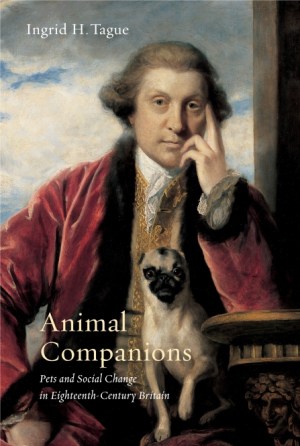 Although pets existed in Europe long before the eighteenth century, the dominant belief was that pet keeping was at best frivolous and at worst downright dangerous. In Animal Companions, Ingrid Tague explores the eighteenth-century conversation about the presence of pets in British society and the ways in which that conversation both reflected and shaped broader cultural debates. Tague argues that pets, as neither human nor fully part of the natural world, offered a unique way for Britons of the eighteenth century to articulate what it meant to be human and what their society ought to look like.
Having emerged from the Malthusian cycle of dearth and famine at the end of the seventeenth century, England became the wealthiest nation in Europe, with unprecedented access to consumer goods of all kinds. And closely connected with these material changes was the Enlightenment, with its implications for contemporary understanding of religion, science, and non-European cultures. All these transformations generated both excitement and anxiety, and they were reflected in debates over the rights and wrongs of human-animal relationships. Looking at a wide variety of texts, Tague shows how pets became both increasingly visible indicators of spreading prosperity and catalysts for debates about the morality of the radically different society emerging in this period.
Ingrid H. Tague is Associate Dean of Arts, Humanities, and Social Sciences and Associate Professor of History at the University of Denver.
◊ ◊ ◊ ◊ ◊
C O N T E N T S
List of Illustrations
Acknowledgments
Introduction
1 The Material Conditions of Pet Keeping
2 Domesticating the Exotic
3 Fashioning the Pet
4 A Privilege or a Right?
5 Pets and Their People
Epilogue
Notes
Bibliography
Index
Basile Baudez on Architectural Drawings
Coming up at MIT’s HTC Forum, the main lecture series of the History, Theory, and Criticism of Architecture and Art Program:
Basile Baudez | Drawing for the Prize: Architectural
Competition Drawings from Europe to America
School of Architecture and Planning, Massachusetts Institute of Technology, Cambridge, 5 May 2015
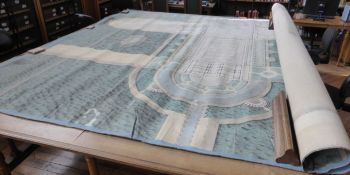 This talk will adopt the premise that architectural training as it was conceived in France in the eighteenth and nineteenth centuries was aimed more directly at producing drawings than buildings. The relatively limited existing scholarship on architectural drawings in a pedagogical context has been dominated, however, almost exclusively by concern for the subjects assigned—which is to say the final, built result. This approach has failed to address the question of the drawings as objects rather than illustrations and more particularly their status as the product of a complex institutional apparatus that taught and rewarded a codified system of architectural representation. This talk considers not only the questions of why and how a French Beaux-Arts model became dominant in dialogue with shifts in institutional structures but also the story of its discontents when alternate means of representation that the Beaux-Arts system had suppressed were revived and explored by those outside the academic establishment.
Architects trained with Legeay and deeply influenced by Piranesi, legitimated a separation between the representation and the actual project itself and taught students to draw ‘des tableaux d’architecture’. Students of the Académie de France à Rome in particular began to make use of expressive techniques that were until then considered exclusively the domain of the pictorial or plastic arts. Variations in ornamentation or distribution were conveyed through affective juxtapositions of color and daring application of pigment that held little to no relationship with the realities of the projected building. The proximity between architects and painters in the second half of the eighteenth century became institutionalized after the Revolution at the École des Beaux-Arts, where architects were trained in the same building as painters, sculptors, and engravers and where draftsmen across media shared life and perspective drawing classes.
During the first years of the nineteenth century, and particularly during the Napoleonic Empire, a reaction against such dramatic pictorial effects encouraged students to restrain their chromatic palette, to refine their lines and to lay stress on the precision with which they represented ornaments and sculpture. Monochromes were prized, resulting in a new value placed on mastering shading and wash, which was to become one of the defining characteristics of the Beaux-Arts style. Over the course of the century wash would provide an arena for experimenting with conventional uses of color and the production of abstract forms that tread carefully between providing a satisfying degree of detail without distracting the viewer or compromising a harmonious whole. In the ateliers of Vaudoyer, Percier and Lebas, students were taught how to animate the surroundings (notably natural elements, such as water, lawns, isolated trees, etc.) in order to produce the most affective architectural renderings of the century. While their most dominant features had little to do with the structures depicted they would emerge as the key models of academic architectural training at the end of the nineteenth century throughout Europe and the United States.
Basile Baudez received his PhD from the Ecole pratique des hautes études in Paris in 2006 and published his dissertation at the Presses universitaires de Rennes under the title Architecture et tradition académique au siècle des Lumières. He is currently associate professor in art and architectural history at the Paris-Sorbonne University. His current book project addresses the rise and dominance of the Beaux-Arts style in architectural drawing in Europe and America from the eighteenth through twentieth centuries.










 Enfilade
leave a comment