The French Sculpture Census Now Online
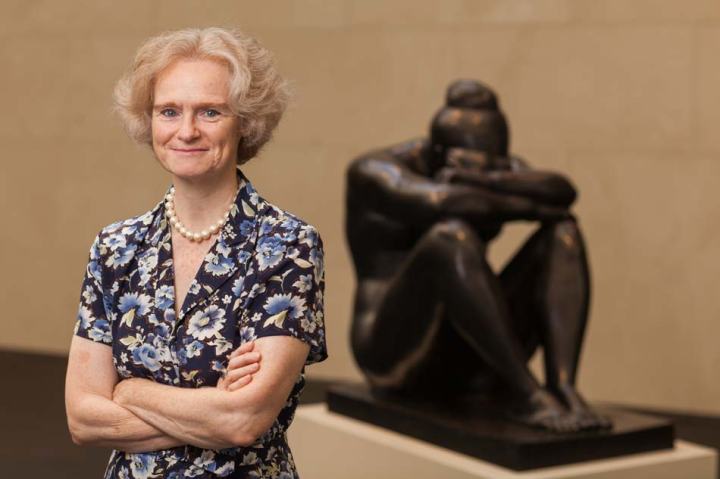
The brainchild of Laure de Margerie, the French Sculpture Census came online in December 2014 with its first 7,000+ records. Hosted by the Nasher Sculpture Center in Dallas with funding from a variety of institutions, the website aims to provide a list of French sculpture produced between 1500 and 1960 that can now be found in American public collections, museums, public buildings, historic homes, or displayed in public space. The completed census is expected to include between 15,000 and 20,000 records. More information is available here»
◊ ◊ ◊ ◊ ◊
From the Nasher Sculpture Center:
Stories from the French Sculpture Census
Nasher Sculpture Center, Dallas, 21 February 2015
From beloved works by Matisse and Rodin in museum collections to American icons like the Statue of Liberty, French sculpture has had a rich and indelible impact on the cultural landscape of the United States. In celebration of a new website that reveals the extent of this shared creative history, Laure de Margerie and panelists from the project’s international partner institutions will share stories of favorite works drawn from the database of the French Sculpture Census.
Laure de Margerie, Director of the French Sculpture Census, was Senior Archivist and head of the Sculpture Archives at the Musée d’Orsay in Paris, from 1978 through 2009. In this position she curated several exhibitions including Facing the Other: Charles Cordier (1827–1905), Ethnographic Sculptor (Paris, Quebec City, New York, 2004/05). She was part of the team who installed the sculpture collection at the opening of the museum in 1986 and co-authored the collection catalogue (1986). De Margerie also worked as archivist in charge of historic buildings in Normandy in Rouen (1983–1985) and oversaw rights and reproductions at the National Archives in Paris (1991–1992). She was awarded a fellowship at the Clark Art Institute, in Williamstown, MA (2000/01), and was the Sculpture and Decorative Arts Department guest scholar at the J. Paul Getty Museum in Los Angeles, CA (Fall 2011).
The Census of French Sculpture in American Public Collections is the first comprehensive catalogue of French sculpture in the United States. It lists all existing French sculpture, dating from 1500 to 1960, in American public collections. Not only does it take account of works in museums, but also in historic houses, government buildings (the White House, for example), corporate collections, and public space. The scope of the census is vast, both in space and time, and currently includes 7,500 works by 680 artists in 305 locations.
Hosted by the Nasher Sculpture Center and supported by a consortium of institutions in the U.S. and France, the French Sculpture Census will be the largest existing website solely dedicated to sculpture. The Census of French Sculpture in American Public Collections is a project of the University of Texas at Dallas and the Nasher Sculpture Center, Dallas, in coproduction with the Institut National d’Histoire de l’Art (INHA), Paris, the Musée d’Orsay, Paris, and the Musée Rodin, Paris, with the participation of the Ecole du Louvre, Paris.
New Book | Perronneau: Un Portraitiste dans l’Europe des Lumières
Published by Arthena and available from Artbooks.com:
Dominique d’Arnoult, with a preface by Xavier Salmon, Perronneau, ca. 1715–1783: Un portraitiste dans l’Europe des Lumières (Paris: Arthena, 2015), 440 pages, ISBN: 978-2903239541, 130€ / $190.
 Le portrait, particulièrement le portrait au pastel, connaît une vogue considérable dans une Europe du XVIIIe siècle où l’on ne dénombre pas moins de deux mille portraitistes. Succédant à Hyacinthe Rigaud (1659–1743) et à Nicolas de Largillierre (1656–1746), puis à Jean-Marc Nattier (1685–1766), deux grandes figures dominent la scène française au milieu de ce siècle : Maurice Quentin Delatour et Jean-Baptiste Perronneau, son cadet d’une dizaine d’années.
Perronneau reçoit sa formation de dessinateur à Paris où il se fait rapidement remarquer. Agréé à l’Académie royale de peinture et de sculpture en 1746, il y est reçu en 1753 avec ses portraits à l’huile du peintre Jean-Baptiste Oudry et du sculpteur Lambert Sigisbert Adam. Dans la tradition de l’Académie, Perronneau s’emploie à donner un prolongement à l’art de grands maîtres comme Van Dyck et Rembrandt, interprété dans un esprit nouveau.
Ses portraits vont être le plus souvent figurés en buste, peints au pastel ou à l’huile. L’enjeu alors est de concilier la ressemblance avec la science picturale propre à la grande peinture, tout en donnant une impression de facilité, voire une forme de désinvolture (la sprezzatura), qui doit dissimuler le travail de l’artiste. C’est un art qui doit de plus rencontrer la satisfaction du modèle. À la cour de Versailles comme à la ville, il est alors de bon goût de ne pas laisser paraître son rang sur son portrait : la simplicité est à la mode. Perronneau y excelle, sachant donner à des portraits travaillés au cours d’un grand nombre de séances l’impression qu’ils sont réalisés dans l’instant. Il devient ainsi l’un des peintres favoris du public du Salon du Louvre de 1746 à 1765.
La rivalité entre Perronneau et Delatour va s’afficher pendant plus de vingt ans au cours desquels l’un et l’autre vont exposer plus de cent portraits au Salon. Delatour ira même jusqu’à se confronter à son rival en 1750, en faisant exposer son autoportrait à côté de son propre portrait demandé à Perronneau. Les carrières des deux artistes restent cependant distinctes: Delatour peint la famille royale et la Cour, Perronneau préfère trouver une clientèle dans les capitales provinciales et étrangères. Ses modèles appartiennent à des milieux sociaux divers, aussi bien à la grande aristocratie qu’au monde du négoce ou à celui des arts.
C’est la vision d’une autre France, d’une autre Europe que celle habituellement représentée par ses rivaux qui apparaît sous les pastels et les pinceaux de Perronneau, celle d’un monde des Lumières en mouvement. En butte à la critique qui lui reproche notamment de choisir des modèles inconnus du grand public à partir de 1767 et voyant sa position à Paris compromise, Perronneau prend le parti de s’éloigner de la capitale et de la France où il ne revient plus qu’épisodiquement après 1773. Ses itinéraires le conduiront alors dans les villes européennes où résident les grands négociants et financiers, en Hollande et en Allemagne essentiellement. À la fin de sa vie, il entreprend un long voyage à Saint-Pétersbourg et Varsovie, avant de s’éteindre à Amsterdam en 1783.
Journée d’étude | Mode, luxe et metiers a Paris au 18e siecle
From H-ArtHist:
Mode, luxe et metiers a Paris au 18e siecle
Hôtel Soubise, Paris, 3 February 2015
Cette journée d’étude organisée par l’association ART & LUXE à l’hôtel Soubise, 60 rue des Francs Bourgeois à Paris, mardi 3 février 2015, de 14h à 17h, aura pour thème les métiers de la mode et du luxe à Paris au 18e siècle.
À cette occasion seront réunis des spécialistes de l’estampe de mode, de l’histoire des métiers et du style: Pascale Cugy, Clare Haru Crowston, Christian Baulez et Georgina Letourmy-Bordier. Pascale Cugy, auteur d’une thèse récente sur l’estampe de mode, mettra en images les métiers de la mode et du luxe sous l’Ancien Régime. La présence exceptionnelle de Clare Haru Crowston, professeur d’histoire de l’Europe moderne, résidant aux Etats-Unis et travaillant sur l’apprentissage en France sous l’Ancien Régime, permettra une rencontre unique au sujet de ses récentes recherches sur les marchandes de modes à Paris au 18e siècle. Cette journée sera aussi l’opportunité offerte par Christian Baulez, conservateur général honoraire du Patrimoine, de présenter le mobilier récemment acquis par le musée des archives nationales pour l’hôtel de Rohan à Paris. Georgina Letourmy-Bordier, expert en éventails, assistée de Sylvain Le Guen, éventailliste, aborderont ensemble ce métier bien particulier, sur lequel peu de travaux sont encore accessibles, et feront une démonstration en objets.
◊ ◊ ◊ ◊ ◊
P R O G R A M M E
14:00 Corinne Thépaut-Cabasset (Paris): Accueil
14:30 Pascale Cugy (Université Rennes-2): Costumes grotesques: Mettre en images les métiers de la mode et du luxe en France sous l’Ancien Régime
15:00 Clare Haru Crowston (University of Illinois, Urbana-Champaign): Les marchandes de modes, un métier célèbre mais encore peu connu
15:30 Christian Baulez (Château de Versailles): Mathieu Debauve, menuisier en sièges des Voyer d’Argenson
16:00 Georgina Letourmy-Bordier (Paris): Entre atelier et boutique, les éventaillistes parisiens au XVIIIe siècle
16:30 Sylvain Le Guen (Paris): Fabriquer l’éventail aujourd’hui
17:00 Discussion
La session sera suivie d’une visite des salons du premier étage où sont exposés les sièges réalisés par Mathieu Debauve sur les dessins de Charles de Wailly, acquis en 2012 pour le musée des Archives nationales de France.
Dans la limite des places disponibles et sur inscription à :
Association ART & LUXE
38 boulevard Henri IV 75004 Paris
art-luxe@live.fr
New Book | Back to the Garden: Nature and the Mediterranean World
From Yale UP:
James H. S. McGregor, Back to the Garden: Nature and the Mediterranean World from Prehistory to the Present (New Haven: Yale University Press, 2015), 384 pages, ISBN: 978-0300197464, $38.
 The garden was the cultural foundation of the early Mediterranean peoples; they acknowledged their reliance on and kinship to the land, and they understood nature through the lens of their diversely cultivated landscape. Their image of the garden underwrote the biblical book of Genesis and the region’s three major religions.
In this important melding of cultural and ecological histories, James H. S. McGregor suggests that the environmental crisis the world faces today is a result of Western society’s abandonment of the ‘First Nature’ principle—of the harmonious interrelationship of human communities and the natural world. The author demonstrates how this relationship, which persisted for millennia, effectively came to an end in the late eighteenth century, when ‘nature’ came to be equated with untamed landscape devoid of human intervention. McGregor’s essential work offers a new understanding of environmental accountability while proposing that recovering the original vision of ourselves, not as antagonists of nature but as cultivators of a biological world to which we innately belong, is possible through proven techniques of the past.
James H. S. McGregor is the author of five books on world cities. He is emeritus professor of comparative literature at the University of Georgia and lives in Cambridge, MA.
Doctoral Studentship | ‘Nature’ in China and Europe, 1500–1800
From H-ArtHist:
Doctoral Studentship: Conceptualising ‘Nature’ in China and Europe, 1500–1800
University of Exeter, 1 September 2015 — 31 August 2018
Applications due by 15 February 2015
The College of Humanities at the University of Exeter is offering a PhD studentship beginning in September 2015, working for the EU Marie Curie-funded project ‘Nature Entangled’ led by Dr Yue Zhuang (Chinese Studies) at the University of Exeter:
One Doctoral Studentship (open to UK/EU and International students) with all tuition fees paid and annual maintenance grant for three years. The maintenance grant will be £13,863 per year.
The subject of your studentship will be the history of conceptualising ‘Nature’ in China and Europe from 1500–1800. Working across disciplines—art (architectural) history, cultural history and China-Europe relations—you will examine the historical legacy shared between China and Europe in envisioning the ‘natural’ living environment in relation to the well-being of citizens and the state.
The studentship will also offer joint supervision by an eminent professor, Prof. Shaoxin Dong at the National Institute of Advanced Humanistic Studies in Fudan University, Shanghai, China. The student will spend one/half year in China for research and fieldwork. The student will benefit from library and archival resources from across the consortium as well as activities such as student events, conferences and the fostering of peer support networks.
Successful applicants normally have a good first degree (at least 2.1, or international equivalent) in a relevant field of humanities, and have obtained, or are currently working towards, a master’s degree at Merit level, or international equivalent. If English is not your native language then you will also need to satisfy our English language entry requirements. English (fluent) and Chinese (advanced level) are essential whilst other languages such as Italian, Latin, French, or Dutch are desirable. You will be an active member of a research team of four and will contribute to the project’s publications as well as produce an outstanding PhD thesis.
To be considered for this Doctoral award, you must complete an online web form where you must submit some personal details and upload a covering letter setting out your suitability for this project, a full CV, research proposal, transcripts, details of two referees and, if relevant, proof of your English language proficiency, by 15 February 2015. Your research proposal should be no more than 4 sides of A4 in length and should be related to the history of ideas of ‘Nature’ in the landscape discourses of China and Europe in 1500–1800.
In addition you must also ensure that your referees email their references to the Postgraduate Administrator at humanities-pgadmissions@exeter.ac.uk by 15 February 2015. Please note that we will not be contacting referees to request references, you must arrange for them to be submitted to us by the deadline.
References should be submitted by your referees to us directly in the form of a letter. Referees must email their references to us from their institutional email accounts. We cannot accept references from personal/private email accounts, unless it is a scanned document on institutional headed paper and signed by the referee. All application documents must be submitted in English. Certified translated copies of academic qualifications must also be provided. Guidelines on submitting references to us can be found on our dedicated page, where you can also download a copy of our institutional reference form for your referees to complete and return to us, or for them to use as a guide.
More information is available here»
Conference | Tracing the Heroic through Gender: 1650, 1750, 1850
As posted at H-ArtHist:
Heroes—Heroizations—Heroisms: Tracing the Heroic through Gender
Freiburg Institute for Advanced Studies, 26–28 February 2015
In most societies the heroic is in many ways gendered. When considering the heroic, attributes of masculinity might first come to mind. Yet, from a historical perspective it becomes apparent that heroizations also often have feminine connotations. The social and cultural production of the heroic cannot be analyzed exclusively in terms of masculinity; nor can we regard women or femininity merely as exceptions in this field. Rather, we need to reconsider the relational character of the category gender. We propose to use gender as an analytical tool in a new way. Metaphorically speaking, gender as a ‘tracer’ can help us uncover new aspects of heroic ideas and concepts. In natural science experiments, a ‘tracer’ passes through different environments and reacts to each of them in a different way. Hence, the tracer is not the object of study, but is used to examine a third element: our conference shall try to use gender systematically to ‘trace’ various historical ‘environments’ of the heroic. By using gender as a tracer, the conference will explore forms, mediums and processes of heroization as well as discourses of heroic transgression, exceptionality or veneration. The conference will focus on three points in time (1650, 1750, 1850) and the continuities and transformations that may become apparent from interrelating the tracing results in a diachronic perspective.
Please register by an informal e-mail: info@sfb948.uni-freiburg.de. More information is available at the research program website. Questions may be directed to Andreas Friedrich, andreas.friedrich@sfb948.uni-freiburg.de.
◊ ◊ ◊ ◊ ◊
T H U R S D A Y , 2 6 F E B R U A R Y 2 0 1 5
14:00 Introduction
Panel 1: 1650
14:30 Women in writings on the heroic in 17th-century academic instruction, Joseph Freedman (Montgomery, Alabama)
15:15 Anti-heroes: Masculinity and civic ethics in literary academies of 17th-century Florence, Eva Struhal (Québec)
16:30 Gendering fear: Transformations of courage and masculinity in heroic drama, Christiane Hansen (Freiburg)
17:15 Testing times for anxious he-roes: Tracing the end of a heroic figuration in England and France, ca. 1650, Andreas Schlüter (Freiburg)
Evening Lecture
18:30 From viragos to valkyries: Transformations of the heroic woman from the 17th to the 19th century, Helen Watanabe-O’Kelly (Oxford)
F R I D A Y , 2 7 F E B R U A R Y 2 0 1 5
Panel 2: 1750
9:30 (Keynote lecture) When heroes sigh… Sentimental heroism in 18th-century opera, Melanie Unseld (Oldenburg)
11:00 A reigning woman as a heroic monarch? Maria Theresa and the roles of emperor, wife and mother, Anne-Marie Wurster (Freiburg)
11:45 Creating and subverting German models of ‘Galanterie’? Heroes and heroines in texts by Christian Friedrich Hunold and Maria Aurora von Königsmarck, Madeleine Brook (Oxford)
Panel 3: 1850
14:00 Heroism of a melancholy look from blue eyes, Petra Polláková (Prague)
14:45 What is the Polish peasant hero’s gender? Representations of peasant citizenship in Polish culture, ca. 1850, Alicja Kusiak-Brownstein (Ann Arbor, Michigan)
15:30 Untangling the heroic from the sacrifice: Malwida von Meysenbug’s attempt to appropriate a common female topos in and for her political novel Phädra (1885), Birgit Mikus (Oxford)
Lecture and Round-table Discussion
16:45 Rethinking the heroic: Difference as a tracer?, Monika Mommertz (Freiburg)
Concert Talk
20:00 ‘En travesti’ The female as male in early 19th-century operas, Thomas Seedorf (Karlsruhe/Freiburg)
Mezzosoprano: Felicitas Brunke / Piano: Freya Jung
S A T U R D A Y , 2 8 F E B R U A R Y 2 0 1 5
Panel 4: Connections
9:30 Gendering the operatic sound of the heroic: 1647 – 1749 – 1843, Anke Charton (Leipzig)
10:15 Victorian male heroes and romance in Elizabeth Bowen’s short fiction, Laura Lojo-Rodríguez (Santiago de Compostela)
11:15 The tragic hero and the gendered imaginary in early modern German drama, Barbara Becker-Cantarino (Columbus, Ohio)
Exhibition | The U.S. Constitution and the End of American Slavery
Press release (24 November 2014) from The Huntington:
The U.S. Constitution and the End of American Slavery
The Huntington, San Marino, California, 24 January — 20 April 2015
Curated by Olga Tsapina
In commemoration of the 150th anniversary of the passage of the 13th Amendment to the U.S. Constitution, The Huntington Library, Art Collections, and Botanical Gardens will illuminate the complexities of ending slavery with an exhibition drawn from its renowned collections of American historical manuscripts and prints. “The U.S. Constitution and the End of American Slavery” will be on view in the West Hall of the Library from January 24 until April 20, 2015.

Thomas Jefferson, notes on the 12th Amendment, ca. 1803 (The Huntington Library, Art Collections, and Botanical Gardens)
“The exhibition follows a long, tortuous, and bloody road that led to that fateful vote,” said Olga Tsapina, the Norris Foundation Curator of American Historical Manuscripts and curator of the exhibition. On January 31, 1865, Schuyler Colfax, the speaker of the U.S. House of Representatives, called for a vote on a joint resolution that would amend the Constitution to abolish slavery throughout the United States and empower Congress to “enforce this article by appropriate legislation.” After the clerk read the tally—119 ayes to 56 nays, with eight abstaining—the House erupted in wild jubilation. American slavery was dead. “The 119 congressmen who voted ‘aye’ on January 31, 1865, accomplished two things that seemed nearly impossible—abolishing slavery and amending the U.S. Constitution,” Tsapina added.
Many hurdles stood in the way of ending slavery: racism, fear, political partisanship, economic interests, and the lack of political will, to name a few. The Constitution presented the most formidable obstacle. The very same national charter that had created a republic dedicated to liberty also guaranteed the rights of Americans who owned human property, said Tsapina. For example, the Constitution mandated that each state respect the other states’ laws, even while Southern states permitted ownership of slaves. “But this is just one area of the Constitution that was problematic,” she added. “There were many others, and they all factored into what was a tremendously complicated—and daunting—matter.”
The conflict between the foundational principles of liberty and the reality of American slavery proved to be irreconcilable. After decades of increasingly bitter discord, it finally broke the Union apart, plunging the nation into civil war in 1861. Even the war failed to end human bondage. That was achieved only by changing the Constitution in a way its framers could not have imagined.
Featuring some 100 manuscripts, rare books, prints, and photographs, most exhibited for the first time, the exhibition will offer Huntington visitors a rare opportunity to experience the history of what Colfax called “that great measure, which hereafter will illuminate the highest place in our History” through the extraordinary breadth and depth of The Huntington’s collections.
The exhibition includes the writings of abolitionists and slave masters; runaway slaves and slave speculators; African American emigrants to Liberia and members of the Underground Railroad; and legal scholars and leaders of political parties. Visitors will see manumissions (formal documents freeing slaves from servitude) and slave traders’ business correspondence, letters from Civil War battlefields, and congressional speeches and resolutions, as well as political cartoons representing viewpoints from both sides of the partisan divide.
The display includes a 1796 letter by President George Washington discussing the fate of his runaway slave, Ona Marie ‘Oney’ Judge; Thomas Jefferson’s notes on amending the Constitution; a notebook from the famous abolitionist John Brown; and the writings of Francis Lieber, the celebrated author of the U.S. Army military code that was praised as “better than the Emancipation Proclamation.” The exhibition will feature letters and manuscripts from The Huntington’s famous collection of Abraham Lincoln material, including Lincoln’s record of his debates with Stephen A. Douglas and a copy of the 13th Amendment signed by the president.
“‘The U.S. Constitution and the End of American Slavery’ tells a complex and fascinating story in which the fate of American slavery was decided not only on Civil War battlefields, but also in courtrooms, the debating floors of state legislatures and the chambers of the U.S. Congress, as well as in proverbial smoke-filled rooms,” said Tsapina.
Display | Working Women: Images of Female Labor
From The Huntington:
Working Women: Images of Female Labor in the Art of Thomas Rowlandson
The Huntington, San Marino, California, 20 December 2014 — 13 April 2015
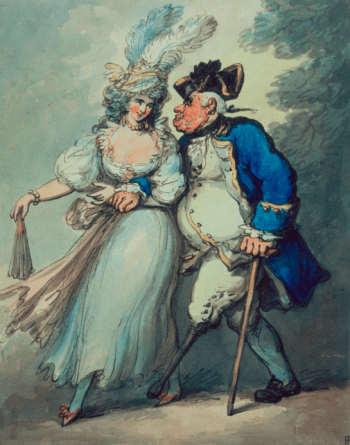
Thomas Rowlandson, A French Frigate Towing an English Man o’ War into Port, no date, pen and watercolor (The Huntington Library, Art Collections, and Botanical Gardens; Gilbert Davis Collection)
As one of Britain’s premier draftsmen, Thomas Rowlandson (1756–1827) lent his vast talent to the comic depiction of a wide range of topics, from politics to pornography. His satirical views of Georgian society are among his strongest work, and The Huntington’s collection focuses primarily on this aspect of his oeuvre. Rowlandson’s observations of the follies of the world around him provide us with a view of late 18th- and early 19th-century England that goes beyond what we see in aristocratic portraits or in the prose of Jane Austen, which portray a world of grand ladies and gentlemen and genteel manners.
This display of 11 rarely-exhibited watercolors from the collection focuses on Rowlandson’s depiction of women. His subjects are primarily those who were most visible within the public sphere—street vendors, servants, actresses, and prostitutes as they plied their various trades—with an occasional glance at the foibles of the upper class. Eschewing complex political or philosophical messages, Rowlandson’s images, though humorous, provide a fascinating glimpse into the reality of women’s lives at this time.
Call for Articles | Court Etiquette
From the Call for Articles:
Court Etiquette: Normative Texts and Customs, 2014–16 Research Progamme
Bulletin du Centre de recherche du château de Versailles

Antoine Dieu, Marriage of Louis de France, Duke of Burgundy and Marie-Adélaïde de Savoie, 7 December 1697 (Château de Versailles)
For its three-year research programme (2014–16), the Centre de recherche du château de Versailles has launched a research axis on Court Etiquette: Normative Texts and Customs and wishes to publish articles related to this subject in the Bulletin du Centre de recherche du château de Versailles.
Although the word etiquette has today taken on an accepted meaning that might appear clear and well defined, it quickly becomes clear that this notion is far from self-evident. In addition to the fact that people often confuse ‘ceremonial’, ‘protocol’ and ‘etiquette’, the latter term was only used rarely at the time, and often with very different meanings. Whether in Richelet’s dictionary or Furetière’s, the lexicographers took it in what was essentially a legal sense. In fact, in France, the word related to elements of judicial procedure. However, the dictionary of the Académie Française (starting with its 1718 edition and in the last definition it gives of the word) recalls the familiar use of this word in Spain in the sense of “what must be done daily in the King’s Household, and in the principal ceremonies.” The absence of the current definition of the word etiquette in contemporary dictionaries in no way means that the word was not used in this sense in the language. We have evidence of this in a letter by Madame Palatine dated 3 February 1679 in which the Duchess of Orléans explained that she had never been able to get used to this “insipid etiquette.”
Bernard Hours in his study on the court of Louis XV describes the historical authenticity and origins of French etiquette (Louis XV et Sa Cour, Paris, PUF, coll. “Le Nœud Gordien”, 2002, p. 77–98). It goes back to the Burgundian court of Philippe le Bon in the 15th century when “it referred to a written formula setting out the timetable of the prince and his court” (ibid., p. 78). From then on, there was an effort to retain the customs in order to perpetuate them. As situations developed, so did etiquette and each new code was recorded to establish a precedent.
This line of research aims to formalise the unwritten customs of the French court. In fact, in contrast to the many systematic studies carried out particularly on the Hapsburg court in Madrid and those on the court in Vienna, French etiquette has always been universally viewed according to the customs and rituals of the court. The main objective here is to understand the evolution of etiquette as it developed, improved and declined.
Article proposals can deal with one or several of the following themes and lines of enquiry:
• The definition of etiquette
• The origins and emergence of etiquette
• The nature of etiquette in relation to court ritual
• The circumstances in which etiquette was applied (large household, ceremonial occasions, rituals) and etiquette according to topography, and vice versa
• Etiquette as a political tool, or a means to control or civilise
• Who determines or arbitrates on matters of etiquette?
• Are courtisans the protagonists, driving force or victims of etiquette?
• A Europe-wide expansion of etiquette
Authors can refer to a non-exhaustive bibliography on the subject (available as a PDF file).
Article proposals (abstracts of about 5,000 characters) should be addressed to Mathieu da Vinha (mathieu.da-vinha@chateauversailles.fr) in French or in English. These proposals will be reviewed by the scientific committee. If the proposals are accepted by the scientific committee, the full articles will be examined both by the latter and by two members of the Centre de recherche du château de Versailles’s peer review committee (or by external scholars appointed by the scientific or peer review committee if necessary). Articles must be submitted before 31 December 2015. Proposals can be submitted in French, English, German, Italian, or Spanish. The final articles will be 40,000 characters maximum (bibliography and footnotes included). Authors should comply with the editorial guidelines of the Bulletin du Centre de recherche du château de Versailles.
Scientific Committee of the Court Etiquette Research Programme
Mathieu da Vinha (Centre de recherche du château de Versailles), Raphaël Masson (château de Versailles), Alice Camus (Centre de recherche du château de Versailles), Delphine Carrangeot (université de Versailles Saint-Quentin-en-Yvelines, centre de recherche ESR-DYPAC), Nicole Lallement (Centre de recherche du château de Versailles), Bénédicte Lecarpentier-Bertrand (université Paris-Est Créteil Val-de-Marne), Pauline Lemaigre-Gaffier (université de Versailles Saint-Quentin-en-Yvelines, centre de recherche ESR-DYPAC), Benjamin Ringot (Centre de recherche du château de Versailles)
Peer Review Committee
Marc Bayard (Mobilier national), Monique Chatenet (université Paris-Sorbonne/École du Louvre), Anne Conchon (université Paris 1 Panthéon-Sorbonne), Claire Constans (conservateur général honoraire du patrimoine), Alexandre Gady (Centre André Chastel/université Paris-Sorbonne), Pauline Lemaigre-Gaffier (université de Versailles Saint-Quentin-en-Yvelines, centre de recherche ESR-DYPAC), Nicolas Le Roux (université Lumière – Lyon 2),Nicole Reinhardt (université de Durham, Grande-Bretagne), Thierry Sarmant (musée Carnavalet)
Exhibition | Shoes: Pleasure and Pain

Pale-blue shoes, silk satin with silver lace and braid, diamond and sapphire buckles, England, 1750s (London: V&A: T.70+A—1947; M.48+A—1962). Photographed on the mantelpiece in The Norfolk House Music Room, the British Galleries at the V&A.
◊ ◊ ◊ ◊ ◊
Press release from the V&A:
Shoes: Pleasure and Pain
Victoria & Albert Museum, London, 13 June 2015 — 31 January 2016
The Bowes Museum, Barnard Castle, County Durham, 11 June — 9 October 2016
Peabody Essex Museum, Salem, Massachusetts, 9 November 2016 — 12 March 2017
Savannah College of Art and Design, Savannah, Georgia, March — June 2017
Curated by Helen Persson
The transformative power of extreme footwear will be explored in the V&A’s summer 2015 fashion exhibition, Shoes: Pleasure and Pain. More than 200 pairs of historic and contemporary shoes from around the world will be on display, many for the first time. The exhibition will explore the agonizing aspect of wearing shoes as well as the euphoria and obsession they can inspire.
The V&A’s shoe collection is unrivalled, spanning the globe and over 2000 years. For Shoes: Pleasure and Pain, curator Helen Persson has delved into this, other international collections and the wardrobes of private individuals to select an exceptional range of shoes from a sandal decorated in pure gold leaf originating from ancient Egypt to futuristic looking shoes created using 3D printing.
 Shoes worn by or associated with high profile figures including Marilyn Monroe, Queen Victoria, Sarah Jessica Parker, and the Hon Daphne Guinness will be shown as well as famous shoes, such as the ballet slippers designed for Moira Shearer in the 1948 film The Red Shoes. Footwear for men and women by 70 named designers including Manolo Blahnik, Christian Louboutin, Jimmy Choo, and Prada will be on display. Historic lotus shoes made for bound feet and 16th-century chopines, silk mules with vertiginous platforms designed to lift skirts above the muddy streets, will also feature.
Exhibition curator, Helen Persson, said: “Shoes are one of the most telling aspects of dress. Beautiful, sculptural objects, they are also powerful indicators of gender, status, identity, taste and even sexual preference. Our choice in shoes can help project an image of who we want to be.”
The exhibition will be shown over two floors. The luxurious, boudoir design of the ground floor gallery will examine three themes: transformation, status, and seduction.
‘Transformation’ will present shoes that are the things of myth and legend, opening with different cultural interpretations of the Cinderella story from across the globe. It will explore the concept of shoes being empowering as passed down through folklore, illustrated by the Seven League Boots from the ‘Hop o’ My Thumb’ tale, and how this feeds into contemporary marketing for such things as football boots and the concept of modern-day, fairy-tale shoemakers, whose designs will magically transform the life of the wearer.
‘Status’ will reveal how impractical shoes have been worn to represent privileged and leisurely lifestyles—their design, shape and material can often make them unsuitable for walking—and how shoes also dictate the way in which the wearer moves, how they are seen and even heard. Shoes on display will include Indian men’s shoes with extremely long toes, noisy slap-sole shoes worn in Europe during the 17th century and the now infamous Vivienne Westwood blue platforms worn by Naomi Campbell in 1993. ‘Status’ will also demonstrate how historically shoe fashions originated from the European royal courts, while today the focus has shifted to famous shoe designers. Desirable shoes such as the ‘Pompadour’, worn by trend-setting women in the 18th-century French court will sit together with designs by the some of the most well-known names in fashion today, including Alexander McQueen and Sophia Webster.
Within ‘Seduction’, the shoes represent an expression of sexual empowerment or a passive source of pleasure. Like feet, shoes can be objects of fetishism. High Japanese geta, extreme heels, and tight-laced leather boots will be on display as well as examples of erotic styles channeled by mainstream fashion in recent years.
In contrast, the laboratory style setting of the first floor gallery is dedicated to dissecting the processes involved in designing and creating footwear, laying out the story from concept to final shoe. This will be enhanced by films and animations that peel back the layers of a shoe and reveal how they are made. The displays will show how makers combine traditional craftsmanship with technological innovation and how they unite function with art.
Designer sketches, materials, embellishments and shoe lasts, such as the lasts created by H. & M. Rayne for Princess Diana, will be on show, alongside ‘pullovers’ from Roger Vivier for Christian Dior. The section will highlight the makers’ ingenuity in creating innovative styles and dealing with the structural challenges of creating ever higher heels and more dramatic shapes and will feature filmed interviews with five designers and makers.
The exhibition will go on to examine shifts in consumption and production—with examples from an 18th-century ‘cheap shoe warehouse’, one-off handmade men’s brogues and trainers made in China. It will also look at the future of shoe design, with experiments of material and shapes, moulding and plastics. On display will be footwear that pushes the boundaries of possibility, including the form-pressed ‘Nova’ shoes designed by Zaha Hadid with an unsupported 16cm heel and Andreia Chaves’ ‘Invisible Naked’ shoes that fuse a study of optical illusion with 3D printing and high quality leather making techniques. The last section of the exhibition will look at shoes as commodities and collectibles. Six different people’s collections will be presented from trainers to luxury footwear.
Sponsored by Clarks, supported by Agent Provocateur, with additional thanks to the Worshipful Company of Cordwainers
Note (added 14 June 2016) — Venues updated to reflect the latest schedule.
◊ ◊ ◊ ◊ ◊
A preview of the accompanying publication is available via Issuu:
Helen Perrson, ed., Shoes: Pleasure and Pain (London: V&A Publishing, 2015), 176 pages ISBN: 978-1851778324, £25 / $40.
 Beautiful, sculptural objects, shoes are powerful indicators of gender, status, identity, taste, and even sexual preference. Our choice in shoes can be aspirational, even fantastical—and projects an image not just of who we are, but who we want to be. Feet are made for walking, but shoes may not be. Featuring extensive new photography, this is a beautiful and authoritative guide to the history and culture of footwear. Iconic creations by celebrated designers sit alongside masterpieces by unknown craftsmen in this book.
Embracing both men’s and women’s footwear, from the Chinese lotus shoe to laser-printed contemporary shoes-as-sculpture, Shoes: Pleasure and Pain engages with the cultural significance of shoes—the source of their allure, how they are made, and the people who buy and wear them. Contributors from a wide range of disciplines consider subjects as diverse as ballet slippers and fetishism, shoes and ceramics, traditional shoemaking, and the obsessive shoe collector. The book also includes a comprehensive discussion of the history of shoe design, and case studies including Marie-Antoinette’s shoe collection and the footwear of the Maharajas.
Helen Persson is curator of Chinese textiles and dress in the V&A’s Asian Department.
◊ ◊ ◊ ◊ ◊
C O N T E N T S
Helen Persson, Introduction
Part 1: The Lure of Shoes
Hilary Davidson, Shoes and Magical Objects
Elizabeth Semmelhack, The Allure of Height
Rowan Bain, Status and Power in the Hamam
Divia Patel, Bling: Footwear of the Maharajas
Cassie Davies-Strodder, Shoes and Sex
Valerie Steele, Ballet Shoes and Fetishism
Rowan Bain, The Shoe and the Body
Part 2: Art and Innovation
Naomi Braithwaite, Shoe Design: Creativity and Process
Helen Persson, The Beauty of Shoemaking
Jana Scholze, Extreme Future
Sonia Solicari, The Shoemaker and the Ceramicist
Joanne Hackett, Plastic Galore
Christopher Breward, Men in Heels
Part 3: Shoe Obsession
Cally Blackman, The Rise of the Celebrity Shoe Designer
Giorgio Riello, Production for Consumption
Kirstin Kennedy, Cracowes and Duckbills
Helen Persson, Lotus Shoes for the Masses
Kimberly Chrisman-Campbell, Marie Antoinette’s Love of Shoes
Karin M. Ekström, The Show Cabinet: Collectors Case Study
Notes
Bibliography
Parts of a Shoe
Glossary
Index
Acknowledgements
Picture Credits










 Enfilade
leave a comment