Call for Papers | Know Thyself: Early Modern Images
From H-ArtHist:
Know Thyself: A Conference on Early Modern Images
University College London, 2 May 2015
Proposals due by 2 February 2015
Nosce te ipsum/ know thyself
The tragedy of Narcissus was his failure to recognise the image he admired on the surface of the pool as his own. His fate might have improved, had he possessed the deeper self-knowledge implied by the Delphic maxim, “know thyself.” The question prompted by Narcissus, of how images pertain to self-knowledge, is especially relevant to the Early Modern period, during which the ancient aphorism nosce te ipsum was engaged provocatively in a range of visual material: it is quoted in illustrations of anatomy, natural history and cartography, and evoked in religious and secular works of art. This renewed cultural imperative to self-knowledge is bound up with the scientific and technological advancements of the period. It is epitomised by the technical refinement of the looking glass, which enabled a person to admire—or better, scrutinise—her own face with unprecedented clarity.
The premise of this conference is that consideration of the Delphic maxim can be productively channeled into interrogating the role of the image in relation to the self: How might images mobilise the philosophical challenge to “know thyself”? What are the mechanisms within images that invite participation in the practices of selfdiscovery and self-representation? The conference aims to explore the role of visuality in the early modern pursuit of self-knowledge in a broad sense. As such, it invites approaches to visual material by which the Delphic maxim is evoked knowingly, or otherwise. Focusing on images from the period c.1500–1800, proposals for papers may include, but are by no means limited to: mortality and bodily materiality, cultural identity and difference (race, religion, gender…), subjectivity and self-fashioning, and encounters with the new world and new technologies.
UCL Department of History of Art invites proposals for 20-minute presentations on the theme of ‘self-knowledge’ in early modern images. Please send abstracts of no more than 300 words to Sophie Morris
sophie.morris@ucl.ac.uk and Nathanael Price n.price.12@ucl.ac.uk by 2nd February 2015.
ASECS 2015, Los Angeles
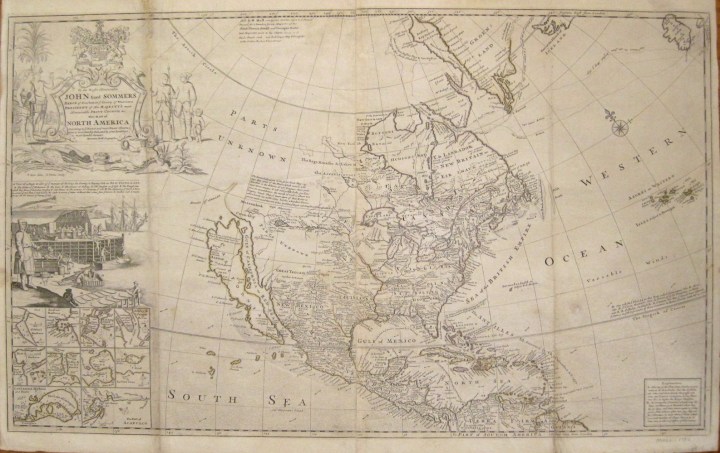
Herman Moll, To the Right Honourable John Lord Sommers…This Map of North America according to ye Newest and most Exact observations, 23 x 38 inches (London: H. Moll, ca. 1715). “California was depicted on maps as an island. . . even after Father Kino established its penisularity about 1705,” The Philadelphia Print Shop. The official date for the founding of the city of Los Angeles is September 4, 1781.
◊ ◊ ◊ ◊ ◊
2015 American Society for Eighteenth-Century Studies Conference
Los Angeles, 19–21 March 2015
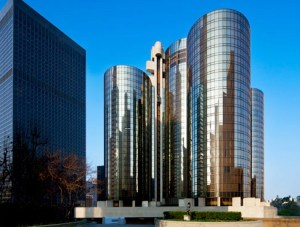
Finished in 1976, the 35-story Westin Bonaventure Hotel is the largest hotel in the city, the work of John Portman, one of the world’s most influential hotel architects.
The 2015 ASECS conference takes place in Los Angeles, March 19–21, at the Westin Bonaventure. HECAA will be represented by two panels, on Friday, chaired by Amy Freund and Noémie Etienne and Meredith Martin. Our annual luncheon and business meeting is also scheduled for Friday. A selection of additional panels is included below (of the 221 sessions scheduled, many others will, of course, interest HECAA members). For the full program, see the ASECS website.
H E C A A S E S S I O N S
Anne Schroder New Scholars’ Session (HECAA)
Friday, 20 March, 11:30–1:00, Santa Anita C
Chair: Amy FREUND, Southern Methodist University
1. Iris MOON, Metropolitan Museum of Art, “Sedimentations of the Self: A Stratigraphic Reading of Maurice Quentin de La Tour’s Pastel Portraits of Jean-Jacques Rousseau, Citizen of Geneva”
2. Joanna M. GOHMANN, University of North Carolina, Chapel Hill, “Woman’s Best Friend: The Visual Work of Madame de Pompadour’s Dogs”
3. Ashley BRUCKBAUER, University of North Carolina, Chapel Hill, “Ambassadeurs à la turc: Assimilation and Dissimulation in Eighteenth-Century Images of Franco-Ottoman Diplomacy”
4. Elizabeth Bacon EAGER, Harvard University, “Between Looking and Making: The Early Drawing Curriculum at West Point”
◊ ◊ ◊ ◊ ◊
Pilgrim Arts of the Eighteenth Century (HECAA)
Friday, 20 March, 4:15–5:45, San Fernando
Chairs: Noémie ETIENNE, Institute of Fine Arts AND Meredith MARTIN, New York University and Institute of Fine Arts
1. David PULLINS, Harvard University, “Multiple Hands: Workshop Practice and Masters of Eighteenth-Century French Painting”
2. Dipti KHERA, New York University and Institute of Fine Arts, “Invitations to Travel: Circulating Pontiffs, Pilgrims and Pictures in the Bazaars of Early Modern India”
3. Kristel SMENTEK, Massachusetts Institute of Technology, “Moving Across Media: The Mobile Image and Eighteenth-Century Sino-French Encounter”
4. Matthew FISK, Boston Architectural College, “A Vernacular Orientalism: Exoticizing Discourse and Amateur Japanning in the Northern Connecticut Frontier, 1725–1735”
O T H E R S E S S I O N S R E L A T E D T O T H E V I S U A L A R T S
T H U R S D A Y , 1 9 M A R C H 2 0 1 5
New Approaches to Material Culture
Thursday, 19 March, 8:00–9:30, San Gabriel B
Chair: Chloe WIGSTON SMITH, University of Georgia
1. Elizabeth Kowaleski WALLACE, Boston College, “The Things Things Don’t Say: Reconsidering the Rape of the Lock”
2. Karen LIPSEDGE, Kingston University, “Men at Home: Men, Domestic Space, and the Novels of Richardson”
3. Robbie RICHARDSON, University of Kent, “‘British valour, opposed to tomahawk cruelty’: First Nations Material Culture in the British Imaginary”
4. Laura ENGEL, Duquesne University, “Staging Desire: Performance, Memory, and Re-enactment in Thomas Lawrence’s Portraits of Sally, Sarah, and Maria Siddons”
◊ ◊ ◊ ◊ ◊
Fans and Fandoms in the Eighteenth Century
Thursday, 19 March, 8:00–9:30, Santa Barbara B
Chair: Kate HAMILTON, Carnegie Mellon University
1. Jade HIGA, Duquesne University, “Mary Crawford’s Fan(ny) Base: Fan Behavior and the Female Body of Austen’s Mansfield Park”
2. Stephanie KOSCAK, Wake Forest University, “The Monarchy in the Marketplace: Royal Signs and Loyalist Fandoms in Eighteenth-Century London”
3. Diana SOLOMON, Simon Fraser University, “The Quality of Fanfare: The Starring Role of Audiences in Eighteenth-Century London Theatre”
4. Whitney ARNOLD, University of California, Los Angeles, “Rousseau and His Fans: Celebrity and Autobiographical Representation”
◊ ◊ ◊ ◊ ◊
A Sum of Its Parts: Symmetry in the Eighteenth Century
Thursday, 19 March, 8:00–9:30, San Pedro
Chairs: Daniella BERMAN, New York University AND Changduk (Charles) KANG, Columbia University
1. Sarah GRANDIN, Harvard University, “Desportes’ Buffet à l’Orfèvrerie and Symmetrical Display”
2. Benjamin H. BAKER, University of Pennsylvania and Université de Paris IV – Sorbonne, “Retrospective Rewriting, Affective Symmetry and Dispositive Disarray in Prévost’s Cleveland”
3. Clare HAYNES, University of Tulsa, “A Beauteous Symmetry: The Expression of Godly Order in the Church of England, 1660–1800”
◊ ◊ ◊ ◊ ◊
The Eighteenth Century in Hollywood (ASECS Executive Board Sponsored Session)
Thursday, 19 March, 9:45–11:15, Catalina Ballroom
Chair: Kathleen WILSON, State University of New York, Stony Brook
1. Paula BYRNE, Advisor and Historian, “Belle”
2. Jeffrey HATCHER, Screenwriter, “The Duchess”
3. Stella TILLYARD, Author and Historian, “Aristocrats, Tides of War, A Royal Affair”
◊ ◊ ◊ ◊ ◊
Scientists, Artists, and Artisans in the Eighteenth Century
Thursday, 19 March, 2:30–4:00, La Cienega
Chair: Dena GOODMAN, University of Michigan
1. Hannah WILLIAMS, University of Oxford, “Artists and Scientists in the Churches of Paris”
2. Mia JACKSON, Queen Mary, University of London, “Illustrious Times: Clock-Makers and Cabinet-Makers in the Louvre”
3. Paola BERTUCCI, Yale University, “Savants, Artisans, and Artistes: The Société des Arts in Early-Eighteenth Century Paris”
4. Nina Rattner GELBART, Occidental College, “Mlle Biheron’s Cabinet, Mlle Basseporte’s Jardin: Savantes-artistes and their Spheres of Sociability”
◊ ◊ ◊ ◊ ◊
Empires and Oceans (Race and Empire Caucus) (Roundtable)
Thursday, 19 March, 4:15–5:45, Santa Barbara C
Chair: James MULHOLLAND, North Carolina State University
1. Betty JOSEPH, Rice University, “Piratical Discourse and the Interspaces of Empire”
2. Daniel J. O’QUINN, University of Guelph, “Theatrum Pacis: Where Does Peace Happen?”
3. Dwight CAREY, University of California, Los Angeles, “Trans-Colonial Style: The Architecture of Empire in Eighteenth-Century Louisiana and Mauritius”
4. Gretchen J. WOERTENDYKE, University of South Carolina, “Meditations on Critical Regionalism, the Sea, and Comparative Literary Studies”
5. Vanessa SMITH, University of Sydney, “Imperialism in Oceania”
6. Steven PINCUS, Yale University, “The Stamp Act in Global Perspective”
F R I D A Y , 2 0 M A R C H 2 0 1 5
Educating Women in France, 1780–1814
Friday, 20 March, 8:00–9:30, Santa Anita C
Chair: Melissa HYDE, University of Florida
1. Mary TROUILLE, Illinois State University, “Mme de Genlis’s Challenge to Rousseau’s Views on Female Education”
2. Sévérine SOFIO, CNRS-Université Paris 8, “L’intérêt social exige d’encourager l’émulation des femmes / Teaching Art to Women During the French Revolution: A National Issue?”
3. Susan TAYLOR-LEDUC, Parsons Paris The New School, “From Servant to Teacher: Madame Campan’s Vision for Educating Women”
4. Lindsay DUNN, Texas Christian University, “Educating an Empress: Art Education and Marie-Louise, House of Habsburg-Lorraine”
◊ ◊ ◊ ◊ ◊
The Cultures of Sport in the Eighteenth Century
Friday, 20 March, 8:00–9:30, San Fernando
Chair: Alexis TADIÉ, Université of Paris, Sorbonne
1. Sharon HARROW, Shippenburg University, “Satire and Ideology in Eighteenth-Century Sports Poetry”
2. John WHALE, University of Leeds, “The Culture of Eighteenth-Century Pugilism”
3. Amy FREUND, Southern Methodist University, “Gun and Game: The Art of Shooting in Eighteenth-Century France”
◊ ◊ ◊ ◊ ◊
Textiles and the Long Eighteenth Century
Friday, 20 March, 8:00–9:30, Los Feliz
Chair: Heidi A. STROBEL, University of Evansville
1. Kimberly CHRISMAN-CAMPBELL, Independent Scholar, “Borrowed Plumes: Feathered Textiles at the French Court”
2. Kristin O’ROURKE, Dartmouth College, “Tactility and Textiles in Portraits of Madame de Pompadour”
3. Emily M.N. KUGLER, Center for the Study of Slavery and Justice, Brown University, “From Calico Madams to Osnaburg-Shrouded Slaves: Textiles for Laboring Women, 1719–1831”
4. Ashley SCHOPPE, University of Tulsa, “‘Richly Dressed in our Own Manufacture’: Public Perceptions of Princess Augusta’s Patronage of British Textiles”
Respondent: Lauren MISKIN, Southern Methodist University
◊ ◊ ◊ ◊ ◊
Teaching the Eighteenth Century: A Poster Session
Friday, 20 March, 11:30–1:00, Santa Monica D
Chair: Diane KELLEY, University of Puget Sound
1. Caroline BREASHEARS, St. Lawrence University, “‘You’re an Austen Hero!’ Teaching about Masculinity in Jane Austen’s Novels”
2. Sharon HARROW, Shippensburg University of Pennsylvania, “Teaching Adaptations”
3. Heather KING, University of Redlands, “Mixing it Up: Balancing Curricular Options and Institutional Limits”
4. Elizabeth KRAFT, University of Georgia, “Restoration Courtship Comedies and Hollywood Comedies of Remarriage”
5. Heidi KRAUS, Hope College, “Women, Art, and Society in Eighteenth- and Nineteenth-Century France: Engaging the Undergraduate Audience”
6. Crystal MATEY, University of North Carolina, Greensboro, “Depictions of Fictional Scientists in the Long Eighteenth-Century”
7. Sarah NICOLAZZO, University of California, San Diego, “Pirates, Pickpockets, Police: Teaching Law and Literature in the Eighteenth-Century Classroom”
8. Véronique OLIVIER AND Yelena LIEPERT, Chapman University, “The Representation and Role of Women in Eighteenth-Century Society”
9. Theresa Marie RUSS, University of California at Santa Barbara, “Teaching ‘Knowledge Work in the Long Eighteenth Century’: Visually, Aurally, Interactively”
◊ ◊ ◊ ◊ ◊
Alta and Baja: California in the Eighteenth Century (ASECS Executive Board Sponsored Session)
Friday, 20 March, 11:30–1:00, Santa Barbara B
Chair: Pamela HUCKINS, Southern New Hampshire University
1. James MIDDLETON, Independent Scholar, “Dress in the Codex Pictoricus Mexicanus of Fr. Ignaz Tirsch, S.J.”
2. David RICHARDSON, Camino Real de las Misiones, “Mission Santa María de los Angeles, The Last Jesuit Mission of Baja California”
3. Yve CHAVEZ, University of California, Los Angeles, “Eighteenth-Century Accounts of Indigenous Art and Culture at the Alta California Missions”
4. Jonathan C. LAURSEN, University of California, Riverside, “The ‘Leyenda negra’ on the Pacific Coast”
◊ ◊ ◊ ◊ ◊
Anne Schroder New Scholars’ Session (Historians of Eighteenth-Century Art and Architecture)
Friday, 20 March, 11:30–1:00, Santa Anita C
Chair: Amy FREUND, Southern Methodist University
1. Iris MOON, Metropolitan Museum of Art, “Sedimentations of the Self: A Stratigraphic Reading of Maurice Quentin de La Tour’s Pastel Portraits of Jean-Jacques Rousseau, Citizen of Geneva”
2. Joanna M. GOHMANN, University of North Carolina, Chapel Hill, “Woman’s Best Friend: The Visual Work of Madame de Pompadour’s Dogs”
3. Ashley BRUCKBAUER, University of North Carolina, Chapel Hill, “Ambassadeurs à la turc: Assimilation and Dissimulation in Eighteenth-Century Images of Franco-Ottoman Diplomacy”
4. Elizabeth Bacon EAGER, Harvard University, “Between Looking and Making: The Early Drawing Curriculum at West Point”
◊ ◊ ◊ ◊ ◊
Digging Italy (Italian Studies Caucus)
Friday, 20 March, 11:30–1:00, San Gabriel C
Chair: Wendy Wassyng ROWORTH, University of Rhode Island
1. Jeffrey COLLINS, Bard Graduate Center, “From Ditch to Nitch: Digging the Villa of Cassius”
2. Lauren DI SALVO, University of Missouri, “Unearthing Ancient Mosaics and their Translation into Contemporary Souvenirs”
3. Ulf R. HANSSON, University of Texas at Austin, “Non-Marrying Men and the Lure of Antiquity: Philipp von Stosch and his Florentine Museo”
4. Carolyn GUILE, Colgate University, “Warsaw’s Italy: Poland’s Last King and the Making of Royal Łazienki, 1764–1795”
◊ ◊ ◊ ◊ ◊
The Eighteenth Century on Film (Northeast American Society for Eighteenth-Century Studies)
Friday, 20 March, 11:30–1:00, Catalina Ballroom
Chair: John H. O’NEILL, Hamilton College
1. Dorothée POLANZ, University of Virginia, “Portrait of the Queen as a Celebrity: Marie Antoinette on Screen, 1934–2012”
2. Melissa BISSONETTE, St. John Fisher College, “‘Too light & bright & sparkling’: The BBC Pride and Prejudice and the Secret of Style”
3. Ellen MOODY, American University, “Screenplays and Shooting Scripts (not Novels) into Films”
4. Steven W. THOMAS, Wagner College, “The Assurance of Belle, the Insurance of the Zong, and the Speculation of Cinema”
◊ ◊ ◊ ◊ ◊
Epistolarity: Contested / ‘Contexted’ and Contextualized Letters, Part I
Friday, 20 March, 11:30–1:00, Santa Barbara A
Chair: Mark MALIN, Randolph-Macon College
1. Nina DUBIN, University of Illinois at Chicago, “Epistolarity at the Salon of 1793: Cicero, Moitte, Janinet”
2. Kelsey RUBIN-DETLEV, University of Oxford, “‘Elle a écrit de sa propre main’: Catherine the Great’s Letters in Periodicals and Polemics of Eighteenth-Century France”
3. Tamara L. HUNT, University of Southern Indiana, “Letters, Seditious Libel, and the Press in Early Eighteenth-Century England”
4. Shang-yu SHENG, City University of New York, Graduate Center, “Responding to Mr. Spectator: Communication Structures in The Spectator’s Hypertexts”
◊ ◊ ◊ ◊ ◊
HECAA Luncheon and Business Meeting
Friday, 20 March, 1:00–2:30, Beaudry B
◊ ◊ ◊ ◊ ◊
Pilgrim Arts of the Eighteenth Century (Historians of Eighteenth-Century Art and Architecture)
Friday, 20 March, 4:15–5:45, San Fernando
Chairs: Noémie ETIENNE, Institute of Fine Arts AND Meredith MARTIN, New York University and Institute of Fine Arts
1. David PULLINS, Harvard University, “Multiple Hands: Workshop Practice and Masters of Eighteenth-Century French Painting”
2. Dipti KHERA, New York University and Institute of Fine Arts, “Invitations to Travel: Circulating Pontiffs, Pilgrims and Pictures in the Bazaars of Early Modern India”
3. Kristel SMENTEK, Massachusetts Institute of Technology, “Moving Across Media: The Mobile Image and Eighteenth-Century Sino-French Encounter”
4. Matthew FISK, Boston Architectural College, “A Vernacular Orientalism: Exoticizing Discourse and Amateur Japanning in the Northern Connecticut Frontier, 1725–1735”
◊ ◊ ◊ ◊ ◊
Twenty-First Century Approaches to Eighteenth-Century Quixotes and Quixotisms: Don Quijote II (1615–2015), Part I (Ibero-American Society for Eighteenth-Century Studies)
Friday, 20 March, 4:15–5:45, La Cienega
Chair: Catherine JAFFE, Texas State University
1. Jonathan CRIMMINS, Augustana College, “The Worth in Every Clime: Historical Tincture in Harlequin and Quixotte: or The Magic Arm”
2. Aaron R. HANLON, Georgetown University, “Quixotism as Global Heuristic”
3. Brittany LUBERDA, The Frick Collection, “Don Quixote by Charles-Antoine Coypel”
4. Elizabeth LEWIS, University of Mary Washington, “Maps, Travelers, and the ‘Real’ Don Quixote de la Mancha”
◊ ◊ ◊ ◊ ◊
UCLA William Andrews Clark Memorial Library Excursion
Friday, 20 March, 5:30–7:00, UCLA bus departs from the Westin Bonaventure Hotel at 5:00.
(Free bus transportation is limited to the first 50 people who register for this excursion)
Free for ASECS conference participants and their guests; please register by 6 March as capacity is limited.
This excursion is hosted by the UCLA William Andrews Clark Memorial Library and Center for 17th- & 18th-Century Studies. It includes a private guided tour of the elegant Clark Library and presentations by the library staff about the collections. Following the tour, guests will enjoy a special reception. The bus will depart the Clark Library at 7:00 p.m. and return to the hotel.
For details about bus or rail transportation options, please visit http://www.metro.net
Free parking is available for those traveling by car or taxi. For directions or a Google map, visit http://www.clarklibrary.ucla.edu/visit
About the Clark Library
The Clark is an off-campus rare book library specializing in the seventeenth and eighteenth centuries. It also has a renowned collection centering on Oscar Wilde and his era and significant holdings of modern fine printing and Western Americana. Other collections include French literature, a major collection devoted to Pietro Aretino, and a recent major gift strengthened considerably the Clark’s holdings of sixteenth- and early seventeenth-century books. Currently the library has about 110,000 books, as well as manuscripts, archives, maps, prints, and other material. Bequeathed to UCLA in 1934 by William Andrews Clark, Jr. (1877–1934), a prominent book collector and philanthropist, this extensive collection is housed in an historical building standing on the spacious grounds of the old Clark estate in the West Adams district of Los Angeles (near downtown L.A.).
How to RSVP
To register, please send an email to c1718cs@humnet.ucla.edu with ‘ASECS- Clark Excursion’ in the subject line, and include the name, email, and phone number for each guest that will attend and indicate whether you need a bus reservation. The free bus transportation is limited to 50 people and reservations are provided on a first-come, first-served basis by email. The RSVP deadline is 6 March.
S A T U R D A Y , 2 1 M A R C H 2 0 1 5
The Habsburgs, 1740–1792, Part I
Saturday, 21 March, 8:00–9:30, Los Catalina Ballroom
Chair: Rebecca MESSBARGER, Washington University in St. Louis
1. Heather MORRISON, State University of New York, New Paltz, “International Scientific Competition and European Diplomatic Relations during the Habsburg Monarchy’s Botanical Expedition of 1783–1788”
2. Michael YONAN, University of Missouri, “Habsburg Artistic Exchange In and Out of the Austrian Netherlands”
3. Julia DOE, Columbia University, “Marie Antoinette et la Musique: Habsburg Patronage and French Musical Culture: 1770–1789”
◊ ◊ ◊ ◊ ◊
Classroom as Coffeehouse: Encouraging Critical Thinking and Debate in Discussion of Primary Sources
Saturday, 21 March, 8:00–9:30, San Gabriel B
Chair: Birte PFLEGER, California State University, Los Angeles
1. Sharlene SAYEGH, California State University, Long Beach, “Reading through the Chatter: Finding the Social in Eighteenth-Century Legal Records”
2. Anne WOHLCKE, California Polytechnic State University, Pomona, “Filtering Eighteenth-Century Content for Twenty-First Century Consumption: Teaching Enlightenment through the Lens of an English Coffeehouse”
3. Kristen CHIEM, Pepperdine University, “Lessons from the Garden: Discussing Gender in Eighteenth-Century Chinese Art”
◊ ◊ ◊ ◊ ◊
Form and Feeling: Materiality in Eighteenth-Century History and Literature
Saturday, 21 March, 8:00–9:30, San Fernando
Chairs: Lisa Foreman CODY, Claremont McKenna College AND Julie PARK, California Institute of Technology and Vassar College
1. Sarah ERON, University of Rhode Island, “Misrecognition: The Case of Evelina”
2. Dahlia PORTER, University of North Texas, Denton, “Feeling the Archive: Objects, Print, and the Materiality of Research”
3. Ryan WHYTE, OCAD University, “Facsimile King: The Crisis of Materiality in Representations of Louis XV”
4. Paula RADISCH, Whittier College, “Two Case Studies in High Art: Quentin de La Tour and Chardin”
◊ ◊ ◊ ◊ ◊
The Circuit of Apollo: Women’s Tributes to Women in the Long Eighteenth-Century, Part II (Roundtable) (Women’s Caucus Scholarly Panel)
Saturday, 21 March, 9:45–11:15, San Pedro
Chair: Laura L. RUNGE, University of South Florida
1. Julie Candler HAYES, University of Massachusetts, Amherst, “Women on Women: Writing Women’s Literary History in France”
2. Julie MURRAY, Carleton University, “Remembering Mary Wollstonecraft: Mary Hays’ Late Style”
3. Deborah WEISS, University of Alabama, “The Tribute of Critique: Amelia Opie and Mary Wollstonecraft”
4. Jessica FRIPP, Parsons The New School for Design, “Honoring Geoffrin: Joséphine and Lemonnier’s The First Reading of Voltaire’s Tragedy L’Orphelin de la Chine in the Salon of Madame Geoffrin in 1755”
5. Jocelyn HARRIS, University of Otago, “Jane Austen’s Homage to Fanny Burney in Mansfield Park”
6. Katharine KITTREDGE, Ithaca College, “Friendship as Platform for Reinvention: Melesina Trench and Mary Leadbeater”
◊ ◊ ◊ ◊ ◊
Clifford Lecture
Saturday, 21 March, 11:30–12:30, Catalina Ballroom
Presiding: Felicity A. NUSSBAUM, University of California, Los Angeles
Ann BERMINGHAM University of California, Santa Barbara, “Coffee-House Characters and British Visual Humor at the End of the Eighteenth Century”
◊ ◊ ◊ ◊ ◊
American Latium: American Artists in and around Rome in the Age of the Grand Tour” (Italian Studies Caucus)
Saturday, 21 March, 2:00–3:30, San Gabriel A
Chair: Karin WOLFE, British School at Rome
1. Christopher M.S. JOHNS, Vanderbilt University, “John Singleton Copley in Rome: The Challenge of the Old Masters Accepted”
2. Tommaso MANFREDI, Università Mediterranea di Reggio Calabria, “The Rome of Charles Bulfinch: A Cultural Itinerary of 1786”
3. Vincent PHAM, University of California, San Diego, “Transatlantic Transactions: Benjamin West, the Grand Tour and The American School in London”
◊ ◊ ◊ ◊ ◊
Flipping the Grand Tour: The Italian Response
Saturday, 21 March, 3:45–5:15, Santa Anita C
Chairs: Blair DAVIS, University of California, Santa Barbara AND
Carole PAUL, University of California, Santa Barbara
1. Peter Björn KERBER, J. Paul Getty Museum, “Foreigners and Festivals in Settecento Venice”
2. Shirley SMITH, Skidmore College, “Goldoni and Baretti: Italian Vacations in the Eighteenth Century”
3. Clorinda DONATO, California State University, Long Beach, “Correcting the Grand Tour Gaze: Domenico Caminer Reviews De La Lande’s 1766 Voyage en Italie”
◊ ◊ ◊ ◊ ◊
Beyond Orientalism: Consumer Agency and Producer Adaptation in Asia Exchanges with Europe and the Americas
Saturday, 21 March, 3:45–5:15, Santa Barbara B
Chair: Samara CAHILL, Nanyang Technological University
1. Sofía SANABRAIS, University of Southern California, “‘…desired and sought by the rest of the world’: The Philippine–Asia Trade and its Impact on Spanish Colonial Artistic Production”
2. Rachel Tamar VAN, California Polytechnic State University, Pomona, “A Market for Fakes: Knock-Offs, Adulteration, & Faux Masterpieces between China & Early America”
3. Susan SPENCER, University of Central Oklahoma, “Ihara Saikaku: Literary Artistry Meets the Art of the Deal”
Respondent: Emily M.N. KUGLER, Center for the Study of Slavery and Justice, Brown University
◊ ◊ ◊ ◊ ◊
The Royal Mistresses of Eighteenth-Century France
Saturday, 21 March, 3:45–5:15, Los Cerritos
Chair: Mary TROUILLE, Illinois State University
1. Kathleen WELLMAN, Southern Methodist University, “Keeping it in the Family: The Nesle Sisters in the Reign and Reputation of Louis XV”
2. Ashley MASON, University of Iowa, “The Marquise de Maintenon or La Scarron: Manipulative Dissimulator or Ideal maîtresse du roi?”
3. C. Ryan HILLIARD, University of California, Los Angeles, “The Female Networks of a Royal Mistress: The Correspondence of Madame de Maintenon and the Princesse des Ursins”
4. Amanda STRASIK, University of Iowa, “Madame de Pompadour, François Boucher, and the Pastoral Child”
New Book | The Smile Revolution in Eighteenth-Century Paris
From Oxford UP:
Colin Jones, The Smile Revolution in Eighteenth-Century Paris (New York: Oxford University Press, 2014, 256 pages, ISBN: 978-0198715818, £23 / $40.
 You could be forgiven for thinking that the smile has no history; it has always been the same. However, just as different cultures in our own day have different rules about smiling, so did different societies in the past. In fact, amazing as it might seem, it was only in late eighteenth century France that western civilization discovered the art of the smile. In the ‘Old Regime of Teeth’ which prevailed in western Europe until then, smiling was quite literally frowned upon. Individuals were fatalistic about tooth loss, and their open mouths would often have been visually repulsive. Rules of conduct dating back to Antiquity disapproved of the opening of the mouth to express feelings in most social situations. Open and unrestrained smiling was associated with the impolite lower orders.
In late eighteenth-century Paris, however, these age-old conventions changed, reflecting broader transformations in the way people expressed their feelings. This allowed the emergence of the modern smile par excellence: the open-mouthed smile which, while highlighting physical beauty and expressing individual identity, revealed white teeth. It was a transformation linked to changing patterns of politeness, new ideals of sensibility, shifts in styles of self-presentation—and, not least, the emergence of scientific dentistry. These changes seemed to usher in a revolution, a revolution in smiling. Yet if the French revolutionaries initially went about their business with a smile on their faces, the Reign of Terror soon wiped it off. Only in the twentieth century would the white-tooth smile re-emerge as an accepted model of self-presentation.
In this entertaining, absorbing, and highly original work of cultural history, Colin Jones ranges from the history of art, literature, and culture to the history of science, medicine, and dentistry, to tell a unique and untold story about a facial expression at the heart of western civilization.
Colin Jones is Professor of History at Queen Mary University of London. He has published widely on French history, particularly on the eighteenth century, the French Revolution, and the history of medicine. His books include The Medical World of Early Modern France (with Lawrence Brockliss, 1997); The Great Nation: France from Louis XV to Napoleon (2002); and Paris: Biography of a City (2004: winner of the Enid MacLeod Prize). He is a Fellow of the British Academy and Past President, Royal Historical Society.
◊ ◊ ◊ ◊ ◊
C O N T E N T S
Introduction
1: The Old Regime of Teeth
2: The Smile of Sensibility
3: Cometh the Dentist
4: The Making of a Revolution
5: The Transient Smile Revolution
6: Beyond the Smile Revolution
Postscript: Towards the Twentieth-Century Smile Revolution
Notes
Index
At Sotheby’s | The Collection of Louis Grandchamp des Raux

François Desportes, Hunting Scene with Dogs, Partridges, and Pheasants, a royal commission for the antechamber of Louis XIV’s apartment at Marly in 1702.
◊ ◊ ◊ ◊ ◊
Press release (14 January 2015) from Artcurial:
Collection Louis Grandchamp des Raux: Le choix de l’élégance
Sotheby’s, Paris, 26 March 2015 (Sale #PF1539)
Exhibition Schedule
Sotheby’s, New York, 24–28 January 2015
Artcurial, Brussels, 11 February 2015
Artcurial, Paris, 20–23 March 2015
Sotheby’s, Paris, 24–25 March 2015
Sotheby’s, in association with Artcurial and the Cabinet Eric Turquin, is delighted to present the Louis Grandchamp des Raux collection—the most significant collection of French 17th- and 18th-century paintings to be offered at auction for the last twenty years. The sale will take place at Sotheby’s in Paris on 26 March 2015, after a travelling exhibition in New York and Brussels.
Built up over more than 25 years, this magnificent collection consists of around 50 paintings, mainly from the French and North European schools. It provides an overview of 17th- and 18th-century French painting that is both consistent and refined, with works from the greatest masters of the period, such as François Boucher, Jean-Honoré Fragonard, François Desportes, Louyse Moillon, Anne Vallayer-Coster, and Hubert Robert, together with lesser-known artists like Pierre-Antoine Lemoine and Nicolas-Bernard Lépicié. Louis Grandchamp des Raux poured his passion into the collection, following the advice of specialists in the field, particularly Eric Turquin.
Eric Turquin said: “I met Louis Grandchamp des Raux in the 1980 (…) It was the start of a project that lasted nearly 30 years. He was initially drawn to Dutch and Flemish painting from the first half of the 17th century. Then, as he explored painting with increasing passion, his taste naturally developed—firstly for 17th-century French painting and then for that of the 18th century, whose delicacy and refinement he relished. The great step forward came with the purchase of two major Desportes, some Boucher, and finally some Fragonard—the crowning achievement of his approach as an aesthete and collector. The sale of this collection of paintings is tremendously exciting. It illustrates the many stages of this journey, which is more or less the path I followed myself at the beginning of my career as a specialist.”

Anne Vallayer-Coster, Portrait of a Woman with Violin, 1773.
The collection contains numerous masterpieces, including a Portrait of a Woman with Violin executed in 1773 by Anne Vallayer-Coster, one of the very few women painters who managed to establish herself in a realm still dominated by men (estimate: €300,000–400,000 / $354,000–470,000)*. Singled out by Marie-Antoinette, Vallayer-Coster carved herself out a niche at court, and received numerous still life commissions from the royal family. This painting is a rare example of the few portraits we know by this artist. Clearly influenced by her predecessor, the genius Jean- Siméon Chardin, it evinces an approach to the portrait that is both poetic and psychological. She draws us into the intimate world of the model: a young violinist who has broken off her musical exercises to peruse her score, and seems lost in thought.
Another talented woman painter, and a veritable master in the art of the still life, was Louyse Moillon, who produced Still Life with Peaches on a Pewter Plate at the age of 24 in 1634 (estimate: €400,000–600,000 / $470,000–709,000). She goes right to the heart of the matter, inviting the viewer to contemplate peaches presented very simply, with striking realism. She gives the fruit a leading role, staging them in a subtle play of light and shade in a sober, refined composition. Another painting by the artist is a Still Life with Basket of Bitter Oranges and Pomegranates, which she painted in around 1650 (estimate: €350,000–450,000 / $413,000–530,000). Here she remains faithful to her artistic invention, opting for a simple composition where the treatment of colour is nonetheless very different from the previous work.
A royal commission for the antechamber of Louis XIV’s apartment at Marly in 1702, the triple portrait of the bitches Bonne, Nonne and Ponne (Hunting Scene with Dogs, Partridges, and Pheasants) is incontestably one of François Desportes’ masterpieces (estimate: €250,000–300,000 / $295,000–354,000). In this house where the king sought refuge from court etiquette, the iconographic theme was nature. A particularly accomplished preparatory sketch for the painting, now in the Musée de la Chasse et de la Nature in Paris, this oil on paper is highly appealing with its generous substance, subtle palette and harmonious colours.
The Northern European School
Louis Grandchamp des Raux’s collection really began with some masters of the Northern European school originally belonging to his family. The still life genre, which was extraordinarily popular in France during the 17th century, is illustrated in the collection with some marvellous examples by artists who have always been keenly admired. Still Life with Grapes, Cherries and Strawberry Plant by Isaac Soreau is a composition of considerable refinement (estimate: €150,000–200,000 / $177,000–236,000). Each fruit, treated separately with an acute sense of detail, reveals all the painter’s love for the Flemish tradition initiated by Jacob van Hulsdonck, his master and first source of inspiration. His mastery of the subject, shored up by an unrivalled technique, makes him one of the subtlest painters of still lifes.
Bouquet of Flowers in a Glass by Jan Frans van Dael (estimate: €100,000–150,000 / $119,000–177,000), is an excellent example of the artist’s virtuosity in line with the tradition of flower painting by Northern artists who were particularly esteemed for their precise brushwork and sense of harmony. The work rivals those of the greatest exponents of the genre active in Paris, like Jan van Huysum and Gérard van Spaendonck.
Jacob van Hulsdonck takes the line adopted by his French and Flemish predecessors with a highly classical staging of his Still Life with Peaches, Plums, and Grapes in a Basket on a Table. The colours are appealing, and the fruits have a beautifully appetising bloom. There is no question that the artist demonstrates considerable mastery of his art here (estimate: €250,000–300,000 / $295,000–354,000).
18th-Century Painting
François Boucher raised the genre of pastoral scene, which he reinvented by enlivening it with figures in modern costumes, to the rank of the most noble subjects in the 18th century, particularly through his fine, delicate and subtle brushwork, which can also be full, rich and generous. Pastoral Scene with Washerwomen and a Couple by the Water, which features in this collection, is a model of the artist’s abundant technical skill (estimate: €120,000– 180,000 / $142,000–213,000). His vigorous workmanship is imbued with thick strokes that enhance the poetry of his composition. This attractive pastoral scene reflects all the charm of François Boucher’s work.
During his first stay in Italy between 1756 and 1761, Jean-Honoré Fragonard discovered the scenery around Rome with its landscapes and inhabitants. The Italian countryside with its rocks and waterfalls, luxuriant vegetation and extraordinary light left an indelible impression on the young painter for the rest of his career. The poetry emanating from Italian Landscape with Staircase lies above all in the subtle treatment of light, making play with the rays of sunshine that illuminate the marble statues and white dress of the woman in the foreground, while the parasol pines provide shade to the carefree strollers wandering around in this leafy setting (estimate: €200,000–300,000 / $236,000–354.000).
Classified as a Historic Monument in the 20th century, like all the furniture in the Château de Ferney-Voltaire where it was kept, Joseph Vernet’s Fishermen Departing at Dawn of 1747 offers a picturesque vision of the Italian coast, instantly wafting the viewer to the idealised Italy of the 18th century. Thanks to his meticulous rendering of this atmosphere, Vernet was enormously successful among those who went on the Grand Tour. He earned a glowing reputation in both Italy and France, particularly as from 1746, when he began to participate in the Salon (estimate: €400,000–600,000 / $470,000–709,000).
While allegory was a subject little treated by Nicolas Lancret, the arts of the stage and music were recurring themes in the work of Antoine Watteau’s poetic follower. This exquisite little painting in grisaille is a preparatory version of the frontispiece for the Second Book of Pieces for Harpsichord by François Dandrieu, a brilliant harpsichordist and composer who was appointed organist of the Chapelle du Roi in 1721 (estimate: €100,000–150,000 / $119,000–177,000). This frontispiece was engraved by Charles-Nicolas Cochin in 1728. Lancret also produced the frontispiece for Dandrieu’s Third Book of Pieces for Harpsichord, published in 1734. There are few differences between the preparatory version and the engraving by Cochin, apart from the arms carried by the putto on the right, which are those of France in the composition here and those of the Conti in the engraving, reflecting the dedication of Dandrieu’s work.
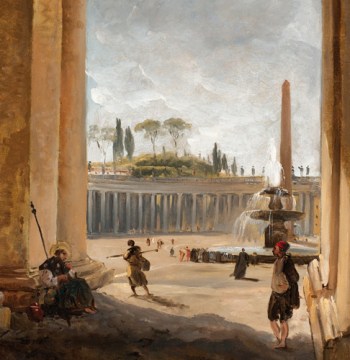
Hubert Robert, View of Saint Peter’s Square in Rome through Bernini’s Colonnade
When it was exhibited at the Salon of 1761, the painting The Village Bride by Jean-Baptiste Greuze, now in the Musée du Louvre, was a considerable success, and all the critics unanimously acclaimed the painter’s genius. The Portrait of a Young Woman in a White Headscarf from the Louis Grandchamp des Raux collection is similar to one of the figures in the centre of the composition (estimate: €80,000– 120,000 / $94,000–142,000). This painting is one of the most speaking examples of the artist’s talent for illustrating the domestic life of his times.
With his View of Saint Peter’s Square in Rome through Bernini’s Colonnade, Hubert Robert gives us a poetic interpretation of this grand esplanade, conveying all the splendour of Rome’s architecture (estimate: €80,000–120,000 / $94,000–142,000). The artist has composed a highly spontaneous view in the treatment of its composition, particularly the figures, depicted with lively, instinctive brush strokes. Nonetheless, the painter remains faithful to the exactness of the scene and shows us Saint Peter’s Square in a highly realistic manner. Combining simplicity with grandeur, the painter evinces a genuine mastery of perspective in this view, drawing the viewer into the scene.
Lesser Known Artists
Louis Grandchamp des Raux had a talent for spotting significant works by artists who were unjustly less well-known. This was the case with the exquisite little portrait of Madame Lagrenée, wife of the painter Louis-Jean- Francois Lagrenée the Elder (1725–1805), by Nicolas-Bernard Lépicié. This delicate picture shows his model immersed in her thoughts, heedless of her book. The refined composition combines a style influenced by Flemish painting with all the delicacy and poetic refinement of a Chardin (estimate: €20,000–30,000 / $24,000–35,000).
The appearance of a work by Pierre-Antoine Lemoine on the market is always a major event. Still Life with Grapes, Peaches and Chinese Vase (estimate: €150,000–200,000 / $177,000–236,000), magnificently succeeds in suggesting the flavours of the fruits shown in the painting, which have a fresh and voluptuous texture. Pierre Antoine Lemoine established himself incontestably as one of the key figures in the history of French still life, proving a worthy heir of Caravaggism, while revealing an individual style and providing a new perspective on this pictorial genre.
* Estimates do not include the buyer’s premium; prices include the hammer price and buyer’s premium.
◊ ◊ ◊ ◊ ◊
Note (added 17 June 2015) — As reported by Art Daily (17 June 2015), Anne Vallayer-Coster’s Portrait of a Woman with Violin was acquired by Sweden’s Nationalmuseum.
Master Drawings New York, 2015

Aert Schouman (Dordrecht 1710–1792 The Hague), A Cockerel Crowing, pencil, pen and ink and watercolour and gum arabic, heightened with white, signed ‘A. Schouman. ad.f’ in pen and brown ink, 171 x 191 mm, Provenance: Lord Fairhaven. Offered by Crispian Riley-Smith Fine Arts Ltd. and on view during Master Drawings New York 2015 at Shepherd / W & K Galleries.
◊ ◊ ◊ ◊ ◊
Press release (26 November 2014) as edited to highlight the eighteenth-century offerings:
Master Drawings New York, 2015
New York, 24–31 January 2015
The 2015 edition of Master Drawings in New York promises to be the best ever. More than thirty of the world’s leading dealers are coming to New York City to offer for sale master art works in pencil, pen and ink, chalk and charcoal, as well as oil on paper sketches and watercolours, created by iconic artists working in the 16th to 21st centuries. Each exhibition is hosted by an expert specialist and many works on offer are newly discovered or have not been seen on the market in decades, if at all.
In addition, Margot Gordon and Crispian Riley-Smith, co-founders of Master Drawings in New York, are delighted to announce that John Marciari, the new head of the Department of Drawings and Prints at the Morgan Library & Museum in New York, will provide the introduction for the 2015 brochure.
Highlights at the 2015 edition include ….
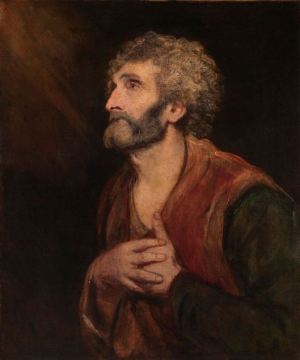
Joshua Reynolds, Dionysius Aeropagites. oil on canvas, 30 x 25 inches, ca. 1772
• A major rediscovered masterpiece by Sir Joshua Reynolds, listed as missing since 1905, and a star attraction at the exhibition of London gallery LOWELL LIBSON LTD. “Dionysius Aeropagites has only been known from an 18th-century engraving,” according to Libson. It depicts Reynolds’s favorite model, a street mender from York, George White. The painting perfectly communicates Reynolds’s ambitions as a history painter shortly after the founding of the Royal Academy.” Painted in emulation of an Italian old master, the powerful head was published shortly after its completion and given the title identifying the sitter as a follower of St. Paul. Libson is also featuring works by William Blake, John Singleton Copley, Thomas Jones, Samuel Palmer, Simeon Solomon and a fascinating group of British portrait drawings of the 1830s and 1840s depicting Queen Victoria, Talleyrand, Chopin and Paganini—plus Sir Thomas Lawrence’s portrait of the Duke of Wellington’s nieces and J.M.W. Turner’s Alpine tour watercolor, The Val d’Aosta.
• A small group of noteworthy David Cox watercolours MARTYN GREGORY is bringing to New York includes a very large one that is completely fresh to the market. Gregory says it is interesting as it is made on several sheets of the ‘Scotch’ paper Cox used later in his career, which he had carefully pieced together to make a much larger sheet. It is a fascinating watercolour which shows Cox working on grand scale, mastering one of his favourite subjects: Betwys-y-Coed in North Wales. Gregory is also showing 18th- and 19th-century British watercolours including Richard Parkes Bonington’s The Ruins of Chateau d’Harcourt near Lillebonne, a pencil and watercolour dating to 1821-22 when Bonington made his first tour of Normandy; a 1793 watercolour by British artist William Alexander showing Chinese Barges of the first British embassy preparing to pass under a bridge, led in 1792-4 by Lord Macartney; and a highly detailed wash drawing, John Hood’s The East Indiaman Essex in Three Positions.
• London specialist STEPHEN ONGPIN FINE ART always manages to acquire new-to-the-market works by the most iconic names in fine art including Edgar Degas, Thomas Gainsborough, Adolph Gottlieb, Paul Klee, Henri Matisse, Edvard Munch, Paul Signac, Alfred Sisley, Wayne Thiebaud, and Odilon Redon. This year’s exhibition won’t disappoint as Ongpin is showing Gainsborough’s Travellers Passing Through A Village, Klee’s Night impression of a Southern Town, Degas’s A Seated Young Woman Plaiting her Hair, Matisse’s Standing Female Nude, Munch’s Rocks on the Edge of a Sea, Paul Signac’s Still Life with a Bowl of Fruit, Wayne Thiebaud’s Ice Cream Cone, and Redon’s A Face in the Window.
• New exhibitor PRPH RARE BOOKS is offering an album of 70 uncensored 16th-century drawings after Michelangelo’s Last Judgment in the Sistine Chapel. The original figures depict genitalia and other ‘lewd’ elements which were later censored and painted over at the Church’s direction. These were generally unknown until the restoration of the work in 1980–84. They are bound in 18th-century calf and were in the collection of Count Leopold Cicognara (1767–1834), the leading Italian art historian of his time. PRPH is also showing a highly important complete set of 50 engraved fortune telling cards (Northern Italy 1465) by the Master of the ‘Mantegna’ Tarocchi—E-series, rebound in 18th-century cartonnato.
• London dealer GUY PEPPIATT brings over wonderful British works including artworks by one of the most important British topographical artists of the late 18th century, Edward Dayes, whose Carlsbrooke Castle Isle of Wight, dating to 1788, is featured at MDNY. Also featured is a William Callow R.W.S. watercolour A Spring Day at Florence from San Miniato, dating to 1882, and Thomas Rowlandson’s pen, ink and watercolour,The Mid-day Rest.
• PIA GALLO is offering a Salvator Rosa (1615–1673) Study for the Figure of Scylla in pen ink and wash that is a study for the painting Glaucus and Scylla at the Brussels Musee des Beaux Arts. The drawing was once owned by Queen Christina of Sweden. Also showing splendid, hand-painted, fan-shaped gouaches with views of the Gulf of Naples that were meant to be folding fans. Fans and hand screens—predominantly as a fashion accessory—became popular in Europe from the seventeenth century onwards. These two individual fans are made from natural vellum, hand-painted by an anonymous artist. The fans here are not folded nor are they mounted and date from probably around 1800. They show Romantic views of the most frequently visited sights in the Bay of Naples by travelers on the Grand Tour. Villa di Pompejo (Villa of Diomedes). Gouache on natural vellum. Veduta del Sepolcro della Sacerdotessa Mammia a Pompejano.
• CRISPIAN RILEY-SMITH of London has titled his exhibition, Flights of Fancy: Birds and Animals by Aert Schouman and his Contemporaries in 18th-century Holland. On view are six Aert Schouman watercolours, including five from the collection of the late Lord Fairhaven, and four watercolours by Abraham Meertens—plus master drawings by Bandini, Benso Hackert, Zuccarelli and Van Goyen.
• MARGOT GORDON FINE ARTS is staging a show titled Five Centuries of Faces and Figures.
• MIA WEINER is showing a selection of important works such as Gaetano Gandolfi’s Studies of Two Angels, preparatory for the flanking angels in the 1780 altarpiece Immaculate Conception in S.M. Lambarun Coeli, Bologna. She also offers a charming red chalk drawing by a student of the Carracci closest in technique to Annibale, drawing a fellow student or perhaps himself as he works from model sheets of facial features made by Agostino. Plus Filippo Lauri’s Allegorical Figures Frolicking in the Flowers in gouache, Jan Van Kessel’s watercolour of Butterfly, Moth, Rose and Spring of Gooseberries, Salvator Rosa’s Study of a River God for The Dream of Aeneas, a study for the same figure in a painting at the Metropolitan Museum. A number of 19th-century landscape oil sketches and watercolours by Northern European and Italian artists such as Carl Friedrich Heinrich Werner’s A Beautiful Water Carrier, which Weiner says is a stunning example of the artist’s work, and Daniel Israel’s large scale Portrait of a Bearded Man, as strong as any German sheet of the period.
• MIREILLE MOSLER is showing artworks spanning five centuries including works by Zacharias Blijhooft, Pieter Holsteyn II, Francois Bonvin, John Constable, Jules Bastien-Lepage, Willem van den Berg, Leo Gestel, Jan Sluyters, Jan Toorop and Jacobus van Looy. The earliest 17th-century drawings exhibited are a group of 15 small animals and insects that once belonged to a larger album in the possession of the Earl of Arundel (1585–1648) known as ‘The Collector Earl’. John Constable’s 1810 ‘En plein air’ East Bergholt depicts the surroundings where he grew up. A Francois Bonvin Study for Le Couvreur tombe dating to 1877 is a recently rediscovered study of a now lost important Salon painting of the same year.
Founded in 2006 as a way to draw upon and buttress the presence of collectors and museum officials during the important January art-buying events, including the Old Master auctions and The Winter Antiques Show, Master Drawings in New York has become an important part of the winter art scene in its own right, attracting the most influential dealers not only in New York but in England, France, Italy, Germany, and Spain who each stage a themed exhibition in more than two dozen Upper East Side galleries between East 63rd and 93rd Streets. Master Drawings in New York has received critical acclaim for orchestrating a showcase for fine art works that cut across the full range of styles, centuries, mediums and genres, and for providing greater accessibility to fine art at price points that range from several thousand dollars to several million.
◊ ◊ ◊ ◊ ◊
Note (added 4 February 2015) — A press release recapping the 2015 event is available here»
London’s Guildhall Art Gallery Reopens with New Installations

The London Guildhall, photo from Wikimedia Commons, 2014.
◊ ◊ ◊ ◊ ◊
From Chloé Nelkin Consulting:
Guildhall Art Gallery has undergone a transformational rehang for the first time in 15 years [opening Friday, 16 January 2015]. Many of the works have never been on show before. In the Victorian display alone, 70% of works represent a completely new curatorial selection; through imaginative use of space, the overall number of paintings on show has been doubled.
This £600,000 renovation project will improve visitor experience with a new state-of-the-art lighting system and more flexible exhibition spaces. As well as more paintings and new lighting, the choice of Aesthetic Movement green as the new wall colour enhances the period feel of the space and the impact of the individual artworks.
The new thematic rehang comprises a radical redisplay of the Victorian Gallery as well as sections on ‘City of London: Plenty and Progress’, ‘Picturing London: 400 Years’, and ‘Landscapes of Sir Matthew Smith’.
By introducing focused thematic displays on everyday subjects such as the home, work and leisure the rehang challenges preconceptions about Victorian art being ‘dated’ and actively seeks to engage modern viewers. The paintings highlight how many aspects of our lives today originate in the Victorian times, for example outdoor recreation such as sports and public parks, affordable home decoration, or office work. The rehang of the Victorian works also demonstrates how the approach to fine art fundamentally changed in the 19th century, with artists turning to the depiction of contemporary life as their main inspiration.
Julia Dudkiewicz, Principal Curator of Guildhall Art Gallery, says “The rehang has been a labour of love and it has been a great privilege to work with such outstanding and internationally significant collections. The Guildhall Art Gallery is a real hidden gem in the heart of the City. It was one of the first public galleries in London, predating Tate Britain by 15 years, and today houses one of the largest and best collections of Victorian art in the world.”
Guildhall Art Gallery, housed in a purpose-built space designed by Richard Gilbert Scott, showcases the extensive art treasures of the City of London Corporation, spanning 400 years of collecting and numbering some 4,500 works. The new ‘City of London: Plenty and Progress’ display will offer an introduction to the City of London Corporation, exploring the often controversial themes of money, commerce and capitalism, with a combination of contemporary and historic works by artists as diverse as William Hogarth, William Logsdail, Ken Howard, and Mark Titchner.
David Pearson, the City of London’s Director of Culture, Heritage and Libraries, said: “As the relaunch is progressing, everyone in the City of London Corporation has been amazed and delighted with the ongoing results. The new colour scheme, and the paintings being seen for the first time in many years, will really transform the display of a collection which is a key part of City heritage. Whether you are an old friend of the Gallery, or have not been before, make sure you come to see it!”
The rehang has been conceived and developed by Julia Dudkiewicz, working with Exhibitions Curator Katty Pearce. The new interpretation and branding has been developed in close collaboration with Crescent Lodge Design, and aims to enhance creative learning opportunities at the Gallery, by introducing original ‘icon’ designs, text panels and new captions.
◊ ◊ ◊ ◊ ◊

Guildhall Art Gallery, relaunch, 2014. ©Sam Roberts for the Guildhall Art Gallery. Pictured is John Singleton Copley’s Defeat of the Floating Batteries at Gibraltar, with General Sir George Eliott on horseback pointing to the battle between the British and the Spanish land and sea forces, 1783–1791.
◊ ◊ ◊ ◊ ◊
From the Guildhall Art Gallery:
In 1670, the Court of Aldermen commissioned twenty-two paintings to hang in their newly restored Guildhall. These were portraits of the Fire Judges; men who had been appointed to assess compensation claims after the Great Fire of London in 1666. The Corporation of London’s art collection grew from this initial commission and now numbers approximately 4,500 works of art. Twenty of the Fire Judges’ portraits were damaged in December 1940 when the gallery was bombed during a World War II air raid. Two survived, and you can see the portrait of Sir Hugh Wyndham on display in the galleries today.
The Corporation continued to commission and purchase early portraits of royalty and individual benefactors of the City of London. Surviving works include portraits of William III and Queen Mary (1690) by the Dutch painter Jan van der Vaardt and portraits of George II and Queen Caroline (1727) by Jervas. The collections have since been shaped by bequests from individuals, as described below, as well as acquisitions of new material. The Gallery’s first Director, the dynamic Sir Alfred Temple, developed its popular collection of Victorian paintings. Crowds gathered to see Temple’s groundbreaking loan exhibitions, filling Guildhall Yard and forming a queue “reaching… almost to the Bank of England.” Since the Second World War, the Gallery has concentrated on expanding its unique collection of London pictures. . .
Search the collection here»
Exhibition | Liverpool’s Most Radical Son: Edward Rushton
◊ ◊ ◊ ◊ ◊
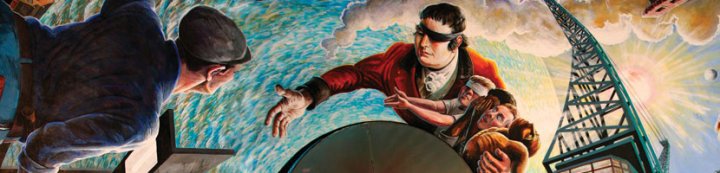
The Museum of Liverpool, the International Slavery Museum, and the Victoria Gallery and Museum celebrate the activism and legacy of Edward Rushton (1756–1814) with a trio of exhibitions:
Unsung – Liverpool’s Most Radical Son: Edward Rushton
The Museum of Liverpool, 7 November 2014 — 10 May 2015
International Slavery Museum, Liverpool, 7 November 2014 — 10 May 2015
Victoria Gallery and Museum, University of Liverpool, 7 November 2014 — 10 May 2015
What made a Liverpool bookseller, and former seaman, publican, and newspaper editor who was blind, take on George Washington, the President of the United States of America, over his personal and public failure to liberate enslaved Africans?

Moses Haughton (1773–1849), Portrait of Edward Rushton (Liverpool: Royal School for the Blind)
Edward Rushton’s knowledge of slavery was first hand—as a West Indies sea boy from the age of ten he had experience of both the slave trade and plantation slavery. In Caribbean waters his life was saved by an African sailor, Quamina, whom he had befriended, and who lost his own life in consequence. Two years later, at eighteen, Rushton was the only crewmember who tended the enslaved Africans infected with the epidemic eye disease, trachoma. Rushton caught the infection and became blind.
Surviving a period of poverty, he opened a bookshop on Paradise Street, which became a hub for Liverpool’s ‘Friends of Freedom’. Rushton was then able to establish the Liverpool School for the Indigent Blind—still in existence today—second only in the world to the Paris school.
Edward Rushton used his pen to support the revolutionary struggles in America, France, Haiti, Ireland, and Poland and was a friend to all who were oppressed whether by human exploitation or human frailty. At the heart was his plea to respect human rights. He saw the press gang as a “a National Stain” and slavery as the “ the Foulest Stain.” Rushton’s poetry broke the mould and gave a voice to the powerless and dispossessed across the world. His work reached a wide audience—it was published on both sides of the Atlantic in newspapers, collected volumes, in broadsides and put to music.
◊ ◊ ◊ ◊ ◊
Supported by the Heritage Lottery Fund and led by DaDaFest as part of DaDaFest International 2014, Unsung began last year in Liverpool as a city-wide project celebrating the social activism and legacy of Edward Rushton on the bicentenary of his death. Kathleen Hawkins wrote about the project for the BBC back in November.
Seminar Series | Visual Cultures of Enlightenment: New Approaches
From ENS:
Cultures visuelles des Lumières: Nouvelles approches en histoire de l’art
École Normale Supérieure, Paris, January — May 2015
Séminaire coordonné par Charlotte Guichard (CNRS/ENS) et Anne Lafont (INHA)
L’histoire de l’art est une discipline aux frontières. Par-delà les traditionnelles hiérarchies entre high art et low art, ce séminaire, à vocation pluridisciplinaire, entend rendre compte aussi bien des chefs-d’œuvre consacrés que desimages scientifiques ou techniques, des graffitis et des cultures visuelles politiques dans un long dix-huitième siècle. La modernité critique des Lumières est en effet indissociable d’une production nouvelle d’images et d’artefacts qui va radicalement changer la manière de voir le monde. Celle-ci se déploie à la faveur d’une articulation inédite entre conception savante de l’image, commercialisation et politisation de l’art au moment de la formation d’un espace critique. Comment la naissance conjointe de l’histoire de l’art, de l’histoire naturelle, de l’anthropologie et de l’esthétique peut-elle nous aider à ressaisir le projet des Lumières ?
Ce séminaire propose un premier état historiographique de ce champ en pleine reconfiguration. Chaque séance sera conçue comme une réflexion autour d’un thème général, avec une intervention plus spécifique menée à partir de travaux en cours. Nous interrogerons notamment les frontières entre art et science à travers l’image ; la question du genre ; les formes de la visualité ; les liens entre art et culture politique.
Séminaire est ouvert aux étudiants à partir du niveau master
Vendredi de 10h à 12h
Salle de séminaire de l’IHMC (esc. D, 3e étage)
École normale Supérieure 45, rue d’Ulm, 75005 Paris
charlotte.guichard@ens.fr et anne.lafont@inha.fr
◊ ◊ ◊ ◊ ◊
P R O G R A M M E
30 janvier 2015 : Séance introductive
6 février 2015 : Violences et Lumières atlantiques
Anne Lafont, « Visualités de la violence à l’époque des abolitions »
Alors que la fin du dix-huitième siècle voit les guerres de révolution éclater de part et d’autre de l’Atlantique (révolutions américaine, française et haïtienne), les saisies visuelles et artistiques de ces événements donnent à voir et à penser différentes expressions de la violence plus ou moins propres au mouvement progressiste desLumières. La production des imagiers de Paris, de Philadelphie et de Saint-Domingue forge un champ visuel de la violence hétérogène qu’il faut scruter à l’aune de ce que signifient ces conflits émancipatoires les uns par rapport aux autres, des révoltes indépendantistes aux luttes contre l’esclavage.
20 février : Figures de l’artiste
Charlotte Guichard, Les signatures de Chardin : des écritures ordinaires ?
Dans la peinture française du 18e siècle, la signature s’impose comme un détail nouveau : lieu de l’expertise pour les amateurs et les marchands, élément d’autoreprésentation pour les peintres, réflexion sur l’objet tableau. La séance portera sur les signatures du peintre Jean Baptiste Chardin : discrètes mais omniprésentes, éminemment réflexives, elles expriment de manière exemplaire les nouvelles conceptions de l’art, de l’auteur et du tableau au siècle des Lumières.
6 mars : Histoire de l’art et Genre
Anne Lafont, « Création/Procréation : autoportrait des femmes artistes »
Les questions relatives à l’activité artistique des femmes sont multiples au cours de l’histoire et ébranlent souvent les catégories d’analyse établies, tels le génie artistique ou la transmission des savoir-faire, mais aussi la détermination des corpus dignes de l’histoire de l’art. Au cours du XVIIIe siècle, l’institutionnalisation de la pratique artistique, de l’exposition, de la critique et d’une manière générale des différents métiers de l’art précipite et multiplie les possibilités offertes aux femmes : non seulement d’exercer leur art, mais de le rendre public et, exceptionnellement, d’accéder à une reconnaissance de leur production par des moyens comparables à ceux déployés par les hommes. Une telle aventure progressiste et perfectible offre certainement un point d’entrée remarquable dans les études de l’art des Lumières.
20 mars : Les Lumières Américaines
Wendy Bellion, « L’art américain et l’illusion optique au XVIIIe siècle »
Cette séance explorera les questions relatives à l’illusion optique aux Etats-Unis à la fin du XVIIIe siècle et au début du XIXe siècle. En mettant l’accent sur les espaces d’exposition à Philadelphie – la plus grande ville américaine de l’époque – nous étudierons les dispositifs de trompe l’œil mis en œuvre par la famille de Charles Willson Peale et d’autres artistes contemporains, considérant que leurs peintures mirent au défi l’agilité des modes de perception desspectateurs, tout comme elles imposèrent une attention accrue portée à la part politique du regard.
3 avril : Cultures visuelles en Révolution
Guillaume Mazeau : « Du spectacle à l’observation : le rôle des cultures visuelles dans la définition de la citoyenneté pendant la Révolution française »
Si le rôle des cultures écrites et orales dans la transition politique de la fin du XVIIIe siècle est assez bien connu, celui des cultures visuelles l’est beaucoup moins. Or parmi les nombreuses compétences et valeurs qui contribuent à dessiner les contours mouvants et débattus de la nouvelle citoyenneté, le sens de l’observation occupe une place de choix. Défini à rebours du spectateur comme celui qui exerce un regard critique, actif et attentif sur la nature dont il tente de saisir la réalité, l’observateur devient un protagoniste majeur des utopies politiques et sociales comme despratiques les plus quotidiennes. Il s’agira ici de poser des questions sur cette « visiocratie » (Peter Goodrich) naissante, en s’interrogeant sur son rôle dans les processus d’émancipation et de domination dans un contexte de révolution.
17 avril : Manière(s) de voir : le regard des Lumières
Charlotte Guichard : « Science et esthétique du coup d’œil »
L’histoire du regard est un terrain de rencontre privilégié pour historiens de l’art et historiens des sciences qui se sont intéressés, chacun dans leur perspective, à une histoire du détail (Daniel Arasse), de l’attention et de l’observation dans les sciences et la culture (Lorraine Daston, Jonathan Crary). Qu’en est-il du « coup d’œil », formule omniprésente au 18e siècle, qui désigne à la fois un dispositif visuel dans l’image et un régime du regard ? Elle nous servira de point d’entrée pour réfléchir à la manière dont artistes, savants et amateurs ont représenté et synthétisé, dans les images d’art et de science, leur expérience et leurs savoirs sur le monde.
15 mai 2015 : Histoire de l’art, histoire des techniques, histoire des sciences
Mechthild Fend, « Epaisseurs de la peau : organicité, sémantique et matérialité de l’image »
À partir de deux images médicales illustrant la structure microscopique de la peau, cette intervention interrogera la relation entre l’image et l’objet de l’image, entre l’observation artistique et l’observation anatomique, entre le savoir médical et le savoir artisanal des imprimeurs. Autrement dit, on envisagera ce que veut dire produire une image sur le vif quand cela fait référence à la représentation de structures microscopiques auparavant invisibles à l’œil nu et dont la connaissance demeure imparfaite. Enfin, il conviendra d’analyser comment un médium – qu’il s’agisse d’un dessin ou d’une gravure, éventuellement en couleur – participe non seulement de la visualisation mais aussi de l’interprétation, et même de la constitution d’un phénomène anatomique.
The Burlington Magazine, January 2015
The eighteenth century in The Burlington:
The Burlington Magazine 157 (January 2015)
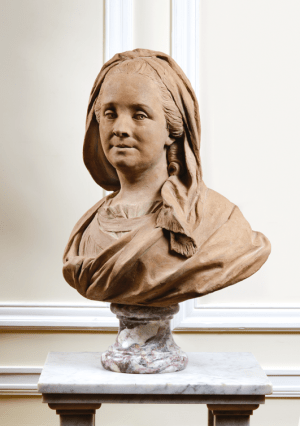
Jean-Baptiste Lemoyne, Portrait of Marie Leszczyńska, terracotta, approx 43 cm high, ca. 1750 (Paris: Fondation Custodia). The bust was acquired in 2013.
A R T I C L E S
• Marie-Noëlle Grison, “A Newly Discovered Bust of a Woman by Jean-Baptiste Lemoyne,” pp. 9–13.
R E V I E W S
• Giles Waterfield, Review of James Anderson Winn, Queen Anne: Patroness of Arts (Oxford University Press, 2014), p. 35.
• Jörg Garms, Review of Robin Thomas, Architecture and Statecraft: Charles of Bourbon’s Naples, 1734–1759 (Penn State University Press, 2013), pp. 35–36.
• Martin Postle, Review of Diana Donald, The Art of Thomas Bewick (Reaktion Books, 2013), pp. 36–37.
Exhibition | Fashioning the Body: An Intimate History of the Silhouette
Press release for the upcoming exhibition at the BGC:
Fashioning the Body: An Intimate History of the Silhouette
Musée des Arts Décoratifs, Paris, 5 July — 24 November 2013
Bard Graduate Center, New York, 3 April — 26 July 2015
Curated by Denis Bruna
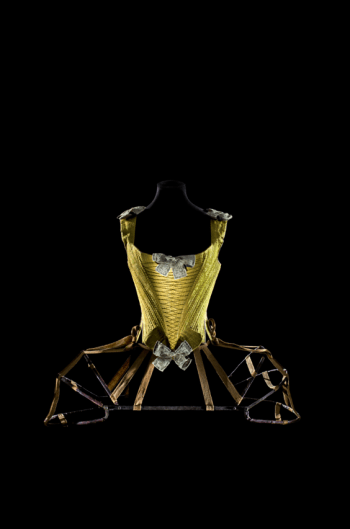
Whalebone corset. France, ca. 1740–60. Silk satin damask, braided silk, linen bows covered in silk and decorated with metallic thread, whalebone, linen lining. Les Arts Décoratifs, PR 995.16.1. Articulated pannier. France, ca. 1770. Iron covered with leather, fabric tape. Les Arts Décoratifs, depot du musée national du Moyen Âge-Thermes et hotel de Cluny 2005, Cluny 7875. Photographer: Patricia Canino.
Having garnered high acclaim at the Musée des Arts décoratifs in Paris in 2013, the exhibition Fashioning the Body: An Intimate History of the Silhouette will be on display at the Bard Graduate Center from April 3 through July 26, 2015. The exhibition will present the many devices and materials that women and men have used to shape their silhouettes from the seventeenth century to today, including panniers, corsets, crinolines, bustles, stomach belts, girdles, and push-up brassieres. The exhibition will also look at how lacing, hinges, straps, springs, and stretch fabrics have been used to alter natural body forms.
Curated by Denis Bruna, curator of pre-19th-century fashion and textile collections at the Musée des Arts décoratifs and professor at the École du Louvre, the exhibition will explore the history of what has long been ‘behind the scenes’ in clothing and fashion—far beyond the corset, the best-known device for shaping the figure. This show, which draws heavily on the Paris museum’s unrivaled costume collection, is the first of its kind, and the Bard Graduate Center will be its only venue in North America.
Although a broad array of silhouette-shaping garments has evolved over the course of fashion history, and techniques have been refined, the purpose of such garments has remained consistent: to flatten the stomach, compress the waist to the point of hollowing it out, support the bust, lift the breasts (and sometimes flatten them), and add curves to the hips. In short, comfort was superseded by appearance until about 1900, when couturiers such as Paul Poiret launched, however fleetingly, a vogue for ‘natural’ lines.
The tricks for fashioning women’s bodies have always confounded belief, from the earliest boned bodices through today’s push-ups. Spread across three floors of the Bard Graduate Center Gallery’s townhouse, Fashioning the Body opens with the seventeenth-century silhouette, exemplified by a rare women’s Spanish doublet, which was internally reinforced to be more rigid. Structured with armatures and other mechanisms, the garments of the eighteenth century enforced the erect posture prized first by the aristocracy and later by an influential bourgeoisie in order to convey a sense of superiority through the display of an idealized physical form. The epitome of the transformed female silhouette is the late eighteenth-century formal or court dress, examples of which will be on display alongside the undergarments that molded their distinctive silhouettes. In men’s fashion, the exhibition explores how padded jackets provoked arched torsos; how calf enhancers, stomach belts, and codpieces were worn; and how variations on these enhancements continued into the nineteenth century and beyond. The exhibition will also include garments for children, who wore corsets beginning in the seventeenth century.
Fashioning the Body continues into the nineteenth century, in which the corset held tyrannical sway, embodying the voguish insistence on a ‘wasp waist’, accentuated by the excessive ballooning of crinoline. After 1870 this kind of boned hoopskirt disappeared and was replaced by the bustle—also known as the faux-cul (fake buttocks), ‘shrimp tail’, or strapontin (jump seat)—which gave women an odd and sinuous profile reminiscent of a goose. Undergarments were never as abundant or as concealed as they were in the nineteenth century. The exhibition will continue with the brassiere and girdle, including examples used by men, and eventually the bust-enhancing and push-up bras of today. These devices were designed to create a plunging look for even the slimmest figures, reflecting the dictates of the canons of beauty at a time when bodies are modeled more by diets, body building, and surgery than by clothing.
In addition to complete outfits shaped by these hidden structural contraptions, the exhibition will also feature moving mannequins wearing mechanized reconstructions of panniers, crinolines, and bustles in order to show how the undergarments worked. The exhibition space will also include an area where visitors can try on specially made replicas of corsets, eighteenth-century panniers, and crinolines in order to understand the workings of these structures, which have played such an important role in the history of fashion.
Denis Bruna has a doctorate in history from the University of Paris I Panthéon-Sorbonne. He joined Les Arts Décoratifs in 2011 as curator of textile and fashion collections before the nineteenth century. He is also a professor and director of research in the history of fashion, costume, and textiles at the École du Louvre. His research focuses on the history and iconography of the costume, dress, and customs of the body. He has published several books and was the curator of the 2012 exhibition Fashioning Fashion: Two Centuries of European Fashion 1700–1915.
The Bard Graduate Center is a graduate research institute in New York City. The Center’s Gallery exhibitions and publications, MA and PhD programs, and research initiatives explore new ways of thinking about decorative arts, design history, and material culture. Founded in 1993, the BGC is an academic unit of Bard College. Fashioning the Body is the third in a series of collaborations between the Musée des Arts décoratifs and the Bard Graduate Center, which included Chinese Cloisonné (2011) and Discovering the Secrets of Soft-Paste Porcelain at the Saint-Cloud Manufactory, ca. 1690–1766 (1999).
The Musée des Arts décoratifs, housed in the Louvre building, is a unique, private institution composed of a specialized library, teaching facilities, and an ensemble of prestigious museums, including the Musée Nissim de Camondo and the Musée des Arts décoratifs. The Musée des Arts décoratifs fulfills a unique role in the French cultural landscape. Its six thousand objects on view in 10,000 square meters of exhibition space highlight the skills of craftsmen through the centuries, the evolution of styles, technological innovation, and the creativity of artists in enriching our day-to-day environ- ment. It is the only museum able to pay tribute to all the great names that have forged the history of French taste, from Boulle, Sèvres, Aubusson, Christofle, Lalique, and Guimard to Mallet Stevens, Le Corbusier, Perriand, and Starck. The museum’s chronological itinerary guides visitors through all the major styles and movements, from Gothic to Louis XVI, Art Nouveau, Art Deco, and modern design. Les Arts Décoratifs also boasts exceptional fashion and textile collections, among the finest in the world, and a vast collection of advertising posters, films, and objects. The wealth of these collections enables Les Arts Décoratifs to run a program of ten to fifteen thematic and monographic exhibitions covering every historic and contemporary aspect of the decorative arts.
◊ ◊ ◊ ◊ ◊
The Bard Graduate Center, in collaboration with Yale University Press, will publish an English-language version of the book that accompanied the exhibition in Paris, which is now out of print:
Denis Bruna, ed., with photographs by Patricia Canino, Fashioning the Body: An Intimate History of the Silhouette (New Haven: Yale University Press, 2015), 272 pages, ISBN: 978-0300204278, $50.
 This unique survey offers fascinating insights into the convoluted transformations employed by both men and women to accommodate the fickle dictates of fashion. With high design, wit, and style, Fashioning the Body tracks the evolution of these sartorial devices—from panniers, crinolines, and push-up bras to chains, zippers, and clasps—concealed beneath outer layers in order to project idealized figures. Women’s corsets constricted waists; exaggerated buttocks and hips counterbalanced jutting bust lines; and chic, aerodynamic silhouettes compressed breasts and flattened bellies. Yet masculine fashion has been no stranger to these tortuous practices. Men flaunted their virility by artificially broadening their shoulders, applying padding to their chests, and slipping codpieces over their groins. With more than 200 beautiful illustrations—including reproductions of superb historic advertisements—Denis Bruna reveals the industry and art of these contrivances meant to entice and beguile as well as assert status and power. Contemporary haute-couture designers Thierry Mugler, Jean Paul Gaultier, Rei Kawakubo for Comme des Garçons, Christian Lacroix, and Vivienne Westwood are featured in this indiscreet tour of intimate fashion history.










 Enfilade
leave a comment