Exhibition | Versailles: Science and Splendour

From the press release for the exhibition, a reworking of Sciences et curiosités de Versailles, which was on view at the palace in 2010–11.
Versailles: Science and Splendour
Science Museum, London, 12 December 2024 — 21 April 2025
Curated by Anna Ferrari
A significant new exhibition unveils the fascinating stories of science at Versailles, exploring how scientific knowledge became widespread, fashionable, and a tool of power to enhance France’s prestige. Versailles: Science and Splendour invites visitors to discover the unexpected, yet vitally important, role of science at the French royal court through spectacular scientific objects and artworks. Many items will be on display for the first time in the UK, including Louis XV’s rhinoceros and a splendid sculptural clock representing the creation of the world. The sumptuous exhibition also sheds light on the contribution of women to physics, medicine, and botany in 18th-century France.
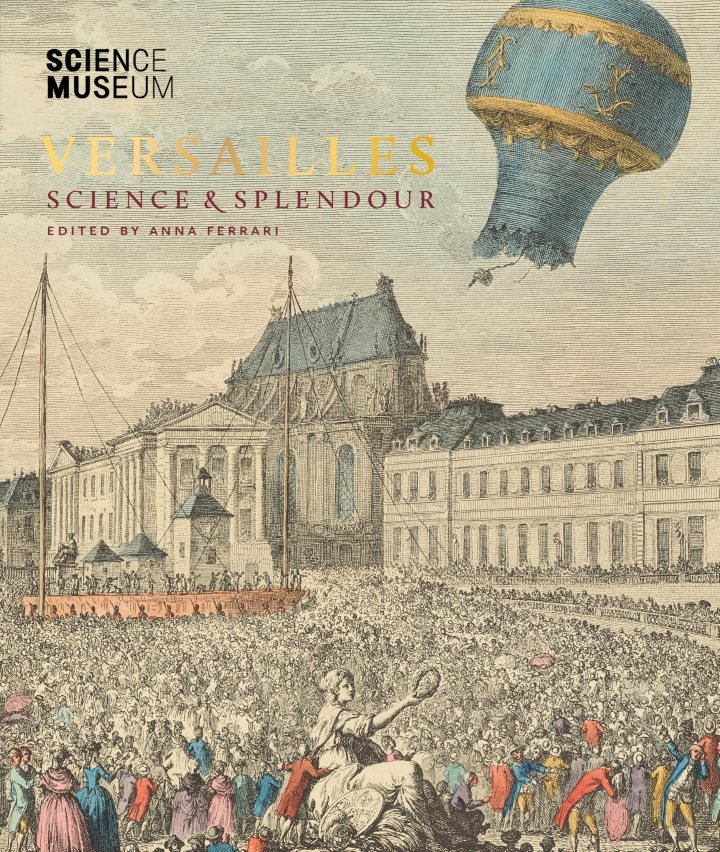
Versailles—the seat of royal power in France in the 17th and 18th centuries—was renowned for its opulent palace and gardens, but it was also a cradle of scientific spirit. Developed with support from the Palace of Versailles, the exhibition reveals the meeting of art and science in the court as it showcases more than 100 fascinating objects, from the extravagant to the everyday. The exhibition explores how Louis XIV, Louis XV, and Louis XVI encouraged scientific pursuit and readily drew on technological advances of their times, enhancing France’s prestige and extending its influence. The exhibition highlights significant figures, including stories of women in science, such as the pioneering midwife Madame du Coudray who trained thousands of midwives in rural France and Emilie du Châtelet, the eminent physicist and mathematician who translated Isaac Newton’s Principia.
Anna Ferrari, lead curator of Versailles: Science and Splendor, said: “We are delighted to bring Versailles to London in this new exhibition, which invites visitors to discover an unusual but crucial side of the palace’s history and grandeur. This exhibition will reveal fascinating stories of science at Versailles through more than a hundred treasures, bringing new attention to the relationship between science and power.”
Christophe Leribault, President of the Palace of Versailles, said: “The Sciences and Curiosities at the Court of Versailles exhibition, held in 2010 at the Palace of Versailles, made a lasting impression. It unveiled a lesser-known aspect of life at the former royal residence: the interest in sciences and the spirit of curiosity and innovation that animated the sovereigns and the entire court. Through this revisited version of the exhibition, we take pride in the fact that our collections and expertise can now cross the Channel to meet visitors at the Science Museum, inspiring them to visit or revisit the Palace of Versailles.”
Sir Ian Blatchford, Director and Chief Executive of the Science Museum Group, said: “Science was at the heart of the French royal court, from the engineering innovations needed to build the regal seat of power to the lavish scientific demonstrations staged for the kings. We are able to share these remarkable stories with Science Museum visitors for the first time thanks to a close partnership with the Palace of Versailles. In strengthening such cultural connections with European partners, we will continue to inspire people with incredible stories of science and culture around the world.”

Versailles: Science and Splendour as installed in London’s Science Museum.
◊ ◊ ◊ ◊ ◊
Harnessing Science
Versailles: Science and Splendour takes visitors on a 120-year journey through the evolution of science at Versailles, from the creation of the Academy of Sciences by Louis XIV in 1666, to Louis XV’s passion for exquisite scientific instruments, and Louis XVI’s ordering of the La Pérouse expedition to the Pacific in 1785.
Measuring time and space was one of the key tasks of the Academy of Sciences, reflecting the challenges of the time in Europe. Members of the Academy mapped the Earth and the skies as visitors can observe in a 1679 map of the Moon by Cassini, the precision of which remained unrivalled for over 200 years. The promotion of France’s power through scientific developments also served political purposes, with exquisite instruments given as diplomatic gifts across the world.
The exhibition also gives visitors the opportunity to see the magnificent gardens of Versailles in a new light. Recruited by Louis XIV, Academicians and experts used mathematics and engineering to transform the site into a statement of power and prestige. Of particular importance for Louis XIV was the creation of spectacular fountains and water features in the grounds, which required hydraulic engineering projects of unprecedented scale. A painting of the monumental Marly Machine, which supplied Versailles’ fountains with water from the river Seine, will impress upon visitors the magnitude of Louis XIV’s grand ambitions.
Understanding Nature

Louis XV’s Rhinoceros (Paris: Muséum national d’Histoire naturelle).
France’s imperial reach enabled Versailles to become a centre for the scientific study of plants and animals from around the world. The exhibition will display this growing interest in zoology and the kings’ luxurious taste, which pushed for inventive botanic engineering to allow exotic fruits, like pineapples, to grow at Versailles.
Visitors will also be able to learn the surprising story of Louis XV’s rhinoceros, on display in the UK for the very first time. Gifted by a French governor in India, this rhinoceros was perhaps the Versailles menagerie’s most pampered and famous resident. Acquired by the Muséum national d’Histoire naturelle in Paris during the revolution, it was dissected after its death in 1793, and has been held there for over two hundred years.
Versailles will also feature the medical advances supported by the kings. The royal family made precious contributions to these developments by submitting their own bodies to procedures. On display will be a scalpel designed specifically to operate on the Sun King, while the exhibition will cover the inoculation against smallpox which Louis XVI and his family underwent as soon as he ascended the throne.
Louis XV supported the training of midwives across France to reduce infant mortality and grow a populous and strong kingdom. Born outside the nobility, to a family of doctors, Madame du Coudray rose to prominence through her pioneering practical training of midwives. She employed sophisticated life-sized mannequins to demonstrate the mechanics of birth—part of the only surviving mannequin will be showcased in the exhibition. Madame du Coudray ultimately trained over 5,000 women, as well as physicians, across France.

Versailles: Science and Splendour as installed in London’s Science Museum.
◊ ◊ ◊ ◊ ◊
Embracing Knowledge
Scientific culture became widespread and fashionable at the courts of Louis XV and Louis XVI, with members of the royal family and of the aristocracy educated in physics, mathematics, and chemistry. Examples of Louis XV’s magnificent collection of instruments will be on display. Visitors will see a sophisticated and rare optical microscope made by the king’s brilliant engineer, Claude-Siméon Passemant, which is also a work of art with its gilt bronze rococo stand by the Caffieri sculptors.
Jean-Antoine Nollet, tutor of physics and natural history to the royal children during Louis XV’s reign, demonstrated principles of physics in sensational presentations at court. His air-pump, used to ‘make the invisible visible’, will be on display in the exhibition. Visitors will also learn about Emilie du Châtelet, an exceptional physicist and mathematician. Her translation of Isaac Newton’s Principia Mathematica into French, with her own additional commentary, remains in use today.
From the heart of government at Versailles, science was used strategically to assert imperial power on the world stage. The exhibition highlights technological developments in warfare and defence engineering, as well as the 1785 expedition of La Pérouse. Commissioned by Louis XVI, the expedition had a dual aim. It sought to establish trade connections around the Pacific as well as further scientific knowledge: mapping coastlines as yet uncharted by Europeans and collecting scientific data.
The exhibition also interrogates the surprising role of science in Versailles’ taste for spectacle. The palace provided an influential platform for scientific figures to present their work, as well as for the kings to display their power through extraordinary demonstrations, such as the flight of Etienne Montgolfier’s hot-air balloon at Versailles in 1783. One of the most complex pieces of engineering of its time, Pendule de la Création du Monde, presented to Louis XV in 1754, will also be on display. This exquisite astronomical clock exemplifies the intersection of scientific interest and royal opulence, boasting Versailles’ splendour through mechanical wonder.
Anna Ferrari, ed., Versailles: Science and Splendour (Milan: Scala, 2025), 128 pages, ISBN: 978-1785515828, £30.
Published to accompany the exhibition at London’s Science Museum, this richly illustrated book breaks new ground in exploring the relationship between science and power at the French court of Versailles. It features sixteen short chapters by experts from Britain, France, and America.
Anna Ferrari is Curator of Art and Visual Culture at the Science Museum and lead curator of the exhibition Versailles: Science and Splendour. Trained as an art historian, she has previously curated and co-curated exhibitions at the Victoria and Albert Museum, the Royal Academy of Arts and the Sainsbury Centre for Visual Arts.
New Book | The Enlightenment’s Most Dangerous Woman
From Oxford UP:
Andrew Janiak, The Enlightenment’s Most Dangerous Woman: Émilie du Châtelet and the Making of Modern Philosophy (Oxford: Oxford University Press, 2024), 304 pages, ISBN: 978-0197757987, .
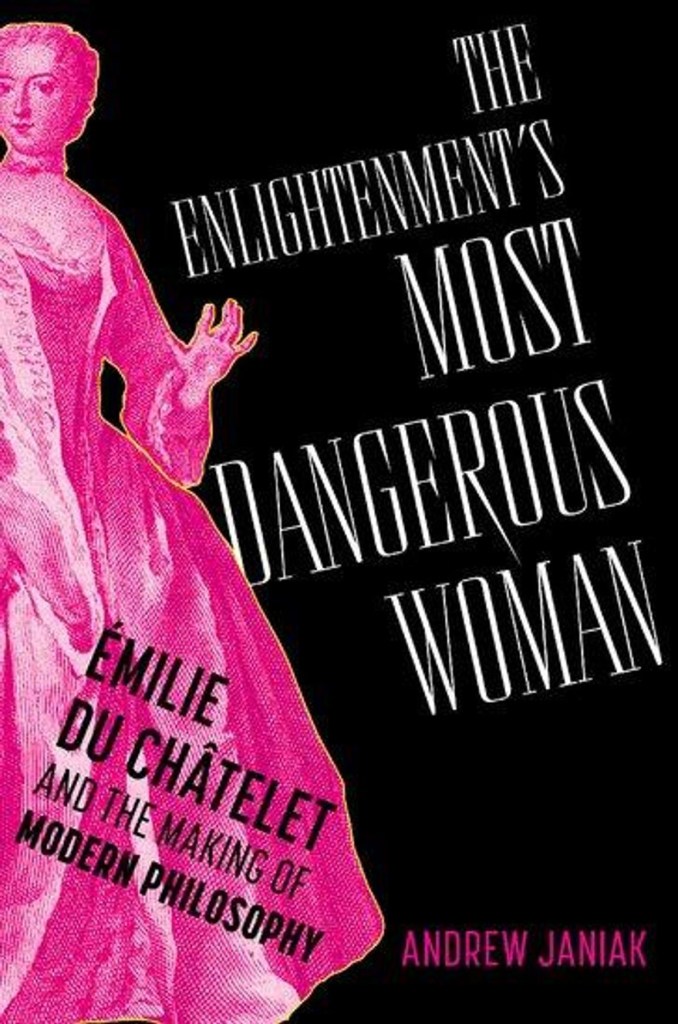 Just as the Enlightenment was gaining momentum throughout Europe, philosopher Émilie Du Châtelet (1706–1749) broke through the many barriers facing women at the time and published a major philosophical treatise in French. Within a few short years, she became famous: she was read and debated from Russia to Prussia, from Switzerland to England, from up north in Sweden to down south in Italy. This was not just remarkable because she was a woman, but because of the substance of her contributions. While the men in her milieu like Voltaire and Kant sought disciples to promote their ideas, Du Châtelet promoted intellectual autonomy. She counselled her readers to read the classics, but never to become a follower of another’s ideas. Her proclamation that a true philosopher must remain an independent thinker, rather than a disciple of some supposedly ‘great man’ like Isaac Newton or René Descartes, posed a threat to an emerging consensus in the Enlightenment. And that made her dangerous.
After all, if young women took Du Châtelet’s advice to heart, if they insisted on thinking for themselves, they might demand a proper education—the exclusion of women from the colleges and academies of Europe might finally end. And if young women thought for themselves, rather than listening to the ideas of the men around them, that might rupture the gender-based social order itself. Because of the threat that she posed, the men who created the modern philosophy canon eventually wrote Du Châtelet out of their official histories. After she achieved immense fame in the middle of the eighteenth century, her ideas were later suppressed, or attributed to the men around her. For generations afterwards, she was forgotten. Now we can hear her voice anew when we need her more than ever. Her lessons of intellectual independence and her rejection of hero worship remain ever relevant today.
Andrew Janiak is Professor of Philosophy and Bass Fellow at Duke University. For the last decade, he has co-led—with Liz Milewicz—Project Vox, a digital project that seeks to recover the lost voices of women who contributed to modern science and philosophy. Janiak is the author or editor of five previous books and numerous articles concerning the relationship between science and philosophy in the 17th and 18th centuries.
c o n t e n t s
1 The Rise and Fall of Émilie Du Châtelet
2 What Was the Scientific Revolution?
3 Du Châtelet’s Vision of Science and Philosophy
4 The Enlightenment’s Most Famous Woman
5 The Enlightenment’s Most Dangerous Woman, Or The Making of Modern Philosophy
6 Du Châtelet’s Enlightenment: Philosophy for Freethinkers
Notes
Bibliography
Index
New Book | Hercules of the Arts
The exhibition was on view last year at Vienna’s Gartenpalais Liechtenstein. The catalogue is distributed by The University of Chicago Press:
Stephan Koja, ed., Hercules of the Arts: Johann Adam Andreas I von Liechtenstein and Vienna around 1700 (Munich: Hirmer Verlag, 2024), 240 pages, ISBN: 978-3777443638, $45. With contributions by Thomas Baumgartner, Reinhold Baumstark, Alexandra Hanzl, Claudia Lehner-Jobst, Katharina Leithner, Gernot Mayer, Cecilia Mazzetti di Pietralata, Andreas Nierhaus, Peter Stephan, Arthur Stögmann, and Silvia Tammaro.
 The life of one of Vienna’s foremost patrons of art.
This book focuses on Prince Johann Adam Andreas I of Liechtenstein (1657–1712). His skillful economic policies enabled him to increase his fortune, with which he purchased important artworks, invested in building projects and their artistic design, founded a city district, and developed Italian art and architecture in Vienna in around 1700. The prince was an important individual in his dynasty and a great patron and builder. He reorganized administrative structures and invested in businesses and innovative production techniques. He thus created the financial basis for the expansion of the art collection and the construction and furnishing of imposing buildings. To this day, the Gartenpalais and Stadtpalais in Vienna bear witness to the activities of this prince known as a Hercules of the arts.
New Book | Maria Theresa Empress
From Yale UP:
Richard Bassett, Maria Theresa Empress: The Making of the Austrian Enlightenment (New Haven: Yale University Press, 2025), 520 pages, ISBN: 978-0300243987, $38.
 A major new biography of Maria Theresa, the formidable Habsburg Empress
Maria Theresa was the single most powerful woman in eighteenth-century Europe. At the age of just twenty-three she succeeded to the Habsburg domains only to find them contested by almost every power in Europe. Over the next forty years, she became a fierce leader and opponent, as well as a devoted wife and mother to sixteen children. In this engrossing biography, Richard Bassett traces Maria Theresa’s life and complex legacy. Drawing on hitherto unpublished sources, Bassett reveals her keen sense of moderation and tolerance, innovative ideas on free trade and finance, and studied reluctance to resort to policies of territorial expansion. Yet Maria Theresa’s modernisation policies were not entirely progressive. Antisemitism and an enduring suspicion of Protestantism greatly affected the lives of her subjects. This is a gripping study of one of the world’s most influential leaders, revealing how Maria Theresa confounded gendered expectations and left a lasting mark on Europe.
Richard Bassett is the author of several books, most notably For God and Kaiser, the first history of the Habsburg army to be published in English. An authority on Central Europe where he has worked for 45 years, he is a Bye-Fellow of Christ’s College Cambridge and a visiting professor at the Central Europe University of Budapest.
Call for Papers | History of Map Collecting
From ArtHist.net:
History of Map Collecting: Vienna, Central Europe, and Beyond
University of Vienna, 12 June 2025
Organized by Eva Chodějovská and Silvia Tammaro
Proposals due by 17 March 2025
This one-day event will be held on 12 June 2025 at University of Vienna. Organised jointly by the Vienna Center for the History of Collecting (University of Vienna, Austria) and the Moravian Library in Brno (Czech Republic), the conference will be accompanied by a poster exhibition on Bernard Paul Moll (1697–1780) and his map collection, formed in 18th-century Vienna and now preserved at the Moravian Library.
Vienna—thanks to personalities of international fame such as the archduke Leopold Wilhelm, Eugene of Savoy, Albert von Sachsen-Teschen, and others—was one of the most important centres of collecting in the early modern period. This international conference aims to go beyond the general public’s conceptions of the collecting of paintings, drawings, and sculptures in two ways. Firstly, to enlarge the group of collected objects to printed sheets with a special focus on maps; secondly, there are important pieces of collectors’ interests of this kind kept in Vienna worth displaying and discussing (including the world-famous Blaeu-Van der Hem Atlas preserved in the Austrian National Library). Based on a long-lasting scholarly discussion of maps as objects of art and products of science, we welcome case studies addressing the practices of map collecting from the 17th to 20th centuries, including the creation of composite atlases in Central Europe.
A paper title, an abstract of 5–8 sentences, and a short CV in English are welcome by 17 March 2025. The acceptance notification is scheduled on 31 March 2025. Presentations should be 20 minutes. The conference language is English. Travel costs will be reimbursed up to €200. The conference is supported by “Stadt Wien Kultur/City of Vienna Culture.” Should you have further questions, please contact the organisers, Eva Chodějovská (chodejovska@mzk.cz) and Silvia Tammaro (silvia.tammaro@univie.ac.at).
Lectures | Barbara Kirshenblatt-Gimblett on Warsaw’s POLIN Museum
.
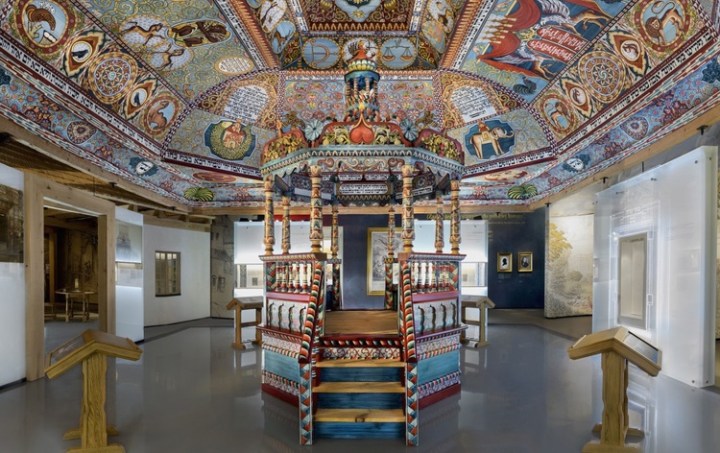
Rebuilding of the painted ceiling, timber-frame roof, and bimah (platform where the public reading from the Torah scroll is performed) of the wooden synagogue that once stood in Gwoździec and is now a centerpiece of the 18th-century gallery, “The Jewish Town” (Warsaw: POLIN Museum of the History of Polish Jews; photo by Magdalena Starowieyska and Darek Golik).
◊ ◊ ◊ ◊ ◊
From BGC:
Barbara Kirshenblatt-Gimblett | Materializing History
The Making of POLIN Museum’s Core Exhibition
Leon Levy Foundation Lectures in Jewish Material Culture
Bard Graduate Center, New York, 27 February, 20 March, 20 April 2025
Each year, Bard Graduate Center presents the Leon Levy Foundation Lectures in Jewish Material Culture, a three-lecture series dedicated to the study of the Jewish past through its material remains. Join us for this year’s lectures.
The Museum of the History of Polish Jews is located on the site of the Warsaw ghetto. It began without a building, collection, or funds. Its greatest asset was the story it would tell, a thousand-year history of Polish Jews. In exploring the creation of POLIN Museum’s Core Exhibition and its extensions, this series of lectures by curator Barbara Kirshenblatt-Gimblett will reveal how the museum materialized history and created and discovered novel kinds of objects.
Bard Graduate Center gratefully acknowledges the Leon Levy Foundation’s support of these lectures.
◊ ◊ ◊ ◊ ◊
Masterplan: Theatre of History
Thursday, February 27, 6pm
This first lecture explores how the Masterplan attempted to plot the thousand-year history of Polish Jews in space, how the exhibition evolved as a theater of history, and how the materializing of history led to the creation of a new kind of object.
Materializing History: The Making of POLIN Museum’s Core Exhibition
Thursday, March 20, 6pm
A centerpiece of the Core Exhibition is the 85 percent-scale painted ceiling and timber-frame roof of the seventeenth-century wooden synagogue that once stood in Gwoździec—today in Ukraine—but was destroyed during World War I. This object exemplifies how material practices produce new knowledge and unique kinds of objects in the process.
The Post-Jewish Object
Thursday, April 20, 6pm
Learn about POLIN Museum’s most recent temporary exhibition, which highlighted ‘post-Jewish’ property, defined by dispossession resulting from the fate of Jews during and after the Holocaust.
Call for Papers | Re-Imagining Allegory in Alchemical Tradition
From ArtHist.net:
Visita Interiora: Re-Imagining Allegory in the Alchemical Tradition, 1400–1800
Palazzo Giustinian Lolin, University of Warwick Venice Centre, Venice, 16–17 June 2025
Keynote Speaker: Jennifer M. Rampling
Organized by Sergei Zotov
Proposals due by 15 April 2025
Alchemy is often associated with the imagery of flasks, furnaces, and laboratories. However, the universe of alchemical iconography extends far beyond these familiar motifs, encompassing a rich tapestry of symbols and allegories tied to both chemical processes and cultural phenomena. Thanks to extensive archival efforts and digitisation projects, we now have access to thousands of alchemical image series preserved in manuscripts and printed books. How might our understanding of this visual tradition deepen if we approach alchemical allegorical iconography using the same methodologies applied to other forms of imagery—such as iconographic analysis and the study of text-image relationships?
This conference invites case studies on the allegorical iconography of alchemy (1400–1800), aiming to foster new perspectives on the role of visual culture in the history of science. We particularly emphasise manuscripts and material culture and encourage submissions that engage with previously unstudied or undigitised sources. The key topics include, but are not limited to:
• Iconographic Trends: What trends emerge in alchemical iconography? Why did certain allegories gain widespread popularity while others remained obscure?
• Sources of Influence: What visual or textual traditions—including non-European and non-alchemical ones such as sacred art, emblem books, or scientific imagery—influenced specific images or image series in European alchemy?
• Methods of Analysis: How can we assess the role and function of allegorical images in alchemy? For instance, what do variations in the same image series across different manuscripts reveal about cultural, religious, or laboratory contexts?
• Material Evidence: What insights can be gained from the imagery on objects such as alchemical medals, coins, book covers, or laboratory apparatus like furnaces?
• Reception: How was allegorical alchemical imagery received in later alchemical or non-alchemical traditions?
We warmly invite you to the historic Palazzo Giustinian Lolin in Venice this June, where the Baroque setting will provide a fitting backdrop for scholarly discussions on alchemical allegories and their visual traditions. Please complete the registration form here. Alternatively, send your submissions to sergei.zotov@sas.ac.uk, including a short biographical note (50 words) and a presentation abstract (250 words) by 15 April 2025.
Prado Launches Online Collection of Printed References to Goya
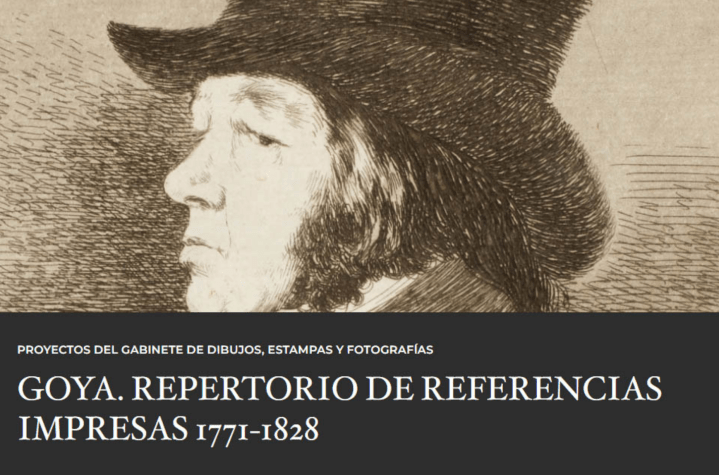
As noted at Art History News, the Prado has just launched its latest online digital project, Goya: Repertorio de referencias impresas: 1771–1828, which collects some 30,000 published references to Goya made during his lifetime in books, advertisements, newspaper articles, and prints. From the press release (6 February 2025) . . .
Goya: Repertorio de Referencias Impresas, 1771–1828
Online, The Prado Museum, Madrid
El Museo del Prado amplía los proyectos digitales del Gabinete de Dibujos, Estampas y Fotografías reuniendo por primera vez todas las referencias impresas sobre Goya publicadas durante su vida. Este Repertorio de referencias impresas. 1771–1828, disponible en la web, facilita el acceso a un corpus documental de gran valor para investigadores y amantes del arte, y público en general.
Para acercar al público su extensa colección de dibujos, estampas y fotografías—formada por aproximadamente 30.000 obras que por motivos de su conservación no se exponen permanentemente en las salas—el Museo Nacional del Prado ha desarrollado un espacio web con contenidos monográficos especialmente concebidos para dar a conocer su singularidad y riqueza. En este contexto, el Museo presenta el Repertorio de referencias impresas. 1771–1828 sobre Francisco de Goya, una herramienta única que pone a disposición del público el primer repertorio en el mundo que reproduce la totalidad de referencias publicadas sobre un artista durante su vida.
Este nuevo repertorio amplía el campo de divulgación de la obra de Goya mediante la recopilación de referencias impresas, conservadas en bibliotecas y museos de todo el mundo, algunas de difícil acceso. Desde la primera mención de Goya en 1771 hasta su fallecimiento en 1828, su nombre fue citado en libros, anuncios, artículos periodísticos y estampas, reflejando su notoriedad y reconocimiento en vida. El Repertorio de referencias impresas. 1771–1828 está organizado mediante fichas cronológicas que incluyen datos bibliográficos, transcripciones, traducciones, imágenes de documentos originales y enlaces a versiones digitalizadas completas. Asimismo, se ha desarrollado un sistema de búsqueda por términos y etiquetas, permitiendo filtrar la información por tipología documental y década.
Este recurso digital ha sido posible gracias al trabajo del especialista en obra gráfica de Goya, Juan Carrete Parrondo, quien inició este proyecto antes de su fallecimiento en 2023. Tras dos años de labor, el Museo del Prado culmina su esfuerzo y lo pone a disposición del público. Siguiendo el espíritu colaborativo de su creador, el proyecto sigue abierto a nuevas aportaciones, invitando a los usuarios a contribuir con referencias adicionales mediante el correo gabinete.dibujos@museodelprado.es.
El Repertorio de referencias impresas. 1771–1828 ha sido financiado con fondos del Plan de Recuperación, Transformación y Resiliencia de España (PRTR) y vinculado a las actuaciones dentro del programa C.24 I3 Digitalización e impulso de los grandes servicios culturales, incluido en el eje incluido en el eje Prado Formación y dentro de la actuación “Prado Formación e Investigación” y de la actividad Canal de formación e investigación.
Research Seminar | Martin Myrone on the Foggo Brothers’ Parga

.
James and George Foggo, Parga during the Awful Ceremony that Preceded the Banishment of its Brave Christian Inhabitants and the Entrance of Ali Pacha, ca. 1819, lithograph, 42 × 64 cm (London: the British Museum, 1842,0319.14).
◊ ◊ ◊ ◊ ◊
Next month at the Mellon Centre:
Martin Myrone | A Radical Alternative within British Romanticism: The Foggo Brothers’ Parga
Online and in-person, Paul Mellon Centre, London, 19 March 2025, 5pm
This talk focuses on one of the most remarkable—but forgotten—works of British art of any era: The Christian Inhabitants of Parga Preparing to Emigrate (1822) by the brothers George and James Foggo. This huge painting, twenty-six feet long by sixteen high, was exhibited several times in the nineteenth century before disappearing. Recorded in a mezzotint, the picture features a multitude of figures in a scene of horror with the people of Parga in Greece disinterring their ancestors so that their remains were not left on ground falling under Ottoman rule. The incident of 1819 on which the picture was based was an international scandal, identified as an appalling indictment of British foreign policy. Ironically, the very size, political purpose and pictorial ambition of the Foggo brothers’ picture has made it easy to be ignored by art history. This talk will explore how the discipline has by contrast—and this is almost regardless of political orientation—been preoccupied with the subjective and commodified aesthetics assumed to be the enduring legacy of the ‘Romanticism’ of the era.
The event starts with a presentation and talk by Martin Myrone, lasting around 40 minutes, followed by Q&A and a free drinks reception. The event is hosted in our Lecture Room, which is up two flights of stairs (there is no lift). The talk will also be streamed online and recording published on our website.
More information and registration is available here»
Martin Myrone is Head of Research Support and Pathways at the Paul Mellon Centre. Before joining the Centre in 2020, Martin spent over twenty years in curatorial roles at Tate, London. His many exhibitions at Tate Britain have included Gothic Nightmares (2006), John Martin (2011), William Blake (2019), and Hogarth and Europe (2021). His research and publications have focused on eighteenth- and nineteenth-century British art, with a special interest in artistic identity and artists’ labour, class, cultural opportunity and gender. His many published works include Bodybuilding: Reforming Masculinities in British Art 1750–1810 (2005) and Making the Modern Artist: Culture, Class and Art-Educational Opportunity in Romantic Britain (2020), both published by the Paul Mellon Centre.
Exhibition | Illusion: Dream–Identity–Reality
Now on view at the Hamburger Kunsthalle:
Illusion: Dream – Identity – Reality
Hamburger Kunsthalle, Hamburg, 6 December 2024 — 6 April 2025
Curated by Sandra Pisot and Johanna Hornauer

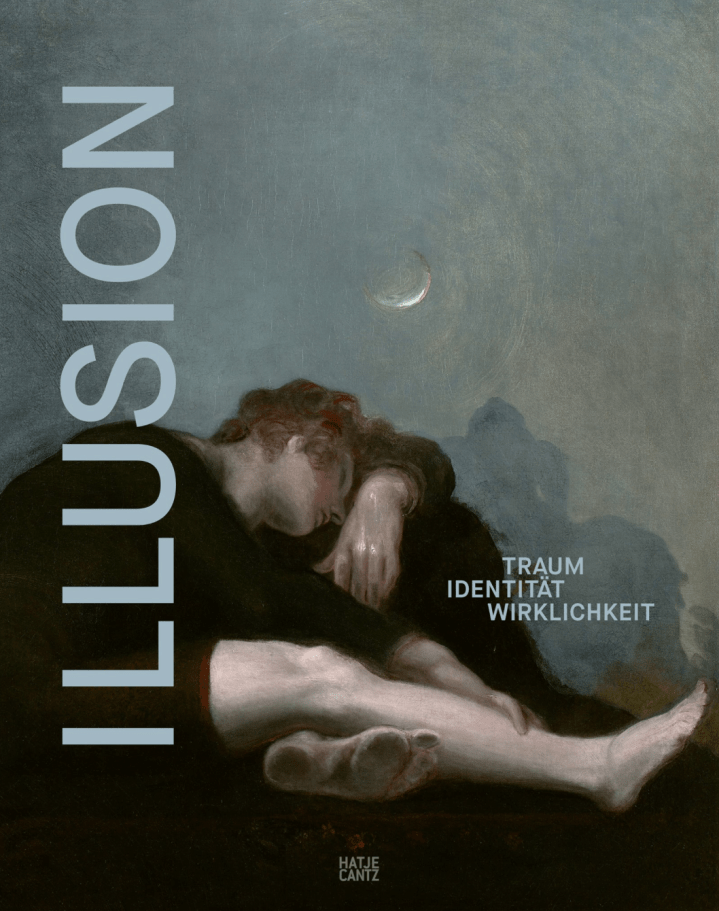
Henry Fuseli, Die Vision des Dichters (The Poet’s Vision), 1806–07, oil on canvas, 61 × 41.5 cm (Winterthur: Stiftung für Kunst, Kultur und Geschichte). The composition served as the frontispiece for William Cowper’s book, Poems (London: J. Johnson , 1808), volume 1.
With a large-scale exhibition spanning several epochs, the Hamburger Kunsthalle looks at the diverse facets of the theme of illusion in art from the Old Masters to the present day. Trompe-l’œil has been widely used in art since antiquity, flourishing in particular in the Renaissance and Baroque periods. And this technique continues to fascinate artists today, when the spread of fake news is almost normal, when people are confronted daily with manipulated images on the internet and virtual reality seems to be expanding our cosmos into infinity. We now live in the certainty that we can no longer trust our eyes, that images are deceptive and are used to depict what is desired rather than what is. But the exhibition shows how illusion means far more than merely deceiving the eye. It is manifested in the (illusionistic) self-love of Narcissus as well as in spatial illusions in architecture, in the play of concealing and revealing via the pictorial motifs of the curtain and the mask, in the meaning of the open or closed window onto the world, and in images of visions and dreams. Based on some 150 paintings, drawings, prints, photographs, sculptures, installations and video works, the show traces the many different forms taken by hyperrealism, reality, fiction, dream, transformation and deception. Among the exhibits are major works from the Hamburger Kunsthalle as well as loans from national and international collections.
Marcel Duchamp remarked succinctly in 1964: “Art is a deception.” And in 1976 Sigmar Polke wondered about the limits of human perception: “Can you always believe your eyes?” Against the backdrop of fake news and artificial intelligence, the exhibition also takes a look at illusion in twenty-first-century society, urging us to sharpen our senses and reflect on what is innately human: our viewing habits, expectations, conventions and vulnerability to visual seduction.
 Artists featured in the exhibition
Helene Appel, Hans Arp, Thomas Baldischwyler, Max Beckmann, Paris Bordone, Carl Gustav Carus, Marc Chagall, Jean-Baptiste Siméon Chardin, Adriaen Coorte, Lovis Corinth, Edgar Degas, Robert Delaunay, Johann Friedrich Dieterich, Gerrit Dou, Wilhelm Schubert von Ehrenberg, Lars Eidinger, Elmgreen & Dragset, James Ensor, Max Ernst, M. C. Escher, Juan Fernández, Charles de la Fosse, Caspar David Friedrich, Johann Heinrich Füssli, Xaver Fuhr, Jean-Léon Gérôme, Cornelis Gijsbrechts, Nan Goldin, Francisco de Goya, Andreas Greiner, Joachim Grommek, Duane Hanson, Vilhelm Hammershøi, Johann Georg Hinz, David Hockney, Samuel van Hoogstraten, Roni Horn, Gerard Houckgeest, Horst Janssen, Alexander Kanoldt, Howard Kanovitz, Anish Kapoor, Oskar Kokoschka, Jens Lausen, François Lemoyne, Lorenzo Lippi, Simon Luttichuys, Alfred Madsen, René Magritte, Tony Matelli, Stefan Marx, Adolph Menzel, Frans van Mieris d. Ä., Piet Mondrian, Ron Mueck, NEAL, Giovanni Battista Piranesi, Sigmar Polke, Gerhard Richter, Joachim Ringelnatz, Jan van Rossum, Pieter Jansz. Saenredam, Godfried Schalcken, Markus Schinwald, Oskar Schlemmer, Georg Schrimpf, Cindy Sherman, Kiki Smith, Antonie van Steenwinckel, Theodoor van Thulden, Nikos Valsamakis, Victor Vasarely, Wolf Vostell, Friedrich Wasmann, John William Waterhouse, Jacob de Wit, Francisco de Zurbarán.
From Hatje Cantz:
Sandra Pisot and Johanna Hornauer, eds., Illusion: Traum – Identität – Wirklichkeit (Berlin: Hatje Cantz Verlag, 2024), 320 pages, ISBN: 978-3775758451, €54. With contributions by Juliane Au, Markus Bertsch, Clara Blomeyer, Laura Förster, Johanna Hornauer, David Klemm, Brigitte Kölle, Kerstin Küster, Sandra Pisot, Jan Steinke, Andreas Stolzenburg, Ifee Tack.










 Enfilade
leave a comment