New Book | Thinking Women and Art in the Long Eighteenth Century
From Amsterdam UP:
Mechthild Fend, Jennifer Germann, and Melissa Hyde, eds., Thinking Women and Art in the Long Eighteenth Century: Strategic Reinterpretations (Amsterdam: Amsterdam University Press, 2025), 414 pages, ISBN: 978-9048558827, €153 / $168.
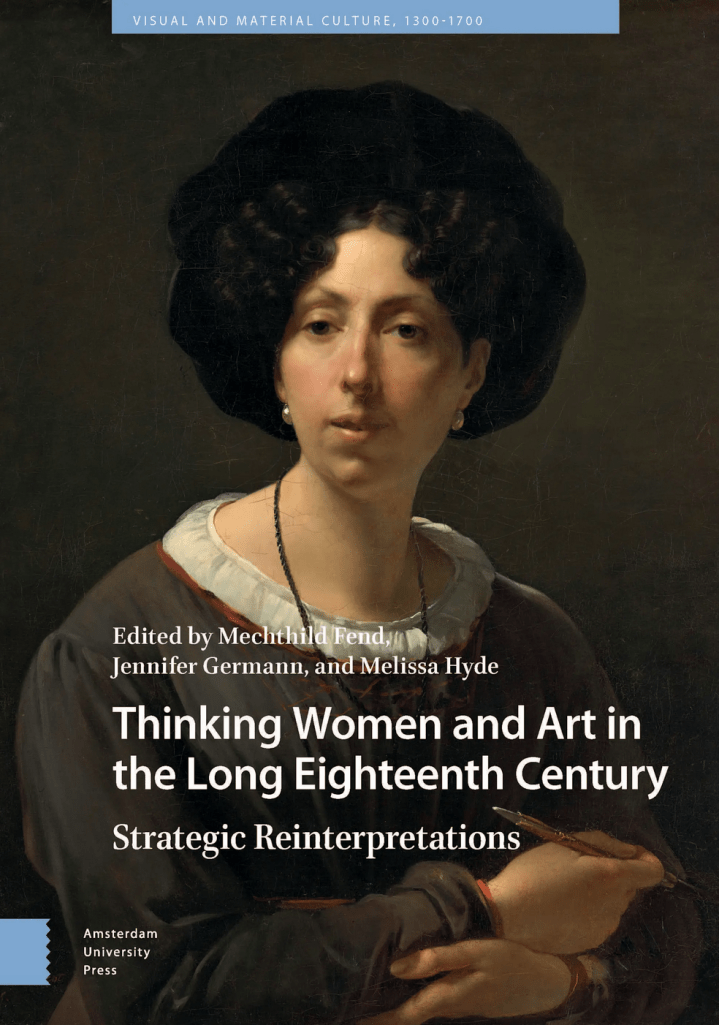 This collection of essays represents state-of-the-art feminist scholarship in the field of eighteenth-century French and British art and visual culture. Topics range from women and their activities in art and science, to gendered representations of childhood and animals to fashion, femininity and temporality. Some chapters center on individual genres like hunting portraits, or on specific paintings, such as David Martin’s Portrait of Dido Elizabeth Belle and Lady Elizabeth Murray (ca. 1780) or Marie Guillemine Benoist’s Portrait of a Young Black Woman (Madeleine) (1800). Others make contributions on the work of familiar actors like Jean-Siméon Chardin or Élisabeth Louise Vigée Le Brun. The volume also brings to the fore lesser-known figures including Marie-Thérèse Reboul, Madeleine Basseporte, Marguerite Le Comte, and Gabrielle Capet. Written by eleven distinguished (art) historians, the assembled essays engage with and honor the work of the late Mary D. Sheriff, whose unpublished chapter on women artists’ self-portraiture opens the book.
Mechthild Fend is Professor of History of Art, Goethe-University Frankfurt. She specializes in French eighteenth- and nineteenth-century art, with particular interests in feminist art history and its historiography, images of the body, and medical imagery. Her books include Fleshing out Surfaces: Skin in French Art and Medicine, 1650–1850, published in 2017.
Jennifer Germann is an art historian specializing in women’s history and eighteenth-century French and British art. She has published in Eighteenth-Century Studies, American Art, and Studies in Eighteenth-Century Culture. She is the author of Picturing Marie Leszczinska (1703–1768): Representing Queenship in Eighteenth-Century France (2015).
Melissa Hyde is Professor of Art History and Distinguished Teaching Scholar, University of Florida. She publishes on gender, the visual arts, and women artists and Rococo and its afterlives in the long eighteenth century in France. Books include Becoming a Woman in the Age of Enlightenment (with Mary Sheriff) (2017), as well as numerous edited volumes.
c o n t e n t s
Acknowledgements
Preface
Introduction
Mary D. Sheriff: Charting New Possibilities for Feminist Art History — Mechthild Fend, Jennifer Germann, and Melissa Hyde
Overture
1 Women and Modes of Self-Portraiture: Fashion, Motherhood, Sensibilité — Mary D. Sheriff
Part I | Art as Social Practice
2 The Woman Artist and the Uncovering of the Social World — Lynn Hunt
3 ‘La touche d’une femme’: Women Artists in the Age of Revolutions — Paris Spies-Gans
Part II | Gender and Fashion
4 Chardin’s Girls: The Ethics of Painting — Ewa Lajer-Burcharth
5 Thinking Animals: Dogs and Men in Eighteenth-Century French Hunting Art — Amy Freund
6 Temporality and Figures de mode: Fashion, Costume, and Gender in Eighteenth-Century Drawings and Prints — Susan L. Siegfried
Part III | Women in Natural History
7 Marie-Thérèse Reboul (Mme Vien): More Than a Footnote in Art History — Melissa Hyde
8 Mlle Basseporte’s Jardin, Mlle Biheron’s Cabinet: Artist-Scientists and Their Spheres of Sociability — Nina Rattner Gelbart
Part IV | Encounters in Portraiture
9 Marguerite Le Comte’s Smile: Portrait of an Amatrice — Mechthild Fend
10 Imperial Family Portraits: Gender, Race, and Social Rank in The Portrait of Dido Elizabeth Belle and Lady Elizabeth Murray — Jennifer Germann
11 Madeleine of the Americas: Resituating Benoist’s Portrait of a Young Black Woman in Colonial Art — Anne Lafont
Index
Call for Papers | The Business of Art, au féminin, ca. 1660s–1945
From the Call for Papers:
The Business of Art, au féminin: Women’s Enterprise in the French Art Economy, Late 1600s to 1945
Centre André-Chastel, Institut National d’Histoire de l’Art (INHA), Paris, 26–27 September 2025
Proposals due by 16 March 2025

Waldon Fawcett, U.S. Treasurey: Two Women with Stacks of Paper Money, ca. 1907 (Washington: Library of Congress, 96510963).
Bringing together the history of art, the history of women, and economic history, this colloquium will investigate women’s role in the financing of artistic production and development in France (painting, sculpture, architecture, decorative arts, engraving, photography, etc.). Embracing an extended time frame, we intend to interrogate both continuities and transformations in their roles across a significant period, starting from the policies and practices of artistic patronage initiated by Louis XIV up to the particular circumstances of the Occupation. Across this longue durée, women will be approached as agents making and moving the money required for artistic invention and production (their own as well as others’) and as integral actors in the operation of art markets, within the bounds imposed by their marital and legal status.
The colloquium will particularly focus on strategies of adapting, circumventing, and assertion deployed by French women or women working in France to negotiate masculine circuits of capital(ists)—strategies that may have gone beyond a mere male/female coexistence to include collaboration, emulation, competition, and conflict. Determined by their access to education, knowledge, and economic information, this positioning emerges clearly in discussions about the financial and legal subordination of women, whether single, married, or widowed. We will study their ability to assemble capital, invest in their own names or via proxies, operate shops, form enterprises, and organize companies. We will also interrogate the limits of their range of action and empowerment, and inquire into the possible existence of economic practices specific to women in the arts.
Contributions will take the form of individual or collective case studies addressing, but not limited to, the following topics:
• Figures and dynasties of female merchants, gallery owners, publishers, sponsors, philanthropists, entrepreneurs, investors, shareholders, and borrowers
• Collective modes of financing (religious orders, committees of female patrons, lay women’s associations) and defense of women’s economic interests (trade unions, networks of female solidarity, etc.)
• Modes of wealth accumulation (inheritance, dowry, marriage, salaries), dissolution (sales, liquidations, bankruptcy, misappropriation), and transmission (legacies, gifts, succession)
• Financing strategies (banking, personal loans, investment) and their institutional contexts (financing specific to wartime, black markets, etc.)
• The visibility or invisibility (purposeful or not) of women at the head of businesses and in financing operations
• The spectrum and specificity of artistic domains in which women invest (for instance, favored arenas like engraving and decorative arts)
Proposals (in French or English) should be sent to the three organizers Nastasia Gallian (nastasia.gallian@sorbonne-universite.fr), Elsa Jamet (elsa.jamet@hotmail.fr), and Justine Lécuyer (justine.lecuyer@hotmail.fr) by 16 March 2025. Please include a summary of the paper (500 words maximum) and a short biographical note (300 words maximum). This call is open to students holding a MA2 and to current doctoral candidates, as well as to all established researchers. Presentations can be in French or English and will last twenty minutes. This is an in-person colloquium, though in exceptional cases the organizers may be able to accommodate virtual participation. The scientific committee will inform participants of their acceptance or rejection in early April. Publishing a volume of proceedings based on the colloquium presentations is envisioned.
Scientific Committee
• Jérémie Cerman, Professor of Modern and Contemporary Art History (France, Université d’Artois, CREHS)
• Natacha Coquery, Professor Emeritus of Early Modern History (France, Université Lumière Lyon, LAHRA)
• Clare Haru Crowston, Dean of the Faculty of Artsn Professor of History (Canada, The University of British Columbia)
• Charlotte Foucher Zarmanian, Scientist, Modern and Contemporary Art History (France, EHESS, CRAL)
• Nastasia Gallian, Associate Professor of Early Modern Art History (France, Sorbonne Université, Centre André- Chastel)
• Charlotte Guichard, Professor of Early Modern Art History (France, École normale supérieure, PSL)
• Melissa Hyde, Associate School Director, Professor and Distinguished Teaching Scholar (USA, University of Florida, College of the Arts)
• Elsa Jamet, Temporary Research and Teaching, PhD in Modern and Contemporary Art History (France, Université de Lille, IRHIS)
• Justine Lécuyer, PhD in Modern and Contemporary Art History (France, Sorbonne Université, Centre André- Chastel)
• Kim Oosterlinck, General Director of the Royal Museums of Fine Arts of Belgium, Professor of Finance (Belgium, Université libre de Bruxelles)
• Anne Perrin, Professor of Early Modern Art History (France, Université de Toulouse – Jean Jaurès / FRAMESPA)
• Élodie Vaudry, Associate Professor of Modern and Contemporary Art History (France, Sorbonne Université, Centre André-Chastel)
• Alexia Yates, Professor of Modern History, historian of economic life (Italy, Florence, European University Institute)
s e l e c t i v e b i b l i o g r a p h y
D’ERCOLE Maria Cecilia et MINOVEZ Jean-Michel (dir.), Art & économie: Une histoire partagée [actes du colloque international de l’Association française d’histoire économique, Toulouse, 18–19 novembre 2016], Toulouse, Presses universitaires du Midi, 2020.
DERMINEUR Elise, Women and Credit in Pre-Industrial Europe, Turnhout, Brepols, 2018.
DOUSSET Christine, « Commerce et travail des femmes à l’époque moderne en France », Les Cahiers de Framespa, 2, 2006, en ligne : https://journals.openedition.org/framespa/57.
DUBY Georges et PERROT Michelle (dir.), Histoire des femmes en Occident, Paris, Plon, 1991–1992, vol. 3, 4 et 5.
FONTAINE Laurence, « Espaces économiques féminins et crédit », dans L’économie morale. Pauvreté, crédit et confiance dans l’Europe préindustrielle, Paris, Gallimard, 2008, p. 134–163.
GREEN David R., OWENS Alastair, MALTBY Josephine et RUTTERFORD Janette (dir.), Men, Women, and Money: Perspectives on Gender, Wealth, and Investment, 1850–1930, Oxford, Oxford University Press, 2011.
KHAN B. Zorina, « Invisible Women: Entrepreneurship, Innovation, and Family Firms in Nineteenth-Century France », The Journal of Economic History, 76, n°1, mars 2016, p. 163–195.
LABARDIN Pierre et ROBIC Paulette, « Épouses et petites entreprises: Permanence du XVIIIe au XXe siècle », Revue Française de Gestion, 188–189, 2008, p. 97–117.
LALLIARD François, « Femmes d’argent, argent des femmes: construction du genre et monétarisation de la vie sociale dans la haute société aristocratique. L’exemple des Wagram (XIXe siècle-début du XXe siècle) », dans L’argent des familles. Pratiques et régulations sociales en Occident aux XIXe et XXe siècles, (dir. Florent Le Bot, Thierry Nootens et Yvan Rousseau), Trois-Rivières et Québec, Centre interuniversitaire d’études québécoises, 2019, p. 179–192.
LANZA Janine, From Wives to Widows in Early Modern Paris: Gender, Economy, and Law, Aldershot, Ashgate, 2007.
LAURENCE Anne, MALTBY Josephine et RUTTERFORD Janette (dir.), Women and their Money, 1700–1950: Essays on Women and Finance, New York, Routledge, 2009.
MARTINEZ Cristina S. et ROMAN Cynthia E. (dir.), Female Printmakers, Printsellers, and Print Publishers in the Eighteenth Century: The Imprint of Women, c. 1700–1830, Cambridge, Cambridge University Press, 2024.
THÉBAUD Françoise, Écrire l’histoire des femmes et du genre, Paris, ENS Éditions, 2007.
TILLY Louise A. et SCOTT Joan W., Les femmes, le travail et la famille, Paris, Rivages-Histoire, 1987 (édition originale 1978).
YATES Alexia, « The Invisible Rentière: The Problem of Women and Investment in Nineteenth-Century France », Entreprises et histoire, 2, 2022, p. 76–89.
Cat. expo. [New York, Grey Art Museum ; Montréal, Musée des Beaux-arts ; Paris, Musée de l’Orangerie, 2024–2025], Berthe Weill: Art Dealer of the Parisian Avant-Garde, Paris, Flammarion, 2024.
New Book | Ornamental Blackness
Coming this spring from Yale UP, with a brilliant preview by Dr. Childs now available in the latest issue of The Magazine of the Decorative Arts Trust (Winter 2024–25) . . .
Adrienne L. Childs, Ornamental Blackness: The Black Figure in European Decorative Arts (New Haven: Yale University Press, 2025), 208 pages, ISBN: 978-0300246094, $65.
 Exploring the role the decorative arts played in the representation of Black people in European visual and material culture
This revelatory look at European decorative arts addresses the long-ignored implications of the depiction of Black bodies on luxury objects from the Baroque period through the nineteenth century. Adrienne L. Childs traces the complex history of the vogue for representing the Black body as an ornamental motif throughout spaces of wealth and refinement. Objects such as furniture, porcelain, clocks, silver, light fixtures, and more conveyed the taste for exoticism and portrayed the laboring Black body in the guise of décor. These objects also express larger ideas about the concept of race, romantic notions of distant lands, the harsh realities of slave labor in the colonies, the presence of Black servants in wealthy European households, and the culture of luxury consumption.
Ornamental Blackness demonstrates how seemingly benign decorative objects can embody the complexities of race, slavery, and representation. Childs examines the tensions inherent in the system of codes in which the Black body can be enslaved, reviled, feared, subjugated, and assaulted on one hand and a symbol of opulence on the other. In this important volume she establishes a framework for understanding the racialized aesthetics of luxury.
Adrienne L. Childs is an art historian and curator and is the Senior Consulting Curator at The Phillips Collection.
The Magazine of the Decorative Arts Trust, Winter 2024–25
The Decorative Arts Trust has shared select articles from the winter issue of their member magazine as webpages for all to enjoy. The following articles are related to the 18th century.
The Magazine of the Decorative Arts Trust, Winter 2024–25
 • “Written in Stone” by Catherine Carlisle Link»
• “The Rivers Collection of Charleston Furniture at the Gibbes Museum of Art” by Matthew A. Thurlow Link»
• “Carved from the Sea: The Art and History of Nantucket’s Pictorial Scrimshaw” by Keely Edgington Link»
• “Diplomatic Reception Rooms Anchor D.C. Gathering” by Matthew A. Thurlow Link»
• “Figuring the Black Body in European Decorative Arts” by Adrienne L. Childs Link»
• “Colonial Architecture, Decorative Arts, and Enslavement at the Colonel John Ashley House” by Livy Scott Link»
• “Convergence at the Market: Vernacular Artisans and Literati in Late Imperial China” by Danielle Zhang Link»
The printed Magazine of the Decorative Arts Trust is mailed to Trust members twice per year. Memberships start at $50, with $25 memberships for students.
Magazine cover: Detail of an early-17th-century table top from Villa La Pietraia, on display at the Opificio delle Pietre Dure in Florence, Italy.
Decorative Arts Trust Announces 2025 Failey Grants
.
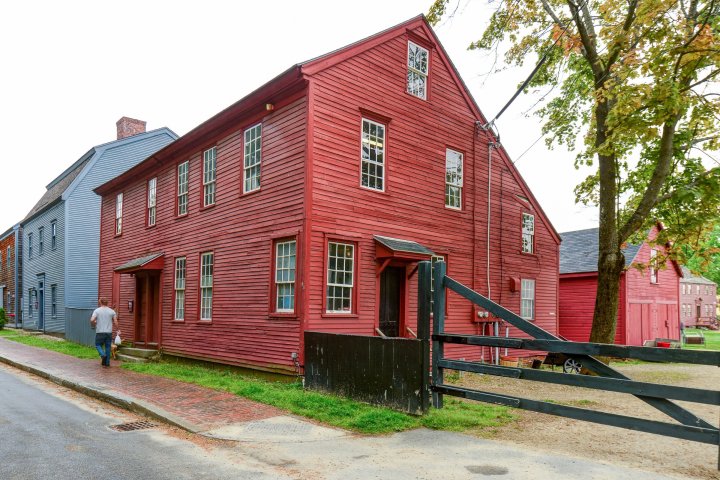
Strawbery Banke Museum in Portsmouth, New Hampshire is an outdoor history museum that preserves a neighborhood’s evolution of over 350 years, with most of the historic houses on their original sites. The Penhallow House—built in 1750 and moved to its present location in 1862—is Strawberry Banke’s only remaining ‘saltbox’. It was recently given a new foundation with a wet-proof basement to counteract rising sea and groundwater levels. In the 20th century, Penhallow House contained three apartments and the daily lives of an extended African-American family. Strawbery Banke intends to interpret the 20th-century Black experience in Penhallow House: the story of Kenneth ‘Bunny’ Richardson, a 20th-century story of Black Portsmouth and Civil Rights.
◊ ◊ ◊ ◊ ◊
From the December press release, with additional information available here:
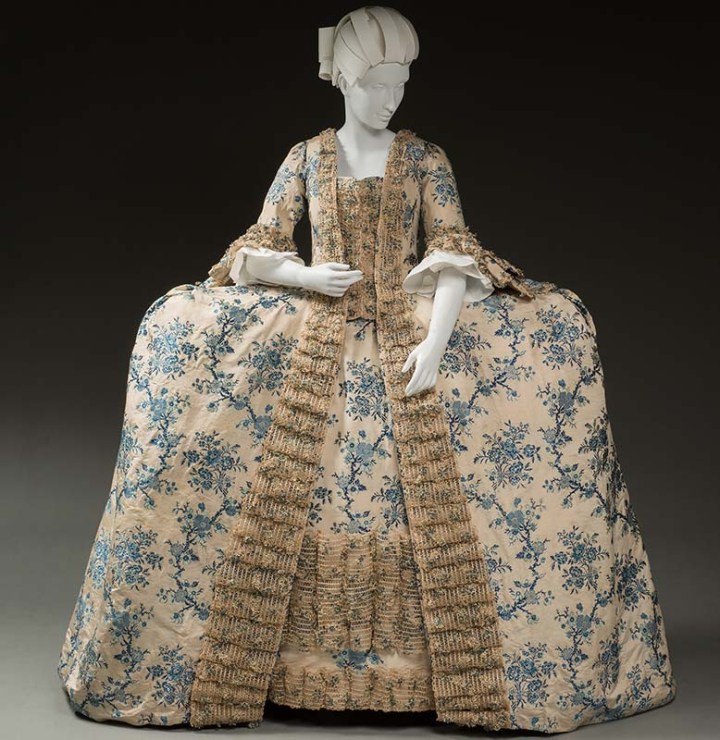
Formal dress (robe à la Française), 1765–70, French or Dutch, brocaded silk with knotted silk fringe and linen lining (Historic Deerfield, HD F.355).
The Decorative Arts Trust is pleased to announce the seven 2025 Dean F. Failey Grant recipients: the Birmingham Museum of Art in Birmingham, AL, for the Silver & Ceremony from Southern Asia, 1850–1910 exhibition; Historic Deerfield in Deerfield, MA, for the Body by Design: Fashionable Silhouettes exhibition; Honolulu Museum of Art in Honolulu, HI, for quilt conservation; the Museum of the American Revolution in Philadelphia, PA, for flag conservation; Strawbery Banke Museum in Portsmouth, NH, for Penhallow House wallpaper; Telfair Museums in Savannah, GA, for The Moss Mystique: Southern Women and Newcomb Pottery exhibition; and Wyck in Philadelphia, PA, for a Chinese desk conservation.
The Failey Grant program provides support for noteworthy exhibition and object-based conservation projects through the Dean F. Failey Fund, named in honor of the Trust’s late Governor. Failey Grant applications are due October 31 annually.
New Book | The Sensory Experience in 18th-Century Art Exhibitions
The volume originated from a June 2021 conference on the topic. From the University of Heidelberg’s arthistoricum.net, where all contents are available free of charge
Gaëtane Maës, Isabelle Pichet, and Dorit Kluge, eds., L’expérience sensorielle dans les expositions au XVIIIe siècle / The Sensory Experience in 18th-Century Art Exhibitions (Heidelberg: arthistoricum.net-ART-Books, 2024 / Passages online, Volume 25), 274 pages, ISBN: 978-3985011544 (hardcover) / ISBN: 978-3985011537 (PDF).
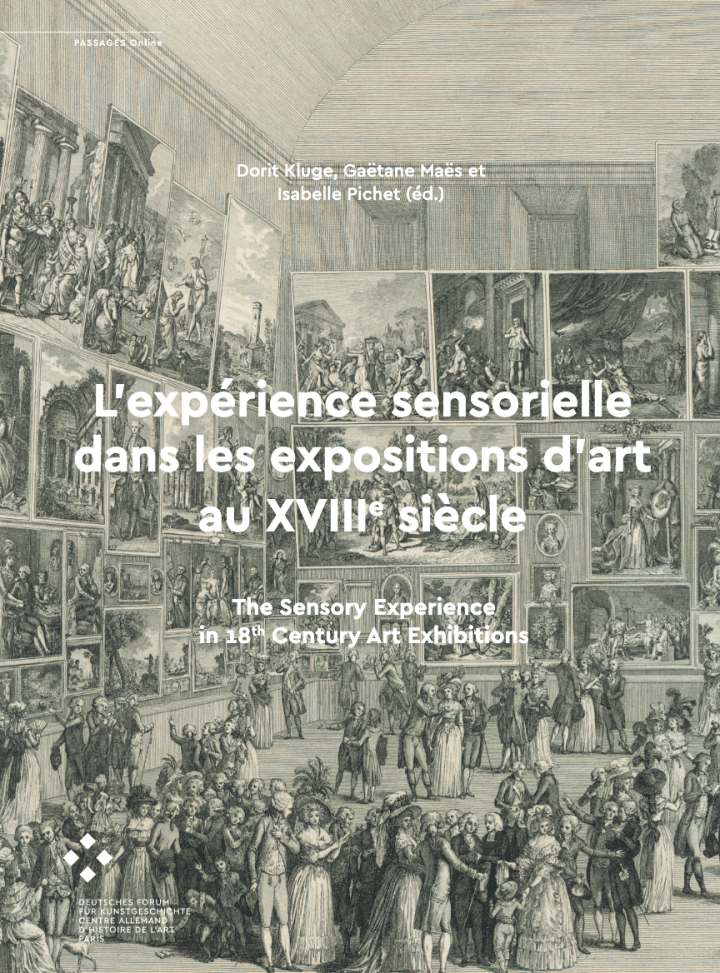 In the 18th century, the art exhibitions organised in the Louvre in Paris by the Académie royale de Peinture et de Sculpture created an unprecedented cultural event, which quickly aroused the curiosity and envy of the public in the French provinces and other nations. A visit to the Salon du Louvre or any other art exhibition, where the desire to be entertained and to learn are intertwined, is an experience that appeals to all the senses. It is therefore possible to introduce the notion of ‘sensory experience’, since not only sight, but also hearing, touch, smell and taste are called upon in varied and complex ways at every moment of the visit. Using a variety of approaches, this book aims to capture the sensations experienced by visitors to art exhibitions in Europe during the long eighteenth century (1680–1815), drawing on visual and textual sources from the period.
c o n t e n t s
Introduction — Gaëtane Maës, Dorit Kluge, Isabelle Pichet (translated from the French by Nicole Charley)
Partie 1 | L’expérience sensorielle dans les œuvres
• Viewing Blindness at the Paris Salon — Emma Barker
• Les saisons en exposition: L’expérience des sensations à travers les sculptures de Jean-Antoine Houdon — Friederike Vosskamp
• Exhibitions of Automata in Ireland in the Age of Enlightenment — Alison Fitzgerald
Partie 2 | L’expérience sensible dans les œuvres
• Depicting identity or emotion? Clairon vs. Dumesnil at the Salon of the Louvre — Gaëtane Maës
• Ducreux’s Yawning: Attention, Sensation, and the Ambiguity of Affect — Lisa Hecht
• Les plaisirs du public: L’érotisation du regard dans les expositions de la Royal Academy au XVIIIe siècle — Jan Blanc
• The Minds and Bodies of Women in the Salon Views of Gabriel de Saint-Aubin: A ‘peintre de la vie moderne’ in the Age of Enlightenment — Kim de Beaumont
Partie 3 | L’expérience spatiale de la visite
• Une surface au service de l’expérience sensorielle: Le mur des espaces d’exposition au XVIIIe siècle — Valérie Kobi
• Le conditionnement de l’expérience du sensible — Isabelle Pichet
• L’émerveillement « rationalisé » des visiteurs des ‘country houses’ dans la Grande-Bretagne du XVIIIe siècle — Sophie Soccard
Partie 4 | L’expérience de la critique
• ‘I’m Dying up Here!’: Disappointing History Painting — Mark Ledbury
• L’aveugle aux Salons de Denis Diderot — You Gyeong Lee
• L’identité de la critique d’art allemande: Un glissement du visuel/descriptif vers l’auditif/narratif — Dorit Kluge
• Le langage du corps face à l’art: Entre affection, discussion et contemplation — Markus Castor
Résumés
Abstracts
Auteurs
Crédits
Online Talks | HECAA Emerging Scholars Showcase, 2025
From the Historians of Eighteenth-Century Art & Architecture:
HECAA Emerging Scholars Showcase
Online, Tuesday, 18 February 2025, 11.00am–12.30pm EST
A beloved HECAA tradition, the Emerging Scholars Showcase serves as a platform for emerging scholars to connect with the wider HECAA community and get feedback on their research. We would appreciate your presence and participation in this meaningful event!
• Emily Hirsch (Brown University) — Flemish Sculptors and Terracotta, ca. 1600–1750
• Siraye Herron (University of Oklahoma) — Degrees of Indigenous Autonomy: Aestheticizing Artistic Survivance in Colonial Cuzco, 1690s–1780s
• Katie DiDomenico (Washington University in St. Louis) — Visions of Colonial Suriname, ca.1667–1795
• Katie Cynkar (University of Delaware) — Myth Making and Remembrance: A Sensorial Examination of Framed North Carolina Plantation-Made Cloth Samples, 1861–1865
• Amelia Goldsby (University of Iowa) — Trees as Bodies of Communication: The Arboreal Aesthetic in French Painting, 1780–1870
• Benet Ge (Williams College) — Looked Through: Edward Orme’s Transparent Prints between Britain and Canton
To attend, please register here»
As always, direct all questions, suggestions (and love) to hecaa.emergingscholarsrep@gmail.com.
Warmly,
Demetra Vogiatzaki
HECAA Board Member At-Large, Emerging Scholars Representative
New Book | Slavery and the Invention of Dutch Art
From Duke UP, with a talk on Thursday at BGC:
Caroline Fowler, Slavery and the Invention of Dutch Art (Durham: Duke University Press, 2025), 176 pages, ISBN: 978-1478028093 (hardcover), $125 / ISBN: 978-1478031321 (paperback), $30.
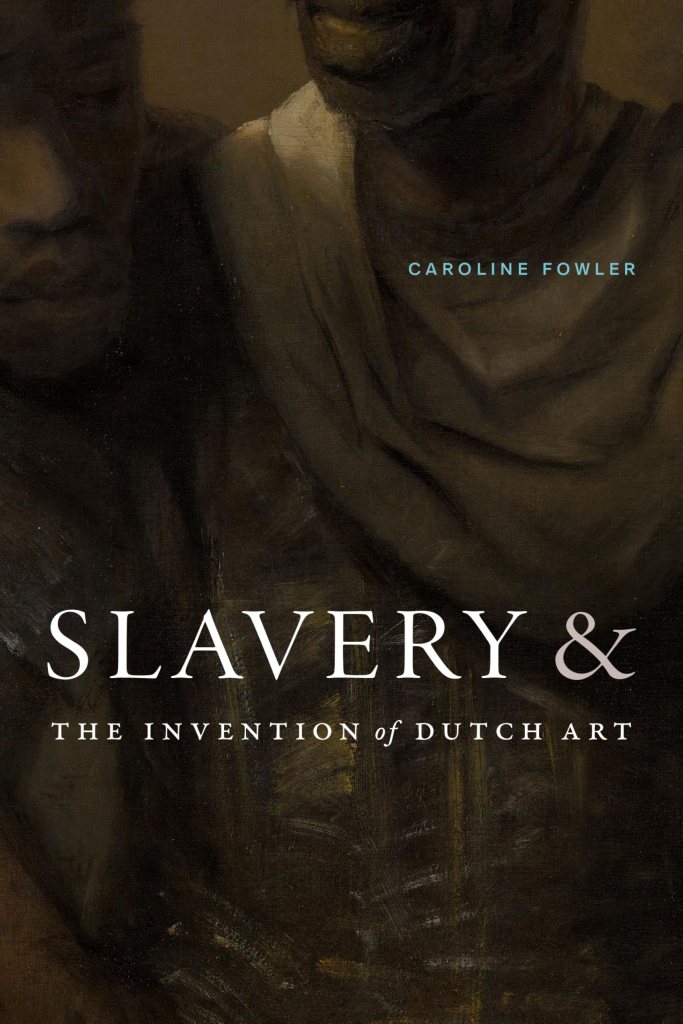 In Slavery and the Invention of Dutch Art, Caroline Fowler examines the fundamental role of the transatlantic slave trade in the production and evolution of seventeenth-century Dutch art. Whereas the sixteenth-century image debates in Europe engaged with crises around the representation of divinity, Fowler argues that the rise of the transatlantic slave trade created a visual field of uncertainty around picturing the transformation of life into property. Fowler demonstrates how the emergence of landscape, maritime, and botanical painting were deeply intertwined with slavery’s economic expansion. Moreover, she considers how the development of one of the first art markets was inextricable from the trade in human lives as chattel property. Reading seventeenth-century legal theory, natural history, inventories, and political pamphlets alongside contemporary poetry, theory, and philosophy from Black feminism and the African diaspora, Fowler demonstrates that ideas about property, personhood, and citizenship were central to the oeuvres of artists such as Rembrandt van Rijn, Hercules Segers, Frans Post, Johannes Vermeer, and Maria Sibylla Merian and therefore inescapably within slavery’s grasp.
Caroline Fowler is Starr Director of the Research and Academic Program at the Clark Institute. She is the author of The Art of Paper: From the Holy Land to the Americas and Drawing and the Senses: An Early Modern History.
c o n t e n t s
Acknowledgments
Introduction: Transubstantiation across Atlantic Worlds
1 Art Markets and Futures Speculation
2 Seascapes and Landscapes
3 Monuments and Architectural Painting
4 Domestic Interiors and Natural History
Conclusion: Historiography and Race
Notes
Bibliography
Index
◊ ◊ ◊ ◊ ◊
Slavery and the Invention of Dutch Art | A Conversation with Caroline Fowler and Helga Davis
Bard Graduate Center, New York, 13 February 2025, 6pm
Caroline Fowler will speak with renowned artist and podcaster Helga Davis about the book Slavery and the Invention of Dutch Art, thinking about the role of poetics in writing history, the importance of Black feminism in rethinking art history, and the ways in which ‘Old Master’ painting continues to impact how the world is seen and interpreted.
Registration is available here»
Call for Papers | Representing the Body
From the Call for Papers (Dorothy Johnson is slated to give a keynote address). . .
VariAbilities 2025 | Exploring Representations of the Body across Visual Disciplines
Mercy University, New York, 11–15 June 2025
Proposals due by 14 February 2025
 The representation of the body is a fundamental aspect of human culture, reflecting societal values, norms, and power structures. From ancient civilizations to contemporary times, various visual disciplines have been employed to create different forms of bodily representation to convey meaning, express emotions, to teach and tell stories. This conference seeks to examine a wide range of representations across multiple visual forms, and across a wide history, shedding light on the ways in which they intersect, diverge, and influence one another.
Some of the key questions we shall address might be:
• How do different visual disciplines (e.g., medical imagery and illustration, painting, photography, sculpture) represent the human body, and what are the implications of these representations?
• What role does performance play in bodily representation, and how do various forms of performance (e.g., doctor/patient interactions, dance, theatre, music) shape our understanding of the body?
• How do word-based and image-based portrayals of the body differ (e.g. literary and cinema, poetry and portraits), and what insights can be gained by comparing these approaches?
• In what ways do representations of the body reflect social attitudes towards gender, race, class, VariAbility, and other forms of identity?
These some of the many questions you may wish to explore, you may have others! Please email a 300-word proposal to Variabilities8@gmail.com by 14 February 2025. The event will take place at the Mercy University Campus in Manhattan, where there is some dorm accommodation for delegates should they choose it. There is also some scope for online presentations for those who have travel issues. Come and tell us what the ‘body’ means to you. More information is available here.
Lea Stephenson Announced as PAFA Curator
From the press release, via Art Daily:
 The Pennsylvania Academy of the Fine Arts (PAFA), the first museum and school of fine arts in the United States, today announced Lea Stephenson as the next Kenneth R. Woodcock Curator of Historical American Art, effective 10 February 2025. In this role, Stephenson will work to strengthen the development, research, presentation, and growth of PAFA’s renowned collection of historical American art, reporting directly to Interim Museum Director Harry Philbrick. “We are thrilled to welcome Lea to PAFA,” said Philbrick. “Her extensive background as a curator and educator and her deep knowledge of American art and art history make her an excellent addition to our team.”
Currently, Stephenson is a PhD candidate in art history at the University of Delaware, completing her dissertation on “‘Wonderful Things’: Egyptomania, Empire, and the Senses, 1870–1992,” which looks at American and British artists and collectors in Egypt during the Gilded Age. Stephenson is also the Luce Foundation Curatorial Fellow in American Paintings and Works on Paper for Historic Deerfield in Massachusetts, expanding the collection, curating exhibitions and programming, writing for publication, and fundraising.
“It is an honor to be chosen as the next Kenneth R. Woodcock Curator of Historical American Art,” said Stephenson. “It is an especially exciting time to be joining PAFA, particularly with the work in progress to curate the museum’s first, new permanent exhibition in some 20 years and prepare for its installation in 2026. PAFA is an American treasure and central to the story of America’s art history, and I could not be more excited to join.”
Stephenson’s experience in the museum world includes her recent work as exhibition curator for Historic Deerfield as well as contributions to exhibitions at the University of Delaware, The Preservation Society of Newport County (Rhode Island), Dallas Museum of Art, The Clark Art Institute (Williamstown, Massachusetts), and Marie Selby Botanical Gardens (Sarasota, Florida). A published author, Stephenson has written multiple essays including “Racial Capital: Peter Marié’s Miniatures and Gilded Age Whiteness” and “The Potter Overmantel: Black Presence and the Sense of ‘Touch’.” She has two forthcoming essays: “Early Transformations in American Art: From the Colonies to an Emerging Republic,” which examines Deerfield Academy’s American art collection and major themes in American art history, specifically 18th-century to Federal period paintings and works on paper, and the other on James Wells Champney’s illustrations and collaborations with Elizabeth Williams Champney.
Stephenson holds a BA in art history from Temple University and a MA in the history of art from Williams College.










 Enfilade
leave a comment