Exhibition | Caravaggio to Canaletto
My apologies for (once again) being so late with this exhibition, which recently closed at the Museum of Fine Arts in Budapest. The catalogue, however, is still available from Artbooks.com. -CH
Caravaggio to Canaletto: The Glory of Italian Baroque and Rococo Painting
Museum of Fine Arts, Budapest, 26 October 2013 — 16 February 2014
Curated by Zsuzsanna Dobos

◊ ◊ ◊ ◊ ◊
The Museum of Fine Arts’ exhibition titled Caravaggio to Canaletto will present the leading styles, outstanding artist figures as well as the extraordinary wealth of genres, techniques, and themes of 17th- and 18th-century Italian painting through more than 140 works by 100 masters, including nine paintings—the highest number by a single artist included in the displayed material—by the period’s prominent painter genius, Caravaggio.
The backbone of the selection is formed by the 34 principal works from the internationally highly acclaimed Italian Baroque and Rococo collection of the museum’s Old Masters Gallery, which will be complemented by 106 masterpieces arriving in Budapest from sixty-two collections of eleven countries, such as the National Galleries in Washington and London, the Musée du Louvre in Paris, the Museo del Prado and the Museo Thyssen-Bornemisza in Madrid, the Galleria degli Uffizi in Florence, the Gemäldegalerie in Berlin, the Gemäldegalerie Alte Meister in Dresden, the Kunsthistorisches Museum in Vienna, and the Galleria Borghese in Rome. The material commands international attention since such a large-scale, comprehensive exhibition surveying the entirety of Italian painting as the one in Budapest has not been put on for decades anywhere in the world.
Some years ago the Museum of Fine Arts set itself the ambitious goal of presenting 15th- to 18th-century Italian painting in two consecutive exhibitions, unprecedented in its scope in Hungary. The first one, titled Botticelli to Titian, held in 2009–2010, attracted 230 thousand visitors, and thus became one of the most successful shows in the history of the museum.
The next, representative exhibition devoted to 17th- and 18th-century Italian painting will be the closing event of the Italian-Hungarian Cultural Season 2013 in Hungary. The two centuries of Italian art surveyed by the exhibition were determined by the Baroque style, which prevailed during the period all over Europe. The early Baroque, which had started at the end of the previous century saw the rise of the naturalism of Caravaggio and his followers, as well as the Bolognese School of Classicism linked to the Carracci. High Baroque, which lasted more than fifty years, was characterised equally by the dynamic style of the so-called master decorators, Baroque Classicism, and early Romanticism. We can talk about the Late Baroque period from the last decades of the seicento, when the tradition of the great masters was carried on in a somewhat empty, routine-like way. The Baroque Era ended in the 18th century with the luxurious Venetian Rococo, while in the middle of the century, also referred to as settecento, the beginnings of Neoclassicism started to appear. The artists of the various painting schools and styles of the 17th and 18th centuries were driven by the same desire: to imitate reality, strive for realistic depiction and create the illusion of tangibility, for which they had the whole range of artistic means at their disposal.
The exhibition will survey the period in eight chapters, starting with Caravaggio, whose activity in Rome brought radical change to painting, going on to the Baroque replacing Mannerism, and ending with the development of Rococo and Classicism, and the introduction of their masters. The opening section will display two early works by Caravaggio—one of them Boy with a Basket of Fruit—which will be followed by some religious compositions of Caravaggist painting, including two versions of Caravaggio’s Salome. The third section will showcase classicising Baroque linked to the names of Lodovico, Agostino and Annibale Carracci, while the fourth unit will present the spreading and flourishing of Baroque art. The fifth section will give an overview of the bourgeois genres of the still-life, the landscape, the portrait and the genre portrait, followed by the part devoted to the main stylistic trends of the 18th century. The last two sections will provide a glimpse into 18th-century painting in Venice and introduce the veduta (townscape), which became a popular genre at that time, through four Venetian townscapes by Canaletto.
The exhibition is implemented at the highest standard, thanks to the collaboration of nearly fifty Hungarian and foreign curators specialising in the period, and is accompanied by a Hungarianand English catalogue. The exhibition is curated by Zsuzsanna Dobos, art historian at the Old Masters Gallery, Museum of Fine Arts.
◊ ◊ ◊ ◊ ◊
From Artbooks.com:
Dobos, Zuzsanna, ed., Caravaggio to Canaletto: The Glory of Italian Baroque and Rococo Painting (Budapest: Museum of Fine Arts, 2013), 458 pages, ISBN: 978-6155304187, $130.
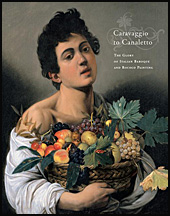 Contents include
• J. Jernyei-Kiss, Italian Painting in the 17th and 18th Centuries
• J. Spike, Caravaggio and the Caravaggesque Movement
• D. Benati, The Carracci Academy: From Nature to History
• C. De Seta, The Grand Tour: The European Rediscovery of Italy in the 17th and 18th Centuries
• A. Vecsey, The Reception of 17th- and 18th-Century Italian Painting in Hungary: Taste and Collecting
Fellowship | Bard Graduate Center
New research fellowship announced by the BGC:
Bard Graduate Center Research Fellowships
Applications due by 15 April 2014
The Bard Graduate Center invites applications for a new funded research fellowship program. Scholars from university, museum and independent backgrounds are invited to apply. Candidates must already have a PhD or equivalent professional experience. The fellowship is open to both collections-based research at the BGC or elsewhere in New York, and to writing or reading projects in which being part of the BGC’s dynamic research environment is intellectually valuable. The stipend rate is $3,500 per month and housing costs are assumed by the BGC. Both long- and short-term fellowships are available (for example, 6, 4, 2 or 1 month), with a one-month minimum. The timing of dates will be negotiated with individual awardees. Fellows would work in a Research Center alongside 12 other postdoctoral fellows.
The BGC is a graduate research institute devoted to study of the decorative arts, design history, and material culture, drawing on methodologies and approaches from art history, economic and cultural history, history of technology, philosophy, anthropology, and archaeology. It offers MA and PhD degrees, possesses a specialized library of 60,000 volumes exclusive of serials, publishes West 86th: A Journal of Decorative Arts, Design History, and Material Culture; Cultural Histories of the Material World (University of Michigan Press); and the catalogues which accompany the four exhibitions it presents every year in its Gallery space. Over 50 research seminars, lectures and symposia are scheduled annually and are livestreamed around the world on the BGC’s YouTube channel.
Applicants should send a detailed description of their project, explain why the BGC is an appropriate research affiliation, and indicate the preferred length of such a fellowship. Two letters of reference should be sent directly by the referees. All materials should be sent by April 15, 2014 to Research Fellowship Applications, attn: Elena Pinto Simon, Bard Graduate Center, 38 W. 86th Street, NY NY 10024. The fellowship year begins on or after September 1, 2014. Fellowships are awarded without regard to race, color, gender, religion, national origin, sexual orientation, age, or disability.
New Book | Giovanni Baratta, 1670–1747
From L’Erma di Bretschneider (and available from artbooks.com) . . .
Francesco Freddolini, Giovanni Baratta 1670–1747: Scultura e industria del marmo tra la Toscana e le corti d’Europa (Rome: L’Erma di Bretschneider, 2013), 355 pages, ISBN: 978-8882659257, €215.
 Discendente di una tra le più importanti dinastie di scultori attive in Italia tra Sei e Settecento, Giovanni Baratta fu a capo del primo importante studio di scultura basato a Carrara, la città del marmo. Negli anni giovanili l’ ambiente artistico fiorentino ed il sofisticato mondo dei cortigiani medicei ispirarono lo scultore a sperimentare ardite soluzioni formali e soggetti raffinati e a creare alcuni tra i capolavori assoluti della decorazione a stucco italiana di primo Settecento. La natura delle commissioni, la composizione della bottega, l’organizzazione del lavoro ed i rapporti con i committenti subirono tuttavia un progressivo cambiamento nella stagione matura, quando l’ industria del marmo inizió a guidare le scelte dello scultore. Questo studio mostra come l’ evoluzione della carriera di Baratta—attraverso la grande decorazione scultorea e architettonica per le corti europee, la collaborazione con Filippo Juvarra ed il mercato del marmo—rifletta la risposta dello scultore alle sfide dell’ agone artistico italiano ed europeo e getti nuova luce sulla storia materiale e sociale della scultura.
Francesco Freddolini è Assistant Professor of Art History a Luther College, University of Regina, ed ha ricevuto borse di studio dalla National Gallery of Art, Washington, D.C., dallo Smithsonian American Art Museum, Washington, D.C., dalla Huntington Library, San Marino, CA, e dal Getty Research Institute, Los Angeles.
A preview of the book is available here»
Call for Papers | French Seventeenth-Century Studies
For those of you working in the long seventeenth century. From SE17:
33rd Annual Conference | Society for Interdisciplinary French Seventeenth-Century Studies
University of Western Ontario, London, Canada, 16–18 October 2014
Proposals due by 30 March 2014
Conference Organizer / Organisateur du colloque
Jean Leclerc, University of Western Ontario, jlecler@uwo.ca
Scholars from all disciplines are invited to submit abstracts in French or English (300 words maximum) for presentations relating to the session themes listed below. Please send abstracts by email directly to session chairs by March 30, 2014. Presentations will be of 20 minutes’ duration.
Les chercheurs de toutes disciplines sont invités à soumettre des propositions de communication (en français ou en anglais) relatives aux thèmes annoncés ci-dessous. Les propositions ne doivent pas dépasser 300 mots et sont à envoyer par courriel directement aux présidents de séance avant le 30 mars 2014. Les interventions devront se limiter à 20 minutes.
1. Economy and spending / Économie et dépenses
Chair / Présidente de session : Nathalie Freidel, Université Wilfrid Laurier, nfreidel@wlu.ca
2. Center and margins / Centre et marges
Chair / Président de session : Jean-Vincent Blanchard, Swarthmore College, jblanch1@swarthmore.edu
3. Old and New France / Ancienne et Nouvelle France
Chair / Présidente de session : Marie-Christine Pioffet, York University, mpioffet@yorku.ca
4. Spaces and perspectives / Espaces et perspectives
Chair / Président de session : Francis Assaf, University of Georgia, fassaf@uga.edu
5. Disappearances and endings / Disparitions et fins
Chair / Présidente de session : Charlotte Trinquet, University of Central Florida, ctrinquet@gmail.com
6. Dazzling, stunning, sublime / Éblouissement, sidération, sublime
Chair / Président de session : Gilles Declercq, Université Sorbonne Nouvelle, gilles.declercq@univ-paris3.fr
7. Pedagogy / Pédagogie
Chair / Présidente de session : Sylvaine Guyot, Harvard University, guyot@fas.harvard.edu
Further information concerning the conference will be available starting in March on the Society’s website / Des informations complémentaires seront disponibles dès le mois de mars sur le site Web de la Société.
View: A Festival of Art History
London’s View: A Festival of Art History (7–9 February 2014) is the latest example of events that slip by me. For anyone interested, the good news is that events were filmed and could be available online in the near future. Plans are also underway for 2015. Here’s the coverage from Apollo Magazine’s blog, The Muse Room. -CH
◊ ◊ ◊ ◊ ◊
Digby Warde-Aldam, “Great View: The UK’s First Art History Festival,” The Muse Room from Apollo Magazine (19 February 2014).
 The venue is a large room in London’s Institut français, its windows looking out over the crazed Victorian skyline of South Kensington. French academic Frédéric Ogée looks slightly taken aback by the crowd, a mix of all ages that has just filled up every available seat—indeed, staff are starting to turn away latecomers to the lecture he is about to give, a fascinating half-hour examination of ‘Englishness’ in English art. At the end of the talk, Ogée is forced to cut short the barrage of questions from the audience in order to clear the room for the next speaker on the bill of the Institut’s View Festival.
The public interest in the talk shouldn’t really be surprising. The View, which had its first edition this month, is Britain’s first art history festival—which, taking into account the fact that the UK has festivals dedicated to everything from Heavy Metal to knitting comes as something of a surprise. Given London’s position as a global art capital, it seems bizarre that nothing like this has ever taken place in the city before. . .
The full review is available here»
Call for Papers | Trade in Animals in the Indian Ocean World
It’s not an art history conference, but thinking about possible correlations between representations of animals and the actual trade in animals would seem fruitful. And maybe some of you are already doing that. -CH
From McGill’s Indian Ocean World Centre:
Trade in Animals and Animal Products in the Indian Ocean World
Indian Ocean World Centre, McGill University, Montreal, 23–24 October 2014
Organized by Omri Bassewitch Frenkel
Proposals due by 1 May 2014
Recently, much public attention has focussed on the lucrative yet often illegal trade in the Indian Ocean world (IOW) of animal parts, including elephant tusks, rhinoceros horns, and tiger skins. However, the trade in exotic animals and animal parts in the IOW, from Africa to China, is not a modern phenomenon. Its roots can be traced back centuries and is reflected in the traditions, folklore, medicinal practices and religious beliefs of many different societies across the IOW. It has also impacted on the environment. By exploring the long-distance trade in animals and animal products as economic, cultural, and ecological phenomenon, this conference will seek to interrogate the concept of the Indian Ocean as a ‘world’. The conference will consider the trade in all land and sea animals as well as birds.
A wide range of relevant issues will be given consideration, but prospective participants are asked to give special consideration to the following themes:
• Trade in exotic animals
• Trade in animal parts
• Trade in animal products
• Impact of the trade on the environment of the source regions
• Finance and structure of the trade
• Prices and profits
• Demand and consumption patterns
• Legal and religious prescriptions governing the hunting/collection and consumption of animals and animal parts
Papers should be in English or French. Deadline for submission of abstracts (title and 1–2 paragraphs) is 1 May 2014. The review process will be completed by 1 June 2014. Papers should be a maximum of 9,000 words (including footnotes). We anticipate that selected papers will be published in a volume to appear in Palgrave Macmillan’s Indian Ocean World Studies series. A registration fee of $200 USD ($60 USD for students) is payable by 1 September 2014. The late registration fee (after 1 September 2014) is $250 USD and $100 USD for students. Registration is payable by cash, personal cheque or money order. Credit card payments are not accepted. All those interested in participating should complete the conference registration form and return it by email to the IOWC (iowc@mcgill.ca). All queries should be sent to the conference organizer, Omri Bassewitch, omri.bassewitchfrenkel@mail.mcgill.ca.
Call for Articles | The Eighteenth-Century Bird in Literature
Edited Volume | The Eighteenth-Century Bird in Literature, 1660–1830
Proposals due by 1 July 2014
A great deal of scholarly effort has been made over the years to gather together, analyze, and anthologize eighteenth-century bird poetry, paintings, and other material cultures that describe and represent birds in this period. Very few publications, however, have attempted to bring together the wide range of different approaches that scholars have adopted. This new project, The Eighteenth-Century Bird in Literature, 1660–1830, accordingly aims to further extend the discussion of the eighteenth-century bird and bring incisive, new critical approaches to the topic of birds and the representations of birds in eighteenth-century literature and cultural life. The editors are particularly interested in ways in which a deeper understanding of the bird in eighteenth-century cultural life shapes our twenty-first century notions of birds, our behaviors towards birds, and towards the environments that birds inhabit.
Chapters may include (but are not limited to) engagement with additional perspectives on eighteenth-century birds. These are just a few suggested topics:
• The eighteenth-century bird in the visual arts of the period
• Natural histories and the eighteenth-century bird
• Print cultures and the eighteenth-century bird
• Animal welfare and animal rights discourses around eighteenth-century birds
• Figurative birds
• The languages of eighteenth-century birds
• The exotic, the local, and the eighteenth-century bird
• The eighteenth-century bird as pet
• Ecocriticism and the eighteenth-century bird
• Science, culture, and the eighteenth-century bird
• Animal studies and the eighteenth-century bird
• Co-evolutions: the eighteenth-century bird and other animals (human and non-human)
• Eighteenth-century bird habitats, land-use transformations, and cultures
• Migrations, diasporas, and the eighteenth-century bird
We ask that anyone interested in contributing to this volume submit a one page CV (including previous publications) and an abstract of no more than 500 words by July 1, 2014 in docx or pdf format. Please send abstracts and direct any questions to the volume editors: Anne Milne (anne.milne@utoronto.ca), Brycchan Carey (brycchan@brycchancarey.com) and Sayre Greenfield (sng6@pitt.edu).
Online Course | Conservation of Globes
From the Hornemann Institute in Hildesheim:
Online Course | Patricia Engel and Michael Højlund Rasmussen, Conservation of Globes
Through the Hornemann Institute, 31 March — 1 June 2014
Historic globes exist all over Europe, in public collections and libraries, but also as private property. While older celestial globes were made of metals, since Behaim’s Erdapfel from 1492, globes have been made of paper, papier-mâché, wood, and parchment. In contrast to this omnipresence of globes, there is a sort of vacuum in conservation expertise concerning globe conservation. Today there are only a few conservators working in different European countries, who, due to their individual careers, are able to deal with the conservation of globes. Isolated articles in various journals have so far been the only competent publications in the field of globe conservation.
Course Structure
The first chapter of the course gives a description of the cultural and historical background of the topic and describes the history of the globes from 3000 BC to the 20th century. This is followed by helpful suggestions for the documentation of a globes material and an overview of damages. The latter provides pictures of typical damages on the globes along with case-by-case explanations. It will enable conservators to identify damages – even rare ones – and help the laymen to deal with their problems. The main chapters deal with specific suggestions for conservators concerning concrete practical conservation requests including the preparation of some materials and the techniques of surface cleaning on globes. The last chapter explains the practical storage problems, the climatic conditions and the correct packing and transportation of globes. Fee: 198€ (20% reduction for students).
Instructors: Based on her broad experiences in globe conservation Dr. Patricia Engel (European Research Centres for Book and Paper Conservation-Restoration in Horn, Austria) developed an e-learning course with the most up-to-date technical possibilities. Michael Højlund Rasmussen (Conservation Centre Vejle, Dänemark) cooperated in this project. For further information ask: hentschel@hornemann-institut.de
If you also want to deepen practically your new knowledge, please contact directly the author Dr. Patricia Engel, who offers regularly workshops for the conservation of globes in the European Research Centre for Book and Paper Conservation-Restoration in Horn, Austria. Further information can be found here.
New Book | Art, Theatre, and Opera in Paris, 1750–1850
Due out from Ashgate in April:
Sarah Hibberd and Richard Wrigley, eds., Art, Theatre, and Opera in Paris, 1750–1850: Exchanges and Tensions (Aldershot: Ashgate, 2014), 288 pages, ISBN: 978-1409439479, £65.
 Art, Theatre, and Opera in Paris, 1750–1850: Exchanges and Tensions maps some of the many complex and vivid connections between art, theatre, and opera in a period of dramatic and challenging historical change, thereby deepening an understanding of familiar (and less familiar) artworks, practices, and critical strategies in the eighteenth and nineteenth centuries. Throughout this period, new types of subject matter were shared, fostering both creative connections and reflection on matters of decorum, legibility, pictorial, and dramatic structure. Correspondances were at work on several levels: conception, design, and critical judgement. In a time of vigorous social, political, and cultural contestation, the status and role of the arts and their interrelation came to be a matter of passionate public scrutiny.
Scholars from art history, French theatre studies, and musicology trace some of those connections and clashes, making visible the intimately interwoven and entangled world of the arts. Protagonists include Diderot, Sedaine, Jacques-Louis David, Ignace-Eugène-Marie Degotti, Marie Malibran, Paul Delaroche, Casimir Delavigne, Marie Dorval, the ‘Bleeding Nun’ from Lewis’s The Monk, the Comédie-Française and Etienne-Jean Delécluze.
Sarah Hibberd is Associate Professor in the Department of Music at the University of Nottingham, UK. Richard Wrigley is Professor of Art History at the University of Nottingham, UK.
C O N T E N T S
Sarah Hibberd and Richard Wrigley, Introduction
David Charlton, Hearing through the eye in eighteenth-century French opera
Mark Darlow, Nihil per saltum: Chiaroscuro in eighteenth-century lyric theatre
Mark Ledbury, Musical mutualism: David, Degotti, and operatic painting
Thomas Grey, Music, theatre, and the Gothic imaginary: Visualising the ‘Bleeding Nun’
Sarah Hibberd, Belshazzar’s Feast and the operatic imagination
Olivia Voisin, Romantic painters as costumiers: The stage as pictorial battlefield
Stephen Bann, Delaroche off stage
Patricia Smyth, Performers and spectators: Viewing Delaroche
Beth S. Wright, Delaroche and the drama of history: Gesture and impassivity from The Children of Edward IV to Marie-Antoinette at the Tribunal
Céline Frigau Manning, Playing with excess: Maria Malibran as Clari at the Théâtre Italien
Richard Wrigley, All mixed up: Etienne-Jean Delécluze and the théâtral in art and criticism
Bibliography
Index
Catalogue | Art and Music in Venice
This catalogue accompanies the exhibition Venice: The Golden Age of Art and Music, which opened last weekend at the Portland Museum of Art. From Yale UP:
Hilliard T. Goldfarb, ed., Art and Music in Venice: From the Renaissance to Baroque (New Haven: Yale University Press, 2013), 240 pages, ISBN: 978-0300197921, $65.
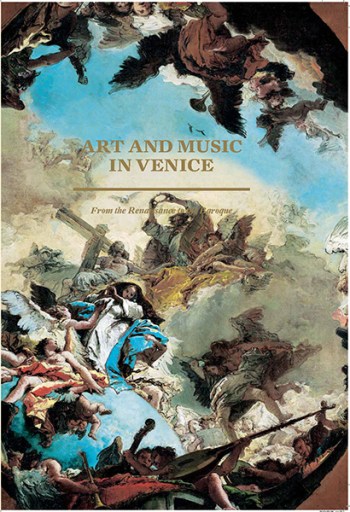 Artistic and musical creativity thrived in the Venetian Republic between the early 16th century and the close of the 18th century. The city-state was known for its superb operas and splendid balls, and the acoustics of the architecture led to complex polyphony in musical composition. Accordingly, notable composers, including Antonio Vivaldi and Adrian Willaert, developed styles that were distinct from those of other Italian cultures. The Venetian music scene, in turn, influenced visual artists, inspiring paintings by artists such as Jacopo Bassano, Canaletto, Francesco Guardi, Pietro Longhi, Bernardo Strozzi, Giambattista and Domenico Tiepolo, Tintoretto, and Titian. Together, art and music served larger aims, whether social, ceremonial, or even political. Lavishly illustrated, Art and Music in Venice brings Venice’s golden age to life through stunning images of paintings, drawings, prints, manuscripts, textbooks, illuminated choir books, musical scores and instruments, and period costumes. New scholarship into these objects by a team of distinguished experts gives a fresh perspective on the cultural life and creative output of the era.
Hilliard T. Goldfarb is associate chief curator and curator of Old Masters at the Montreal Museum of Fine Arts.










 Enfilade
leave a comment