Call for Essays | Laughter and Medicine
From ArtHist.net:
Edited Volume | Laughter and Medicine
Proposals due by 15 March 2025
We invite proposals for contributions to an edited volume exploring the interfaces between laughter and medicine. Developing from a British Academy/Wellcome Trust-funded conference held at the University of Birmingham in November 2024, this volume will put the medical humanities in dialogue with healthcare provision and the medical sciences so as to bridge the divides between the clinic, the laboratory, cultural history, literature, and the arts in Western cultures from the classical period to the present day.
The volume aims to present a transdisciplinary account of the cultural, social, diagnostic, therapeutic, and physiological implications of the laughter that characterizes—and is elicited by—real and fictional interactions among physicians, patients and the general public, inside and outside the clinic. Laughter is not always the ‘best medicine’, nor is laughter linked only to comedy and enjoyment. Without excluding the curative or the comic, this project hopes to uncover the more complex and sometimes darker aspects of the relationship between laughter (both voluntary and involuntary) and medicine that are often obscured by facile idioms and clichés. ‘Healing laughter’ differs markedly in character and effects from pathological laughter; hysterical laughter; forced or bitter laughter; laughter serving to mitigate awkwardness in, or failures of, communication; laughter intended to deceive; or laughter signifying fear, discomfort or aggression. The irony and other double-coded signifiers that abound in comic and parodic representations of medical practitioners and their patients, as well as in medical metaphors and allegories deployed in diverse discursive contexts, often reveal medicine’s paradoxical place in various cultural imaginaries and in individual and collective experience.
Submissions may respond to questions including, but not limited to, the following:
• How and why is laughter represented, elicited, and mobilized in connection with medicine in the temporal and spatial arts (literature, cinema, print and digital media, performing arts, sculpture, etc.) in particular historical and cultural contexts and moments? What ideological, aesthetic, cultural, and other issues are bound up with or thought through the nexus between laughter and medicine?
• What does synchronic and diachronic comparison reveal about the specificity of particular representations of laughter and medicine and about the historical evolution of their cultural construction? How do evolving cultural and artistic representations inform, and how are they informed by, the development of medical science and practice?
• How and why does laughter occur in the context of illness and death, as well as in routine healthcare provision? What is its significance? What functions does it serve?
• What are laughter’s causes and effects from a physiological and psychological standpoint? What does the phenomenon of laughter reveal about the relationships between mind and body and between physical, mental, and emotional health?
• How and with what stakes has the relationship between laughter and medicine been theorized at different moments in intellectual and cultural history? How does the thinking of laughter in medical contexts fit into larger cultural formations and reflect or revise scientific models?
• What are the poetic and ideological effects and stakes of the ludic medicalization, in various discursive contexts, of aspects of life and culture that are not (necessarily or customarily) imagined in medical terms?
• What are the implications of the relationship between laughter and medicine from a philosophical perspective?
• What are the sociological implications of the nexus between laughter and medicine, especially in relation to contexts and patterns of (mis)communication and to the negotiation of social identities linked to profession, class, gender, ethnicity, etc.?
• What roles does laughter play in relation to disability and disability studies?
In order to accommodate the different disciplinary norms corresponding to the diverse fields that will be represented in the volume, we will accept proposals for chapters ranging in length from 3,000 to 10,000 words. Each chapter should make a contribution in its own discipline while making an effort to remain intelligible to an interdisciplinary academic audience.
Chapter proposals should take the form of a 500-word abstract including a title; a brief overview of scholarly or scientific contexts; a concise articulation of the research question and/or aims to be addressed; the tentative theses, conclusions, and/or arguments to be advanced in the chapter; and an estimated word count for the chapter. Authors should also provide an abbreviated CV.
It is hoped that the volume proposal will be submitted in July 2025 to the Proceedings of the British Academy series, which has expressed interest in the project. Contrary to what its name might suggest, this series, currently published through Oxford University Press, produces high-quality, rigorously peer-reviewed themed volumes developing from conference projects that have earned support from very competitive British Academy grants. Following notification of the acceptance of the book proposal, contributors will be asked to submit their completed chapters within six months. Submissions should be sent to both p.barta@surrey.ac.uk and lucas.wood@ttu.edu by 15 March 2025.
Symposium | The Art of the Dolls’ House
 .
.
The Uppark dolls’ house from 1732, currently installed at the Huguenot Museum in Rochester. The Neo-Palladian house was a gift to ten-year-old Sarah Lethieullier from her father, who acquired it fully equipped from the Covent Garden auctioneer Christopher Cock. More information is available from Tessa Murdoch’s December 2023 Apollo article.
◊ ◊ ◊ ◊ ◊
Registration for the symposium is available at Eventbrite:
The Art of the Dolls’ House: The 49th Annual Furniture History Society Symposium
Online and in-person, Victoria & Albert Museum, London, 22 March 2025
Led by Tessa Murdoch
An international roster of speakers will celebrate the earliest surviving European dolls’ houses preserved in The Netherlands and Nuremberg. That tradition developed in Britain where two beautifully furnished ‘baby’ houses treasured by Huguenot heiresses are today curated by the National Trust. The dolls’ house belonging to Petronella de la Court in Utrecht complemented her contemporary art collection. 300 years later, model maker Ben Taggart will speak about making models of historic houses. Architect-designed Queen Mary’s Dolls’ House has just celebrated its centenary whilst the installation of dolls’ houses at the Young V&A by Rachel Whiteread and the curatorial team have contributed to its celebratory position as the 2024 Art Fund Museum of the Year. The symposium will revisit these miniature homes and explore their legacy and creative inspiration as educational tools opening the eyes of successive generations through fascination with miniature worlds.
There will be an opportunity for delegates to visit the exhibition of Sarah Lethieullier’s 1730s dolls’ house at the Huguenot Museum, Rochester, Kent on Friday, 21 March 2025.
p r o g r a m m e
10.00 Registration
10.30 Welcome by Christopher Rowell (FHS Chairman)
10.35 Session 1 | The European Dolls’ House
Moderated by Christopher Rowell
• Revisiting the ‘Nuremberg Houses’: 17th-Century Miniature Households as Imperfect Windows into the Past — Heike Zech, (Deputy Director, Germanisches Museum, Nuremberg)
• At Home in the 17th Century: The Rijksmuseum Dolls’ Houses — Sara van Dijk (Curator of Textiles, Rijksmuseum, Amsterdam)
• Petronella de La Court’s Dolls’ House in Utrecht (1670–1690): Registration, Research, and Re-Installation — Natalie Dubois (Curator of Applied Art and Design, Centraal Museum, Utrecht)
• Kinnaird Castle: A Miniature Mystery — Ben Taggart (model maker of historic properties)
12.45 Lunch — Study Sessions: Demonstration of miniature furniture making by Terence Facey and looking at silver toys with Kirstin Kennedy (curator, V&A Metalwork)
2.00 Session 2 | National Trust Dolls’ Houses
Moderated by Megan Wheeler (Assistant Curator, Furniture, National Trust)
• ‘Deceptively Spacious’: The Dolls’ House and Framing Significance and Story at Nostell — Simon McCormack (Property Curator, Nostell Priory, National Trust)
• The Lethieullier Family Dolls’ House at the Huguenot Museum — Tessa Murdoch
2.55 Break for tea
3.20 Session 3 | Displaying Dolls’ Houses
Moderated by Tessa Murdoch
• Fitted up with Perfect Fidelity’: Lutyens and Queen Mary’s Dolls’ House — Kathryn Jones (Senior Curator of Decorative Arts, Royal Collection Trust)
• Dolls’ Houses from the V&A — William Newton (Curator, Young V&A)
4.25 Closing remarks
Exhibition | Carved Couture: 18th-Century British Wooden Fashion Dolls
Opening in January at the Barry Art Museum:
Carved Couture: 18th-Century British Wooden Fashion Dolls
Barry Art Museum, Old Dominion University, Norfolk, Virginia, 28 January — 31 July 2025
 In 2025, the Barry Art Museum will continue its series of historical doll exhibitions by taking a closer look at English wooden dolls.
Popular among affluent consumers between the seventeenth and eighteenth centuries, these dolls acted as three-dimensional fashion plates for viewers, their simple bodies a backdrop for showcasing elegant clothing in miniature. Centuries before Barbie dazzled the world with her extensive wardrobes and accessories, English wooden dolls modeled the latest fashions for their privileged viewers. In keeping with the Barry’s commitment to showcasing the richness of Hampton Roads’ art and material culture, this show will highlight not only works from our permanent collection but also objects from Colonial Williamsburg and local private collectors.
The full press release is available here»
◊ ◊ ◊ ◊ ◊
Note (added 5 February 2025) — The posting was updated to include a link to the press release.
Exhibitions at the Prado in 2025
From the press release:
The Museo Nacional del Prado has announced an exciting program for 2025, promising a year of rich artistic exploration. From monographic exhibitions of Old Masters to a fascinating look at the impact of Mexican iconography in Spain, and a celebration of women’s contributions to art history, the Prado’s 2025 season offers something for everyone.

Antón Rafael Mengs, Self-Portrait, 1761–69, oil on panel, 63 × 50 cm (Madrid: Museo Nacional del Prado).
Following a 2024 season focused on thematic exhibitions, the Prado is returning to the intimate study of individual artists. Three giants from its collection will be the focus of major solo shows: El Greco and Veronese in the first half of the year, followed by Anton Raphael Mengs in the latter half.
A Reunion for El Greco’s Masterpiece
Kicking off the year is El Greco: Santo Domingo el Antiguo (18 February — 15 June), an exhibition that will reunite, for the first time since 1830, the majority of works El Greco created for the Monastery of Santo Domingo el Antiguo in Toledo. This significant commission, which included a grand altarpiece and two side altarpieces, has seen its components scattered across the globe. Thanks to a special agreement with the Art Institute of Chicago, the breathtaking Assumption of the Virgin will return to the Prado after more than a century, joining other works from the museum’s collection and various other holdings.
Veronese: A Venetian Master in the Spotlight
Next up is Paolo Veronese (1528–1588) (27 May — 21 June), an exhibition that culminates the Prado’s ongoing study and re-evaluation of its world-renowned Venetian Renaissance painting collection. Following successful shows on the Bassanos, Titian, Tintoretto, and Lorenzo Lotto, this exhibition shines a light on Veronese’s importance, particularly his influence on Spanish art during the Golden Age. The exhibition will explore Veronese’s creative process, his workshop’s organization, and his remarkable ability to capture the aspirations of Venetian elites, a style that resonated with European courts.
A Journey Across the Atlantic: Guadalupe in Spain
Shifting gears, the Prado will present So Far, So Close: Guadalupe of Mexico in Spain (10 June — 14 September). This exhibition will trace the remarkable journey of the Virgin of Guadalupe’s image from New Spain (colonial Mexico) to Spain, examining its profound impact on art on both sides of the Atlantic. This exhibition builds on the Prado’s ongoing exploration of the artistic exchange between Spain and the Americas, continuing the work started with the 2021 exhibition Tornaviaje.
The Sculptural World of Juan Muñoz
Later in the year, the Prado will focus on contemporary sculpture with an exhibition dedicated to Juan Muñoz (18 November 2025 — 8 March 2026). Curated by Vicente Todolí, the exhibition will explore Muñoz’s dialogue with art history, particularly his inspirations drawn from Renaissance and Baroque masters like Velázquez and Goya. The exhibition will examine Muñoz’s use of theatricality, illusionism, and architecture, and how he captured fleeting moments in time, echoing the styles of his artistic predecessors.
Mengs: A Major Retrospective
Closing out the monographic exhibitions is Anton Raphael Mengs: The Greatest Painter of the 18th Century (25 November 2025 — 1 March 2026). This will be the most comprehensive exhibition of Mengs’ work to date, featuring approximately 150 pieces, including paintings, watercolors, pastels, drawings, and even his fresco Jupiter and Ganymede. The exhibition promises a complete overview of Mengs’s artistic practice, his influences, and his connections to other great masters like Raphael, Correggio, and Pompeo Batoni.
Celebrating Women’s Contributions to Art History
The Prado remains committed to highlighting the often-overlooked contributions of women to art history. The third edition of The Prado in Feminine will focus on the 18th century, exploring the legacy of influential women who played a crucial role in shaping the museum’s collections. The exhibition will focus on figures like María Luisa Gabriela de Saboya, María Luisa de Parma, and especially Queen Isabel de Farnesio, a key figure in both politics and art collecting in 18th-century Europe.
A Hub for Research and Learning
Beyond the exhibitions, the Prado’s Center for Studies will offer a rich program of lectures and residencies. Lecture cycles like Spanish Intellectual Women and the Museo del Prado will explore the museum’s role in the intellectual and social awakening of Spanish women in the 19th century. The Writing the Prado residency, in partnership with the Loewe Foundation and Granta in Spanish, will host acclaimed writers Helen Oyeyemi and Mathias Énard. There will also be a Pérez-Llorca Conference by Robert Lane Fox on classical antiquity and the Prado Chair led by Astrid Schmidt-Bukhardt on genealogical diagrams in art history. The Prado’s 2025 program promises to be a vibrant and engaging exploration of art from various periods and perspectives.
New Book | Freedom’s Currency
From Penn Press:
Julia Wallace Bernier, Freedom’s Currency: Slavery, Capitalism, and Self-Purchase in the United States (Philadelphia: University of Pennsylvania Press, 2024), 224 pages, ISBN: 978-1512826470, $50.
 The first comprehensive study of self-purchase in the United States from the American Revolution to the Civil War
Enslaved people lived in a world in which everything had a price. Even freedom. Freedom’s Currency follows enslaved people’s efforts to buy themselves out of slavery across the United States from the American Revolution to the Civil War. In the first comprehensive study of self-purchase in the nation, Julia Wallace Bernier reveals how enslaved people raised money, fostered connections, and made use of slavery’s systems of value and exchange to wrest control of their lives from those who owned them. She chronicles the stories of famous fugitives like Frederick Douglass, who, with the help of friends and supporters, purchased his freedom to protect himself against the continued legal claims of his enslavers and the possibility of recapture. She also shows how enslaved fathers like Lunsford Lane and mothers like Elizabeth Keckley tried to secure lives for their families outside of slavery. Freedom’s Currency argues that freedom played a central role in the social and economic lives of the enslaved and in the ways that these aspects of their lives overlapped. This intimate portrait of community illuminates the complexity of enslaved people’s ideas about their place at the intersection of slavery and American capitalism and their attempts to value freedom above all. Given the stakes—liberation or remaining enslaved—it is an account of both triumph and devastating failure.
Julia Wallace Bernier is Assistant Professor of History at Washington & Jefferson College.
Lecture | Beatrice Glow on Speculative Objects
From the BGC:
Beatrice Glow | Speculative Objects
Bard Graduate Center, New York, 5 February 2025, 6pm

Beatrice Glow, Pax Hollandica (Dutch Peace), 2022. VR-sculpted photopolymer 3D print, metallic paint, acrylic paint, enamel coating, chains (Photo: Aertiron).
Responding to archival research on lesser-known public histories, artist Beatrice Glow creates objects that blend digital processes (such as virtual reality sculpting and 3D printing) with meticulous handcrafting to envision speculative futures. In this talk, Glow will introduce two of her recent projects that leverage playful artistry to foster a deeper public understanding of cultural inheritance. First, she will unpack her recent New York Historical solo exhibition, When Our Rivers Meet, in which she collaborated with culture bearers whose heritages were impacted by Dutch colonialism to create an alternative commemoration of the 400th anniversary of the founding of New Amsterdam. This exploration has continued beyond the exhibition and has taken a new form as a board game—Finding Magic Turtle (Unpacking the Four Continents)—commissioned by the Institute of Contemporary Art, San Diego. Glow will also share her current work-in-progress, Gilt/Guilt, a performance-installation imagined as a speculative auction. The hauntingly luxurious collectibles in this project reveal the cascading impacts of colonial violence and environmental extraction.
Beatrice Glow is an American multidisciplinary artist of Taiwanese heritage whose practice includes examinations of archives and collaboration with culture bearers and researchers in the creation of sculpture, installations, textiles, emerging media, and olfactory experiences to envision a more just and thriving world guided by history. Recent solo exhibitions have taken place at the New York Historical and the Baltimore Museum of Art. Her work has been supported by Creative Capital, the National Endowment for the Arts, Rockefeller Brothers Fund, Smithsonian Artist Research Fellowship, Yale-NUS College, Lower Manhattan Cultural Council, the Asian/Pacific/American Institute at New York University, the Fulbright Program, and many more. More information about her work is available here.
Exhibition | Monstrous Beauty: A Feminist Revision of Chinoiserie
Opening in March at The Met:
Monstrous Beauty: A Feminist Revision of Chinoiserie
The Metropolitan Museum of Art, New York, 25 March — 17 August 2025

Monstrous Beauty: A Feminist Revision of Chinoiserie radically reimagines the story of European porcelain through a feminist lens. When porcelain arrived in early modern Europe from China, it led to the rise of chinoiserie, a decorative style that encompassed Europe’s fantasies of the East and fixations on the exotic, along with new ideas about women, sexuality, and race. This exhibition explores how this fragile material shaped both European women’s identities and racial and cultural stereotypes around Asian women. Shattering the illusion of chinoiserie as a neutral, harmless fantasy, Monstrous Beauty adopts a critical glance at the historical style and its afterlives, recasting negative terms through a lens of female empowerment.
Bringing together nearly 200 historical and contemporary works spanning from 16th-century Europe to contemporary installations by Asian and Asian American women artists, Monstrous Beauty illuminates chinoiserie through a conceptual framework that brings the past into active dialog with the present. In demand during the 1700s as the embodiment of Europe’s fantasy of the East, porcelain accumulated strong associations with female taste over its complex history. Fragile, delicate, and sharp when broken, it became a resonant metaphor for women, who became the protagonists of new narratives around cultural exchange, consumption, and desire.
The catalogue is distributed by Yale University Press:
Iris Moon, ed., Monstrous Beauty: A Feminist Revision of Chinoiserie (New York: The Metroplitan Museum of Art, 2025), 256 pages, ISBN: 978-1588397928, $35. With additional contributions by Marlise Brown, Patty Chang, Anne Anlin Cheng, Elizabeth Cleland, Patricia Ferguson, Eleanor Hyun, Cindy Kang, Ronda Kasl, Joan Kee, Pengliang Lu, Lesley Ma, David Porter, Joseph Scheier-Dolberg, Elizabeth Kowaleski Wallace, Chi-ming Yang, and Yao-Fen You.
Exhibition | Recasting the Past: The Art of Chinese Bronzes, 1100–1900

Incense Burner in the Form of a Goose, Ming dynasty (1368–1644), early 15th century, bronze
(New York: The Metropolitan Museum of Art).
◊ ◊ ◊ ◊ ◊
From the press release (9 January) for the exhibition:
Recasting the Past: The Art of Chinese Bronzes, 1100–1900
The Metropolitan Museum of Art, New York, 28 February — 28 September 2025
Shanghai Museum, 3 November 2025 — 8 March 2026
Curated by Pengliang Lu
In ancient China, bronze vessels were emblems of ritual and power. A millennium later, in the period from 1100 to 1900, such vessels were rediscovered as embodiments of a long-lost golden age that was worthy of study and emulation. This ‘return to the past (fugu) was part of a widespread phenomenon across all the arts to reclaim the virtues of a classical tradition. An important aspect of this phenomenon was the revival of bronze casting as a major art form. Opening at The Metropolitan Museum of Art on 28 February 2025, Recasting the Past: The Art of Chinese Bronzes, 1100–1900 aims to be the most comprehensive study of Chinese bronzes during this period. This exhibition, co-organized by The Met and the Shanghai Museum, where it will open following its display in New York, will present the new aesthetic represented by these creative adaptations of the past, while exploring their cultural and political significance throughout China’s long history.
 “While bronze as an art form has long held a significant role throughout China’s history, this exhibition explores an often-overlooked time period when a resurgence of craftsmanship and artistic achievements revitalized the medium,” said Max Hollein, The Met’s Marina Kellen French Director and Chief Executive Officer. “Bringing together major loans from institutions in China alongside works from The Met collection, this exhibition offers viewers an important opportunity to better understand the lasting aesthetic and cultural impact of bronze objects.”
The exhibition will be divided into five thematic and chronological sections that explicate over 200 works of art—an array of bronze vessels complemented by a selection of paintings, ceramics, jades, and other media. Some 100 pieces from The Met collection will be augmented by nearly 100 loans from major institutions in China, Japan, Korea, Germany, France, the United Kingdom, and the United States to present the most comprehensive narrative of the ongoing importance of bronzes as an art medium throughout China’s long history. Featured in the exhibition are around 60 loans from institutions in China, including major works such as a monumental 12th-century bell with imperial procession from the Liaoning Provincial Museum, documented ritual bronzes for Confucian temples from the Shanghai Museum, and luxury archaistic vessels made in the 18th-century imperial workshop from the Palace Museum, Beijing.
The exhibition begins with the section “Reconstructing Ancient Rites,” which introduces how emperors and scholar-officials commissioned ritual bronzes from the 12th to the 16th century as part of an effort to restore and align themselves with antique ceremonies and rites. The exhibition continues with “Experimenting with Styles,” illustrating how the form, decoration, and function of ancient bronzes were creatively reinterpreted from the 13th to the 15th century. The next section, “Establishing New Standards,” will explore further transformations in both the aesthetic and technical direction of bronze making from the 15th to the 17th century. The fourth section, “Living with Bronzes,” will feature a display in the Ming Furniture Room (Gallery 218) to demonstrate how bronzes were used in literati life from the 16th to the 19th century. The last section, “Harmonizing with Antiquity,” will examine how the deep scholarly appreciation of archaic bronzes during the 18th and 19th centuries led to a final flourishing of bronze production.
Pengliang Lu, Brooke Russell Astor Curator of Chinese Art at The Met, said: “This exhibition attempts a long-overdue reevaluation of later Chinese bronzes by seeking to establish a reliable chronology of this art form across the last millennium of Chinese history. The exhibition will also distinguish outstanding works from lesser examples based on their artistic and cultural merits.”
Later Chinese bronzes have long been stigmatized as poor imitations of ancient bronzes rather than being seen as fundamentally new creations with their own aesthetic and functional character. This exhibition redresses this misunderstanding by showcasing their artistic virtuosity, innovative creativity, and wide cultural impact. Through archaeologically recovered examples and cross-medium comparisons to a wide range of objects, the exhibition demonstrates the ongoing importance and influence of bronzes as well as how they inspired the form and function of works in other media. Recasting the Past: The Art of Chinese Bronzes, 1100–1900 is curated by Pengliang Lu, Brooke Russell Astor Curator of Chinese Art at The Metropolitan Museum of Art.
The catalogue is distributed by Yale University Press:
Pengliang Lu, Recasting the Past: The Art of Chinese Bronzes, 1100–1900 (New York: The Metropolitan Museum of Art, 2025), 320 pages, ISBN: 978-1588397904, $65.
Book Launch | The Dominion of Flowers
From EventBrite:
The Dominion of Flowers: North American Book Launch
Online and in-person, University of Toronto, Thursday, 23 January 2025, 6.30pm
 Between 1760 and 1840, plants were imported into Britain via empire and depicted in periodicals and scientific treatises as specimens alongside objects of natural history. Mark Laird’s provocative new book—part art history, part polemic—weaves fine art, botanical illustration, gender studies, and rare archival material into a political and ethical account of Britain’s horticultural heritage. Drawing on Professor Laird’s genealogical research into his family’s colonial past, The Dominion of Flowers foregrounds Indigenous ideas about ‘plant relations’ in a study that animates trans-oceanic movements of plants and people.
The talk will show how, researched ‘virtually’ in pandemic Toronto, the book’s three-part structure emerged: global, pan-European, and local. His epilogue links New Zealand to Canada, past and present. Following the talk, Therese O’Malley, a historian of landscape and garden design, will facilitate a conversation about Laird’s 40-year career as scholar and practitioner. Prompted by one reviewer who claimed “Laird pioneered plant humanities avant la lettre,” the conversation will turn to botanical studies within the humanities.
Mark Laird is Professor Emeritus at the University of Toronto’s John H. Daniels Faculty of Architecture, Landscape and Design, and a former faculty member of Harvard University. He is the author of The Flowering of the Landscape Garden and A Natural History of English Gardening. The Dominion of Flowers completes his trilogy. In the UK he has been historic planting consultant to Painshill Park Trust, English Heritage, and Strawberry Hill Trust, and in Ontario he has worked on Rideau Hall, Parkwood, and Chiefswood.
Therese O’Malley, FSAH is an historian of landscape and garden design, focusing on the 18th to 20th centuries and the transatlantic exchange of plants and ideas. Former associate dean of CASVA, National Gallery of Art (1984–2021), she continues to lecture and publish internationally. Her many publications include Keywords in American Landscape Design (2010), now expanded as the website, History of Early American Landscape Design (heald.nga.gov). O’Malley has held guest professorships at Penn, Harvard, and Princeton, and serves on boards and advisory committees including those of Dumbarton Oaks, New York Botanical Garden, and the U.S. State Dept. Ambassadors Fund for Cultural Property. She was chair of the Association of Research Institutes in Art History (1994–2000) and president of the Society of Architectural Historians (2000–2006).
Mark Laird, The Dominion of Flowers: Botanical Art and Global Plant Relations (London: Paul Mellon Centre for Studies in British Art, 2024), 277 pages, ISBN: 978-1913107451, £35 / $50.
Martina Droth Named YCBA Director
From the press release:
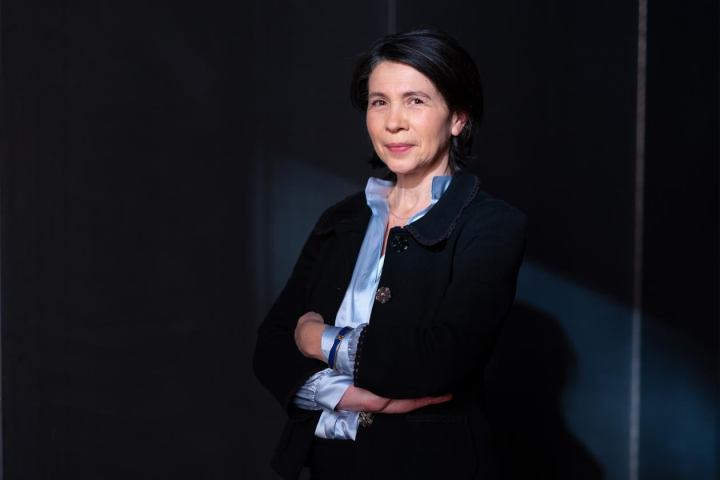
Photo of Martina Droth by Nick Mead.
Martina Droth, an art historian and curator who has served in a series of prominent roles at the Yale Center for British Art (YCBA) over 16 years, will be the museum’s next Paul Mellon Director, Yale President Maurie McInnis announced today.
As the museum’s deputy director and chief curator, Droth has been an integral part of the YCBA team and an active member of the university community, the president wrote in a message to the Yale community, building “an impressive record of achievement through roles of increasing responsibility, from leading the research division and serving as curator of sculpture to her current post. The YCBA will benefit from being led by an art historian and curator who has been instrumental in its success.”
Droth began her new role on January 15. Her tenure begins as YCBA prepares to reopen to the public on March 29, following a two-year renovation that will help safeguard the museum’s collections for generations to come. The museum houses the largest collection of British art outside the United Kingdom.
Droth succeeds Courtney J. Martin, who is now executive director of the Robert Rauschenberg Foundation. Richard Brodhead, a former dean of Yale College and former president of Duke University, has served as YCBA’s interim director since 1 July 2024.
“As interim director I’ve had the privilege to watch the Yale Center for British Art prepare for a dazzling reopening,” Brodhead said. “Martina Droth has been a key driver of this rebirth. With her warmth, breadth of knowledge, transatlantic contacts, and love of the museum’s art and its people, she will make an extraordinary leader for a unique cultural resource. I couldn’t be happier for YCBA’s future.”
Since coming to Yale in 2009, Droth has been instrumental in shaping the museum’s long-range strategy for research, collections, and exhibitions. “She is playing a vital role in reimagining the YCBA’s collection installation and conceiving a new curatorial program in readiness for the museum’s reopening,” McInnis wrote in her message.
Under Droth’s leadership, McInnis said, the YCBA will continue to advance its mission of promoting the understanding and appreciation of British art “through its exceptional collections, groundbreaking exhibitions, field-defining research, and innovative public programs.”
Susan Gibbons, vice provost for collections and scholarly communication at Yale, described Droth as “a brilliant curator with an in-depth understanding of British art history.”
“Her field-changing scholarship on British art studies and extensive experience working with partners across the university and those at external institutions demonstrate her ability to build collaborations and advance YCBA’s mission,” Gibbons said. “Having been such an integral part of the museum for the past 16 years, she will have a seamless transition into her new leadership role.”
As director, Droth, in partnership with staff, faculty, and students, will further enhance educational initiatives, expand community engagement, and foster an intellectual environment that welcomes a breadth of perspectives to be part of the discourse in art and art history, McInnis said. Droth also will build on the museum’s partnerships with Yale’s academic departments to augment its national and international collaborations and outreach.
“My colleagues and I are very much looking forward to working with Martina, who has expertly led the Yale Center for British Art’s curatorial and research endeavors over the past 16 years,” said Stephanie Wiles, the Henry J. Heinz II Director of the Yale University Art Gallery. “We are keen to advance the Art Gallery and the Center’s thriving exhibition partnerships already underway and together to explore new intellectual collaborations engaging Yale’s exceptional art collections.”
Droth has curated numerous high-profile YCBA exhibitions, including Bill Brandt | Henry Moore and Sculpture Victorious: Art in an Age of Invention, 1837–1901, along with the two upcoming exhibitions, Tracey Emin: I Loved You Until the Morning and Hew Locke: Passages, which will mark YCBA’s reopening.
Droth has also secured resources that support the museum’s scholarly initiatives, McInnis noted, including the multi-year Andrew W. Mellon Foundation grants with which she developed the research strategy at the YCBA. Her efforts to advance the museum’s mission have often involved collaborative efforts with renowned external institutions such as Tate Britain, the Fitzwilliam Museum at Cambridge University, and the Getty Museum.
“Hearing the news of Martina’s promotion is a great way to start the year,” said Locke, the British sculptor and contemporary visual artist whose work will be on display during the museum’s reopening. “Having known her for 15 years, it is certain that the institution is in a safe pair of hands. Working with her on my forthcoming exhibition, her support, intellectual rigor and instinctive understanding of the nature of working with artists, made the complex and lengthy process a pleasure. I wish her every success in her new post.”
Beyond her YCBA work, Droth has served on university committees, including the Committee for Art in Public Spaces; co-taught courses with faculty members from the Department of the History of Art in Yale’s Faculty of Arts and Sciences; and brought graduate students into curatorial research.
She oversaw the YCBA’s first joint exhibition with the Yale School of Architecture and facilitated projects integrating visiting artists with students at the Yale School of Art. She has also mentored numerous curators, students, and postdoctoral fellows who have gone on to careers in the academy and museum fields. Her academic work includes many service roles, including co-editing the British Art Studies journal with the Paul Mellon Centre.
Droth said she is deeply honored to step into the role of YCBA director “at this pivotal moment in its history. This wonderful institution has been my home base for 16 years, and I am thrilled to lead it into its next chapter — one where we continue to push the possibilities of scholarship, exhibitions, and public programming. The YCBA’s success has always been built on collaboration—amongst our talented staff, faculty, students, and our wider community—and I look forward to working with all of these groups to continue expanding the museum’s reach, deepen its impact, and make it a vital and welcoming space of cultural exchange, inspiration, and discovery.”
Before coming to Yale, Droth taught at universities and coordinated research and curated exhibitions for major art institutes in the UK. A former chair of the Association of Research Institutes in Art History, she has a deep commitment to the field, characterized by collaborative leadership and excellence in curatorial practice, research, and education, McInnis said.
“Martina’s success over the years is due in large part to her dedication to fostering a culture of collaboration and inclusion,” the president wrote. “A proponent of building partnerships with local communities, Martina has developed programs to connect broad audiences with Yale’s collections.”
At YCBA, Droth initiated “The View from Here: Accessing Art through Photography,” a program for New Haven high school students, in collaboration with the Lens Media Lab at the Institute for the Preservation of Cultural Heritage. And she has introduced students from New Haven Promise into the Curatorial Division of the YCBA and created internship opportunities for undergraduates through, for example, the Association of Research Institutes in Art History. (New Haven Promise is a college scholarship and career development program that supports New Haven Public School students.)
“Martina appreciates how much Yale artists and students are engaged in New Haven, and she partners on and off campus to increase educational opportunities,” said Kymberly Pinder, the Stavros Niarchos Foundation Dean of the Yale School of Art. “She has been a great collaborator with the School of Art, connecting YCBA curators and visiting artists with our students and high school students. She knows the value of the arts to inspire young scholars and create connections within communities. I am excited for how the YCBA, with her leadership, will continue to make these connections and advance the work artists do across Yale and within the city and beyond.”
Droth’s appointment reinforces the YCBA’s dedication to innovative scholarship, teaching, and community engagement, said Paul Messier, the founder and Pritzker Director of the Lens Media Lab at Yale’s Institute for the Preservation of Cultural Heritage. “As an energetic and insightful leader, she combines a collaborative spirit with a distinct vision for the YCBA’s future and its role within Yale, New Haven, and the international landscape of museums and cultural institutions,” he said.
In McInnis’ message, the president thanked Brodhead for providing “exceptional leadership” as interim director. She also thanked members of the search advisory committee, which was chaired by Ned Cooke, the Charles F. Montgomery Professor of American Decorative Arts in the FAS, and members of the Yale community who offered suggestions and ideas during the search process.
“Over the course of the search, the committee learned a great deal about the strengths and untapped potential of the YCBA,” Cooke said. “We gained insight into the established reputation of the institution — its strong collections, ambitious exhibitions, and leading research program — but we also learned about popular perceptions and different audiences.
“The center holds a pivotal role for the Yale community, local audiences, and national and international visitors with a keen interest in British art,” he added. “Martina Droth offers a unique blend of experience at the center, close ties to British art circles, and commitment to a balance of exhibition, research, and outreach. Her experience at the center, collegiality, and passionate insistence on reaching the various potentials of the center give us great confidence in her appointment.”
McInnis said she and the advisory committee benefited from comments they received during the international search. “Based on the insights we gathered, Martina is the ideal leader for the YCBA. I look forward to working with her as she steers the museum toward new heights in realizing its mission and makes it an ever more welcoming space that offers inspiring experiences with art and deepens our engagement with students, scholars, New Haven residents, and visitors from around the world.”










 Enfilade
leave a comment