Study Day | Joseph Wright of Derby: Bath and Beyond
From the study day programme:
Joseph Wright of Derby: Bath and Beyond
The Holburne Museum, Bath, 24 February 2014
This event will bring together a variety of stimulating speakers from different disciplines to examine in greater
depth Wright’s little-known Bath period and its contexts. The morning session will explore the cultural life of Bath
in the 1770s through recent historical research and ask whether Wright’s place in this complex and creative
society has been misunderstood. In the afternoon the focus will turn to other places: Derbyshire, Liverpool, the
London exhibition galleries and the places of Wright’s literary imagination, and their influence on the artist’s
life and work.
The study day accompanies the major new exhibition Joseph Wright of Derby: Bath and Beyond (25 January 5
May 2014). It has been made possible by a generous grant from the Paul Mellon Centre for Studies in British
Art. The exhibition is sponsored by Lowell Libson Ltd. Price: £45 (Concessions £40, Students £15), to include morning coffee, afternoon tea and a ticket for the exhibition.
Credit card bookings may be made by calling Spencer Hancock at the Holburne on 01225 388560, email
s.hancock@holburne.org, or in person at the Museum’s information desk. Or send a cheque made payable to “The Holburne Museum” to Spencer Hancock, Visitor Services Manager, the Holburne Museum, Great Pulteney Street, Bath BA2 4DB. We can also offer a packed lunch for £6.15. Please purchase when you book. When booking, please supply your name and address so that your tickets can be posted to you.
M O N D A Y , 2 4 F E B R U A R Y 2 0 1 4
9.00 Registration
9.30 Welcome, Alexander Sturgis, Director, Holburne Museum; and introduction, Adrian Tinniswood OBE, Trustee, the Holburne Museum
9.45 Georgian Bath: Images and Realities, Peter Borsay
Session I: Joseph Wright’s Bath
10.30 Toyshops and Tradesmen in Bath, Vanessa Brett
11.00 Coffee
11.30 Anna Miller, Catharine Macaulay and Agnes Witts: Bath hostesses, diarists and travellers, Elaine Chalus
12.00 Henry Sandford’s commonplace books, Susan Blundell
12.25 Wright’s working practices in Bath, Rica Jones
12.50 Questions
1.00 Lunch
2.30 Joseph Wright ‘of Bath’?, Amina Wright
Session II: Joseph Wright beyond Bath
3.15 Joseph Wright and Derby, Stephen Daniels and Alice Insley
3.45 Joseph Wright and Liverpool, Alex Kidson
4.10 Tea
4.50 Wright’s Exhibitions, John Bonehill
5.15 Questions
Recent Reviews Posted at BSECS
Recent reviews at BSECS:
Nelson, Navy, Nation: The story of the Royal Navy and the British people, 1688–1815
Location: National Maritime Museum, Greenwich
Event Date: December 2013
Reviewed By: Evan Wilson, University of Oxford
This new gallery shows there’s more to the eighteenth-century Navy than Nelson, but his fans will still get their fix.
KPM. Gestalten, Benutzen, Sammeln / Creating, Using, Collecting: 250 Jahre Porzellan aus der Königlichen Manufaktur Berlin
Location: Schloss Charlottenburg
Event Date: November 2013
Reviewed By: Caroline Cannon-Brookes
Berlin celebrates the 250th anniversary of its Royal Porcelain Manufactory.
David d’Angers: Making the Modern Monument
Location: The Frick Collection, New York City
Event Date: November 2013
Reviewed By: Lucy Gellman, Florence B. Selden Fellow, Yale University Art Gallery
A welcome, if somewhat underwhelming, stateside debut for the ‘other’ David.
Exhibition | Metropolitan Vanities: The History of the Dressing Table
Press release (3 July 2013) from The Met:
Metropolitan Vanities: The History of the Dressing Table
The Metropolitan Museum of Art, New York, 17 December 2013 — 13 April 2014
Curated by Jane Adlin

Martin Carlin, combination table, ca. 1775 (New York: Metropolitan Museum of Art,1976.155.99a, b)
Metropolitan Vanities: The History of the Dressing Table at The Metropolitan Museum of Art will explore the evolution of the modern dressing table. Few pieces of furniture have revealed more about social customs, leisure-time pursuits, and popular tastes throughout history. The form of the dressing table—or vanity, as we know it today—began to develop in the late 17th century in Europe. The exhibition will consist of outstanding examples of this furniture form and some 50 related objects, paintings, and drawings selected mainly from the Metropolitan’s collection. Ancient Egyptian decorative boxes used to hold cosmetics, classical Greek and Roman scent bottles, medieval mirror cases, 18th-century nécessaires, and innovative contemporary jewelry and accessories will be on display.
In the late 17th century, European high society began commissioning luxurious specialized furniture from craftsmen and furniture makers. The poudreuse in France, and the low boy, Beau Brummel, and shaving table in England served as models for the dressing table. Jean-Henri Riesener’s Mechanical Table (1780–81) is one of the finest examples of this period in the exhibition. This table, in which the top slides back as the drawer slides forward to reveal a toilette mirror flanked by two compartments, was delivered by the cabinetmaker to Queen Marie Antoinette at Versailles in January 1781.
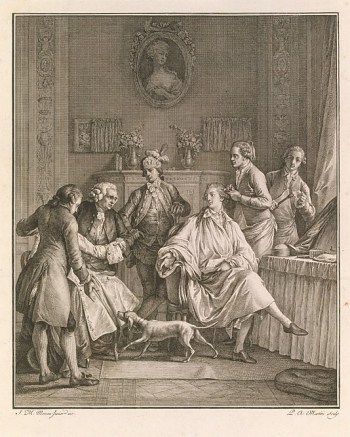
Pietro Antonio Martini, after Jean Michel Moreau the Younger, The Morning Toilet (La Petite Toilette), from Le Monument du Costume, ca. 1777
(New York: Metropolitan Museum of Art, 33.6.28)
In America the designs for dressing tables were simpler, with the Chippendale style among the most popular. During the 19th century, dressing tables were made in many revivalist styles including the Gothic, Elizabethan, Rococo, Renaissance, and Colonial revivals, to name a few. Eventually, in the later 19th century, the dressing table—like other cabinet furniture—became a matching part of the bedroom suite.
It was not until the early part of the 20th century, during the Art Deco period in both Europe and America, that luxurious dressing tables came to epitomize the modern concept of glamour and luxury. Hollywood films of the 1920s and ’30s, with their fantasy world of penthouses atop Manhattan skyscrapers, were hugely popular during this period and often depicted the femme fatale heroine sitting at her supremely elegant vanity table in the bedroom or dressing room. Norman Bel Geddes’s enamel and chrome-plated steel dressing table (1932) is a model for this streamlined and sophisticated style.
More recently, designs for the dressing table have reflected the diversity of new styles, from the modern molded-plastic valet dressing cabinet of Raymond Loewy (1969) to a postmodernist Plaza dressing table and stool by Michael Graves (1981) and a minimalist dressing table of today by the Korean contemporary designer Choi Byung Hoon (2013).
Metropolitan Vanities: The History of the Dressing Table is organized by Jane Adlin, Associate Curator in the Department of Modern and Contemporary Art at The Metropolitan Museum of Art. The exhibition is accompanied by a Bulletin published by the Metropolitan Museum and distributed by Yale University Press (volume 71, Fall 2013).
More images are available here (under additional resources).
At Auction | Portrait of François-Henri d’Harcourt by Fragonard
From Bonhams:
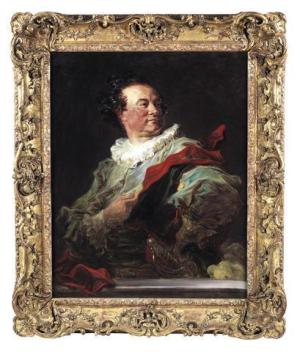 A major work by the 18th-century French artist Jean-Honoré Fragonard, The Portrait of François-Henri d’Harcourt, sold for £17,106,500 this evening (5 December) setting a world record price for the artist at auction [Bonhams, Auction 21413, Lot 85]. The previous record was £5,300,000 for a painting sold in London in 1999. It is also the highest price for an Old Master Painting sold at auction anywhere in the world this year. The painting was the leading work in the sale of paintings and sculpture from the renowned collection of the German philanthropist, the late Dr Gustav Rau which raised more than £19 million. The proceeds will be used to benefit the Foundation of the German Committee for UNICEF—for the children of the world.
Bonhams Director of Old Master Paintings, Andrew McKenzie, said, “The portrait of François-Henri d’Harcourt is one of the paintings on which Fragonard’s reputation as an artistic genius rests. It is impossible to overstate its cultural and artistic significance. Handling this great painting for sale was a huge privilege and a landmark in the history of the art market.” . . .
One of Fragonard’s famous fifteen fantasy portraits, The Portrait of François-Henri d’Harcourt was the most significant of the artist’s works to have appeared on the market for many years. Only two other fantasy portraits remain in private hands making this painting rarer than portraits by Frans Hals, Joshua Reynolds or even Rembrandt.
Jean-Honoré Fragonard (1732–1806) was a master of genre painting and a leading exponent of the Rococo style of which The Swing in the Wallace Collection in London is probably the best known example. In great demand as a portraitist in the dying days of the Ancien Régime, Fragonard fell on hard times after the French Revolution, and although he continued to live in France, he died in obscurity and poverty. Fragonard’s fantasy portraits—often depicting friends and acquaintances—were painted quickly with bold, fluid brush work which anticipated the Impressionists in bravura and technique. This style was referred to by some contemporaries as the artist’s, “swordplay of the brush.” The portrait of François-Henri d’Harcourt is unusual among Fragonard’s fantasy portraits because the subject is identified. Many of the other portraits are personifications of the arts rather than representations of named individuals.
Exhibition | Rococo to Neoclassicism from the Palazzo Chigi in Ariccia
From Artbooks.com:
Dipinti tra rococò e neoclassicismo da Palazzo Chigi in Ariccia e da altre raccolte
Palazzo Ducale Castromediano di Cavallino, Lecce, 21 September — 15 December 2013
 La mostra è dedicata alla memoria di Fiammetta Luly Lemme (Ancona, 20 marzo 1937 – Roma, 29 marzo 2005), avvocato, collezionista e studiosa d’arte, moglie dell’avvocato Fabrizio Lemme, che con lei ha condiviso i medesimi interessi per l’arte e il collezionismo, che ancora coltiva. La collezione Lemme, formata con la consulenza di insigni studiosi quali Federico Zeri, Italo Faldi e Giuliano Briganti, fornisce un rilevante materiale di studio per la conoscenza della pittura barocca, rococò e proto-neoclassica, con particolare attenzione al Settecento romano. Nel 1998 i coniugi Lemme donarono al Museo del Louvre venti quadri e una scultura, collocati nella “Sala Lemme,” mentre altri ventuno furono donati contestualmente alla Galleria Nazionale d’Arte Antica di Palazzo Barberini, oggi organicamente inseriti nel nuovo allestimento.
Il 28 maggio 2007 Fabrizio, Giuliano e Ilaria Lemme hanno formalizzato la donazione al Palazzo Chigi in Ariccia del nucleo più importante della collezione, costituito da 128 dipinti, in gran parte già oggetto di notifica del Ministero dei Beni Culturali e Ambientali come insieme di elevato interesse storico artistico (Decreto del 1 dicembre 1998). La raccolta è confluita nel Museo del Barocco Romano, ubicato nella dimora chigiana, formato a partire dal nucleo di dipinti del ‘600 lasciati nel 2002 dallo storico dell’arte Maurizio Fagiolo dell’Arco. Ulteriori donazioni provenienti da altre raccolte (Ferdinando Peretti, Oreste Ferrari, Renato Laschena, etc.) hanno potenziato il museo di Palazzo Chigi, arricchendo le già rilevanti raccolte di provenienza chigiana, acquisite con la dimora nel 1989.
Il presente evento si pone in continuità ideale ed è una prosecuzione in termini didattici e storicoartistici della mostra Dipinti del Barocco Romano da Palazzo Chigi in Ariccia, tenuta a Cavallino di Lecce tra settembre e dicembre 2012, circoscritta alla pittura romana del ‘600. L’esposizione si volge al ‘700, il secolo dei lumi, l’età d’oro del Grand Tour d’Italie, che ebbe in Roma il proprio centro pulsante, propagandosi in tutta Italia. Tuttavia, oltre agli artisti attivi nella capitale pontificia, sono presenti in mostra anche pittori della scuola napoletana, provenienti o attivi nel regno borbonico. Spicca in ambito meridionale la figura di Corrado Giaquinto, il massimo artista pugliese del secolo ed uno dei più grandi del ‘700. Sono presenti anche tele di Paolo de Matteis, pittore della scuola napoletana attivo anche nel Salento. Le opere esposte provengono in gran parte da Palazzo Chigi, sia dalla collezioni storiche chigiane che dal Museo del Barocco. Sono presenti anche alcune opere in collezione privata, compresi ulteriori dipinti raccolti da Fabrizio Lemme negli ultimi anni o provenienti da una prestigiosa collezione privata inglese.
Francesco Petrucci, Dipinti tra rococò e neoclassicismo da palazzo Chigi in Ariccia e da altre raccolte (Rome: Gangemi, 2013), 128 pages, ISBN: 978-8849227086, $48.50.
Call for Papers | George I 300 Years On
George I 300 Years On: Reconstructing the Succession
Bath Royal Literary and Scientific Institution, 18–20 June 2014
Proposals due by 24 January 2014

George I (Bristol City Museum)
Led by the History postgraduate community, and hosted by Bath Spa University, Göttingen University and Mannheim University, this international conference will be held at Bath Royal Literary and Scientific Institution.
This interdisciplinary conference takes the theme of the accession of the first Hanoverian king, George I. It will examine not just the end of the Stuart era, but the defining characteristics, outcomes and consequences the Hanoverian succession. We invite new and established academics, PhD and early career researchers to bring their knowledge and expertise together for this three-day gathering in the city of Bath. We welcome proposals (200–250 words) for individual papers. Panels of three papers with chair and commentator are also welcome. All proposals should be sent to the Centre for History and Culture at Bath Spa University (email: historyandculture.bsu@gmail.com.
Exhibition | Connecting Seas: Discoveries and Encounters
This exhibition opens the Getty Research Institute’s newly expanded galleries with an exploration of materials related to the 2013–14 scholar year theme Connecting Seas: Cultural and Artistic Exchange. From the exhibition press release (5 November 2013) . . .
Connecting Seas: A Visual History of Discoveries and Encounters
Getty Research Institute, Getty Center, Los Angeles, 7 December 2013 — 13 April 2014
Curated by Peter Bonfitto, David Brafman, Louis Marchesano, Isotta Poggi, Kim Richter, and Frances Terpak

◊ ◊ ◊ ◊ ◊
Since antiquity, people have crossed the seas to explore distant shores and discover other cultures. The introduction of the printing press made it possible for illustrated accounts of travel and exploration to find wide distribution in Europe, and, soon after, other continents. Connecting Seas: A Visual History of Discoveries and Encounters, on view December 7, 2013–April 13, 2014 at the Getty Research Institute, Getty Center, draws on the Getty Research Institute’s extensive special collections to reveal how adventures on other continents and discoveries of other cultures were perceived, represented, and transmitted during past ages of ocean travel.
“This exhibition prompts us to see and consider the long history of cultural encounters, an endeavor we are still pursuing today,” said Thomas W. Gaehtgens, director of the Getty Research Institute. “The Getty Research Institute’s special collections are rich troves of original sources that offer insight into the history of representation spanning five hundred years.”
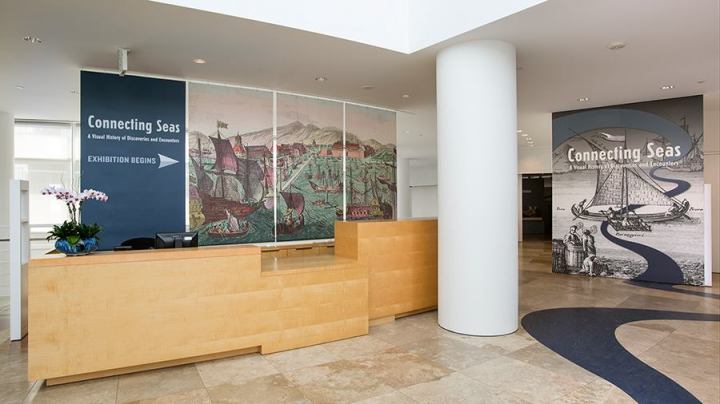
Featuring rare books, prints, maps, and navigational instruments—from Renaissance prints to Napoleon’s monumental folios on Egypt to panoramic images known as vues d’optique, photographs and children’s games—the exhibition traces the fascinating course of scholarly investigation and comprehension of cultures in Asia, South America, and Africa. These intriguing original works from the sixteenth- to the twenty-first century, mostly from European, but some of Asian and South-American origins, chart diverse narratives of discovery, exploration, commerce, and colonization, and illuminate the multiple and various levels of encounter at the roots of today’s globalization. The exhibition is organized under three themes: “Orienting the World,” “Expeditions and Exploration,” and “Commerce and Colonialism” and was collaboratively curated by six GRI curators: Peter Bonfitto, David Brafman, Louis Marchesano, Isotta Poggi, Kim Richter and Frances Terpak.
Most of the rare material featured in Connecting Seas is of European origin, which reflects the history of the GRI. In the past, the GRI was primarily dedicated to collecting and exploring the Western tradition. Some objects from other parts of the world already signal a recent programmatic change. As the GRI continues to broaden its scope of collecting and research, this more global approach will become a more visible aspect of exhibitions and public programs. Connecting Seas draws heavily from the GRI’s special collections, including prints, photographs, drawings, rare books and ephemera from the 16th to 20th centuries. It also features navigational instruments, a painting on the North Atlantic slave trade and other marine objects generously loaned by the Kelton Foundation that directly complement the GRI’s collections on display. Through deep research in the GRI’s rich holdings of primary sources and historical objects and documentation, the exhibition interprets images from the past to see how they transferred and represented the encounter of cultures. As Gaehtgens states, “by understanding how such encounters were embraced in the past, we can learn to think critically about our contemporary experiences and its challenges.”
“This exhibition invites the viewer to reflect on the complex, long history of exploration and exchange,” added Marcia Reed, Chief Curator, Getty Research Institute. “For every instance of misunderstanding, prejudice or exploitation there are examples of persistent intellectual curiosity, generosity, and empathy.”
Orienting the World
Mapping the world was the first step in discovering new lands. The first section of the exhibition displays the techniques and tools early explorers developed in order to navigate the seas. Knowledge of astronomical orientation and the invention of maritime instruments were necessary to face the challenges of ocean voyages. For example, an Islamic astrolabe from Maghreb helped mariners navigate by charting the stars. As civilization gradually came to understand the Earth as a globe, discoverers created early representations of the continents that combined experience and imagination. A woodcut map from Magdeburg in 1597 depicts the world as a clover leaf with Jerusalem at the center, and the continents of Europe, Asia and Africa emerging from the center.
Expeditions and Exploration
Early travelogues of Europeans who visited Asia and Africa were at times extraordinarily fanciful, and hearsay reports generated strange imaginings and misunderstandings about other lands and cultures. In many cases bizarre legends were passed down over centuries, understood as true. A woodcut in Giovanni Botero’s early seventeenth-century book, Man from the Wilds of Asia, depicts a headless man with a face on his chest. The notion that such people had been seen in Africa and throughout Asia was centuries old at the time and could be traced to al-Qazwini, a thirteenth-century scholar of Baghdad.
This second section of the exhibition explores how early travelers’ tales with such misinformation gradually became replaced by more scholarly studies. Exploration and collecting were followed by study and analysis. Enlightenment values motivated rigorous scholarly approaches to distant continents, but they also often coincided with imperialist ambitions of European rulers. Napoleon invited geographers, archaeologists, and scientists to accompany him on military campaigns in Egypt. After their return to France, this team of experts published precise, firsthand observations and groundbreaking research on the entire Egyptian world. Preoccupation with other cultures became the domain of professionals who valued firsthand knowledge of distant lands and employed systematic and scientific approaches. Among the most remarkable of these was the German explorer and intellectual Alexander von Humboldt, who traveled extensively to many parts of Latin America. He returned to Berlin and Paris with significant specimens and notes and published his research. A German lithograph dating to the mid-1800s on view in the exhibition depicts Humboldt in his study, surrounded by maps, papers and objects from his travels.
Commerce and Colonialism
The third section of the exhibition examines how exploration, colonization, and exploitation characterized the age of modern imperialism, in which European nations competed for control over territories in Africa, Asia, and the Americas. International exhibitions in European and North American cities displayed the products of faraway lands or reproductions. Some children’s games disseminated prejudice—advertisements for the Belgian company Chocolat de Beukelaer from the early-twentieth century featured disturbing cartoon scenes of colonial encounters in Africa—and world’s fairs even displayed human beings who were brought to the European capitals along with (often inaccurate) reconstructions of their original dwellings. Despite the rise in scholarly perspectives on exploration and travel during the nineteenth and twentieth centuries, racial prejudices were often spread by in prints, journals, and photographs as trade among the continents increased.
The Getty Research Institute’s Scholar Program
The exhibition relates closely to the GRI’s Scholar Year theme. Every year scholars from around the world come to the Getty Research Institute to join the highly competitive Scholars Program. This year, forty scholars were chosen out of nearly 600 applicants, the highest total in the program’s 28-year history. The 2013–14 scholar year theme, Connecting Seas: Cultural and Artistic Exchange, will focus on similar subjects as the exhibition, exploring the art-historical impact of maritime transport. The scholars will be in residence at the Getty Center and the Getty Villa through the spring to undertake research projects related to the vital role seas and oceans played in connecting cultures.
New Exhibition Spaces
Connecting Seas will be the first exhibition in the Getty Research Institute’s newly expanded galleries. As part of its ongoing commitment to present engaging exhibitions to the public, the Getty Research Institute has added an additional 2,000 square feet of gallery space. The additional gallery space will bring the total exhibition area to 2,800 square feet, divided between two galleries. This expansion will allow the Research Institute to mount innovative and significant exhibitions drawing principally from the GRI’s Special Collections and responding to advanced research initiatives in art history.
The exhibition object list is available here»
Exhibition | Gods and Heroes: European Drawings of Classical Mythology
From the exhibition press release (24 October 2013) . . .
Gods and Heroes: European Drawings of Classical Mythology
J. Paul Getty Museum, Getty Center, Los Angeles, 19 November 2013 — 9 February 2014
Curated by Edouard Kopp
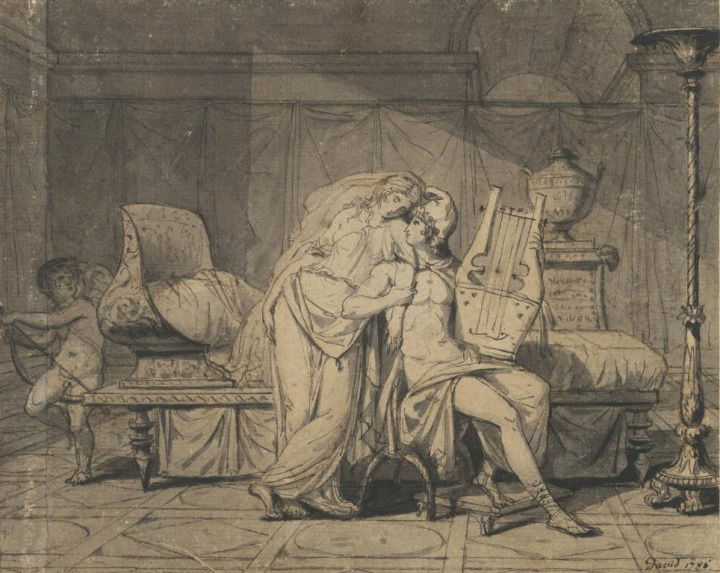
Jacques-Louis David, Paris and Helen, 7 x 9 inches, 1786
(Los Angeles: The Getty, 83.GA.192)
◊ ◊ ◊ ◊ ◊
The stories involving the mythical gods and heroes of Greco-Roman antiquity have inspired artists for centuries, testing their abilities to represent complex narratives in visual form. The likes of Venus and Apollo, Hercules and Achilles, have proved to be particularly rich artistic subjects not only because they had extraordinary qualities―such as beauty, creativity, strength and courage―but also for the imperfections that made these characters even more compelling. Involved in love and lust, rivalry and treachery, crime and punishment, they possessed all the passions and flaws of mere mortals, but on a much larger scale. Featuring a selection of close to 40 drawings dating from the Renaissance to the 19th century, Gods and Heroes: European Drawings of Classical Mythology, on view November 19, 2013–February 9, 2014 at the J. Paul Getty Museum, Getty Center, explores the pictorial representation of myths that have been instrumental in the formation of Western culture.
“The Getty’s collection of drawings provides an almost endless supply of images representing figures from classical mythology,” explains Timothy Potts, director of the J. Paul Getty Museum. “Those chosen for this exhibition bring these myths to life for today’s audience in works of outstanding artistic quality. The exhibition also nicely complements the Museum’s collection at the Getty Villa, which is dedicated to the arts and culture of the ancient Mediterranean. Many of the gods and heroes that will be on view at the Getty Center in this exhibition find their counterparts in ancient representations there.”
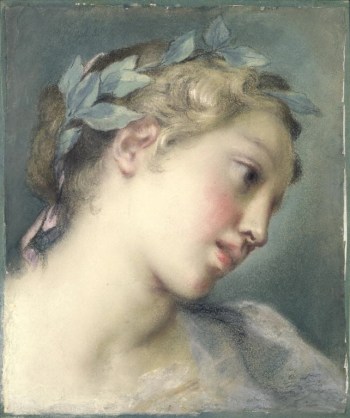
Rosalba Carriera, A Muse, 12 x 10 inches, mid-1720s
(Los Angeles: The Getty, 2003.17)
Depending on when and where they worked, artists have approached mythical figures very differently, sometimes treating them as pretexts for visual experimentation. Consistently, these subjects have provided artists with the opportunity to demonstrate their ability to render human anatomy. While Agostino Carracci’s Triton Blowing a Conch Shell (1600) was made in preparation for an elaborate frescoed scene on the vault of Palazzo Farnese in Rome, the drawing stands alone as a powerful depiction of the triton’s twisting body, which is depicted with striking illusionism. In a subtle display of skill, Rosalba Carriera’s Muse (mid-1720s) exemplifies the artist’s mastery of the pastel technique, which is most evident in the rendering of the young woman’s ivory skin, flushed cheeks, and rosy lips. By contrast, Gustave Courbet used a tonal medium to represent the Head of a Sleeping Bacchante (1847). His smudged, painterly application of charcoal suggests the heaviness of the subject’s slumber.
Themes of love and lust are common in classical myths, as shown by Agostino Carracci’s drawing of Cupid Overpowering Pan (about 1590). In accord with the Roman poet Virgil’s statement that “love conquers all,” Cupid, symbolic of virtuous love, is shown subduing Pan, the embodiment of carnal desire. Cupid’s crucial role in matters of love is, by comparison, merely hinted at in Jacques-Louis David’s Paris and Helen (1786). According to legend, the Trojan prince Paris abducted the Spartan princess Helen, but she fell in love with him after Cupid shot her with an arrow of desire―events that led to the Trojan War. As for mortals, love was no easy thing for mythological figures; indeed, it often ended in tragedy.
The world of gods and heroes could also be a violent one, and drawings such as those depicting the labors of Hercules, attest to this. Hercules had to perform twelve feats as punishment for having killed his wife and children in a fit of temporary insanity. Giulio Romano’s Hercules Resting after Killing the Hydra (about 1535) shows the hero with an unusually lanky body, exhausted after he has killed the Hydra of Lerna, a multiheaded water serpent that was wreaking havoc. Victorious yet weary, Hercules rests on a large rock, with bits of the slain monster lying around him on the ground. For his part, Gustave Moreau represents another of Hercules’s labors, namely when the hero had to capture the flesh-eating mares of Diomedes, the evil king of Thrace. Hercules, having succeeded in seizing the animals, feeds Diomedes’s body to his own horses. Moreau situated the atrocious episode in a dim setting that offsets the brilliant tones of the delicately executed watercolor―a refined technique that could hardly be in starker contrast with the gory nature of the subject it serves to represent.
“This exhibition showcases a beautiful and highly interesting part of the Getty drawings collection in a meaningful way that invites the viewer to explore the fascinating world of Greco-Roman mythology and its artistic representations,” says Edouard Kopp, associate curator of drawings at the J. Paul Getty Museum and curator of the exhibition.
The illustrated checklist is available as a PDF file here»
Arches Software for Cultural Heritage Sites
Press release (4 December 2013) from The Getty:
Getty Conservation Institute and World Monuments Fund Release Arches Software To Help Safeguard Cultural Heritage Sites Worldwide
The Getty Conservation Institute (GCI) and World Monuments Fund (WMF) today announced the public release of Arches (version 1.0), a user-friendly, open source information management software system built specifically to help heritage organizations safeguard cultural heritage sites worldwide.
Arches has been created to help inventory and manage heritage places, and by incorporating a broad range of international standards, meets a critical need in terms of gathering, making accessible and preserving key information about cultural heritage.
“Knowing what you have is the critical first step in the conservation process. Inventorying heritage assets is a major task and a major investment,” said Bonnie Burnham, President and CEO of World Monuments Fund.
Cultural heritage inventories are difficult to establish and maintain. Agencies often rely on costly proprietary software that is frequently a mismatch for the needs of the heritage field or they create custom information systems from scratch. Both approaches remain problematic and many national and local authorities around the world are struggling to find resources to address these challenges.
The GCI and WMF have responded to this need by partnering to create Arches, which is available at no cost. Arches can present its user interface in any language or in multiple languages, and is configurable to any geographic location or region. It is web-based to provide for the widest access and requires minimal training. The system is freely available for download from the Internet so that institutions may install it at any location in the world.
“Our hope is that by creating Arches we can help reduce the need for heritage institutions to expend scarce resources on creating systems from the ground up, and also alleviate the need for them to engage in the complexities and constantly changing world of software development,” said Tim Whalen, Director of the Getty Conservation Institute in Los Angeles.
In developing Arches, the GCI and WMF consulted international best practices and standards, engaging nearly 20 national, regional, and local government heritage authorities from the US, England, Belgium, France, and the Middle East, as well as information technology experts from the US and Europe. The contributions of English Heritage and the Flanders Heritage Agency have played a particularly important role during the development process. Data provided by English Heritage has been valuable for system development, and it is incorporated as a sample data set within the demonstration version of Arches.
The careful integration of standards in Arches also will encourage the creation and management of data using best practices. This makes the exchange and comparison of data between Arches and other information systems easier, both within the heritage community and related fields, and it will ultimately support the longevity of important information related to cultural sites.
Once the Arches system is installed, institutions implementing it can control the degree of visibility of their data. They may choose to have the system and its data totally open to online access, partially open, accessible with a log-in, not accessible at all, or somewhere in between.
“Shared understanding of cultural heritage sites is essential for their successful management and for their enjoyment, too. English Heritage has been really proud to contribute to the development of Arches, and believes it to offer a fresh and readily applicable solution to the challenges of data management. It’s been a great international partnership, and has overcome real complexities,” said Dr. Gillian Grayson, Head of Heritage Data Management at English Heritage.
The GCI and WMF are committed to providing resources to support the Arches open-source community during its formative period.
Arches is not the first joint initiative for the GCI and WMF. The partners previously developed the Middle Eastern Geodatabase for Antiquities, or MEGA, to help the Kingdom of Jordan manage archeological sites. In 2010, MEGA was deployed as Jordan’s National Heritage Documentation and Management System. Different from MEGA, Arches has taken advantage of new semantic technologies and that it is designed to help inventory and manage all types of cultural heritage information, not only archaeological sites. As well, Arches is intended for application anywhere in the world rather than simply one geographic area.
Arches has been developed by the GCI and WMF in conjunction with Farallon Geographics Inc., who also provided expertise for MEGA.
◊ ◊ ◊ ◊ ◊
From the FAQ page:
Does Arches record movable heritage?
Arches has been designed to record all types of immovable heritage, based on the CIDOC Core Data Standard for Archaeological and Architectural Heritage. In conformance with this standard, Arches provides the ability to record artifacts discovered at a site, but it has not been designed as a collections management tool. For a discussion of this question in greater detail, including ways to achieve additional functionality that may be required for movable heritage, please visit the Arches forum.
New Book | History of Design, 1400–2000
From Yale UP:
Pat Kirkham and Susan Weber, eds., History of Design: Decorative Arts and Material Culture, 1400–2000 (New Haven: Yale University Press for the Bard Graduate Center, 2013), 712 pages, ISBN: 978-0300196146, $80.
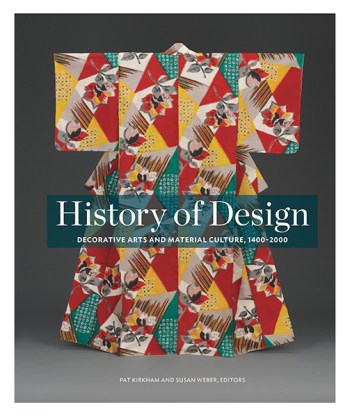 Spanning six centuries of global design, this far-reaching survey is the first to offer an account of the vast history of decorative arts and design produced in Africa, the Americas, Asia, Europe, the Indian subcontinent, and the Islamic world, from 1400 to the present. Meticulously documented and lavishly illustrated, the volume covers interiors, furniture, textiles and dress, glass, graphics, metalwork, ceramics, exhibitions, product design, landscape and garden design, and theater and film design. Divided into four chronological sections, each of which is subdivided geographically, the authors elucidate the evolution of style, form, materials, and techniques, and address vital issues such as gender, race, patronage, cultural appropriation, continuity versus innovation, and high versus low culture.
Leading authorities in design history and decorative arts studies present hundreds of objects in their contemporary contexts, demonstrating the overwhelming extent to which the applied arts have enriched customs, ceremony, and daily life worldwide over the past six hundred years. This ambitious, landmark publication is essential reading, contributing a definitive classic to the existing scholarship on design, decorative arts, and material culture, while also introducing these subjects to new readers in a comprehensive, erudite book with widespread appeal.
Pat Kirkham is a professor at the Bard Graduate Center, where Susan Weber is founder and director.










 Enfilade
leave a comment