Journal18, Fall 2024 — Craft
The latest issue of J18 (I’m sorry to be slow with this one! –CH) . . .
Journal18, Issue #18 (Fall 2024) — Craft
Issue edited by Jennifer Chuong and Sarah Grandin
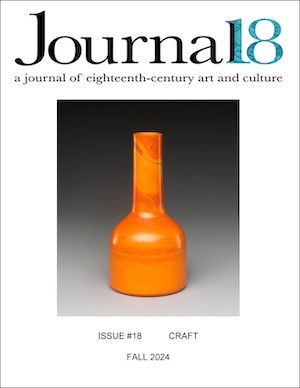 When, where, and why does craft matter? Craft, by definition, is any activity involving manual skill. But in the modern western world, the term typically implies specific kinds of activities that produce specific kinds of objects: things like baskets, lace, and lacquerware. In a culture that has historically privileged rationality and innovation, craft’s commitment to tradition, reliance on haptic knowledge, and association with marginalized subjects have rendered it the minor counterpart to more ‘serious’ forms of material production. As a subsidiary to art and industry, craft has often occupied a circumscribed role in accounts of modern art and modernity’s origins in the eighteenth century. Recently, however, craft—as a more capacious category of material production—has become a crucial term in efforts to expand and diversify the study of eighteenth-century art.
This special issue builds on recent investigations while considering how craft’s ancillary role within the Anglo-European tradition has limited its capacity to transform the field. Drawing inspiration from the absence of an art/craft divide in many cultures, we are interested in exploring craft’s potential to radically reframe, reconceptualize, and globalize the history of art.
a r t i c l e s
Elizabeth Eager — Labor, Leisure, and Lost Time in Eighteenth-Century Women’s Embroidery
Yve Chavez — Eighteenth-Century Loom and Basket Weaving at the California Missions
Hampton Smith — Insurgent Tooling and the Collective Making of Slave Revolts
Natalie E. Wright and Glenn Adamson — Encyclopædia Materia: Material Intelligence and Common Knowledge
Julie Bellemare, N. Astrid R. van Giffen, and Robert Schaut — Hot Tempered: Recreating a Lost Glass Recipe
Caroline Wigginton — Reading with Indigenous Form: Lucy Tantaquidgeon Tecomwas’s Moccasins (ca. 1767)
Ellen Siebel-Achenbach — Bookbinding in Eighteenth-Century Nuremberg: Reconstructing an Edge Plough from the Hausbücher der Nürnberger Zwölfbrüderstiftungen
All articles are available for free here, along with recent notes & queries:
r e c e n t n o t e s a n d q u e r i e s
Lytle Shaw — A Pirate Primer? Review of Stan Douglas: The Enemy of All Mankind
Sofya Dmitrieva — The Art Collection of the French Royal Academy of Painting and Sculpture: Notes on the Database
Jennifer Laffick — Lethière in Williamstown and Paris: A Transatlantic Exhibition Review
Kristina Kleutghen — Beijing to Dresden via St. Petersburg: An Early Qing Enameled Snuff Bottle in the Collection of Augustus II the Strong
Geoff Quilley — Lubaina Himid’s Naming the Money at the Entangled Pasts, 1768-now Exhibition, Royal Academy, London
Print Quarterly, March 2025
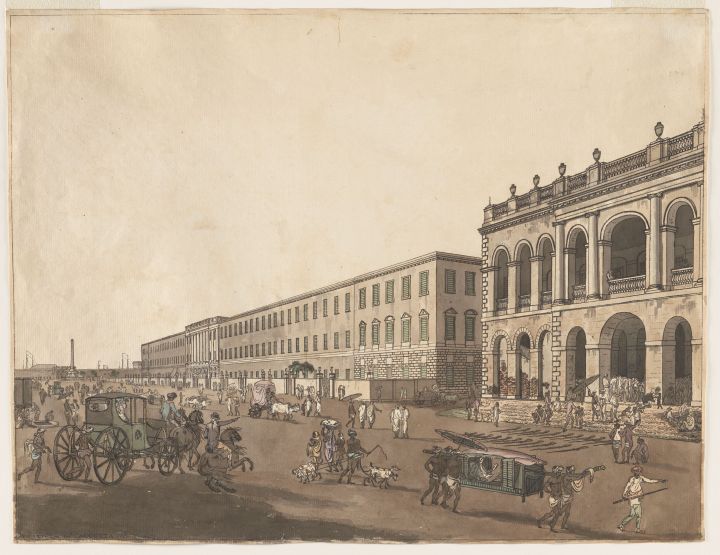
Thomas Daniell, The Old Court House and Writers’ Building, 1786, hand-coloured etching, 403 × 524 mm
(Philadelphia Museum of Art; image Thomas Primeau).
◊ ◊ ◊ ◊ ◊
The long eighteenth century in the latest issue of Print Quarterly:
Print Quarterly 42.1 (March 2025)
a r t i c l e s
• Jalen Chang, “‘Bengalee Work’ before Aquatint: Thomas Daniell’s Views of Calcutta”, pp. 20–30.
This article reevaluates eleven hand-coloured etchings by Thomas Daniell (1749–1840) held by the Philadelphia Museum of Art, previously presumed to be published states of his 1786–88 print series Views of Calcutta, often cited as the earliest aquatints made outside of Europe. Devoid of the rudimentary aquatinting and hand-coloured skies which characterize other extant examples, the relatively bare objects document a distinct stage of Daniell’s artistic process and are unprecedented in their survival. The article suggests that these prints were trial proofs never intended for publication or sale, meant instead to serve as colour tests for Daniell and his team of Indian copyists. Furthermore, the article considers early imperial printmaking and its ideological functions in British India.
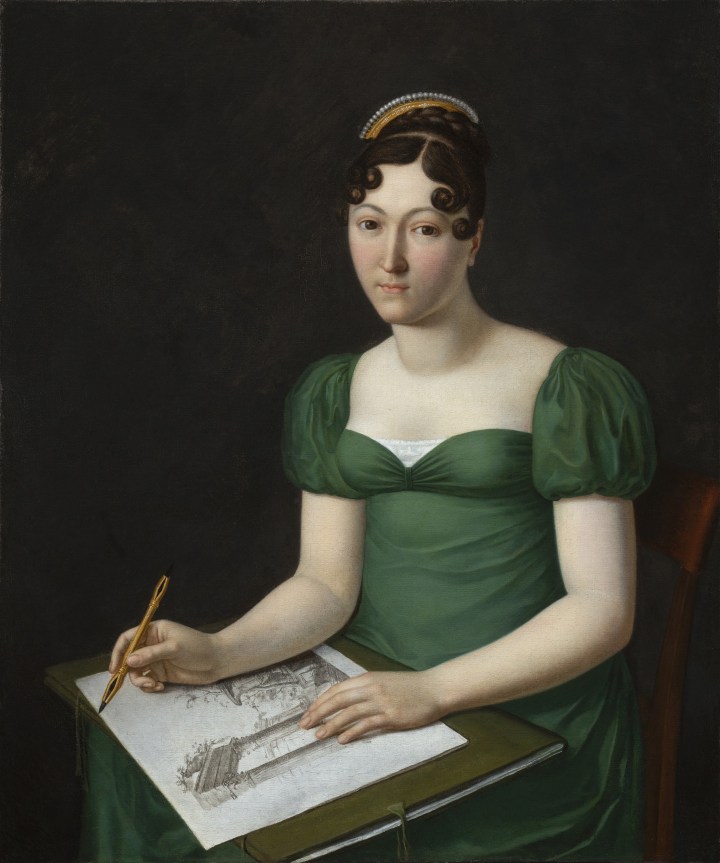
Charlotte Bonaparte, Self-Portrait, ca. 1824–26, oil on canvas, 885 × 730 mm (Princeton University Art Museum).
• Thomas Busciglio-Ritter, “From Brussels to Point Breeze: Charlotte Bonaparte’s Lithographic Landscapes, 1821–25”, pp. 31–43.
This article discusses a series of twelve lithographs by Charlotte Bonaparte (1802–1839), niece to Napoleon I, of North American views known as the Vues pittoresques de l’Amérique dessinées par la Comtesse Charlotte de Survillier (printed 1824), which she completed and disseminated on her return to Europe. The series, published in Brussels, became the first lithographic scenic views of the United States to circulate among western European audiences. The article situates Bonaparte’s landscape views within the context of transatlantic print culture of the early nineteenth century, touching on the role of women as producers of landscape images and the introduction of lithography as a new medium for American audiences.
n o t e s a n d r e v i e w s
• Bernard Aikema, Review of the exhibition catalogue Connecting Worlds: Artists and Travel, ed. by Anita Viola Sganzerla and Stephanie Buck (Paul Holberton Publishing, 2023), pp. 64–66.
• Catherine Jenkins, Review of the exhibition catalogue Trésors en noir et blanc. Estampes du Petit Palais, de Dürer à Toulouse-Lautrec, by Anne-Charlotte Cathelineau, Joëlle Raineau-Lehuédé, and Clara Roca (Paris Musées, 2023), pp. 74–76.
• Ellis Tinios, Review of Hokusai’s Fuji, ed. by Kyoko Wada (Thames and Hudson, 2023), pp. 76–77.
• Victoria Sancho Lobis, Review of Aaron Hyman, Rubens in Repeat: The Logic of the Copy in Colonial Latin America (Getty Research Institute, 2021), pp. 99–105.
Exhibition | Lines of Connection: Drawing and Printmaking

Hendrick Goltzius, Study of a Right Hand, 1588
(Haarlem: Teylers Museum, N058)
◊ ◊ ◊ ◊ ◊
Recently opened at the AIC:
Lines of Connection: Drawing and Printmaking
Art Institute of Chicago, 15 March — 1 June 2025
Getty Center, Los Angeles, 1 July — 14 September 2025
Curated by Jamie Gabbarelli and Edina Adam
The first exhibition ever to focus on the multiple connections between drawing and printmaking, this presentation brings together around 90 works on paper by some of the greatest artists in the Western tradition to uncover the inner workings of their creative process and offer new ways to think about the links between the two mediums.

Joseph Wright of Derby, Self-Portrait in a Fur Cap, 1765–68, monochrome pastel (grisaille) on blue-gray laid paper, 42.5 × 29.5 cm (Art Institute of Chicago, Clarence Buckingham Collection, 1990.141).
Featuring fascinating drawings and exceptional prints from the late 15th century though the mid-19th century by artists such as Albrecht Dürer, Parmigianino, Rembrandt, Peter Paul Rubens, Maria Sibylla Merian, Francisco Goya, and William Blake, the exhibition explores the creative exchange between the two practices by showcasing preparatory drawings for prints, printed imitations of drawings, and drawn copies of prints. A selection of hybrid works also questions traditional definitions, strict boundaries, and outdated hierarchical distinctions between media.
Among the many remarkable loans enriching the exhibition are two astonishing drawings of a right hand by Hendrick Goltzius, which will be shown alongside each other for the first time in over a generation. Additionally an impressive drawing by Rembrandt of Leonardo da Vinci’s Last Supper makes its Chicago debut. With a wealth of exceptionally beautiful works, Lines of Connection offers fresh perspectives on two intertwined mediums and lifts the curtain on the rarely foregrounded subjects of artistic training, workshop practices, and the afterlife and collecting of works on paper.
Lines of Connection: Drawing and Printmaking is co-organized by the Art Institute of Chicago and the J. Paul Getty Museum. The exhibition is curated by Jamie Gabbarelli, Prince Trust Associate Curator, Prints and Drawings, Art Institute of Chicago, and Edina Adam, assistant curator of drawings, The J. Paul Getty Museum.
Jamie Gabbarelli and Edina Adam, Lines of Connection: Drawing and Printmaking, 1400–1850 (Los Angeles: Getty Publications, 2025), 230 pages, ISBN 978-1606069653, $40.
Study Day | The Evolving Life of Country House Display
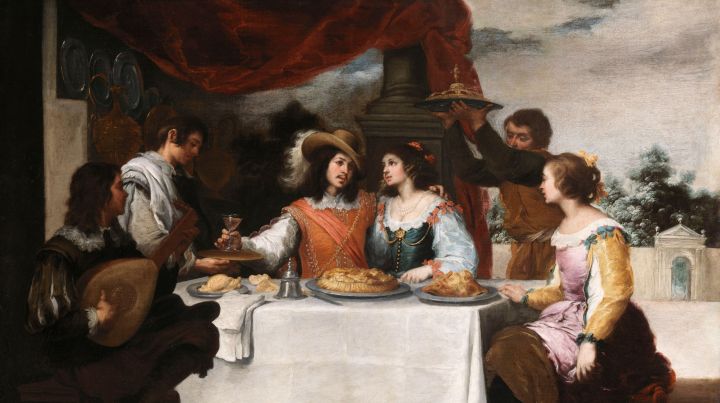
Bartolomé Esteban Murillo, The Prodigal Son Feasting, 1660s. The painting is one of a series of six, all of which are on display at Russborough from March 1 until May 31.
◊ ◊ ◊ ◊ ◊
From ArtHist.net and Russborough:
The Evolving Life of Country House Display
Russborough House & Park, County Wicklow, 10 April 2025
To celebrate the unique history of Russborough, on the occasion of the ‘return home’ of the Prodigal Son series by Bartolomé Esteban Murillo (1617–1682), this study day explores the interplay among houses, collections, and collectors, in a cross-disciplinary attempt to celebrate the richness and diversity of Irish and British country houses.
The historic houses ICOM’s sub-committee (DEMHIST) has identified three main elements that characterise historic houses that are open to the public, and that were formerly owned by collectors—as in the case of Russborough. These are: the container (the house), the content (the collection), and the creator (the collector). All three elements are profoundly intertwined; however, over time, their relationship can evolve, interrupt, or re-bond, thus altering and creating new narratives of collecting, display, and afterlife, often at the intersection of the private and the public.
This is certainly the case for Russborough, where two families and their collections in particular, the Milltowns and the Beits, and two important donations to the National Gallery of Ireland at both ends of the 20th century, have impacted the present history of Russborough and shaped the nature of Ireland’s national collections. The legacy of these donations is commemorated through the naming of the Milltown and Beit wings at the National Gallery of Ireland, and that of the Alfred Beit Foundation at Russborough.
While Russborough offers a significant case study, country houses across Ireland and Britain equally illustrate the evolving nature of historic interiors and display. The architectural design of these properties, their decorative schemes, and the methodologies used to interpret their contents have developed significantly over time, with ongoing research shedding new light on these complex histories. Drawing on Anne Higonnet’s concept of the ‘collection museum’, one may view the relationship between houses, their collections, and their former owners as one that transcends the physical displacement of objects. Despite relocation, such collections often continue to evoke the memory of their original settings and custodians, commemorated through names, foundations, or reimagined displays.
This study day will examine continuities and changes in historic display practices and architectural design, with insights drawn from country houses across Ireland and Britain. Speakers will consider the methodologies and sources that inform such research. The day will also offer participants the opportunity to reflect on Russborough itself, the Beits’ collecting activities, and their connection to Murillo’s Prodigal Son series, which participants will have the opportunity to view in its historic setting. Tickets are €60 and include lunch and refreshments.
The Return of the Prodigal Son exhibition, presented in partnership with the National Gallery of Ireland, runs until May 31st.
p r o g r a m m e
9.45 Registration with tea and coffee
10.15 Welcome and Introduction
10:30 John Goodall (Country Life) — Keynote Speech
11.20 Session 1 | The Architecture of Display
Chair: Mary Heffernan (Office of Public Works)
• Alec Cobbe (Alec Cobbe Design) — Inside Matters
• Frances Bailey (National Trust NI) — Bringing Mount Stewart Back to Life
• James Rothwell (FSA, National Trust) — Restoring Baroque Pomp and Circumstance: The Beauty Room at Petworth, Sussex
12.30 Lunch and Free Flow Tours of the Murillo Display
13.30 Session 2 | Sources for Studying Collecting and Display
Chair: Audrey Whitty (National Library of Ireland)
• David Sheehan (Castletown Foundation) — Castletown: ‘The Epitome of the Kingdom and All the Rarities She Can Afford’
• Adrian Tinniswood (University of Buckingham) — A Madness to Gaze at Trifles
• Seán O’Reilly (Institute of Historic Building Conservation) — Sociological and Psychological, Artistic and Architectural Aspects of Country House Display and Prospective Impacts for Management
14.40 Break and Free Flow Tours of the Murillo Display
15.00 Session 3 | Russborough, the Beits, and Murillo’s Return of the Prodigal Son
Chair: Fionnuala Croke (Chester Beatty)
• Aidan O’Boyle (Office of Public Works) — The Reconstruction of an 18th-Century Picture-hang at Russborough
• John Hilary (University of Nottingham) — The Beit Collection: Murillo’s Prodigal Son Series in Context
• Leah Benson and Muirne Lydon (National Gallery of Ireland) — From Russborough to the National Gallery: The Beit Gift and the Conservation of Murillo’s Prodigal Son Series
16.20 Drinks Reception
Funding | Research Related to Castletown House, County Kildare
From the application form:
Kevin B. Nowlan Castletown Bursary
Applications due by 9 May 2025
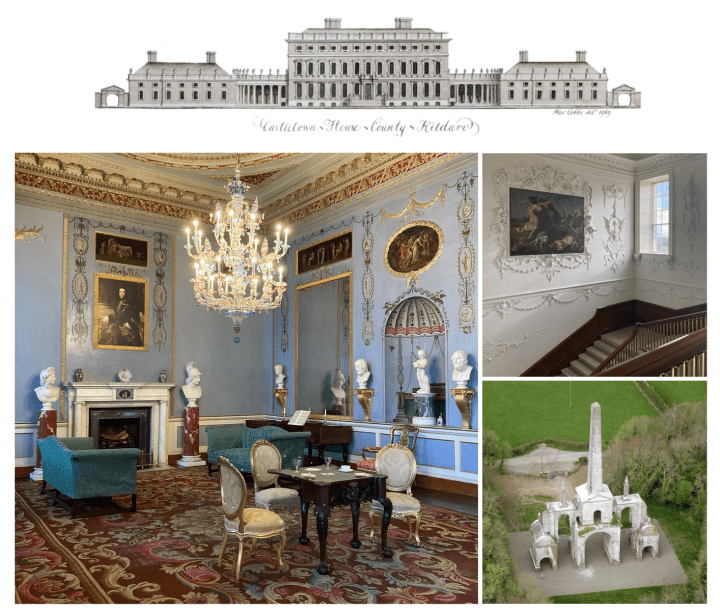 The Castletown Foundation is pleased to announce a call for applicants for the Kevin B. Nowlan Castletown Research Bursary, established to honour the memory of our esteemed former chairman. This scholarship aims to further research that focuses on or relates to Castletown: this extends to houses, collections, objects, and landscapes of allied family properties across Ireland and Great Britain that will have a direct bearing on the mediation and interpretation of Castletown house. Applications are invited from post-graduate students, early career professionals, and established scholars. The award of up to €5,000 may be used for research-related expenses only. The selection committee will be composed of members of the Castletown Foundation and one external specialist. The scholarship need not be awarded in any one year, and the decision of the assessors is final.
Your proposal (max. 1,000 words) should outline how existing knowledge will be extended by your work; it should also include a timeline for the research and an indicative budget. That document together with this application form must be submitted by email to Dr Alison FitzGerald (alison.fitzgerald@mu.ie) and Dr Patrick Walsh (WALSHP9@tcd.ie) by Friday, 9 May 2025 at 5pm, with the subject line ‘Kevin B. Nowlan Castletown Bursary’. A confidential reference supporting the application must arrive separately, before the closing date.
American Ceramic Circle Research Grants
From ArtHist.net:
American Ceramic Circle Research Grants
Applications due by 11 April 2025
To encourage new scholarship in the field of ceramics, the American Ceramic Circle (ACC) annually underwrites grants for up to $5,000 to individuals to help offset costs associated with original research. Grant applications, which are reviewed by the Grants and Scholarship Committee, are due the second Friday of April. Grants are not intended for projects involving commercial profit, including publication subventions. Successful applicants are required to submit the results of their completed research to the ACC in the form of a paper, which may be published in the ACC Journal. Grantees may also be invited to speak at the annual ACC symposium. To apply, please send your coversheet and proposal as a PDF file to Yao-Fen You, the ACC Grants and Scholarship Chair, at accgrants@gmail.com using this form. Queries are also welcome.
1 Coversheet
• Name
• Address
• Telephone
• Email address
• Institutional Affiliation
• List of Publications — please attach copy of one, especially if related to proposed topic.
• References — please ask references familiar with your project to send letters of recommendation directly to accgrants@gmail.com as PDFs.
2 Proposal
Please prepare an attachment to the cover sheet with the following sections:
• Project title
• Brief project summary (100 words max)
• Significance of topic (500 words max)
• List of primary sources consulted (if project is historic in nature)
• Project description: plans for the project, reasons, how it will be accomplished, and describe the qualifications of individuals involved in project (500 words max)
• Research plan
• Timeline, including estimated date of completion
• Collections, archives, institutions, etc. to be visited
• Proposed budget, with estimated expenditures
• Total amount requested from ACC
The American Ceramic Circle was founded in 1970 as a non-profit educational organization committed to the study and appreciation of ceramics. Its purpose is to promote scholarship and research in the history, use, and preservation of ceramics of all kinds, periods, and origins. The current active membership is composed of ceramics enthusiasts from many walks of life, including museum professionals, collectors, institutions, auction house professionals, and dealers in ceramics. Member interest is focused on post-Medieval pottery and porcelain of Europe, Asian ceramics of all periods, and ceramics made, used, or owned in North America.
New Book | Danish Porcelain: 250 Years
From ACC Art Books:
Elliot Todd, Danish Porcelain: 250 Years of Royal Copenhagen and Bing & Grøndahl; Volume 1: A Legacy in Porcelain, Stoneware, and Faience; Volume 2: A Collection of Works (New York: ACC Art Books, 2025), 936 pages, ISBN: 978-1788841504, £125 / $175.
 This detailed two-volume set offers an unparalleled scholarly insight into the history of Danish porcelain. Renowned for its ceramic industry, Denmark earned its status as a leading porcelain exporter through intense rivalry with other firms across Europe. With its factories excelling time and time again at the largest international expositions of the 19th and early 20th century, Danish porcelain took its own place on the world stage. Founded in 1775, Royal Copenhagen remains one the oldest porcelain manufacturers still in operation today. Throughout its history, the factory has experienced numerous highs and lows and has weathered more than 130 years of competition from the Bing & Grøndahl Porcelain Factory. After 1882, the two factories were located less than a mile apart, with their flagship stores eventually competing side-by-side for sales in the heart of Copenhagen.
Danish Porcelain was inspired by a two-generation collection of Royal Copenhagen and Bing & Grøndahl porcelain, stoneware, and faience begun by the author’s father in 1947. Developed over the past 20 years, this is the first comprehensive publication to critically review the history of both factories, from their beginnings to their eventual merger. Featuring detailed appendices and over 2400 images, these two volumes comprise an important source of information on the history of Danish porcelain, including the many technical and artistic successes of the late 1880s that revolutionized production worldwide.
Elliot Todd is a second-generation collector of Danish porcelain, stoneware, and faience from the factories of Royal Copenhagen and Bing & Grøndahl. Dr. Todd recently retired as Professor Emeritus from a major American university and is internationally recognized as a leading researcher and educator.
AHRC Studentship | Netherlandish Networks: Home-making, 1565–1799
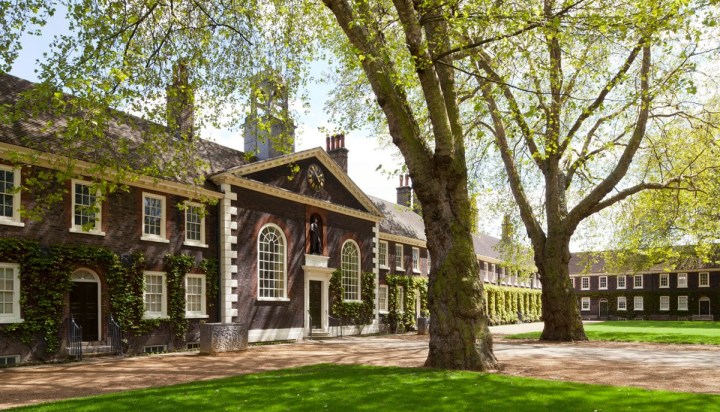
The Museum of the Home is located in almshouses, built in 1714, in Hoxton, East London.
◊ ◊ ◊ ◊ ◊
From the project description:
Netherlandish Networks:
Home-making in an Age of Emerging Global Capitalism, 1565–1799
AHRC Doctoral Studentship, Open University with the Museum of the Home and Queen Mary, University of London
Applications due by 7 April 2025
We are delighted to invite applications from students for a PhD Studentship in the Department of Art History at the Open University funded by the Arts and Humanities Research Council in partnership with the Museum of the Home (London) and the Centre for the Studies of Home at Queen Mary, University of London.
The project will explore the hidden histories behind a set of early modern objects belonging to the Museum of the Home, including a Flemish tapestry, Delftware, Chinese porcelain, japanned furniture, and items inlaid with rosewood. These diverse objects all share one quality: a relationship to the Netherlandish maritime trading networks (‘Netherlandish’ here refers to the profoundly entwined economies and cultures of what is roughly now Belgium and Holland). These Netherlandish networks spanned the globe but at their centre lay the cities of Amsterdam and Antwerp, not least because their Sephardic Jewish communities facilitated otherwise difficult trading connections between Northern Europe and the extensive Spanish and Portuguese Empires. London and the emerging British Empire relied heavily on these Netherlandish networks, especially across the sixteenth and seventeenth centuries. Crucially, these networks allowed for the circulation of religious and other refugees, merchants, skilled craftworkers, and enslaved people as well as materials like tropical hardwoods, objects like ceramics, clocks, and metalwork, and types of design that were then copied locally.
Key Research Questions
• What are the most efficient ways of mapping the many and complex journeys behind the interior fittings and furnishings that constituted home-making in early modern England as it became part of a global economy that, in turn, rested on colonialism and enslavement?
• How were early modern homes made in and through objects—so visually, spatially and materially—in relation to two overlapping immigrant communities (Sephardic Jews and Netherlanders)?
• To what extent were homes made in temporary lodgings such as boarding-houses or through public spaces such as churches or synagogues? In this process, how were objects mobilised in ritual and less formal behaviour?
• How can objects best be used to instantiate specific social histories about immigration, colonialism, and enslavement?
• What broader historical, curatorial, and art-historical methodologies may be developed from studying objects with hidden histories?
As part of the studentship, the successful candidate will be expected to spend significant periods of time with the collections at the Museum of the Home in east London. Research will also be undertaken at relevant archives across London, including the National Archives at Kew, which holds an extensive range of port books recording merchant shipping into most English ports from between 1565 and 1799.
The candidate will be co-supervised between the Open University and the Museum of the Home. Professor Clare Taylor and Dr Margit Thøfner, from the Department of Art History will supervise from the Open University, and Ailsa Hendry, Collections Manager and Lara Baclig, Community Producer, will supervise on behalf of the Museum of the Home.
Clare Taylor is a specialist in early modern interiors, material culture, and design. She has been lead supervisor for a number of Collaborative Doctoral Awards, including with the National Trust, the National Railway Museum, and the Sanderson archive. Margit Thøfner specialises in Netherlandish art, visual and material culture from the sixteenth and seventeenth centuries. Ailsa Hendry’s experience stretches across collections care and curation and she has worked on many projects exploring early modern European history. Lara Baclig specialises in community engagement and decolonial practice in collecting and displays.
More information is available here»
Call for Papers | ‘National’ Churches in Foreign Mediterranean Ports
This panel is part of the AISU conference in Palermo:
‘National’ Churches and Mediterranean Ports in the Early Modern Period
Foreign Communities Reshaping the Urban Fabric
Chiese ‘nazionali’ nei porti del Mediterraneo in età moderna (secoli XV–XVIII)
Il ruolo delle comunità forestiere nella riconfigurazione del tessuto urbano
Associazione Italiana di Storia Urbana Congress, Palermo, 10–13 September 2025
Organized by Nadia Rizzo and Carl Alexander Auf der Heyde
Proposals due by 3 May 2025
The establishment of ‘national’ mercantile groups in major Mediterranean port cities—key hubs for cross-cultural exchange—developed continuously from the Middle Ages into the early modern period (Colletta 2012). These ports became meeting places for foreign merchants who organised themselves into ‘nations’, structured associations based primarily on geographical origin, but also on shared language and religion (Petti Balbi 2001). These communities did not limit their activities to commercial spaces such as ‘fondaci’ and ‘logge’.
From at least the fifteenth century, they established meeting and worship places, often gaining patronage for chapels within existing churches. The most ambitious goal of the foreign communities, however, was the construction of a dedicated church, consecrated to their patron saint and intended primarily to meet the religious and liturgical needs of the group (Koller, Kubersky-Piredda 2015 [for national churches in Rome]). In addition to serving as a devotional landmark, the construction of a national church was a clear statement of the community’s presence, identity, and wealth, exerting a tangible and visible influence on the urban and architectural landscape of the host city.
From the mid-sixteenth century, coinciding with a wave of significant urban redevelopment, there was a marked increase in the construction of national churches independent of local religious communities. This phenomenon intensified during the seventeenth century, alongside the architectural fervour of the newly emerging Counter-Reformation orders, fostering a virtuous cycle of competition not only between nations, but also among religious congregations and national communities.
This panel seeks to explore the impact of foreign communities on the urban transformation of Mediterranean port cities between the sixteenth and eighteenth centuries, with a focus on the institution of the national church as a key reference point. We invite proposals in Italian, English, Spanish, and French that approach this topic from different perspectives and levels of analysis, including:
• Research on the settlement system of a single nation in multiple mercantile centers
• Specific studies on individual national churches
• Diachronic investigations on the settlement of a foreign group in a specific center (from chapels to national churches)
• Comparative overviews of multiple national churches in the same city
To apply, please fill out the form available at the bottom of each session presentation. The link for session 4.1 can be found here. Applicants are required to submit the paper abstract (maximum 5000 characters) and a brief biographical note. For any further information regarding the session, please contact the panel coordinators: Nadia Rizzo (Scuola Normale Superiore, nadia.rizzo@sns.it) and Carl Alexander Auf der Heyde (Università degli Studi di Palermo, carlalexander.aufderheyde@unipa.it).
The congress of the Associazione Italiana di Storia Urbana (Italian Association of Urban History / AISU International) will meet in Palermo, 10–13 September 2025. This year’s theme is The Crossroad City: Relations and Exchanges, Intersections and Crossing Points in Urban Realities.
Call for Papers | What Does Sculpture Do to a Garden? 17th–21st Century
From ArtHist.net, which includes the French version:
What Does a Sculpture Do to a Garden? What Does a Garden Do to a Sculpture?
Que fait une sculpture à un jardin? Que fait un jardin à une sculpture?, 17e–21e siècle
Musée Rodin, Paris, 6 June 2025
Proposals due by 31 March 2025

Edvard Munch, Le Penseur de Rodin dans le parc du Dr Max Linde à Lübeck, ca. 1907, oil on canvas, 143 × 98 cm (Paris: Musée Rodin).
Part of the 22nd edition of the Rendez-vous aux jardins taking place 6–8 June 2025 under the theme “Stone Gardens / Garden Stones,” the symposium is under the scientific direction of Emmanuelle Héran, Chief Curator and Head of Garden Collections at the Musée du Louvre. The event will be webcast live.
While closely linked since Antiquity, the relationship between sculpture and gardens was rekindled during the Renaissance. Rodin himself pondered this connection, as Paul Gsell recounts in Art: “Statues are usually placed in gardens to embellish them. For Rodin, gardens are here to adorn the statues. For him, Nature remains the supreme mistress, an infinite perfection.” And yet, works tracing the history of gardens often give little consideration to the statuary that inhabits them. Conversely, sculpture scholars rarely reflect on the unique setting of gardens, or on what a sculpture, in turn, can bring to a garden. In both fields, publications are frequently illustrated with tightly framed photographs of sculptures, isolating them as if displayed within a museum—or even entirely cut out from their surroundings. Yet, a garden is not a museum; it offers to three-dimensional works neither the neutrality of a ‘white cube’ nor even the illusion of a ‘green cube’ beneath an open sky.
Indeed, what could be more subject to change, more ephemeral, than a garden? As seasons pass, with the shifting hours of the day and the whims of the weather, the environment surrounding a sculpture is in constant flux. While there does exist a ‘museography’ for gardens—defined both as the art of displaying sculptures within them and as the composition of gardens incorporating sculpture—it has never been the subject of a comprehensive study. It is scarcely taught, neither to curators overseeing an ‘open-air sculpture museum’ nor to landscape architects and garden designers responsible for their creation and upkeep. In this regard, Louis Gevart’s dissertation broke new ground [1].
The question of meaning also arises. In royal and aristocratic parks and gardens, a sculptural ensemble may follow a coherent iconographic program, whose analysis reveals political intentions—such as the renowned Grande Commande of 1674 for Versailles. More often, however, groves and lawns host a disparate collection, whose coherence—if it ever existed—may have faded over time. The history of a collection displayed in a garden can mirror that of a museum. Yet it may also be entirely different, as the works placed in a garden are not necessarily commissioned pieces or first choices. Some may have arrived belatedly, by default, left outdoors for lack of a better option, or, when too damaged or vandalized, removed in haste.
It is thus possible that a restoration, conversion or ex nihilo creation project requires a landscape architect to address the difficult issue of sculptures. In the world of historical monuments, managing a set of statues does not always fall under the responsibility of the chief architect, but of a heritage curator. This separation of powers is worth examining: is it relevant or counterproductive? How can dialogue be established? The choice of materials, their adaptability and durability can all be considered. Site-specific works created in close collaboration with a garden can be cited, such as Giuseppe Penone and Pascal Cribier’s L’Arbre des voyelles in the Tuileries Gardens.
During the 20th century, sculpture parks and gardens—created with this intent—focused more on presenting a “living history of sculpture under construction” (Louis Gevart). Iconographic objectives may have been replaced by the production of a historical-stylistic narrative, without soliciting the help of a landscape architect. However, as the profound changes recently made to Middelheim Park in Antwerp and the recreation of entire programs at Stowe demonstrate, a return to iconographic coherence does seem to be taking place, in response to the public’s presumed expectations.
This symposium welcomes case studies of the same work in different sizes and materials, whose effect on a garden can be decisive for its composition or, on the contrary, become unremarkable. Think of copies of famous ancient sculptures—the Farnese Hercules, the Diana of Versailles—whose use, identified by Haskell and Penny in 1981 and recently revised, continues. Also welcome are examples of sculptures whose contribution to a garden does not appear to be essential, or of attempts that have proved inconclusive, or of bases that have been left empty or refilled. The crucial question remains that of the usefulness and relevance of a three-dimensional work within a garden environment. In other words, what does a sculpture do to a garden? And what does a garden do to a sculpture?
This call is addressed to art historians specializing in gardens or sculpture. It is also aimed at park and garden managers, heritage architects and landscape architects who have carried out preliminary studies or restoration work on historic gardens, so that they can share their thoughts and recent field practices, carried out in close collaboration with art historians and sculptors. It will focus on the following questions:
• What is the use of sculpture in a garden?
• Iconography: the search for coherence
• When the statue is missing / The empty base
• What materials are used in a garden?
• Landscape architects and sculptors / Site-specific works
Submissions—with a title, an abstract (1500–2000 characters), and a brief biographical note (500–1000 characters)—should be sent to colloques@musee-rodin.fr before 31 March 2025.
Research Committee
• Emmanuelle Héran, Chief Curator, Head of Garden Collections, musée du Louvre
• Amélie Simier, Chief Curator, Director, musée Rodin
• Véronique Mattiussi, Head of the Research Department, musée Rodin
• Franck Joubin, Researcher and Conference Coordinator, musée Rodin
[1] Louis Gevart, “La Sculpture et la terre. Histoire artistique et sociale du jardin de sculpture en Europe (1901–1968),” PhD thesis in art history, under the direction of Thierry Dufrêne, Université Paris Ouest La Défense, January 2017.










 Enfilade
leave a comment