Display | The Geometry of War: Fortification Plans
From the University of Michigan:
The Geometry of War: Fortification Plans from Eighteenth-Century America
William L. Clements Library, University of Michigan, 15 October 2012 — 15 February 2013
 The eighteenth century was a time of intensive military activity in Europe and in the Americas. Much of this centered on fortified towns or positions. The period from the 1680s to the French Revolution has been called the “classic century of military engineering,” a time when earlier forms of artillery fortifications were perfected and frequently tested in battle.
Designing, constructing, and recording fortifications was the job of the military engineer. He followed well-tested principles of design, based on geometry, to construct fortified places. These were recorded in detailed plans, many of surprising beauty and complexity. The Clements Library is rich in examples, manuscript and printed, and offers a sample illustrating the science of fortification in eighteenth-century America.
Conference | The Cultural History of Cartography
From the conference website:
The Cultural History of Cartography
University of Michigan, Ann Arbor, 25-26 October 2012
This two-day interdisciplinary symposium on the cultural history of cartography intends to facilitate discussion among scholars of history, art history, literary criticism, area studies, and architecture and urban planning. To develop comparative modes of inquiry, each panel will address specific concerns across geographical spaces and temporal periods. Topics include the relations of mapmaking, map reception, and map use to perception, fantasy, temporality, indigeneity, travel, migration, the slave trade, colonialism, citizenship, costume books, and poetry and drama. The symposium is free and open to the public.
◊ ◊ ◊ ◊ ◊
T H U R S D A Y , 2 5 O C T O B E R
Palmer Commons, Forum Hall
9:00 Welcome
Valerie Traub, Karl Longstreth, Brian Dunnigan, and Kevin Graffagnino
9:15 Travel, Commerce, Tourism
Chair: Scotti Parrish
• Jordana Dym: “‘A Prick’d Line’: Route Maps and Travel Accounts, 1600-1930”
• Laura Williamson Ambrose: “Moved to Travel: Dislocation and Domestic Mobility in Anna Trapnel’s Report and Plea”
• Jyotsna Singh:“Cartographies of the Guinea Coast and the Early Modern Slave Trade”
• James Akerman: “Rivers, Roads, and Rails: Travelers and Maps in the Early United States”
11:15 Break
11:30 Technologies
Chair: Mary Pedley
• Stephanie Leitch: “Us and Them: Vespucci’s Triangle and the Geometry of Difference”
• Lydia Soo: “Early Modern Maps of London”
12:30 Lunch
1:30 The History of Cartography Project
Chair: Karl Longstreth
• Mary Pedley
• Matthew Edney
2:00 Difference, Similarity, Classification
Chair: Ellen Poteet
• Marjorie Rubright: “The Il-logic of Location: Getting Lost in Early Modern Atlases”
• Susan Schulten: “Mapping the Population in the Aftermath of the American Civil War”
• Martha Jones: “Race, Space, and Citizenship in Antebellum Detroit: Rethinking the Power of Maps”
3:30 Break
3:45 Ornamentation
Chair: Betsy Sears
• Kathryn Will: “Mapping the Heraldic Field”
• Ann Rosalind Jones: “Allegories of the Continents in Sixteenth-Century Costume Books”
F R I D A Y , 2 6 O C T O B E R
University of Michigan Museum of Art, Helmut Stern Auditorium
10:00 Welcome
Valerie Traub and Karl Longstreth
10:15 Maps, Theater, and the Literary
Chair: Valerie Traub
• Gavin Hollis: “‘Bed Work, Mappery, Closet War’: Shakespearean Anti-Cartography”
• Julia Carlson: “Poetry, Print Culture, and the Making of the ‘Lake-District’”
• Jonathan Zwicker: “Stage and Spectacle in an Age of Maps: Kabuki and the Cartographic Imagination in Nineteenth-Century Japan”
11:45 Relocate to 1014 Tisch Hall for panel and lunch
12:00 Mapping the Americas
Chair: Michael Witgen
• Neil Safier: “Fugitive Landscapes in Deep Time: Mapping Indigenous Migrations in Amazonia”
• Jon Parmenter: “The Spatial Reconnaissance of Iroquoia, 1600-1775: Who Knew What, and When Did they Know It?”
• Martin Brückner: “Cartography and the Gigantic: Wall Maps, Aesthetics, and Technology in Nineteenth-Century America”
2:00 Relocate to Art Museum
2:30 Perception, Fantasy, Time
Chair: Celeste Brusati
• Gottfried Hagen: “Time and Narrative in Ottoman Maps”
• Bronwen Wilson: “Insular Navigations”
• Tom Conley: “The Baroque Hydrographer”
• Anne Herrmann: “‘Naive Geography’: Aleksandra Mir’s ‘Switzerland and Other Islands’”
Exhibition | Guglielmo Du Tillot and the Enlightenment
From the University of Parma:
Guglielmo Du Tillot Regista delle Arti nell’Età dei Lumi
Palazzo Bossi Bocchiarma, Parma, 28 October 2012 — 27 January 2013
Curated by Gianfranco Fiaccadori, Alessandro Malinverni, and Carlo Mambriani
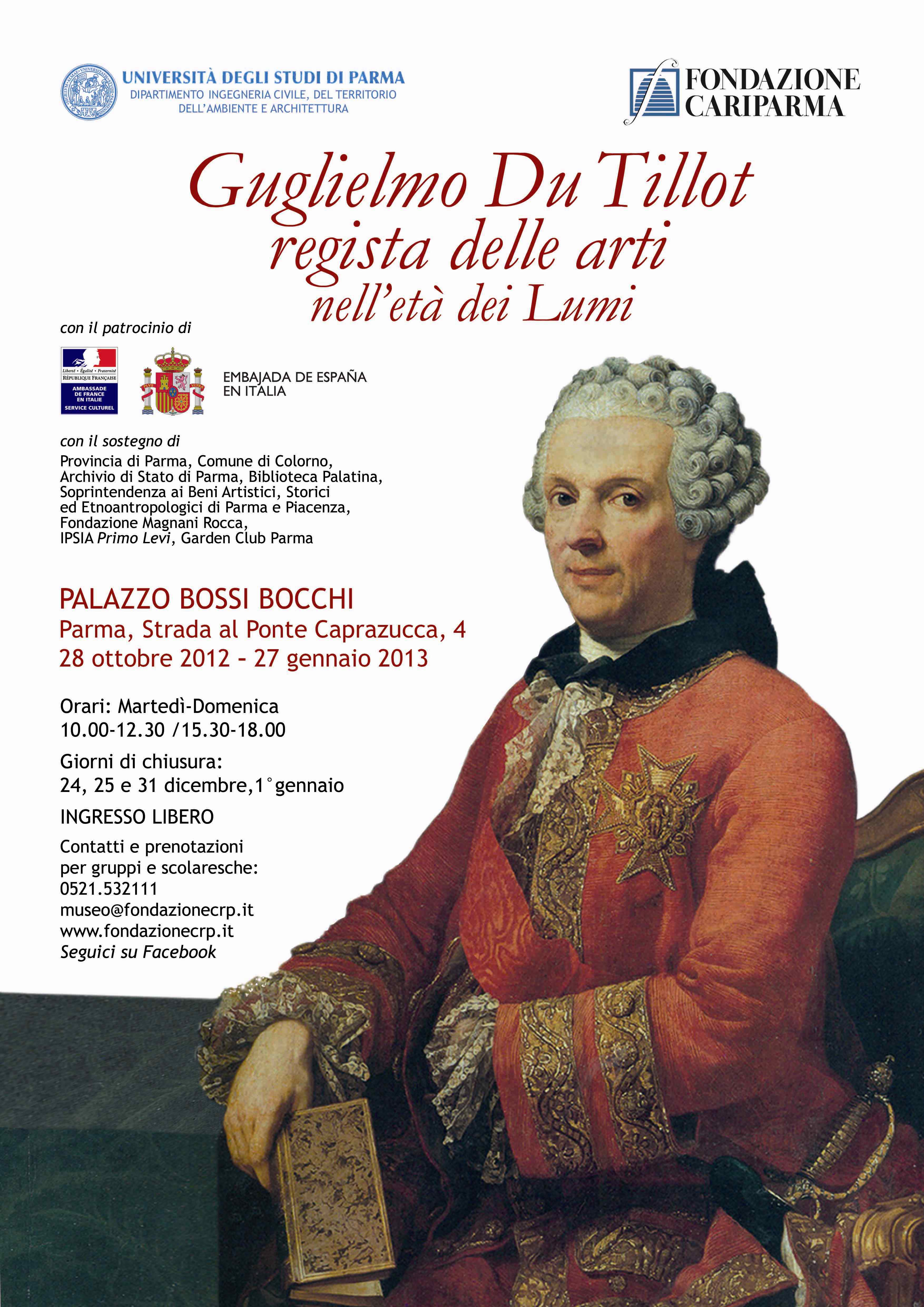 La mostra Guglielmo Du Tillot, regista delle arti nell’età dei Lumi si terrà a Palazzo Bossi Bocchi dal 28 ottobre 2012 al 27 gennaio 2013 (inaugurazione sabato 27 ottobre ore 18,00). L’esposizione, che si fregia del patrocinio delle ambasciate di Francia e di Spagna in Italia, è stata realizzata in collaborazione con Biblioteca Palatina di Parma, Soprintendenza per i Beni Storici Artistici ed Etnoantropologici di Parma e Piacenza, Archivio di Stato di Parma e IPSIA “Primo Levi” di Parma; l’obiettivo è di raccontare a un vasto pubblico l’impatto culturale e artistico della figura di Du Tillot, Intendente della Real Casa inizialmente e Primo ministro in seguito. Attraverso un ricco panorama di opere, talvolta inedite, di pittura, scultura, architettura, incisione, numismatica e arti decorative, nonché di preziosi volumi conservati nei fondi antichi della Biblioteca Palatina e della Biblioteca di Busseto, verrà illustrata la riforma artistica e culturale che permise al piccolo stato borbonico di emergere in Italia e in Europa come non era accaduto nemmeno sotto la dinastia farnesiana, facendo di Parma l’«Atene d’Italia».
Il percorso della mostra – ideata e curata da Gianfranco Fiaccadori e Alessandro Malinverni (Università di Milano) e Carlo Mambriani (Università di Parma) – si articola in due sezioni: la prima, preceduta da un inquadramento biografico del protagonista, è incentrata sulla trasformazione di Parma in «Atene d’Italia»: il ruolo del ministro, di Annetta Malaspina e della loro cerchia; le nozze dei principi come eventi di propaganda artistica e dinastica; l’istituzione dell’Accademia e l’appoggio fornito ai suoi artisti; il rinnovo delle residenze, delle manifatture e del tessuto urbano. La seconda sezione è dedicata alla committenza privata di Du Tillot a Parma e a Parigi, durante il breve esilio: l’allestimento delle sue residenze, gli acquisti di libri e di opere d’arte, gli artisti prediletti.
Tra i numerosi artisti presenti in mostra, oltre all’architetto Ennemond Alexandre Petitot, fedele collaboratore del ministro, e ai vincitori dei concorsi accademici degli anni Sessanta, si segnalano i protagonisti della ritrattistica settecentesca parmense, come Giuseppe Baldrighi e Pietro Melchiorre Ferrari, ed europea, del rango di Jean-Marc Nattier, Anton Raphael Mengs, Laurent Pecheux e Louis-Michel Van Loo.
Conference | Guglielmo Du Tillot and the Enlightenment
From the University of Parma:
Tillot e i Ministri delle Arti nell’Europa dei Lumi
Parma e Colorno, 25-27 October 2012
Convegno organizzato da Gianfranco Fiaccadori, Alessandro Malinverni, e Carlo Mambriani
A due anni di distanza dalle celebrazioni in onore della duchessa di Parma Luisa Elisabetta di Borbone, la Fondazione Cariparma, in collaborazione con il Dipartimento di Ingegneria Civile, Ambiente, territorio e Architettura dell’Università di Parma, prosegue l’approfondimento della storia dei ducati parmensi nel Settecento, attraverso un doppio appuntamento dedicato al ministro riformatore Guglielmo Du Tillot e al suo ruolo nello sviluppo delle arti a Parma negli anni Sessanta.
L’evento, che prepara e apre la mostra, è il convegno internazionale di studi Guglielmo Du Tillot e i ministri delle arti nell’Europa dei Lumi, articolato su tre giorni: 25 ottobre (Biblioteca Palatina), 26 ottobre (Reggia di Colorno) e 27 ottobre (Università, Aula dei Filosofi). Il convegno offrirà una panoramica esaustiva del secondo decennio di dominazione borbonica a Parma e un raffronto tra i principali ministri delle arti in Europa. Di storia, letteratura, pittura, musica, architettura e urbanistica, arti decorative e costume tratteranno una trentina di studiosi, afferenti a centri di ricerche e atenei italiani ed esteri.
◊ ◊ ◊ ◊ ◊
Giovedì, 25 Ottobre 2012 – Parma, Biblioteca Palatina
PARMA 1759-1771: L’«ATENE D’ITALIA»
9.00 Accoglienza e registrazione dei Relatori
Saluti delle Autorità, CARLO MAMBRIANI (Università degli Studi di Parma), Introduzione
9:30 Presiede Sabina Magrini, Direttrice della Biblioteca Palatina
• GIUSEPPE GALASSO (Accademia Nazionale dei Lincei), L’Italia degli anni Sessanta
• MARCELLO VERGA (Università degli Studi di Firenze), Modelli di governo e politiche riformatrici negli stati italiani (gli anni Sessanta del XVIII secolo)
• MARC FUMAROLI (Académie Française, Collège de France), La Parma illuminista e neoclassica nelle geopolitica di Choiseul
14.45 Presiede Giuseppe Galasso, Accademia Nazionale dei Lincei
• CLAUDIO MADDALENA (Università degli Studi di Padova), Le riforme amministrative ed ecclesiastiche: forza e debolezza del governo Du Tillot
• GIOVANNI FRACASSO (Università degli Studi di Bologna), La politica economica di Du Tillot: riforme e sostegno alla manifattura
• MERCEDES SIMAL LÓPEZ (Istituto Universitario La Corte en Europa, Madrid), Le nozze di Luisa Maria di Parma con il principe delle Asturie: un’altra parmigiana alla corte di Spagna
• GIORGIO FEDERICO SIBONI (Università degli Studi di Milano), Giochi di potere. Du Tillot e il matrimonio di don Ferdinando con Maria Amalia
• GIUSEPPE BERTINI (Parma), La cultura francese a Parma dopo la caduta di Du Tillot
Venerdì, 26 Ottobre 2012 – Colorno, Reggia, Sala Grande
DU TILLOT REGISTA DELLE ARTI
9.15 Saluti delle Autorità
9.30 Presiede Maria Letizia Sebastiani, Direttrice della Biblioteca Nazionale Centrale di Firenze
• CARLO MAMBRIANI (Università degli Studi di Parma), Le strategie architettoniche e urbane di Du Tillot
• ALESSANDRO MALINVERNI (Università degli Studi di Milano), Du Tillot e la pittura a Parma 1759-1771
• GUILHEM SCHERF (Musée du Louvre), La scultura a Parma tra 1749 e 1771
• FRANCESCA FEDI (Università degli Studi di Parma), Il teatro e le lettere a Parma
• CLAUDIO TOSCANI (Università degli Studi di Milano), La musica nei ducati
• CHIARA TRAVISONNI (Università degli Studi di Parma), Du Tillot, Valdrè e Palmieri: un collezionista e i suoi pittori tra Parma e Parigi
15.00 Presiede Maria Utili, Soprintendente per i Beni Storici, Artistici ed Etnoantropologici di Parma e Piacenza
• ENRICO COLLE (Firenze), Du Tillot e la promozione delle arti decorative a Parma
• CRISTINA CAMPANELLA (Milano), La Real Fabbrica della Maiolica e Vetri e la ceramica nel Settecento a Parma
• ANDREINA GALLEANI D’AGLIANO (Roma), Ordinativi di porcellana per i duchi di Parma (1755-1770): un confronto con le principali corti europee
• FRANÇOISE TETART VITTU (Musée Galliera, Paris), La mode à Parme entre 1749 et 1771
Sabato, 27 Ottobre 2012 – Parma, Università, Aula dei Filosofi
I MINISTRI DELLE ARTI NELL’EUROPA DEI LUMI
9.00 Saluti delle Autorità
9.15 Presiede Carlo Mambriani, Università degli Studi di Parma
• CHRISTOPHE HENRY (Groupe Histoire Architecture Mentalités Urbaines, Paris), Une renaissance manufacturière des arts : la contribution de Philibert Orry et de Guillaume du Tillot à la théorie économique des Lumières (1730-1774)
• ALESSANDRO MALINVERNI (Università degli Studi di Milano), Tournehem e la Direction des Bâtiments du Roi (1745-1751)
• MARIE-LAURE DE ROCHEBRUNE (Château de Versailles), Le duc de Choiseul et les arts
• XAVIER SALMON (Château de Fontainebleau), Madame de Pompadour et les arts
• CHRISTOPHE MORIN (Université de Tours), Marigny entre cour et jardin: le goût d’un ministre des arts à la ville et aux champs
• JOSÉ Luis SANCHO (Patrimonio Nacional, Madrid), I “ministri delle arti” in Spagna da Filippo V a Carlo III
14.45 Presiede Bruno Adorni, Decano del DICATeA, Unversità di Parma
• IMMA ASCIONE (Archivio di Stato di Napoli) e GINA ASCIONE (Palazzo Reale di Napoli, Appartamento storico), Le arti a Napoli durante la Reggenza (1759-1767) nelle lettere di Bernardo Tanucci e Domenico Cattaneo
• PAOLO CORNAGLIA (Politecnico di Torino), Intendenti Generali delle Fabbriche e Governatori dei Reali Palazzi alla corte di Torino: 1737-1783
• LAURA FACCHIN (Università degli Studi di Verona), Carlo Gottardo Firmian ministro plenipotenziario della Lombardia Asburgica: politiche artistiche tra Milano e Vienna
• ORONZO BRUNETTI (Università degli Studi di Parma), Il potere e le arti in Toscana
• CRISTINA RUGGERO (Bibliotheca Hertziana, Roma), Il conte Heinrich von Brühl, primo ministro del principe elettore di Sassonia
• GIANFRANCO FIACCADORI (Università degli Studi di Milano), Chiusura del convegno
18.00 Inaugurazione della Mostra Guglielmo Du Tillot Regista delle Arti nell’Età dei Lumi
Exhibition | Bronze at The Royal Academy
Reviewed for Enfilade by Craig Ashley Hanson
Bronze
Royal Academy of Arts, London, 15 September — 9 December 2012
Curated by David Ekserdjian and Cecilia Treves
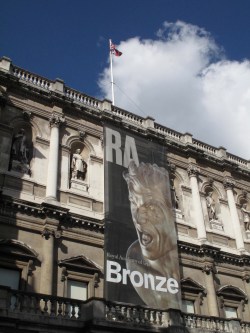 Critics have been raving about Bronze since it opened last month at the Royal Academy of Arts in London. Notwithstanding the exhibition’s sweeping coverage–in terms of geography and history–I didn’t initially include it here at Enfilade as I had trouble finding eighteenth-century points of relevance. Indeed, out of dozens of objects shown across ten rooms, only a handful of works were produced during the period. And yet, now that I’ve seen the exhibition, I’m convinced dix-huitièmistes should pay attention.
Organized by theme rather than time and place, the range of works is staggering. If, in keeping with traditional historiographical models, the show begins with an achingly beautiful example from ancient Greece–a recently recovered Dancing Satyr–it quickly brings an international array of work into open and productive dialogue. On display are works from Ghana and Nigeria, Eturia and Rome, China and Japan, Northern Europe and the United States. Categories one might expect to see are well represented: ritual dining vessels from Shang dynasty tombs, classicizing work from Renaissance Florence, Buddhist work from India (including an extraordinary sixth-century Buddha Shakyamuni from Bihar). Rodin’s Age of Bronze is, of course, included. But there are surprises, too: ancient court objects from Israel (a crown, scepter, and vulture standard), sixteenth-century French spurs, a basketball by Jeff Koons. Works by Giambologna appear next to an oversized spider by Louise Bourgeois (climbing the wall, no less).

François Girardon, Laocoön and His Sons, ca. 1690 Houghton Hall, Norfolk/Photo © Royal Academy of Arts, London, Roy Fox (click for more info)
While it all could have gone horribly wrong, the experience of viewing the exhibition appears to be, for most viewers, one of coherence rather than confusion, coherence derived from the thoughtful attention to the possibilities of bronze as a material. The medium is the subject in an entirely convincing, indeed revelatory manner. The varieties of objects, selected from a global vision of art history, work thanks to careful attention to exploration of seven thematic categories: figures, animals, groups, objects, reliefs, gods, and heads. Scale and texture, color and composition, the tensile strength and resulting artistic flexibility of bronze all become matters of first, rather than passing, interest.
And for the eighteenth-century? The final room of heads includes original choices: Massimiliano Soldani-Benzi’s Damned Soul of 1705 after Bernini and Anne Damer’s Mary Berry from 1793, while François Girardon’s Laocoön from Houghton Hall, ca. 1690, exerts a commanding presence in the gallery dedicated to groups. Particularly compelling for me, in that same room, is the sensitive installation of Francesco Bertos’s 1730s allegorical group of Sculpture, Arithmetic, and Architecture from the Prado. Placed alongside Giambologna’s 1576 Nessus and Deianira (a centaur abduction scene) and Alessandro Algardi’s 1647 St. Michael Overcoming the Devil, Bertos’s work appears as an entirely legible development from Renaissance humanism, to forceful Baroque religious expression, to refined Enlightened optimism. Adrian de Vries’s Hercules, Nessus and Deianira of 1622 dominates the center of the gallery, making the relationships–the similarities and differences within this 150-year period–all the more striking.
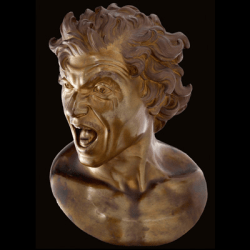
Massimiliano Soldani-Benzi, after Bernini, Damned Soul (‘Anima Dannata’), 1705-07. Bronze with golden-red lacquer patina, 39.5 cm. Liechtenstein Museum, Vienna. Photo © Liechtenstein. The Princely Collections, Vaduz-Vienna
And so historical arguments do exist within the exhibition, even if there’s no obvious central argument based on tracking change over time (it is I think one reason material from all over the world can be placed side by side so effectively). One may wish there were more eighteenth-century offerings–I’ll leave those criticisms to the sound judgment of my colleagues. But, for me, it is an exhibition that likely would make a lot more sense to eighteenth-century connoisseurs than the much more tightly focused, monographic approaches dominating exhibitions in the present age. No only is it a show I think many eighteenth-century viewers would understand (with admittedly a bit of instruction), it’s a show I think they would like.
Alongside it, the catalogue offers innovative models for thinking about different ways exhibitions generally might succeed. The book pairs beautifully with the catalogue for the 2009 exhibition Cast in Bronze: French Sculpture from Renaissance to Revolution, available–for anyone regretting that there aren’t more eighteenth-century works on
display–in the Royal Academy gift shop on the way out.
◊ ◊ ◊ ◊ ◊
Catalogue: Bronze (London: Royal Academy Publications, 2012), 248 pages, ISBN: 9781907533280, $65.
 Bronze, long celebrated for its durability and the wide range of effects that it offers, has been prized as an artistic material in many parts of the world throughout the ages. Magnificent bronze sculptures from the ancient times have emerged unscathed after millennia on the sea bed. It is a material that has been used on all scales, from the minute to the monumental. This sumptuous catalogue examines bronze’s earliest beginnings in North Africa, the Middle East and China as it transcended tools and weaponry to become a medium of fine art. Expert authors chart the virtuousity of artists in ancient Greece and Rome; developments in Asia and Africa; bronze’s great flowering in the European Renaissance and its use in the modern era by artists such as Rodin, Picasso, Brancusi and Bourgeois.
A unique testament to the works of art that one medium has inspired, Bronze contains lavish colour plates of over 150 masterworks arranged chronologically to take the reader on a voyage through time, tracing the work of sculptors, casters and chasers through the centuries.
Conference | New Perspectives on the Romantic Period
From the conference website:
New Perspectives on the Romantic Period
Tate Britain, London, 6 -7 November 2012
Registration deadline: 26 October 2012
A student-led conference in association with the Tate Research Centre: British Romantic Art
The Tate Research Centre: British Romantic Art aims to promote research on British art from around 1770 to 1850. Tate’s collection of watercolours and drawings, and major holdings of the work of William Blake and John Constable is among the greatest in the world. With a special focus on Blake, Constable and Turner, the Centre offers a programme of events and activities aimed at encouraging research on these artists and on the Romantic era as a whole, as well as the legacy of Romantic art and culture in Britain and around the world.
This two-day conference, organised by PhD students in collaboration with Tate, will feature papers by British and international post-graduates working on the Romantic period with contributions focusing on British art and visual culture of the period c.1770–1850. Papers will offer new perspectives on the iconic artists of the Romantic period: Turner, Constable, Blake, David Wilkie, Edwin Landseer, John Sell Cotman, John Martin, James Barry and Benjamin Robert Haydon, all of whom are represented in the Tate collection. Themes under discussion in the conference will include the material concerns of artists, examining the use of different media artists’ multidisciplinary interests and approaches, and their self-representation and identity, as well as landscape and travel, political and religious themes, and cross-period connections.
The conference will make use of Tate Britain’s resources, with the chance to get up close to works in the collection and see items that are rarely shown in public. Attendance to the conference is free and open to current students. Places are limited, so please book early to secure a place: newperspectives@tate.org.uk
Join the Twitter conversation at: #britishromanticart
◊ ◊ ◊ ◊ ◊
P R O G R A M M E
6 November 2012, 11.30-18.00
Session 1: Travel and Romantic journey
• Sarah Moulden, Cotman in Yorkshire: Patronage, Pencil, Resistance
• Aneta Lipska, Word-painting and 19th-century aesthetic discourses in Marguerite Blessington’s Journals
Session 2: Turner’s multidisciplinary practice
• Marion Martin, Mingling voices: Turner’s early exhibited works
• Christine Lai, ‘Perpetual Revolution’: J. M. W. Turner & Romantic Architecture
Session 3: Prints
• Hayley Flynn (née Morris), Landscape in Blake: the Job Illustrations
• Esther Chadwick, Experiments in Liberty: Barry’s Phoenix and late-18th-century artists’ prints in Britain
Session 4: Iconography of space and place
• Vivien Estelle Williams, The bagpipe as a national identifier: English v. Scottish Romantic portrayals
• Jordan Mearns, Romancing the Past: Mary, Queen of Scots and Sentimental Historiography in Late Eighteenth-Century British History Painting
• María Egea García, Artists’ Studios in English Painting: 1770-1850
7 November 2012, 10.00-16.00
Session 5: Material matters
• Sarah Gould, The Paradigm of texture in the works of Constable and Turner: redefining matter
• Alice Coombs, Glass and Paper: Manufacturing Experience in John Martin’s The Last Judgement, The Great Day of His Wrath and The Plains of Heaven
• Gabriella Szalay, Material Matters: Jan van Eyck in the Age of Romanticism
Session 6: The body
• Thomas Ardill, Healing Miracles in British Art, c.1812-1823
• Cora Gilroy-Ware, Turner’s Reclining Venus, 1828
Session 7: Romantic legacy
• Lee Hallman, Frank Auerbach, Leon Kossoff and the Legacy of British Romanticism
• Shannon Rollins, Anachronism as Aesthetic: Steampunk and J.M.W. Turner
• Laura Kuch, The Seed of Romanticism: In Search of the Blue Flower: Exploring the relevance of the German Romantics’ ideas in artistic creation today – An artist’s (re)search
Fellowships | Amsterdam’s National Maritime Museum
As noted by Hélène Bremer, the Scheepvaartmuseum in Amsterdam welcomes an international pool of scholars to apply for its fellowships:
Amsterdam’s National Maritime Museum Fellowships
Het Scheepvaartmuseum (the National Maritime Museum) and the Society Dutch Historical Maritime Museum promote scientific research on the museum’s collection. A special foundation has been set up and every year three fellowships are granted to students and academics from the Netherlands and abroad: the Dr. Ernst Crone fellowship, the Mr. Peter Rogaar fellowship and the Prof. J.C.M. Warnsinck fellowship.
Het Scheepvaartmuseum develops its collection around five main themes and has defined five research areas connected to the five main themes: Sailing folk, Water recreation, Art and the maritime world, The Dutch and the other and Innovation in shipbuilding. We kindly ask candidates who wish to apply for a fellowship to submit a proposal within these frameworks.
Study Day in Sydney To Celebrate Major Ceramics Gift
To celebrate a major gift of maiolica and porcelain, the Art Gallery of New South Wales in Sydney is presenting a study day toward the end of this month. From the museums’ website:
◊ ◊ ◊ ◊ ◊
Renaissance and Rococo Ceramics Study Day: The Arts of Maiolica and Porcelain
Art Gallery of New South Wales, Sydney, 28 October 2012
Discover two of the most significant material innovations in the history of European decorative arts with this study day focused on the extraordinary Kenneth Reed Collection, in the European galleries. Comprising 16th- and 17th-century maiolica (tin-glazed earthenware) and 18th-century porcelain, the Reed Collection offers insight into Renaissance and rococo art and material culture.
Curator Richard Beresford and art historian Mark de Vitis outline the history of the two ceramic traditions, illustrated with examples from the Reed Collection, followed by a demonstration of materials and processes by noted Sydney ceramicist Bronwyn Kemp.
◊ ◊ ◊ ◊ ◊
From the press release (16 October 2012) . . .

Meissen (Germany), Parrots, 1745, hard-paste porcelain, 39 x 27 x 18 cm (on loan from Kenneth Reed) The group was originally modeled by Joseph Joachim Kändler in April 1745 for Augustus III’s consort Maria Josepha of Austria.
Kenneth Reed today announced his intention to bequeath to the Art Gallery of New South Wales his entire private collection of 200 pieces of rare and valuable 18th-century European porcelain valued at $5.4 million. Mr Reed also helped the Gallery acquire an important Italian renaissance maiolica masterpiece, Francesco Xanto Avelli’s Sack of Rome plate of 1530 with his generous donation of $550,000.
‘This most generous gift to the Gallery represents a significant addition to the Gallery’s European collection. Ken has been one of our most generous benefactors in the history of this Gallery’, said Michael Brand, director, Art Gallery of New South Wales.
Mr Reed, a Sydney-based retired lawyer, has been a collector of European paintings and decorative arts for more than 25 years. He says that he was inspired by visits as a child to the Art Gallery of New South Wales where his father used to take the family on Sunday afternoons.
The Gallery is to receive a spectacular group of parrots originally modelled at Meissen by Joseph Joachim Kändler for Augustus III’s consort, Maria Josepha of Austria, superlative examples of Vincennes and Sèvres porcelain, including a rare rose marbré tea service, a unique piece of experimental hard paste from the early 1760s, plus
exquisite Chelsea figures and wares from all periods of the factory’s
production.
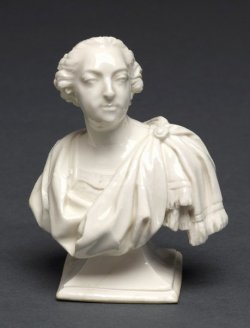
Sèvres, Bust of Louis XV, ca. 1762-63, hard-paste porcelain, 11 x 9 x 6 cm
(on loan from Kenneth Reed)
In the words of Richard Beresford, senior curator of European art, “This promised gift transforms the Gallery’s presentation of European art. We have never owned anything comparable in range and quality to this collection but now the Gallery will be able to show some of the highest quality 18th-century porcelain in the world. The Gallery has had neglected holdings of European decorative arts until now. The decision to show 16th-18th-century ceramics alongside paintings of the same period will add a new dimension to the Gallery’s collection display. The Gallery is now also better placed to respond to an expected rise in public interest in ceramic history.”
In 2010 Kenneth Reed announced a bequest to the Gallery which then consisted of 25 old master paintings, 25 pieces of 18th-century porcelain and 22 pieces of Italian maiolica from the 16th and 17th centuries. The addition to his bequest of this European porcelain brings the total value of the bequest to almost $13 million, ranking Mr Reed among the top benefactors in the Gallery’s history.
Lecture | Jeffrey Collins at University of Bern’s ‘Interior’ Series
Jeffrey Collins offers the second in a three-part lectures series at the University of Bern’s 2012-13 lecture series:
Lecture Series: The Interior
University of Bern/Switzerland, 2012-13
This lecture series is part of the SNSF Sinergia project The Interior: Art, Space, and Performance (Early Modern to Postmodern) which is based at the Institute of Art History, University of Bern, and is conducted in cooperation with the Institute of Media Culture and Theatre, University of Cologne. Proceeding from a heterogeneous and dynamic conception of the interior drawn from various media, styles, and contexts, this interdisciplinary project investigates diverse theoretical and interpretative models of interiors in art, theatre, and visual culture from the Early Modern to the Contemporary eras.
12 December 2012
‘Interior Designs: Imagining the Museum in Eighteenth-Century Italy’
Jeffrey L. Collins, (Bard Graduate Center: Decorative Arts, Design History, Material Culture, New York)
More information is available at the project website»
New Title | The Origins of the Royal Academy
From The Royal Academy:
Charles Saumarez Smith, The Company of Artists: The Origins of the Royal Academy of Arts in London (London: Bloomsbury, 2012), 192 pages, ISBN: 9781408182109, $32.
 On Friday 9th September 1768 an almighty row broke out within the Society of Artists. At its heart was a disagreement over the practice of art in Britain, and no amount of good humour on the part of the Society’s ‘jolly president’ could ‘persuade the disputants to lay aside their mutual Bickerings, and drown their Heartburnings in bumpers of wine’.
From this eruption emerged the Royal Academy of Arts.
An elegant and often amusing day-to-day account of these events and the two years that followed, The Company of Artists reveals the opposing models of a continental and a British art academy that divided leading artists of the day. As he explores their attempts to outmanoeuvre their fellows and win the support of King George III, Charles Saumarez Smith brings to life the characters involved and shows how they shaped the new Royal Academy of Arts, thereby changing the practice and perception of art in Britain for good.
Former director of the National Portrait Gallery and the National Gallery, Charles Saumarez Smith is Secretary and Chief Executive of the Royal Academy of Arts. His previous publications include The National Gallery: A Short History (2009), The National Portrait Gallery (1997) and The Building of Castle Howard (1990).
◊ ◊ ◊ ◊ ◊
In Charles Saumarez Smith’s blow-by-blow account of the early days, I recognise the Royal Academy as it still is today. The big ego’s. How to teach art. The status of drawing. Whether or not art stems from genius, ambition or sheer hard work. Everything that is still important and good about the Royal Academy was discussed and debated in those first few weeks.
Christopher Le Brun, President, Royal Academy of Arts
An enthralling behind the scenes look at the egos, the politics and the good and bad intentions that led to the founding of one of our most enduring cultural establishments.
Loyd Grossman, Broadcaster and heritage campaigner
In this short, neat, thorough and readable history, Charles Saumarez Smith, the current secretary and chief executive of the RA, has attempted to identify [the Royal Academy’s] unique quality… Saumarez Smith is smitten, as you will be after reading this touching and passionate love letter.
Brian Appleyard, Literary Review
◊ ◊ ◊ ◊ ◊
Note (added 17 October 2012) — On Thursday, 25 October, from 6:30 to 8:00 PM at Sotheby’s New York (570 Lexington Avenue), Charles Saumarez Smith will be presenting remarks on the project and signing copies of the book. RSVP to Andrew Gardner at a.gardner@sothebysinstitute.com.










 Enfilade
leave a comment