Call for Papers | Alternative Enlightenments
From the conference website:
Alternative Enlightenments: An Interdisciplinary Conference in the Humanities
Bilkent University, Ankara, Turkey, 26-28 April 2013
Proposals due by 1 December 2012
Keynote Speakers
Wijnand Mijnhardt, Professor of History and Director of the Descartes Centre, University of Utrecht
Felicity Nussbaum, Professor of English, UCLA
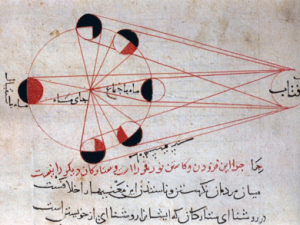 From Kant’s seminal essay “What is Enlightenment?” through the manifold critical responses of the twentieth century, the ambiguity of a term designating both a paradigmatic approach to human intellect or autonomy, and a specific historical period, remains. How distinct is the concept of Enlightenment from the era of European history long taken to have discovered or invented it? This symposium proposes an examination of Enlightenments in the plural, welcoming both revisionary accounts of the Age of Enlightenment and explorations of Enlightenment in other times and places.
With an eye to translating the idea of Enlightenment, scholars have traced its many national and regional varieties. Discussions of an Ionian or an Athenian Enlightenment, of movements of Enlightenment in the medieval caliphate or the Ottoman Empire, share the contemporary intellectual landscape with debates on the continuing relevance of the eighteenth-century Enlightenment to the current global order. We are interested in the way the term has been borrowed and translated, creating a constellation of “Enlightenments” bound together by family resemblances. Is there still a singular project of Enlightenment (i.e. the critique of received ideas and inherited values, in particular religious ones; the promotion of rational or empirical methods; the creation of cosmopolitan and secular spaces), or has the term broken out of its historical mold to designate a more fluid set of cultural projects and practices?
Where do we stand today with regard to the Enlightenment? After all, the continuation of a politics and practice of Enlightenment may depend on the spatial and temporal translations we propose to explore. Such displacements give new life to the idea of Enlightenment, even as the term is contested, criticized and transformed.
Topics of interest include:
• Ionian / Athenian Enlightenment
• Secularism, materialism, the immanent frame
• Literatures of Worldliness in East and West: Renaissance, Tanzimat, Arab and Near Eastern Enlightenments
• Orientalism and Occidentalism
• Diplomacy, correspondence, the figure of the court philosopher
• What is Enlightenment: Kant, Foucault and beyond
• (The) Enlightenment in the Americas
• The public and the private: cross-cultural studies of an Enlightenment distinction
• Travel literature, satire, and utopian fiction
• Nineteenth century national Enlightenments, nationalism vs. internationalism
• Enlightenment and Empire
• The rhetoric of Enlightenment in geopolitics, the claims of the West
• Material culture, exchange, circulation, accumulation, dispersal
• Enlightenment and its others: mysticism, hermeticism and the arcane
• The metaphorics of Enlightenment: illumination, dawn, twilight and dusk
• Where do we stand today with regard to (the) Enlightenment? Critical theory / social and political practice
Please submit an abstract of no more than 300 words to wcoker@bilkent.edu.tr by 1 December 2012.
Jewish High Holidays
On Site
With Yom Kippur (The Day of Atonement) beginning this evening at sundown, it seems like an appropriate time to note an exceptional piece of eighteenth-century English architecture: the Bevis Marks Synagogue in London, the oldest synagogue in Britain, with a history of continuous worship stretching back 311 years. I was one of 2000 fortunate people to visit the building on Sunday in conjunction with London’s annual Open House weekend.
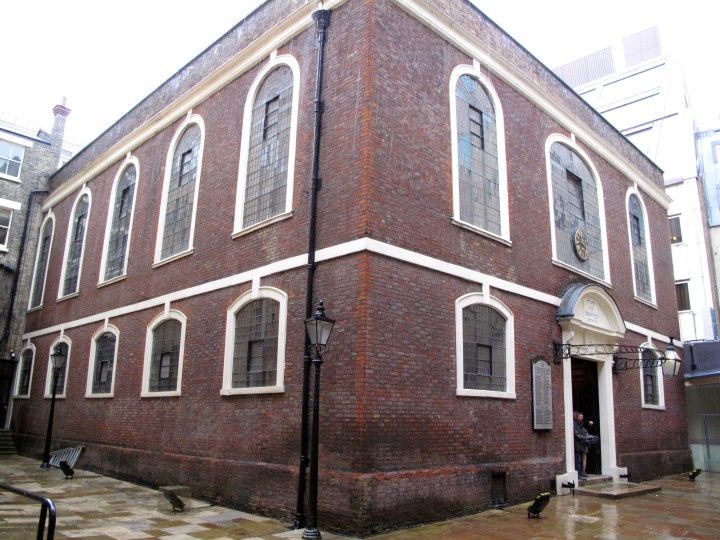
Joseph Avis, The Bevis Marks Synagogue in London, 1701
◊ ◊ ◊ ◊ ◊
A short walk from the Aldgate Tube stop and historically just north of the actual gateway, the Bevis Marks Synagogue was completed in September 1701, the work of Joseph Avis, a Quaker carpenter who had previously worked with Christopher Wren on St Bride’s in Fleet Street. With a few exceptions, the interior and furnishings of this Grade I listed building are original. Some of the benches, in fact, date to the middle of the seventeenth century, when the community met in the upper floor of a house in nearby Creechurch Lane.
It was under Cromwell that these Spanish and Portuguese Jews–many of whom had strong ties to Amsterdam–were legally recognized and allowed to practice their faith openly (in addition to the right to a space for worship, they were granted permission to establish a cemetery). Services today are carried out almost entirely in Hebrew, though there are two exceptions: announcement are made in Portuguese, and prayers for the Queen are said in English.
 Architecturally, the building relates to contemporary dissenting traditions and corresponds to the rebuilding of the fifty-one churches by Wren. One of the points I took away from the visit was simply how easy and useful it would be to include the Bevis Marks Synagogue when teaching Wren and the reconstruction of London following the Great Fire. It would provide a physically tangible way to engage the history of Jews in England, looking both backward and forward. One could, for instance, address the arrival of Jews with William the Conqueror, the expulsion under Edward I in 1290, and the migration of Jews from the Iberian Peninsula after 1492. Looking forward into the eighteenth century, I would like to know more about The Board of Deputies of British Jews, which was formally established on the accession of George III to the throne in 1760. With the synagogue, the character and limits of religious tolerance in the period are nicely introduced. As I’m really just thinking aloud here, I’m sure many of you who teach have already been doing
this and doing it well in your classes–so by all means feel free to chime in
with suggestions.
To all those keeping the fast, G’mar Tov.
-CH
Call for Papers | Temporary Conditions in Architecture
From the Society of Architectural Historians of Great Britain:
Transitory, Transportable, and Transformable: Temporary Conditions in Architecture
London, 18 May 2013
Proposals due by 15 October 2012
Proposals are invited for papers addressing the theme of Temporary Conditions in Architecture to be presented at the 2013 Annual Symposium of the Society of Architectural Historians of Great Britain, to be held at Alan Baxter Associates, 75 Cowcross Street, London EC1M 6EL, on Saturday 18 May 2013.
Architecture is generally regarded as being, for the most part, permanent, static and immutable. However some significant buildings are intended to be temporary, whereas others are designed to be moved from one location to another or even to be flexible enough to alter their form and appearance as the result of changing requirements. This symposium intends to explore the temporary condition in architecture and to question whether architecture needs to be either permanent, static or immutable.
Transitory: Many buildings are short-lived, but few of them are regarded as serious architecture. In 1661, triumphal arches were erected for Charles II’s coronation procession from the City of London to Westminster. Constructed largely of timber, plaster and canvas, they were architecturally elaborate yet intentionally impermanent, only to be soon swept away. Political expediency, no doubt, necessitated their quick erection, otherwise they might have been built in stone and, like Temple Bar (1670-72), still stand today, albeit not in its original location. Modern materials allow for the quick and permanent erection of buildings such as Team 4’s prize-winning Reliance Controls Electronics Factory at Swindon (1967). Yet despite the longevity of its materials, this building was intentionally short-lived and, having served its purpose, was demolished in 1991. Only the ‘thirty-year rule’ saved it from being listed, as it might well have been. Papers could consider whether the lack of permanence in architecture diminishes its value or, on the other hand, whether the permanence which listing building legislation imposes and implies, ultimately benefits it.
Transportable: The Crystal Palace (1851) was first erected, in Hyde Park, as a temporary building but was soon transported to Sydenham where it was re-erected. This was made possible by its pre-fabricated, component-based assembly process. This thinking allowed pre-fabricated buildings to be sent out across the world by the European colonial powers in both the nineteenth and twentieth centuries. Whether these be William Slater’s cast-iron church for the Ecclesiologists (1853-56) or Jean Prouvé’s steel barracks for the French army (1939), the use of transportable architecture to establish and promote religious or military, and therefore political control, was the same. Conversely, the practice of retrieving and displaying spolia as a demonstration of political control, such as Napoleon’s relocation to the Arc de Triomphe, in 1797, of the quadriga from St Mark’s Basilica, Venice, shows that architecture can be as easily brought home as it can be sent out. Papers, therefore, might like to investigate the use of transportable architecture as both a vehicle and an affirmation of colonisation and the influence which these buildings had on the national architecture, culture and society of the colony and the coloniser alike.
Transformable: If the Pyramids are regarded as the ultimate expression of permanence in architecture, then the Pompidou Centre, as originally conceived in 1971, might be the antithesis. For here the floors could move, the envelope could be reassembled, and the exposed services regularly modified. Although the floors, in the end, remained static, the building has been noticeably transformed over the years. Today, ‘Legacy’ is one of the key-words for the London 2012 Olympics. Yet few of the buildings destined to remain will be left in their original condition; many will be transformed. The side wings will be loped off Zaha Hadid’s swimming pool and the upper stage will be removed from Populous’s stadium. In considering legacy, papers might ask whether there is a real architectural legacy in such a situation and whether those few buildings which will emerge unscathed, such as, hopefully, Hopkins Architects’ velodrome, will provide the only true reminder of the Olympics.
Abstracts of not more than 250 words should be sent to Professor Neil Jackson at the School of Architecture, University of Liverpool, Abercromby Square, Liverpool L69 7ZN or e-mailed to neil.jackson@liverpool.ac.uk no later than 15 October 2012. Authors will be advised by 3 December 2012 whether or not their paper has been selected.
New Novel | The Potter’s Hand
Just out in the UK from Atlantic Books:
A. N. Wilson, The Potter’s Hand (London: Atlantic, 2012), 512 pages, ISBN: 9781848879515, £18.
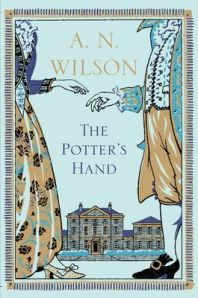 In 1774, Josiah Wedgwood, master craftsman possessed with a burning scientific vision, embarks upon the thousand piece Frog Service for Catherine the Great. Josiah’s nephew Tom journeys to America to buy clay from the Cherokee for this exquisite china. Tom is caught up in the American rebellion, and falls for a Cherokee woman who will come to play a crucial role in Josiah’s late, great creation: the Portland Vase. As the family fortune is made, and Josiah’s entrepreneurial brilliance creates an empire that will endure for generations, it is his daughter Sukey, future mother of Charles Darwin, who bears clear-eyed witness.
A novel of epic scope, rich in warmth, intellect and humanity, The Potter’s Hand explores the lives and loves of one of Britain’s greatest families, whose travails are both ordinary — births, deaths, marriages, opium addiction, depression — and utterly extraordinary.
A. N. Wilson grew up in Staffordshire, where his father was Managing Director of Josiah Wedgwood and Sons. He was educated at Rugby and New College, Oxford. A Fellow of the Royal Society of Literature, he holds a prominent position in the world of literature and journalism. He is a prolific and award-winning biographer and celebrated novelist. His most recent novel, Winnie and Wolf, was longlisted for the 2007 Man Booker Prize. He lives in North London.
◊ ◊ ◊ ◊ ◊
From Country Life:
Reviewed by Giles Waterfield; posted 10 September 2012.
Historian, biographer, commentator and novelist A. N. Wilson is full of variety. Having recently written about St Paul and Adolf Hitler, he turns his attention in this long and richly flavoured novel to Josiah Wedgwood, probably the most famous of all British ceramicists, at least until the 20th century. Wedgwood excelled as craftsman, designer and businessman, building up the ceramics industry in Staffordshire. . .
This boldly panoramic novel mixes history and invention, swooping from the narrator’s viewpoint to the personal feelings of the very large cast of characters. Highly experienced narrator that he is, Mr Wilson skilfully interweaves his various plots, yet keeps Wedgwood, his wife and his daughter Sukie at the centre of the book. This is the historical novel at its most ambitious.
The full review is available here»
Exhibition | The Last Days of Pompeii
While the exhibition showcases the nineteenth-century response to the eruption, there are still plenty of eighteenth-century offerings. The exhibition checklist is available here (as a PDF file). The following comes from the description of the accompanying publication.
◊ ◊ ◊ ◊ ◊
The Last Days of Pompeii: Decadence, Apocalypse, Resurrection
Getty Villa, Los Angeles, 12 September 2012 — 7 January 2013
Cleveland Museum of Art, 24 February — 19 May 2013
Musée national des beaux-arts du Québec, 13 June — 8 November 2013
 Destroyed yet paradoxically preserved by the eruption of Mount Vesuvius in A.D. 79, Pompeii and other nearby sites are usually considered places where we can most directly experience the daily lives of ancient Romans. Rather than present these sites as windows to the past, however, the authors of The Last Days of Pompeii: Decadence, Apocalypse, Resurrection explore Pompeii as a modern obsession, in which the Vesuvian sites function as mirrors of the present. Through cultural appropriation and projection, outstanding visual and literary artists of the last three centuries have made the ancient catastrophe their own, expressing contemporary concerns in diverse media—from paintings, prints, and sculpture, to theatrical performances, photography, and film. This lavishly illustrated volume—featuring the works of artists such as Piranesi, Fragonard, Kaufmann, Ingres, Chassériau, and Alma-Tadema, as well as Duchamp, Dalí, Rothko, Rauschenberg, and Warhol—surveys the legacy of Pompeii in the modern imagination under the three overarching rubrics of decadence, apocalypse, and resurrection.
Decadence investigates the perception of Pompeii as a site of impending and well-deserved doom due to the excesses of the ancient Romans, such as paganism, licentiousness, greed, gluttony, and violence. The catastrophic demise of the Vesuvian sites has become inexorably linked with the understanding of antiquity, turning Pompeii into a fundamental allegory for Apocalypse, to which all subsequent disasters (natural or man-made) are related, from the San Francisco earthquake of 1906 to Hiroshima, Nagasaki, 9/11, and Hurricane Katrina. Resurrection examines how Pompeii and the Vesuvian cities have been reincarnated in modern guise through both scientific archaeology and fantasy, as each successive cultural reality superimposed its values and ideas on the distant past.
Victoria C. Gardner Coates, Kenneth Lapatin, and Jon L. Seydl, The Last Days of Pompeii: Decadence, Apocalypse, Resurrection (Los Angeles: J. Paul Getty Museum, 2012), 256 pages, ISBN: 9781606061152, $40.
June 2012 Issue of ‘The Court Historian’
Eighteenth-century topics in the current issue of The Court Historian 17 (June 2012) . . .
Articles
• Clarissa Campbell Orr, “Popular History, Court Studies, and Courtier Diaries,” pp. 1-15.
• Robin Thomas, “Building the Monarchy: The Teatro di San Carlo in Naples, 1737,” pp. 35-60
• Neil Jeffares, “Between France and Bavaria: Louis-Joseph d’Albert de Luynes, Prince de Grimberghen,” pp. 61-85.
Reviews
• Clare Hornsby, Review of David Marshall, Susan Russell, and Karin Wolfe, eds., Roma Britannica: Art Patronage and Cultural Exchange in Eighteenth-Century Rome (London: British School at Rome, 2011), pp. 91-93.
• Wolf Burchard, Review of Christina Strunck and Elisabeth Kieven, eds., Europäische Galeriebauten: Galleries in a Comparative European Perspective (1400-1800), Römische Studien der Bibliotheca Hertziana 29 (Munich: Hirmer Verlag, 2010); and Mathieu da Vinha and Claire Constans, eds., Les grandes galeries européennes XVIIe-XIXe siècles (Paris: Éditions de la Maison des sciences de l’homme, 2010), pp. 95-104.
Conference Reports
• Antonio Ernesto Denunzio, “Aristocratic Residences in Naples: The Palazzo Zevallos Stigliano and Arts Patronage by the Nobility from the 16th to the 20th Centuries” (Naples, October 2011), pp. 113-14.
• Charles C. Noel, “The Court in Europe: Politics and Religion, 1500-1800,” (Madrid, December 2010), pp. 117-20.
New Field Editor for Eighteenth-Century Art at ‘caa.reviews’
From the Editor
 I am thrilled to announce that I’ll be stepping in as the new field editor for Eighteenth-Century Art at caa.reviews, succeeding Laura Auricchio who has brilliantly filled the position since 2007. I am especially grateful to both Laura and the editor-in-chief of caa.reviews, Sheryl Reiss, for all they’ve done to facilitate what, I hope, will be a smooth transition.

Published by the College Art Association, caa.reviews plays a valuable role for the scholarly community, keeping a pulse on art historical discourse but also — crucially, to my thinking — helping shape that discourse with more reviews and more timely reviews than would have ever been possible from CAA’s paper-based publications. As I’ve often said in my capacity as editor at Enfilade, I now say in this new role as a caa.reviews editor: the success of the publication depends upon you, the readers. I’ll do my best to invite thoughtful, engaged responses to a selection of the most striking and substantive scholarship addressing the eighteenth century, to give you good cause to keep reading. While promising neither revolutions (glorious or otherwise) nor sweeping societal enlightenment — certainly no guarantees regarding the sublime — I can affirm that I approach the position as an amateur, in the best sense of the eighteenth-century designation, as one who finds much to love in this period, a period as central as ever for grappling with questions of what it means to be human, what it means to make and use art, what it means to be modern, and what it means to address the past productively.
-Craig Ashley Hanson
◊ ◊ ◊ ◊ ◊
About caa.reviews
Founded in 1998, caa.reviews publishes timely scholarly and critical reviews of studies and projects in all areas and periods of art history, visual studies, and the fine arts, providing peer review for the disciplines served by the College Art Association. Publications and projects reviewed include books, articles, exhibitions, conferences, and other works as appropriate. It also publishes essays on these subjects, as well as on art education and policy and related topics. In reviewing and publishing recent texts and projects, caa.reviews fosters timely, worldwide access to the intellectual and creative materials and issues of art-historical, critical, curatorial, and studio practice, and promotes the highest standards of discourse in the disciplines of art and art history. The journal is published on a continual basis by the College Art Association. Access to caa.reviews is a benefit of membership in the College Art Association. For details about becoming a CAA member, please visit CAA’s membership pages.
Huguenot Conference October 6
From The Huguenot Society of Great Britain and Ireland:
London’s Huguenot Heritage: A Colloquium in Honour of Robin Gwynn
Orange Street Congregational Church, London, 6 October 2012
Robin Gwynn is one of the most prolific and capable historians of the Huguenots in England, dealing (among other things) with patterns of migration, the nature of the Huguenot community, and the relationship between the Huguenots and their fellow citizens. He has also sought to integrate the findings of his detailed research into a coherent overall picture, and to highlight the contribution of the refugees to English life, which (he has suggested) has traditionally been underestimated. Much of Dr Gwynn’s work has been on Huguenots in London, which makes London’s Huguenot Heritage an appropriate title for a conference to celebrate his achievements.
The conference takes place on Saturday, 6 October 2012, starting at 10:00am at the Orange Street Congregational Church, the site of the former Leicester Fields French Church (Orange Street, London WC2H 7HR). For details and a booking form click here»
◊ ◊ ◊ ◊ ◊
P R O G R A M M E
• Robin Gwynn — Conformity and non-conformity: Refugees’ dilemma, historian’s nightmare
• Anthony and Daniel Chamier — Daniel Chamier (1660/61-1698): A founder minister of Leicester Fields
• Greig Parker — Through the keyhole: Seeking Huguenot identity through domestic material culture
• David McKinley — Huguenot silversmiths in London
• Tessa Murdoch — A French noble household in London: Montagu House, Bloomsbury 1689-1709
• Charles Littleton — Huguenots in London scientific communities: From medical guilds to the Royal Society
• Barry Hoffbrand — Dr John Misaubin, Hogarth’s ‘quack’
• Angela Lloyd — ‘The Stage is my world’: David Garrick, Shakespeare and the making of modern theatre
Exhibition | ‘Canaletto in Venice’ at the Musée Maillol
It’s a busy autumn for eighteenth-century Venice — whether you’re in Venice or Paris. Along with the exhibition at the Musée Jacquemart-André, Canaletto–Guardi: The Two Masters of Venice, museum-goers in Paris can also see Canaletto in Venice at the Musée Maillol. The latter is loosely connected with the Guardi exhibition, opening in Venice at the Correr Museum on September 28. Continuing this theme of pairs, Canaletto in Venice will include the Venetian Notebook, shown earlier this year at the Palazzo Grimani. Thanks to Pierre-Henri Biger for pointing out this latest Parisian offering. The full press release is available as a PDF file here.
◊ ◊ ◊ ◊ ◊
Canaletto in Venice
Musée Maillol, Paris, 19 September 2012 — 10 February 2013
Curated by Annalisa Scarpa
 The Musée Maillol pays homage to Venice with the first exhibition devoted exclusively to Canaletto’s Venetian works. The exhibition will be presented in partnership with the Foundation of Venice Civic Museums which is preparing to put on a Francesco Guardi retrospective at the Correr Museum in Venice to mark the 300th anniversary of that Venetian painter’s birth. Canaletto in Venice will be an exclusive occasion for visitors to enjoy the master’s vision of his city, brought to life through his paintbrush. Along the canals we discover places, islands, squares and monuments, views of a city that still retains its 18th-century charm. The Venetian painter certainly didn’t invent the veduta, or detailed cityscape, a genre that has ancient origins, but he helped to develop it by giving his paintings a modernity that allowed him to overtake his masters.
Canaletto (1697-1768) is the most famous of the Venetian vedutisti of the 18th century. Over the centuries Antonio Canal has never fallen from favour; his works have always been eagerly sought after by collectors. They seem to have an endless charm, unaffected by trends. Canaletto has the crystal clarity of a man who was faithful to the spirit of the Enlightenment, with a very personal vision of reality. His painting manages to capture the very essence of the light; it conveys a unique and sensual shimmering.
The exhibition will bring together more than 50 carefully selected works, from the greatest museums and some historic private collections. On display too will be his drawings and also the famous sketchbook from about 1731, a rare loan by the Gabinetto dei Disegni e Stampe Gallerie the Cabinet of Prints and Drawings of the Accademia Gallery in Venice, which will be displayed open but which can be fully explored on computers.
Visitors will also be able to see a copy, made by Venetian master craftsmen, of the optical chamber used by Canaletto to make his drawings, thanks to a partnership with the superintendence of the Polo Museale of the City of Venice and the research of Dario Maran. It is taken from Canaletto’s original device, which was often used on a boat, made with carefully placed lenses that offered highly precise images that were unique at that time. Visitors will be able to see for themselves just how effective it was.
In recent times Canaletto has had a central role in a series of ground-breaking exhibitions about the vedutisti, including the one in Rome curated by the much-missed Alessandro Bettagno with Bozena Anna Kowalczyk; The Splendours of Venice in Treviso in 2009, by Giuseppe Pavanello and Alberto Craievich; and more recently the outstanding shows in London and Washington, curated by Charles Beddington. The exhibition at the Musée Maillol aims to be the last in this decade-long cycle by allowing Canaletto alone to lead the spectator around his city through his view paintings. The works on display will show how the artist developed his style. The juxtapositioning of his paintings of the same view will show how his early style, heavily influenced by the artist Marco Ricci and also by his training as a theatrical scenery painter, gradually evolved into interpretations of reality. These were imbued with an atmosphere that was both subtle and sublime, paving the way for painting that was to conquer Europe.
◊ ◊ ◊ ◊ ◊
Annalisa Scarpa specialises in Venetian painting of the 18th century and Venetian view painting. After teaching at the University of Ca’ Foscari in Venice, alongside authorities on Venetian art such as Pietro Zampetti, Alessandro Brettagno and especially Terisio Pignatti, she spent many years studying Canaletto’s graphic art. With Ludovico Mucchi she published Nella Profondità dei Dipinti: La Radiografia nell’indagine Pittorica (The Profundity of Painting: Radiography in Art Research), analyzing more than 200 Venetian view paintings using radiography. She is the author of important works on 18th-century Venetian art, Marco Ricci, Sebastiano Ricci and Jacopo Amigoni. She has curated a number of major recent exhibitions: Settecento Veneciano at the Academia of San Fernando in Madrid and at the Museo ode Bellas Artes in Seville, as well as From Canaletto to Tiepolo at the Palazzo Reale in Milan. She is the curator of the Fondazione A. F. Terruzzi in Milan.
S C I E N T I F I C C O M M I T T E E
• Irina Artemieva, Curator of Venetian painting, the State Hermitage Museum, St Petersburg
• Charles Beddington, Art historian who was curator of two of the most recent and important exhibitions dedicated to Canaletto: Canaletto in England: A Venetian Artist Abroad 1746-1755 at Yale Centre for British Art, New Haven, 2006, and the Dulwich Picture Gallery, London, 2007; as well as Venice: Canaletto and His Rivals at the National Gallery in London, 2010 and the National Gallery of Art in Washington, D.C. in 2011.
• Alberto Craievich, Curator, Museo del Settecento Veneziano, Ca’ Rezzonico, Venice, and Professore Emerito of the University of Ca’ Foscari
• Alastair Laing, Curator of Paintings and Sculpture, the National Trust, London
• Filippo Pedrocco, Director, Museo del Settecento Veneziano, Ca’ Rezzonico, Venice
• Lionello Puppi, President of the Centro Studi Tiziano e Cadore, Pieve di Cadore
• Alain Tapié, Chief Curator of Cultural Heritage
New Title | Invaluable Trees: Cultures of Nature, 1660-1830
Just out from SVEC (formerly Studies on Voltaire and the Eighteenth Century), available from the Voltaire Foundation:
Laura Auricchio, Elizabeth Heckendorn Cook and Giulia Pacini, eds., Invaluable Trees: Cultures of Nature, 1660-1830 — SVEC 2012:08 (Oxford: Voltaire Foundation, 2012), 360 pages, ISBN 9780729410489, £65 / €95 / $110.
 Trees and tree products have long been central to human life and culture, taking on intensified significance during the long eighteenth century. In this interdisciplinary volume, contributors trace changes in early modern theories of resource management and ecology across European and North American landscapes, and show how different and sometimes contradictory practices were caught up in shifting conceptions of nature, social identity, physical health and moral wellbeing.
◊ ◊ ◊ ◊ ◊
C O N T E N T S
Introduction
• Laura Auricchio — Elizabeth Heckendorn Cook and Giulia Pacini, Invaluable trees
I. Arboreal Lives
• Hamish Graham — ‘Alone in the forest’? Trees, charcoal and charcoal burners in eighteenth-century France
• J. L. Caradonna — Conservationism avant la lettre,? Public essay competitions on forestry and deforestation in eighteenth-century France
• Paula Young Lee — Land, logs and liberty: the Revolutionary expansion of the Muséum d’histoire naturelle during the Terror
• Peter Mcphee — ‘Cette anarchie dévastatrice’: the légende noire of the French Revolution
• Paul Elliott — Erasmus Darwin’s trees
• Giulia Pacini — At home with their trees: arboreal beings in the eighteenth-century French imaginary
II. Strategic Trees
• Elizabeth Heckendorn Cook — The vocal stump: the politics of tree-felling in Swift’s ‘On cutting down the old thorn at Market Hill’
• Michael Guenther — Tapping nature’s bounty: science and sugar maples in the age of improvement
• Meredith Martin — Bourbon renewal at Rambouillet
• Susan Taylor-Leduc — Assessing the value of fruit trees in the marquis de Fontanes’s poem Le Verger
• Elizabeth Hyde — Arboreal negotiations, or William Livingston’s American perspective on the cultural politics of trees in the Atlantic world
• Lisa Ford — The ‘naturalisation’ of François André Michaux’s North American sylva: patriotism in early American natural history
III. Arboreal Enlightenments
• Tom Williamson — The management of trees and woods in eighteenth-century England
• Steven King — The healing tree
• Nicolle Jordan — ‘I writ these lines on the body of the tree’: Jane Barker’s arboreal poetics
• Waltraud Maierhofer — Goethe and forestry
• Paula R. Backscheider — Disputed value: women and the trees they loved
• Aaron S. Allen — ‘Fatto di Fiemme’: Stradivari’s violins and the musical trees of the Paneveggio
Summaries
Bibliography
Index
◊ ◊ ◊ ◊ ◊
Laura Auricchio is Associate Professor of Art History and Chair of Humanities at The New School in New York. Her current research addresses Franco-American cultural exchanges in the Age of Revolution.
Elizabeth Heckendorn Cook is Associate Professor of English at the University of California, Santa Barbara. She studies the history of environmental ethics and early modern representations of trees and forests.
Giulia Pacini is Associate Professor of French at The College of William & Mary. Her current research focuses on the political and material significance of trees in early modern France.










 Enfilade
leave a comment