Conference | The Expert’s Eye
From the conference website and programme:
El ojo experto: Método, límites y la disciplina de la Historia del Arte
The Expert’s Eye: Method, Limitations, and the Practice of Art History
Online and in-person, Museo Arqueológico Nacional, Madrid, 24–25 October 2024
Organized by Pilar Diez del Corral Corredoira and David Ojeda Nogales
 The work of the art historian revolves around the art object, and the need to tailor one’s methodology to that object gives the discipline its variety and richness. Yet paradoxically, to stress that art works are the centre of art history feels almost transgressive at a time when basic questions of identification and dating are increasingly deemphasized in training new generations of scholars and curators.
The new art history, by contrast, has shown itself perfectly capable of conducting research without having to study or even look at the art object. Without discrediting the results, which are sometimes more characteristic of departments of history or anthropology, the ease with which art-historical fact is blurred can be surprising. Over the last fifty years, the notable decrease in studies that examine the most fundamental problems of dating and authorship has raised questions about the usefulness of prevailing methodologies, leading to extreme cases in which a trained or expert eye is considered unnecessary, or at least insufficient, to deal with objects lacking documentary or other external proof of origin, creator, or date. By contrast, having an educated eye implies knowing the difference between a Roman bust from the first century AD and a modern copy, between discovering the hand of Leonardo and detecting an excellent falsification. In light of these trends, this conference aims to interrogate and challenge the abandonment of visual, material, and historical expertise among art historians.
Watch online here»
Technical coordination
• Marta I. Sánchez Vasco, misanchezvasco@gmail.com
Scientific coordination
• Pilar Diez del Corral Corredoira, diezdelcorral@geo.uned.es
• David Ojeda Nogales, dojeda@geo.uned.es
Scientific committee
• Amaya Alzaga Ruiz (UNED)
• Jeffrey Collins (Bard Graduate Center, Nueva York)
• Ana Diéguez Rodríguez (Instituto Moll)
• Pilar Diez del Corral Corredoira (UNED)
• David Ojeda Nogales (UNED)
• Markus Trunk (Universität Trier)
j u e v e s , 2 4 o c t u b r e
10.00 Presentación institucional a cargo de Isabel Izquierdo Peraile, directora del Museo Arqueológico Nacional
10.30 Conferencia plenaria
• Jeffrey Collins (BGC, NY) — Experts, Eyes, and Expert Eyes: A View from the Decorative Arts
11.30 Pausa café
11.50 Bloque 1
Modera P. Diez del Corral
• Hans R. Goette (DAI) — Remarks on Excavation Context and Epigraphy Serving Stylistic Analysis by Experts in Classical Archaeology: The ›Esquiline Sculptures‹ ‒ ca. 200 or 400 AD?
• Matteo Cadario (UNIUD) — I rischi dei giudizi ‘stilistici’ nello studio della scultura antica
• David Ojeda (UNED) — La desaparición del ‘ojo experto’: El problema del tiempo en el estudio de la escultura antigua
13.30 Pausa comida
15.00 Bloque 2
Modera Jeffrey Collins
• Benjamin Binstock (Independiente) — Less is More: Recognizing Young Rembrandt’s Painting-by-Painting Development
• Miguel Hermoso (UCM) — Truco o trato: Ojo crítico y pintura de la Edad Moderna
• Pilar Diez del Corral Corredoira (UNED) — Aprendices, copistas y falsarios: El dibujo de Carlo Maratta y sus seguidores
16.15 Pausa café
16.30 Bloque 3
Modera Ana Diéguez
• Beatriz Campderá Gutiérrez (MAN) — El ojo experto en las colecciones medievales
• Eduardo Lamas e Isabelle Lecocq (KIK-IRPA) — Inventory at the Service of the Expert Eye
• Sacha Zdanov (ULB) — Interrogating Erwin Panofsky’s Artistic Relativity: Methodological Reflections on the Aesthetic Diversity of Netherlandish Pictorial Production around 1500
• Rafael Villa (UNIGE) — Connoisseurship and French Stained Glass: On the Abandonment of a Method
v i e r n e s , 2 5 o c t u b r e
9.30 Conferencia plenaria
• Carmen Marcos Alonso (subdirectora del MAN) — Protección y enriquecimiento del Patrimonio Cultural: La labor de los museos en la expertización de bienes culturales
10.15 Bloque 4
Modera Amaya Alzaga
• José Luis Guijarro (Universidad Nebrija) — El ‘silencio de los expertos’: Consideraciones en torno a las responsabilidades legales del historiador del arte en el ejercicio de su labor
• Isabel Menéndez (UNED) — Historiadores y peritos en la valoración de la obra de arte
• Adolfo Gandarillas (UPO) — La Inteligencia Artificial y las tecnologías avanzadas aplicadas al patrimonio artístico: Herramientas y recursos del nuevo connoisseur
11.30 Pausa café
11.50 Mesa redonda
J18 | Provocations from HECAA@30
A selection of J18 Notes & Queries essays responding to the 2023 conference:
Elizabeth Saari Browne and Dana Leibsohn, eds., “Provocations from HECAA@30,” Journal18 (October 2024).
Responses
• Jennifer Van Horn — Absence and Abundance: Thinking Ahead from HECAA@30
• Karen Lipsedge — The Power of Storytelling and Story-Listening: Reflections on HECAA@30
• Emily C. Casey and Matthew Gin — Everything in Between: Reflections on HECAA@30
• Deepthi Murali —The Ethics of Study and Display of Ivory Objects
• Dawn Odell — Who (or What) Speaks in a Global History of Art?
• Kathryn Desplanque —Material Art History and Black Feminist Pedagogies
From the introduction by Elizabeth Saari Browne and Dana Leibsohn:
 In October 1725, a Jiwere (Otoe) leader named Aguiguida found himself at Versailles watching the fountains play. Invited by French men eager to secure allies amongst those who lived on the Central Plains of North America, this visit had been designed to impress. Along with a tour of Parisian sites and a meeting with the king, Aguiguida and his fellow travelers received gifts aplenty: dress coats with silver ornaments, plumed hats, royal medallions; also rifles and swords, and a painting depicting their audience with the monarch. The visitors had meant to offer their own gifts, but most of these were lost in a shipwreck off the coast of America.[1] Today, no material creations from their trip exist, neither those meant for Louis XV nor those offered the delegates.
By the 1720s, people had been traveling from the Americas to European courts for centuries. Itineraries varied, but when Aguiguida met Louis, it was as much trope as history. So why does this story still surprise? Indeed, who does it still surprise? These kinds of questions surfaced at the recent 30th-anniversary convening of HECAA (Historians of Eighteenth-Century Art and Architecture) in October 2023, Environments, Materials, and Futures. This particular eighteenth-century narrative circles around colonial and imperial histories and how creations of earthen and animal materials, of voyages across (and art lost to) land and sea, and of material cultures of global exchange and of war are implicated in such enterprises. But Aguiguida’s trans-Atlantic voyage and visit also pose other questions for historians of art and architecture: about archival absences, affective relationships, and presumed and real (im)balances of power embedded in materials, in pedagogical relationships, and in the Academy. It is these themes the following essays address. . .
Elizabeth Saari Browne is Assistant Professor of Art History and Women’s Studies at the University of Georgia in Athens.
Dana Leibsohn is the Alice Pratt Brown Professor of Art at Smith College in Northampton, Massachusetts.
The full introduction and all essays are available here»
New Book | Maurice Quentin de La Tour: L’Oeil absolu
From Cohen et Cohen:
Xavier Salmon, Maurice Quentin de La Tour: L’Oeil absolu (Paris: Cohen et Cohen, 2024), 623 pages, ISBN: 978-2367491141, €160.
 Maurice Quentin de La Tour (1704–1788) se joua des difficultés à reproduire ce qu’il voyait, transcrivant à l’aide des poudres de pastel aussi bien la douceur d’un velours, la délicatesse d’une dentelle, que le miroitement d’une armure, mais il sut aussi emporter l’âme de ses modèles en descendant à leur insu au plus profond de leur être.
L’homme n’a jamais laissé indifférent et il s’est livré tout au long de son œuvre et de ses écrits. Maurice Quentin de La Tour se joua des difficultés à reproduire ce qu’il voyait. Non seulement il eut le secret de toutes les manufactures, ainsi que se plurent à le souligner ses contemporains, transcrivant à l’aide des poudres de pastel aussi bien la douceur d’un velours, la délicatesse d’une dentelle, que le miroitement d’une armure, mais il sut aussi emporter l’âme de ses modèles en descendant à leur insu au plus profond de leur être. Fin psychologue, La Tour se piqua également de musique, de théâtre, de danse ou bien encore d’astronomie. Sans cesse en quête de perfection, il fut l’ami des philosophes, des savants et des artistes et livra leurs visages à la postérité.
Riche d’environ 500 pastels et préparations, l’œuvre de La Tour et la vie du maître n’ont pas fait en France l’objet d’une monographie complète depuis celle que publièrent Albert Besnard et Georges Wildenstein en 1928. Travaillant depuis bientôt 30 ans sur le maître et ses créations, Xavier Salmon relève aujourd’hui le défi de rendre un nouvel hommage au plus célèbres des pastellistes du XVIIIème siècle et livre une étude précise où chefs-d’œuvre et pastels inédits ou méconnus sont soigneusement analysés, replacés dans le contexte du temps et reproduits afin de restituer toute la richesse et la diversité d’un Siècle des Lumières dont Maurice Quentin de La Tour fut assurément l’un des témoins les plus fidèles.
Spécialiste de l’art européen du XVIIème et du XVIIIème siècle, Xavier Salmon est directeur du département des Arts graphiques du musée du Louvre. Il a été précédemment conservateur des peintures du XVIIIème siècle et du cabinet d’arts graphiques au château de Versailles, chef de l’inspection générale des musées et directeur du patrimoine et des collections du château de Fontainebleau. Il fut commissaire de nombreuses expositions dont les rétrospectives Jean-Marc Nattier, Maurice Quentin de La Tour: Le voleur d’âmes, et Alexandre Roslin: Un portraitiste pour l’Europe à Versailles, Madame de Pompadour et les arts également à Versailles, Marie-Antoinette et Elisabeth Louise Vigée Le Brun au Grand Palais à Paris. Il a reçu en 2014 le grand prix de l’Académie Française pour son ouvrage : Fontainebleau: Le temps des Italiens. Il a dédié une partie de ses travaux aux pastels français du XVIIIème siècle.
◊ ◊ ◊ ◊ ◊
As Adam Busiakiewicz noted at Art History News in June, Salmon’s is the first print catalogue raisonné to be published since 1928, though Neil Jeffares published a new online catalogue in 2022 as part of his Pastellists website, available for free here. –CH
Exhibition | French Neoclassical Paintings from the Horvitz Collection

Claude-Joseph Vernet, After the Storm, 1788.
(Wilmington: Horvitz Collection)
◊ ◊ ◊ ◊ ◊
Now on view at the AIC:
French Neoclassical Paintings from the Horvitz Collection
Art Institute of Chicago, 19 October 2024 — 6 January 2025
Curated by Emerson Bowyer and Andrea Morgan
This exhibition showcases 25 paintings from the preeminent private collection of French 18th-century art in the United States: the Horvitz Collection. The selection of works focuses on Neoclassicism, an artistic style that emerged in the later 1700s and flourished through the 1820s, a period of tremendous political and social upheaval in France. This time was also the heyday of ‘history painting’, a genre of painting characterized by large-scale compositions portraying scenes from history, mythology, and religion. Neoclassical painters looked to the art, architecture, and literature of ancient Greece and Rome for inspiration, often as a lens through which to depict and comment upon contemporary events, and several works included in the exhibition were displayed to a broad public at the annual Paris Salons.
While these works were created more than 200 years ago and often depict ancient or mythological events, they also reference social and political challenges that remain relevant today, from the overthrow of an absolutist government during the French Revolution—which saw the groundwork laid for modern democracies—through to Napoleon’s Empire and the eventual restoration of Bourbon monarchy. This period also coincided with the rise of Enlightenment ideals, the democratization of knowledge, the spread of printed materials, and the origins of industrialization and increased urbanization.
French Neoclassical Paintings from The Horvitz Collection is curated by Emerson Bowyer, Searle Curator, Painting and Sculpture of Europe and Andrea Morgan, research associate. The exhibition complements a major survey of drawings from the same period, Revolution to Restoration: French Drawings from The Horvitz Collection.
Exhibition | French Drawings from the Horvitz Collection

Étienne Barthélémy Garnier, Banquet of Tereus
(Wilmington: Horvitz Collection)
◊ ◊ ◊ ◊ ◊
Opening soon at the AIC:
Revolution to Restoration: French Drawings from the Horvitz Collection
Art Institute of Chicago, 26 October 2024 — 6 January 2025
Curated by Kevin Salatino and Emily Ziemba
The exhibition features approximately 90 drawings made from the 1770s through the 1850s, one of the most turbulent periods in French history. During this time, France abolished the monarchy, established a republic, terrorized perceived political enemies, waged war across the continent, imposed an empire, and eventually reinstated the monarchy—and these are only a handful of the tumultuous episodes that occurred across this 80-year period. Despite this profound instability, the country’s cultural environment flourished, spurring a significant stylistic shift in artistic production. Influenced by the rationalist ideas and moral seriousness of such Enlightenment thinkers as Voltaire and Jean-Jacques Rousseau, and inspired by important archaeological discoveries that radically altered contemporary ideas about the ancient Greco-Roman past, artists turned away from the playful, decadent Rococo style of the mid-18th century. In its place they adopted a more restrained and disciplined style, now known as Neoclassicism, a term invented only in the 19th century.

Henriette Lorimier, Female Nude, 1796, Black chalk, charcoal, and white crayon (Wilmington: Horvitz Collection).
Featuring works by the most accomplished and influential artists of the time, including Jacques-Louis David, Jean Auguste Dominique Ingres, Pierre-Paul Prud’hon, and Théodore Géricault, the exhibition explores the impact of ancient Greek and Roman art, history, and mythology on artistic production, as well as the role of the Academy, changing social norms, and convulsive contemporary events.
The selected drawings showcase a variety of media—pen and ink, watercolor, chalk, and pastel—and highlight how artists of the period demonstrated a surprisingly modern combination of intellectual curiosity, political commitment, and graphic virtuosity. The presentation demonstrates the expressive versatility and powerful immediacy of drawing as a medium of persuasion, propaganda, and, above all, aesthetic stimulation.
Revolution to Restoration: French Drawings from The Horvitz Collection is curated by Kevin Salatino, Chair and Anne Vogt Fuller and Marion Titus Searle Curator, Prints and Drawings, and Emily Ziemba, director of curatorial administration and research curator, Prints and Drawings. The exhibition complements French Neoclassical Paintings from The Horvitz Collection in Gallery 223.
Lecture | Margaret Grasselli on Neoclassical Drawings
Upcoming at the AIC:
Margaret Morgan Grasselli | Neoclassical Drawings—What’s Old Is New Again
Art Institute of Chicago, Saturday, 2 November 2024, 2pm
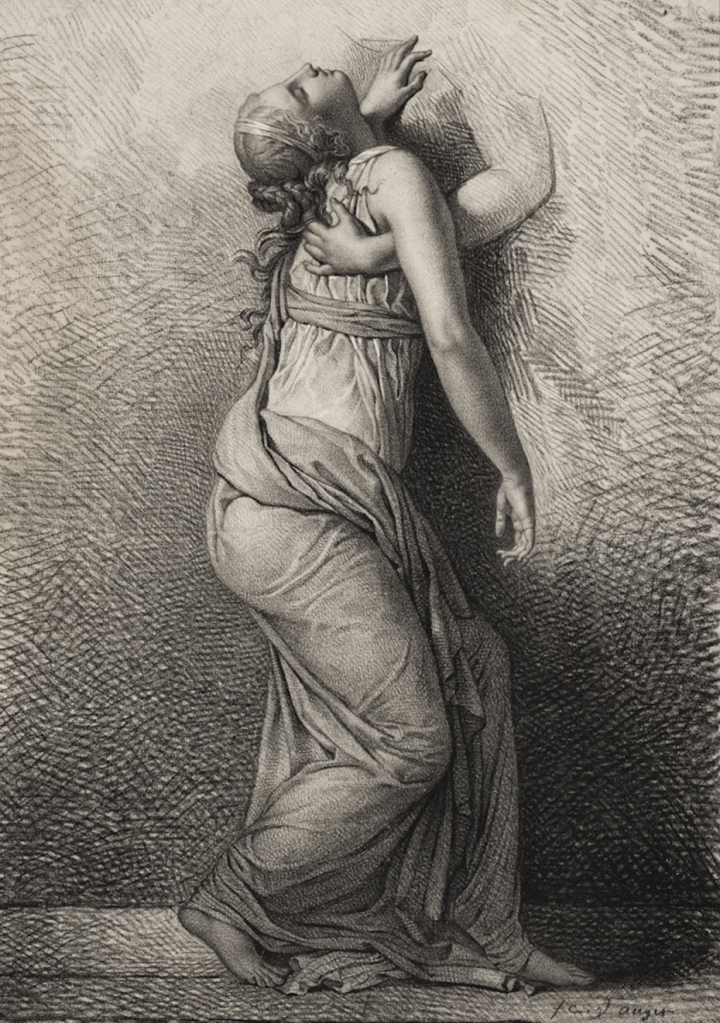
Adrien Victor Auger after Jacques-Louis David, Fainting Young Girl (Wilmington: Horvitz Collection).
Discover the defining features of Neoclassicism in this exploration of the origins and characteristics of the ‘new classical’ style that dominated Europe, especially France, in the late-18th century. With an eye towards the drawings featured in Revolution to Restoration: French Drawings from the Horvitz Collection, Margaret Morgan Grasselli, a leading expert in the field of French drawings, documents the movement’s roots: the careful study of Roman antiquities, the development of an austerely dramatic, visually striking pictorial style, and the depiction of subjects from both ancient and modern history.
Margaret Morgan Grasselli worked for 40 years in the department of graphic arts at the National Gallery of Art in Washington, 30 of them as curator of Old Master drawings. An expert on French drawings, especially those of the 18th century, she organized many major exhibitions, most notably Watteau, 1684–1721 in 1984; Renaissance to Revolution: French Drawings from the National Gallery of Art, 1500–1800 in 2009; and Hubert Robert in 2016. After retiring from the National Gallery in 2020, Meg spent three years as visiting senior scholar for drawings at the Harvard Art Museums, where she also served as visiting lecturer in the department of history of art in the faculty of arts and sciences.
New Book | The Story of Drawing: An Alternative History of Art
From Yale UP:
Susan Owens, The Story of Drawing: An Alternative History of Art (New Haven: Yale University Press, 2024), 256 pages, ISBN: 978-0300260472, $35.
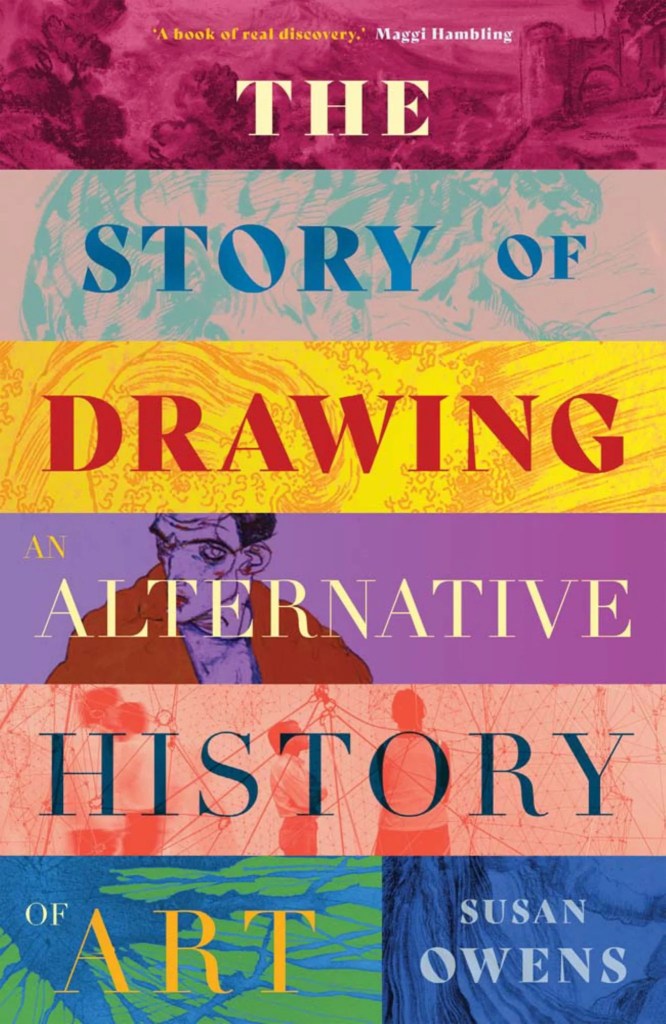 Drawing is at the heart of human creativity. The most democratic form of art-making, it requires nothing more than a plain surface and a stub of pencil, a piece of chalk or an inky brush. Our prehistoric ancestors drew with natural pigments on the walls of caves, and every subsequent culture has practised drawing—whether on papyrus, parchment, or paper. Artists throughout history have used drawing as part of the creative process.
While painting and sculpture have been shaped heavily by money and influence, drawing has always offered extraordinary creative latitude. Here we see the artist at his or her most unguarded. Susan Owens offers a glimpse over artists’ shoulders—from Michelangelo, Rembrandt, and Hokusai to Van Gogh, Käthe Kollwitz, and Yayoi Kusama—as they work, think, and innovate, as they scrutinise the world around them or escape into imagination. The Story of Drawing loops around the established history of art, sometimes staying close, at other times diving into exhilarating and altogether less familiar territory.
Susan Owens is a writer, art historian, and former V&A curator. Her previous books include The Art of Drawing, Spirit of Place, and Imagining England’s Past.
Online Symposium | Drawn to Blue
From the University of Amsterdam, as announced at ArtHist.net:
Drawn to Blue
Online, 12–13 November 2024
Organized by Edina Adam, Leila Sauvage, and Michelle Sullivan
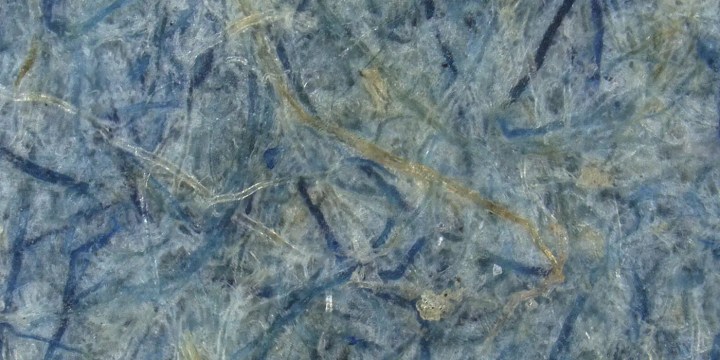
This two-day online symposium, co-organized by the J. Paul Getty Museum and the University of Amsterdam, brings together art historians and paper and textile conservators to share their new research on the history of early modern blue paper.
Made from discarded blue rags, early modern blue paper was a humble material. However, producing it required expert knowledge, and its impact on European draftsmanship was transformative. The rich history of blue paper, from the fifteenth to the mid-eighteenth centuries, illuminates themes of transcultural interchange, international trade, and global reach. Inspired by the recent Getty exhibition Drawing on Blue: European Drawings on Blue Paper, 1400s–1700s and coinciding with the current exhibition Drawn to Blue: Artists’ Use of Blue Paper at the Courtauld, this two-day online symposium brings together art historians and paper and textile conservators to share their new research on the history of early modern blue paper.
Registration is available here»
All times listed in Pacific Time and Central European Time.
t u e s d a y , 1 2 n o v e m b e r
9.00am / 6.00pm Opening remarks by Edina Adam, Leila Sauvage, and Michelle Sullivan
9.10am / 6.10pm Artistic and Non-artistic Use of Blue Paper
• Presence of the Blue Paper inside French Paintings of the 18th Century — Lorenzo Giammattei and Selene Secondo, La Sapienza Università di Roma
• Seeds of Blue: Archival Evidence of the Use of Blue Paper as Seed Packets — Maria Zytaruk, University of Calgary
10.15am / 7.15pm Raw Materials, Trade, Economics
• Blue Paper: Its Life, Origin, History and Artistic Exploration — Judith Noorman, University of Amsterdam
• Paper, Pastels, and Patriotism: Artistic Innovation and the American Revolution — Megan Baker, University of Delaware
11.20am / 8.20pm Works in Progress: Study, Examination, Collection Surveys on Blue Paper
• Surveying The Morgan’s Blue Paper Collection — Elizabeth Gralton, Reba Fishman Snyder, and Rebecca Pollak, The Morgan Library & Museum
• The Blue Paper Project at the Art Gallery of Ontario: Developing an Architecture for Close Looking of Drawing Supports — Maia Donnelly, Joan Weir, and Tessa Thomas, Art Gallery of Ontario
• The Blue Papers of Allan Ramsay at the National Galleries Scotland — Charlotte Park, Clara de la Pena McTigue, and Charlotte Topsfield, National Gallery of Scotland
w e d n e s d a y , 1 3 n o v e m b e r
9.00am / 6.00pm Technical Case Studies
• On Blue: The Portrait Drawings of Ottavio Leoni — Georg Dietz et al., Kupferstichkabinett, Staatliche Museen zu Berlin
• Out of the Blue? Tracing Object Biographies, Early Conservation Treatments, and the Original Appearance of Italian Old Master Drawings on Blue Paper at the Kunstmuseum — Annegret Seger, Rebecca Honold, and Max Ehrengruber, Kunstmuseum Basel
• Blue Paper in Late-19th Century Paris: Mary Cassatt Pastel Supports — Tom Primeau, Philadelphia Museum of Art
10.30am / 7.30pm Printing on Blue Paper
• From Aldus to Zanetti, Parenzo to Proops, Venice to Volhynia: Three Centuries of Hebrew Printing on Blue Paper in Southern, Western, Central, and Eastern Europe — Brad Sabin Hill, George Washington University
• Blueprint(s) — Armin Kunz, C.B. Boerner Gallery
• Etched in Blue: A Unique Set of Prints by the Abbé de Saint-Non — Rachel Hapoienu, Courtauld Gallery of Art
11.55 am / 8.55pm Roundtable
Moderated by Ketty Gottardo, Courtauld Gallery of Art
Program participants reflect on new insights, questions raised, and future avenues of research.
Exhibition | Drawn to Blue: Artists’ Use of Blue Paper
Now on view at The Courtauld:
Drawn to Blue: Artists’ Use of Blue Paper
The Courtauld Gallery, London, 4 October 2024 — 26 January 2025

Jonathan Richardson, the Elder (1665–1745), Self-Portrait (London: The Courtauld).
This display presents a selection of drawings on blue paper from The Courtauld’s collection, ranging from works by the Venetian Renaissance artist Jacopo Tintoretto to a watercolour by famed English artist Joseph Mallord William Turner.
Made from fibres derived from blue rags, blue paper first appeared in Northern Italy in the 14th century. It became a popular drawing support for artists, and its use spread across Western Europe by the late 16th century; it was widely used in England and France in the 18th century. Blue paper provided a nuanced mid-tone which allowed the creation of strong light and dark contrasts, an effect much sought after by draughtsmen. This exhibition project brought together a team of curators and paper conservators at The Courtauld and the J. Paul Getty Museum to explore the technical aspects and artistic richness of the use of blue paper.
Conference | Unfolding the Coromandel Screen
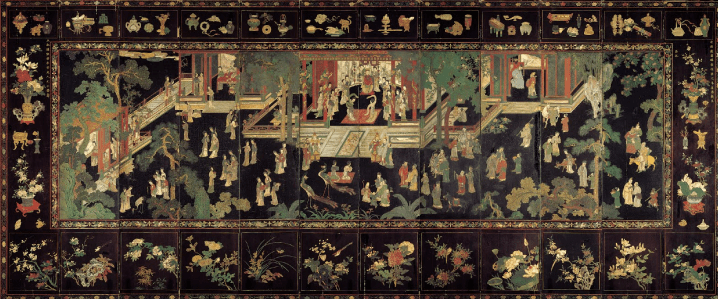
Coromandel Screen, Kangxi reign (1662–1722), Qing dynasty, carved lacquer, 258 × 52 × 3.5 cm
(Art Museum, The Chinese University of Hong Kong, 2001.0660)
◊ ◊ ◊ ◊ ◊
From the conference website and programme:
Unfolding the Coromandel Screen: Visual Mobility, Inscribed Objecthood, and Global Lives
Online and in-person, City University of Hong Kong, 22–23 November 2024
Organized by by Lianming Wang and Mei Mei Rado
During the second half of the seventeenth century, the production of Coromandel screens, also known as kuancai (‘carved polychrome’), flourished along China’s southeast coast. These screens became immensely popular both domestically and in European markets, establishing connections between regional artisans, merchants, and prominent European figures, including royalty and nobility. In the last two decades of this century, Coromandel screens emerged as one of China’s most frequently exported commodities, rivaling porcelain and challenging Japanese lacquerware exports. Their significance extends far beyond the common perception of them as merely mass-produced craftwork of inferior quality.
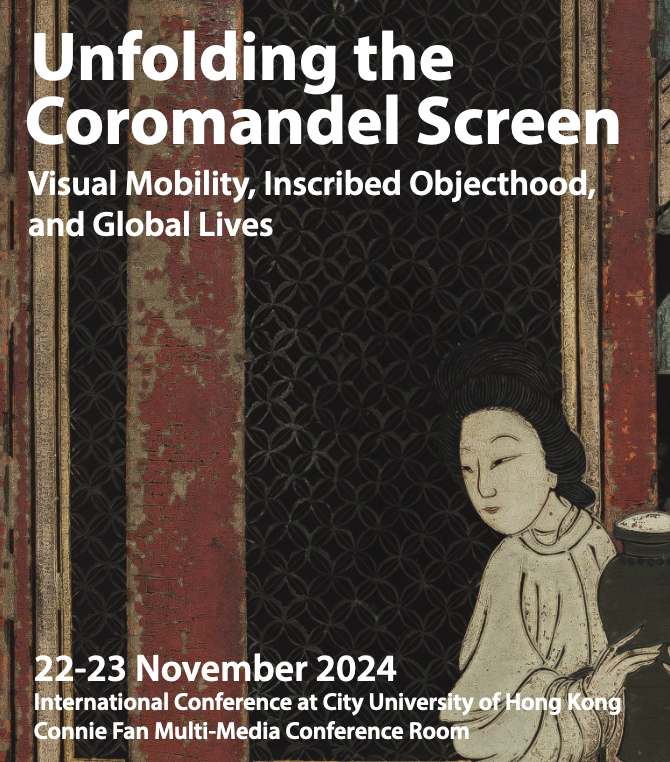 With the generous support of the Bei Shan Tang Foundation, the Department of Chinese and History at City University of Hong Kong will host a two-part academic event titled Unfolding the Coromandel Screen to celebrate the department’s tenth anniversary. The conference, organized by Lianming Wang (City University of Hong Kong) in collaboration with Mei Mei Rado (Bard Graduate Center, New York), will take place on-site at City University of Hong Kong and via Zoom from 22 to 23 November 2024. It will bring together an international group of art historians, museum curators, conservators, collectors, and global historians. Participants will explore various aspects of the Coromandel screen and its intricate histories, including its interrelations with paintings, prints, decorative arts, palatial and interior designs, global maritime trade, and the fashion industry. Following the conference, the speakers will join a two-day traveling seminar from 24 to 25 November, visiting lacquer and conservation workshops as well as museum collections in Hong Kong and Guangzhou.
Registration for both onsite and online participation is available here»
Advisory Board
May Bo Ching (City University of Hong Kong), Burglind Jungmann (UCLA), Mei Mei Rado (Bard Graduate Center, New York), Anton Schweizer (Kyushu University), Ching-Fei Shih (National Taiwan University), Lianming Wang (City University of Hong Kong), Xiaodong Xu (†) (Art Museum of The Chinese University of Hong Kong)
Supporting Institutions
Art Museum of The Chinese University of Hong Kong, Indra and Harry Banga Gallery of City University of Hong Kong , Hong Kong Maritime Museum, Lee Shau Kee Library of The Hong Kong University of Science and Technology, Guangdong Provincial Museum, Guangzhou Museum, Chen Clan Ancestral Hall – Guangdong Folk Arts Museum
f r i d a y , 2 2 n o v e m b e r
8.30 Registration
9.00 Welcome and Introduction
• May Bo Ching (City University of Hong Kong), Lianming Wang (City University of Hong Kong), and Mei Mei Rado (Bard Graduate Center, New York)
9.15 Keynote
• Transcultural Treasures: Kuancai (Coromandel) Screens in China and Abroad — Jan Stuart (National Museum of Asian Art, Washington DC)
10.00 Coffee break
10.15 Panel 1 | Coromandel Screens as Sites of Power Representation
Chair: Libby Chan (Indra and Harry Banga Gallery, City University of Hong Kong)
• Place, Scale, and Medium in Several Cartographic Coromandel Screens — Stephen Whiteman (The Courtauld Institute of Art, London)
• Picture of the Immense Sea: Temporal and Spatial Transformation on the Birthday Celebration Screen of
Nan’ao (in Chinese with English subtitles) — Weiqi Guo (Guangzhou Academy of Fine Arts)
11.15 Panel 2 | Coromandel Screens and Intra-Asian Visual Entanglements
Chair: Wan Chui Ki Maggie (The Chinese University of Hong Kong)
• Coromandel Screens and Japanese Seminary Painters in Macau — Yoshie Kojima (Waseda University, Tokyo)
• When the Barbarians Came by Sea: Hunting Screens in China and Japan — Lianming Wang (City University of Hong Kong)
• Transcultural Pictorial Dynamics: Coromandel Screens and Joseon Court Painting and Visual Culture — Yoonjung Seo (Myongji University, Seoul)
12.40 Lunch break
14.00 Panel 3 | Format, Motif, and Technique: Understanding Coromandel Screens
Chair: Daisy Wang (Hong Kong Palace Museum)
• A Screen So Grand: Coromandel Screens from the Perspective of Scale — Tingting Xu (University of Rochester, New York)
• Decoding Frames: Unveiling Names, Provenance, and Connections of the Framed Images on the ‘Dutch
Tribute Screen’ in the National Museum of Denmark, Copenhagen — Xialing Liu (Central Academy of Fine Arts, Beijing / Utrecht University)
• Textiles, Taste, and Templates: Kuancai Screen Motifs and Techniques — Ricarda Brosch (Museum am Rothenbaum – World Culture and Arts, Hamburg)
• Copy Culture and Commodification in Coromandel Screens and Related Lacquerwares, 1680–1780 — Tamara Bentley (Colorado College)
15.40 Coffee Break
16.00 Panel 4 | Materials and Conservation: Perspectives from Labs and Workshops
Chair: Josh Yiu (Art Museum, The Chinese University of Hong Kong)
• On the Origins and Regional Differences of the Kuancai Screens (in Chinese with English subtitles) — Bei Chang (Southeast University, Nanjing) and Linlong Li (Centre de recherche sur les civilisations de l’Asie orientale, Paris)
• A Conservator’s Perspective: Technical Examination and Treatment Strategies for Coromandel Lacquer from the Kangxi Period — Christina Hagelskamp (The Metropolitan Museum of Art, New York)
• Scientific Analysis of a Coromandel Cabinet from the Victoria and Albert Museum, London — Julie Chang (Fu Jen Catholic University, Taipei) and Lucia Burgio (Victoria and Albert Museum, London)
18.00 Museum Visit — Might and Magnificence: Ceremonial Arms and Armour across Cultures,
Indra and Harry Banga Gallery, City University of Hong Kong
19.00 Dinner
s a t u r d a y , 2 3 n o v e m b e r
9.15 Keynote
• The Taste for Coromandel Lacquer in France in the 17th and 18th Centuries: Trade, Reception, and Customs — Stéphane Castelluccio (CNRS, Centre André Chastel, Paris)
10.00 Coffee Break
10.30 Panel 5 | Coromandel Screens as Global Artefacts
Chair: Phil Kwun-nam Chan (Art Museum, The Chinese University of Hong Kong)
• On the ‘Exoticness’ of the Coromandel Lacquerware — Ching-Ling Wang (Rijksmuseum Amsterdam)
• Coastal Landscape and Scenes of Europeans on Coromandel Folding Screens — Rui Oliveira Lopes (Museu das Convergências, Porto)
• Differences and Commonalities: Links between 17th- and 18th-Century Coromandel Export Lacquer Pieces and Luso-Asian Lacquers of the Previous Century — Ulrike Körber (IHA/FCSH//IN2PAST – Universidade Nova de Lisboa)
12.00 Lunch break
13.30 Panel 6 | Coromandel Screens and Their Global Lives, Part One
Chair: Nicole Chiang (Hong Kong Palace Museum)
• Beyond the Closet: The Taste for Coromandel Lacquerware Furniture in Holland and England, ca. 1675–1700 — Alexander Dencher (Rijksmuseum Amsterdam)
• ‘Sawed, Divided, Cut, Clift, and Split Asunder’? A Case Study of a European Chest of Drawers Decorated with Excerpts from a Coromandel Screen of Known Pictorial Model — Grace Chuang (Independent Scholar, Detroit)
• Reframing the West Lake in French Furniture and Interiors — Nicole Brugier (Ateliers Brugier, Paris)
14.30 Coffee Break
14.45 Panel 7 | Coromandel Screens and Their Global Lives, Part Two
Chair: Florian Knothe (University Museum and Art Gallery, The University of Hong Kong)
• The ‘Japanese Cabinet’ at the Hermitage in Bayreuth, Germany — Patricia Frick (Museum für Lackkunst, Münster)
• The Ludic Afterlife of Coromandel Screens: Integrating the Swinging Woman into 18th-Century French Interiors — Weixun Qu (Washington University in St. Louis)
16.00 Short Break
16.15 Panel 8 | The Afterlives of the Coromandel Screens
Chair: May Bo Ching (City University of Hong Kong)
• Art Dealer Florine Langweil and the European Market for Coromandel Screens in the Early 20th Century — Elizabeth Emery (Montclair State University, New Jersey)
• Inspiring Art Deco in Britain: The Architect, the Theatre, and the Coromandel Screen — Helen Glaister (Victoria and Albert Museum, London)
• Shifting Identities and Global Circulation of the Coromandel Screen in Early-20th-Century Buenos Aires — Mariana Zegianini (SOAS University of London)
• The Framework of Modernism: Lacquer Screen and Fashion Imagination in the 1920s — Mei Mei Rado (Bard Graduate Center, New York)










 Enfilade
leave a comment