New Book | The Library: A Fragile History
First published in hardcover in 2021, it was released in paperback last fall. From Hachette Book Group:
Andrew Pettegree and Arthur der Weduwen, The Library: A Fragile History (New York: Basic Books, 2021), 528 pages, ISBN: 978-1541600775 (hardcover), $35 / ISBN: 978-1541603721 (paperback), $22.
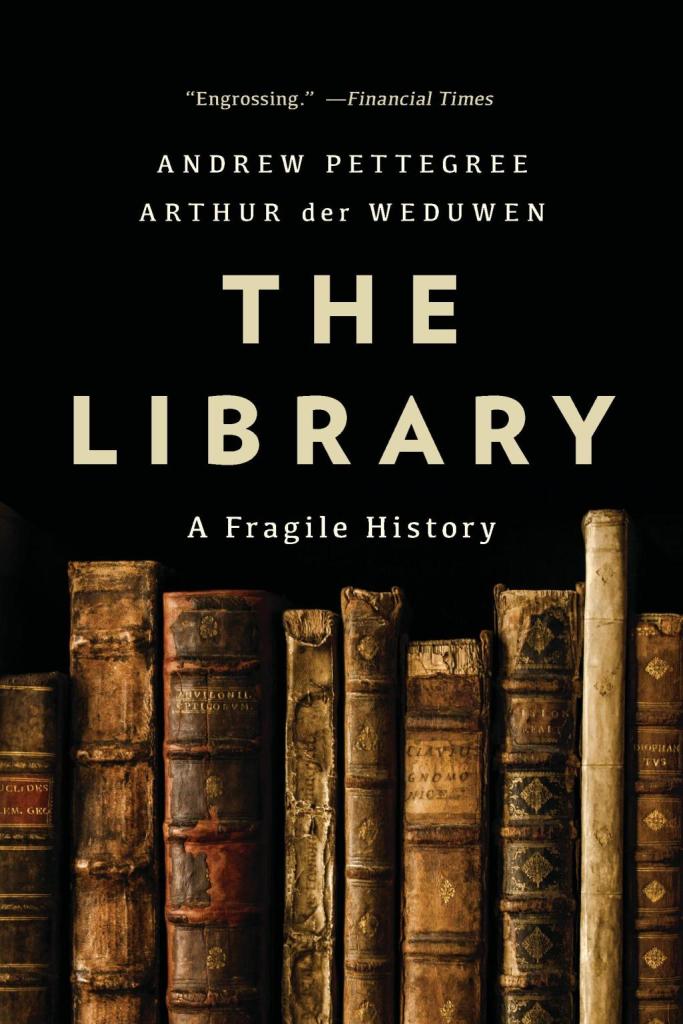 The ‘engaging’ and ‘ambitious’ (Washington Post) history of libraries and the people who built them, from the ancient world to the digital age
The history of the library is rich, varied, and stuffed full of incident. In The Library, historians Andrew Pettegree and Arthur der Weduwen introduce us to the antiquarians and philanthropists who shaped the world’s great collections, trace the rise and fall of literary tastes, and reveal the high crimes and misdemeanors committed in pursuit of rare manuscripts. In doing so, they reveal that while collections themselves are fragile, often falling into ruin within a few decades, the idea of the library has been remarkably resilient as each generation makes—and remakes—the institution anew.
Andrew Pettegree is professor of modern history at the University of St. Andrews and a leading expert on the history of book and media transformations.
Arthur der Weduwen is a British Academy postdoctoral fellow at the University of St. Andrews.
Walpole Library Fellowships and Travel Grants for 2025–26
From The Lewis Walpole Library:
Applications due by 1 November 2024
The Lewis Walpole Library, a department of Yale Library, is now accepting Fellowship and Travel Grants application for the 2025–26 Fellowship year, which runs from 1 June 2025 through 31 May 2026. With strong collections of primary and secondary source materials focused on Britain in the long eighteenth century, located on a fourteen-acre campus located in the peaceful and scenic town of Farmington, Connecticut, the Lewis Walpole Library offers a unique scholarly experience.
Fellowships, which last four weeks, and Travel Grants, which last two weeks, afford scholars the time and space to focus on research without distraction. Delve into manuscripts, prints, ephemera, and printed texts, and more in the spacious modern reading room during the day, connect with other researchers informally in the eighteenth-century readers’ residence in the evening, and spend weekends thinking, processing, and writing or exploring the area. In this collegial environment, discussions with peers generate new perspectives and suggestions from staff lead to new discoveries. The application deadline is 1 November 2024. Details and an application link can be found here.
Zoë Colbeck Named Director of Strawberry Hill
From the press release, via Art Daily (8 June 2024) . . .
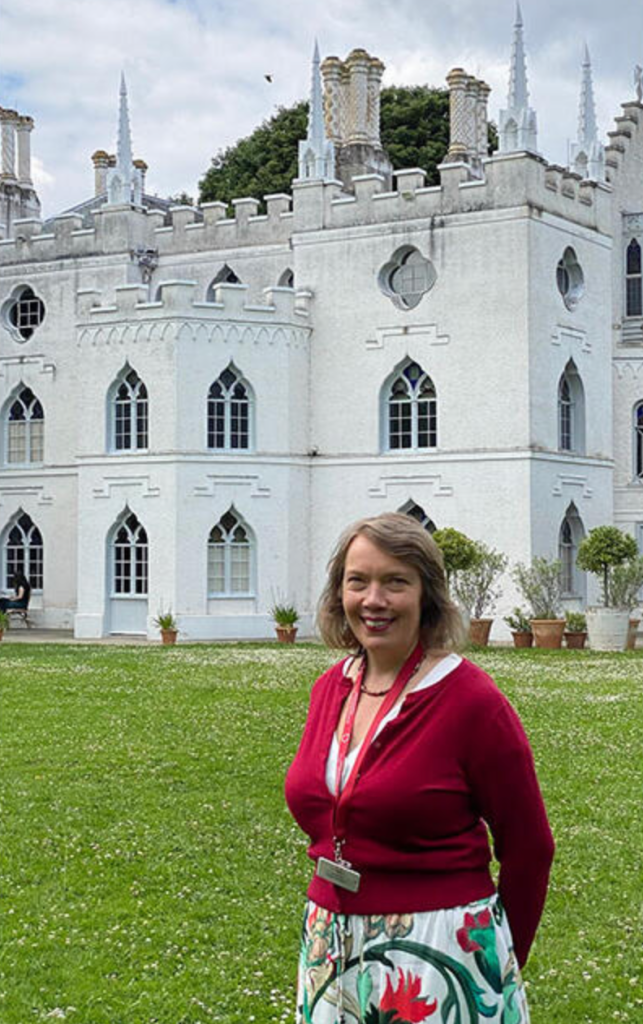 Strawberry Hill House announced that Zoë Colbeck will succeed Derek Purnell as Executive Director of the historic South West London attraction. Zoë joins the team from her previous role as Project Manager at the Solent Cluster, a major decarbonisation initiative based in Hampshire, bringing over 20 years of experience in the heritage sector to Strawberry Hill House and Garden.
Having read chemistry at university, Zoë worked for one of the UK’s largest retailers, specialising in logistics and people management, before joining the National Trust (NT) to combine her passion for heritage with her commercial background. She left the NT in 2021 after 18 years, ultimately as General Manager of the Chartwell Portfolio, one of the NT’s top properties. More recently, she was Commercial and Operations Director with the Mary Rose Trust in Portsmouth.
Zoë took up her new position at Strawberry Hill on 3 June—after her predecessor, Derek Purnell, left to take up an opportunity with the Frederick Ashton Foundation, based at the Royal Opera House in Covent Garden.
Announcing the appointment, Paul Kafka, Chairman of Strawberry Hill Trust, said: “During her time at the National Trust, Zoë led three transformational projects, which, in turn gave her extensive knowledge and vital experience in the fields of climate change mitigation, sustainable management, and heritage conservation. She has a passion for working collaboratively and making a difference for museums, communities, and the planet.” He added: “I am delighted that Zoe is joining Strawberry Hill at this moment in our history. 2024 is going to be a year of change and new directions. Our quest for a sustainable business model continues, even as our reputation as a museum and cultural destination continues to grow.”
Zoë commented: “I am passionate about making a difference for our history and heritage and making it relevant for different audiences. Horace Walpole is such an interesting character, and I am looking forward to leading the team at Strawberry Hill House and Garden through the next stage of development, preserving his legacy and contributing to its future.”
Call for Papers | Windows in British Architecture and Visual Culture
From the Call for Papers:
‘What Light through Yonder Window Breaks?’: The Window as Protagonist in British Architecture and Visual Culture
Paul Mellon Centre, London, 21–22 November 2024
Proposals due by 8 July 2024
From the quintessentially romantic ‘balcony scene’ in William Shakespeare’s Romeo and Juliet to the visceral tension of Alfred Hitchcock’s classic 1954 film Rear Window; in paintings, prints and photography; in architectural drawings and their realisation in three-dimensional form, the window has played a significant role in almost every medium of artistic expression. The window serves, both literally and figuratively, as a boundary between interior spaces and the external world, between humans and nature, between the familiar and the unknown.
As we mark five years this winter since the outbreak of Covid-19, we recognise how recurring lockdowns underscored our own personal consciousness of the boundary between interior and exterior. More than a boundary, however, the window also acts as a frame, helping to define and mediate how we see and interact with the spaces around us, not least providing a view of the world outside from a place of relative protection from the elements—an important consideration following the world’s hottest year on record. Across visual media and architectural design, the window is central to a broad range of issues, including self-representation, privacy and security, surveillance and voyeurism, spiritual and religious symbolism, climate and the environment, and technological and industrial innovation.
This conference will explore the multifaceted, multi-purpose nature of the window as protagonist, with an emphasis on its place in British architecture and visual culture, broadly conceived. A range of interdisciplinary papers presented by international scholars will provide a platform for dynamic and engaging discourse that forefronts the cultural and social significance of the window in its many guises as object, as boundary, as frame, and as mediator. As part of this two-day conference, we invite proposals for papers that consider the various roles of the window across periods, media and disciplines; we are committed to championing new voices, and especially encourage proposals from graduate students and early career researchers.
Possible topics could include but are not limited to:
• How the view is framed: what is shown/captured from/through a window, window placement within a room/building, the relation between the window and the picture plane
• The figure at the window (or its absence): issues surrounding gender and voyeurism, the use of the window in literature as narrative or plot device
• Inequality: surveillance, power imbalances between inside and outside, window breaking in times of social unrest, historical window/glass taxes
• Privacy and security: elevated windows (in prisons, banks, libraries, museums), bars on windows and locking mechanisms, window dressings (curtains, blinds, shutters), window use/placement in urban versus rural environments, jali and mashrabiya
• Windows and the environment: keeping out the elements, smart windows, protecting objects from UV light (especially in museums or historic buildings)
• Setting the tone or conveying a message: contrasting light levels between inside and outside or between one space/room and the next, coloured or stained-glass windows in ecclesiastical (or secular) architecture, types/shapes of windows as linked to specific architectural styles
• Windows in motion: in vehicles, trains, ships, aeroplanes, and on film
• The window extended: full-length windows and architectural permeability, shopfront windows, glass roofs/structures
Please submit the following by noon (BST), 8 July 2024, using ‘CFP: WINDOW’ as the subject line, to events@paul-mellon-centre.ac.uk:
• 200-word abstract outlining the topic of your paper
• short biography of approximately 100 words (please do not send CVs)
The abstract and biography should be combined in a single Word document and submitted as an email attachment. Incomplete or late submissions will not be considered. Successful contributors selected through this open call will be paid a fee of £150 for their contribution and reasonable travel and accommodation costs will be covered. Please feel free to share with us any other pertinent information, such as required adjustments or access needs, and we will do our best to accommodate them.
The symposium is convened by Rebecca Tropp (Paul Mellon Centre).
New Book | Ingenious Italians
From Brepols:
Katherine Jean McHale, Ingenious Italians: Immigrant Artists in Eighteenth-Century Britain (Turnhout: Brepols, 2024), 344 pages, ISBN: 978-1915487179, €175.
 Explores the lives of the nearly two hundred Italian artists who made the arduous journey to Britain, adapting to a foreign culture while using their renowned skills and entrepreneurial abilities, inspiring and instructing indigenous artists as they enriched the culture of their new country
This book fills a significant gap in the literature on eighteenth-century art in Britain. Although immigrant Italian artists played a crucial role in the development of Britain’s expanding art world over the course of that century, they have been largely overlooked in books on both British and Italian art. When mentioned in works on eighteenth-century British art, Italian artists are regarded as bit players who were tangential to the art world. Ingenious Italians seeks to correct this view, demonstrating the critical role played by immigrants who brought their skills and talents to a new country. In Britain, they established networks of Italian and British colleagues, cultivated new patrons, and created innovative works for a growing market. In doing so, they influenced the development of art in British society. This little-explored facet of art history in Britain presents readers with a new perspective from which to consider the art of the era, highlighting the important work contributed by Italian artists in Britain. The book also contains an appendix of biographical information on the Italian artists working in Britain throughout the eighteenth century.
Katherine Jean McHale received her PhD from the University of St Andrews in 2018, after a thirty-year career as a lawyer. Her thesis, the basis for this book, continued her masters’ research at Hunter College, New York City, exploring the intersection between eighteenth-century Italian and British art. Her articles have been published in Master Drawings, Dieciocho, The British Art Journal, and The Georgian Group Journal.
Exhibition | Piermarini in Milan: The Drawings of Foligno
Now on view at Palazzo Reale:
Piermarini in Milan: The Drawings of Foligno / Piermarini a Milano: I disegni di Foligno
Palazzo Reale, Milan, 30 May — 28 July 2024
Curated by Alessia Alberti, Emanuele De Donno, Marcello Fagiolo, Simone Percacciolo, Marisa Tabarrini, Italo Tomassoni, and Paolo Verducci
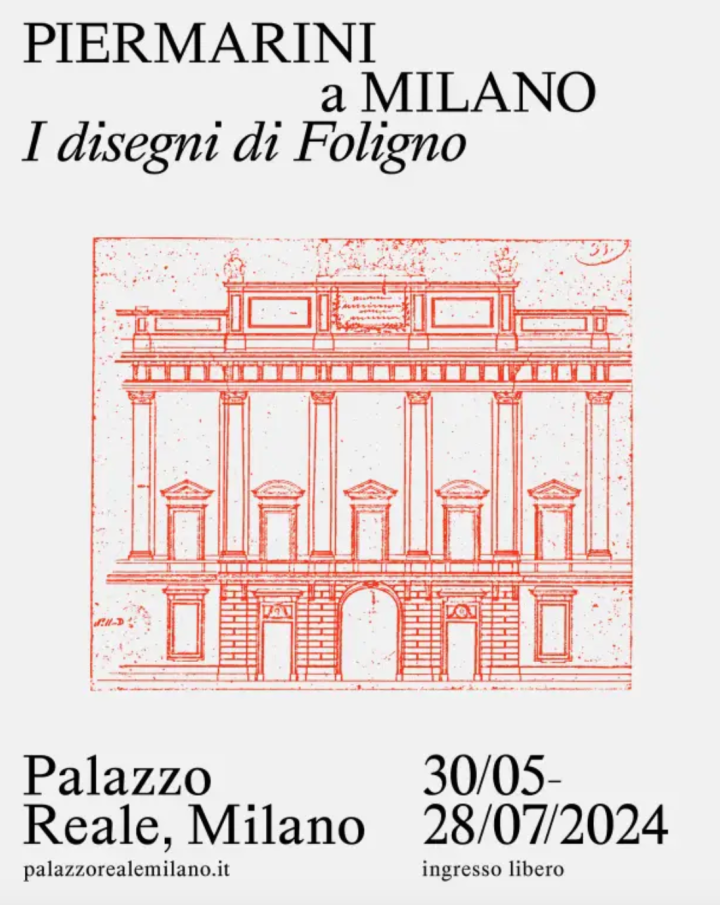 This summer Palazzo Reale presents Piermarini in Milan: The Drawings of Foligno, highlighting the evolution of the architect Giuseppe Piermarini (1734–1808), one of the leading Italian architects of the 18th century, whose neoclassical imprint can still be admired in the most significant buildings of Milan and Lombardy today. The exhibition immerses the viewer in preparatory drawings—sourced from the Piermarini Fund in his hometown of Foligno—ranging from early studies in Rome to major works in Lombardy, with particular attention to Milan and Palazzo Reale. Architectural models on loan from Palazzo Trinci in Foligno and the Museo Teatrale della Scala will also be displayed. The exhibition falls within the initiatives of enhancement aimed by Palazzo Reale as a member of the ARRE network — Association des Résidences Royales Européennes, which brings together approximately thirty royal residences in Europe.
New Historical Fiction | The Glassmaker and The Instrumentalist
From Penguin Random House:
Tracy Chevalier, The Glassmaker: A Novel (New York: Viking, 2024), 416 pages, ISBN: 978-0525558279, $32.
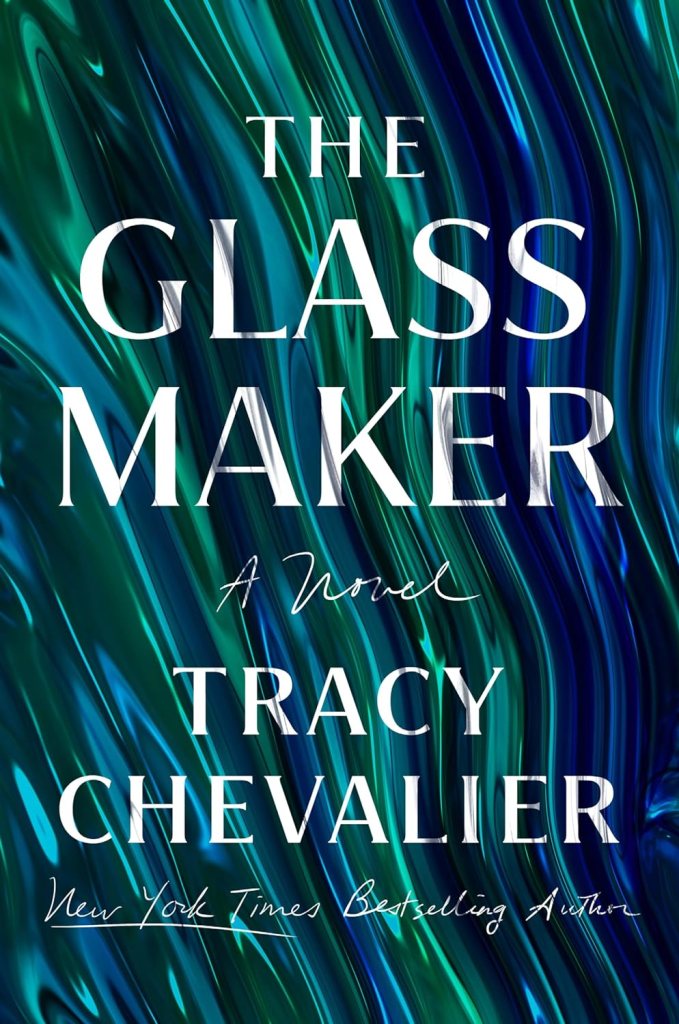 From the bestselling historical novelist, a rich, transporting story that follows a family of glassmakers from the height of Renaissance-era Italy to the present day
It is 1486 and Venice is a wealthy, opulent center for trade. Orsola Rosso is the eldest daughter in a family of glassblowers on Murano, the island revered for the craft. As a woman, she is not meant to work with glass—but she has the hands for it, the heart, and a vision. When her father dies, she teaches herself to make glass beads in secret, and her work supports the Rosso family fortunes. Skipping like a stone through the centuries, in a Venice where time moves as slowly as molten glass, we follow Orsola and her family as they live through creative triumph and heartbreaking loss, from a plague devastating Venice to Continental soldiers stripping its palazzos bare, from the domination of Murano and its maestros to the transformation of the city of trade into a city of tourists. In every era, the Rosso women ensure that their work, and their bonds, endure. Chevalier is a master of her own craft, and The Glassmaker is as inventive as it is spellbinding: a mesmerizing portrait of a woman, a family, and a city as everlasting as their glass.
Tracy Chevalier is the New York Times bestselling author of ten previous novels, including Girl with a Pearl Earring, which has been translated into forty-five languages and made into an Oscar-nominated film, a play, and an opera. Born and raised in Washington, DC, she lives in London with her husband.
◊ ◊ ◊ ◊ ◊
From Simon & Schuster:
Harriet Constable, The Instrumentalist (New York: Simon & Schuster, 2024), 336 pages, ISBN: 978-1668035825, $28.
 A stunning debut novel of music, intoxication, and betrayal inspired by the true story of Anna Maria della Pietà, a Venetian orphan and violin prodigy who studied under Antonio Vivaldi and ultimately became his star musician—and his biggest muse
Anna Maria della Pietà was destined to drown in one of Venice’s canals. Instead, she became the greatest violinist of the 18th century. Anna Maria has only known life inside the Pietà, an orphanage for children born of prostitutes. But the girls of the Pietà are lucky in a sense: most babies born of their station were drowned in the city’s canals. And despite the strict rules, the girls are given singing and music lessons from an early age. The most promising musicians have the chance to escape the fate of the rest: forced marriage to anyone who will have them. Anna Maria is determined to be the best violinist there is—and whatever Anna Maria sets out to do, she achieves. After all, the stakes for Anna could not be higher. But it is 1704 and she is a girl. The pursuit of her ambition will test everything she holds dear, especially when it becomes clear that her instructor, Antonio Vivaldi, will teach Anna everything he knows—but not without taking something in return.
Harriet Constable is an award-winning journalist and filmmaker living in London. She has written for The New York Times, The Economist, and the BBC, and is a grantee of the Pulitzer Center and a fellow of the Royal Society of Arts. She grew up playing the flute and piano and singing with her mother, a classically trained pianist and singer. The Instrumentalist is her debut novel.
Call for Papers | Textiles in Early Modern Venice
From ArtHist.net:
Venice: Trade, Production, Consumption of Textiles and Dress in the Early Modern Period
Dressing the Early Modern Network Conference
Centro Tedesco di Studi Veneziani, Venice, 28–29 May 2025
Organised by Jola Pellumbi, Sara van Dijk, and Torsten Korte
Proposals due by 30 September 2024
Venice in the early modern period flourished as a centre of textile production and trade, shaping and fostering global networks of connections that directly impacted dress in Europe and elsewhere. Due to Venice’s impenetrable location, its proximity to the centre of Europe, and a long-standing tradition of merchants and seafarers, Venice had positioned itself as a principal gateway between Europe and the East. Whether it was through the importation of luxury goods such as textiles and carpets, exports of beauty products and perfumes, or exchanges of ambassadorial gifts, Venice aided in the dissemination and infiltration of ideas, styles, and designs between Europe and the East. Furthermore, due to the flourishing art production and the thriving printing press in sixteenth-century Venice, textile patterns and dress styles were able to spread throughout Europe and the rest of Venice’s trading posts around the world influencing fashions, designs, methods of production, and patterns of consumption. Apart from the unaffected patrician government attire, infiltrations of new styles were particularly noticeable in Venice itself, throughout Carnival festivities, dogal and ambassadorial processions, operas and theatres, gambling dens, and in everyday life where both spaces and bodies were adorned. This conference aims to generate a discussion about the role of Venice as a centre of a global network of connections as seen through its trade, production, and consumption of textiles and dress as well as carpets, haberdashery, beauty products, perfumes, dyes, feathers, jewellery and design.
The conference is open to all, but we particularly welcome submissions from PhD candidates and early career researchers who are invited to speak about the topic with reference to their current or previous projects. We invite potential speakers to submit the following as a single document to the Dressing the Early Modern Network at info@dressingtheearlymodern.com: 1) a paper title; 2) a 300-word paper abstract, which should include the main question of the research project; 3) a short written biography (150 words max); 4) institutional affiliations; 5) subject of PhD thesis and (expected) date of completion; and 6) contact information. Each speaker will be allotted twenty minutes. The deadline for submissions is 30 September 2024. Notification of the outcome will be advised by email before 31 October 2024.
Organised by Jola Pellumbi, Sara van Dijk, and Torsten Korte, Dressing the Early Modern Network, in collaboration with Centro Tedesco di Studi Veneziani.
Call for Papers | The Art of Embroidery
From ArtHist.net:
The Art of Embroidery: History, Tradition, and New Horizons
University of Murcia / Lorca, 27–30 November 2024
Proposals due by 31 August 2024
Organized by the Lorca City Council and the Research Group Sumptuary Arts of the History of Art Department, University of Murcia
This congress aims to create a space to present and discuss the results of the most recent studies on the history of embroidery in its broadest dimension, without prioritizing specific cultural, artistic, or chronological areas, but encompassing all aspects that such an ancient art as embroidery entails. Languages for communications: Spanish, Portuguese, Italian, English, and French
Those interested in participating in the congress by presenting a communication must adhere to any of the themes that the scientific committee has established following the following descriptors:
Spanish embroidery history. European embroidery history. Ibero-American embroidery history. Geographies and circulation. Temporal connections. Spatial connections. Material connections. Formal connections. Technical connections. Relationships and exchanges. Aesthetic relationships. Uses and functions. Identities. Dating. Survivals. Typologies. Definition of centers, workshops, studios, schools, masters, etc. Flow of artists. Transmission of teaching. Craft and guilds. Techniques and designs. Patronage and sponsorship. Cultural histories surrounding embroidery. Religious contexts. Civil contexts. Provenances. Religious image embroidery. Civil and military embroidery. Rituals and symbolic practices. Liturgies and ceremonies. Cataloging and conservation. Theory, methodology, and historiography. Authorship and attributions. Decorations and ornamentations. Museums and collections. Restoration and conservation. Documentary findings. Research sources. Copies and fakes. Art market and trade. New challenges and approaches.
People interested in submitting a paper for its oral presentation should send their proposals by 31 August 2024 to Manuel Pérez Sánchez at congresobordadolorca@um.es. Questions are also welcome at the same address.
Proposals should include the following items
• Title of the proposal
• Brief summary of the proposal and justification (500 words maximum)
• Brief curriculum vitae (300 words maximum)
• Name(s) of the author(s)
• Institutional affiliation
• Email address
• Postal address
• Telephone number
Accepted papers will be announced 13 September 2024, when the registration period will begin (until 11 November).
Important Notes
• The papers submitted will have a maximum of three authors, must be original, unpublished, and not being considered for publication in any other medium for the dissemination of knowledge.
• Papers whose authors are not registered cannot be presented.
• One registration fee will be paid per author and paper.
• Priority will be given to those papers that provide a real advance in knowledge of the history of art and heritage in the lines of work proposed.
• The oral presentation of the paper will not exceed 15 minutes.
• The acceptance or rejection of the paper will be communicated on the given date to the authors via email
• The University of Murcia will issue certification of the papers only to those who have presented them orally at the congress.
Registration fees are as follows
• 20€ for standard presenters
• 10€ reduced fee for presenters: CEHA members, under 25, unemployed, and people with disabilities
• 5€ for non-presenting attendees
Online Talk | Hannah Carlson on Pockets and Gender
As noted at Events in the Field, maintained by The Decorative Arts Trust:
Hannah Carlson | Objects Up Close: Gendering Pockets and Purses
Online, Winterthur Museum, Garden & Library, 10 July 2024, 10.30am EDT
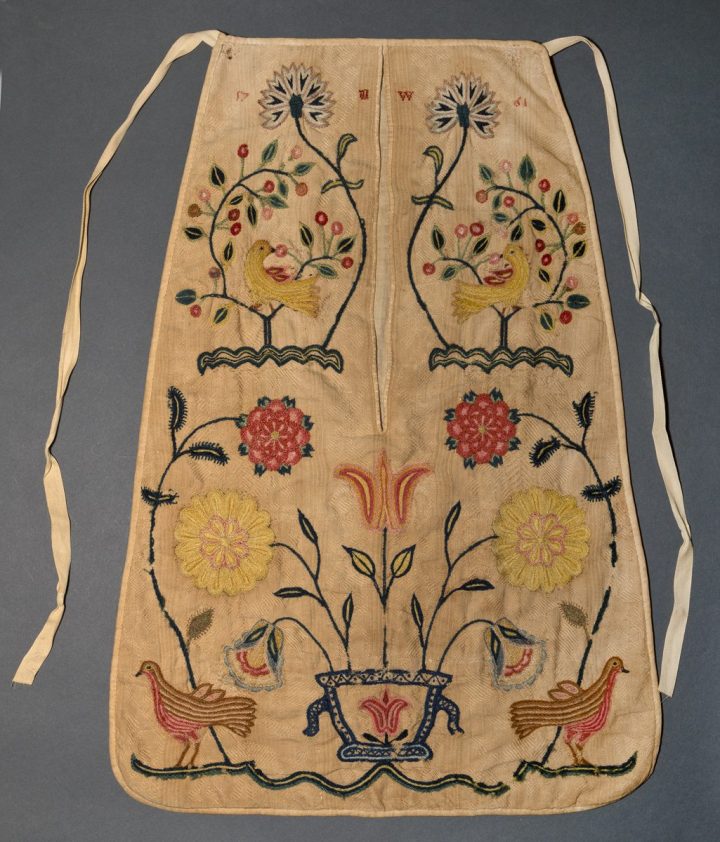
Pocket (Lady’s pocket), United States, 1780–1840, linen, wool, and silk (woven, embroidered, crewelwork), 56 × 39 cm (Winterthur, 1966.1126).
Explore the fascinating history of women’s and men’s pockets in this virtual lecture featuring a tie-on pocket in Winterthur’s collection. Through the 18th century, women used the tie-on pocket, an accessory worn under the skirt and wrapped around the waist. Men had pockets integrally stitched into the three-piece suit. Hannah Carlson, Winterthur summer research fellow and senior lecturer in the apparel design department at the Rhode Island School of Design, will explore the ‘pocket question’ and politics of individual preparedness and privacy.
Register for this free event here»
Hannah Carlson teaches dress history and material culture at the Rhode Island School of Design. After training as a conservator of costume and textiles at the Fashion Institute of Technology, she received a PhD in material culture from Boston University. She is the author of Pockets: An Intimate History of How We Keep Things Close (Algonquin Books, 2023).










 Enfilade
leave a comment