One Small Step, One Giant Leap
Scaramouche: “You must know, Madam, your Father (my Master, the Doctor) is a little Whimsical, Romantick, or Don Quick-sottish . . . Lunatick we may call him without breaking the Decorum of good Manners; for he is always travelling to the moon.”
-Aphra Behn, The Emperor of the Moon (1687)
On the 40th anniversary of Neil Armstrong’s moon walk, a selection of lunar images from the eighteenth century seems in order. And as often is the case with this crucial century, we see important foundations established (and some from the sixteenth century reinforced). From Aphra Behn’s use of the moon as a potent source of satire for the Royal Society – recently explored by Al Coppola in “Retraining the Virtuoso’s Gaze: Behn’s Emperor of the Moon, the Royal Society, and the Spectacles of Science and Politics,” Eighteenth-Century Studies 41 (Summer 2008) – to William Hogarth’s Principal Inhabitants of the Moon, the celestial orb proved a useful foil for assessing life as experienced in more local terms.
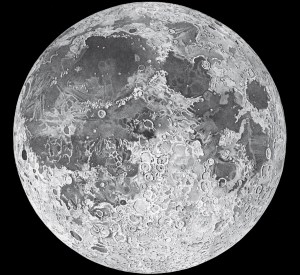
 By the end of the century, however, John Russell (Royal Academician and Painter to George III) would fix his entirely serious and scrupulous gaze to the heavens. Along with a series of drawings, he produced a handsome lunar globe and a striking pastel, measuring 5ft across. Both are now found at the Museum of the History of Science in Oxford, which possesses the major collection of work relating to Russell’s lunar observations. For details, see the museum’s website, which contains especially useful information from a 2007 exhibition dedicated to the subject, “Moonscope.”
Others that come to mind?










 Enfilade
Well, there are Donato Creti’s ‘astronomical landscapes,’ done for Clement XI and based on actual telescopic observation of celestial bodies, including the moon. These were the subject of an article by Christopher Johns in the “Zeitschrift für Kunstgeschichte” some years ago. Fascinating paintings.