Call for Papers: Sociology of the Letter
First Annual EE Colloquium on the Sociology of the Letter
St Anne’s College, Oxford, 12–13 November 2010
Proposals due by 10 September 2010
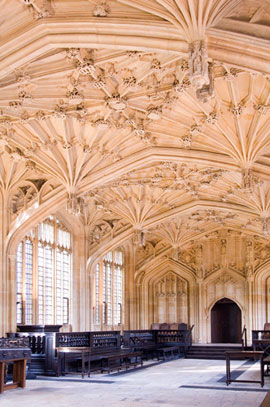
The Divinity School, Bodleian Libraries, University of Oxford
The Colloquium on the Sociology of the Letter is a new event from the Electronic Enlightenment Project, a leading scholarly resource for correspondence in the early modern period, supported by the Centre for the Study of the Book, a centre for fostering research into books across academic and professional specialisms. Both groups are scholarly departments of the Bodleian Libraries, University of Oxford. The colloquium is intended to provide a forum for both academics and graduate students exploring different aspects of both correspondence about publishing(letters to and from authors, editors, copy-editors, printers, proof-readers, printers, binders, booksellers, censors, reviewers . . .) and the publication of correspondence itself (ancient, medieval, contemporary, translations, fictional, satirical, translations . . .) in the early modern period.
Both correspondence and publishing were immensely influential in the nexus of political, religious, literary and cultural ferment in Europe and the Americas in the 16th-18th centuries. By exploring the links between the two, we expect to contextualize both and reach a deeper understanding of their social and
historical significance.
Call for Papers
The papers given by academics will be 40 minutes; those given by graduate studentswill be 20 minutes. Conference papers can be in English or French. A selection of papers will be published electronically in the Electronic Enlightenment Project’s e-journal Letterbook. Please send your proposals (max 250 words) by Friday 10 September 2010 to the following addresses:
Dr Robert V. McNamee
Director, Electronic Enlightenment Project
Bodleian Libraries, University of Oxford
Email: eecolloquium@e-enlightenment.info
Thomas Lawrence Exhibition and Conference
Thomas Lawrence: Regency, Power and Brilliance
A Conference at the National Portrait Gallery and The Paul Mellon Centre, London, 18-19 November 2010
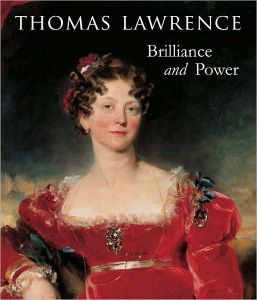
Ed. by Cassandra Albinson, Peter Funnell, Lucy Peltz ISBN: 9780300167184 (YCBA, 2010), $70
This conference accompanies the exhibition Thomas Lawrence: Regency, Power and Brilliance at the National Portrait Gallery, London (20 October 2010–23 January 2011) which will be shown at the Yale Center for British Art, New Haven, (24 February–5 June 2011). This will be the first exhibition in the United Kingdom since 1979 to examine Lawrence’s work and the first substantial presentation of this artist in the United States. It will present Lawrence as the most important British portrait painter of his generation and will explore his development as one of the most celebrated and influential European artists of the late eighteenth and early nineteenth centuries. By his untimely death in 1830 Lawrence had achieved the greatest international reach and reputation of any British artist. Based on new research and fresh perspectives, this exhibition will introduce Lawrence to a new generation of museum visitors and students. It will also contextualise his work in the light of recent scholarship on the art, politics and culture of the period. The exhibition will include the artist’s greatest paintings and drawings alongside lesser known works in order to provide a fresh understanding of Lawrence and his career. It will contrast his approach to sitters according to age and gender, juxtapose the power and impact of his public works with the intimacy and intensity of those portraits of his friends and family, trace his innovations as a draughtsman and painter, and place him within the broader contexts of the aesthetic debates, networks of patronage and international politics of his day.
Thursday, 18 November 2010, National Portrait Gallery (2:00pm–8:30pm)
Session One will address issues relating to Lawrence, gender and representation, and will include papers by Marcia Pointon (Professor Emerita, University of Manchester), Shearer West (Arts and Humanities Research Council and the University of Birmingham) and Sarah Monks (School of World Art Studies and Museology, University of East Anglia).
Evening: At 6pm, delegates are invited to attend a guest lecture by Richard Holmes, the biographer and author of The Age of Wonder: How the Romantic Generation Discovered the Beauty and Terror of Science (2008) and formerly Professor of Biographical Studies at the University of East Anglia. The lecture will be followed by a wine reception hosted by the curators, and free admission to the exhibition.
Friday, 19 November 2010, Paul Mellon Centre (9:15am–7:15pm)
Session Two, devoted to Lawrence and his contemporaries, will include papers by Viccy Coltman (University of Edinburgh) and Martin Myrone (Tate).
Session Three will explore technical aspects of Lawrence’s career, particularly his studio practice and relationship with engravers, and will include papers by Jacob Simon (National Portrait Gallery) and Sally Doust (Independent Scholar).
Session Four will address Lawrence’s reputation and historiography into the later nineteenth century, and will include papers by Philippa Simpson (Tate) and Pat Hardy (Walker Art Gallery, National Museums Liverpool).
The conference will conclude with a roundtable discussion, including Mark Hallett (University of York), Ludmilla Jordanova (King’s College, London), David Solkin (Courtauld Institute of Art), and the curators of the exhibition, which will consider themes arising from this exhibition and conference. The discussion will be followed by a wine reception at 5:45pm.
Full conference fee for both days, including coffee, lunch and tea on 19 November, and receptions: £40. Student and Senior concessions £20. To register for the conference please check availability with Ella Fleming at The Paul Mellon Centre: Email: events@paul-mellon-centre.ac.uk, Tel: 020 7580 0311, Fax: 020 7636 6730.
Garden History
From the Editor
It’s been bothering for me a while that Enfilade hasn’t done more with the history of eighteenth-century gardens. Those of you who keep better tabs on the field than I, please don’t be shy about submitting any notices regarding conferences, CFPs, reviews, or new publications.
For readers who would like to know more, you might spend some time at the fine website of the London-based Garden History Society, which includes news of upcoming events, recent book reviews from the society’s journal Garden History, and general information about the work of the GHS. Also have a look at the fine blog, Early American Gardens, which focuses on “America’s colonial Atlantic coast & early republic” particularly in terms of “what primary sources reveal was actually in these gardens, when various garden components were noted, & what people were doing in these gardens & why” (my thanks to Janet Blyberg for the reference). I’m afraid this sort of sampling just reinforces how much I’ve overlooked, but it’s a start. -C.H.
200th Anniversary of Napoleon’s Second Marriage
Press release (PDF) from the Musée national du château de Compiègne:
1810: The Politics of Love — Napoleon I and Marie-Louise in Compiègne
Musée national du château de Compiègne, 28 March — 19 July 2010

Exhibition catalogue, ISBN: 9782711857029
This first exhibition in France to evoke Marie-Louise, Empress of the French, intends to celebrate the two hundredth anniversary of the second marriage of Napoleon I to the young Archduchess of Austria, Marie-Antoinette’s grand-niece. It describes the extraordinary preparations for the arrival of the new Empress at the Palace of Compiègne, the splendours of the wedding ceremonies in Paris and the subsequent honeymoon in Compiègne. More than 200 works, wedding gifts, commissions for the sovereign’s trousseau and items of furniture, have been brought together: paintings, drawings, prints, sculptures, objets d’art, clothes, silks and jewellery. The exhibition has special loans from French museums (Louvre, Versailles, Fontainebleau, Fondation Napoléon and Fondation Thiers, etc) as well as international loans (Italy, Switzerland, Germany etc).
Napoleon I chose to receive his second wife at the Palais de Compiègne, just as Marie-Antoinette had been received here in 1770 by Louis XV and the Dauphin, the future Louis XVI. This event took place on 27 March 1810 and, on the orders of the Emperor who in his impatience brushed aside all protocol, the official meeting planned for Soissons was cancelled. 1810: la politique de l’amour: Napoléon Ier & Marie-Louise à Compiègne sets out to show the sumptuous refurbishment of the palace and the park before 1810.
The works started in 1807 under the direction of the architect Louis-Martin Berthault, and were hurried forward for the arrival of the Archduchess. Large portraits of the great figures of the Empire were presented in the new Galerie des Ministres (Prud’hon, Fabre, Lefèvre, etc), paintings by great masters from many different schools (Le Dominiquin, Patel, Flinck, etc) were brought together in the new Galerie des Tableaux de l’Impératrice, and Canova’s famous marbles on the theme of Psyche and Love (the standing version of this is on special loan from the Louvre), were placed at the entrance to the imperial apartments. The furniture, made by cabinetmakers Jacob-Desmalter and Marcion, as well as the Sèvres porcelain ordered for the palace, illustrates one of the high point of decorative art at a time when the Empire style was at its peak.
The grandeur of the civil and religious wedding celebrations at the Palace of Saint-Cloud then in the Salon Carré of the Louvre, together with the festivities organised in Paris up to 1st July 1810, reflecting an Emperor at the height of his power, created a wealth of iconographic images (Rouget’s painting inspired by David’s Coronation of Napoleon, drawings by Zix and Prud’hon, portraits by Gérard, Isabey, etc). (more…)
Xavier Salomon Said to Move from Dulwich to the Met
From ArtInfo (13 July 2010). . .
 Eighteen months into his tenure as director of the Metropolitan Museum of Art, Thomas P. Campbell is beginning to make significant hires at the museum. Earlier this month he stole American painting and sculpture curator Elizabeth Mankin Kornhauser from the Wadsworth Atheneum, and now Artnet is reporting that the museum has snapped up Xavier Salomon, the chief curator of London’s Dulwich College Picture Gallery, to join the Met’s Italian painting department. . . .
◊ ◊ ◊ ◊ ◊
In a 30-minutes audio interview available at Yang-May Ooi’s Fusion View (and occasioned by the 2007 Canaletto exhibition at Dulwich), Salomon discusses
his own pan-European roots and about the fusion art of Canaletto, the great Venetian painter who came to London in 1746. Canaletto painted famous London scenes with his Italian eye, staying in this vibrant city for 10 years. Xavier talks about what London might have been like at that time and why Canaletto came here for his painting. He also talks about his personal experiences of European art and what it takes to become the curator of one of the most respected art galleries in the UK.
◊ ◊ ◊ ◊ ◊
A 2008 feature from the Dulwich website indicates a variety of Salomon’s preferences including bespoke suits, scallops, Palermo, Verdi, and Venetian velvet slippers. What’s not to like? Well . . . maybe the camel (though even at that, I’ve never been on one; so who knows? Perhaps taste depends on trust more than we might like to admit).
An Eighteenth-Century Synagogue from Suriname in Jerusalem
Press release (24 May 2010) from the Israel Museum:
Rare and Newly Restored 18th-Century Synagogue from Suriname to be Highlight of Israel Museum’s New Synagogue Route

Interior of the 18th-century Suriname Synagogue Zedek-ve-Shalom at the Israel Museum. Photo by Eli Posner. Courtesy of the Israel Museum, Jerusalem.
A newly restored 18th-century synagogue from Suriname – one of only two remaining examples – will be a highlight of the Israel Museum’s newly installed Mandel Wing for Jewish Art and Life, on view beginning July 26, 2010, when the Museum opens its expanded and renewed campus to the public. This rare and striking South American synagogue will stand alongside synagogue interiors from Italy, Germany, and India as part of the Museum’s new Synagogue Route, which will offer visitors the opportunity for a notably rich experience with Jewish ritual traditions from around the world. On display with its original furniture and decorations and a sand floor, the Tzedek ve-Shalom Synagogue will offer visitors a glimpse into Suriname’s once vibrant Jewish community.
Built in 1736 in the capital city of Paramaribo, Suriname, Tzedek ve-Shalom ceased to function as a place of worship in the 1990s. In order to rescue this important example of the Jewish life of this remote Jewish community, the Israel Museum approached its leaders with the aim of restoring and preserving the synagogue on its campus for the benefit of future generations of visitors from around the world. The synagogue’s interior and its original ceremonial objects and furnishings were transferred to the Museum in 1999, where it has now been meticulously refurbished. (more…)
“A Collector’s Obsession”: Beckford at the Strawberry Hill Sale
On the 250th anniversary of William Beckford’s birth, Bet McLeod writes in the June 2010 issue of Apollo Magazine about the collector’s acquisitions at the 1842 sale of the contents of Strawberry Hill:

John Hoppner, "Portrait of William Beckford," ca. 1800 (City of Salford Art Gallery)
Horace Walpole (1717–97) and William Beckford (1760–1844), two of the most prominent and well-known collectors, builders and authors of the 18th and 19th centuries in Britain, are inextricably linked. Both had a passion for the past and an uncanny ability to recreate a highly imaginative version of that past. The comparisons between their renowned Gothic residences (Strawberry Hill and Fonthill Abbey) and novels (Castle of Otranto, 1764, and Vathek, 1786) have invited much debate, as have the parallels between their patterns of collecting, their acquisitions, and the arrangement of the collections in their residences. Much interest has also been paid to the on-site public auctions of both their collections, the production of the sale catalogues and the intense public interest that the auctions generated, manifested in the enormous number of visitors and extensive print coverage.
This year sees a celebration of both of these complex and contradictory individuals. It marks the 250th anniversary of Beckford’s birth, which will be commemorated by several publications and a special exhibition at Beckford’s Tower in Bath. It is also the year in which the first large-scale exhibition devoted to Horace Walpole and Strawberry Hill is on view in London at the Victoria and Albert Museum, having opened at the Yale Center for British Art, New Haven, in October 2009. Taking as its basis Beckford’s own words as selected from his correspondence, this article provides some insight into his reactions to and acquisitions of decorative works of art and sculpture at the 1842 sale of the contents of Strawberry Hill, which took place over 24 days. . . .
For the full article, click here»
NPG Appeal to Secure Historic Portrait
Press release from the NPG in London:
Appeal to Secure First British Portrait of a Black African Muslim and Freed Slave
National Portrait Gallery needs £100,000 to acquire first British oil painting of a freed slave, never seen in public
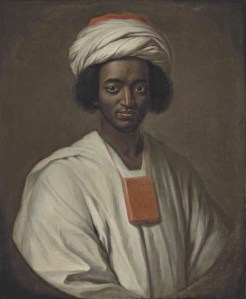
William Hoare, "Portrait of Ayuba Suleiman Diallo, also known as Job ben Solomon," oil on canvas, 1733 © Christie's Images Limited
The National Portrait Gallery today launches, with the support of the Heritage Lottery Fund (HLF) and the Art Fund, an appeal to acquire for the nation the earliest known British oil painting of a freed slave, and the first portrait that honours a named African subject as an individual and an equal. Never before seen in public, and currently on temporary display at the Gallery, this portrait of Ayuba Suleiman Diallo (c.1701-73), known when he was in England as Job ben Solomon, shows the sitter painted in 1733 in his traditional dress wearing his copy of the Qur’an around his neck.
The portrait, from a private collection, was sold at auction in December, is now under a temporary Ministerial export bar following a recommendation by the Reviewing Committee on the Export of Works of Art and Objects of Cultural Interest, administered by the Museums, Libraries and Archives Council (MLA). The Gallery needs to have raised £554,937.50 to secure this important and compelling painting for future generations by 25 August 2010. Art Fund members have kick-started the campaign with a £100,000 grant and the Heritage Lottery Fund has pledged £333,000 towards the acquisition and a project to cover costs for its conservation, display, interpretation and regional tour to Leicester, Liverpool and the North East Museums Hub. In addition to the funds the Gallery is able to contribute to the purchase, it is now launching a campaign to raise £100,000 to complete the target. . . .
A high status African from a prosperous family of Muslim religious clerics, Ayuba Suleiman Diallo was born in the Gambia. At the age of 29 he was captured as a slave and transported to work on a plantation in America. After being imprisoned for trying to escape, he met the lawyer Thomas Bluett who become aware of Diallo’s high birth, intellect and education and took an interest in him, arranging to bring him to England in 1734. After his arrival, he mixed with high society and had a lasting impact on Britain’s understanding of African culture, identity and religion. (more…)
Call for Papers: SAH Conference in New Orleans
Society of Architectural Historians 64th Annual Meeting
New Orleans, 13-17 April 2011
Proposals due by 14 August 2010
Members and friends of the Society of Architectural Historians are invited to submit abstracts by 14 August 2010. Abstracts of no more than 300 words should be sent directly to the appropriate session chair; abstracts are to be headed with the applicant’s name, professional affiliation [graduate students in brackets], and title of paper. Submit with the abstract a short curriculum vitae, home and work addresses, email addresses, and telephone and fax numbers. Abstracts should define the subject and summarize the argument to be presented in the proposed paper. The content of that paper should be the product of well-documented original research that is primarily analytical and interpretative rather than descriptive in nature. In addition to the following two panels, the full list of session topics can be found here»
◊ ◊ ◊ ◊ ◊
Architecture and Gastronomy
Architecture and food have long held analogies. Both can be characterized by words such as “tasteful,” “bland,” and most prominently in recent years—“organic.” Their synergy is embodied by the Latin word colere (“to till, tend”), which is also the root of our modern term “to cultivate.” Importantly, cultivation can reference both pragmatic and symbolic phenomena. Cicero notably fused the concrete and figurative inflections of the term, proposing that the human mind must be cultivated in order “to fruit.” During the Enlightenment this analogy was widened into architectural theory when J.-F. Blondel defined “taste” as the “fruit of reasoning.” Just as chefs designed recipes for fine cuisine, architectural theorists began to devise rules for good architecture. While both architecture and gastronomy are disciplines that espouse fundamental principles and standards, neither can be wholly controlled by absolute prescriptions or rigid formulae. They rely on a combination of intuition, inventiveness, and even wonder. This session aims to illuminate and clarify the reciprocity between building and eating, paying particular attention to the role of gastronomy in the expression and interpretation of architecture. Proposals can be from diverse approaches, and those that reassess the metaphorical relationship between taste and architecture are particularly welcome. Speakers may also wish to present case studies that address how the built environment, including landscape, participates in the experience of a meal. Possible questions to explore might include: What is the underlying significance of the terms like “setting” and “service” within architectural discourse? How do food markets contribute to the character of a city? In what ways does architecture structure certain forms of dining, such as ritual meals and communal feasts? How can tastes and smells help define the memory of particular places? The session is also open to presentations that examine emerging dialogues between building and eating, such as how vernacular architecture and regionalism have been aligned with contemporary movements like Slow Food and Edible Schoolyards.
Please send proposals to: Samantha Martin-McAuliffe, University College Dublin School of Architecture, Richview, Clonskeagh, Dublin 14, Republic of Ireland; samantha.martinmcauliffe@ucd.ie +353.1.716.2757.
◊ ◊ ◊ ◊ ◊
The Architecture of Spectacle: Antiquity through Early Modernity
While many recent period-specific studies address the ways that buildings and cities serve spectacle, from the perspective of visuality (Jay 1988) it may be useful to analyze how architecture for spectacle may condition visual experience itself and how it is theorized within cultural contexts. In turn, we might also ask how the requirements of facilitating or enhancing spectacle impacted the institution of architecture and its design processes, or how theaters or similar buildings adapted to new practical uses or even as models for envisioning the design and structure of the world. This session seeks papers focused on any period from antiquity to 1800, addressing how historical places for spectacle of all sorts shaped or reflected other architectural forms, how they adapted to other purposes, or how they influenced knowledge. How did forms in the theater resonate with public buildings, institutions, houses, or cities? How might columnar stage backdrops with pavilions, niches, and aediculas have both influenced and evoked urban forms? In what ways did later periods adapt monumental theaters or amphitheaters like those of the Roman world for domestic, commercial, or political purposes? Similarly, how might designers have adapted the architecture of theaters to different visual concerns in the manner Jeremy Bentham’s Panopticon, for example? What role did theaters serve in the development or construction of institutionalized knowledge in contexts like the anatomical theater or planetarium, or more generally in terms of the nature of spectacle and how visual experience itself works?
Send proposals to: John Senseney, Assistant Professor, University of Illinois at Urbana-Champaign, School of Architecture, 117 Temple Buell Hall, MC-621, 611 Lorado Taft Drive, Champaign, Illinois 61820; 217-244-5137; senseney@illinois.edu
Frick Addition Approved by Landmarks Preservation Commission
Press release (23 June 2010) from The Frick:

Model of the proposed Portico for Decorative Arts and Sculpture at The Frick Collection, south façade (Davis Brody Bond Aedas Architects and Planners)
Visitors at The Frick Collection find it difficult to believe that the Garden Court—a signature gallery considered by many to be the heart of the former mansion—was never enjoyed by its original resident, industrialist Henry Clay Frick (1849–1919). Indeed, it was created by enclosing a former carriage-way roughly fifteen years after his death, when in the 1930s architect John Russell Pope undertook the conversion of the Frick family home into a public museum, nearly doubling its size. The presentation of works of art within the mansion never remained static either, as Frick was an extremely active collector through his final days. His taste broadened from paintings to include sculpture and decorative arts, and only a year after moving into the residence, he began discussions with his original architect, Thomas Hastings of Carrère and Hastings, asking him to draw up plans for an extension that included a gallery devoted to the display of sculpture. The Frick Collection now returns to that idea. On June 22, 2010, at a meeting of the Landmarks Preservation Commission, a plan was approved, as submitted, to enclose an underutilized portion of the property, the portico in the Fifth Avenue Garden, which is viewable from inside the house but not open to the general public. The highly transparent enclosure of the portico, set back from the original limestone columns and cornice, will create a new gallery within the existing footprint of the institution. Construction is anticipated to begin in the fall of 2010, with an expected completion date of September 2011. (more…)










 Enfilade
leave a comment