Watteau’s Drawings in London
From the Royal Academy of Arts:
Watteau’s Drawings: Virtuosity and Delight
Royal Academy of Arts, London, 12 March — 5 June 2011

Jean-Antoine Watteau, "Three Studies of a Young Girl Wearing a Hat," ca. 1716. Red and black chalk, graphite on paper. 138 x 246 mm. Collection of Ann and Gordon Getty
In March 2011, the Royal Academy of Arts will present the first retrospective exhibition of the drawings of Jean-Antoine Watteau (1684–1721) to be held in the UK. The display will contain over 80 works on paper produced by the French artist. Watteau is perhaps best known for his invention of a new genre: the fêtes galantes, small pictures of social gatherings of elegant people in parkland settings. He was also an exceptional draughtsman. His drawings were praised for their subtlety, freedom of execution, lightness of touch and grace, and remain widely admired today.
Watteau is particularly renowned for his mastery of the ‘three chalks’ or trois crayons technique, the subtle manipulation and expert balancing of red, black and white. The drawings on display will be presented chronologically to give a sense of the artist’s stylistic development. Together they will demonstrate the full range of his subject-matter, from theatre pieces, portraits, and shop interiors to fêtes galantes.
Attingham Applications Due Soon
The Attingham Trust for the Study of Historic Houses and Collections — 2011 Courses

Summer School 2010 at Chatsworth (Photo: Rebecca Parker)
The Attingham Trust is an educational charitable trust offering specialised study courses for people professionally engaged in the field of historic houses, their collections and settings including the history and contents of English Royal Palaces. Since its foundation in 1952 it has enjoyed success with its high academic standards. The courses are highly regarded by museums, universities, heritage bodies, architectural practices and conservation workshops all over the world as an excellent opportunity for career and continuing professional development.
The 60th Attingham Summer School
1–19 July 2011
Directed by Lisa White and Dr Helen Jacobsen, and accompanied by specialist tutors and lecturers, this intensive 18-day course will include visits to approximately 25 houses in Sussex, Nottinghamshire, Derbyshire and Shropshire. The Summer School will examine the country house in terms of architectural and social history, and the decorative arts. Full and partial scholarships are available and applications are invited from those working in related fields. Closing date for applications: 31st January 2011.
Royal Collection Studies
4–13 September 2011
Run on behalf of the Royal Collection Trust, this strenuous 10-day course based near Windsor is directed by Giles Waterfield. The school will visit royal palaces in and around London with specialist tutors (many from the Royal Collection) and study the extensive patronage and collecting of the royal family from the Middle Ages. The course is open to all but priority will be given to those with a professional or specialist knowledge of British architecture, history or the fine and decorative arts. Some scholarship assistance is available.
Closing date for applications: 15th February 2011.
The Attingham Study Programme, Glasgow and the West of Scotland
17–25 September 2011
This intensive 9-day programme directed by Giles Waterfield will be based in Glasgow and West Scotland and will examine the Scottish house. It will include visits to Dumfries House, Drumlanrig Castle, Mount Stuart, The Hill House, Helensburgh and Pollok House, Glasgow. Some scholarship assistance is available and applications are invited from those employed or seriously interested in architecture and the fine and decorative arts. Closing date for applications: 28th February 2011.
For further information please visit our website: www.attinghamtrust.org or email Rebecca Parker: attinghamtrust@btinternet.com or Mayuri Amuluru: attingham@verizon.net for applicants from the USA.
Reviewed: ‘The Marlborough Gems’
From the December issue of Apollo Magazine:
John Boardman, The Marlborough Gems: Formerly at Blenheim Palace, Oxfordshire (New York: Oxford University Press, 2009), ISBN: 9780199237517, $325.
Reviewed by Lucia Pirzio Biroli Stefanelli; posted 1 December 2010.

In the February 2008 issue of ‘Apollo’, Sir John Boardman described how he was devoting himself to the reconstruction of the most important 18th-century English private collection of cameos and intaglios, that of George Spencer, 4th Duke of Marlborough (1739–1817). The result of this vast labour is a splendid and wonderfully rich volume written with the collaboration of Erika Zwierlein-Diehl, Claudia Wagner and Diana Scarisbrick, who contributed an analysis of the jewelled settings.
The Marlborough collection, comprising 800 intaglios and cameos covering all periods from antiquity to the late 18th century, became – along with telescopes – the duke’s main interest after he became disillusioned with the world of politics,
and retired. He kept his collection close at hand in Blenheim
Palace, where it remained until 1875 . . .
The full review is available here»
Chardin Exhibition in Ferrara and Madrid
Roderick Conway Morris reviews the Chardin exhibition currently in Ferrara for The New York Times, 22 December 2010, “Chardin’s Enchanting and Ageless Moments” . . .
Chardin: The Painter of Silence
Ferrara, Palazzo dei Diamanti, Ferrara, 17 October 2010 — 30 January 2011
Museo Nacional del Prado, Madrid, 1 March — 29 May 2011
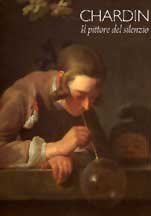
ISBN: 9788889793107, $90
“We stop in front of a Chardin as if by instinct,” wrote Diderot in his review of the Paris Salon of 1767, “like a traveler weary of the road choosing, almost without realizing, a place that offers a grassy seat, silence, water and cool shade.”
Jean-Siméon Chardin’s small still lifes and genre scenes have been working their magic ever since the 18th century. And trying to explain how Chardin created his enchanting effects has never ceased to exercise writers on art.
The Louvre has the world’s largest collection of Chardins, and Pierre Rosenberg, formerly the director of the museum, has made a lifelong study of the painter. He is now the curator of “Chardin: Painter of Silence,” the first exhibition devoted to the French artist ever to be staged either in Italy or Spain (the show will travel on to the Prado in February). The event brings together 52 pictures (with four additional works and a few substitutions in the Madrid version). . . .
The full article is available here. Didier Rykner reviewed the exhibition for The Art Tribune in October. The catalogue is available at artbooks.com.
New Website for ‘Early Modern Architecture’

Announcing: there is a new website devoted to the architecture of Europe and its colonies, 1400-1800 at: http://earlymodernarchitecture.com. The site aims to:
- highlight new research trends (through announcements of CFPs, upcoming conferences, and recently published volumes)
- provide basic information about the field (from images to fellowships and jobs)
- offer the opportunity for discussion and photo exchange.
-Editors, Freek Schmidt and Kimberley Skelton
In Memoriam
Anne Layton Schroder (1954-2010)
By Mary D. Sheriff
For a serious scholar, Anne Schroder certainly laughed a lot. It was such a pleasure to hear that generous, mirthful, and above all contagious laugh, a laugh filled with optimism. That optimism and joy, I also heard in Anne’s serious talk about the scholarship that she loved. But where her laughter came spontaneously and without effort, her scholarly work demanded time, patience and determination as well as intellect and invention. Her keen mind, astute eye, fertile imagination and sheer love of her work are perceptible in all her writings, but her elegant and fluid prose render invisible the effort and labor that went into producing them.
As Anne’s graduate school adviser, and then her friend and colleague, I had the good fortune of working with Anne over many years. Anne, in fact, was my first dissertation student, and I met her when I interviewed for my job at UNC. In those years there were very few art historians specializing in eighteenth-century French art, and to find at UNC a brilliant student who shared my enthusiasms was pure kismet. Over the years I worked with Anne, I saw her perseverance as well as her brilliance. Anne continued her dissertation research in Paris through a season of metro bombings that were frightening indeed, and she continued her dissertation writing while holding a demanding full-time position at the Museum of Fine Arts in Springfield. Anne produced an outstanding and original thesis requiring the sort of detective work that she recently showed in locating an unknown early work by Francois Gérard for the Nasher Museum of Art. In fact, Anne has long been a finder. In the course of her dissertation research, she combed through old records and located a drawing by Fragonard long forgotten in the storerooms of a French museum. She wrote to the museum about the drawing, hoping to see and publish the work. But before she could get there, the museum scooped her, announcing its “discovery” of a previously unknown Fragonard drawing. Like many other scholars, Anne experienced this sort of treachery at different points in her career, but if wiser for such experiences, she remained generous to students and colleagues, optimistic about the future of scholarship, and deeply committed to her own work. Even in professional positions that neither supported nor encouraged her own scholarship, nor gave her the time to pursue it, Anne never stopped writing.
For those who specialize in eighteenth-century art, Anne was not only a well-known scholar, she was also a well beloved colleague and friend. Anne had a knack for getting along with everyone: and I cannot think of a single colleague who was so universally liked and respected. She served the Historians of Eighteenth-Century Art and Architecture, in various roles, including a term as president, and she was instrumental in sustaining and growing the organization. She will be sorely missed by all.
Over the years I knew Anne, she never lost the optimism that always seemed to echo in her laughter. If she experienced setbacks and obstacles, she never gave up her scholarship. If before Spalding there were heartbreaks, she never lost faith in family, and if before Eric there were disappointments, she never lost faith in love.
With Deepest Sympathy
Note from the President

Dr. Anne L. Schroder, 1954-2010
I am very sorry to begin the new year with sad news. Our friend and colleague Anne Schroder passed away after a brief and unexpected illness on December 23. Anne served HECAA as newsletter editor, treasurer, and president. Far beyond these official capacities, she was an extraordinary voice of enthusiasm, support, and good cheer for our community. She will be greatly missed.
The notice from the Nasher Museum of Art is available here»
Cards can be sent to her husband Eric Vance at 2507 Foxwood Drive, Chapel Hill, NC 27514.
In lieu of flowers, the family requests that donations can be made to the Smith College Fund and directed to scholarship support. Gifts may be made online, by calling (800) 241-2056, or by mailing a check to the Gift Accounting Unit, Smith College, 33 Elm Street, Northampton, MA 0106. A memorial service in Chapel Hill, NC, is planned for Saturday, January 15, 2011, at 2 PM at Binkley Baptist Church, 1712 Willow Drive, Chapel Hill, NC, 27514; phone (919) 942-6186. A graveside service will take place in Atlanta at a later date.
Dr. Julie-Anne Plax
Professor of Art History
University of Arizona
jplax@email.arizona.edu
Exhibition: ‘Extravagant Display’ of Chinese Art at the Met
Thanks to Style Court for noting this one. From the Met:
Extravagant Display: Chinese Art in the Eighteenth and Nineteenth Centuries
Metropolitan Museum of Art, New York, 15 December 2010 — 1 May 2011
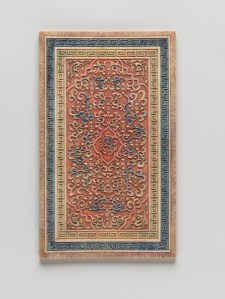
Tablet with Design for a Carpet, Qianlong period (1736–95), ivory with pigment, 13 inches (33 cm) high (Metropolitan Museum of Art; gift of James F. Ballard, 1923; 23.233.2)
The art of the Qing dynasty (1644–1911) has informed Western perceptions of Chinese taste and imagery for centuries, beginning in the late seventeenth century with the European craze for chinoiserie and continuing to this day. Ruled by the Manchus, a non-Han Chinese people from the far northeast, the Qing dynasty, in particular the reign of the powerful and erudite Qianlong Emperor (1736–1795), was a period of peace and prosperity that witnessed a spectacular flowering of the visual arts. Textiles, lacquers, ivories, jades, porcelains, and other objects were created both in palace workshops in Beijing and in specialized artistic centers such as the enormous kiln complex at Jingdezhen, Jiangxi Province.
Works in all media exhibit an appreciation for multilayered surfaces covered with dense, disciplined designs, many drawn from earlier periods in Chinese art. Included are figural scenes based on Chinese literature and history; popular gods and mythical creatures such as dragons and phoenixes; birds, bats, fish, deer, and other animals; trees, plants, and flowers; and geometric designs. Most of these motifs are imbued with meanings—usually auspicious—derived from long-standing cultural traditions. For example, the peony, which was first cultivated in the eighth century, alludes to spring and denotes wealth, while the chrysanthemum reflects autumn and symbolizes longevity. The pine tree, deer, and crane also evoke longevity, while squirrels, grapes, and gourds express a wish for generations of children. Other themes exploit the homonymic potential of the Chinese language, in which a word such as “bat” (pronounced in Chinese as “fu”) can symbolize “good fortune” (the character for which is also read as “fu”). This rich visual language enhanced the meaning of gifts, given seasonally and for important events such as birthdays, and of objects intended for display, either individually or in groups, thus creating specific messages for special occasions.
Drawn largely from the Museum’s permanent collection, this exhibition explores the vibrancy and innovation of Chinese art in the eighteenth and nineteenth centuries, underscoring the taste for extravagant imagery that characterized the period. In one room, theatrical costumes used in lavish court performances are on display, while objects in another room demonstrate the mastery with which Qing artists manipulated natural materials such as lacquer (made from tree sap), ivory, and bamboo. The third room features works in more resilient materials—jade and other hard stones, metals, and enamels—that were made not only for the court but as part of the extensive global trade in Chinese objects that marked this period in world history.










 Enfilade
leave a comment