Reviewed: English Silver from the Virginia Museum of Fine Arts
Recently published by Apollo Magazine:
Christopher Hartop, A Noble Pursuit: English Silver from the Rita Gans Collection at the Virginia Museum of Fine Arts (Richmond: Virginia Museum of Fine Arts, 2011), 88 pages, ISBN 9780917046902, $25.
Reviewed by Martin Chaisin; posted 1 May 2011.
In 1988, Jerome (Jerry) and Rita Gans loaned their magnificent collection of English silver of the 17th and 18th centuries to the Virginia Museum of Fine Arts (VMFA). The collection was eventually gifted to the museum in 1997; a decade later, it was permanently housed in a beautifully designed installation, as celebrated in Christopher Hartop’s earlier overview, ‘A Noble Feast: The Jerome and Rita Gans Collection of English Silver’ (2007). Then, following Jerry’s death, Rita assembled a collection – reflecting her taste and engaging personal style – from which she donated an additional 50 pieces to the museum in 2009. Hartop’s present publication is a catalogue of that latter collection, as well as an illuminating discussion of collecting, connoisseurship and the design and uses of silver in 18th-century England. . . .

The full review is available here»
20 Grants for Traveling to 2012 CAA in Los Angeles
Given that many of Enfilade’s readers are not based in the U.S., this announcement may be useful, especially for readers “from developing countries or from nations not well represented in CAA’s membership.” It would be nice to see a scholar of the eighteenth century among the recipients, and we would love to see you at the HECAA events. From CAA News:
The Getty Foundation has awarded a $100,000 grant to CAA in support of international travel for twenty applicants to attend the 100th Annual Conference and Centennial Celebration, taking place February 22–25, 2012, in Los Angeles. Through the new Getty Foundation Travel Grant Program, CAA will provide funds for travel expenses, hotel accommodations, per diems, and conference registrations. Recipients will also receive one-year CAA memberships. Applicants may be art historians, artists who teach art history, and art historians who are museum curators; those from developing countries or from nations not well represented in CAA’s membership are especially encouraged to apply.
The goal of the project is to increase international participation in CAA and to diversify the organization’s membership (presently sixty-five countries are represented). CAA also wishes to familiarize international participants with the submission process for conference sessions and to expand their professional network in the visual arts. Members of CAA’s International Committee have agreed to host the participants, and the National Committee for the History of Art will also lend support to the program.
CAA will publish an official call for grant applications on its website on Friday, July 8, 2011; the program will also be publicized in CAA News. A jury will select the twenty grant recipients.
Ian Wardropper Named Next Director of the Frick
Press release (19 May 2011) from The Frick Collection:
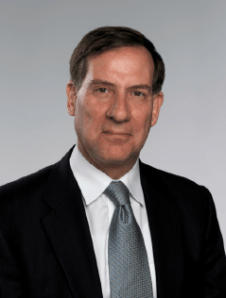 The Board of Trustees of The Frick Collection announced the appointment of Ian Bruce Wardropper as the next Director of the institution. Dr. Wardropper, currently Iris and B. Gerald Cantor Chairman, Department of European Sculpture and Decorative Arts, The Metropolitan Museum of Art, will take up the post as of October 3, 2011, with the retirement of the Frick’s Director of eight years, Anne L. Poulet. Wardropper will be responsible for the overall vision of The Frick Collection, which includes the Frick Art Reference Library. Comments Margot Bogert, Chairman of the Board of Trustees, “We are delighted to welcome Ian Wardropper to The Frick Collection as its next Director. He comes to the institution with a significant and nuanced combination of experience as a scholar and curator in areas that relate beautifully to the holdings of the Frick. As an administrator over large collections and staffs at The Metropolitan Museum of Art, and previously at The Art Institute of Chicago, Ian Wardropper played an increasingly involved role―along with Directors, Trustees, and Development colleagues―in the fundraising efforts required of large-scale projects, among them the multimillion-dollar renovation of the former institution’s Wrightsman Galleries in 2006–7. His top-down involvement in such successful and well-received initiatives, his relationships with collectors and donors, and his appreciation for the high standards and values espoused by the Frick, inspire great confidence in us today as we share this wonderful news.” (more…)
New Website for Yale Center for British Art
The new website for the Yale Center for British Art sets high the standard for digital art historical resources. The site features an online catalogue of the Center’s holdings, allowing seamless searching across the art collections and related library materials, AND publication-quality images of all art objects in the public domain are available for free downloading. As outlined in the press release below, more content will be added in the coming months. And what better way to draw attention to the new site, than an exhibition? -CH
Connections
Yale Center for British Art, New Haven, 20 May — 11 September 2011
Curated by Matthew Hargraves and and Imogen Hart
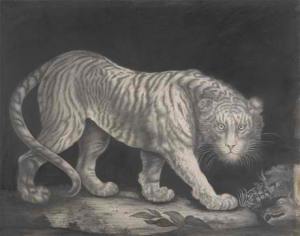
Elizabeth Pringle, "A Prowling Tiger," graphite, brushed black ink and white gouache, ca. 1800 (Yale Center for British Art)
To mark the launch of the YCBA’s online catalogue, Connections, a companion exhibition, replicates the experience of searching across the Center’s extraordinary collections. With more than two hundred paintings, sculptures, prints, drawings, rare books, and manuscripts from the early seventeenth to the early twentieth century, Connections presents familiar works as well as some surprises. Alongside popular collection highlights such as Rubens’s bravura oil sketch Peace Embracing Plenty will be rarely exhibited works, including outstanding prints and drawings by Thomas Gainsborough. The exhibition reveals the depth and breadth of material in the Center’s physical collections, which will now be accessible in a single searchable catalogue. Among the themes explored in the exhibition are: British Art in the 1630s; Hogarth and History; Sporting Art; the Academy and the Human Body; Egypt; British Modernism in the 1930s; Paul Sandby; George Stubbs; Thomas Gainsborough; and Samuel Palmer. The section devoted to George Stubbs (1724–1806) is representative of the exhibition in its span of different genres, as it showcases Stubbs’s extraordinary artistic range and some of the Center’s great treasures: paintings on canvas, copper, and earthenware; Wedgwood plaques and enamels; a selection of his technically innovative prints and drawings; anatomical studies; and books and manuscripts of midwifery and anatomy.
◊ ◊ ◊ ◊ ◊
Yale Center Offers Unprecedented Access to Largest Collection of British Art Outside the UK through New Online Catalogue

William Gilpin, leaves 33v–34r (with color chart laid in) from "Hints to form the taste & regulate ye judgment in sketching Landscape," manuscript, in pen and ink, with watercolor, ca. 1790 (Yale Center for British Art, Paul Mellon Collection)
Beginning May 20, the Yale Center for British Art, which houses the largest and most comprehensive collection of British art outside of the United Kingdom, will share its extraordinary holdings with the world through a new online catalogue. For the first time, visitors to the museum’s redesigned and expanded website—britishart.yale.edu—will have the ability to search across the Center’s entire collection of paintings, sculpture, prints, drawings, rare books, manuscripts, and works in the Reference Library. In addition, they will be able to download high-resolution images of objects in the public domain, free of charge. This new policy should transform scholarship in the field of British art by allowing universal access to the Center’s unparalleled collection. The launch of the Center’s online catalogue dovetails with Yale University’s recently announced “Open Access” policy, which will make high-quality digital images of Yale’s vast cultural heritage collections in the public domain openly and freely available. (more…)
First Annual Art History Festival at Fontainebleau
Thanks to Melissa Hyde for pointing this out. From the festival website:
Festival de l’histoire de l’art
Fontainebleau, 27-29 May 2011
 Le festival, c’est une série de conférences, de débats, de concerts, de lectures, autour d’un thème et d’un pays invité, qui changeront chaque année. Pour cette première édition, le choix s’est porté sur la Folie et l’Italie. Mais c’est aussi un ensemble de rendez-vous pérennes: un forum traitant des questions d’actualité en histoire de l’art, un salon du livre et des revues d’art, et un festival du film d’art. De plus, accompagnant l’introduction de l’histoire de l’art dans les programmes du primaire et du secondaire, l’université de printemps de l’Éducation Nationale s’associe au festival. Vous trouverez ci-dessous les programmes de toutes ces manifestations.
Details, including a full program, are available here»
Looking Ahead: HECAA Session at CAA 2013
HECAA Session at CAA 2013: ‘Art in the Age of Philosophy?’ — Chaired by Hector Reyes
College Art Association, Chicago, February 2013
The relationship between philosophy and art has been a rich field of research for scholars of eighteenth-century painting. Such inquiry has identified philosophical motivations for the pursuit of pleasure, especially aesthetic pleasure, and led to a new understanding of the intellectual foundations and commitments of supposedly frivolous painters, such as Fragonard, Greuze, Boucher and Chardin. This panel seeks to broaden the inquiry in eighteenth-century philosophy and art by considering a wide range of philosophical and artistic practices. Are there neglected philosophies that might relate to artistic theory or production? How might philosophical approaches help us to rethink the status of other media or artistic production more generally in the eighteenth century? Does an emphasis on philosophical questions occlude or lead us away from important formal questions? Papers that question or interrogate the philosophical approach to art historical research are as welcome as those that present new research or that propose new approaches and methodologies.
Call for Papers: BSECS Conference, January 2012
From the BSECS website:
British Society for Eighteenth-Century Studies Annual Conference
St Hugh’s College, Oxford, 4-6 January 2012
Proposals due 30 September 2011
The annual meeting of the British Society for Eighteenth-Century Studies is Europe’s largest and most prestigious annual conference dealing with all aspects of the history, literature, and culture of the long eighteenth century. We invite proposals for papers and sessions dealing with any aspect of the long eighteenth century, not only in Britain, but also throughout Europe, North America, and the wider world. Proposals are invited for fully comprised panels of three or four papers, for roundtable sessions of up to five speakers, for individual papers, and for ‘alternative format’ sessions of your devising.
While proposals on all and any eighteenth-century topics are very welcome, this year the conference theme will be Landscapes & Environments. We would thus particularly welcome proposals for panels and papers that address eighteenth-century uses of, and attitudes to, landscapes and environments of all kinds, throughout the long eighteenth century and in any part of the world. These might include, but will not be confined to: changes in the landscape (including urban landscapes) and environment; climate and weather (for example ‘the great storm’ of 1703); ‘greening’ the eighteenth century; landscape gardening; enclosure; pastoral; the picturesque; sacred landscapes; ruins and archaeology; representations of the landscape; and meanings and significance given to landscapes and environments, in all fields from history to the arts, literature, and philosophy.
All enquiries regarding the academic programme of the conference should be addressed to the academic programme co-ordinator, Dr Corinna Wagner (academic@bsecs.org.uk). Proposals are due by Friday 30 September. Registration will be available in September and you will be notified whether your paper has been accepted or not by Friday 21 October. For more information please see the BSECS website.
Art Historical Ethics: From Professional Codes to Ai Weiwei
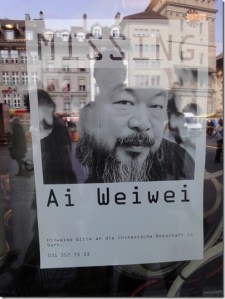
Photo from the Hurford Humanities Center, which is collecting graphics related to Ai Weiwei's imprisonment
A recent Google search for / HECAA art / provided a link to a page on ‘Art Ethics’ hosted by the Office of the Vice Chancellor of Research at the University of Illinois at Urbana-Champaign. The section on professional associations includes about a dozen organizations, most of which (including HECAA) don’t supply a code of ethics — as noted, rather curiously I think, at the site (the point seems less to direct users to codes of ethics than to imply that lots of organizations don’t think about these things).
The HECAA link is out of date in any case, but it did get me thinking about the place of ethics for an association like ours. Given that we’re an affiliate of the College Art Association, I think it’s safe to say that we’re covered by its work in this area. The most relevant document is presumably “A Code of Ethics for Art Historians and Guidelines for the Professional Practice of Art History.” Probably more complicated than articulating an ethical code for Art History is doing so for museum practices. Here, too, CAA has certainly addressed the problem, though it seems that new dilemmas often call for new responses.
In considering one example of the challenges museum officials face, Mary Louise Schumacher offers this piece on the intersection of Chinese involvement in the eighteenth-century exhibition, The Emperor’s Private Paradise, which opens in Milwaukee in June, and China’s recent imprisonment of the contemporary artist, Ai Weiwei. -CH.
◊ ◊ ◊ ◊ ◊
Mary Louise Schumacher, “Should the Milwaukee Art Museum Protest Ai Weiwei’s Detention?,” Journal Sentinel, 20 May 2011.
. . . Because of this new level of cultural exchange, China’s Palace Museum has authorized, for the first time, a large-scale exhibition of its treasures to travel to the U.S. This art historically significant show of 18th-century art and decorative objects, The Emperor’s Private Paradise will make its final stop at the Milwaukee Art Museum this summer.
Meanwhile, China has also imprisoned its most famous living artist Ai Weiwei. Ai is one of dozens of artists, lawyers, activists and bloggers arrested or gone missing in recent months in one of the worst spikes in repression in more than a decade and a presumed attempt to prevent the kinds of uprisings that have taken place across the Middle East and Nortth Africa, according to Human Rights Watch. . . .
These contradictory narratives are about to intersect in a unique way here in Milwaukee. The Milwaukee Art Museum is the only museum in the world about to open a major exhibition of Chinese art organized in direct cooperation with China.
On the one hand, it is a coup for MAM to snag this critically acclaimed show, fresh from a successful run at the Metropolitan Museum of Art in New York and the Peabody Essex Museum in Salem, Mass., which organized the show in cooperation with China’s Palace Museum. . . .
MAM is making this show, which has been in the works for many years, the centerpiece of its Summer of China, an entire slate of exhibits and events. Early on, the museum sought to include an outdoor installation by Ai Weiwei, but those plans fell through. The museum couldn’t identify an artwork that fit its plans and budgets, museum officials said.
The exhibit places MAM in an uneasy spot and raises ethical questions.
Should the museum join many of the world’s other cultural institutions in signing petitions and speaking publicly? Would China pull the show? And if they did, would MAM lose the exhibition fee, presumably in the millions?
If MAM is mum, however, will it run the risk of the appearance of appeasement? Does the museum have an obligation to educate its audience about the oppression of Ai Weiwei during its “Summer of China?”
Does this show provide an opportunity for dialogue or even diplomacy? And – a question for all art museums – will overt forms of protest be more effective than behind-the-scenes efforts in affecting Ai’s release . . .
The full article is available here»
Wellcome Library Acquires Portrait of French Surgeon, Imbert-Delonnes
Yes, that’s a 28-pound testicular tumor on the table — extracted by this surgeon from the body of the father (at least nominally the father) of Eugène Delacroix. Press release from the Wellcome:
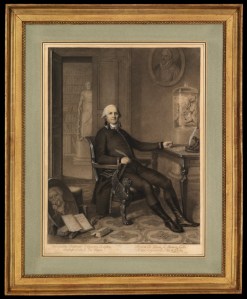
Pierre Chasselat, "Portrait of the French Surgeon Ange-Bernard Imbert-Delonnes," ca. 1800 (London: Wellcome Library)
The Wellcome Library in London has added to its collection of drawings with the acquisition of a magnificent portrait drawing of the French surgeon Ange-Bernard Imbert-Delonnes (1747-1818) by Pierre Chasselat – a portrait with a distinctive feature. The drawing is unusual in that in addition to its more conventional features, the minutely detailed interior includes, on the right, a gruesome souvenir of Imbert Delonnes’s proudest achievement: a gigantic testicular tumour (sarcocele) which – in a controversial operation – Imbert-Delonnes removed from Charles-François Delacroix, the French foreign minister.
The drawing in black chalk is signed by the artist and dated L’an 8 (year 8 in the French Revolutionary calendar, meaning 1799-1800). The portrait itself, and the identity of the man portrayed, were discovered by the firm of Didier Aaron, from whom the drawing has been purchased by the Wellcome Library with the aid of grants from the MLA/V&A Purchase Grant Fund and the Art Fund.
The drawing is both a work of art and a historical document. In accordance with Imbert-Delonnes’s self-image, it shows him sitting in a lordly pose in a fashionable interior at the dawn of the Empire period. In his professional life, he was a fearless and forceful surgeon who made his name in the French Army serving under Napoleon at the battle of Marengo (1800). In the drawing, he is holding his pen as if putting the finishing touches to a manuscript of the Progress of the Art of Healing. The operation on Delacroix proceeded despite seven of his eight medical advisers counselling against touching the tumour, which weighed some 28 pounds.
The seemingly incongruous display of excised body-parts on a plinth in an elegant interior makes the drawing a vivid witness to the sensibility of the surgical elite of the time – and the sarcocele has its own subplot. Its unwilling owner, Charles-François Delacroix, was nominally the father of the painter Eugène Delacroix, although he was almost certainly not his biological father, owing to this very tumour. Eugène Delacroix’s biological father was reputed to be Charles-François Delacroix’s successor as French foreign minister, Charles Maurice de Talleyrand, to whom Eugène bore a strong physical resemblance. (more…)
Exhibition: The Captain Kidd Story
Pirates: The Captain Kidd Story
Museum of London Docklands, 20 May — 30 October 2011
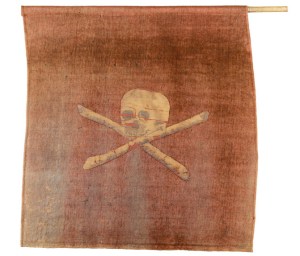 Focusing on the legendary privateer turned pirate, Captain Kidd, this exhibition reveals the surprising truth of how London’s corrupt political activities were entrenched in piracy. The launch date also coincides with the anniversary of Captain Kidd’s execution on 23 May 1701 in Wapping. From cannons and hidden treasure maps to female pirates and gibbet cages, the exhibition will explore the myths and mysteries surrounding common perceptions of pirates. 17th- and 18th-century English society will also be explored, looking at gruesome ritual executions and the greed and manipulation of the infamous East India Company. Over 170 objects will be displayed, including:
• Kidd’s last letter with the promise of hidden treasure
• A real pirate flag, the Admiralty Marshall’s Silver Oar and a gibbet cage
• A Vivienne Westwood outfit from her seminal 1981 ‘Pirates’ collection
• An original 1724 edition of Captain Johnson’s History of the Pyrates
• An early 18th-century cannon
• Images of the Quedah Merchant ship wreck, the vessel that was captured by Scottish privateer, William “Captain” Kidd on January 30, 1698. On May 23, Indiana University will place a dedication plaque on the actual shipwreck.
◊ ◊ ◊ ◊ ◊
From an IU press release (13 December 2007) . . .
Indiana University discovers 1699 Captain Kidd Shipwreck
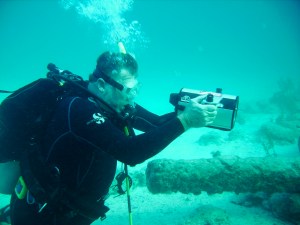
IU marine protection authority Charles Beeker examines possible wreckage from Capt. Kidd's Quedagh Merchant. Photo courtesy of Indiana University
Resting in less than 10 feet of Caribbean seawater, the wreckage of Quedagh Merchant, the ship abandoned by the scandalous 17th-century pirate Captain William Kidd as he raced to New York in an ill-fated attempt to clear his name, has escaped discovery — until now. An underwater archaeology team from Indiana University announced on 13 December 2007 the discovery of the remnants. IU marine protection authority Charles Beeker said his team has been licensed to study the wreckage and to convert the site into an underwater preserve, where it will be accessible to the public.
Beeker, director of Academic Diving and Underwater Science Programs in IU Bloomington’s School of Health, Physical Education and Recreation, said it is remarkable that the wreck has remained undiscovered all these years given its location, just 70 feet off the coast of Catalina Island in the Dominican Republic, and because it has been sought actively by treasure hunters. “I’ve been on literally thousands of shipwrecks in my career,” Beeker said. “This is one of the first sites I’ve been on where I haven’t seen any looting. We’ve got a shipwreck in crystal clear, pristine water that’s amazingly untouched. We want to keep it that way, so we made the announcement now to ensure the site’s protection from looters.” (more…)










 Enfilade
leave a comment