Call for Papers | Perversions of Paper
While it’s a symposium especially geared toward book studies, it seems like some of you working on prints would have exciting examples of “papery aberrations.” -CH
Perversions of Paper
Birkbeck Material Texts Network and the Archive Futures Network
Keynes Library, Birkbeck College, University of London, 28 June 2014
Proposals due by 30 March 2014
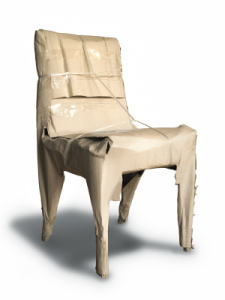 Perversions of Paper is a one-day symposium investigating the outer limits of our interactions with books and with paper. It considers unorthodox engagements with texts, from cherishing or hoarding them to mutilating and desecrating them, from wearing them to chewing them, and from inhaling their scent to erasing their content.
‘Perversion’ may apply to deviations from normal usage but also to our psychological investments in paper. To talk of having a fetish for books is common, but is there more to this than merely well-worn cliché? What part do books and other written artefacts play in our imaginary and psychic lives, and what complex emotional attachments do we develop towards them? Also, how might literary studies or cultural history register these impulses and acts; what kind of methodologies are appropriate?
This symposium invites reflections on perverse uses of—and relationships with—paper and parchment. We welcome proposals from a range of historical periods and disciplinary backgrounds, and from postgraduate students, as well as from more established academics. Contributors are invited to consider bookish and papery aberrations from any number of angles, including but not limited to:
• the defacing or mutilation of writing
• the book as sculpture or art medium
• ‘upcycling’ or re-purposing
• the book or manuscript as a fetish object
• pathologies or obsessions related to paper
• psychologies of book collecting
• bibliophilia and bibliophobia
• book crazes, the tactility or sensuality of paper and manuscripts
• books, libraries and archives as sources of contagion, or as the focus of terror or abjection.
Please email abstracts of no more than 200 words together with a brief bio statement to Dr Gillian Partington (g.partington@bbk.ac.uk).










 Enfilade
leave a comment