Exhibition | Caravaggio to Canaletto
My apologies for (once again) being so late with this exhibition, which recently closed at the Museum of Fine Arts in Budapest. The catalogue, however, is still available from Artbooks.com. -CH
Caravaggio to Canaletto: The Glory of Italian Baroque and Rococo Painting
Museum of Fine Arts, Budapest, 26 October 2013 — 16 February 2014
Curated by Zsuzsanna Dobos

◊ ◊ ◊ ◊ ◊
The Museum of Fine Arts’ exhibition titled Caravaggio to Canaletto will present the leading styles, outstanding artist figures as well as the extraordinary wealth of genres, techniques, and themes of 17th- and 18th-century Italian painting through more than 140 works by 100 masters, including nine paintings—the highest number by a single artist included in the displayed material—by the period’s prominent painter genius, Caravaggio.
The backbone of the selection is formed by the 34 principal works from the internationally highly acclaimed Italian Baroque and Rococo collection of the museum’s Old Masters Gallery, which will be complemented by 106 masterpieces arriving in Budapest from sixty-two collections of eleven countries, such as the National Galleries in Washington and London, the Musée du Louvre in Paris, the Museo del Prado and the Museo Thyssen-Bornemisza in Madrid, the Galleria degli Uffizi in Florence, the Gemäldegalerie in Berlin, the Gemäldegalerie Alte Meister in Dresden, the Kunsthistorisches Museum in Vienna, and the Galleria Borghese in Rome. The material commands international attention since such a large-scale, comprehensive exhibition surveying the entirety of Italian painting as the one in Budapest has not been put on for decades anywhere in the world.
Some years ago the Museum of Fine Arts set itself the ambitious goal of presenting 15th- to 18th-century Italian painting in two consecutive exhibitions, unprecedented in its scope in Hungary. The first one, titled Botticelli to Titian, held in 2009–2010, attracted 230 thousand visitors, and thus became one of the most successful shows in the history of the museum.
The next, representative exhibition devoted to 17th- and 18th-century Italian painting will be the closing event of the Italian-Hungarian Cultural Season 2013 in Hungary. The two centuries of Italian art surveyed by the exhibition were determined by the Baroque style, which prevailed during the period all over Europe. The early Baroque, which had started at the end of the previous century saw the rise of the naturalism of Caravaggio and his followers, as well as the Bolognese School of Classicism linked to the Carracci. High Baroque, which lasted more than fifty years, was characterised equally by the dynamic style of the so-called master decorators, Baroque Classicism, and early Romanticism. We can talk about the Late Baroque period from the last decades of the seicento, when the tradition of the great masters was carried on in a somewhat empty, routine-like way. The Baroque Era ended in the 18th century with the luxurious Venetian Rococo, while in the middle of the century, also referred to as settecento, the beginnings of Neoclassicism started to appear. The artists of the various painting schools and styles of the 17th and 18th centuries were driven by the same desire: to imitate reality, strive for realistic depiction and create the illusion of tangibility, for which they had the whole range of artistic means at their disposal.
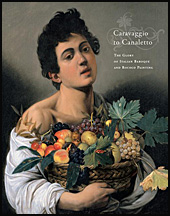
The exhibition will survey the period in eight chapters, starting with Caravaggio, whose activity in Rome brought radical change to painting, going on to the Baroque replacing Mannerism, and ending with the development of Rococo and Classicism, and the introduction of their masters. The opening section will display two early works by Caravaggio—one of them Boy with a Basket of Fruit—which will be followed by some religious compositions of Caravaggist painting, including two versions of Caravaggio’s Salome. The third section will showcase classicising Baroque linked to the names of Lodovico, Agostino and Annibale Carracci, while the fourth unit will present the spreading and flourishing of Baroque art. The fifth section will give an overview of the bourgeois genres of the still-life, the landscape, the portrait and the genre portrait, followed by the part devoted to the main stylistic trends of the 18th century. The last two sections will provide a glimpse into 18th-century painting in Venice and introduce the veduta (townscape), which became a popular genre at that time, through four Venetian townscapes by Canaletto.
The exhibition is implemented at the highest standard, thanks to the collaboration of nearly fifty Hungarian and foreign curators specialising in the period, and is accompanied by a Hungarianand English catalogue. The exhibition is curated by Zsuzsanna Dobos, art historian at the Old Masters Gallery, Museum of Fine Arts.
◊ ◊ ◊ ◊ ◊
From Artbooks.com:
Dobos, Zuzsanna, ed., Caravaggio to Canaletto: The Glory of Italian Baroque and Rococo Painting (Budapest: Museum of Fine Arts, 2013), 458 pages, ISBN: 978-6155304187, $130.
 Contents include
• J. Jernyei-Kiss, Italian Painting in the 17th and 18th Centuries
• J. Spike, Caravaggio and the Caravaggesque Movement
• D. Benati, The Carracci Academy: From Nature to History
• C. De Seta, The Grand Tour: The European Rediscovery of Italy in the 17th and 18th Centuries
• A. Vecsey, The Reception of 17th- and 18th-Century Italian Painting in Hungary: Taste and Collecting










 Enfilade
leave a comment