Call for Participation | British Print Culture in a Transnational Context
Call for Participation from The Paul Mellon Centre for Studies in British Art:
Graduate Summer Seminar | British Print Culture in a Transnational Context, 1700–2014
The Paul Mellon Centre for British Art, London, 21–25 July 2014
Applications due by 10 March 2014
In July 2014, the Paul Mellon Centre for Studies in British Art will offer a week-long graduate student seminar focusing on British print culture. This is open to doctoral candidates who are working on related topics, or whose research would benefit from a deeper knowledge of the subject. There is a substantial body of literature on British prints that takes the form of survey publications, monographic studies of individual printmakers, and studies of individual techniques, and a number of scholars and doctoral students are currently undertaking research related to these topics. However, the broad field of British print culture still remains relatively underexplored, and its importance for those working in other areas of British visual culture tends to be underestimated. Two related areas, in particular, have been neglected and offer rich possibilities for further study: the reproductive print and the transnational aspect of the British print. The now canonical division between reproductive and ‘original’ prints has tended to elevate the latter category at the expense of the former, and the long-held perception of the status of professional engravers working in Britain as inferior to the artists whose work they translated has obscured appreciation of the collaborative relationships between artist and engraver, and so inhibited our understanding of the complexities of British artistic production. Secondly, Stephen Bann’s research on Anglo-French exchange in nineteenth-century reproductive printmaking has provided an important model for investigating the transnational nature of the British print trade, the various different manifestations of which include: British engravers working elsewhere in the world; foreign engravers working in Britain; the circulation of British prints around the world; the appropriation of imagery from non-British prints in Britain and vice-versa; and indeed the emergence of global modes of representation transmitted by way of prints throughout the former British empire.
The seminar will engage with the development of British print culture, in a transnational context, from 1770 to the present day. It will offer an opportunity for consideration of the state of the field, through a series of sessions taught at the Paul Mellon Centre and at various print rooms in central London, including the British Museum, the Courtauld Institute of Art, University College London, and the V & A Museum. Students will have the chance to see and discuss a wide range of primary materials. The seminar will also offer an introduction to the different techniques of printmaking in relation to their historical development, and includes a visit to a print studio. (more…)
Exhibition | The Material World of the Early South
From the press release (10 February 2014). . .
A Rich and Varied Culture: The Material World of the Early South
DeWitt Wallace Decorative Arts Museum, Colonial Williamsburg, opens 14 February 2014
Curated by Ronald Hurst and Margaret Beck Pritchard

Powder Horn, attributed to Jonathan Sarrazin, Charleston, South Carolina, cow horn, 1762–64 (Winston-Salem, NC: The Museum of Early Southern Decorative Arts)
◊ ◊ ◊ ◊ ◊
A groundbreaking exhibition examining the material culture of the early South from the 17th century through 1840—the first of its kind to include a wide variety of media—will open at the DeWitt Wallace Decorative Arts Museum, one of the Art Museums of Colonial Williamsburg, on February 14. A Rich and Varied Culture: The Material World of the Early South will feature a dozen categories of media and represent three geographic regions of the South.
Some 350 objects will be drawn from the Colonial Williamsburg collections, those of 10 other institutions and 14 private collections. Many of the items in the exhibition will be on public view for the first time in a museum setting. Like the culture they represent, the objects are diverse, chronologically telling the story of the region’s population as it expanded westward and southward toward the frontier.
“The early American South has long been depicted as a society that produced almost none of the objects used by its substantial populace,” said Ronald L. Hurst, Colonial Williamsburg vice president for collections, conservation, and museums and its Carlisle H. Humelsine Chief Curator. “However, the opposite is true. Southern artists and artisans generated a vast body of material in virtually every medium. The abundance and diverse cultural resonance of these goods will be powerfully conveyed by the objects assembled for this exhibition.”
Featured in A Rich and Varied Culture will be furniture, paintings, prints, metals (silver and pewter), ceramics, mechanical arts and arms, architectural elements, archaeological objects, rare books, maps, costumes and accessories and musical instruments. These objects are each receiving detailed, exhaustive research that sometimes challenges previous research. In one example, a remarkable painting of Frances Parke Custis, on loan from Washington and Lee University, has recently been identified as the work of the Broadnax Limner, a little-known artist who worked in Virginia during the 1720s. Similarly, an elaborately decorated 1770s ‘dresser’ or hutch was long thought to be a Pennsylvania product, but has proven instead to be the work of a Quaker cabinetmaker working in Alamance County, N.C.
While the majority of the objects and paintings in the exhibition come from the various collections of the Colonial Williamsburg Foundation, several sister institutions are also lending to this important undertaking in an example of unprecedented partnership. Chief among them is The Museum of Early Southern Decorative Arts (MESDA) at Old Salem Museums and Gardens in Winston-Salem, N.C., with which the Art Museums recently announced a five-year partnership. It is the largest lender with 39 objects. Other lenders include Drayton Hall, a Historic Site of the National Trust for Historic Preservation in Charleston, S.C..; The Charleston Museum; Washington and Lee University in Lexington; The Winterthur Museum, Garden, and Library in Winterthur, Del.; Historic Charleston Foundation; Tennessee State Museum; the University of Tennessee’s Department of Anthropology and McClung Museum of Natural History and Culture; Marble Springs State Historic Site in Knoxville, Tenn.; and The President’s House Collection at The College of Williams & Mary in Williamsburg. Fourteen private collectors are also generously lending to the exhibition. (more…)
Colloque | The Artist and the Antiquary
From the programme:
L’artiste et l’antiquaire: L’étude savante de l’antique
et son imaginaire à l’époque moderne, XVIe–XVIIIe siècles
Institut national d’histoire de l’art, Paris, 6–7 March 2014
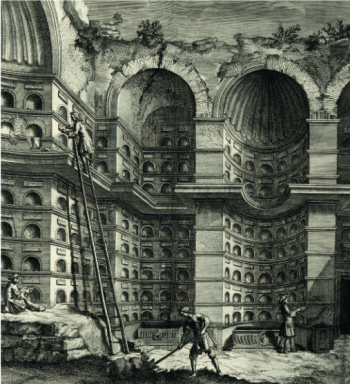
Francesco Bianchini, Camera Ed Inscrizioni Sepulcrali (1727)
L’ambition de ce colloque, dont le sujet se situe à la croisée de l’archéologie et de l’histoire de l’art, est d’analyser les formes de collaborations savantes entre les « antiquaires » et les artistes à l’époque moderne. De la Renaissance à la fin du XVIIIe siècle, la recherche savante sur les civilisations antiques à partir de leurs différents vestiges, écrits et matériels, fut aussi bien le fait de grands lettrés que celui de nombreux artistes et praticiens. Si les hommes de lettres eurent souvent besoin de dessinateurs pour les seconder dans leur travail de documentation des objets et des sites, ceux-ci se sont révélés à l’occasion d’excellents collaborateurs, voire même de fins connaisseurs de l’Antiquité classique qui ont contribué directement à la construction de la discipline.
Le colloque réunira des spécialistes de tous horizons – archéologues, historiens de l’art antique et moderne, historiens de l’archéologie – en vue d’une réflexion commune sur la recherche antiquaire, ses méthodes et ses enjeux, ainsi que sur la fécondité de ces études sur les plans artistique et culturel. Les travaux mettront l’accent sur les réseaux socio-professionnels, sur les pratiques de documentation et l’illustration des traités, ainsi que sur les relations entre savoir et invention, érudition antiquaire et création artistique.
J E U D I , 6 M A R S 2 0 1 4
9.15 Ouverture, Delphine Burlot (INHA) et Emmanuel Lurin (université Paris-Sorbonne)
Artistes et lettrés étudiant l’Antique : commandes, collaborations, rivalités scientifiques
Présidente de séance : Martine Denoyelle (INHA)
9.45 Alain Schnapp (université Paris 1 Panthéon-Sorbonne), Le scribe, l’artisan et le poète : aux origines du savoir antiquaire
10.30 Peter N. Miller (New York, Bard Graduate Center), Peiresc and Marseille: A ‘Knowledge Community’ in the Seventeenth-Century Mediterranean
11.15 Pause
11.45 Colin Debuiche (université Toulouse-Le Mirail), Les artifices du passé : Antiquité et mythes urbains de la Palladia Tolosa au XVIe siècle
12.30 Delphine Burlot, « La querelle des antiquaires et des graveurs n’est pas prête de finir ». Concurrence entre artistes et antiquaires dans la documentation et la restauration de l’Antique
13.15 Pause déjeuner
Les pratiques de documentation : reproductions, relevés, corpus documentaires et collections
Président de séance : Jean-Louis Ferrary (EPHE, IV e section)
14.45 Jean Guillemain (université Paris Descartes, bibliothèque H. Piéron), Les débuts de la numismatique grecque en France (Lyon, 1552)
15.30 Florian Stilp (université Paris Ouest Nanterre La Défense, labex « Les passés dans le présent »), À chacun son arc d’Orange. La vision variable d’un monument romain à l’époque moderne
16.15 Pause
16.45 Helen Whitehouse (University of Oxford, Oriental Institute), Records of Egyptian Antiquities in the ‘Paper Museum’ of Cassiano dal Pozzo
17.30 Pierre Gros (université de Provence, Académie des Inscriptions et Belles-Lettres), Le coeur antique du futur. Lectures palladiennes des vestiges des temples romains dans le dernier des Quattro Libri
18.15 Discussion générale
V E N D R E D I , 7 M A R S 2 0 1 4
Une démonstration par l’image : le discours antiquaire et son illustration scientifique
Président de séance : Philippe Sénéchal (INHA)
10.00 Emmanuel Lurin, L’antiquaire, l’artiste et le graveur (Rome, XVIe siècle) : autour des relevés « archéologiques » du Codex Orsini et des gravures d’antiquités de Jacob Bos
10.45 Frédérique Lemerle-Pauwels (CNRS, université François Rabelais, Tours), Représenter l’antique : architectes et antiquaires en France (XVIe–XVIIe siècles)
11.30 Pause
12.00 Carmelo Occhipinti (Università di Roma Tor Vergata), Mariette e Bouchardon. Ricerca antiquaria e storia artistica
12.45 Adriano Aymonino (University of Birmingham), Giovanni Pietro Bellori and Pietro Santi Bartoli’s Publications: Their Reception during the Eighteenth Century
13.30 Pause
Un laboratoire pour la création ? Érudition antiquaire et invention artistique
Président de séance : Claude Mignot (université Paris-Sorbonne)
15.00 Flaminia Bardati (Università di Roma La Sapienza), Bâtir à l’antique, sur l’antique, pour l’antique
15.45 Daniela Gallo (université Pierre Mendès-France Grenoble 2), Entre érudition et création artistique. Les objets antiques en marbre au xviiie siècle
16.30 Pause
17.00 Ingo Herklotz (Philipps-Universität Marburg), Visualizing the Catacombs: Between Legend and Scholarship in Early Modern Painting
17.45 Discussion générale
Renseignements: Elsa Nadjm (elsa.nadjm@inha.fr), Marine Acker (marine.acker@inha.fr)
Conference | Objects, Images, and Texts: Pope and Roubiliac
Objects, Images, and Texts: Pope, Roubiliac, and Representations of Authorship
Yale Center for British Art, 21–22 February 2014

Photographer unknown, William Kurtz Wimsatt, ca 1961,
© National Portrait Gallery, London
◊ ◊ ◊ ◊ ◊
This two-day international conference explores the relationship between authorship and the visual arts in the eighteenth century, focusing on the poet Alexander Pope. Building on the work of Yale scholar W. K. Wimsatt, an interdisciplinary panel of speakers will situate Pope’s portraits, both sculpted and painted, within the framework
of debates about his often ambiguous modes of authorial self-presentation involving the design of his printed texts as well as the complexities of the verse itself. The conference coincides with the Center’s exhibition Fame and Friendship: Pope, Roubiliac, and the Portrait Bust in Eighteenth-Century Britain, which focuses on a series of busts of Pope made by the French émigré sculptor Louis François Roubiliac. The conference is free and open to the public. Advance registration is recommended. Register online through February 20. On-site registration will be available at the event.
F R I D A Y , 2 1 F E B R U A R Y 2 0 1 4
10:00 Amy Meyers (YCBA), Welcome
10:15 Panel 1
Malcolm Baker (University of California, Riverside), Introduction to the Exhibition and Conference
Joseph Roach (Yale), Pope at Yale: The Intentional Fallacy and the Life of the Poet
12:00 Lunch Break
2:45 Panel 2
Session Chair: Gordon Turnbull (Yale)
Jill Campbell (Yale), ‘Give Me Back My Tears’: Monuments and Feeling in the Poetry of Pope
Greg Sullivan (Tate Britain), Roubiliac’s Biographers and his Place in Histories of British Sculpture
2:45 Break
3:15 Panel 3
Session Chair: Matthew Hargraves (YCBA)
Nigel Wood (Loughborough University), Pope and the Reading Public
Matthew Craske (Oxford Brookes), Roubiliac and the Business of Making Sculpture
5:00 Break
5:30 Keynote Lecture
Helen Deutsch (University of California, Los Angeles), ‘Ev’ry Coxcomb knows me by my Style’: Alexander Pope and the Art of Authorship
S A T U R D A Y , 2 2 F E B R U A R Y 2 0 1 4
10:00 Martina Droth (YCBA), Welcome
10:15 Panel 4
Session Chair: David Bromwich (Yale)
Janine Barchas (University of Texas at Austin), Counterfeit Authority: Frontispiece Portraits of Fictional Authors and Authors of Fiction
James Raven (University of Essex), Images of Authors Within Eighteenth-Century Libraries
12:00 Lunch Break
1:15 Breakout Sessions
Malcolm Baker (UCR), Martina Droth (YCBA), and Anne Gunnison (Yale University Art Gallery), Looking at Busts of Pope
Kathryn James (Beinecke Library) and Margaret Powell (Lewis Walpole Library), Reading Pope: Rare Books and Documents in the Yale Collections
2:30 Break
2:45 Panel 5
Session Chair: Langdon Hammer (Yale)
David Brewer (Ohio State University), Hanging Pope in Effigy
Richard Wendorf (American Museum in Britain), Classicizing Alexander Pope
Malcolm Baker (UCR), Confronting Pope’s Portraits
5:00 Closing Reception
New Book | Early American Silver in The Metropolitan Museum of Art
Distributed by Yale UP:
Beth Carver Wees with Medill Higgins Harvey, Early American Silver in The Metropolitan Museum of Art (New York: The Metropolitan Museum of Art, 2013), 340 pages, ISBN: 978-0300191837, $75.
 This lavishly illustrated book documents the most distinguished works from The Metropolitan Museum’s extensive collection of domestic, ecclesiastical, and presentation silver from the Colonial and Federal periods. Detailed discussions provide a stylistic and socio-historical context for each piece, offering a wealth of new information to both specialist and non-specialist readers. Every object is documented with new photography that captures details, marks, and heraldic engraving. Finally, accompanying essays discuss issues of patronage and provenance, design and craft, and patterns of ownership and collecting, providing windows onto the past that help bring these pieces to life.
Beth Carver Wees is curator of American decorative arts, and Medill Higgins Harvey is a research associate in the American Wing, both at The Metropolitan Museum of Art, New York.
Symposium | Millinery through Time
This in Williamsburg, just before ASECS. From the conference website:
Millinery through Time
Colonial Williamsburg, 16–19 March 2014
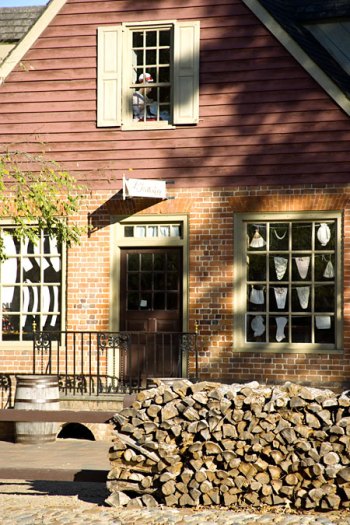 Colonial Williamsburg is pleased to celebrate the 60th anniversary of the opening of the Margaret Hunter Millinery Shop. For 60 years, the shop has interpreted the 18th-century business and craft of millinery with its ever-changing fashions. As fashion has evolved and changed with time, so has the trade. Millinery Through Time will explore the development of the trade from the 18th century, dealing with thousands of fashionable accessories, to the 21st century, specializing in a single fashionable item: hats.
This conference will present an understanding of the trade from a scholarly and a technical perspective through the collaboration of lectures, hands on workshops, and demonstrations. Join us as we step into the world of millinery, one of change, creativity, commerce, and fashion.
S U N D A Y , 1 6 M A R C H 2 0 1 4
5:00 Welcome, Jay Gaynor, director, Historic Trades, Colonial Williamsburg
• 60 Years at the Margaret Hunter, Janea Whitacre, mistress milliner and mantuamaker, Colonial Williamsburg
• The Margaret Hunter Shop in Media, Leslie Doiron Clark, associate producer, Productions, Publications, and Learning Ventures, Colonial Williamsburg
• Virtual Tour of the Margaret Hunter Shop: The 3D Virtual Reconstruction of the 18th-Century Interior, Peter Inker, Digital History Center, Colonial Williamsburg
• Collections for the Margaret Hunter Shop, Linda Baumgarten, curator, textiles and costumes, Colonial Williamsburg
6:00 Birthday Reception. Central Court. Guests are encouraged to wear their favorite costume. Prizes will be awarded.
M O N D A Y , 1 7 M A R C H 2 0 1 4
9:30 Welcome and announcement of prizes from the birthday reception.
9:45 The Milliner and Her Trade, Janea Whitacre, mistress milliner and mantuamaker, Colonial Williamsburg
10:30 Coffee
11:00 Monsieur Beaulard: The Man Who Dressed Marie-Antoinette, Kimberly Chrisman-Campbell, independent scholar, Glendale, California
11:25 ‘To set off every Female Perfection to the highest Advantage’: Milliners, Mantua-Makers, and Dressmakers in Popular Fiction, 1750–2012, Susan Holloway Scott, novelist and history blogger, Philadelphia
11:50 Cry Thief! 18th-Century Milliners and the World of Stolen Goods, Emma Cross, interpreter, Colonial Williamsburg
12:15 Lunch
12:45 Study drawers open in Textile Gallery, Linda Baumgarten, curator, textiles and costumes, and Kimberly Smith Ivey, curator, textiles and historic interiors, Colonial Williamsburg
1:45 ‘Just Imported…and to be Sold on Reasonable Terms by the Subscriber’: Visualizing 18th-Century Textiles through Primary Research, Angela Burnley, independent researcher and owner, Burnley & Trowbridge Co., Williamsburg
2:35 The Morning Ramble or the Milliner’s Shop, Sarah Woodyard, apprentice milliner and mantuamaker, Colonial Williamsburg
3:30 Afternoon refreshments
4:00 Inspired Globally But Created in Upstate New York: An Early 18th-Century Apron with Exotic Motifs, Mary D. Doering, independent scholar, collector, and guest curator, Falls Church, Virginia
4:25 A Mysterious Bit of Millinery: The Mask, Mark Hutter, journeyman tailor supervisor, Colonial Williamsburg, and Phillippe L. B. Halbert, Lois F. McNeil Fellow, Winterthur Program in American Material Culture, Winterthur Museum and the University of Delaware.
7:00 Play, The Milliners, with a question and answer session to follow the performance.
T U E S D A Y , 1 8 M A R C H 2 0 1 4
9:30 An American Identity: The Shoemaker’s Label in Revolutionary and Federal America, Meaghan Reddick, candidate for M.A. History of Decorative Arts, George Mason University, Fairfax, Virginia.
9:55 ‘Any thing elegant, in the form of a Turban’: Women’s Turbans in Fashion at the Turn of the 19th Century, Ann Buermann Wass, history/museum specialist, Maryland-National Capital Park and Planning Commission, Riverdale Park, Maryland
10:20 Coffee
10:50 Velvet and Silk Flowers for Millinery and Dressmaking, Mela Hoyt-Heydon, chairman, Theatre Arts Department, Fullerton College, Fullerton, California
11:40 ‘…what vulgar people calls a milliner’: How the Milliner Survived the Westward Expansion, Hat-Making, and French Lessons, Abby Cox, apprentice milliner and mantuamaker, Colonial Williamsburg
12:35 Lunch
1:05 Study drawers open in Textile Gallery, Linda Baumgarten, curator, textiles and costumes, and Kimberly Smith Ivey, curator, textiles and historic interiors, Colonial Williamsburg
2:00 Traffic Lights of Chic: American Millinery and American Style, 1937–1947, Nadine Stewart, adjunct professor, Montclair State University, Montclair, New Jersey
2:55 Shades of Grief: The Role of Millinery and Accessories as Indicators of Mourning in the 1860s, Samantha McCarty, Williamsburg
3:20 Ellen Carbery: Enterprising Milliner of Newfoundland, Cynthia Boyd, Ph.D. candidate, Department of Folklore, Memorial University of Newfoundland, St. John’s, Newfoundland and Labrador.
3:45 Afternoon refreshments
4:15 ‘Creative Abilities and Business Sense’: The Millinery Trade in Ontario, 1870–1930, Christina Bates
4:40 Millinery as a 21st-Century Occupation: A Current Example of a Career in Hat Making, Ignatius Creegan, Ignatius Hats, Petersburg, Virginia
W E D N E S D A Y , 1 9 M A R C H 2 0 1 4
An assortment of optional workshops are offered on Wednesday.
New Book | The Libertine: The Art of Love in Eighteenth-Century France
From Abbeville:
Michel Delon, ed., with a foreword by Marilyn Yalom, The Libertine: The Art of Love in Eighteenth-Century France (New York: Abbeville, 2013), 496 pages, ISBN: 978-0789211477, $150.
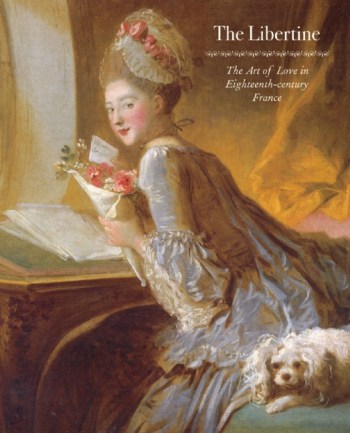 “Delon’s anthology… display[s] the dazzling breadth and depth of the 18th-century obsession with pleasures of the flesh. Certainly The Libertine is as lavish—with its sumptuous illustrations of luscious Rococo nudes and other toothsome lovelies—as an 18th-century bal masqué. But Delon’s analogy understates the dizzying diversity of the ball’s invitees. Priapic peasants, depraved duchesses, masked miscreants, sexy sylphs, coy mistresses, foot fetishists, human sofas (!) and a surprising abundance of naughty nuns: These raunchy revelers engage in one decadent mating dance after another, tirelessly chasing ‘it’, and gamely explaining why it matters.” —The New York Times
“That which both sexes then called ‘love’ was a kind of commerce that they entered into, often without inclination, where convenience was always preferred to sympathy, interest to pleasure, and vice to feeling.” Thus did one novelist describe the spirit that pervaded the twilight years of the Ancien Régime, the heyday of the libertine. Today this word typically evokes the excesses of a Sade or the cruel manipulations of Dangerous Liaisons, but the game of love, as the jaded French aristocracy played it, was most often characterized by a refinement of speech and manner, a taste for nuance over forthright assertion that finds its counterpart in the paintings of Fragonard and the operas of Mozart. The amours of the libertine also colored the intellectual life of the time, figuring into the great debates about natural instinct versus social institutions, and the proper limits of personal freedom.
This sumptuous volume re-creates the milieu of the libertine in all its lively decadence, bringing together more than eighty brief selections from eighteenth-century French literature, grouped into eight broad themes—including tales of seduction, fantasies of exotic lands, and the discoveries of youth—and introduced by an eminent French scholar. These pieces, which encompass fiction, drama, verse, essays, and letters, are the work of nearly sixty writers, some familiar to Anglophone readers—such as Voltaire, Rousseau, Diderot, and yes, the Marquis de Sade—and some much less so; indeed, many of the selections are hitherto untranslated. Each excerpt is accompanied by splendid reproductions of period artworks, many rarely seen, by Watteau, Boucher, Fragonard, and numerous others, that echo and heighten the mood of the texts.
Michel Delon, professor of French literature at the Sorbonne, is the author of several studies of the eighteenth-century libertine. He has edited the works of Diderot and Sade for the Bibliothèque de la Pléiade, as well as Routledge’s Encyclopedia of the Enlightenment.
Marilyn Yalom is a former professor of French and presently a senior scholar at the Clayman Institute for Gender Research at Stanford University. In 1991 she was decorated as an Officier des Palmes Académiques by the French Government. She is the author of widely acclaimed books such as Blood Sisters: The French Revolution in Women’s Memory (1993), A History of the Breast (1997), A History of the Wife (1997), and How the French Invented Love: 900 Years of Passion and Romance (2012). She lives in Palo Alto, California, with her husband, the psychiatrist and author Irvin D. Yalom.
Call for Papers | Perversions of Paper
While it’s a symposium especially geared toward book studies, it seems like some of you working on prints would have exciting examples of “papery aberrations.” -CH
Perversions of Paper
Birkbeck Material Texts Network and the Archive Futures Network
Keynes Library, Birkbeck College, University of London, 28 June 2014
Proposals due by 30 March 2014
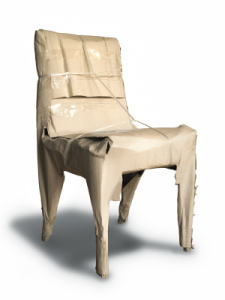 Perversions of Paper is a one-day symposium investigating the outer limits of our interactions with books and with paper. It considers unorthodox engagements with texts, from cherishing or hoarding them to mutilating and desecrating them, from wearing them to chewing them, and from inhaling their scent to erasing their content.
‘Perversion’ may apply to deviations from normal usage but also to our psychological investments in paper. To talk of having a fetish for books is common, but is there more to this than merely well-worn cliché? What part do books and other written artefacts play in our imaginary and psychic lives, and what complex emotional attachments do we develop towards them? Also, how might literary studies or cultural history register these impulses and acts; what kind of methodologies are appropriate?
This symposium invites reflections on perverse uses of—and relationships with—paper and parchment. We welcome proposals from a range of historical periods and disciplinary backgrounds, and from postgraduate students, as well as from more established academics. Contributors are invited to consider bookish and papery aberrations from any number of angles, including but not limited to: (more…)
Call for Papers | Fifth Annual Feminist Art History Conference
Fifth Annual Feminist Art History Conference
American University, Washington, D.C., 31 October — 2 November 2014
Proposals due by 15 May 2014
This annual conference builds on the legacy of feminist art-historical scholarship and pedagogy initiated by Norma Broude and Mary D. Garrard at American University. To further the inclusive spirit of their groundbreaking anthologies, we invite papers on subjects spanning the chronological spectrum, from the ancient world through the present, to foster a broad dialogue on feminist art-historical practice. Papers may address such topics as: artists, movements, and works of art and architecture; cultural institutions and critical discourses; practices of collecting, patronage, and display; the gendering of objects, spaces, and media; the reception of images; and issues of power, agency, gender, and sexuality within visual cultures. Submissions on under-represented art-historical fields, geographic areas, national traditions, and issues of race and ethnicity are encouraged.
To be considered for participation, please provide a single document in Microsoft Word. It should consist of a one-page, single-spaced proposal of unpublished work up to 500 words for a 20-minute presentation, followed by a curriculum vitae of no more than two pages. Please name the document “[last name]-proposal” and submit with the subject line “[last name]-proposal” to fahc5papers@gmail.com.
Submission Deadline: May 15, 2014. Invitations to participate will be sent by July 1.
Keynote speaker: Professor Lisa Gail Collins, Vassar College
Sponsored by the Art History Program and the Department of Art, College of Arts and Sciences, American University. Organizing committee: Kathe Albrecht, Juliet Bellow, Norma Broude, Kim Butler Wingfield, Mary D. Garrard, Helen Langa, Andrea Pearson, and Ying-chen Peng.
Call for Papers | Tracing the Heroic through Gender: 1650, 1750, 1850
Tracing the Heroic through Gender: 1650, 1750, 1850
Collaborative Research Cente 948, University of Freiburg, 26–28 February 2015
Proposals due by 28 March 2014
In most societies the heroic is in many ways gendered. Attributes of masculinity might first come to mind. Yet, from a historical perspective it becomes apparent that heroizations often also have feminine connotations. The social and cultural production of the heroic cannot be analyzed exclusively in terms of masculinity (and masculinity-studies), nor can we regard women or femininity simply as exceptions in this field. Rather, the relational character of the category gender needs to be taken seriously.
The fundamental relationality, the ‘constructedness’, and the historicity of gender are among the core assumptions in gender studies today. Based on this and by interdisciplinary cooperation the conference will examine forms, mediums and processes of heroization as well as discourses of heroic transgression, exceptionality or veneration for certain periods in time.
In order to give adequate consideration to the complexities of the historical entanglement between gender and heroization, we would like to use gender as an analytical tool in a new way. Speaking metaphorically, one might understand gender as a ‘tracer’ that ‘leads’ us, which way we may uncover new aspects of heroic ideas and concepts.
In today’s natural sciences, a tracer is a substance that helps with the exploration of certain organisms or environments. In experiments, the tracer passes through these environments and reacts to each of them in a different way. Hence, the tracer itself is not the object of study; rather a third element distinguishable from the tracer is explored. Therefore we propose to use gender systematically to ‘trace’ various historical ‘environments’ of the heroic. We are interested in gender relations, men and women as heroes or heroines and their (intersectionally differentiated) construction. Primarily, however, we are interested in
a. the heroic itself,
b. the historical contexts which shape the heroic,
c. its medial and performative manifestations and
d. its spatiotemporal trends and transformations.
We welcome scholars from all fields of the humanities and social sciences. The conference focusses on areas of European culture at three different points in time—1650, 1750 and 1850—which are to be discussed from the viewpoints of different disciplines. Proposals including an abstract of a maximum 2000 characters and a one-page
CV should be submitted by March 28, 2014 to gender@sfb948.uni-freiburg.de. The conference will be held in English. A collection of essays based on selected presentations from the conference is to be published. An extended version of the call for papers with further conceptual research questions can be found here.










 Enfilade
2 comments