Forthcoming Book | Between Formula and Freestyle: Nicolai Abildgaard
Due out in June from Archetype:
Troels Filtenborg, Between Formula and Freestyle: Nicolai Abildgaard and Eighteenth-Century Painting Technique (London: Archetype, 2014), 152 pages, ISBN: 978-1909492097, £38 / $80.
As the most important Danish history painter, Nicolai Abildgaard (1743–1809) worked in a century that saw marked shifts in the styles of painting, from the late Baroque via Rococo to Neoclassicism, as well as the emergence of art academies throughout Europe as the prevalent factor in the training of young artists. Abildgaard has been the subject of a number of studies through the years. Within this considerable body of research, however, little attention has been given to the technical material aspect of his art. This book presents results of a paint technical study of his oeuvre, from early student paintings to mature works from his later years.
As a result of the composite nature of his training in Copenhagen as well as in Rome in the 1760s and 70s, a number of factors in Abildgaard’s formative years were influential in shaping his painting methods and choice of materials. Defying a specific formula, his technique displays the coexistence of a stepwise, systematic approach, typical of academic painting, with a freer, more alla prima manner. However, in adopting a variety of interchanging methods, Abildgaard does not appear to be unique for his time. And although his practice may at times appear unorthodox and inconsistent, most of its separate components are found in works by his contemporaries, making his technique a reflection of different characteristic currents in 18th-century painting.
C O N T E N T S
Preface
Introduction
Painting supports: Fabrics, sizes and formats
Grounds
Underdrawings
Paint layers: Pigments and Varnishes
The Christiansborg series
The Terence series
Exhibition | Samuel Hieronymus Grimm, 1733–1794
From Bern’s Kunstmuseum:
Samuel Hieronymus Grimm, 1733–1794: A Very English Swiss
Kunstmuseum, Bern, 17 January — 21 March 2014
Curated by William Hauptman with Therese Bhattacharya-Stettler
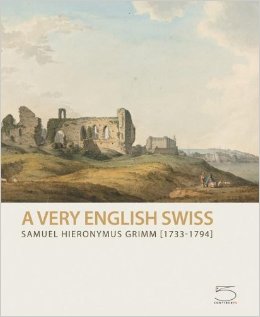 Samuel Hieronymus Grimm (1733–1794) is being presented in a comprehensive exhibition for the very first time. He pursued a career as topographer, illustrator, caricaturist and painter of watercolors, acquiring quite a reputation especially in England.
Grimm was born in Burgdorf and was initially devoted to poetry. Around 1760 he became interested in painting and took lessons with Johann Ludwig Aberli (1723–1786). In 1765 he went to Paris to continue his art studies with Jean-Georges Wille (1715–1808). There Grimm focused on landscape painting, going on long hikes with his art teacher in the countryside. In 1768 he moved to London, where he stayed for the rest of his life, working as both an illustrator and a caricaturist. With biting humor Grimm portrayed British society, fashion and politics. Around 1773, he was commissioned by Sir Richard Kaye to paint to watercolors. Kaye was to become one of his most devoted patrons, giving Grimm carte blanche to capture everything he found ‘unusual’. 2600 watercolors and drawings illustrating everyday subjects in Britain, the country’s architecture and the mores of its people were the outcome of Kaye’s patronage, producing a veritable illustrated encyclopedia of Georgian England during the 18th century. Grimm had numerous additional well-known personages as his patrons whom he accompanied on trips in England and Wales.
Grimm’s great popularity is due to the exactness of his representations; he was renowned for his speed with the pen, his moderate prices, and the perfection of his technique in sketching and painting outdoors. Specialists on British art see in Grimm one of the most talented topographers of his generation, his watercolors leave nothing to be desired and are equal to those of the best British masters of the time.
The exhibition combines examples from every genre Grimm worked in and will be accompanied by a richly illustrated catalogue in German and English. Prof. William Hauptman, Lausanne, is curator of the show, a great specialist for the period. Already in 1996 he was in charge of organizing the large John Webber exhibition at the Kunstmuseum Bern. Dr. Therese Bhattacharya-Stettler is co-curator.
William Hauptman, Samuel Hieronymus Grimm, 1733–1794: A Very English Swiss (Milan: 5 Continents Editions, 2014), 224 pages, ISBN: 978-8874396627, €35 / $45.
The Burlington Magazine Index Blog
A recent posting at British Art Research highlights The Burlington Magazine Index Blog. The work of Barbara Pezzini, the site has been up since November 2013. In a contribution posted 29 January 2014, Neil Jeffares examines “the language implicit and explicit in the coverage of pastels made before 1800 in The Burlington Magazine, with the aim of investigating how this journal participated in the formation of these attitudes.”
From the about page:

◊ ◊ ◊ ◊ ◊
The Burlington Magazine Index Blog is a weekly blog dedicated to all matters related to the history of The Burlington Magazine, written in an accessible style and aimed not just at scholars.
It includes, but it is not limited to, research and news on:
* The art writing of the magazine, recounted in both historiographic and biographical terms.
* The works of art that this journal treated in the two centuries of its existence: their attribution, conservation, critical reception, forgeries and circulation through reproductive engravings and photographs.
* The art world around these works, especially the network of commercial galleries and dealers that contributed to their circulation and interpretation.
This project, previously funded by the Andrew W. Mellon Foundation and currently supported by The Monument Trust, stems from The Burlington Magazine Index, for which there has been a compete re-reading and cataloguing of the whole contents of this journal from its inception in March 1903 until the present. The Burlington Magazine Index contains more than 40,000 records and refers to more than 10,000 artists. It is not only an essential reference for art historical investigation but also a primary source for research on art criticism, art historiography and the art market.
While researching for the Burlington Index, a wealth of new information has been uncovered: much of this it has either been published or it is currently being published in essay form, but much more is hidden in the database: this blog wishes to be a more discursive and engaging approach to some of that information.
As the current stage of the project is the indexing of some 90,000 historical advertisements of art dealers in the Burlington, this blog will have a bias on art galleries and, more widely, on the history of the art market and its intersections with art criticism.
This blog is written by me, Barbara Pezzini, with external contributors. I am an art historian and the Editor of The Burlington Magazine Index.
I welcome external contributions. Write to pezzini@burlington.org.uk
Thanks to: Dylan Armbrust, Alison Bennett, Bart Cornelis, Alan Crookham, Chris Hall, Caroline Elam, Ulrike Kern, Noti Klagka, Nicola Kennedy, Mark MacDonald, Olivia Parker, Madeleine Pearce, Mark Westgarth, Alison Wright and Foteini Vlachou for their contribution to this project.
Fellowship | 2015 NACBS-Huntington Library Fellowship
2015 NACBS-Huntington Library Fellowship
Applications due 15 November 2014
The NACBS, in collaboration with the Huntington Library, offers annually the NACBS-Huntington Library Fellowship to aid in dissertation research in British Studies using the collections of the library. The amount of the fellowship is $3000. A requirement for holding the fellowship is that the time of tenure be spent in residence at the Huntington Library. The time of residence varies but may be as brief as one month. Applicants must be U. S. or Canadian citizens or permanent residents and enrolled in a Ph.D. program in a U.S. or Canadian institution.
Nominations and applications for the 2015 award are invited. Please note that the applications are due on November 15, 2014. Applications should consist of a curriculum vitae, two supporting letters (one from the applicant’s dissertation advisor), and a description of the dissertation research project. The letter should include a description of the materials to be consulted at the Huntington and the reason that these are essential sources for the dissertation. (more…)
Exhibitions | Frozen Thames: Frost Fair, 1684 and 1814
Press release (29 January 2014) from the Museum of London:
Frozen Thames: Frost Fair 1814 and Frozen Thames: Frost Fair 1684 open at the Museum of London Docklands and Museum of London respectively, from Wednesday 29 January to Sunday 30 March 2014. The mini-exhibitions feature objects, paintings, keepsakes, engravings and etchings from the collection.
Why did the Thames freeze?
The Thames could freeze over not necessarily because it was colder these years, but because the river was much more sluggish and slow flowing than today. There was no embankment and the arches of the former London Bridge was much wider and protected by floating pontoons in front of them which impeded the current. Evidence for this is that after 1831 the old London Bridge—resting on its twenty solid piers—was demolished, and replaced with a new bridge with just five arches. No further Frost Fairs have been recorded since. Narrower and with fewer obstacles, the Thames now flows too fast to freeze, and the Thames Frost Fair is a spectacle we will probably never see again.
◊ ◊ ◊ ◊ ◊
Frozen Thames: Frost Fair 1814
Museum of London Docklands, 29 January — 30 March 2014

George Cruikshank and Thomas Tegg,
Gambols on the River Thames, February 1814.
◊ ◊ ◊ ◊ ◊
To the modern observer, it is a scene from London’s history that is difficult to comprehend. For just under one week, from 1 February 1814 until 5 February 1814, the River Thames, the artery of the city, froze completely solid between London Bridge and Blackfriars Bridge. Exactly 200 years ago this week, Londoners of all backgrounds took to the ice to revel in the event.
Georgina Young, Senior Curator at the Museum of London said: “The 1814 Frost Fair brightened the depths of London’s coldest winters. Imagine a travelling carnival and a street market rolled into one. Coffee houses, taverns and souvenir stalls formed improvised streets across the frozen Thames, with entertainments from skittles to swings ranged all around.”
The only surviving piece of gingerbread bought at the 1814 Frost Fair, is among a variety of objects, paintings, keepsakes, engravings and etchings which will go on display as part of two Frost Fair displays, running in parallel at the Museum of London Docklands near Canary Wharf and the Museum of London in the City of London.
The 1814 Fair was the last of its kind, but it was not the first. Between 1309 and 1814, the Thames froze at least 23 times and on five of these occasions, the freeze was extensive enough to support the weight of festivities, and a Frost Fair was born. The Museum of London collection evidences five Fairs in 1683–84, 1716, 1739–40, 1789 and 1814.
The display at the Museum of London Docklands includes a varied collection of original keepsakes from the 1814 Frost Fair, and important contemporary illustrations of the Fair, including two etchings by satirical artist, George Cruikshank, and a print by George Thompson.
For most people, a Frost Fair on the frozen Thames was a once in a lifetime occasion, and all kinds of mementoes were kept. These include fragments of stone chipped from Blackfriars Bridge, printed keepsakes, and a piece of gingerbread, bought at the Fair, which comes with an original handwritten note, identifying the purchaser as Thomas Moxon. The printed items were produced and sold by enterprising printers, who relocated their businesses onto the ice, turning crisis into opportunity. Indeed, when the Thames froze over, the normal workings of London froze with it—even the Thames Watermen converted their boats into temporary stages, and there are reports that an elephant was led across the Thames by Blackfriars Bridge.
◊ ◊ ◊ ◊ ◊
Frozen Thames: Frost Fair 1684
Museum of London, 29 January — 30 March 2014

Abraham Hondius, Frost Fair, 1684
(Museum of London)
◊ ◊ ◊ ◊ ◊
The star objects in the Museum of London display are two paintings by the Dutch artist, working in London, Abraham Hondius (c.1625–91) who was a notable artist in the expanding art market fostered by Charles II. The first painting depicts the frozen Thames in 1677 looking eastwards towards London Bridge (though this was not recorded as a ‘Frost Fair’), and the second, portrays the area of present day Temple on the north side of the river, in the grip of the 1684 Frost Fair.
Pat Hardy, Curator for Paintings, Prints and Drawings at the Museum of London, said: “Hondius brought with him from the Netherlands new painting and print techniques as well as an acute observation of contemporary life. The pleasures of the 1684 Fair are vividly captured.”
The paintings by Hondius appear alongside other works by unknown artists, which depict the 1684 Fair, and a later drawing of the 1716 Frost Fair, which grew even larger than its predecessor.

Frost fair on the Thames in 1715–16, woodcut. This view is taken from
near Temple Stairs, with Old London Bridge in the background.
New Book | From Pompeii: The Afterlife of a Roman Town
From Harvard UP:
Ingrid D. Rowland, From Pompeii: The Afterlife of a Roman Town (Cambridge, MA: Belknap Press, 2014), 352 pages, ISBN 978-0674047938, $29 / £22 / €26.
 When Vesuvius erupted in 79 CE, the force of the explosion blew the top right off the mountain, burying nearby Pompeii in a shower of volcanic ash. Ironically, the calamity that proved so lethal for Pompeii’s inhabitants preserved the city for centuries, leaving behind a snapshot of Roman daily life that has captured the imagination of generations.
The experience of Pompeii always reflects a particular time and sensibility, says Ingrid Rowland. From Pompeii: The Afterlife of a Roman Town explores the fascinating variety of these different experiences, as described by the artists, writers, actors, and others who have toured the excavated site. The city’s houses, temples, gardens—and traces of Vesuvius’s human victims—have elicited responses ranging from awe to embarrassment, with shifting cultural tastes playing an important role. The erotic frescoes that appalled eighteenth-century viewers inspired Renoir to change the way he painted. For Freud, visiting Pompeii was as therapeutic as a session of psychoanalysis. Crown Prince Hirohito, arriving in the Bay of Naples by battleship, found Pompeii interesting, but Vesuvius, to his eyes, was just an ugly version of Mount Fuji. Rowland treats readers to the distinctive, often quirky responses of visitors ranging from Wolfgang Amadeus Mozart, Charles Dickens, and Mark Twain to Roberto Rossellini and Ingrid Bergman. Interwoven throughout a narrative lush with detail and insight is the thread of Rowland’s own impressions of Pompeii, where she has returned many times since first visiting in 1962.
Ingrid D. Rowland is Professor at the University of Notre Dame School of Architecture in Rome.
Introduction: Naples, 1962
1. Pompeii, May 2013
2. The Blood of San Gennaro and the Eruption of Vesuvius
3. Before Pompeii: Kircher and Holste
4. Mr. Freeman Goes to Herculaneum
5. The Rediscovery of Pompeii
6. Wolfgang Amadeus Mozart
7. Further Excavations
8. Karl Bryullov
9. Railway Tourism
10. Charles Dickens and Mark Twain
11. Giuseppe Fiorelli, the “Pope” of Pompeii
12. Bartolo Longo
13. The Social Role of Tourist Cameos
14. Pierre-Auguste Renoir
15. The Legacy of August Mau
16. Crown Prince Hirohito of Japan
17. Don Amedeo Maiuri
18. Roberto Rossellini and Ingrid Bergman
19. Autobus Gran Turismo
Coda: Atomic Pizza
Notes
Bibliography
Acknowledgments
Index
Exhibition | Handel and Charles Clay’s Musical Clocks
From the Handel House:
Handel and Charles Clay’s Musical Clocks
Handel House Museum, London, 20 November 2013 — 23 February 2014
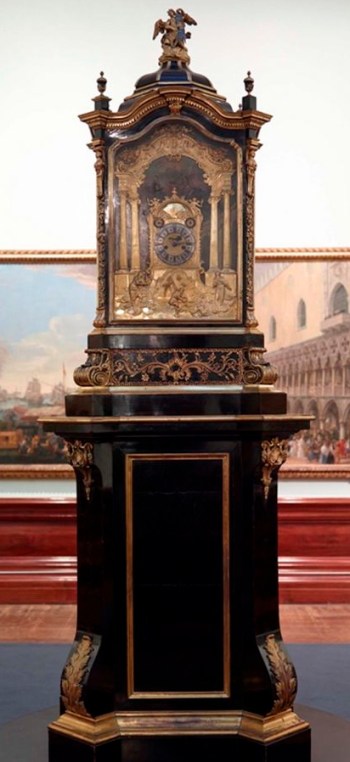 In the 1730s Handel provided music for a series of clocks created by watch and clockmaker Charles Clay. These beautiful machines, which incorporated automata, paintings, sculptures, furniture and gold and silver work by some of the finest artisans in London, also included chimes and pump organs that played extended musical excerpts from popular operas and sonatas.
This exhibition provides the opportunity to view a Clay clock from the Birmingham Museum and Art Gallery in an intimate Georgian setting which recalls the context in which such new inventions were originally viewed in the clockmaker’s own home. It will be joined by a gilt bronze relief from another Clay clock on loan from the V&A, and a manuscript of Handel’s clock tunes from the British Library. In addition, a recording of the music from a Clay clock in a private collection demonstrates the earliest ‘recordings’ of Handel’s music made during his lifetime.
For more information about the Kensington Palace clock, view a video here. For details of the Windsor clock, click here.
The exhibition is kindly supported by the A.C.H.Crisford Charitable Foundation.
◊ ◊ ◊ ◊ ◊
Additional information and images are available from the Handel House; also see a posting at the Antiquarian Horological Society’s blog The Story of Time.
Spring 2014 at the Bard Graduate Center
Details for upcoming events are available at the BGC Calendar:
As part of the Bard Graduate Center’s commitment to making our innovative programming more widely available and so shaping the global discourse about the cultural history of the material world, we will be live-streaming our seminar series and symposia on the BGC’s channel. We look forward to seeing you on West 86th Street in New York City for these events; however, for those of you who can’t attend in person, we look forward to your watching us live online.
February 11, 6:00–7:30
Conservation Conversations
Francesca Brewer, “Material Matters: Early Scientific Inquiry in Archaeology and Art”
Laurent Olivier, “Henri Hubert Between Durkheim and Mauss: The Visual Reconstruction of Archaeological Time”
February 12, 6:00–7:30
William Stenhouse, “Conserving Relics of the Classical Past: Civic Bodies and the Preservation of Antiquities in the Renaissance”
February 19, 6:00–7:30
Lara Penin, “Design Futures: Service Design for Social Innovation”
February 25, 6:00–7:30
Birgitt Borkopp-Restle, “How To Do Things with Textiles: Marie Antoinette at the Courts of Vienna and Versailles”
March 5, 10:00–5:45
Symposium | “The Material Text in Pre-Modern and Early Modern Europe”
March 25, 6:00–7:30
Alexander Marr, “Early Modern Instrument Aesthetics”
April 1, 6:00–7:30
Max Tillmann, “Les derniers goûts de France: Elector Max Emanuel and French Decorative Arts about 1715″
April 3, 9:00–5:30
Symposium | “Material Reformations: Towards a Material Culture of Protestantism”
April 9, 6:00–7:30
Glenn Wharton, “The Painted King: Art, Activism, and Authenticity in Hawai’i”
April 11, 9:00–5:00
“Objects and Power: An Interdisciplinary Approach to Medieval Islamic Material Culture”
April 14, 1:30–5:00
Symposium | “Woven Worlds: The Social Lives of Andean Textiles”
April 23, 6:00–7:30
Nathan Schlanger, “Material Culture: The Concept and its Use in Historical Perspective”
April 24, 6:00–7:30
Conservation Conversations | Judith Olszowy-Schlanger & Michelle Chesner, “Case Study in Collaboration: Conserving Thousands of Lost Medieval Hebrew Manuscripts”
April 25, 9:00–5:00
Symposium | “Mapping New York”
April 29, 6:00–7:30
Ines Rotermund-Reynard, “Beads and Buttons from Briare: A Global Industrial Success Story from 19th-Century France”
May 9, 9:00–6:00
Symposium | Day 1: “History and Material Culture: World Perspectives
May 10, 9:00–6:00
Symposium | Day 2: “History and Material Culture: World Perspectives”
May 15, 6:00–7:30
Symposium Keynote: “Majolica: A World View”
May 16, 9:00–6:00
Symposium | “Majolica: A World View”
CAA 2014, Chicago
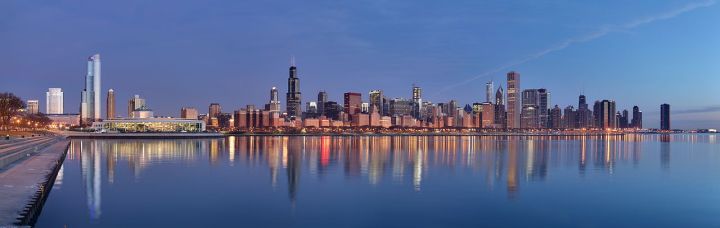
Photo by Daniel Schwen, 18 April 2009
(Wikimedia Commons)
◊ ◊ ◊ ◊ ◊
The 2014 College Art Association conference takes place at the Hilton, Chicago (720 S. Michigan Ave), February 12–15. HECAA will be represented by two panels on Saturday, chaired by Kristel Smentek and Kevin Chua. Other sessions that may be of interest for dixhuitièmistes are also listed. A full schedule of panels is available here»
H E C A A S E S S I O N S
Historians of Eighteenth-Century Art and Architecture
New Scholars Open Session: The Eighteenth Century, Global and Local
Saturday, 15 February, 12:30–2:00, Hilton Chicago, 2nd Floor, International South
Chair: Kristel Smentek, Massachusetts Institute of Technology
- The Threads that Bind: Luxury, Slavery, and the Circulation of South Asian Textiles between France and India, Liza L. Oliver, Northwestern University
- Objects of Terror: The Image and Spectacle of Punishment in Hogarth’s London, Meredith J. Gamer, Yale University
- Facing Age and Aging Faces: Marie-Thérèse Geoffrin and Her Pendule, Jessica Fripp, Parsons The New School for Design
◊ ◊ ◊ ◊ ◊
Historians of Eighteenth-Century Art and Architecture
After the Secular: Art and Religion in the Eighteenth Century
Saturday, 15 February, 2:30–5:00, Hilton Chicago, 3rd Floor, Williford A&B
Chair: Kevin M. Chua, Texas Tech University
- The Dôme des Invalides: Sublimity, Religious Rhetoric, and Aesthetic Experience in Early Eighteenth-Century France, Aaron Wile, Harvard University
- Theism and Secularization in James Barry’s Society of Arts Murals, Daniel R. Guernsey, Florida International University
- The Saving Heart-Knowledge, and the Soaring Airy Head-Knowledge: Quaker Aesthetics as an Agent of Cure in Lunatic Asylum Design, Ann-Marie Akehurst, University of York
- The Mother of Light in New Spain, Bernard J. Cesarone, University of Illinois at Urbana-Champaign
- Miracles in the Age of Reason, Hannah Williams, University of Oxford
◊ ◊ ◊ ◊ ◊
O T H E R S E S S I O N S R E L A T E D T O T H E 1 8 T H C E N T U R Y
Historians of British Art
Queer Gothic
Wednesday, 12 February, 9:30–12:00, Hilton Chicago, Lobby Level, Continental A
Chairs: Ayla Lepine, University of Nottingham; Matthew Mark Reeve, Queen’s University
- The Perverse Visibility of William Beckford, Dominic Janes, Birkbeck, University of London
- Neither Sorrow Nor Crying: Twentieth-Century Gothic Bodies and Heavenly Visions, Ayla Lepine, University of Nottingham
- Soi-disant Gothicisms: The Rejection of Gothic Hybridity in the Nineteenth Century, Sarah E. Thompson, Rochester Institute of Technology
- Medieval Monstrosity: Francis Bacon’s Flesh, Jongwoo Jeremy Kim, University of Louisville

◊ ◊ ◊ ◊ ◊
American Council for Southern Asian Art
Artistic Practices in the Long Eighteenth Century
Wednesday, 12 February, 12:30–2:00, Hilton Chicago, Lobby Level, Continental B
Chair: Yuthika Sharma, Goethe-Universität
- Copying Contexts: Picturing Places and Histories in Udaipur Court Painting and Picart’s Atlas Historique, Dipti Khera, New York University
- Forging New Identities: The Role of the Artist in Eighteenth-Century Northern India, Malini Roy, The British Library, London
- The Divine Surface: Thanjavur Painting, Seventeeth-Nineteenth Centuries, Caroline Duke, University of California, Berkeley
- Maratha Art and Moor’s Hindu Pantheon (1810), Holly Shaffer, Yale University
◊ ◊ ◊ ◊ ◊
The Erotic Gaze in Early Modern Europe
Thursday, 13 February, 9:30–12:00, Hilton Chicago, Lobby Level, Continental B
Chairs: Joe A. Thomas, Kennesaw State University; Elizabeth Pilliod, Rutgers University-Camden, The State University of New Jersey
- Devotion, Desire, and Difference: Images of Christ and of Susanna,Patricia L. Simons, University of Michigan
- Alchemy: The Erotic Science, M. E. Warlick, University of Denver
- Pleasure on Paper: Agostino Carracci’s Lascivie Prints and the Gaze that Met Them, Natalie Lussey, University of Edinburgh
- Disgust and Desire: Responses to Rembrandt’s Nudes, Stephanie S. Dickey, Queen’s University
- Doggie Style: Rococo Representations of Interspecies Sensuality and the Pursuit of Volupté, Jennifer D. Milam, University of Sydney
◊ ◊ ◊ ◊ ◊
Historians of British Art
British Country Houses: Architecture, Collections, and Gardens
Thursday, 13 February, 12:30–2:00, Hilton Chicago, 3rd Floor, Williford A&B
Chair: Craig Ashley Hanson, Calvin College
- ‘Both Instructive and Pleasant’: The Country House Garden in Vitruvius Britannicus, William Coleman, University of California, Berkeley
- From Stowe to Mount Edgcumbe: Touring Collections in Gardens, Jocelyn Anderson, Courtauld Institute of Art
- William Kent’s Decorative Scheme in Stowe’s North Hall (ca. 1728), Laurel Peterson, Yale University
◊ ◊ ◊ ◊ ◊
Historians of British Art
Business Meeting / Young Scholars Session
Thursday, February 13, 5:30–7:00, Hilton Chicago, 3rd Floor, Marquette Room
Moderated by Colette Crossman and then chaired by Jongwoo Jeremy Kim
- Modern Banditti: Colonial Masculine Artistic Identity and Topographical Photography in India, Nathaniel M. Stein, Brown University
- ‘Science is Measurement’: The Uneasy Evolutionism of Henry Stacy Marks, Caitlin Silberman, University of Wisconsin-Madison
- Placing Trust: Collaborators, Competitors, and the Business of Print Publishing in the 1770s, Amy Torbert, University of Delaware
◊ ◊ ◊ ◊ ◊
Publications Committee
The Art Bulletin’s Digital Future?
Thursday, 13 February, 5:30–7:00, Hilton Chicago, 2nd Floor, Grand Ballroom
Chair: David J. Getsy, School of the Art Institute of Chicago
- Thelma K. Thomas, Institute of Fine Arts, New York University
- Alexi Taylor, Scalar and New York University
- Tara McPherson, Scalar and University of Southern California
- Katherine Behar, Baruch College, City University of New York
- Kirk T. Ambrose, University of Colorado at Boulder
◊ ◊ ◊ ◊ ◊
National Endowment for the Arts
Friday, 14 February 2014, 7:30–9:00am, Hilton Chicago, Lobby Level, Continental A
Chair: Wendy Clark, Acting Director of Museums, Visual Arts, and Indemnity
Early risers’ (and Valentine’s Day) session to learn about funding of exhibitions, public art, conservation, artist residencies, commissions, and collection care available to non-profit organizations, universities, and units of local and state governments.
◊ ◊ ◊ ◊ ◊
The Early Modern Child in Art and History
Friday, 14 February, 9:30–12:00, Hilton Chicago, 3rd Floor, Astoria Room
Chair: Matthew Knox Averett, Creighton University
- The (Holy) Innocents: Visualizing the Foundling in Fifteenth-Century Florence, Diana Bullen Presciutti, College of Wooster
- Princely Portraits of Adolescence in the Court of Philip II in the Mid-Sixteenth Century, Lisa W. Tom, Brown University
- Little Idols and the Infant Jesus: The Sacred Rituals of a Royal Spanish Nun, Tanya J. Tiffany, University of Wisconsin-Milwaukee
- Dressing the Part: Picturing and Promoting the Early Modern Child, Parme P. Giuntini, Otis College of Art and Design
- New Parents of the New Child in Eighteenth-Century French Art, Suzanne Conway, Chestnut Hill College
◊ ◊ ◊ ◊ ◊
Digital Publishing in Art History: The Online Scholarly Catalogue Initiative
Friday, 14 February, 9:30–12:00, Hilton Chicago, Lobby Level, Continental C
Chair: Anne Collins Goodyear, Bowdoin College Museum of Art
- Overview of the Online Scholarly Catalogue Initiative, Anne L. Helmreich, Getty Foundation
- Dutch Paintings of the Seventeenth Century, Judith Metro and Jennifer Henel, National Gallery of Art
- Monet and Renoir at the Art Institute: Paintings and Drawings, Gloria L. Groom, The Art Institute of Chicago
- The Robert Rauschenberg Research Project, Sarah Roberts, San Francisco Museum of Modern Art
Discussant: Paul B. Jaskot, DePaul University
◊ ◊ ◊ ◊ ◊
Aspects of Vitruvius’s Reception: New Research in Architectural Practice and Theory in the Early Modern World
Friday, 14 February 2014, 2:30–5:00, Hilton Chicago, 3rd Floor, Astoria Room
Chairs: Victor Luis Deupi, New York Institute of Technology; Richard John, University of Miami
- Translating Vitruvius in the Quattrocento: Ancient Theory or Contemporary Practice?, Angeliki Pollali, DEREE-The American College of Greece
- Sundials and Water Organs: The Vitruvian Tradition in Italian Gardens, Natsumi Nonaka, University of Texas at Austin
- Vitruvius and Pious Learning, Susan Klaiber, Winterthur, Switzerland
- Vitruvius in Early Modern England: The Case of the Royal Society, 1660–1695, Matthew Walker, University of Oxford
- James Gibbs’s Rules for Drawing (1732) and Vitruvius’s Method for the Ionic Order, Richard John, University of Miami
◊ ◊ ◊ ◊ ◊
The Art of Display: Context and Meaning, 1700–1850
Friday, 14 February, 2:30–5:00, Hilton Chicago, 8th Floor, Lake Huron
Chair: Christina R. Ferando, Harvard University
- A Roman Venus in the Tsar’s Baroque Garden: Orthodox Blasphemy, Soviet Scandal, Margaret Samu, Yeshiva University Stern College
- Duobaoge: Artful Displays in Eighteenth-Century Qing China, Eleanor Hyun, University of Chicago
- Unconventional Displays and Unacquainted Spectators: The Impact of John Martin’s Eccentric Exhibitionary Tactics, Chris Coltrin, Shepherd University
- The Empire at Home: Displaying the Locker Collection at Greenwich Hospital, 1830–1843, Catherine Roach, Viriginia Commonwealth University
- Corot in Situ: The Studio as Exhibition Space, Heather A. McPherson, University of Alabama at Birmingham
Conference | Culture Clash? Contemporary Arts in Historic Contexts
From the Royal Museums Greenwich:
Culture Clash? Contemporary Arts in Historic Contexts
Royal Museums Greenwich, London, 14 February 2014

Yinka Shonibare MBE, Cheeky Little Astronomer (2013) in Flamsteed House. Commissioned by National Maritime Museum, Greenwich, London.
◊ ◊ ◊ ◊ ◊
In recent years it has become increasingly popular for museums and historic buildings to invite living artists to respond to their buildings or collections by curating, creating or performing on site. What has been the impact of this popular collaborative trend for artists, museums and their audiences? To coincide with the latest in a series of contemporary interventions, Yinka Shonibare MBE at Greenwich, Royal Museums Greenwich is organising a one-day conference to explore the role of contemporary art outside the white cube. Conference fee: £50 (concessionary rate £40). Booking form is available here or call 020 8312 6716.
◊ ◊ ◊ ◊ ◊
P R O G R A M M E

Yinka Shonibare MBE, Nelson’s Jacket, 2011.
9.00 Registration and refreshments
9.50 Melanie Vandenbrouck (Royal Museums Greenwich), Welcome and introduction
10.00 Session 1: Approaches and challenges
• Helen Hillyard (National Gallery), New Visions of the Sea: Assessing the legacy of contemporary art at the National Maritime Museum, 1999–2009
• Julien Parsons and Martin Thomas (Royal Albert Memorial Museum, Exeter), The challenges faced by local authority-managed museums and settings
• Antoinette Maget Dominicé (University of Lucerne), Contemporary arts, historic contexts and the law
11.30 Coffee and tea
12.00 Session 2: Interpreting and animating sites and collections
• Bergit Arends (independent curator), Talking Back: Artists working with natural history collections from Australia, China and India
• Nick Cass (University of Leeds), The Haunting of a Shrine: Contemporary art at the Brontë Parsonage Museum
13.00 Lunch, with an opportunity to visit Flamsteed House at the Royal Observatory to see the Cheeky Little Astronomer by Yinka Shonibare MBE
14.30 Curator-led tour of Yinka Shonibare MBE at Greenwich in the Queen’s House
15.30 Coffee and tea
16.00 Session 3: Collaboration, dialogue and (mis)understanding
• Melissa Hamnett (V&A), Disturbing the comfortable
• Helen Shaw (University of York), How do we see each other? Dialogue and exchange in Native American curatorial methodologies
• Jonathan Carson (Carson & Miller) and Rosie Miller (University of Salford), Playing with the past
17.30 Drinks reception










 Enfilade
leave a comment