Exhibition | Caspar Wolf and the Aesthetic Conquest of Nature

Caspar Wolf, Panorama of the Grindelwald Valley with the Wetterhorn, Mettenberg, and Eiger, ca. 1774 (Aarau: Aargauer Kunsthaus, photo by Jörg Müller)
◊ ◊ ◊ ◊ ◊
From the Kunstumuseum Basel:
Caspar Wolf and the Aesthetic Conquest of Nature
Kunstmuseum Basel, 19 October 2014 — 1 February 2015
Curated by Bodo Brinkmann and Katharina Georgi
The Alps as magnificent spectacle of nature—a surprisingly recent opinion. It was only during the course of the 18th century that people began regarding jagged mountain ranges as ‘sublime’ and aesthetically pleasing. The Swiss landscape painter Caspar Wolf (1735–1783) was one of the first to conquer this largely undeveloped Alpine landscape on his extensive treks and made it available as subject matter for artistic treatment. In his galvanizing compositions, massive boulders, thundering mountain torrents, and bizarre glacier formations impede the viewer’s path. The human being, standing in awe, is reduced to a tiny figure before expansive panoramas. Wolf stands well apart from the idyllic Baroque landscapes with his radical formations and as one of the most significant precursors to European romanticism. But the same time, his work breathed the spirit of enlightenment. The exhibition includes 126 works by Caspar Wolf and his contemporaries as well as a selection of recent photographs taken at these respective locations in the Alps. In conjunction with this exhibition, the Kupferstichkabinett at the Kunstmuseum Basel will present highlights from its wealth of drawings and prints by Caspar Wolf.
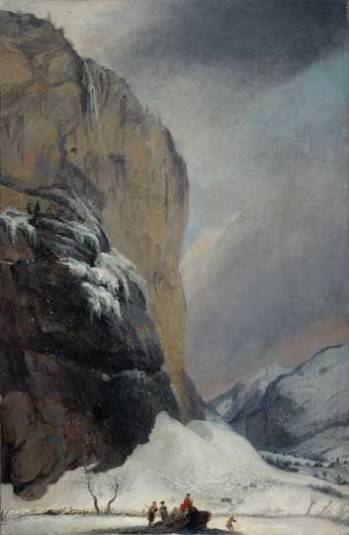
Caspar Wolf, The Staubbachfall in Winter, ca. 1775
(Bern: Kunstmuseum)
A fluke of history can be credited for Caspar Wolf ascent from impoverished childhood in Muri as carpenter’s son and moderately successful painter to artist of standing in European art history: the most important pioneer of Alpine painting and one of the most significant precursors to European Romanticism.
The fluke in question is Caspar Wolf’s encounter with the influential Bernese publisher Abraham Wagner (1734–1782). Wagner, one year his senior, had an ambitious project: to issue an encyclopedic publication of the Swiss Alpine landscape complete with illustrations of the highest artistic standard; and more to the point, these illustrations would be worked immediately from nature. The landscape that Wagner had in mind as motif was the rarely travelled and difficult to reach high Alpine region. The idea was to offer viewers a new conception of the Alpine landscape in images of previously unparalleled precision and magnificence. To author the written sections of this publication, Wagner engaged the Bernese priest and eminent natural philosopher Jacob Samuel Wyttenbach. Wolf was to accompany the two men on their extensive treks through the Alpine mountains. His task was to document and depict in paintings these unique encounters with nature.
What resulted was a comprehensive picture cycle of the Swiss Alps. Working in his studio from the nature studies completed on location, Wolf created some 200 paintings of imposing quality that bring together spontaneous observations and highly artistic formulations. Wolf invents astute painterly formulations to depict mountain ranges and glaciers, waterfalls and caves, bridges and raging torrents, lakes and high plateaus, sometimes rendering these in expansive panorama views, sometimes in close, claustrophobic compositions. His paintings include many prominent natural monuments, some no longer existent due to the environmental destruction of recent centuries: hence, the famous ‘séracs’ (pinnacles of glacier ice) of the Lower Grindelwald Glacier, evident in two exceptionally powerful paintings by Wolf, have long since melted, for instance.
Wolf’s paintings can neither be grouped with the vedute, a type painting popular at the time, nor can they be described as explicitly documentary images. Instead, they speak to a more fundamental subject matter: they consider the relationship between the mountain as rational concept and the mountain as sensual perception.
But what was the origin for the remarkable aesthetic assurance with which the artist entered the virginal territory of Alpine painting? Wolf’s intense engagement with French painting while in Paris in 1770/71 proved to be of central importance. This is vividly demonstrated in the exhibition with works by François Boucher, Claude-Joseph Vernet, Philippe-Jacques de Loutherbourg the Younger, and Hubert Robert. Surprisingly, Wolf profits greatly from his engagement with contemporary marine paintings and their depictions of dramatic storms at sea and shipwrecks.
The exhibition includes 126 works by Caspar Wolf and his contemporaries as well as a selection of recent photographs taken at these respective locations in the Alps. In conjunction with this exhibition, the Kupferstichkabinett at the Kunstmuseum Basel will present highlights from its wealth of drawings and prints by Caspar Wolf.
◊ ◊ ◊ ◊ ◊
The catalogue is available in German and English:
Caspar Wolf und die ästhetische Eroberung der Natur (Ostfildern: Hatje Cantz Verlag, 2014), 224 pages, ISBN: 978-3775738323 (German) / ISBN: 978-3775738330 (English), €58.
 The notion of the Alps as a magnificent natural spectacle is surprisingly recent. It was not until the eighteenth century that its craggy mountain ridges began to be seen as ‘sublime’ and beautiful. The Swiss landscape painter Caspar Wolf (1735–1783) was one of the first to discover the then largely unexplored world of the Alps as a subject of art through his extended forays into the mountains. Trained in southern Germany and Paris, Wolf was commissioned to produce a comprehensive series on the Swiss Alps, which he completed between 1773 and 1779. Working in his studio, the artist created some 180 imposing paintings from nature studies done outdoors. The publication demonstrates how he conveyed what he had seen according to his aesthetic criteria. In his dramatic compositions, paths are blocked by immense boulders, roaring streams of water, and glaciers, or the
view opens up to reveal giant panoramas, which are
observed by tiny, awestruck human figures.
Call for Papers | Jean-Pierre Saint-Ours (1752–1809)
As noted at H-ArtHist:
Saint-Ours Aujourd’hui
Geneva, 19–21 November 2015
Proposals due by 30 November 2014
À l’occasion de l’exposition rétrospective consacrée à Jean-Pierre Saint-Ours (1752–1809), le Musée d’art et d’histoire (MAH) et le Département d’histoire de l’art de l’Université de Genève lui consacreront un colloque international, à Genève, du 19 au 21 novembre 2015. Ce colloque souhaiterait faire le point de la recherche, passée et présente, sur l’un des peintres les plus importants de l’histoire des arts à Genève.
Invitant des spécialistes confirmés mais aussi de jeunes chercheurs, ce colloque offrira aussi l’occasion de réinterroger les relations que les peintres genevois ont établies avec les autres artistes européens et la place des arts à Genève à la fin du XVIIIe siècle et au début du XIXe siècle.
Les chercheur-e-s intéressé-e-s sont prié-e-s de transmettre
• le titre envisagé et un résumé de 300 mots de leur conférence
• un bref curriculum-vitae, agrémenté d’une éventuelle liste de publications
à Jan Blanc jan.blanc@unige.ch, avant le 30 novembre 2014
An extended Call for Papers with bibliography is available at Le Blog de L’ApAhAu.
Exhibition | Detroit before the Automobile
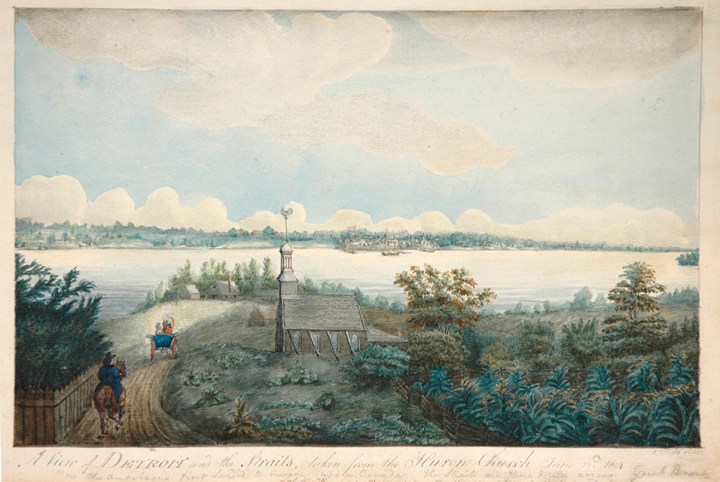
Edward Walsh, View of Detroit and the Straits,
Taken from the Huron Church, 1804
(University of Michigan: William L. Clements Library)
◊ ◊ ◊ ◊ ◊
Now on view at the University of Michigan, as noted at Art Daily:
Detroit before the Automobile: The William L. Clements Library Collection
University of Michigan Museum of Art, Ann Arbor, 18 October 2014 — 18 January 2015
In spite of the economic reverses of the last few decades, Detroit is still perceived by most Americans as the cradle of the automotive industry and the testing ground for twentieth-century innovations in manufacturing that changed the world. ‘Motown’, however, was already two centuries old by the time the Model T rolled off the first assembly line. Detroit before the Automobile examines the first 200 years of the city’s history using rare books, manuscripts, maps, and graphics from the extensive collection of the University of Michigan’s William L. Clements Library.
Detroit was founded by the French in 1701 as a trading center and agricultural settlement. In 1760 it passed to the British and became an important post for them during the American Revolution. It was ceded to the United States by the peace treaty of 1783, although the United States did not actually take control of the city until 1796. In 1805, Detroit became the capital of the Michigan Territory, but it was destroyed by fire the same year. Rebuilt to a radical new design, the town and fort were taken by the British at the outset of the War of 1812 and then recovered by the United States in 1813. In 1817 it saw the birth of the University of Michigan. During the nineteenth century, Detroit matured and grew in importance as a shipping center with a developing industrial base of shipbuilding, rail-car construction, stove manufacturing, and similar industries that ensured the city would have the infrastructure and transportation network needed to greet the infant auto industry at the dawn of the twentieth century.
The Clements Library has a rich variety of primary sources documenting the history of Detroit before 1900, from maps outlining the distinctive ‘ribbon farm’ land pattern of the French, to plans of the town, and prints charting the city’s increasing size and the height of its buildings. Together this array of primary documents brings to life the early history of one the oldest cities in the Midwest.
The exhibition is part of the U-M Collections Collaborations series, co-organized by and presented at UMMA and designed to showcase the renowned and diverse collections at the University of Michigan. The U-M Collections Collaborations series is generously supported by the Andrew W. Mellon Foundation.
Richard Wilson Online Catalogue Now Available
 The Richard Wilson Online catalogue raisonné has been compiled by Dr Paul Spencer-Longhurst (Senior Research Fellow) with the collaboration of Professor David Solkin (Curator of the exhibition, Richard Wilson: The Landscape of Reaction, 1982–83) and Kate Lowry (formerly Chief Conservator at the National Museum Wales, Cardiff), with the assistance of Maisoon Rehani (Project Coordinator) and Peter Thomas (Technical Project Consultant).
Richard Wilson Online is the outcome of intensive ongoing research undertaken since 2009 to re-establish Richard Wilson’s (1713/14–1782) status and redefine his output in celebration of the tercentenary of his birth. The website is launched as a work-in-progress designed to provide an up-to-date and freely accessible record of Wilson’s autograph paintings and works on paper. It complements and extends the public interest in and academic focus on his achievements stimulated by the exhibition, Richard Wilson and the Transformation of European Landscape Painting, on show at the Yale Center for British Art, New Haven, USA, and Amgueddfa Cymru – National Museum Wales, Cardiff in 2014.
Accessing Richard Wilson Online
Call for Papers | ISECS 2015 Panel—For the Greater Glory of Portugal

◊ ◊ ◊ ◊ ◊
Now accepting proposals for this panel for next year’s ISECS Congress in Rotterdam:
For the Greater Glory of Portugal: Cultural Policy and Artistic Trade in the Age of João V
ISECS Congress, Rotterdam, 26–31 July 2015
Proposals due by 12 January 2015 (though earlier submissions are very much encouraged)
Organiser: Dr. Pilar Diez del Corral Corredoira, Art History Institute, New University of Lisbon: pilarddcc@gmail.com; pcorral@fcsh.unl.pt
João V (1689–1750) propelled Portugal into the arena of international politics and raised the country’s prestige to new and unprecedented levels. His imperial policies affected vast swathes of territory in Africa, Asia, and Latin America. With his huge spending on art, music, and luxury items—intended to strengthen his position within European—he can be seen as a second Sun King. It is surprising, therefore, that relatively little interest has been shown in his kingship by non-Portuguese historians.
This panel will be devoted to analyzing Joao’s V artistic policy in Europe after the Treaty of Utrecht. One example of this was his massive print collection, intended to cover all areas of knowledge in a kind of Encyclopédie avant la lettre. The king used diplomatic channels to gather this, putting some of his best ambassadors and diplomats in Rome, Paris, London, and The Hague in charge. He was also extremely interested in developing strong ties with the Church in Rome. He supported lavish ambassadorial entrées, made substantial donations to the Pope and became (in absentia) one of the most generous patrons of art in Rome. He commissioned hundreds of masterpieces, namely the magnificent sculptures for his palace in Mafra and the sumptuous chapel of San Rocco in Lisbon, and he and his courtiers became some of the most influential collectors in the new Grand Tour.
Topics might include (but are not restricted to):
• The cultural milieu and artistic trade involving the embassies
• The print collection and the Mariettes
• The Boendermaker Atlas
• The art markets in Rome, Paris, and The Hague
• Collectors and diplomats as trading agents for the king
Exhibition | Anne Seymour Damer: Sculpture and Society
Now on view at Strawberry Hill:
Anne Seymour Damer: Sculpture and Society
Strawberry Hill, Twickenham (London), 11 August — 9 November 2014

Anne Seymour Damer, Shock Dog, 1780
Anne Damer was the daughter of Horace Walpole’s favourite cousin, Henry Seymour Conway. Born into a life of luxury in 1748, Anne was subjected to an arranged marriage in 1767 to John Damer, a man she neither knew or liked. Her husband’s bankruptcy and subsequent suicide led her to turn to a different life as a sculpture. In marble, terracotta or bronze, Anne Damer modelled friends, family and their animals, and also political heroes, including Admiral Nelson. Anne Damer’s art provides a wealth of insight into nineteenth–century British sculpture, including the negative reactions towards the work of a woman. Living through the turbulent times, Anne Damer mixed sculpture with acting, writing and travel. Many of her friends included leading members of the political, arts and theatre world and with Georgiana, Duchess of Devonshire she became known as one of the fashionable set of ladies of London.
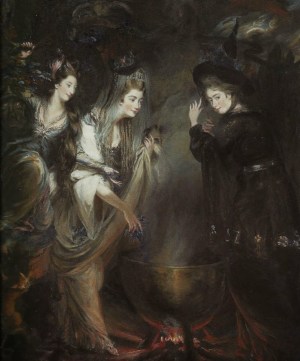
Daniel Gardner, The Three Witches from Macbeth (Elizabeth Lamb, Viscountess Melbourne; Georgiana, Duchess of Devonshire; Anne Seymour Damer), 1775 (London, National Portrait Gallery).
Horace Walpole played a significant role in Anne Damer’s life as he was her godfather and encouraged her interest in sculpture. Indeed, she developed a triangular friendship with her godfather and his protégée, Mary Berry. Horace’s affection for Anne Damer was shown in the bequest of his house to her, enabling her to live and work at Strawberry Hill until 1811. Her studio was part of Walpole’s printing house, part of which still survives today.
For the first time, Anne Damer’s life and work will be formally shown to the general public at Strawberry Hill. The exhibition, which is supported by The Henry Moore Foundation and Rainer Zietz, will showcase some of her sculptures, many from private collections and her anatomy drawing book, personal objects and a rare set of her prompt copies of plays performed at Richmond House and Strawberry Hill. The painting of The Three Witches from Macbeth (Elizabeth Lamb, Viscountess Melbourne, Georgiana, Duchess of Devonshire, Anne Seymour Damer) by Daniel Gardner will also be displayed courtesy of the National Portrait Gallery, London.
Michael Snodin, Chairman of the Trustees of Strawberry Hill Trust said, “Anne Seymour Damer: Sculpture and Society is one of a series of exhibitions on subjects related to Horace Walpole and Strawberry Hill. Anne Damer was a leading light for women of her generation and with the current interest in Georgian England, her life and work will interest many visitors to Strawberry Hill.”
New Book | The Life of Anne Damer: Portrait of a Regency Artist
Published last year by Rowman & Littelfield:
Jonathan Gross, The Life of Anne Damer: Portrait of a Regency Artist (Washington, DC: Lexington Books, 2013), 410 pages, ISBN: 978-0739167656, £52 / $85.
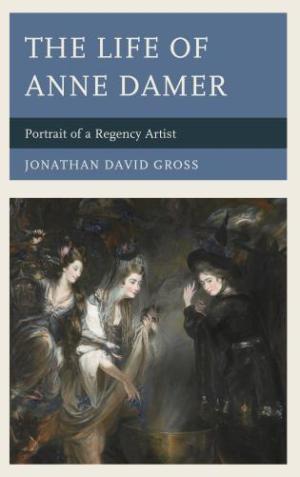 The first biography of Anne Damer since 1908, The Life of Anne Damer: Portrait of a Regency Artist, by Jonathan Gross, draws on Damer’s notebooks and previously unpublished letters to explore the life and legacy of England’s first significant female sculptor. Best known for her portraits of dogs and other animals, Damer also created busts of England’s most important political heroes, sometimes within days or hours of their historical accomplishments.
This in-depth biography traces her life during the American Revolution, the French Revolution, the Peace of Amiens and the Hundred Days. Damer was convinced that art could have significant political influence, sending her bust of Nelson to the King of Tanjore to encourage trade with India. Her art stands at the transition between neoclassicism and romanticism and provides a wealth of insight into nineteenth-century British sculpture. In the last twenty years, there has been a strong revival of interest in Damer’s life, particularly in gay and lesbian studies due to her famous relationship with author Mary Berry. This text serves as a deeper investigation of this fascinating and important figure of British art history.
The emotional ménage a trois of Anne Damer, Mary Berry, and Horace Walpole forms the heart of this new biography. Gross contends that all three individuals, had they led more conventional lives, would never have given the world the literary and artistic gifts they bestowed in the form of Strawberry Hill, Belmour, and Fashionable Friends. The struggles they faced will encourage modern readers to appreciate anew the fluidity of sexual identity and passionate friendship, as well as the restraints put in place by society to control them. Anne Damer’s life has much to teach a new generation concerned with the complex relationship between love, art, and politics. The Life of Anne Damer will interest historians of Georgian England, and readers in the fine arts, literature, and history.
New Book | Diplomats, Goldsmiths, and Baroque Court Culture
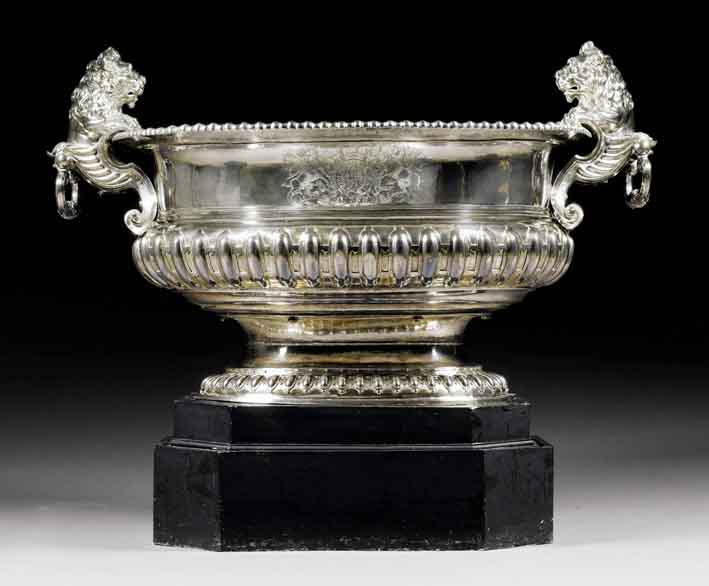
Philip Rollos the Elder, Great Silver Wine Cistern of Thomas Wentworth, Lord Raby, 1705–1706. On display at Temple Newsam House, Leeds. This enormous cistern sold for more than £2million at Sotheby’s in 2010.
More information is available here»
◊ ◊ ◊ ◊ ◊
This collection of essays grows out of a 2012 conference at Wentworth Castle, Yorkshire. From the New Arcadian Press:
Patrick Eyres and James Lomax, eds., Diplomats, Goldsmiths, and Baroque Court Culture: Lord Raby in Berlin, The Hague, and Wentworth Castle (Stainborough: Wentworth Castle Heritage Trust, 2014), 196 pages, ISBN: 978-1909837171, £20.
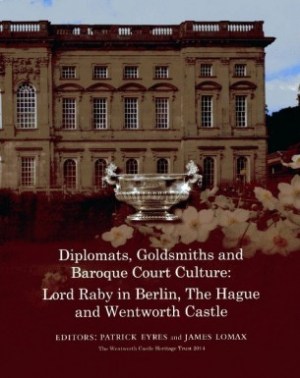 Lord Raby’s celebrated silver wine cistern was saved for the nation after a major appeal in 2011. It was part of the spectacular group of silver provided by the government for his important embassy to Berlin (1705–1711). He received even more silver as ambassador to the Dutch Republic (1711–1714) when he was Britain’s co-negotiator of the Peace of Utrecht. This book explores the political contexts to Lord Raby’s embassies; the craftsmanship, ritual function and cultural politics of Baroque court Goldsmiths’ work in England, Germany and Holland; as well as the influence of Prussia and peacemaking on the architecture, collections and gardening of Lord Raby’s Wentworth Castle estate in Yorkshire, which he had acquired in 1708.
“The book is particularly strong on the role of goldsmiths work in European diplomacy … [and] is delightfully wide-ranging, offering new scholarship on aspects of cultural politics and dining.” Susan Jenkins, The Art Newspaper (October 2014): 86.
◊ ◊ ◊ ◊ ◊
C O N T E N T S
• Patrick Eyres and James Lomax, Diplomats, Goldsmiths and Baroque Court Culture: Lord Raby in Berlin and at Wentworth Castle
• Alfred Hagemann, The Cultural Milieu of the Berlin Court of Frederick I
• Michael Charlesworth, Lord Raby’s Prussians: Art, Architecture and Amour, 1703–1713
• Patrick Eyres, Lord Raby’s Embassies and their Representation at Wentworth Castle
• James Lomax, The Ambassador’s Plate
• Jet Pijzel-Dommisse, Ambassadorial Plate, Embassies and the Dutch Court
• Philippa Glanville, Goldsmiths and Diplomats in Baroque Europe
• Ellenor Alcorn, Silver and the Early Hanoverians
• James Lomax, Baroque Silver Fountains, Cisterns, and Coolers in England
• Christopher Hartop, German Silver in England
• Jane Furse, Lord Raby and His Scientific Instruments
Call for Papers | Think ‘Small’: Artistic Miniaturization
From the Call for Papers (avec l’Appel à communication en français). . .
Think ‘Small’: Textual Approaches and Practices
of Artistic Miniaturization from Antiquity to the Nineteenth Century
Université de Toulouse – Jean Jaurès, Maison de la recherche, 1–2 October 2015
Proposals due by 15 January 2015
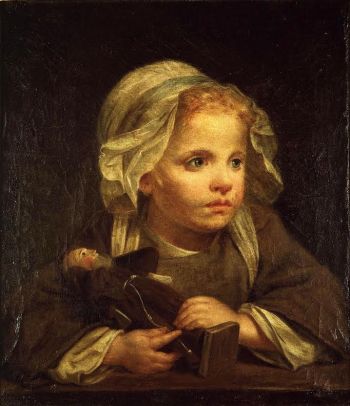
D’après Jean-Baptiste Greuze, Fillette au capucin
(Montauban: Musée Ingres). Commentaire de Diderot sur le tableau original de Greuze, Salon de 1765: “Approchez, voyez-vous cette enfant ? C’est de la chair ; ce capucin, c’est du plâtre. Pour la vérité et la vigueur de coloris, petit Rubens.”
From the Tanagra statuettes to the scientific automata of the industrial age, there are many material manifestations of the ancient fascination with shapes, images, and tiny objects. The examples abound: carved micro-architectures of Gothic buildings, small engravings by Stefano della Bella or Sébastien Leclerc, the objects of vertu of the eighteenth-century upper classes, and the Lilliputian creatures of children’s literature.
Rare, however, are the historical sources that allow us to understand their cultural foundations. While the written sources usually consider the ‘small’ only in its hierarchical relationship to the ‘big’, the analysis of the consumption of these objects reveals a set of practical, symbolic, and artistic skills such as manoeuvrability, mobility, economy, poverty, preciousness, thoroughness, prettiness, and strangeness. Too often, the dominant sources focus on the size of the objects, which diminishes the presence of other considerations. At times miniaturization reduces the scale of a given object, while at other times it may be an independent creation governed by specific criteria. Whatever the case, miniaturization is based on a set of justifications, usages, and judgments that this conference aims to clarify.
This area of research is nourished by recent scientific trends and interest which have benefited the European production of miniatures, notably through the recent conferences: The Gods of Small Things (Reading, 21–22 September 2009); La miniature en Europe, XVIIe–XIXe siècles (Paris, 11–12 October 2012); L’automate: Enjeux historiques, techniques et culturels (Neuchâtel, 6–7 September 2012); and Micro-architecture et figures du bâti: l’échelle à l’épreuve de la matière (Paris, 8–10 December 2014). Our conference will consider the multiple reasons that explain the taste and interest in miniaturization over time, without favouring any particular medium. We will therefore discuss architecture, painting, sculpture, decorative arts, folk art, as well as poems and epigrams. Crossing disciplinary approaches (art history, history, anthropology, philosophy, literature, philology), this conference will focus in the first place on the theoretical reflections underlying the examination of a body of works. Secondly, we will examine those texts that, even if they comment on the ‘small’ in marginal and critical terms, are nonetheless important in the context of an anthology project in which the presenters will participate.
In order to define the ‘small’ in art and question its varied reception through the ages, each presentation, lasting 20 minutes, will explore three registers of perception, by no means reductive:
Consumption and contexts of use
Economic, marketing and circulation (reproducible series or unique work, mobility, swarming); conservation and presentation (curio cabinets, boxes, editing); functionality, usability, destinations and meanings (private / public; domestic / fun / political; secular / sacred / memorial).
Artistic and aesthetic aspects
Ideological tensions between ‘small’ and ‘high’ art; the issue of miniature reproduction of the human figure (dwarf, pygmy, monsters); characters of courtesy, refinement, oddity, impoverishment, etc., specific to the ‘small’; intercultural relations (exchanges and influences between East, the Americas and the West, exotic).
Human and emotional dimensions
Individuals, human categories and social structures involved in the ‘small’ (women, children, ‘ignorant’, princes, peasants, etc.); an attempt at classification; challenges of physical manipulation and microscopic observation; moral criticism (worship and fetishism); imaginary fables and tales and history of mentalities.
Proposals for papers up to one page and a brief bio-bibliographical record in English or French should be sent to Colloque.Petit.Toulouse.2015@gmail.com before January 15, 2015. The proceedings of the symposium will be published along with an anthology of textual sources dealing with the ‘small’; the papers and the list of references and possible sources for the anthology should be sent by December 15, 2015. Languages used in the symposium: French and English.
Organizers
Sophie Duhem (université Toulouse – Jean Jaurès, FRAMESPA UMR 5136); Estelle Galbois (université Toulouse – Jean Jaurès, PLH-CRATA); Anne Perrin Khelissa (université Toulouse – Jean Jaurès, FRAMESPA UMR 5136)
Scientific Committee
Jean-Pierre Albert (EHESS, LISST, Toulouse); Lorine Bost (Centre de recherches en Littérature et Poétique comparées, EA 3931); Quitterie Cazes (université Toulouse – Jean Jaurès, FRAMESPA); Pierre-Olivier Dittmar (EHESS, GAHOM); Jean-Marie Guillouët (université de Nantes); Pascal Julien (université Toulouse – Jean Jaurès, FRAMESPA); Jean-Marc Luce (université Toulouse – Jean Jaurès, PLH-CRATA); Christian Michel (université de Lausanne); Jean Nayrolles (université Toulouse – Jean Jaurès, FRAMESPA); Odile Nouvel (Les Arts décoratifs, Paris); Nathalie Rizzoni (CELLF 17e-18e UMR 8599 CNRS et université Paris – Sorbonne)
Penser le « petit » de l’Antiquité au XIXe siècle.
Approches textuelles et pratiques de la miniaturisation artistique
The Call for Papers in French is available here»
Call for Articles | Irish Fine Art in the Early Modern Period
From the Call for Papers:
Collection of Essays | Irish Fine Art in the Early Modern Period
Proposals due by 12 January 2015
Papers are invited for a forthcoming book which will showcase new scholarship focused on the history of fine art in Ireland in the early modern period (c.1600–c.1815). Publication by Irish Academic Press is due in 2016. Dedicated research in the past decade into Irish fine art of this period has produced some excellent—though isolated—examples in the form of displays, publications, and articles. In notable contrast are coeval fine art studies in Britain which currently enjoy a revival in research funding, museum partnerships, publishing opportunities, exhibitions, and active expertise networks, all of which provide vital scholarly momentum to the field.
While a more sustained format for focused scholarly output in this area remains a desideratum, this project provides an opportunity to draw together and highlight substantial new work on the production and reception of fine art in Ireland in this period and its contemporary discourse. Contributions are warmly welcomed from academics and graduate students working in art history and associated humanities disciplines, curators, and independent scholars actively engaged in related research. Papers should engage with fine art media—painting, drawing, miniatures, sculpture, and print culture—and demonstrate original and previously unpublished research.
Possible topics for papers include, but are not confined to, the following themes as considered in an Irish context:
• Artistic patrons, patronage, and collecting
• Modes of acquisition and display
• The impact of contemporary politics and ethnographic change on artistic production and consumption
• Artistic networks
• Artistic genres
• Artist biographies
• Artistic training and education
• Foreign travel for formal or informal artistic education
• Amateur artists and artistic production
• Fashioning an artistic career: artists’ means of self-promotion and engagement with patrons and the art market
• Art writing, published or otherwise
• Art historiography of the early modern period
Please send an abstract of your proposed paper (approximately 400 words) and a brief biographical note (maximum 200 words) to IrishArtCFP@outlook.com by Monday 12 January 2015. If you have any queries, please address them to the same email. Final papers will be in the region of 9,000 words, but abstracts for shorter papers are also welcome (please indicate if possible when submitting your abstract). Authors are welcome to submit more than one abstract for consideration by the editorial committee, which comprises Dr Jane Fenlon, Dr Ruth Kenny, Caroline Pegum, and Dr Brendan Rooney. Final papers will be peer-reviewed.










 Enfilade
leave a comment