Snite Museum Acquires Pressly Collection of James Barry Prints
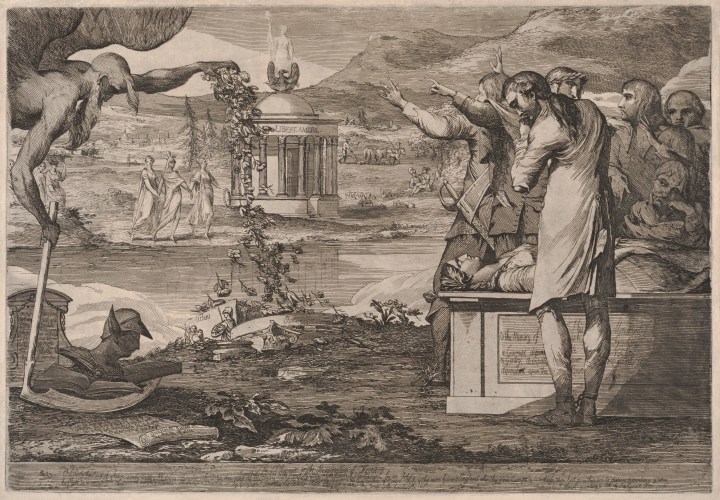
James Barry, The Phoenix or The Resurrection of Freedom, 1775/ca. 1790, etching and engraving with traces of aquatint, 17 x 24.1 inches (plate). Snite Museum of Art, gift of William and Nancy Pressly in honor of the Stent Family, 2015.002.001.
Click here to enlarge
◊ ◊ ◊ ◊ ◊
Press release (30 January 2015) from the Snite Museum of Art:
Snite Museum Expands Irish Art Collection at the University of Notre Dame with the William and Nancy Pressly Collection of James Barry Prints
The Snite Museum of Art announces the acquisition of a significant portfolio of 28 prints by the quixotic Irish artist James Barry (1741–1806). Rich in symbolism and technically inventive, these new additions to the collection promise to enhance the University of Notre Dame’s position as a leading center for Irish, eighteenth-century, art historical, and trans-Atlantic studies. The artist’s dramatic compositions, grand scale, and heroic subjects offer visitors, connoisseurs, students, and scholars much to contemplate and enjoy.
“This is a first-rate acquisition of one of the most influential artists of the eighteenth-century British Atlantic world. It will be thrilling to see how our students in early American, Irish, and British history interpret such a rich and complex set of materials,” said Patrick Griffin, chair and Madden-Hennebry Professor of History at the University of Notre Dame.
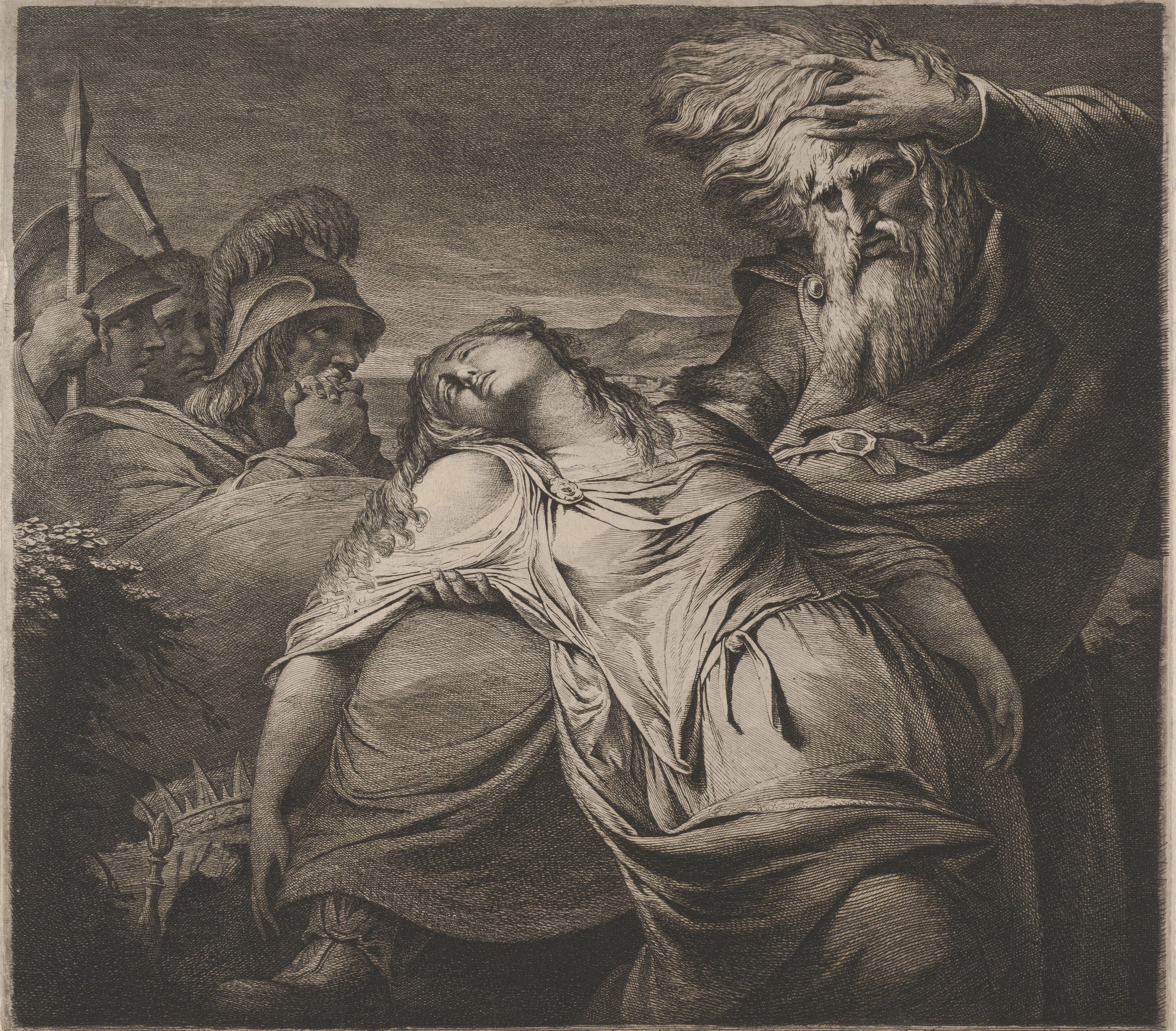
James Barry, King Lear and Cordelia, etching and engraving, 1776/1791, 19.5 x 22.2 inches (sheet). Snite Museum of Art, The William and Nancy Pressly Collection acquired with funds made available by the F. T. Stent Family, 2015.001.001.
Included in the portfolio are many rare, lifetime impressions of some of the Catholic artist’s most provocative images skewering British society or weighing in on contentious current events, such as the war in the American colonies. Barry was a member of the Royal Academy but was eventually expelled for his belligerence and acrimony.
Printmaking for Barry was more than just an opportunity to market his ideas to a wide audience. Self-taught in the arts of printmaking, he used it to work out iconographical and compositional problems. It was part of his creative process, and the prints can be used to chart his ever-evolving positions on political issues and his increasing technical acumen. Multiple states of the same print in which the more experimental aquatint technique was effaced in favor of conventional engraving suggest the artist’s lamentable concession to a market that did not appreciate his innovations. He was one of the earliest practitioners of lithography shortly after its invention around 1800, a singular example of which is also part of this portfolio.
This remarkable collection was built over four decades by Nancy and William Pressly, the foremost scholar on James Barry and professor emeritus of eighteenth- and nineteenth-century European art at the University of Maryland. Pressly said, “Over the years, as I looked and relooked at these prints, I was amazed at both the subtlety and richness of Barry’s process, but he never pursued virtuosity for its own sake: all is in the service of his passion to transform his audience, a transformation, however, that places great demands on his viewer.”
Barry produced over 40 prints during his career. The William and Nancy Pressly Collection represents more than half of that production, making the University of Notre Dame and the Yale Center for British Art the two largest repositories of his work in the United States.
The acquisition of eighteen of the prints was made possible by a generous gift from the F. T. Stent Family with ten additional prints donated by the Presslys themselves.










 Enfilade
leave a comment